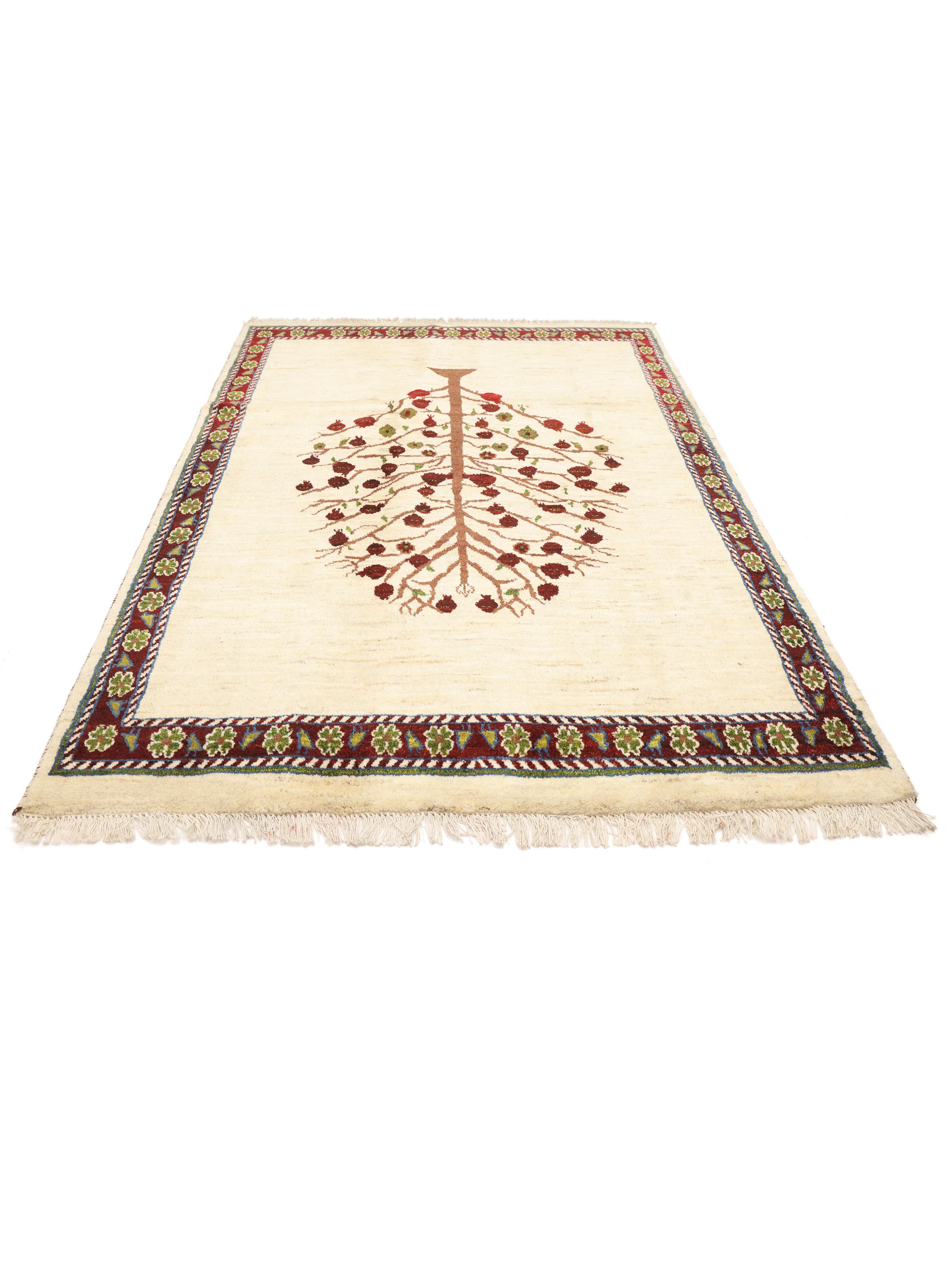
The Loribaft rug finds its roots in the nomadic weaving traditions of the Middle Eastern regions, specifically among the Luri and Qashqai tribes. These rugs are renowned for their connection to the natural world, often serving as a canvas for the weaver's personal expression and local folklore.
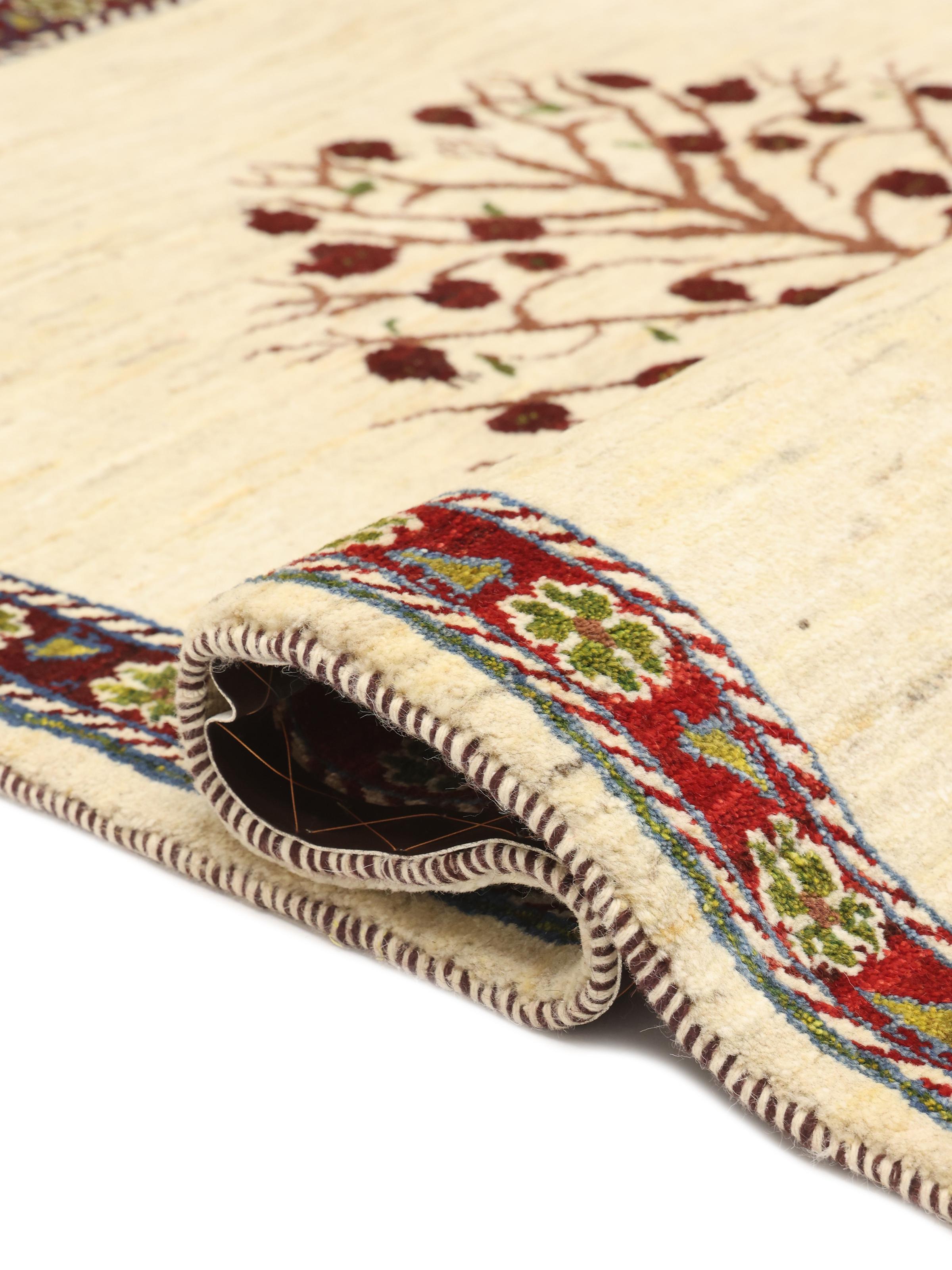
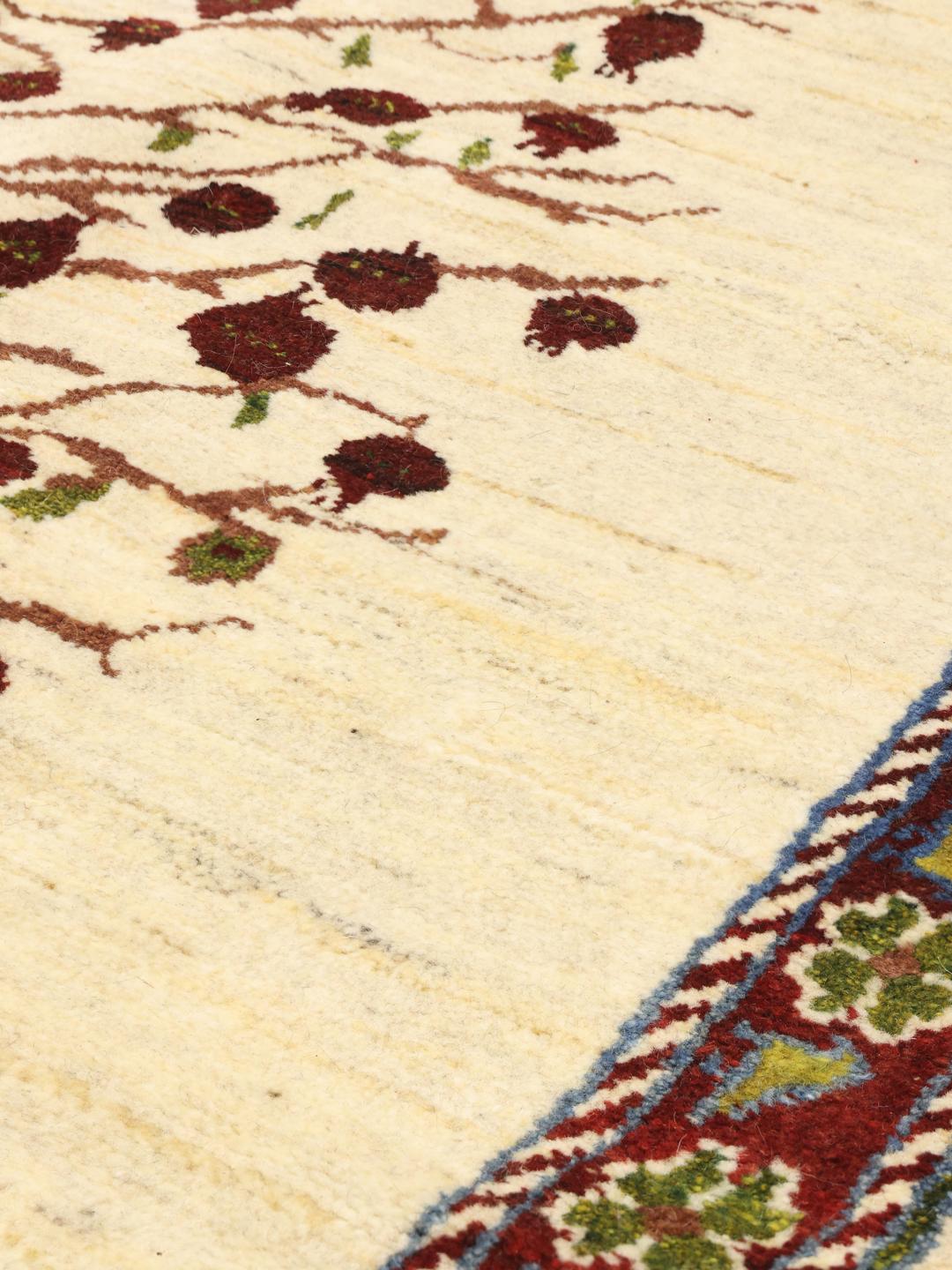
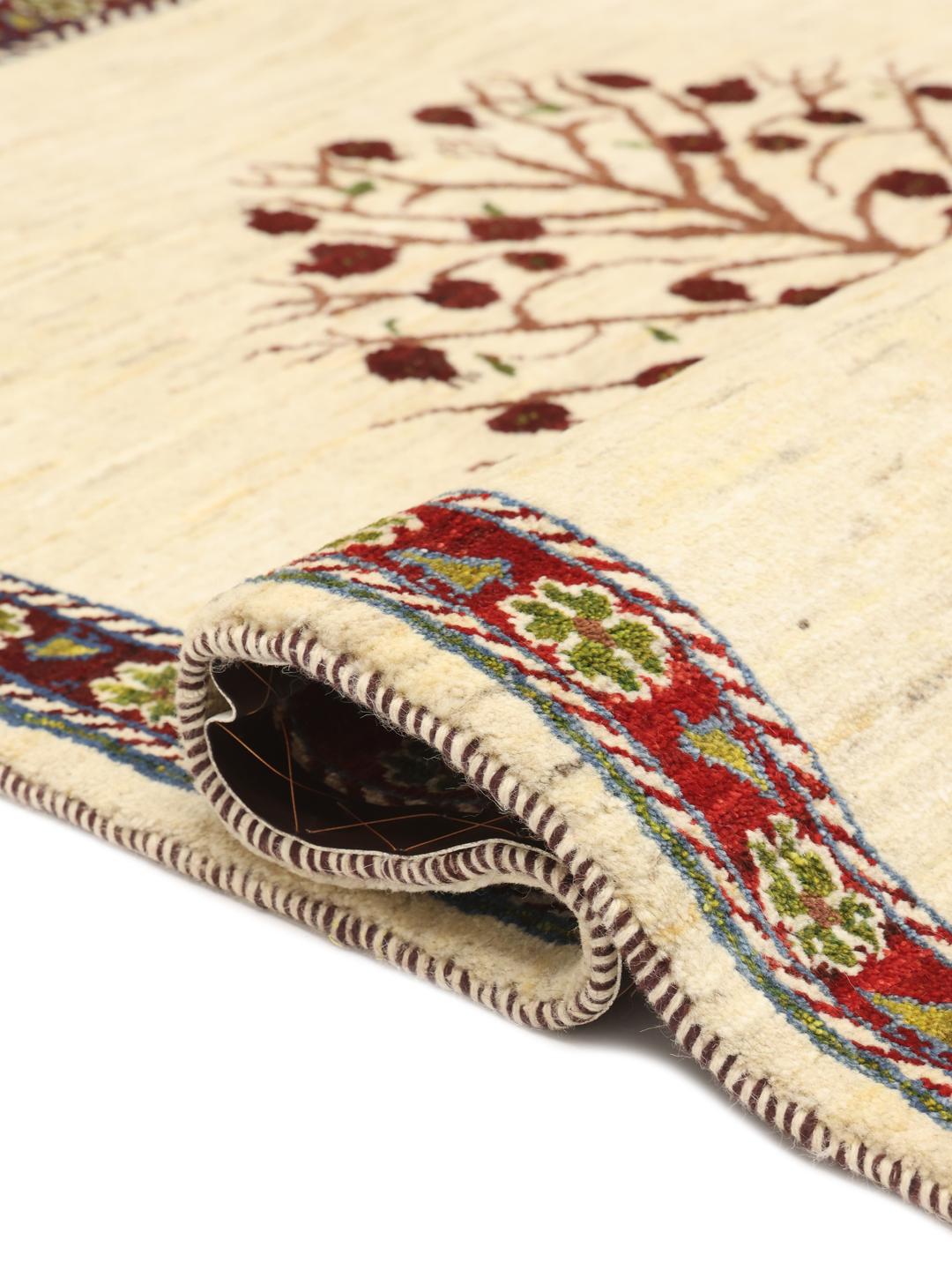
The term 'Loribaft' refers to a specific style of weaving that emphasises a soft, thick pile and a more relaxed, spontaneous approach to patterns compared to formal city rugs. This style is closely related to Kashkooli traditions, which are celebrated for their finer knotting and artistic flair, resulting in rugs that are both comfortable and visually captivating.
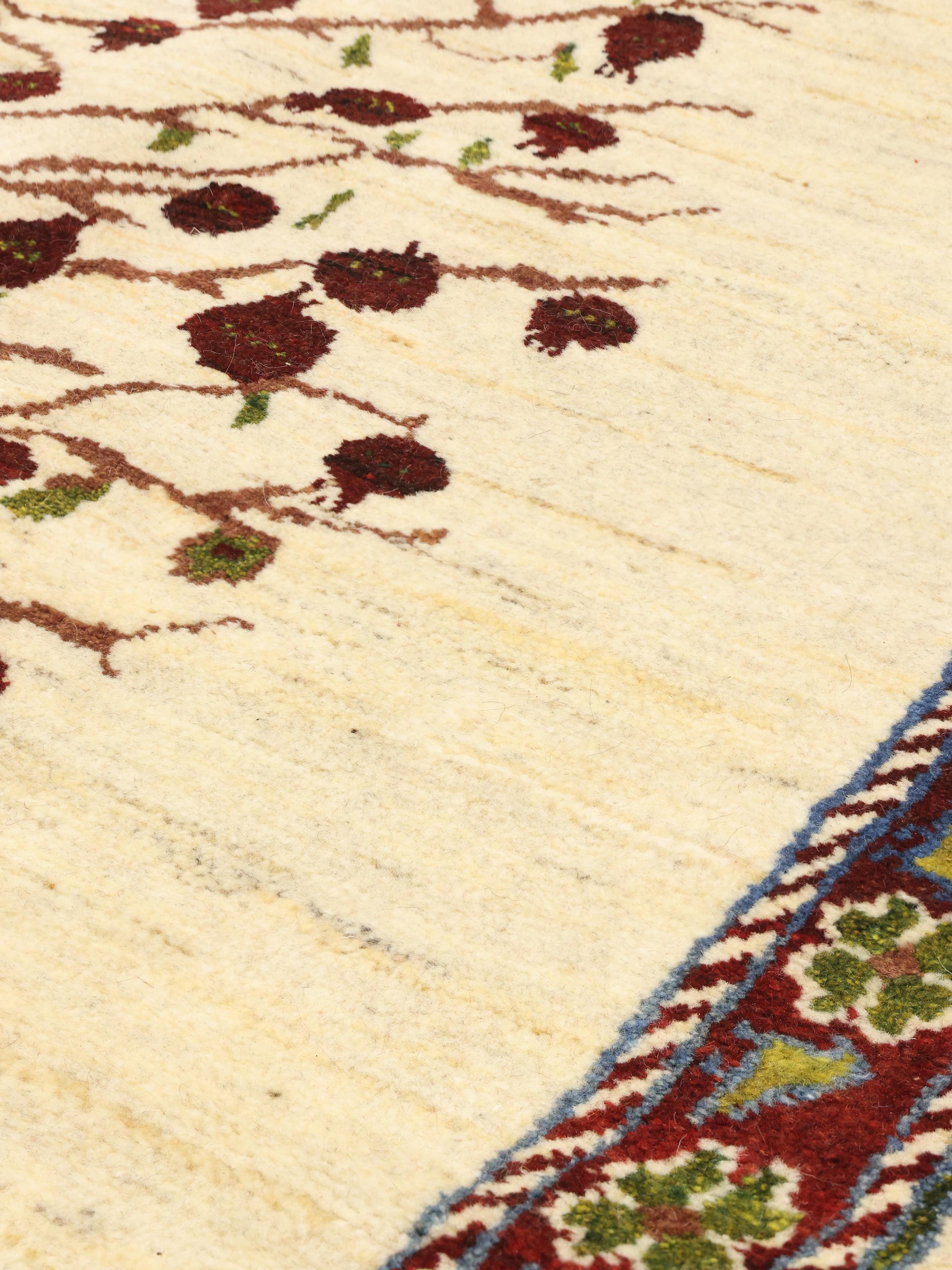
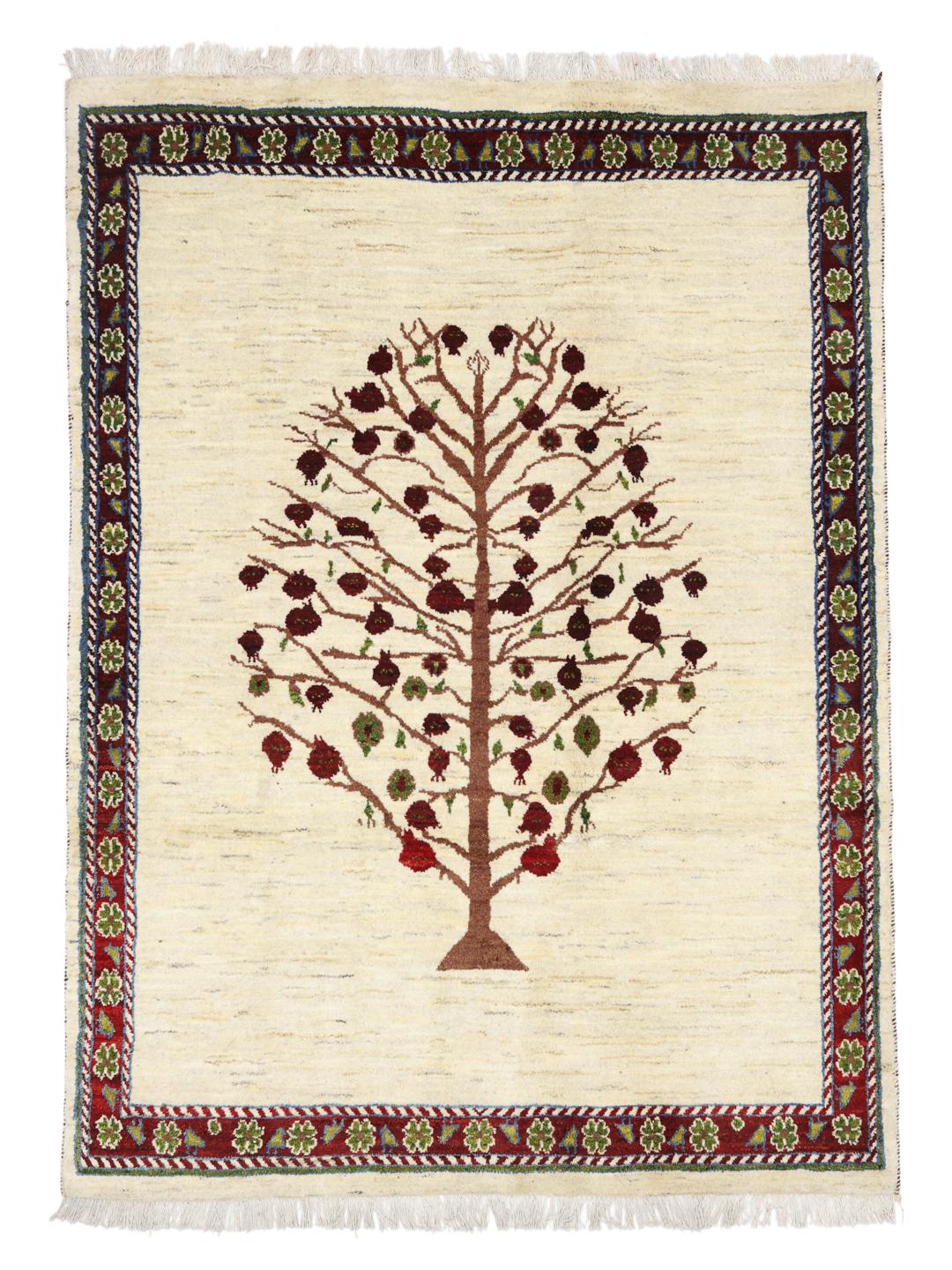
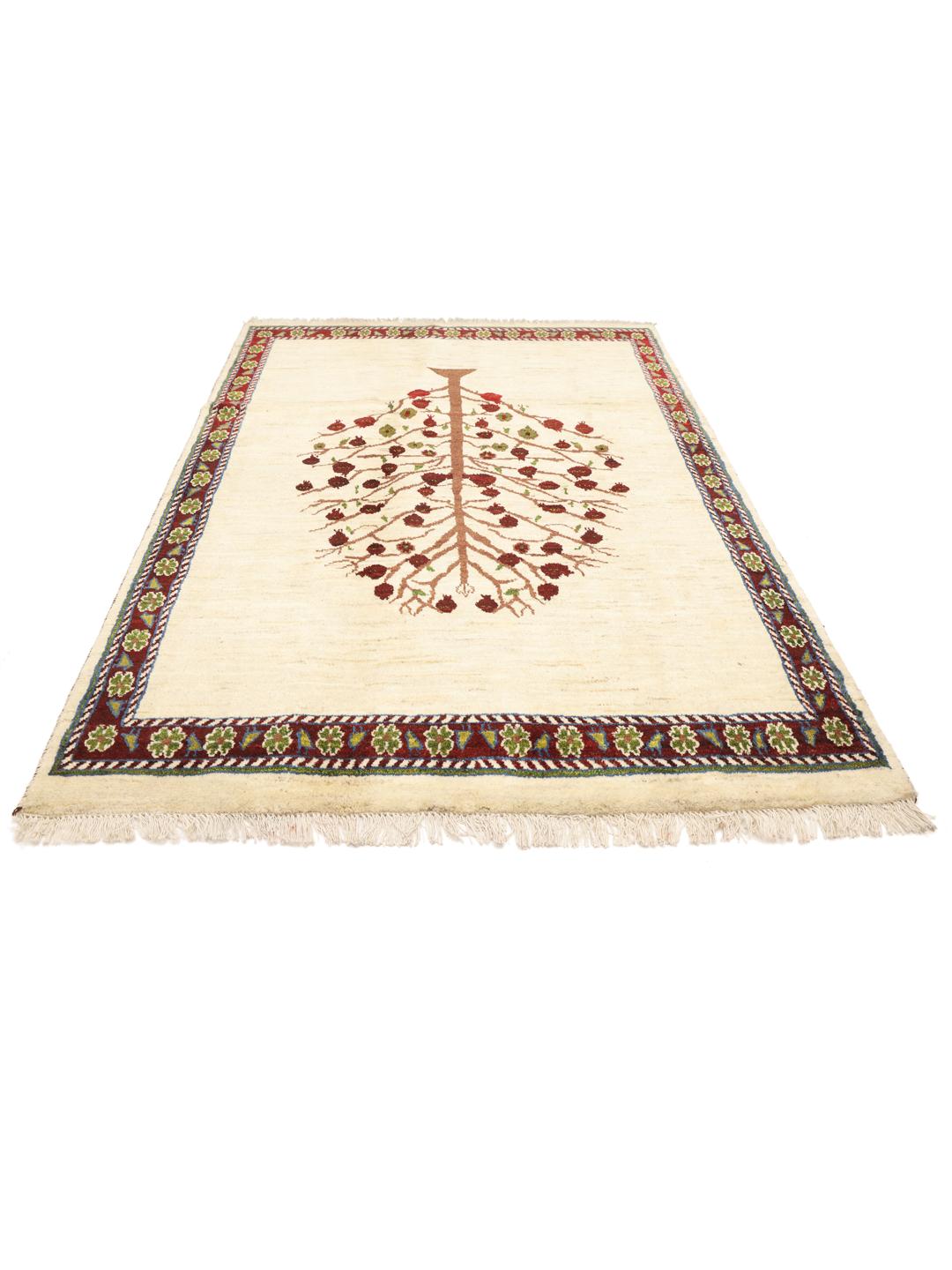
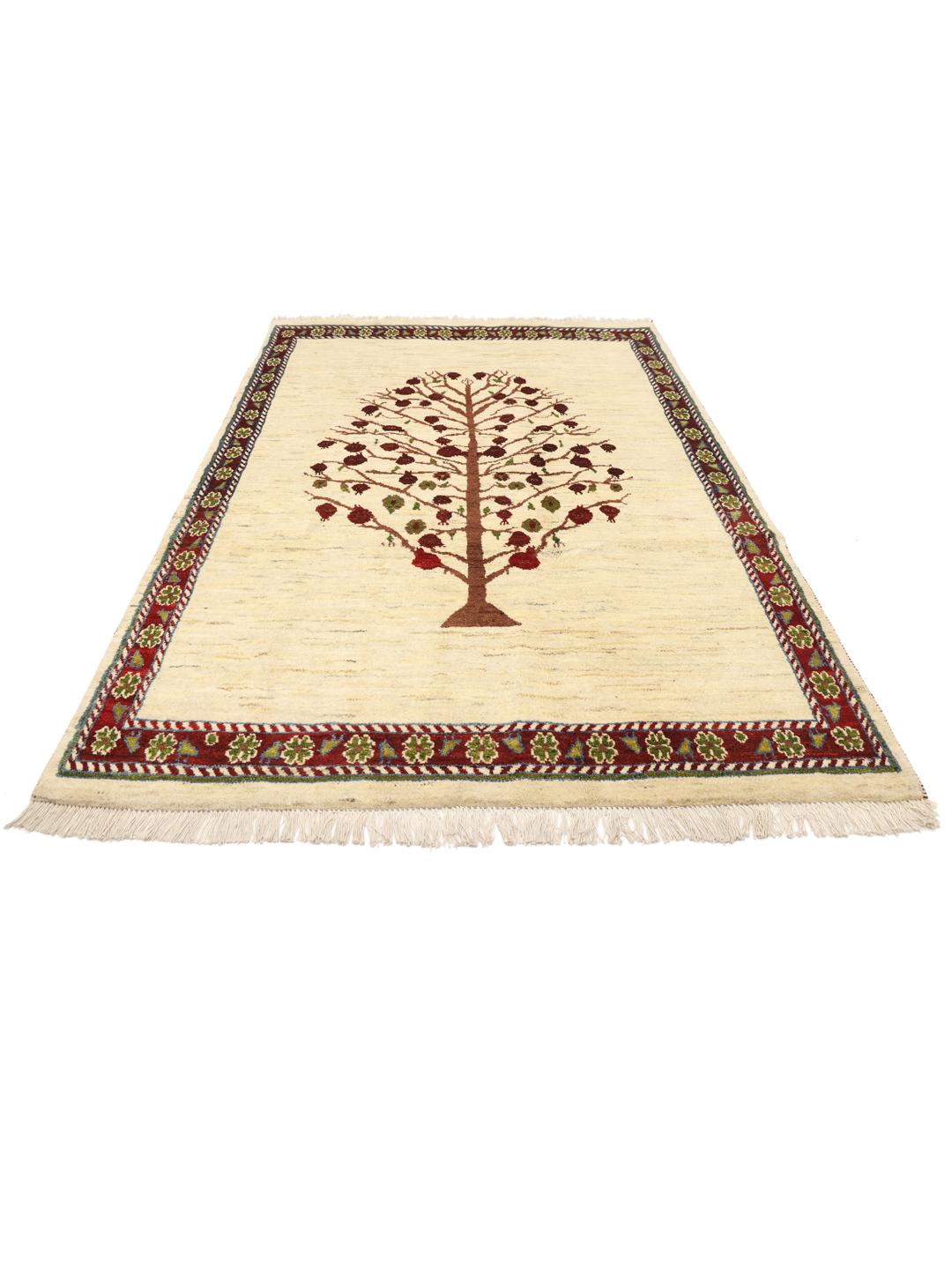
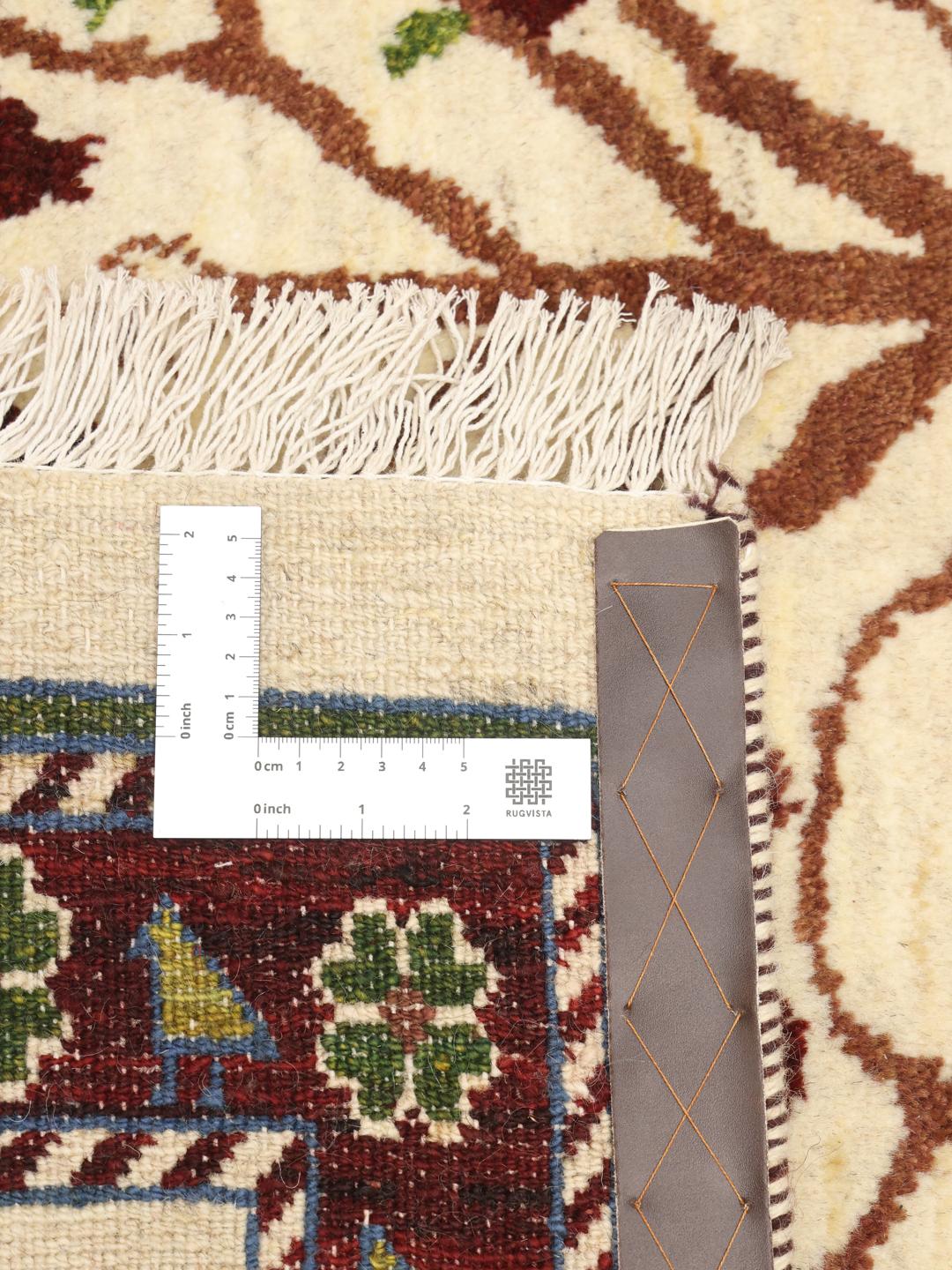
A central element in this rug is the tree-of-life motif, a timeless symbol found throughout Middle Eastern art. It represents growth, health, and a connection between the earth and the heavens. The deep red fruits and green foliage depicted here are typical of the vibrant, nature-inspired palette that defines this weaving tradition.
Owning a Loribaft rug is an invitation to appreciate the history of tribal craftsmanship. These pieces are valued by collectors not only for their beauty but for the skill required to produce them without the use of complex looms or modern machinery. By choosing this piece, you are supporting a legacy of traditional art that has been passed down through generations.