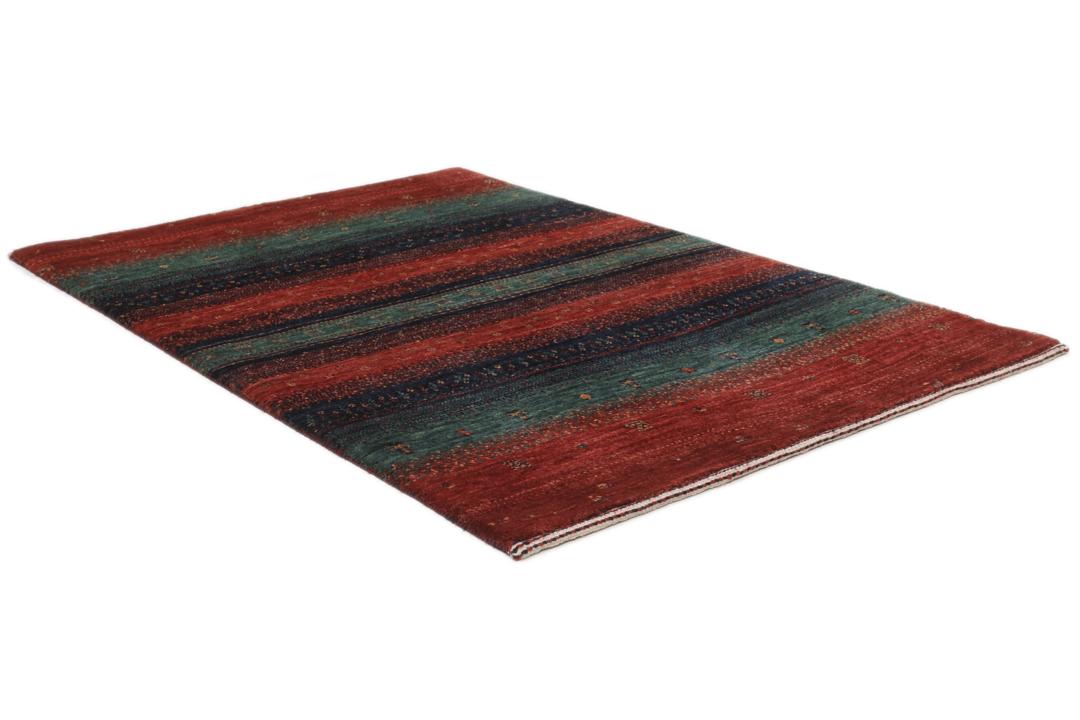
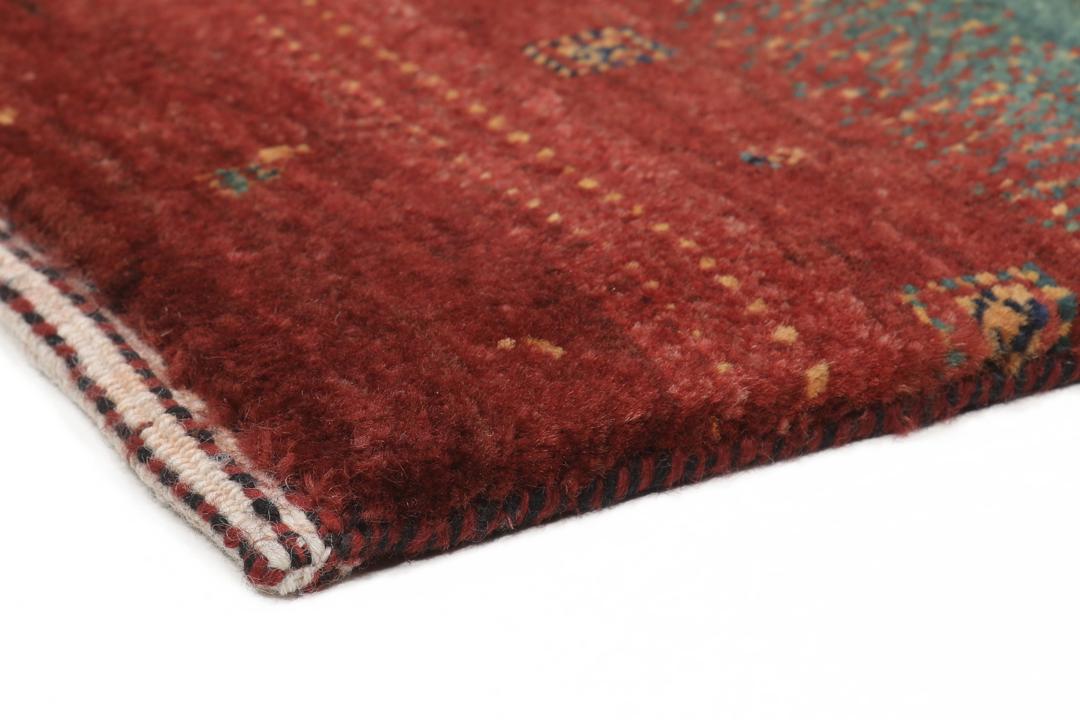
Loribaft rugs represent a refined evolution of the traditional Gabbeh rug, originating from nomadic and semi-nomadic weaving communities across the Middle East. While traditional Gabbeh pieces are known for their thick pile and minimalistic, spontaneous design, Loribaft rugs introduced a higher level of precision and detail, creating a tighter weave while maintaining the organic charm of tribal art.
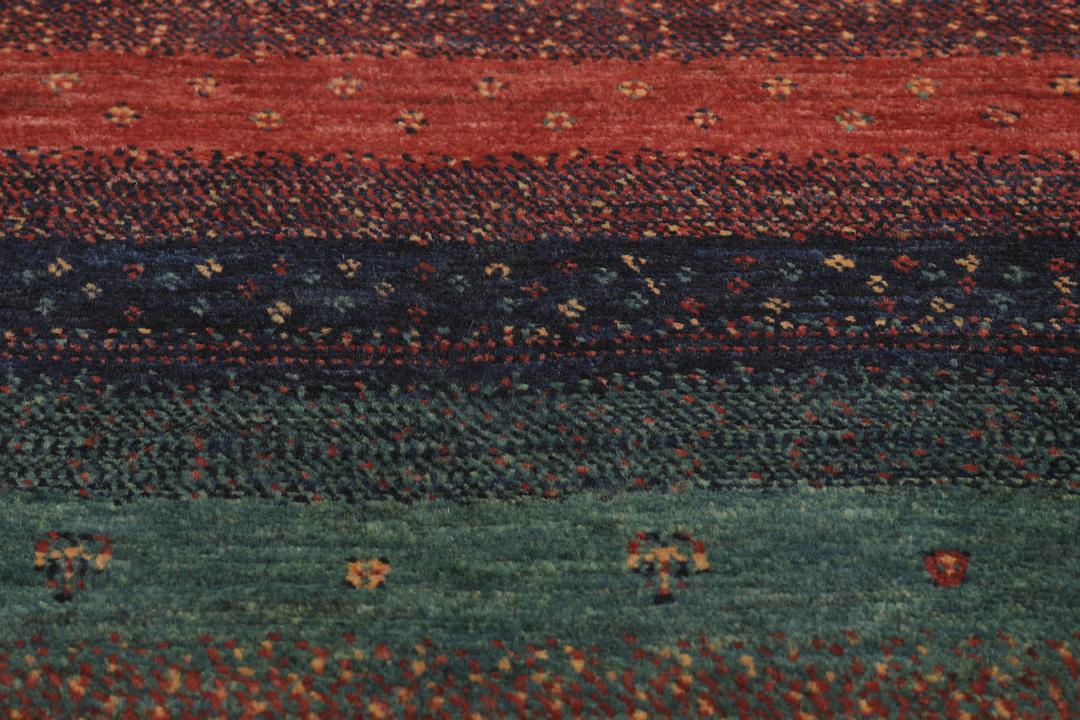
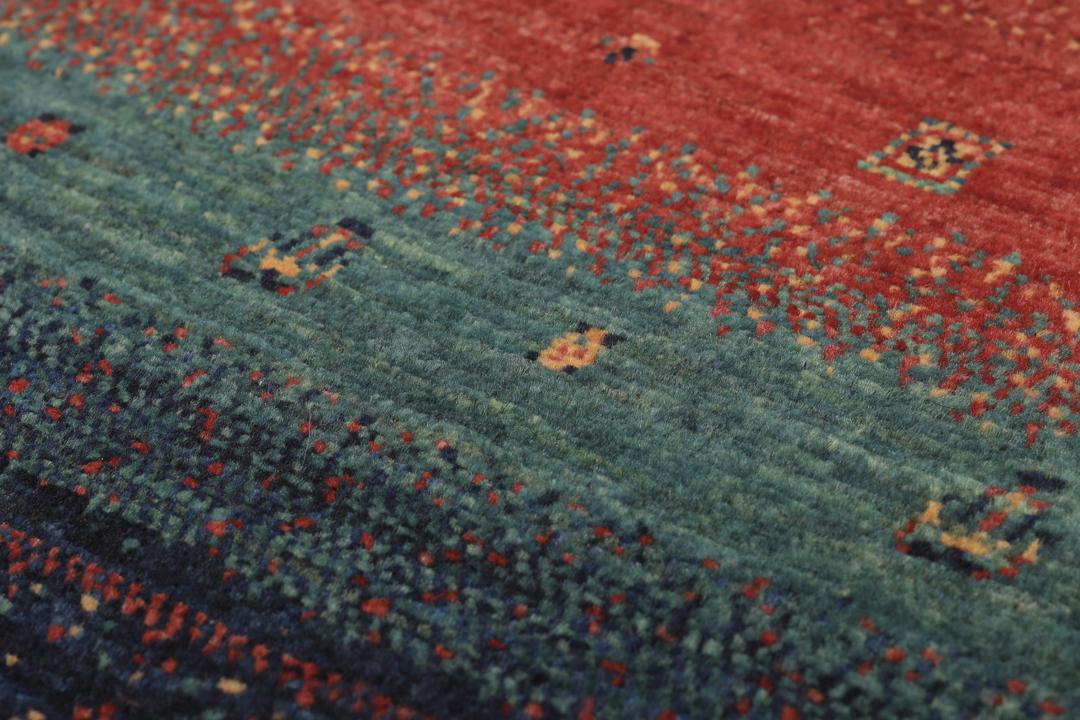
The name Loribaft translates to 'woven by the Lori', referring to the Lori weavers whose distinctive knotting techniques and design heritage shaped this style. The fine knotting allows for intricate motifs and crisp geometric bands that would not be possible on coarser weaves, giving the finished piece a balanced aesthetic that feels both traditional and modern.
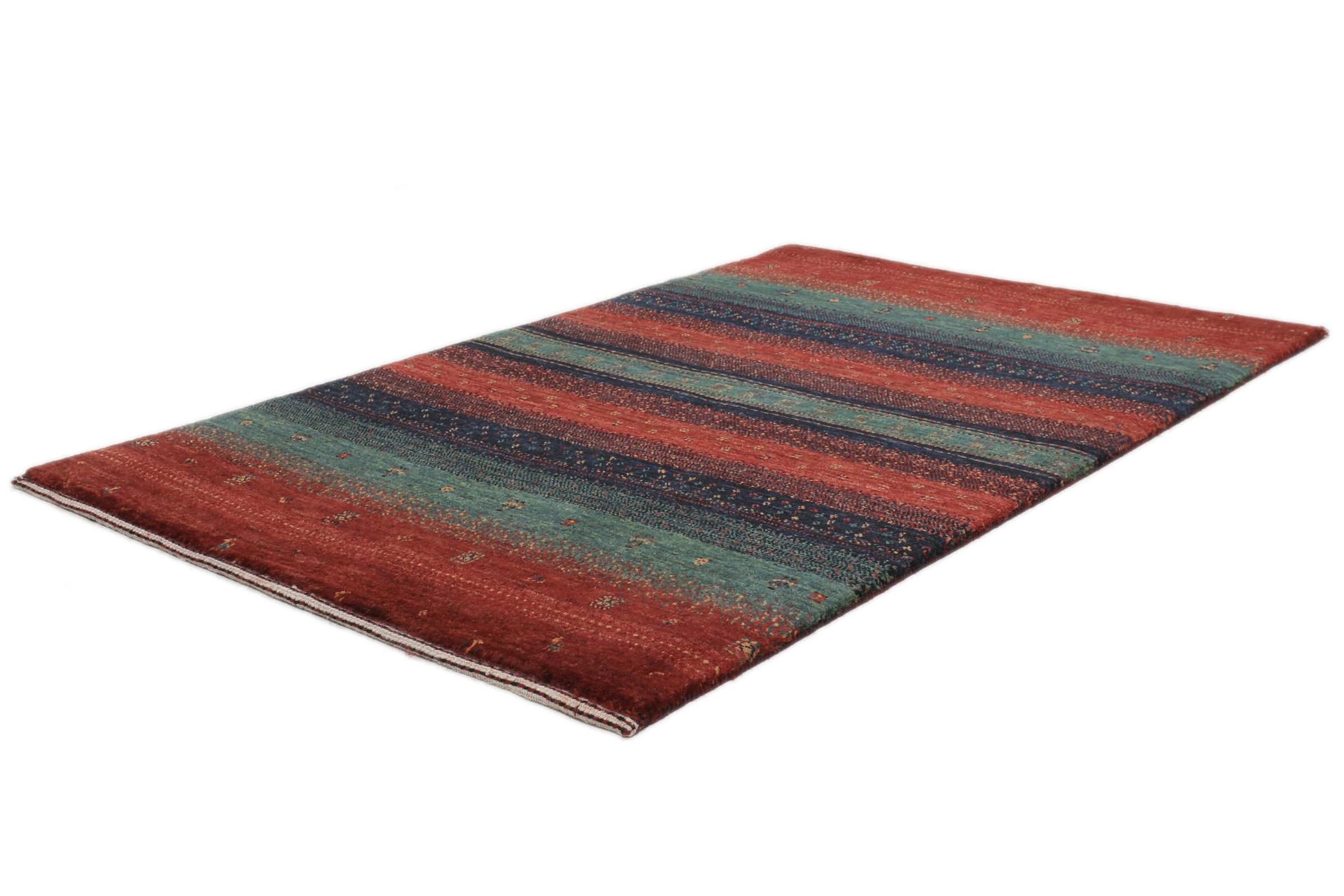
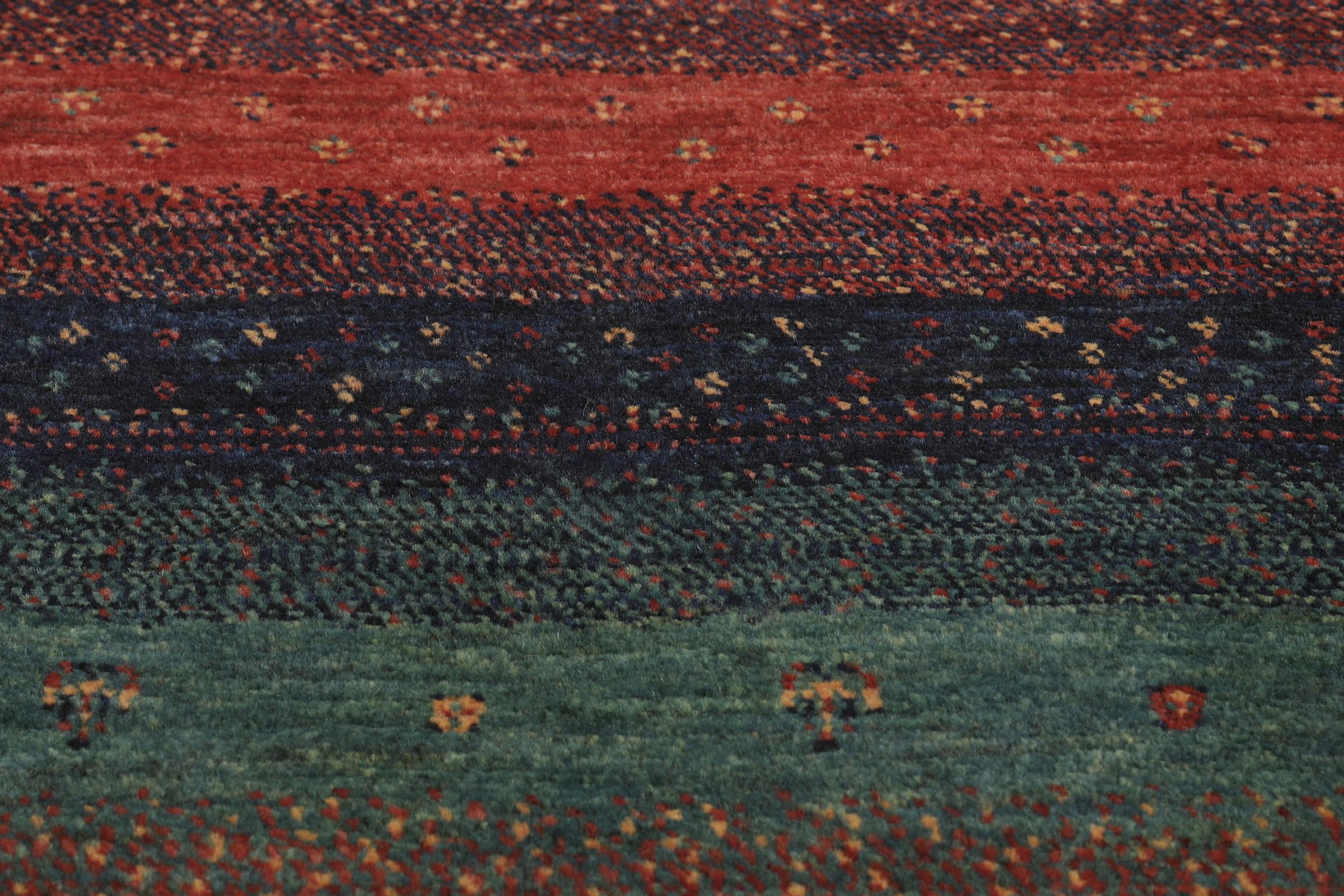
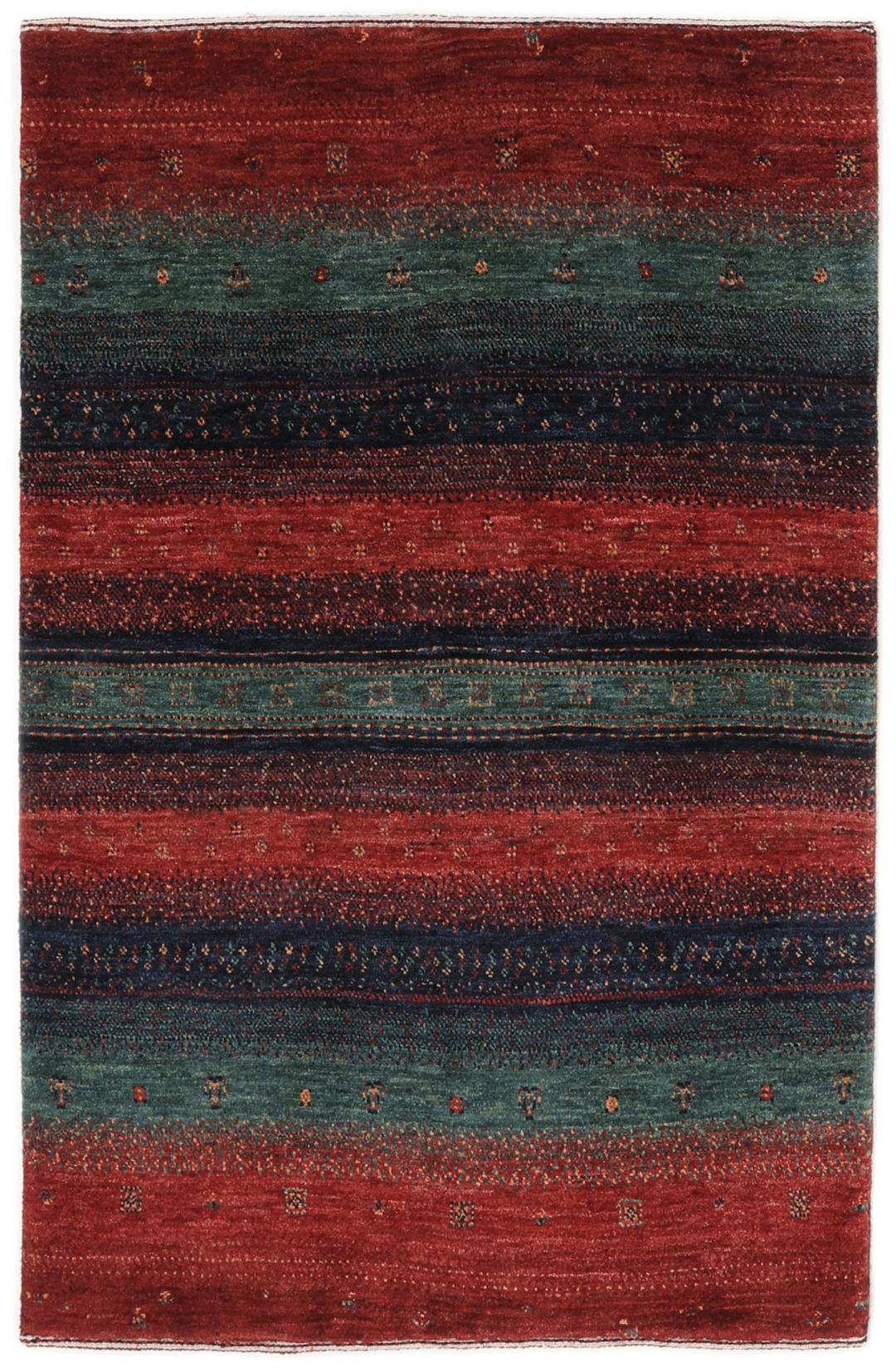
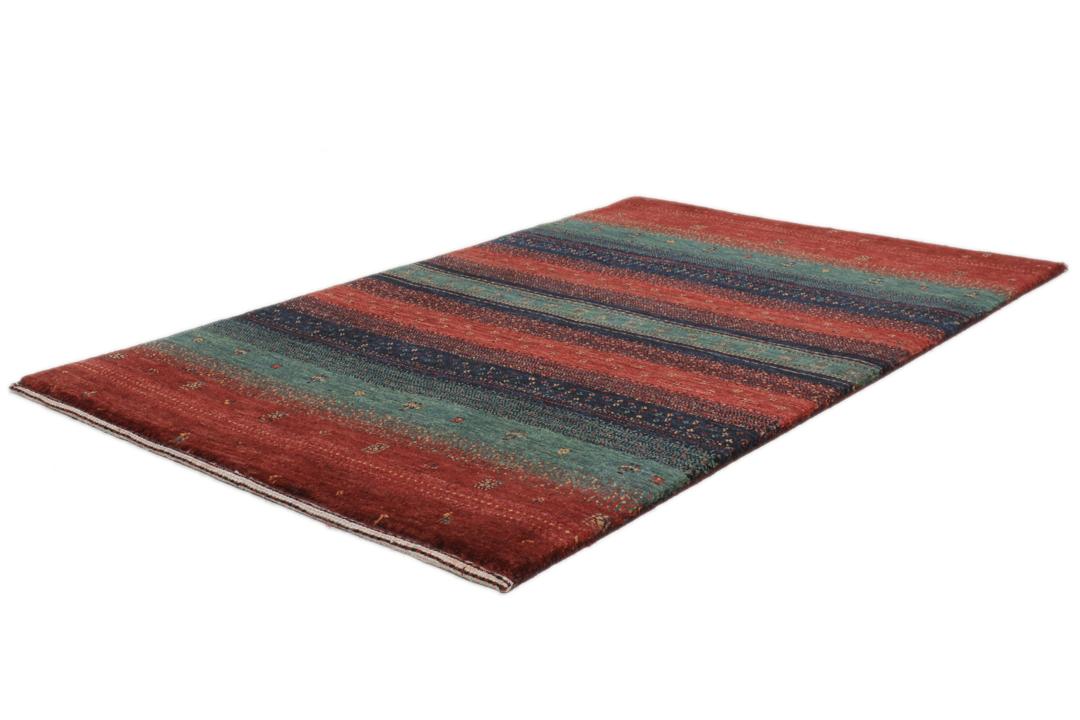
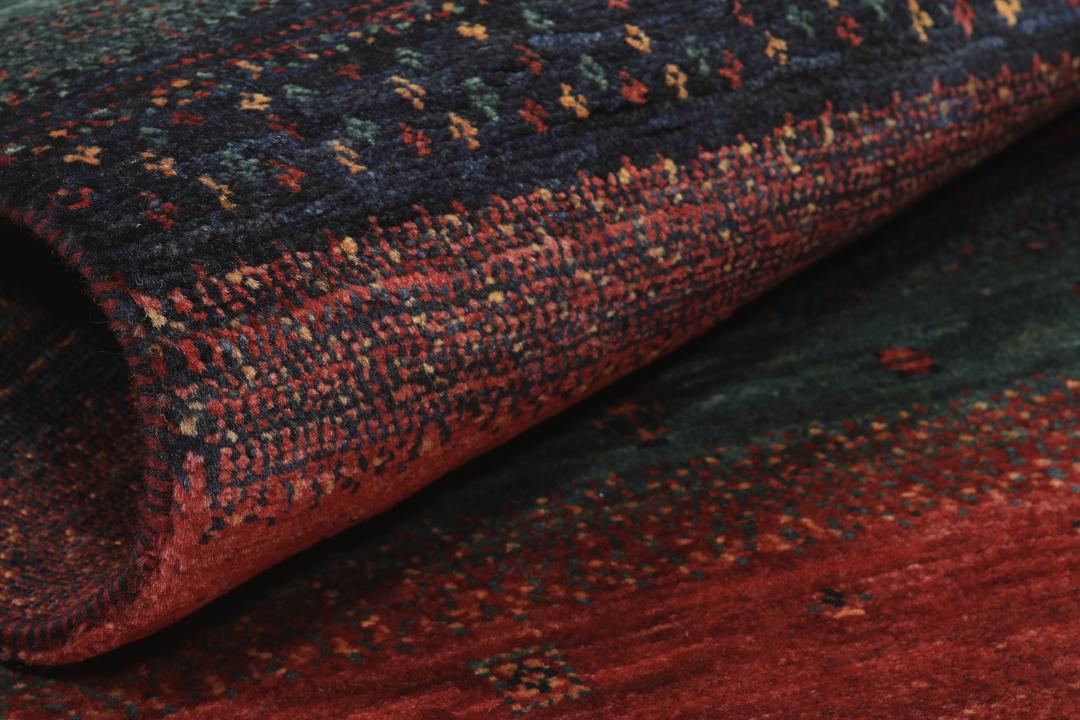
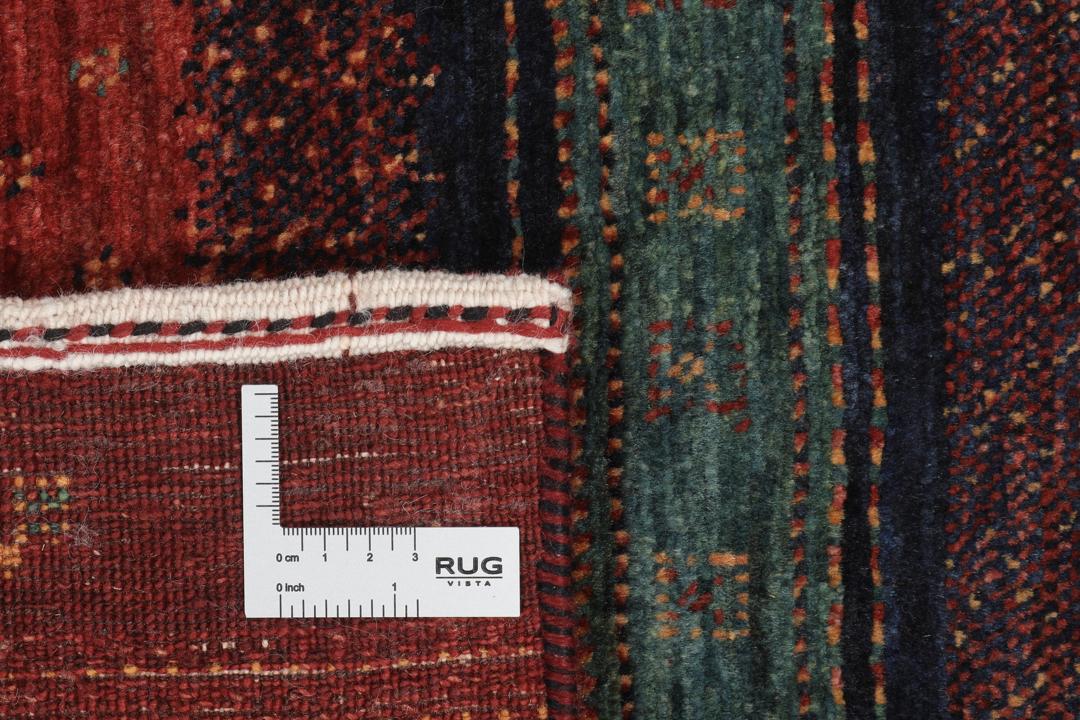
Visually, Loribaft rugs are defined by rich, saturated tones and stylized geometric motifs. Horizontal striping, often accented with small abstract animal or plant symbols, reflects the weaver's personal creative expression and connection to their natural surroundings. The subtle variations in color, known as abrash, happen naturally during the dyeing process, giving the bands of dark red, green, and blue an organic depth.
Today, Loribaft rugs are celebrated by collectors and interior enthusiasts alike for their expressive character and lasting quality. Owning a original Loribaft piece brings a real sense of provenance and artistic heritage into the home, celebrating a living textile art form that has endured for generations.