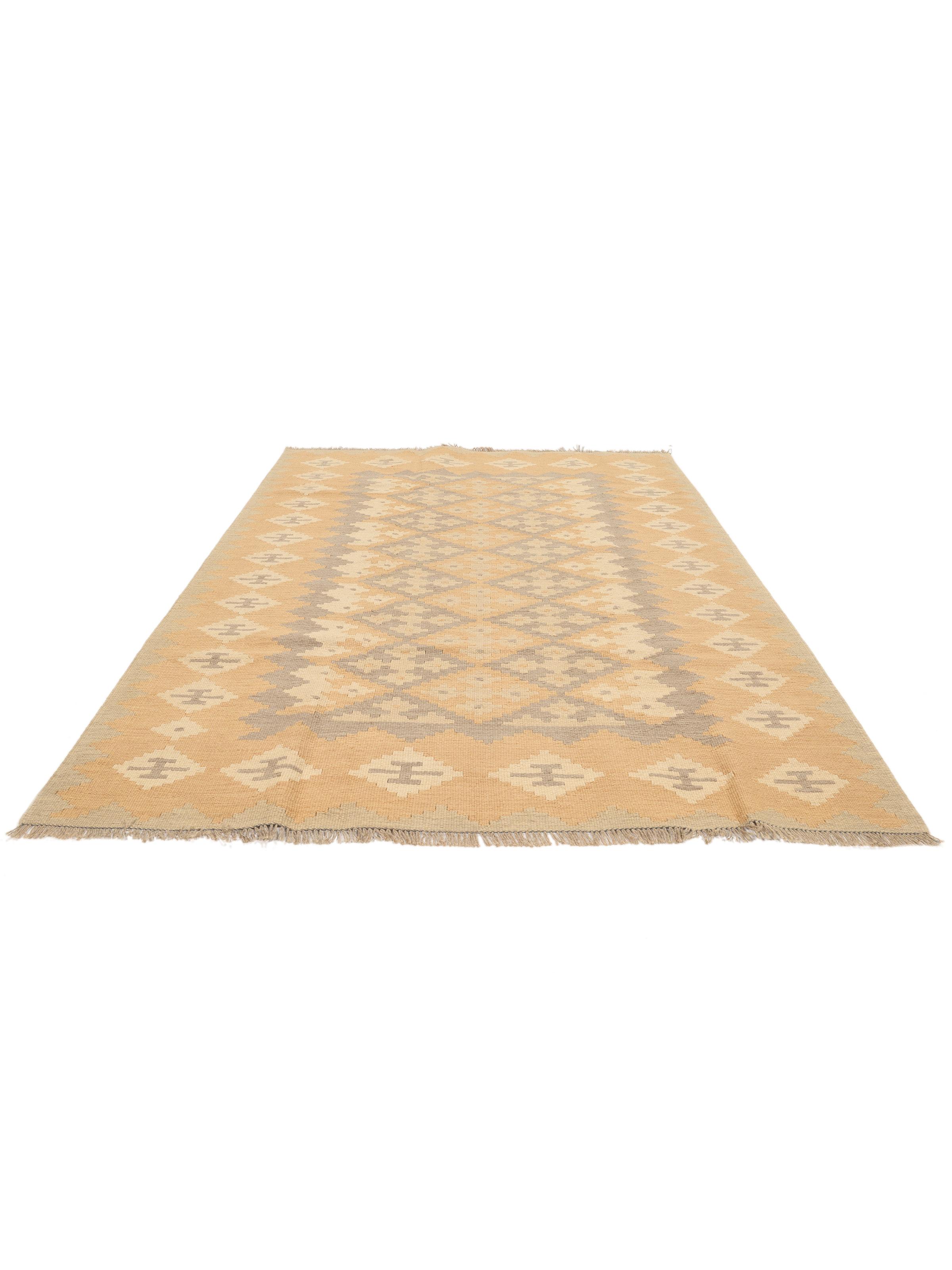
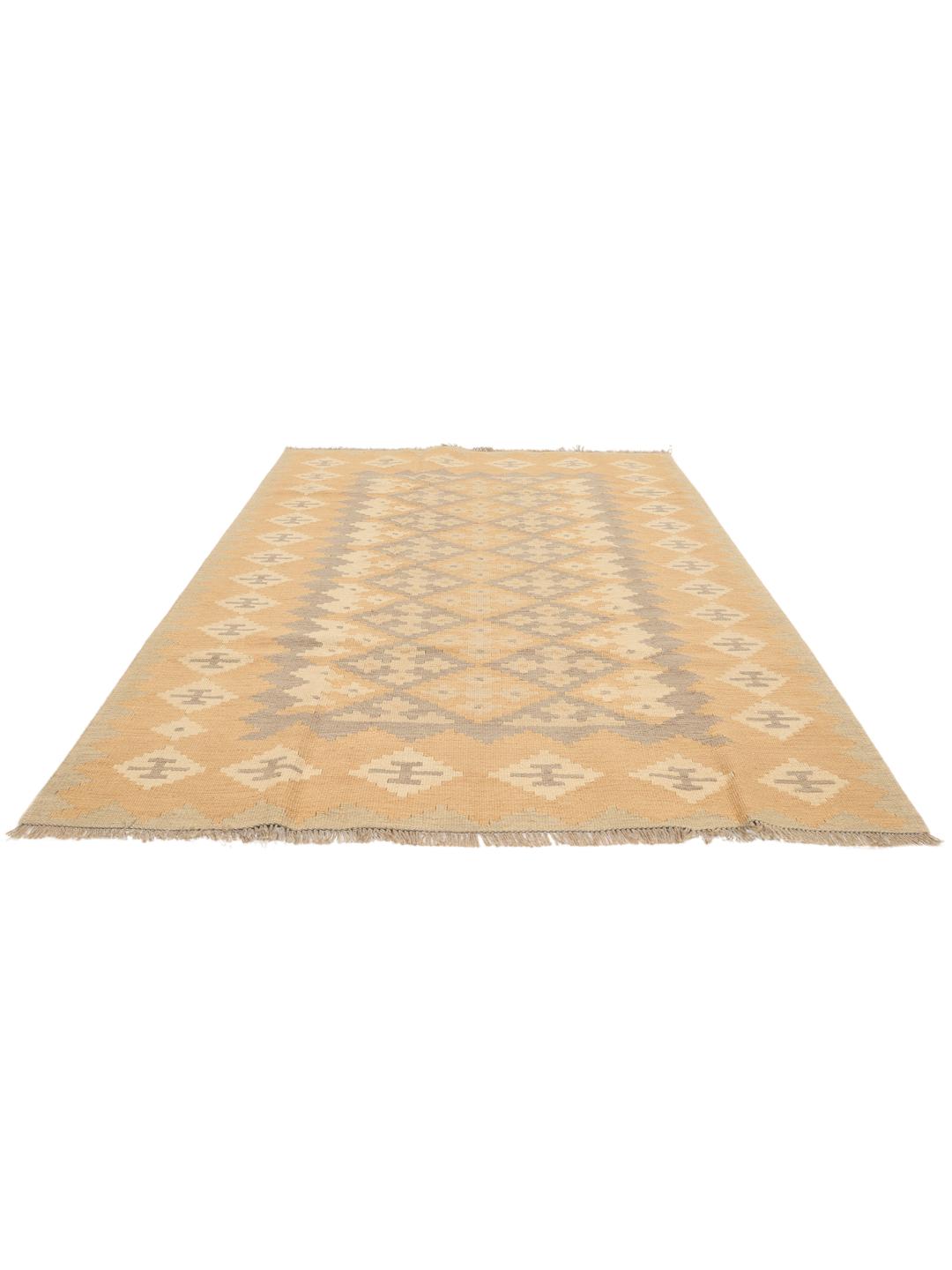
Kilim rugs are deeply rooted in the nomadic traditions of the Middle East, where they were originally created as practical, portable textiles for tent life. These flat-woven rugs served as everything from floor coverings and blankets to saddlebags, reflecting a lifestyle defined by movement and adaptability.
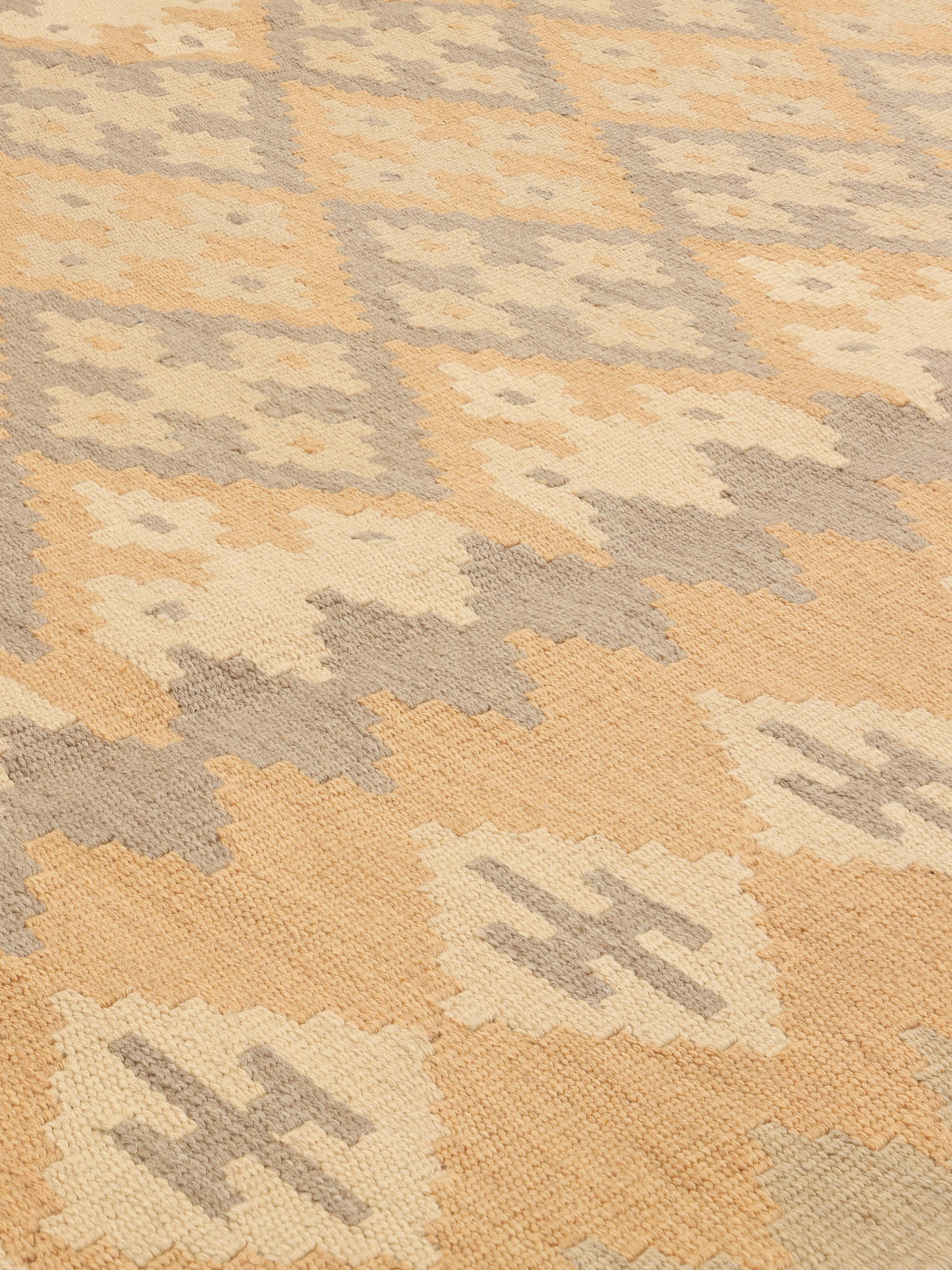
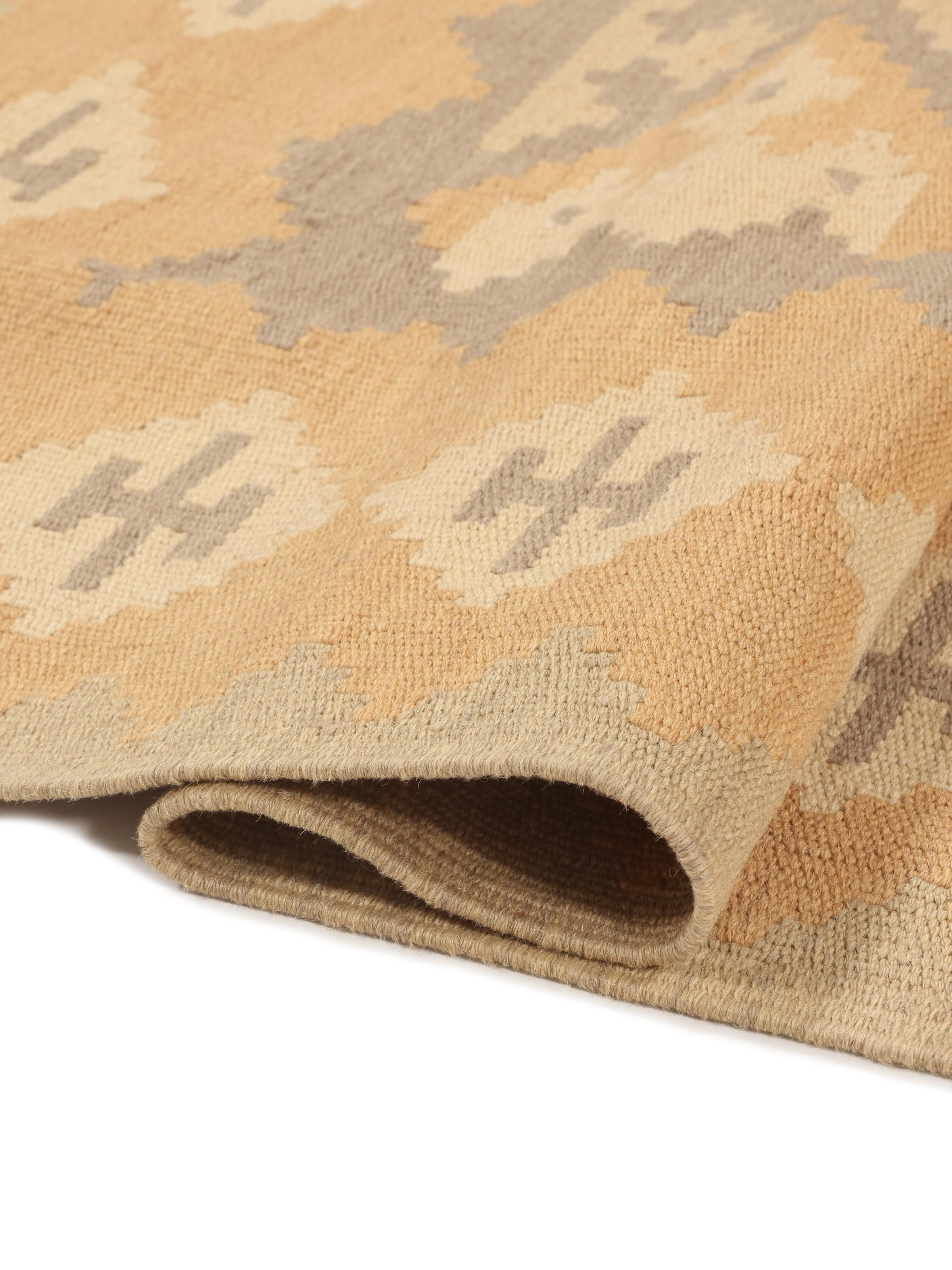
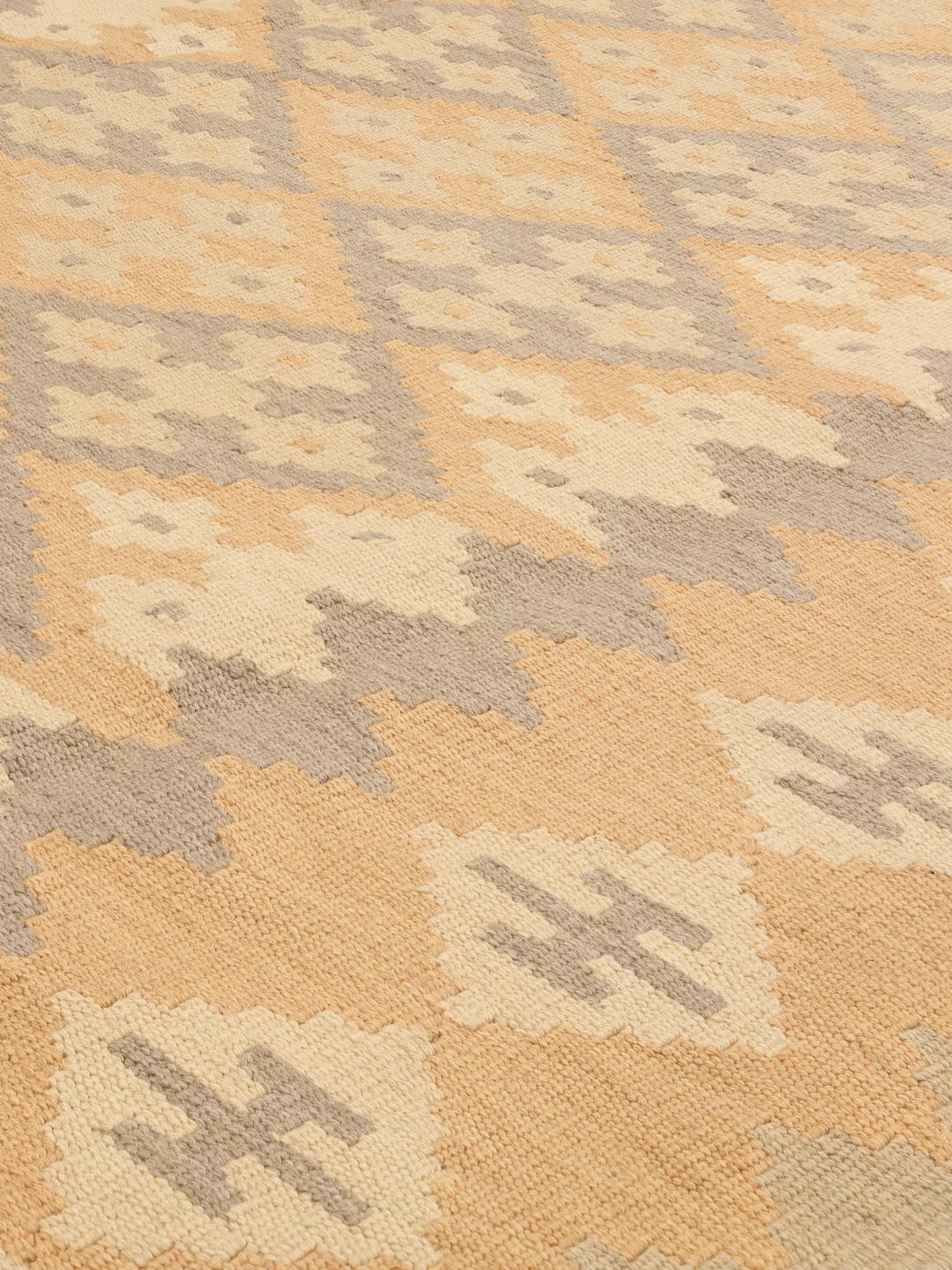
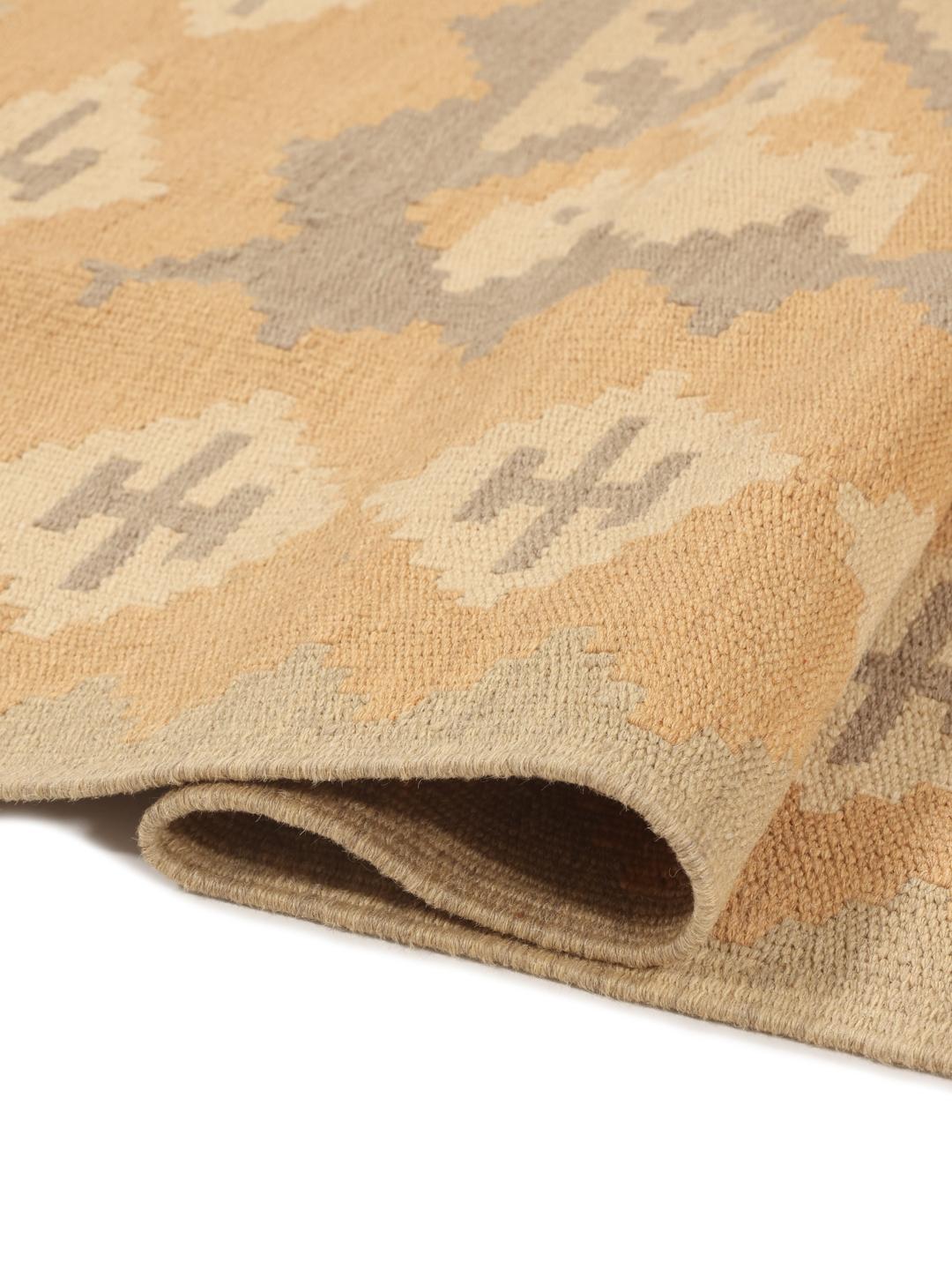
The term Kilim refers to the specific tapestry-weave technique where no pile is created. Instead, the design is formed by the weft threads, which are tightly packed to cover the vertical warp threads completely. This method results in a durable, reversible rug that is prized for its clean lines and graphic clarity.
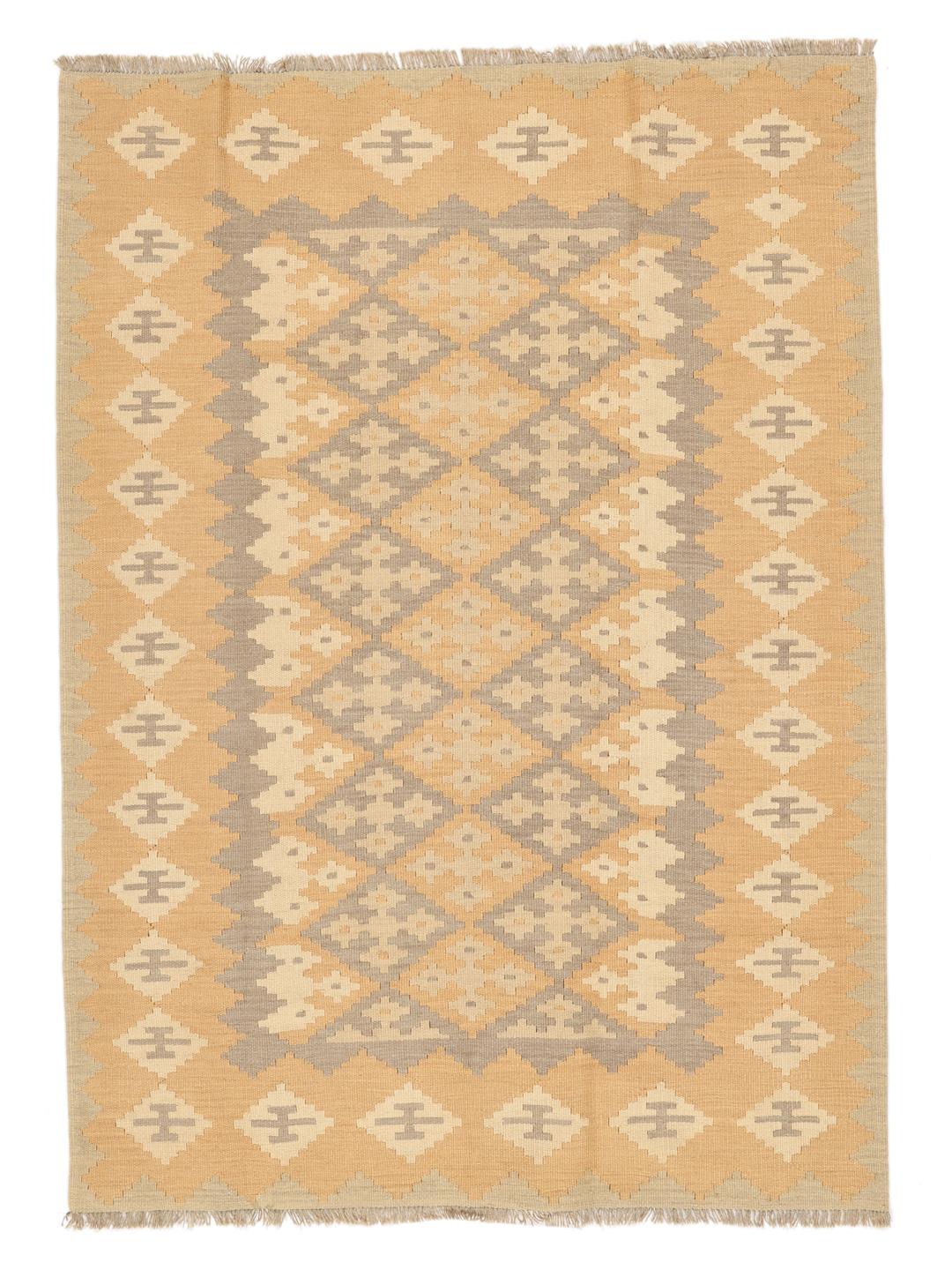
The Ghashghai people, known for their nomadic migration patterns, are celebrated for their distinctive approach to these textiles. Their designs often feature geometric medallions and repeating motifs that are passed down through generations, each pattern carrying symbolic meaning related to the natural world and their ancestral environment.
Owning a Kilim is a way to connect with a rich, enduring heritage. These rugs are highly valued by collectors for their authenticity and the sheer skill required to maintain consistency across such intricate geometric fields. By acquiring this piece, you are preserving a craft tradition that has been refined over centuries.