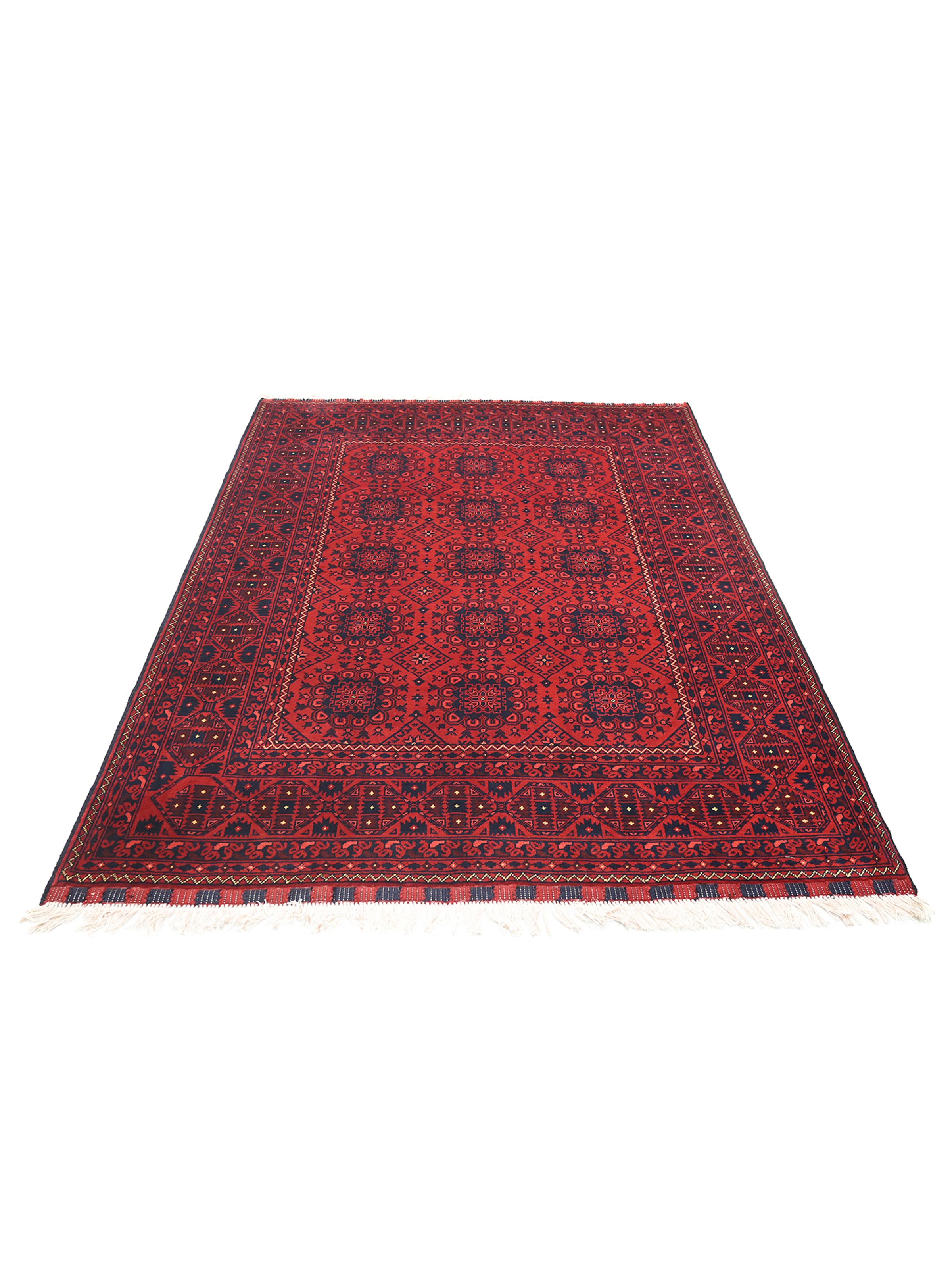
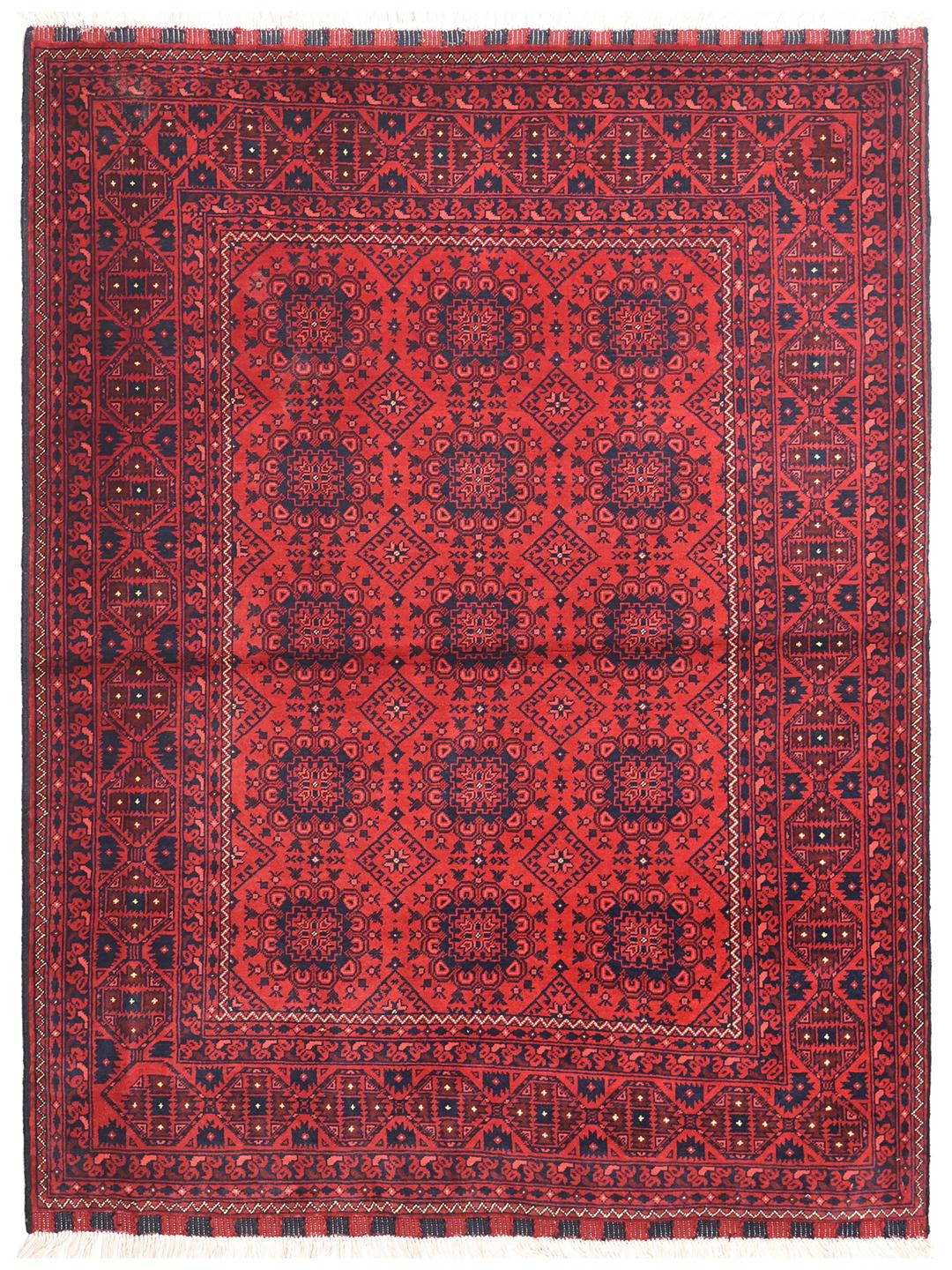
The Kunduz rug tradition is deeply rooted in the history of the northern Middle East. This area has long served as a vital cultural crossroads, blending various weaving influences from Central Asia. These rugs are renowned for their bold, geometric aesthetics and the use of natural, earthy palettes that reflect the rugged landscape of their origin.
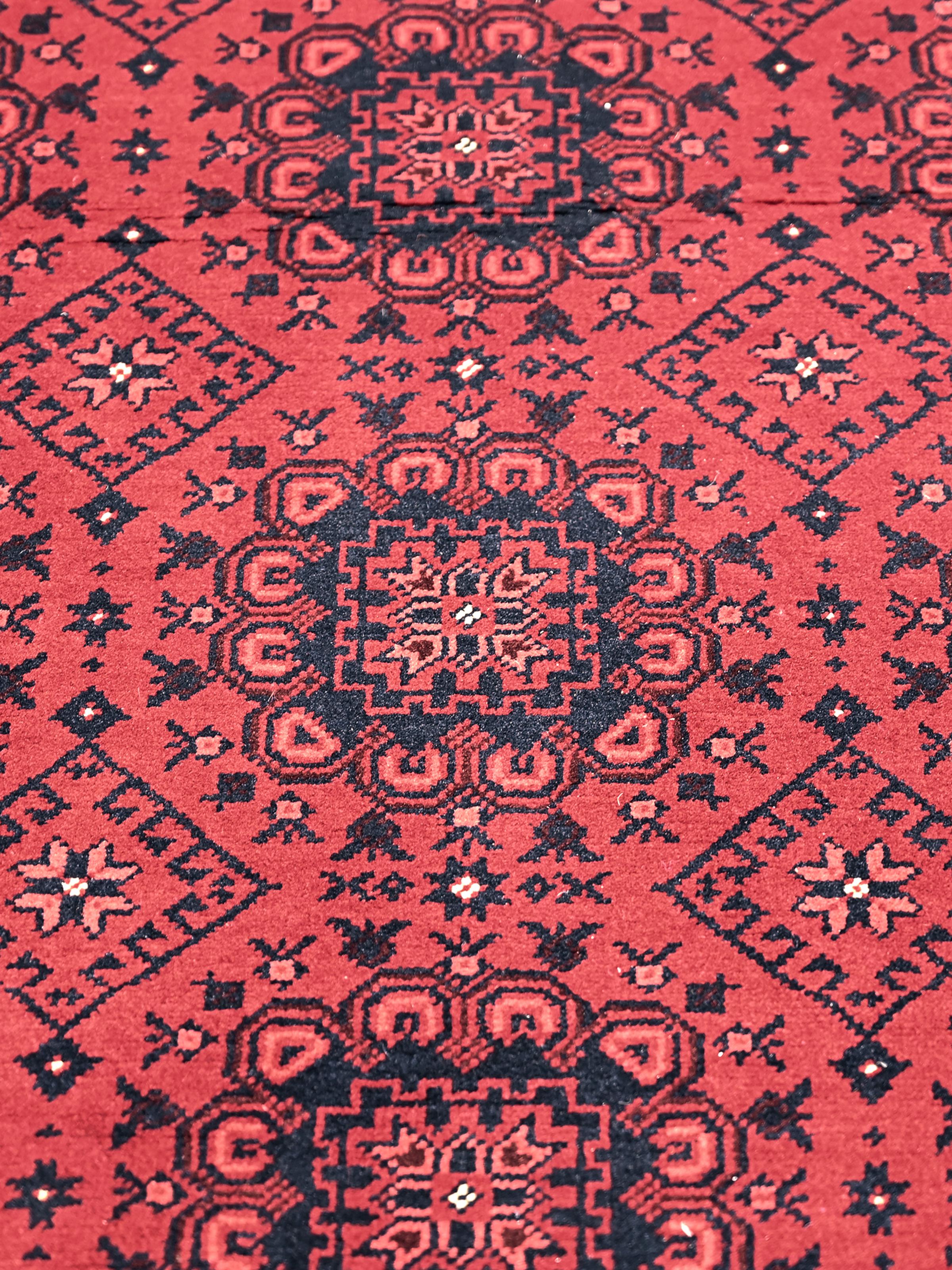
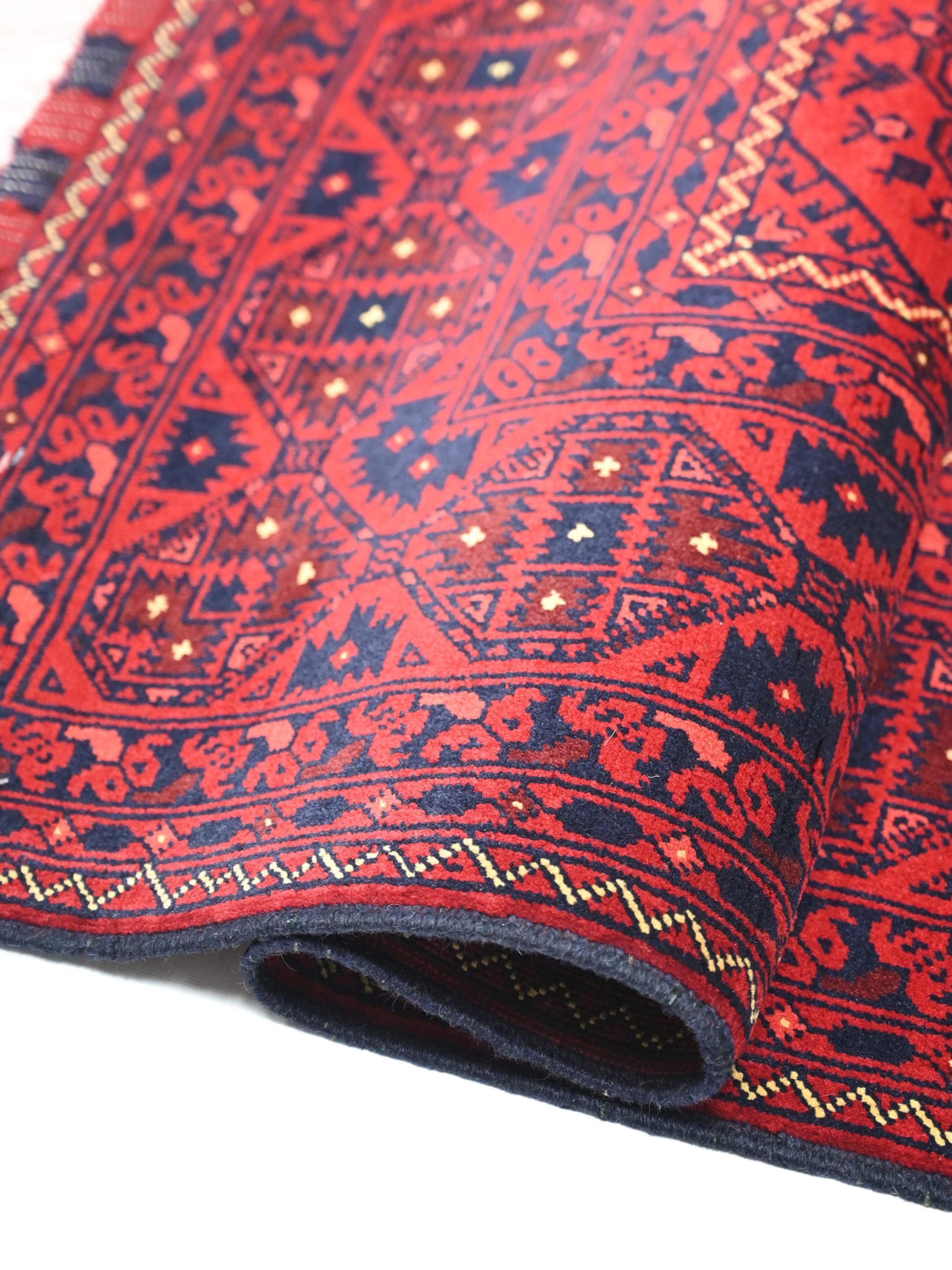
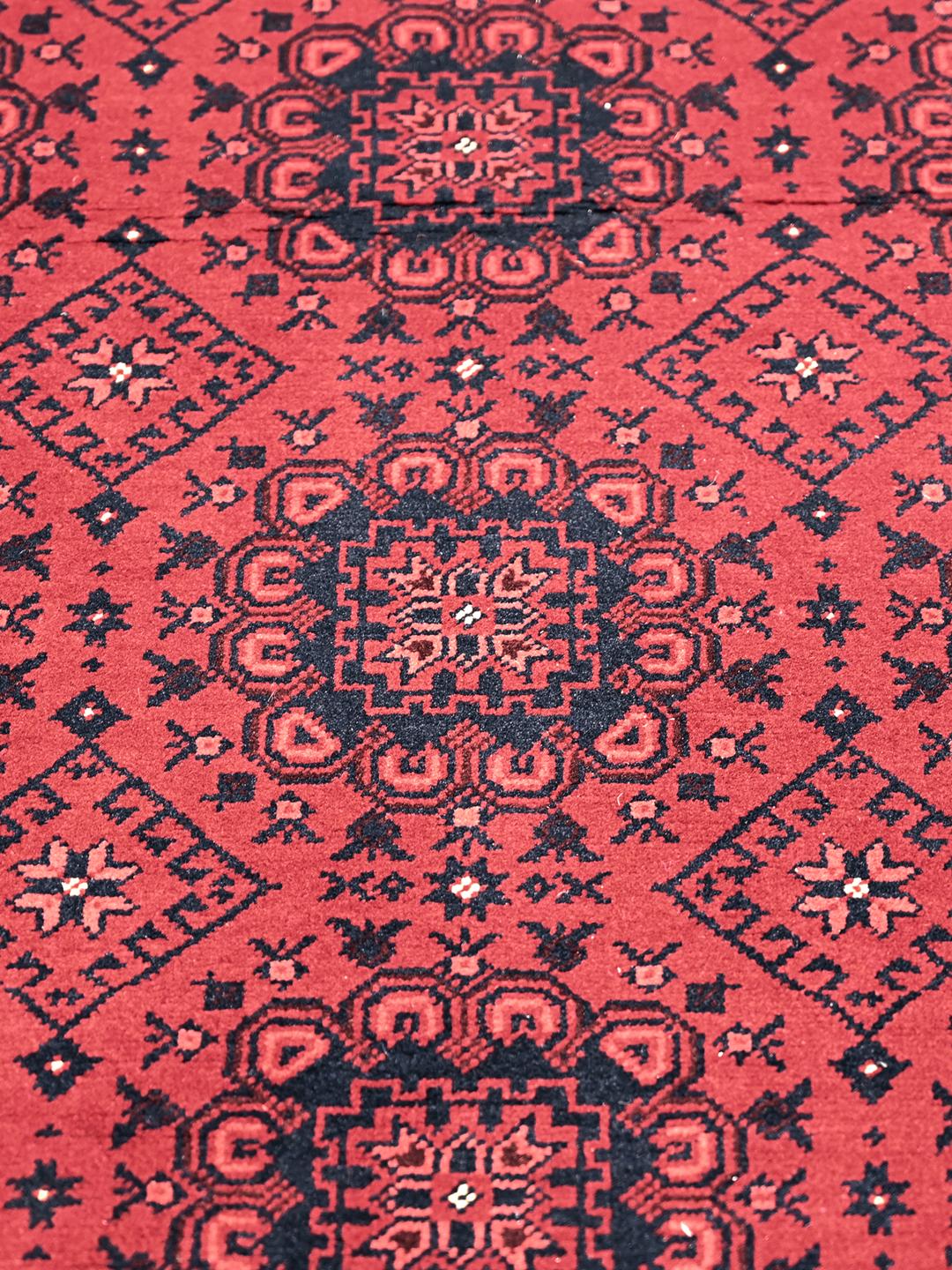
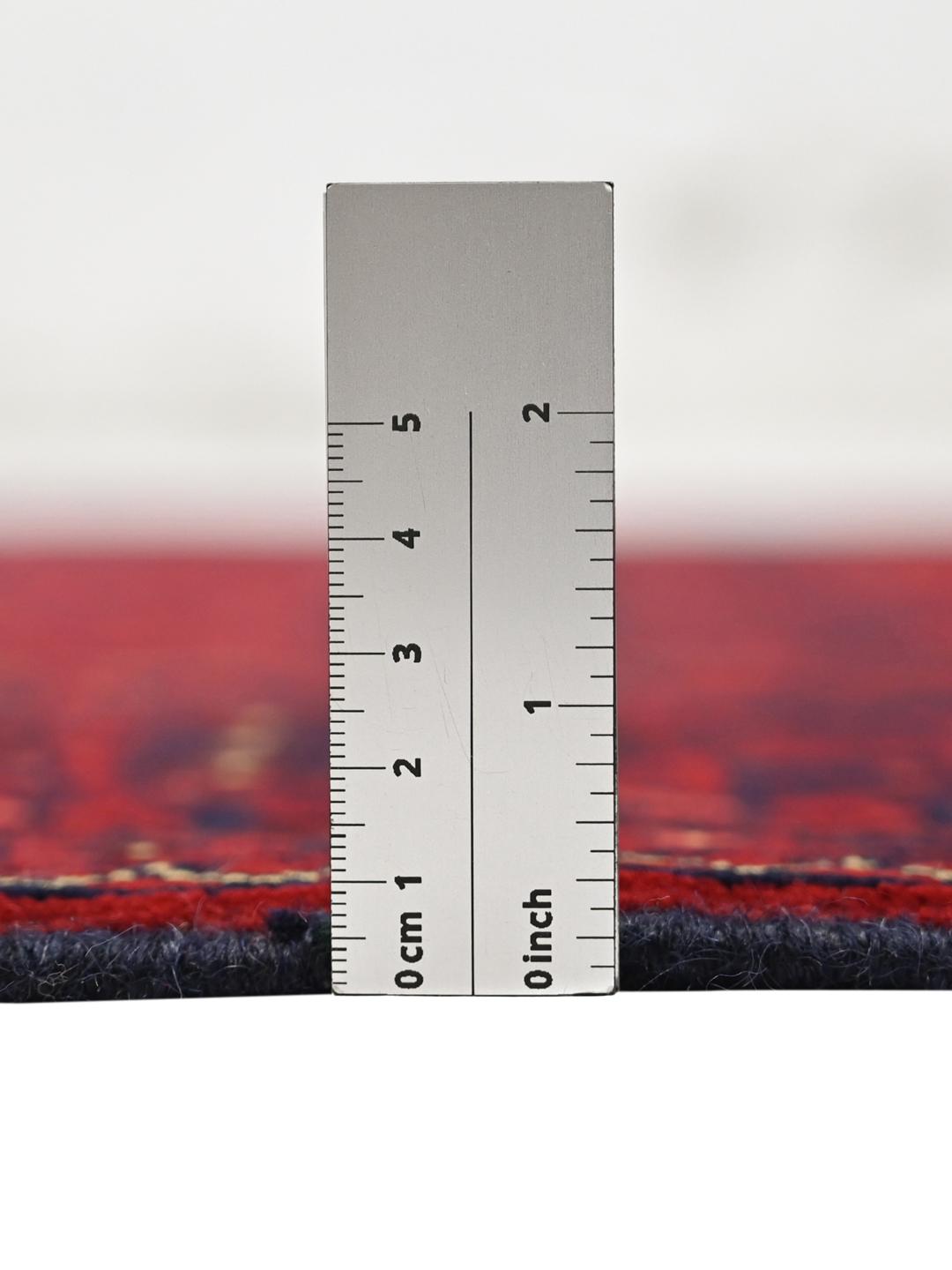
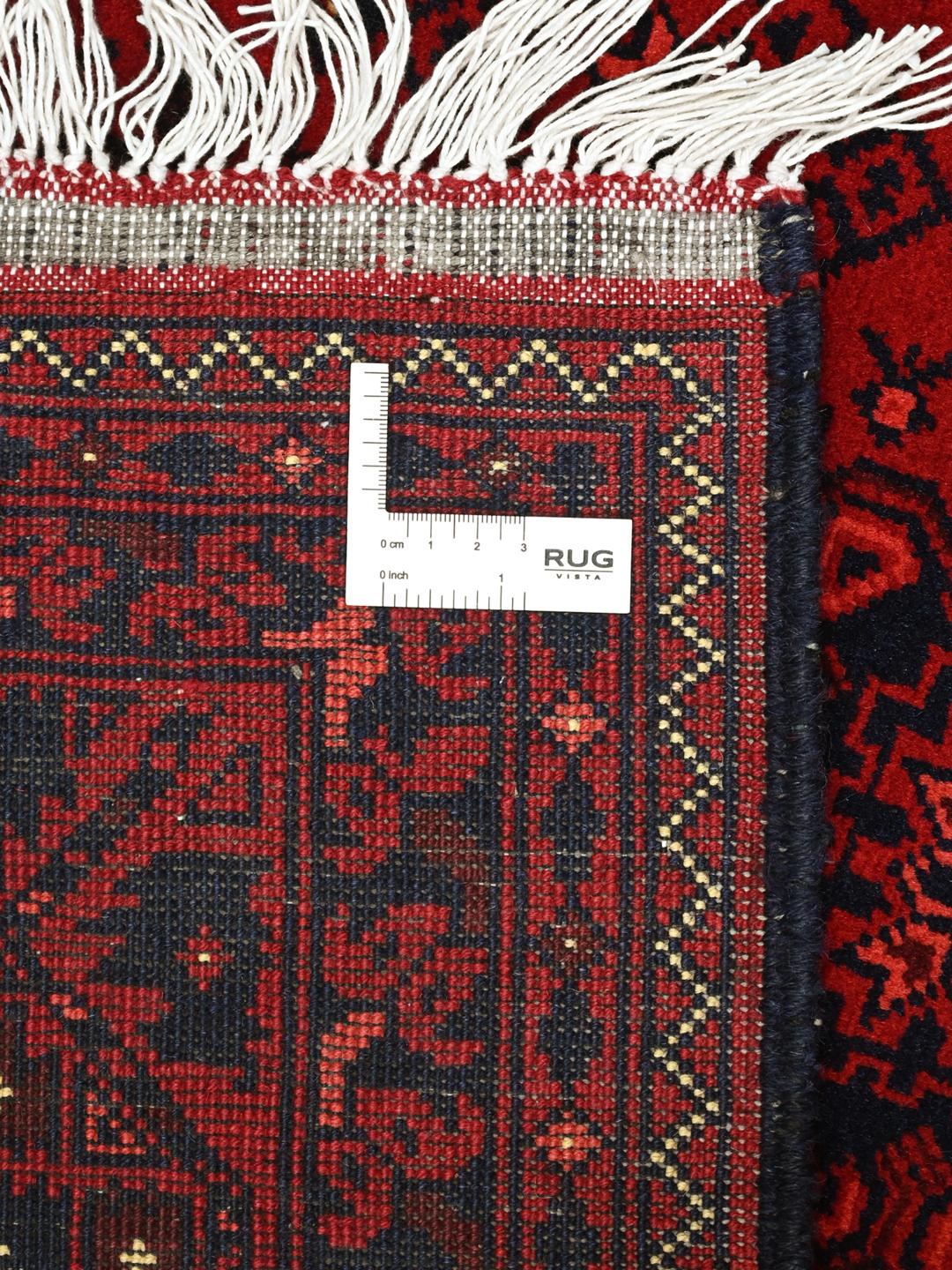
The term 'hand-knotted' refers to the traditional method where individual strands of Wool are tied onto a foundation of cotton. This technique is essential for the durability and the distinct, dense texture that characterises a genuine Kunduz rug. By using a foundation of cotton, the rug gains structural stability, ensuring it remains flat and robust even with heavy traffic, making it a reliable choice for long-term use.
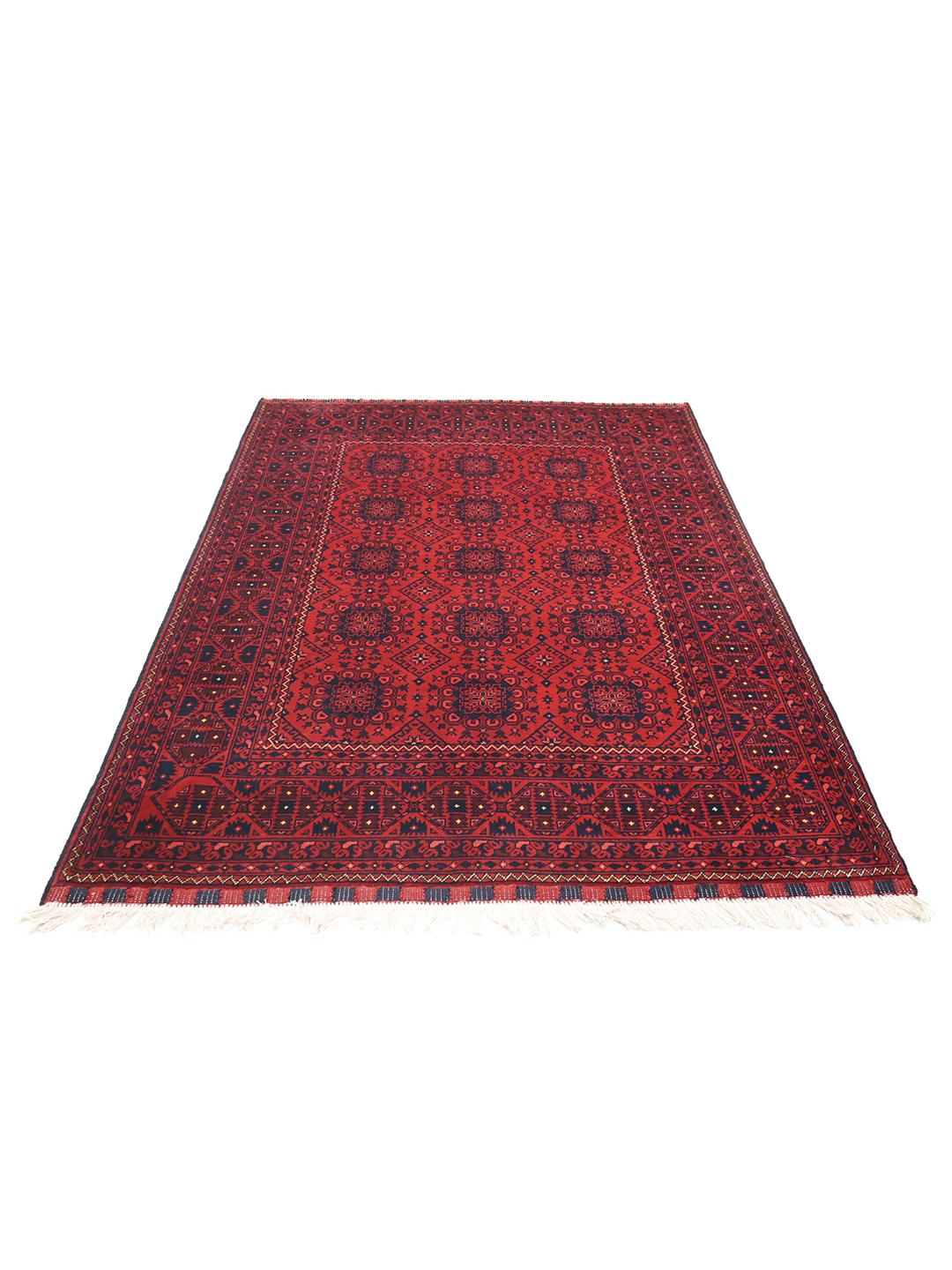
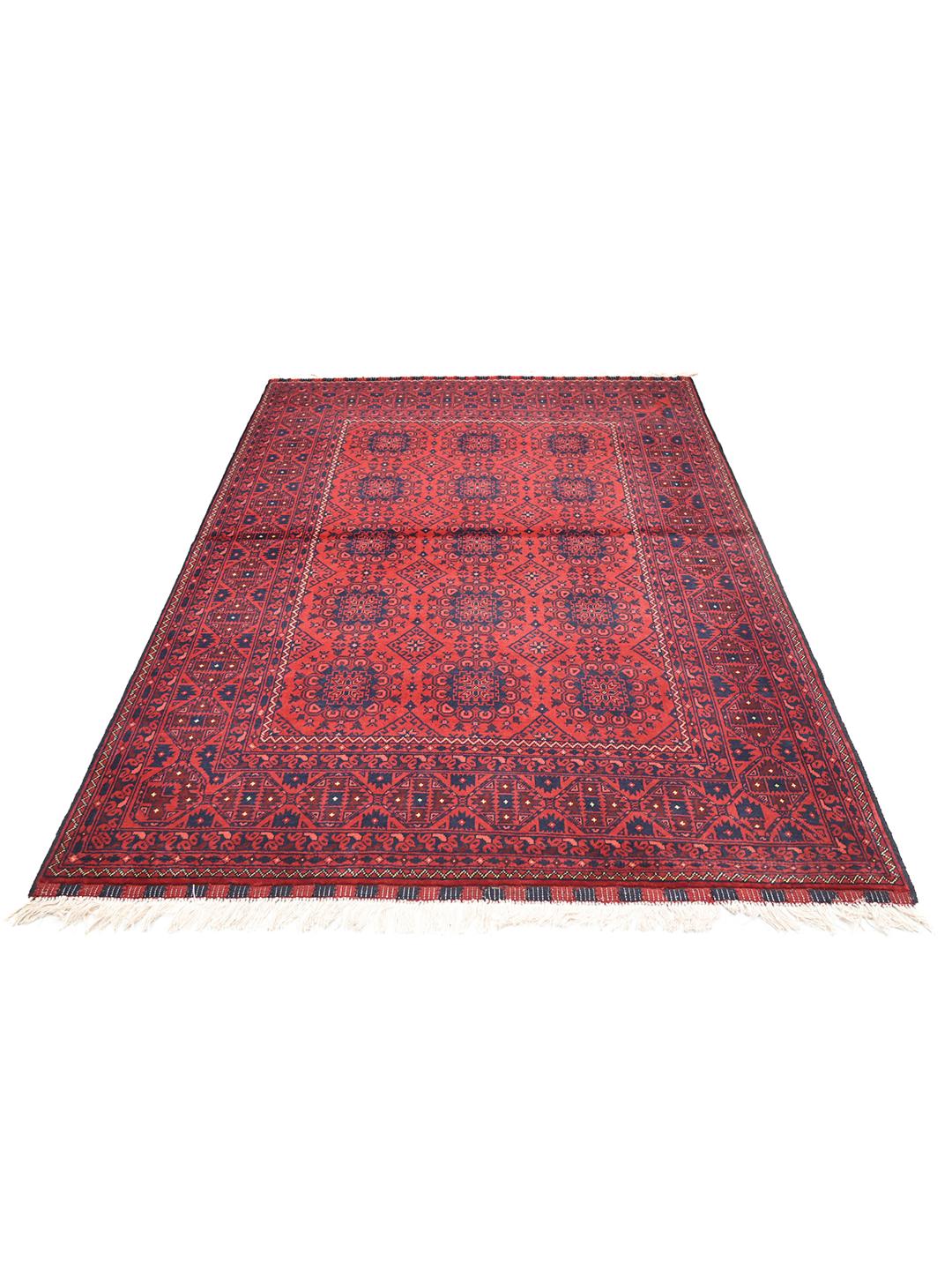
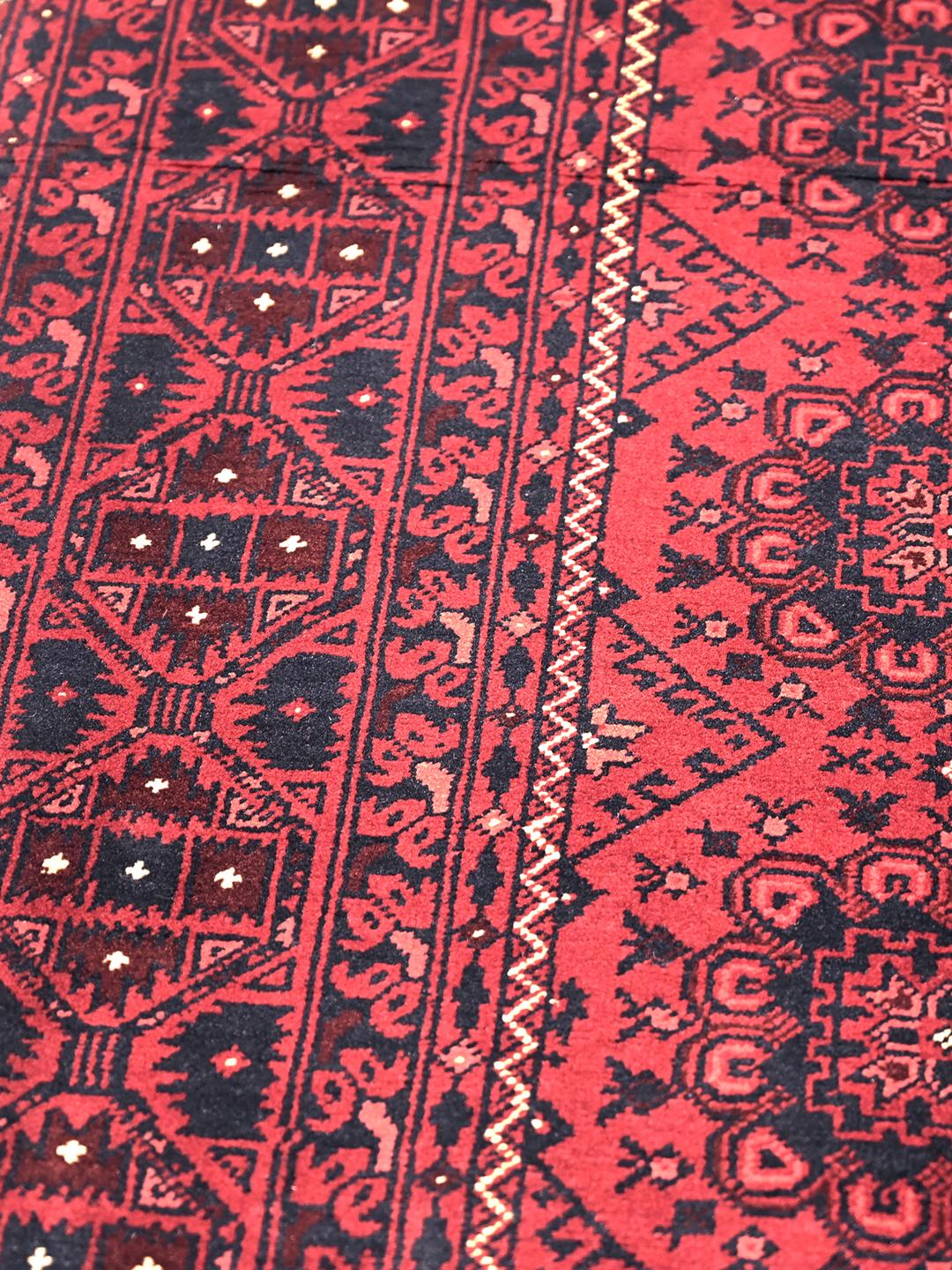
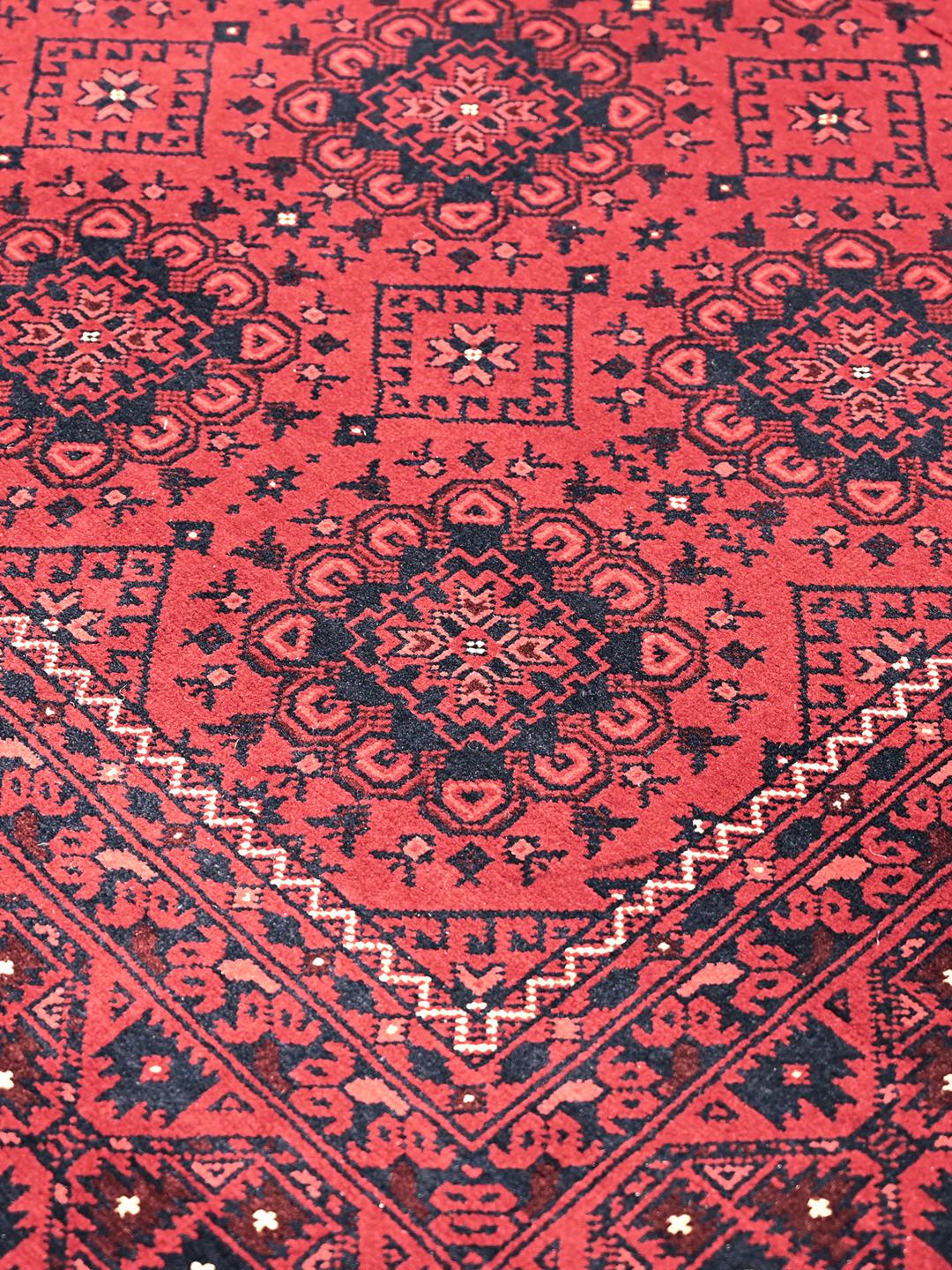
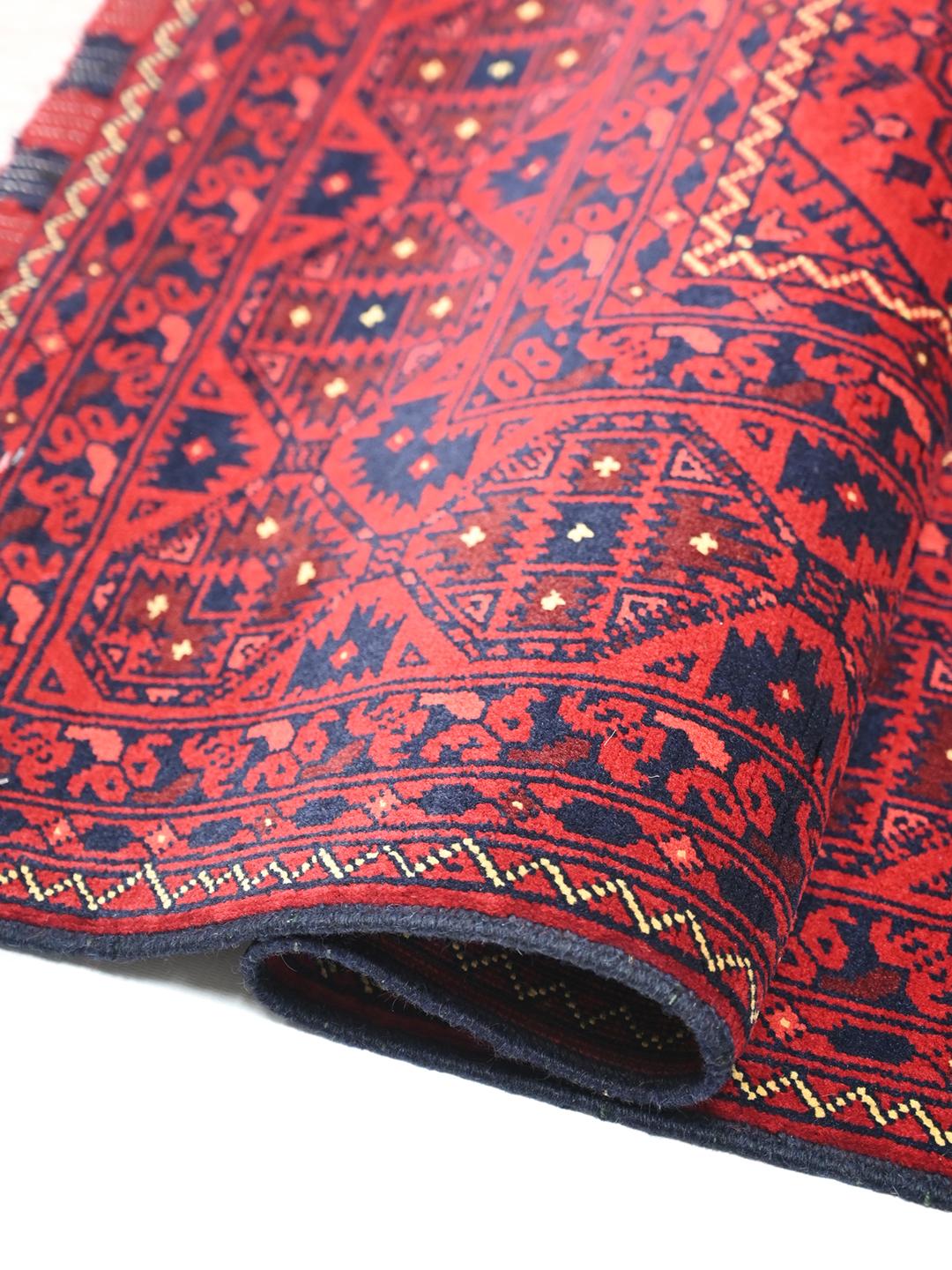
Visually, these rugs are defined by their repetitive medallion motifs, often referred to as 'guls', which are arranged in structured, rhythmic rows. These geometric patterns are enclosed by elaborate, wide borders that frame the field with precision. The specific combination of deep red and dark blue tones seen here is a hallmark of the region, symbolising strength and traditional elegance in local weaving circles.
Collectors value Kunduz rugs for their authentic connection to nomadic and village weaving heritage. Owning one is an opportunity to preserve a craft that has been passed down through generations. These pieces serve as a testament to the skill of the artisans and the enduring appeal of traditional geometric design, providing a sense of cultural depth and character that modern, mass-produced items cannot replicate.