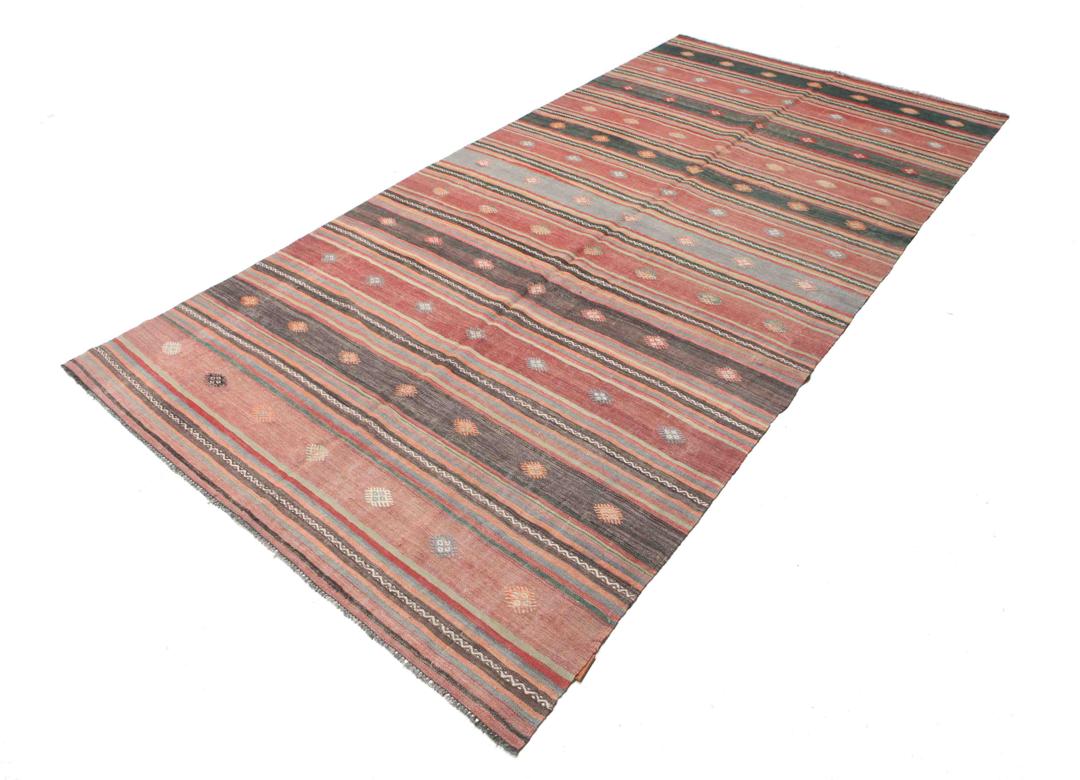
Kilims are flat-woven rugs that hold a profound place in the history of the Middle East and Central Asia. Historically, these rugs were created by nomadic and semi-nomadic tribes for practical use, serving as floor coverings, tent dividers, and storage bags. The transition from purely utilitarian objects to celebrated decorative pieces reflects the deep cultural significance and the endurance of these traditional weaving methods.
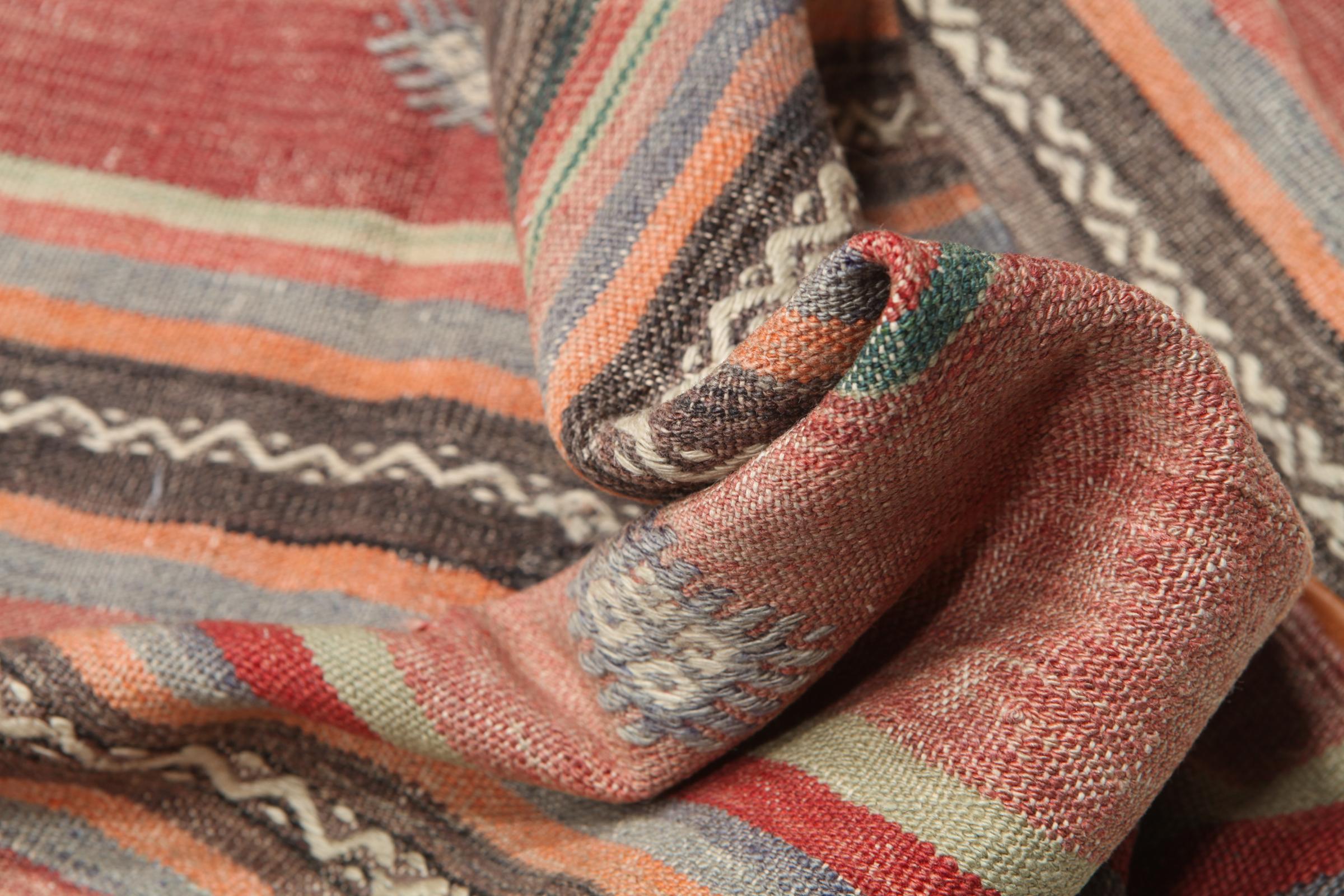
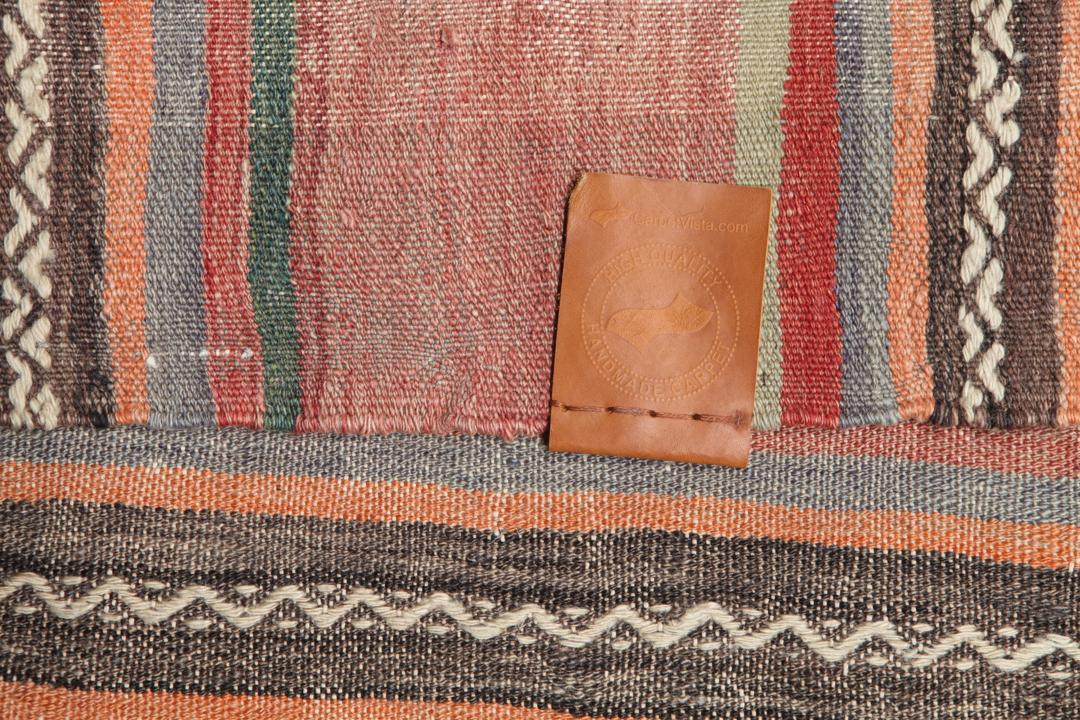
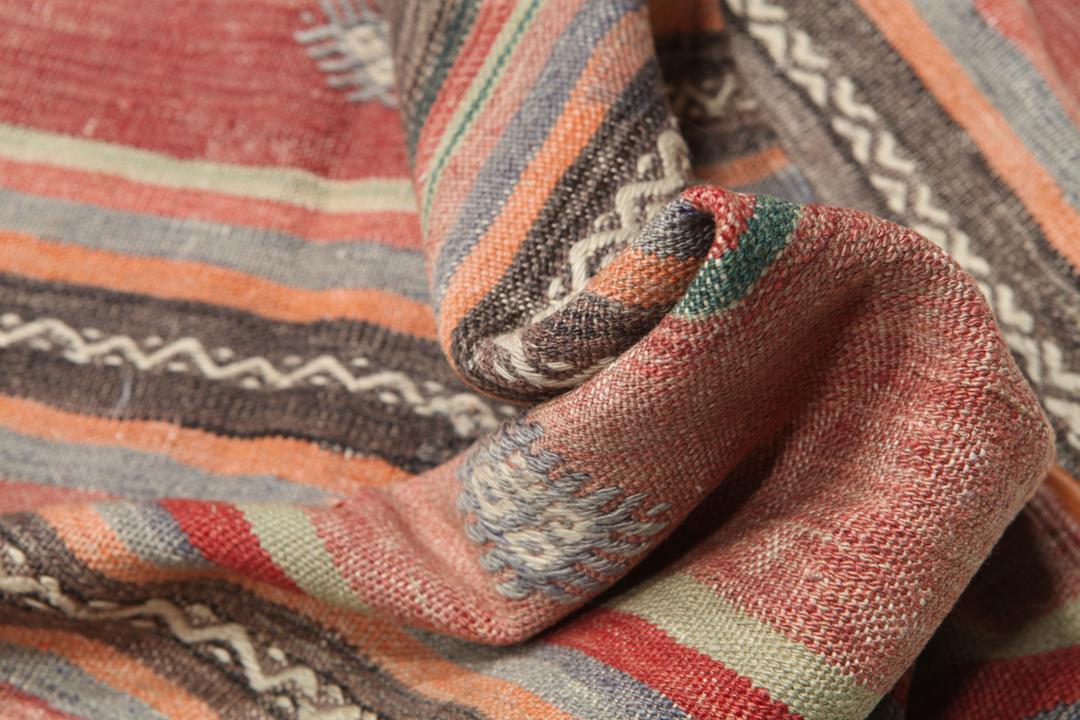
The term 'kilim' refers to the specific technique of interweaving the coloured weft threads with the warp to create a flat, pattern-rich surface. This method is distinct because it does not involve a pile, resulting in a lightweight yet incredibly strong fabric. The precision required to maintain consistent tension across such a broad surface is a testament to the skill level of the weavers who have passed these techniques down through generations.
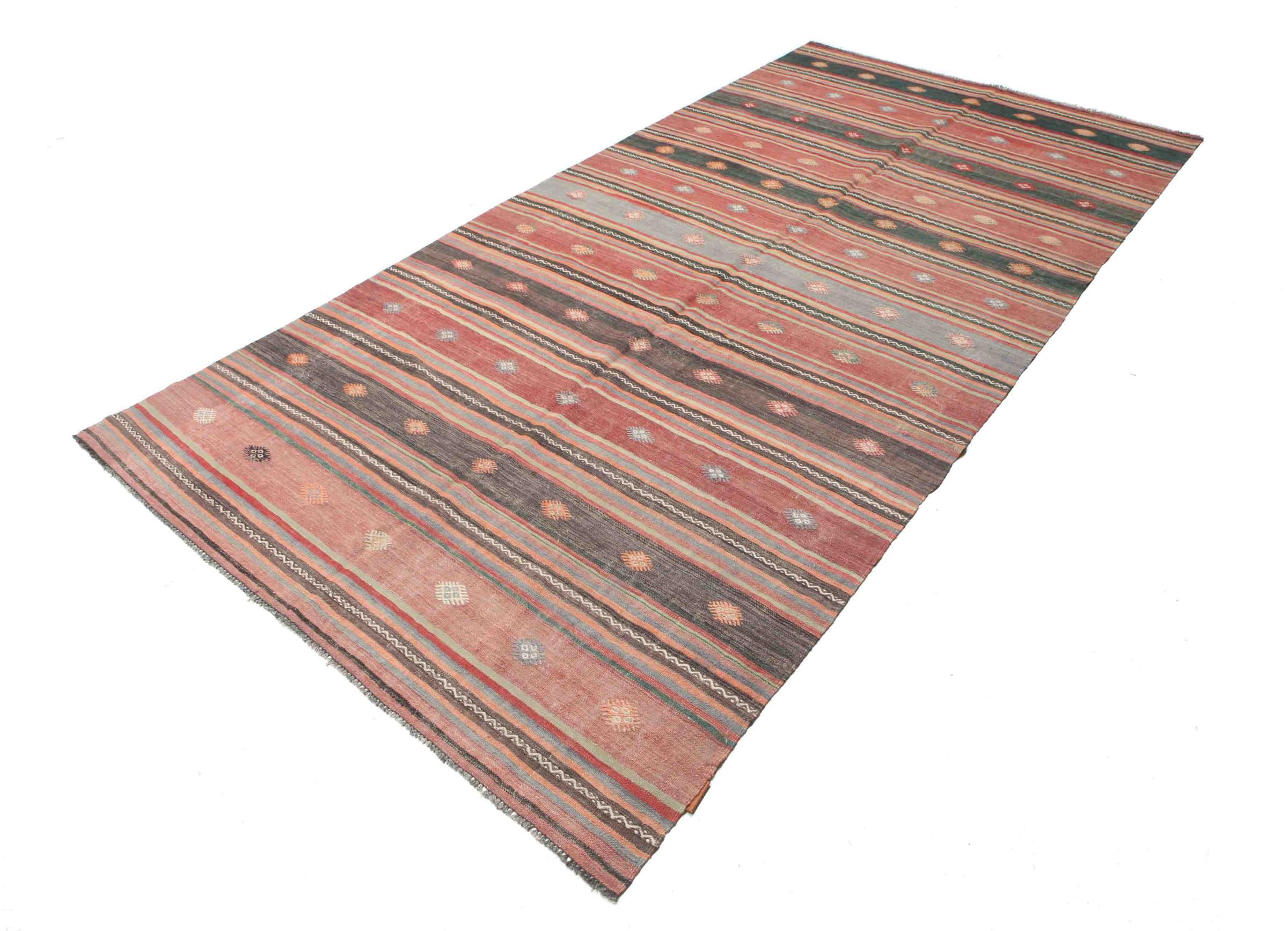
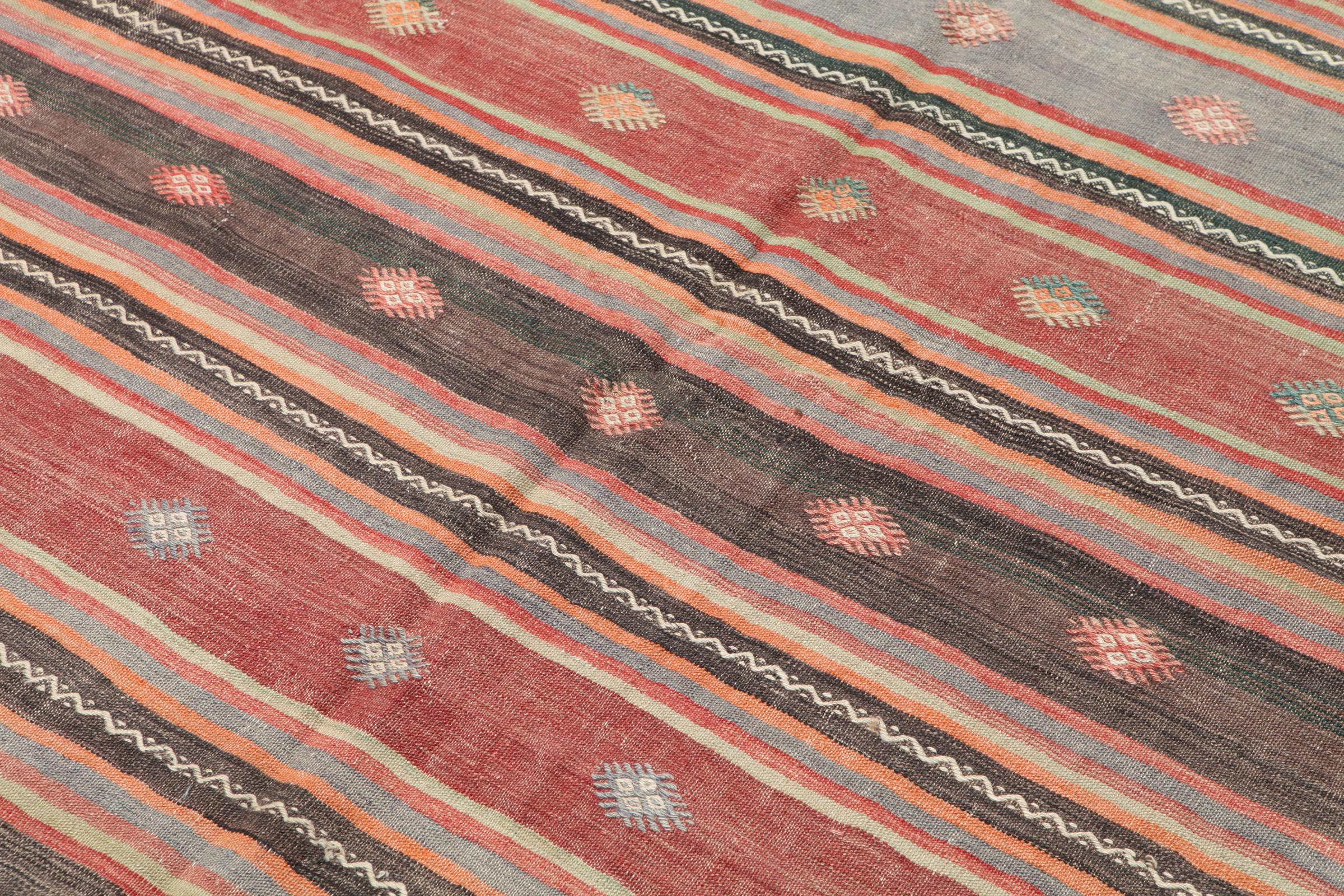
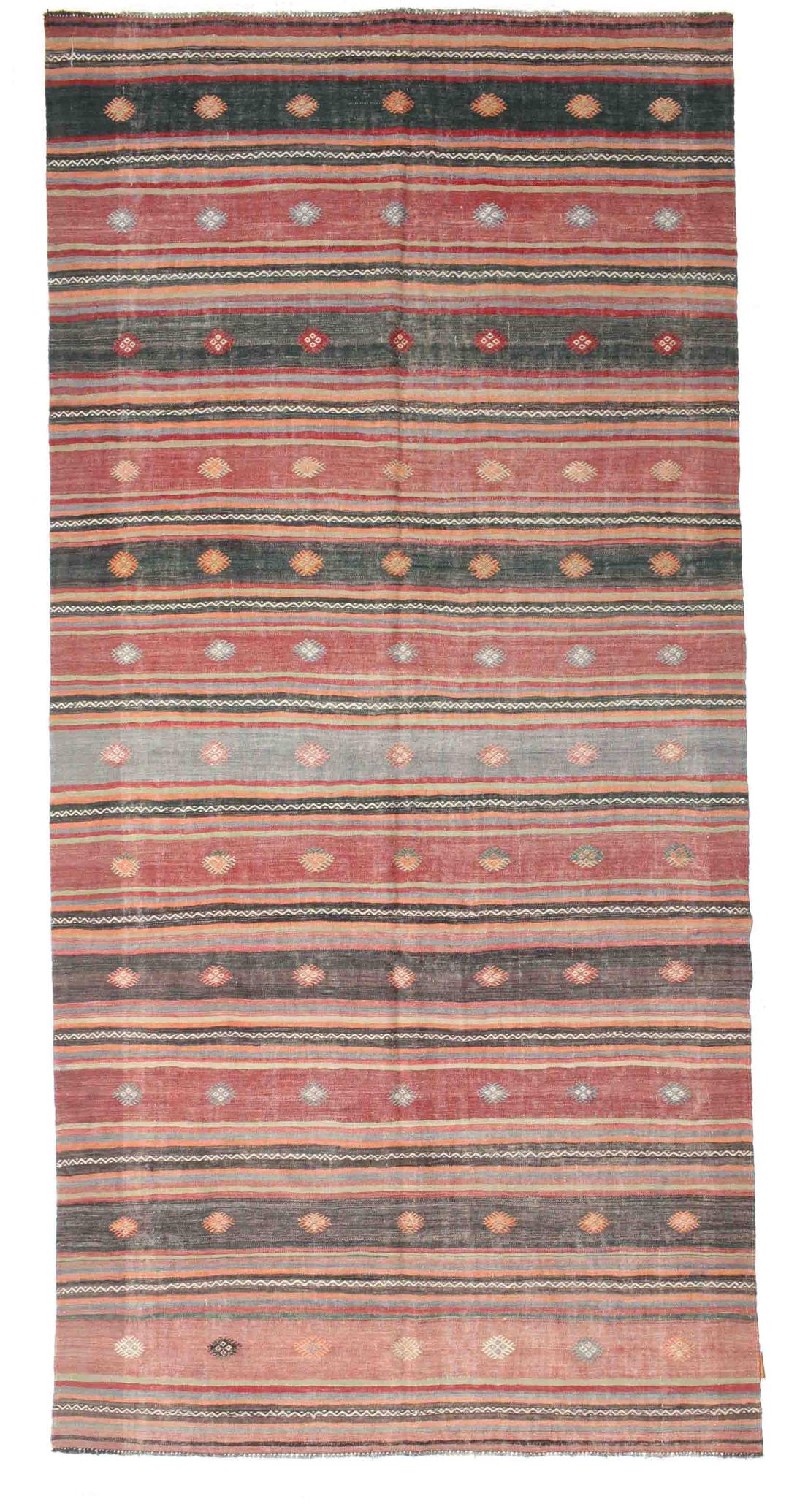
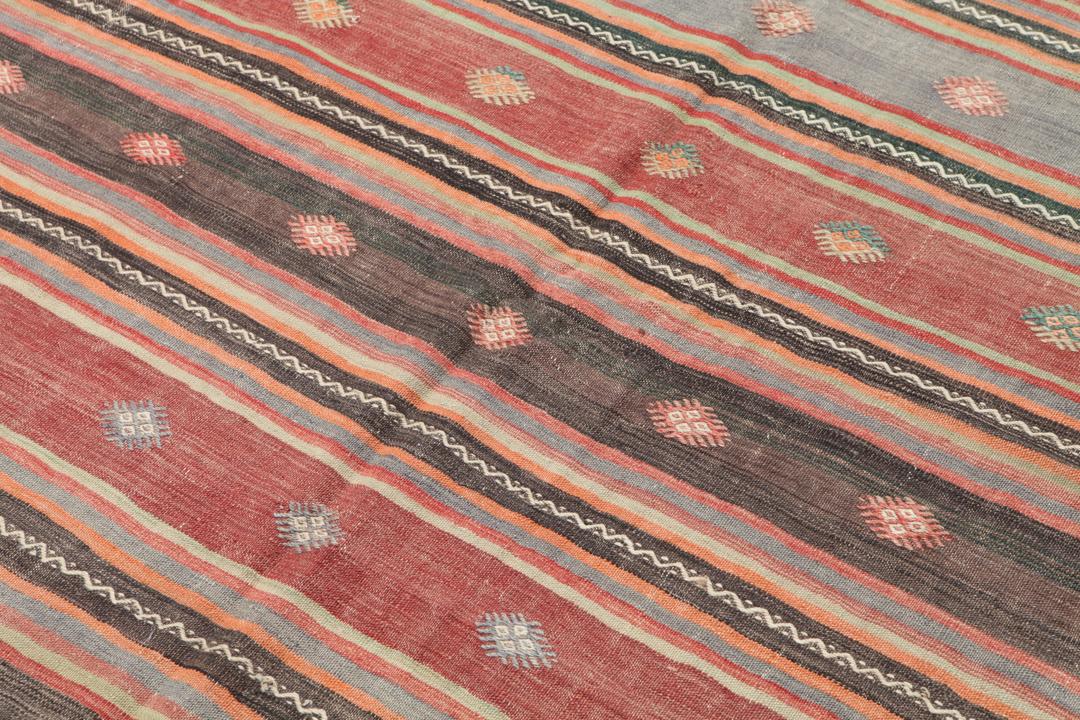
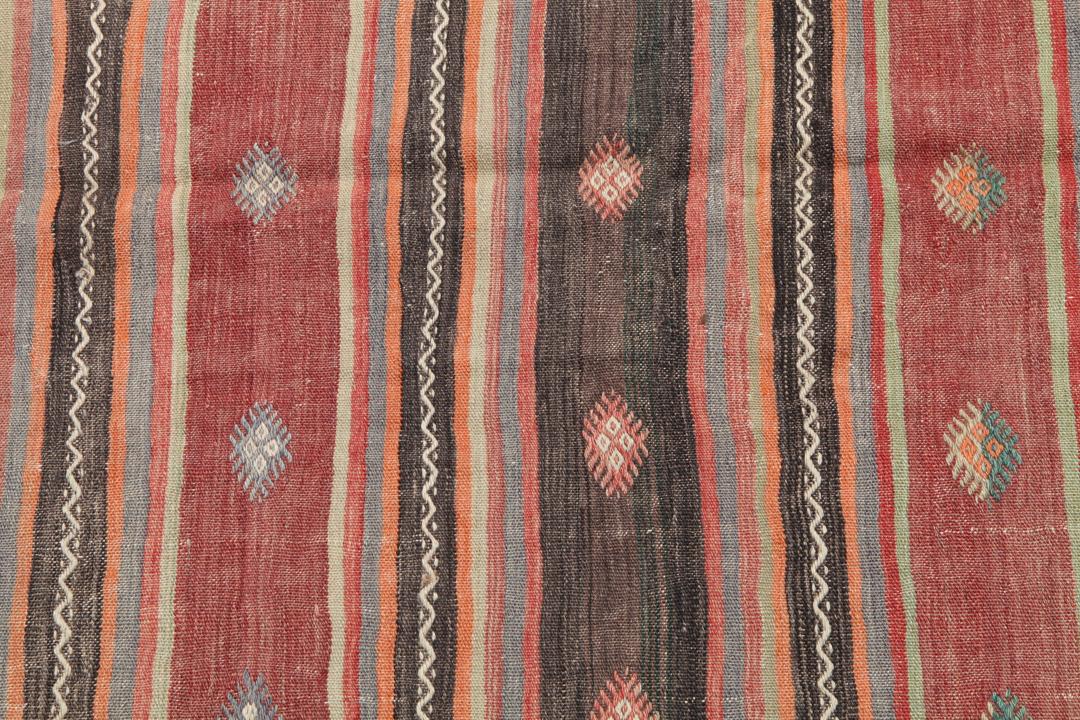
Visually, kilims are defined by their geometric motifs, often featuring diamonds, triangles, and intricate borders. The use of stripes is a classic design element that organises the field and allows for the creative interplay of colours. This particular rug features a harmonious arrangement of stripes and small decorative motifs, which are characteristic of the aesthetic traditions found in Turkish weaving regions.
Today, vintage kilims are highly sought after by collectors and those who appreciate authentic craft. Owning a piece like this is a way to connect with a long-standing heritage of skill and artistic expression. Each rug tells a story of its origin, reflecting the specific dyes, patterns, and cultural influences of the region where it was made, ensuring that your home is enriched by a piece of genuine history.