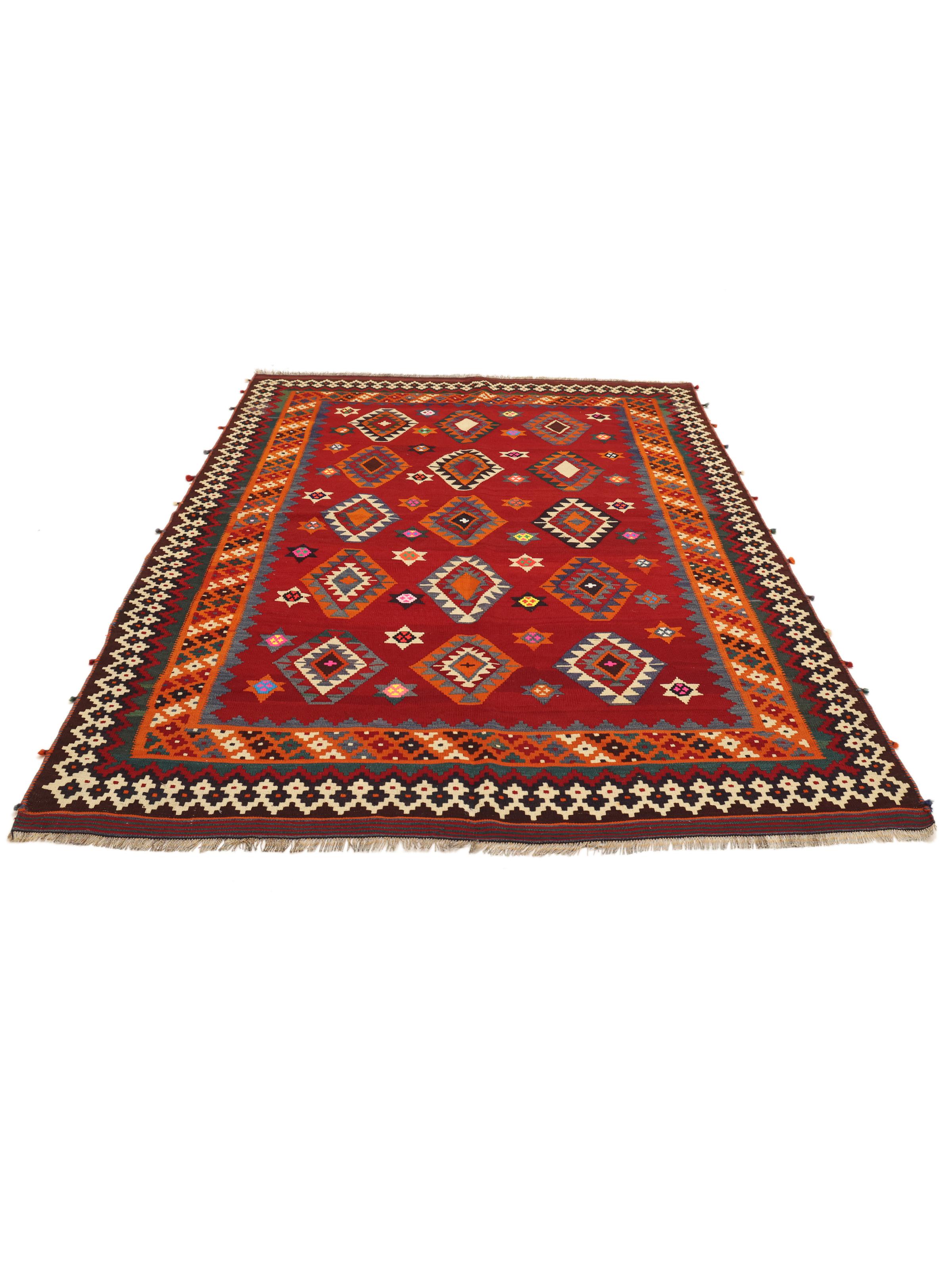
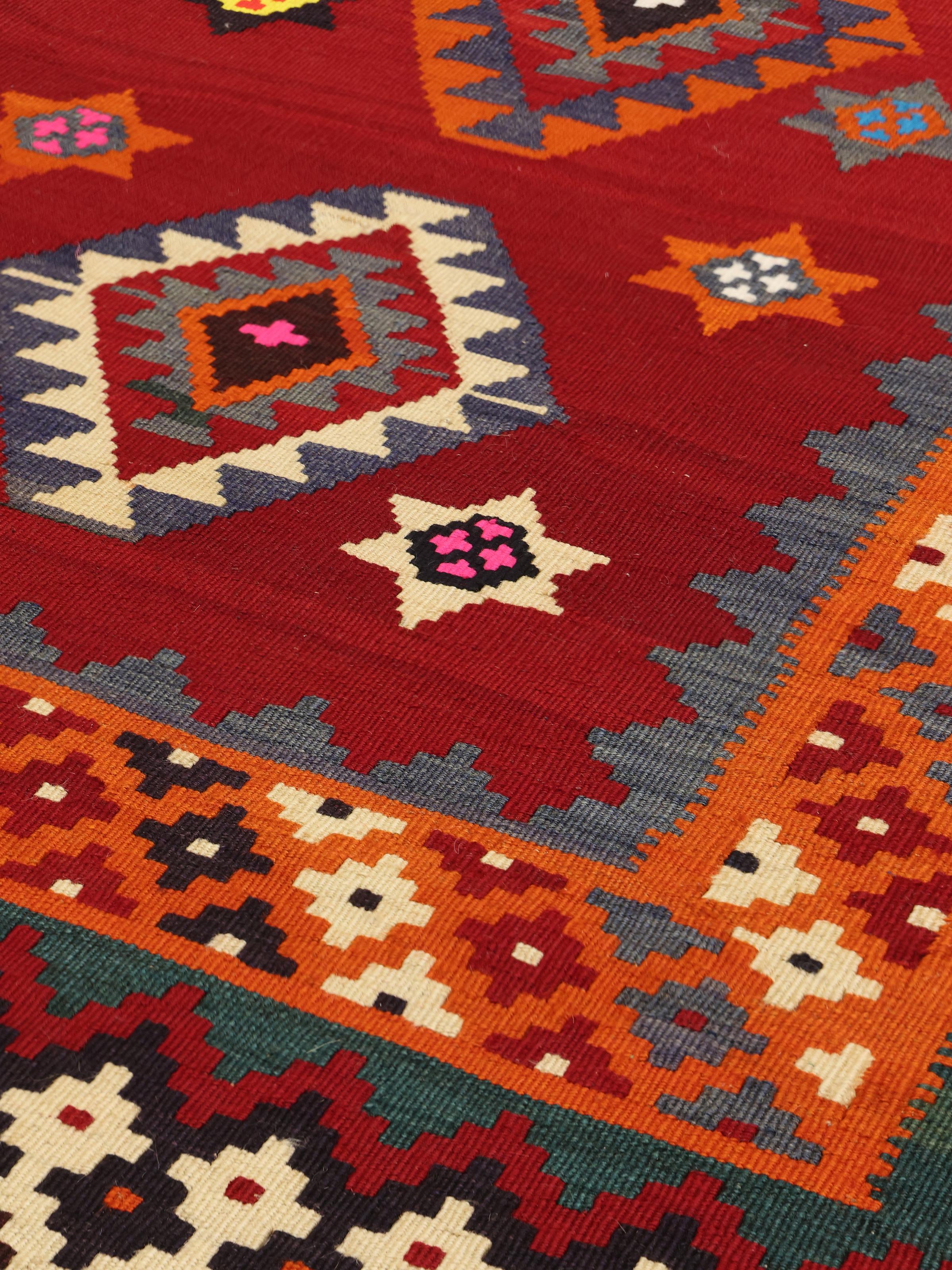
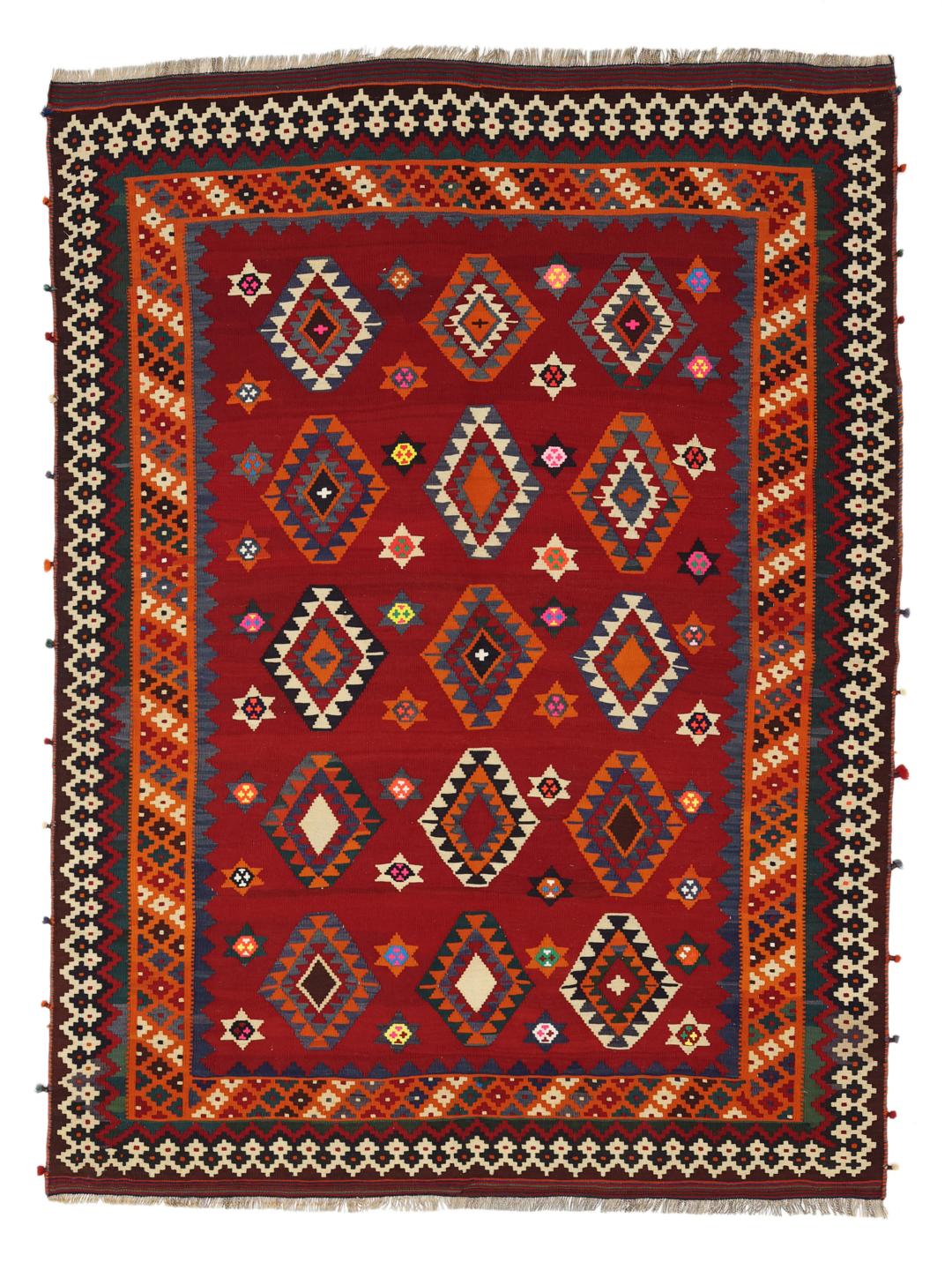
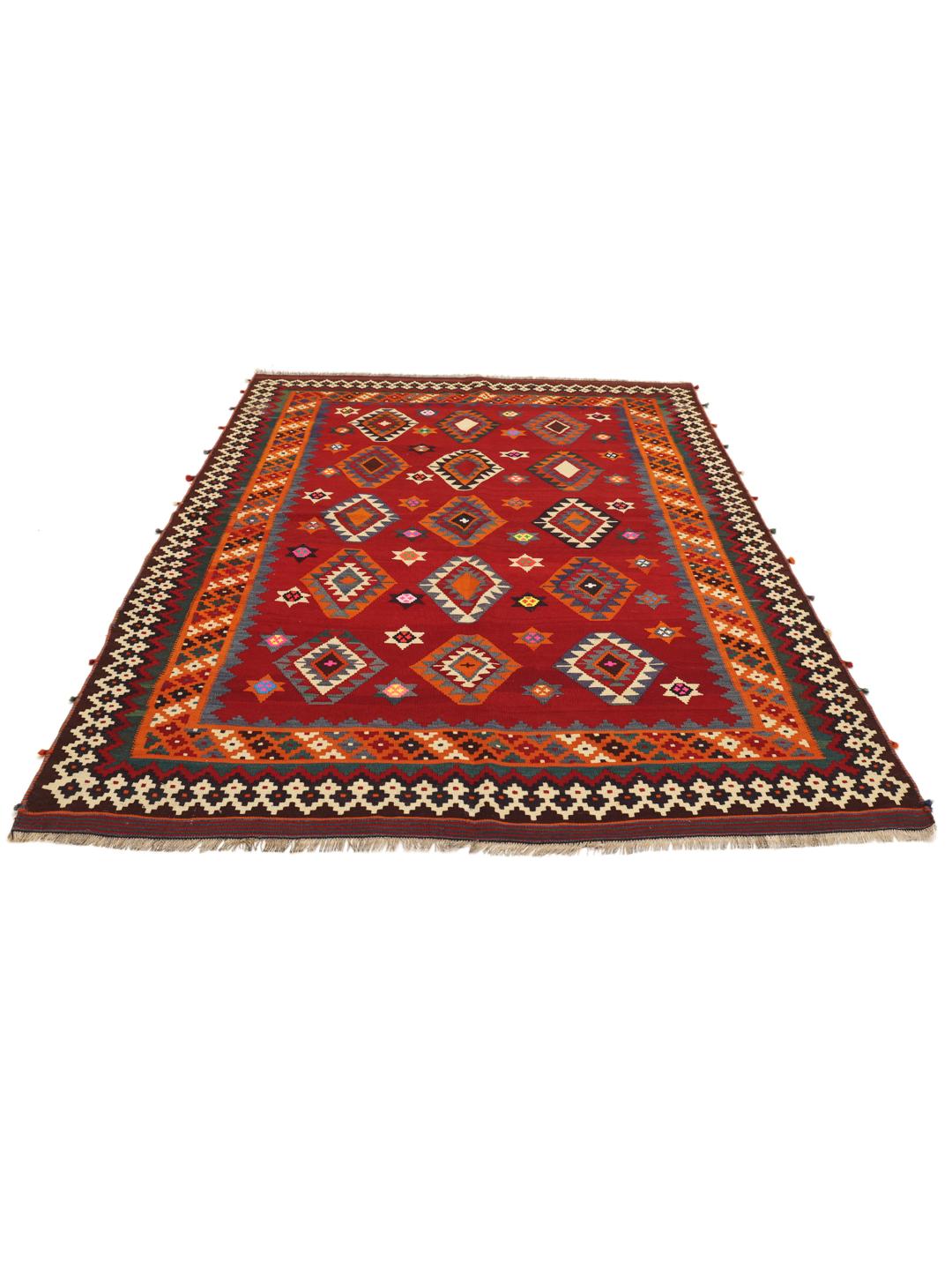
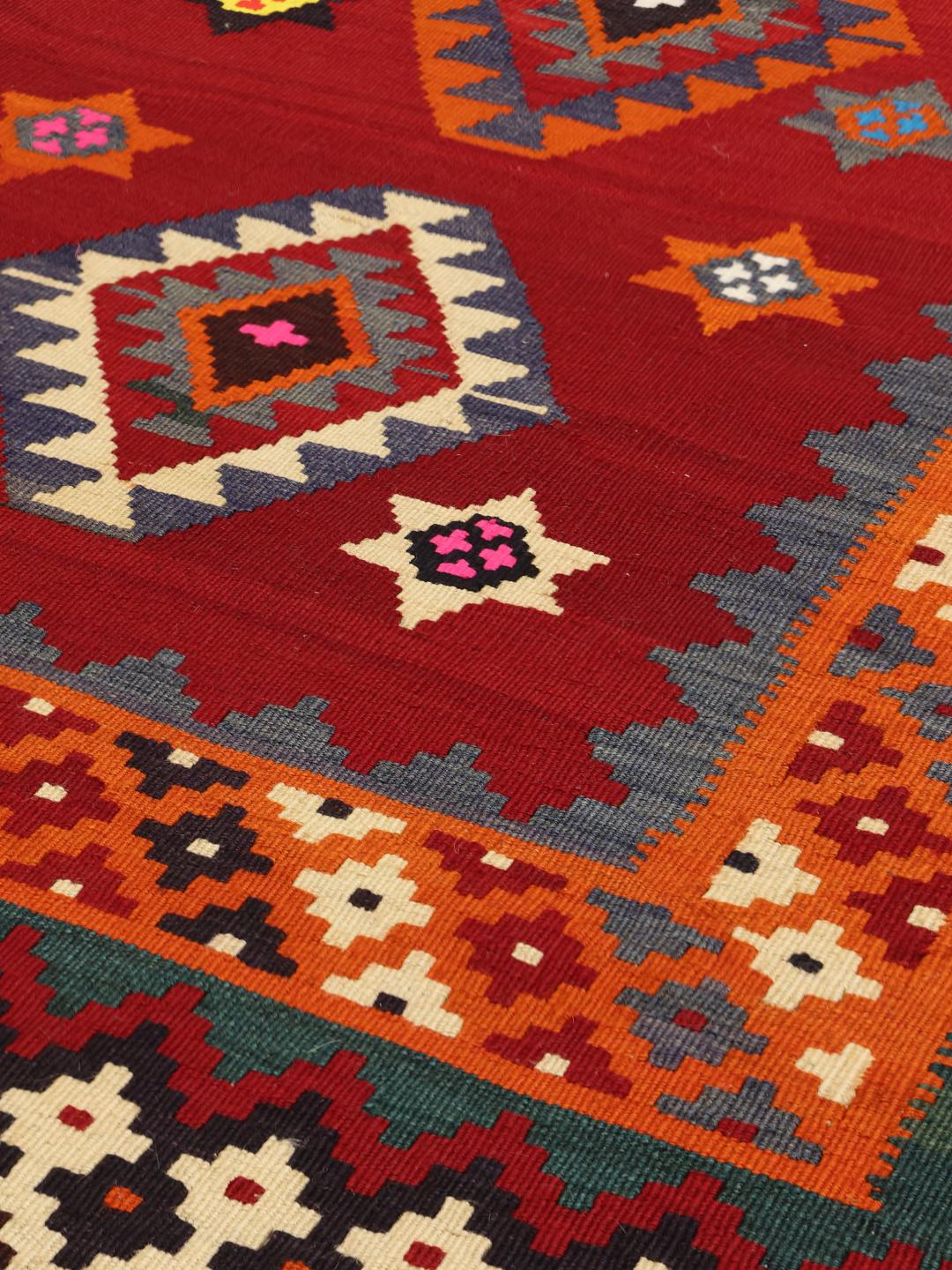
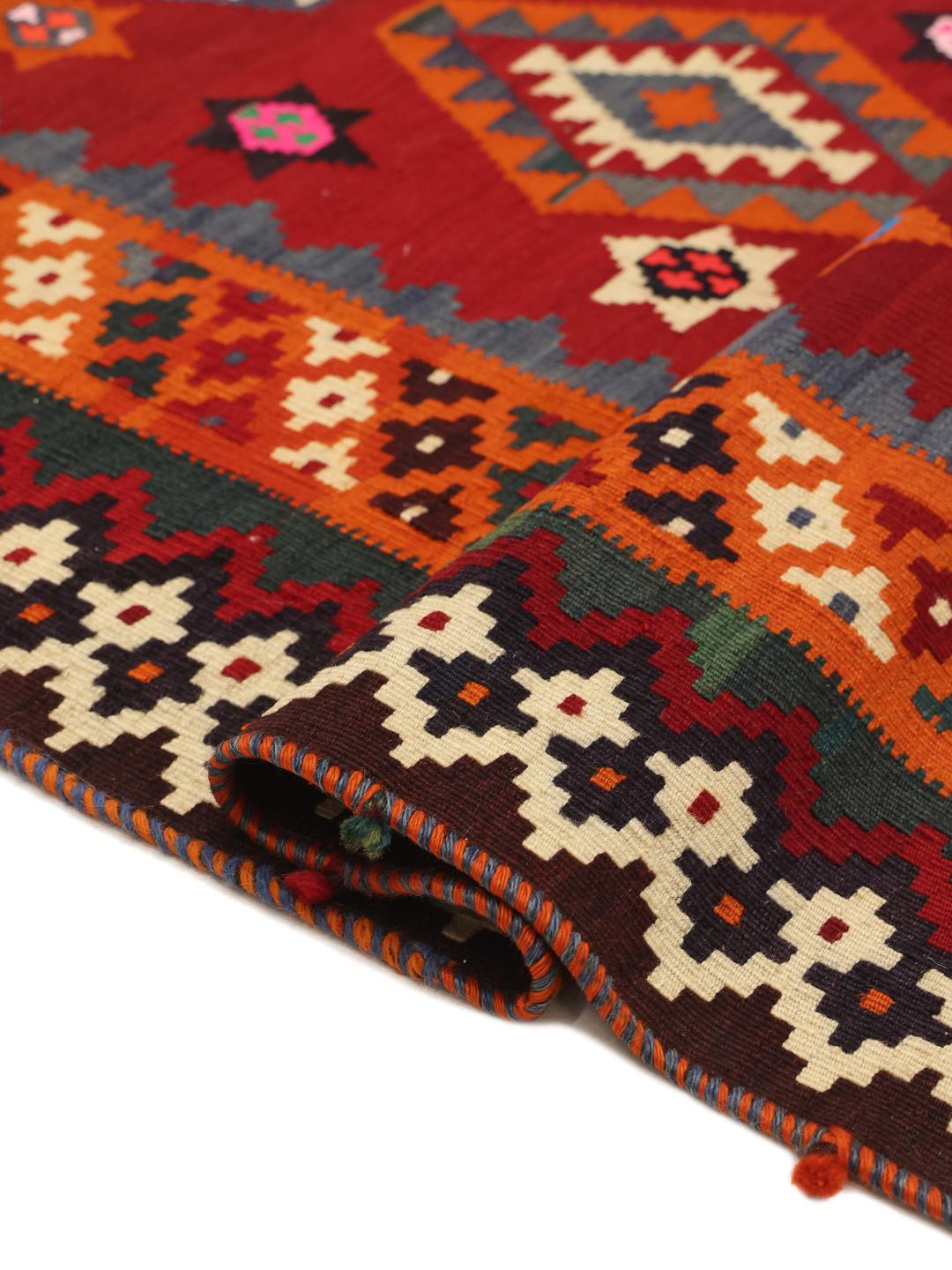
Kilim weaving is one of the oldest textile traditions in the world, originating across the historic trade routes and pastoral communities of Anatolia in modern-day Turkey. Unlike piled carpets, Kilims are created using a flatweave technique where warp and weft strands are tightly interwoven to produce a smooth, lightweight tapestry with no raised pile.
The term vintage in Turkish Kilims typically denotes rugs that are between 20 and 50 years old. These pieces come from an era when natural materials were used almost exclusively and rugs were woven primarily for domestic use rather than mass export, giving them an authenticity and durability that modern factory items cannot match.
The geometric diamonds and star-like symbols woven across this red field belong to an ancient visual vocabulary passed down through generations of Anatolian weavers. Traditionally, specific motifs served as symbols of protection, good fortune, and tribal identity, making each handwoven piece a personal story told through thread.
Today, vintage Kilims are highly sought after by collectors and interior designers alike for their ability to bring history, color, and soul into contemporary homes. Acquiring a vintage handwoven piece means preserving a fragment of regional heritage that only grows more distinguished with time.