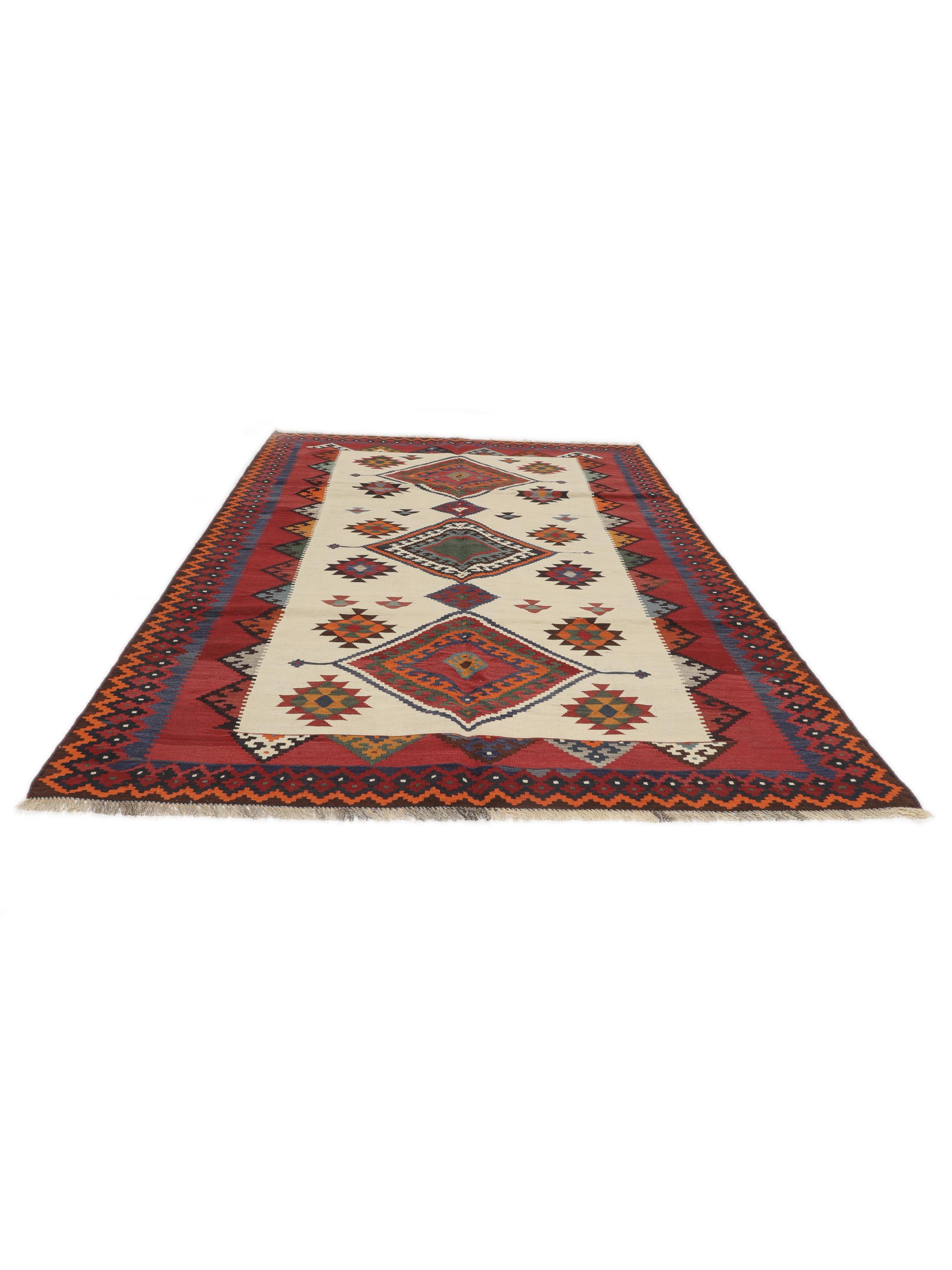
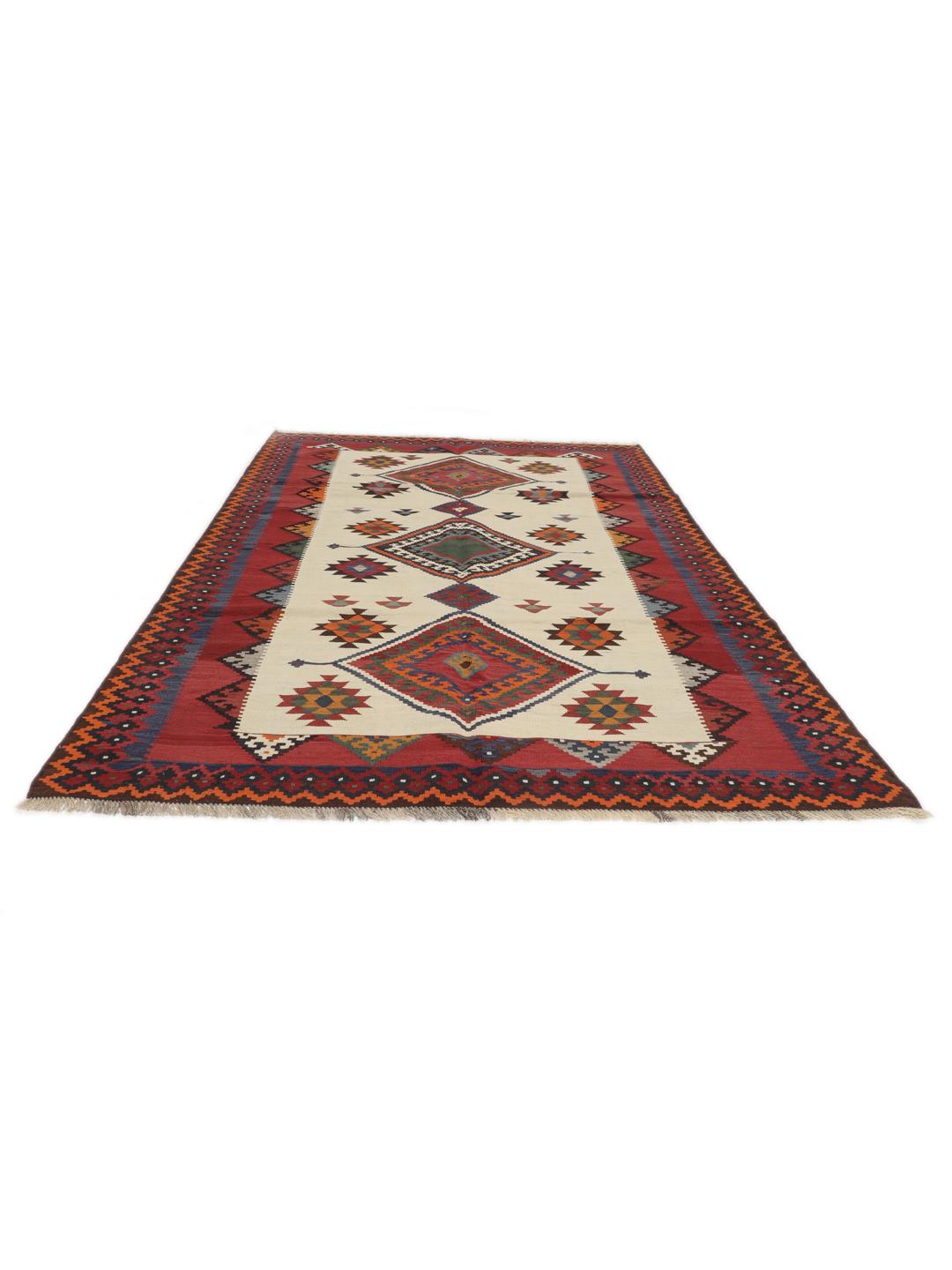
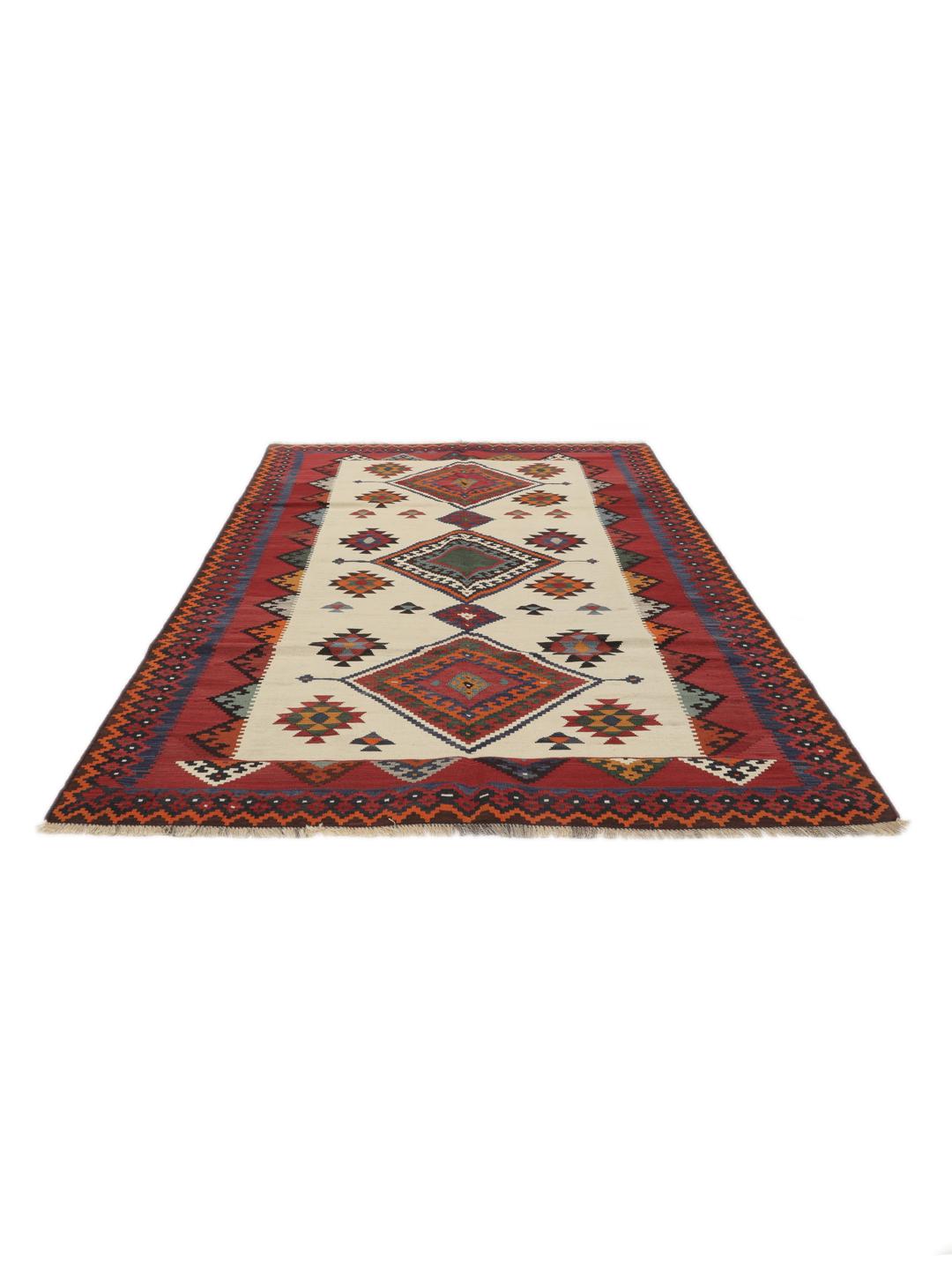
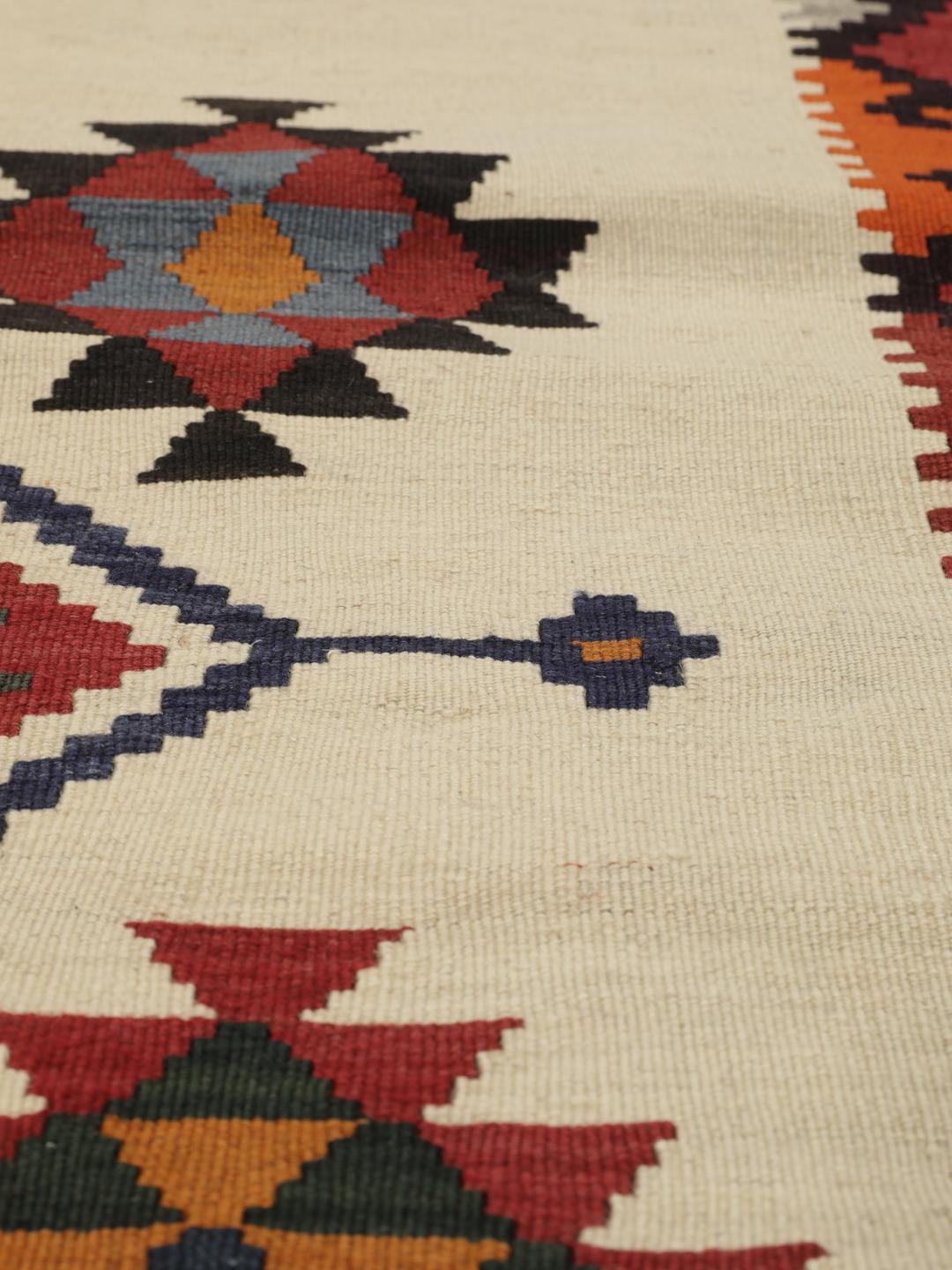
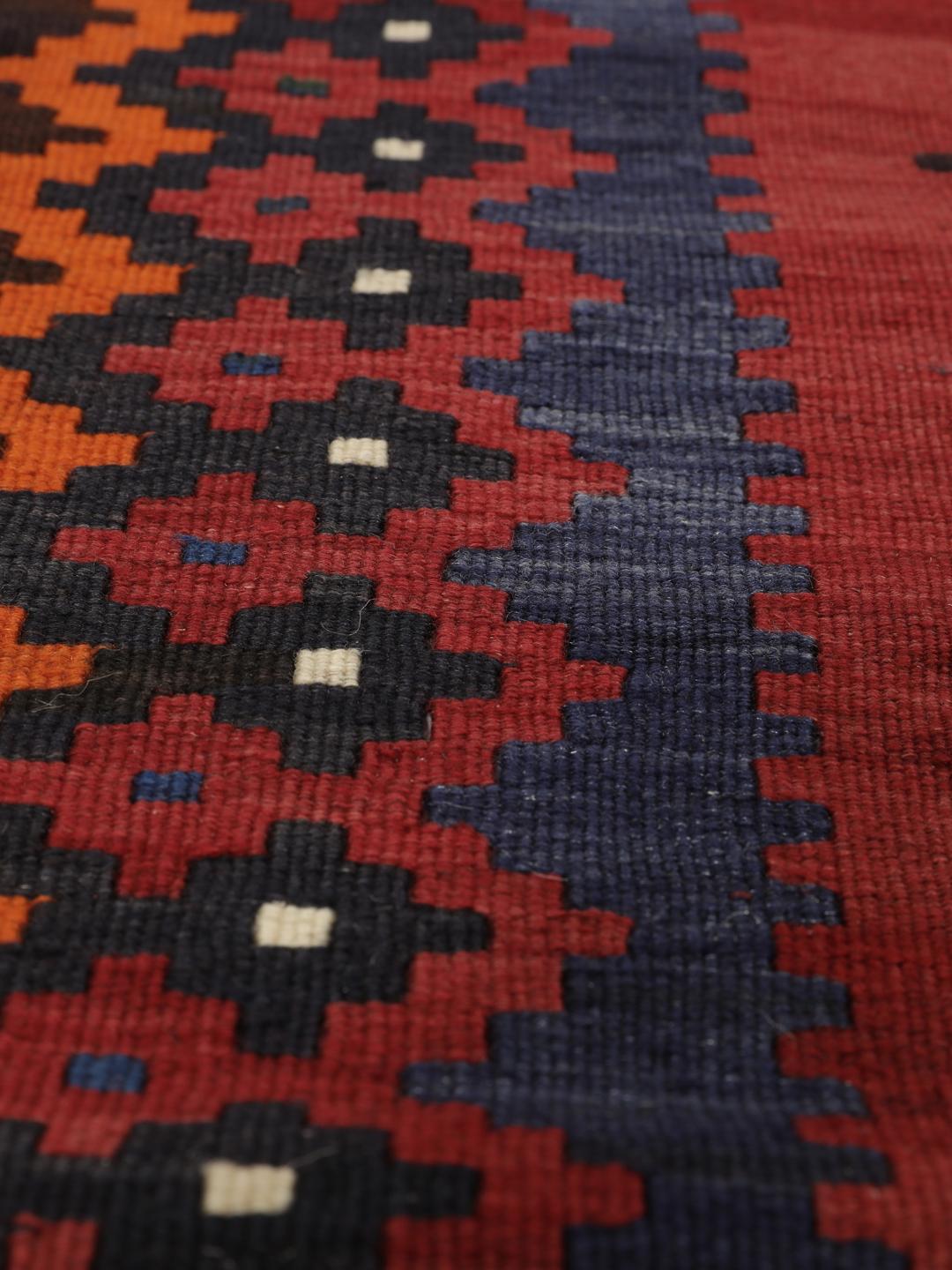
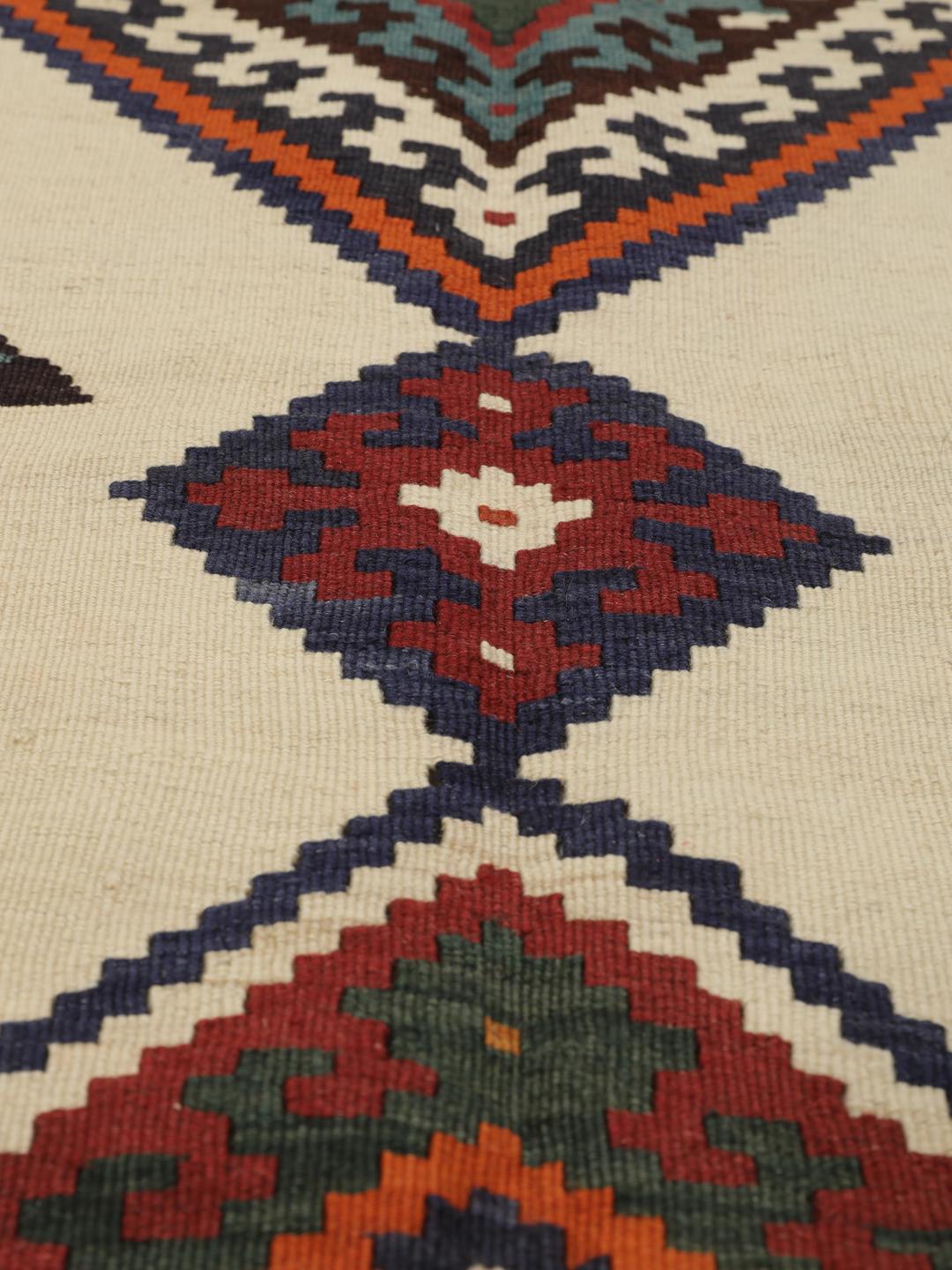
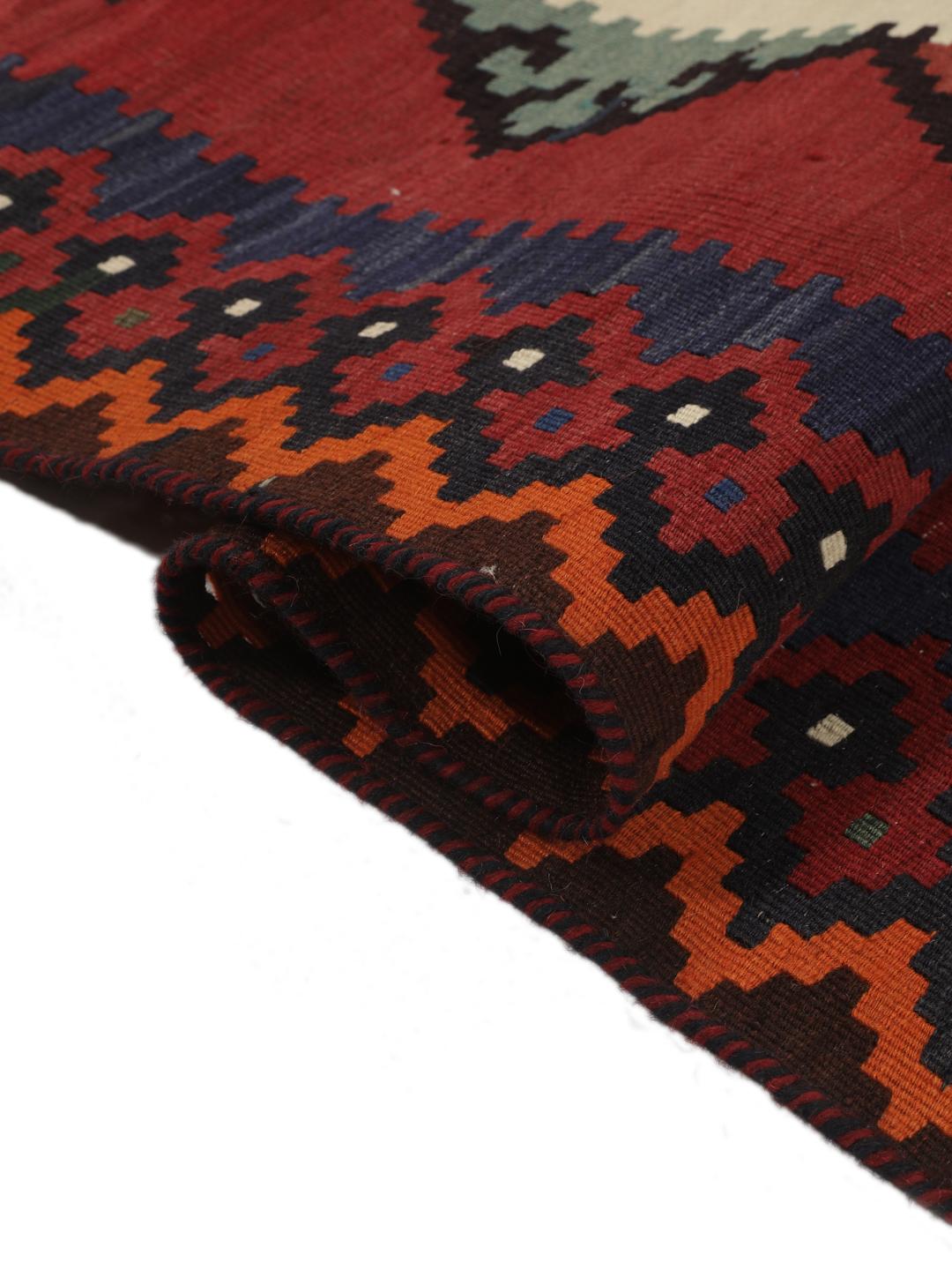
Kilim rugs are a foundational element of Middle Eastern textile history, rooted in the nomadic traditions of the region. Historically, these flat-woven rugs were essential to daily life, serving as floor coverings, blankets, and storage bags for travelling tribes. The evolution of these textiles reflects a deep connection to the environment, as the patterns and colours were often inspired by the surrounding landscapes and local folklore.
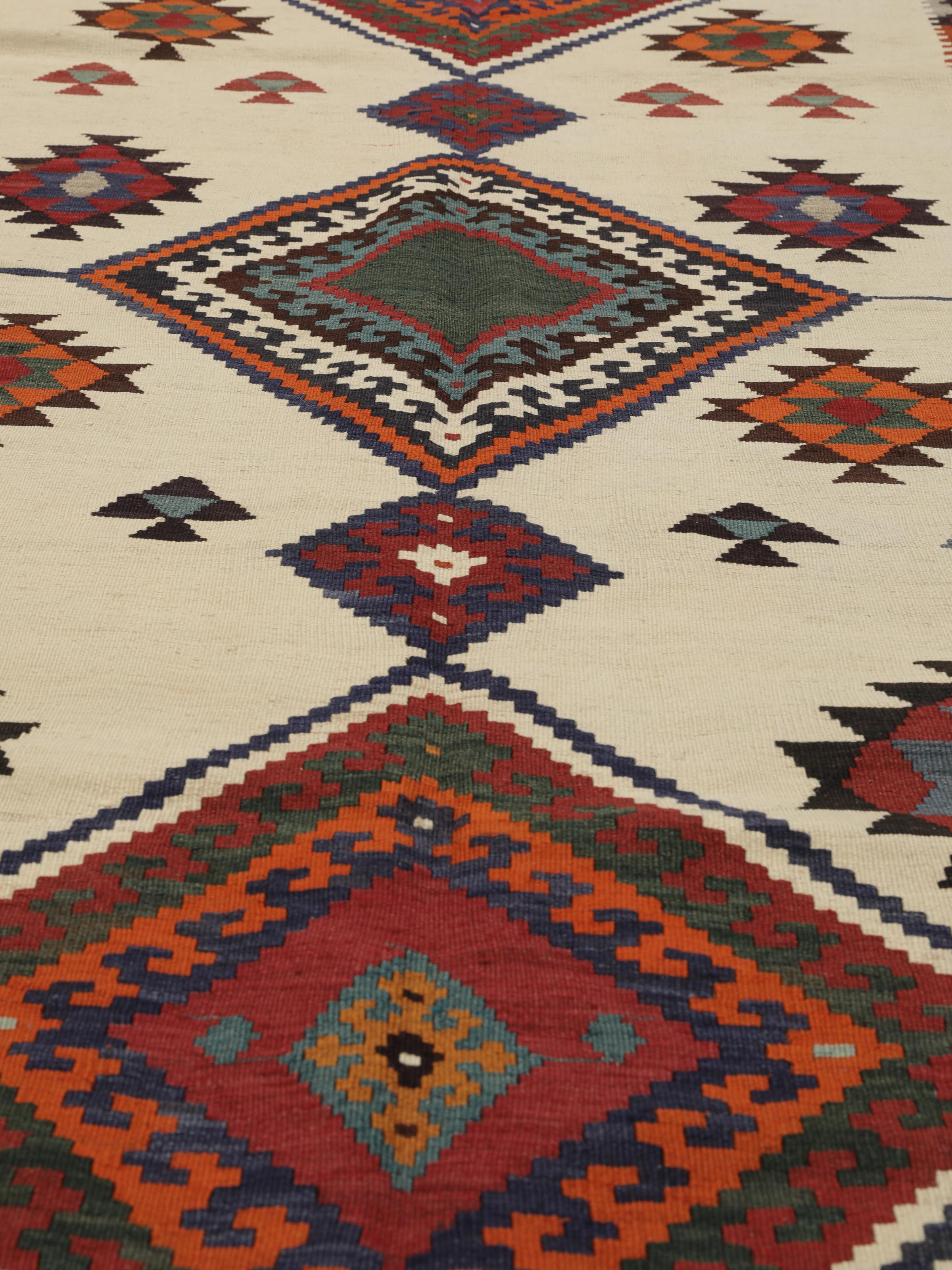
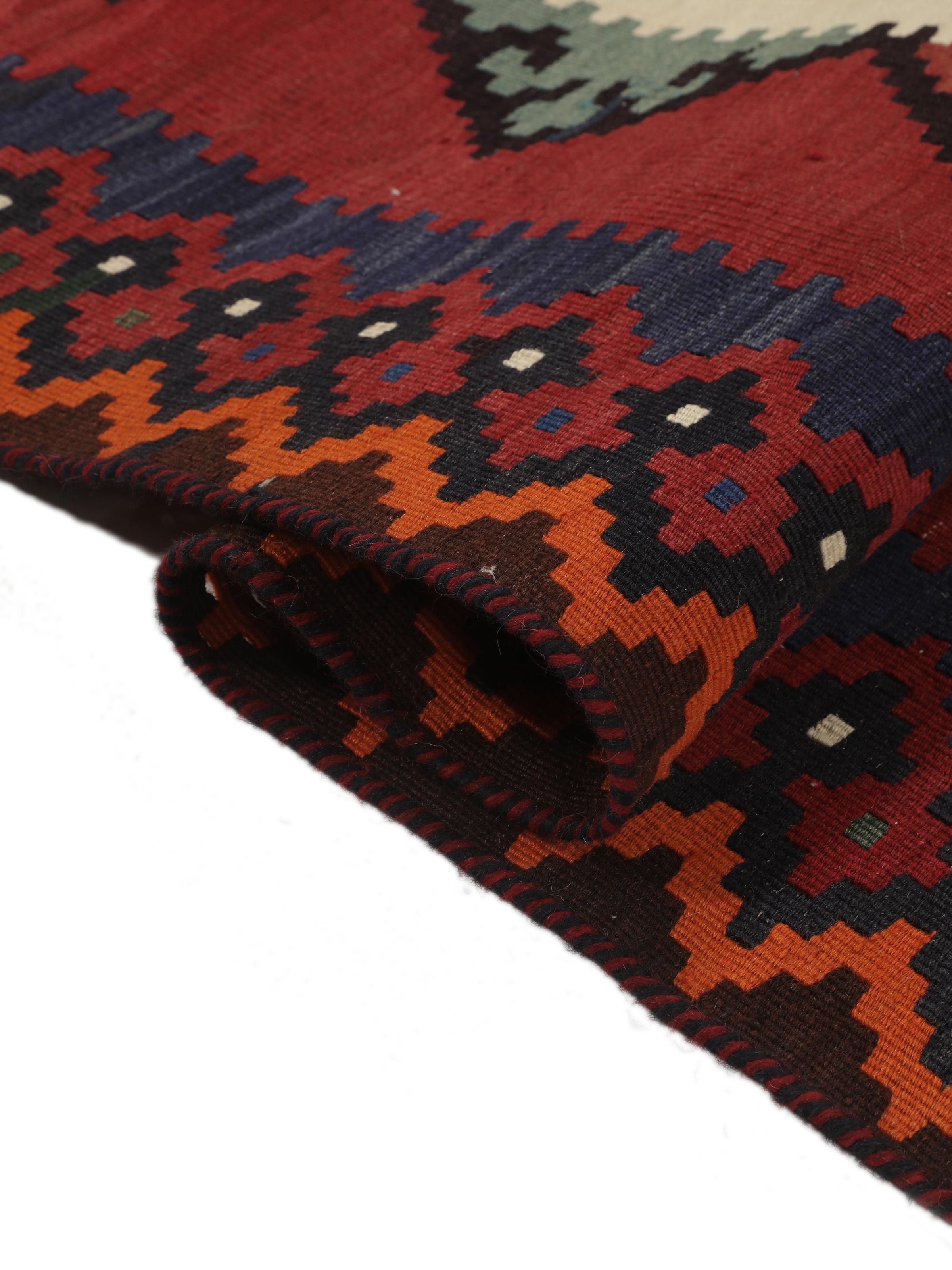
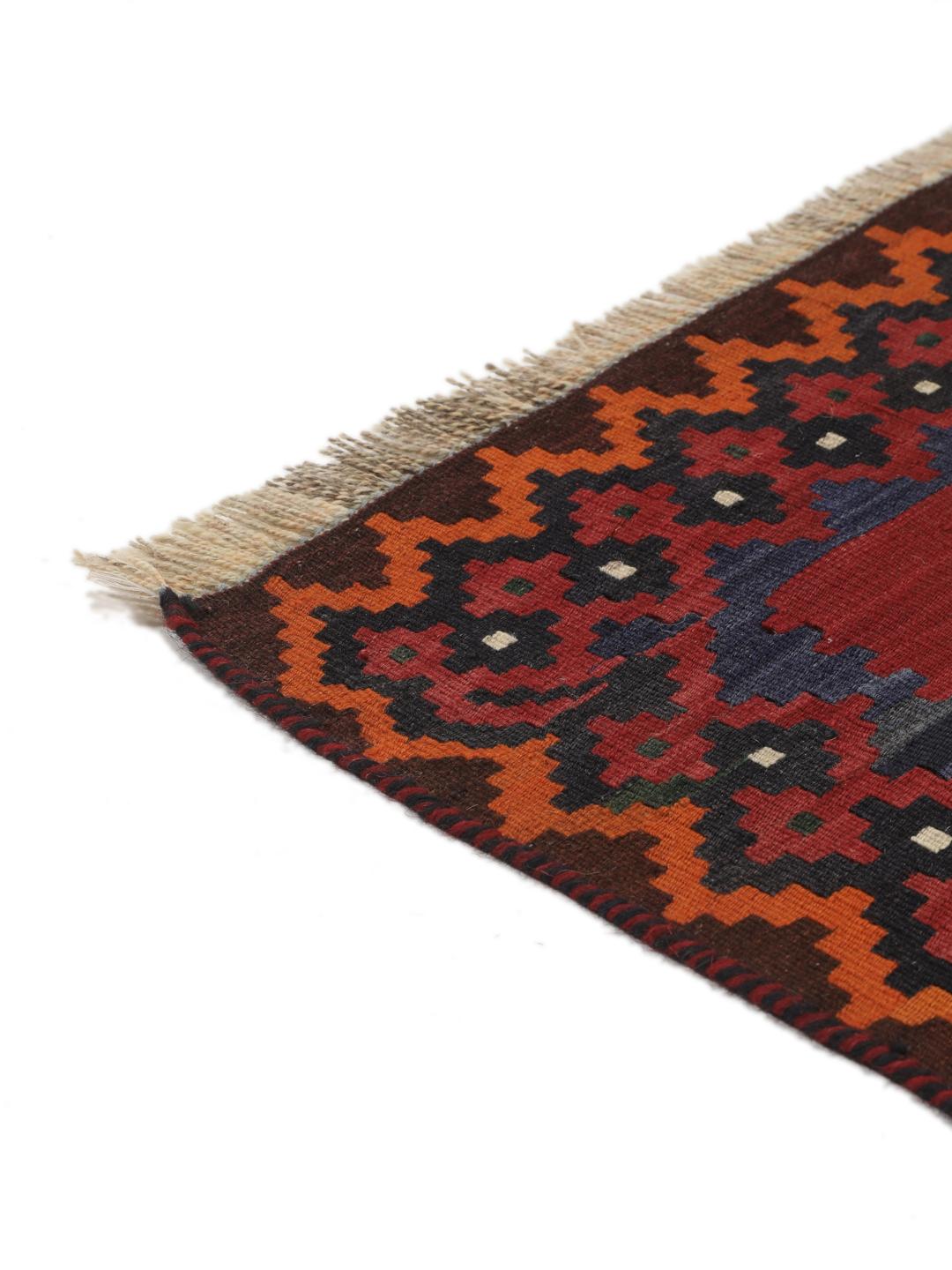
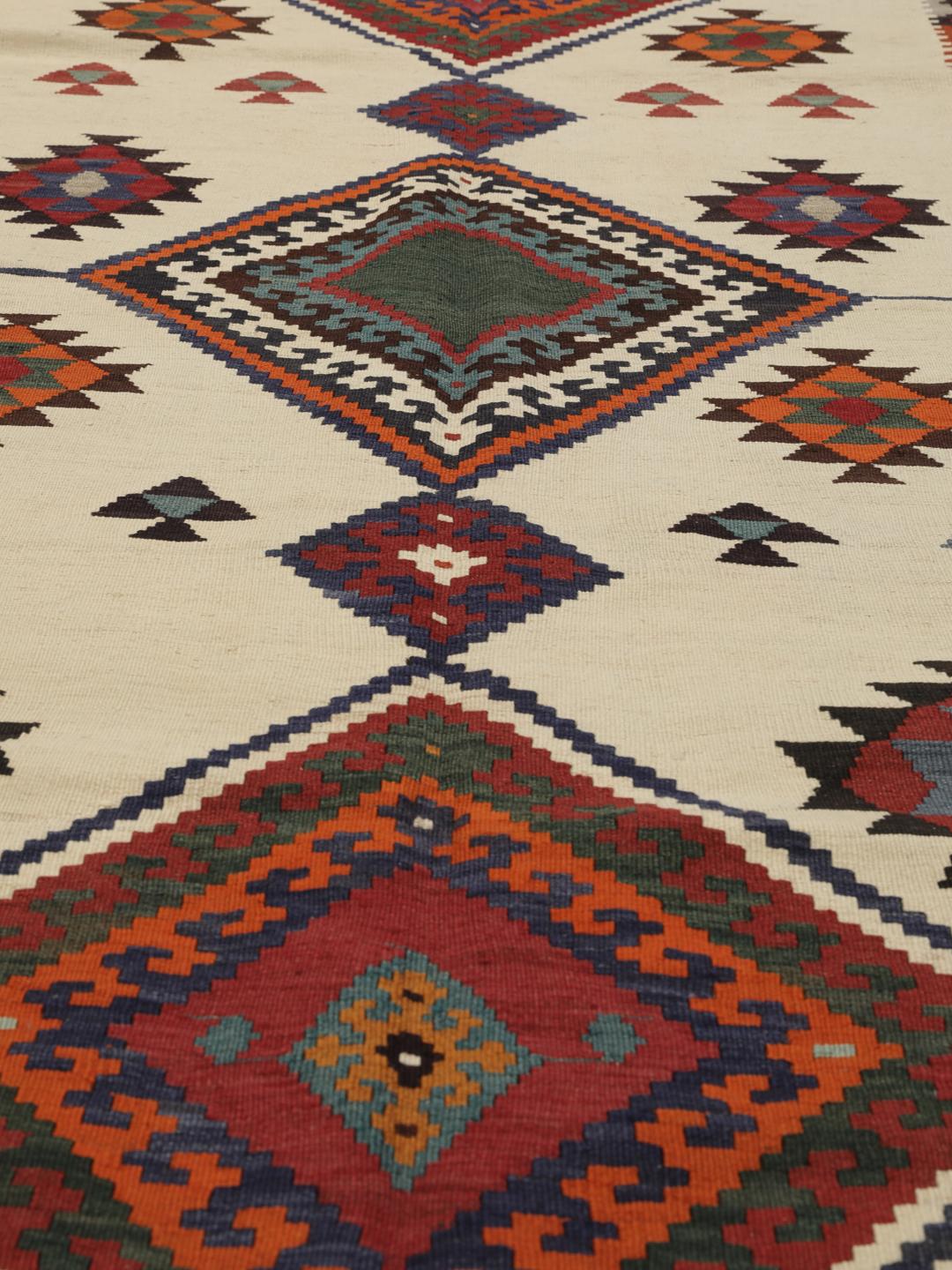
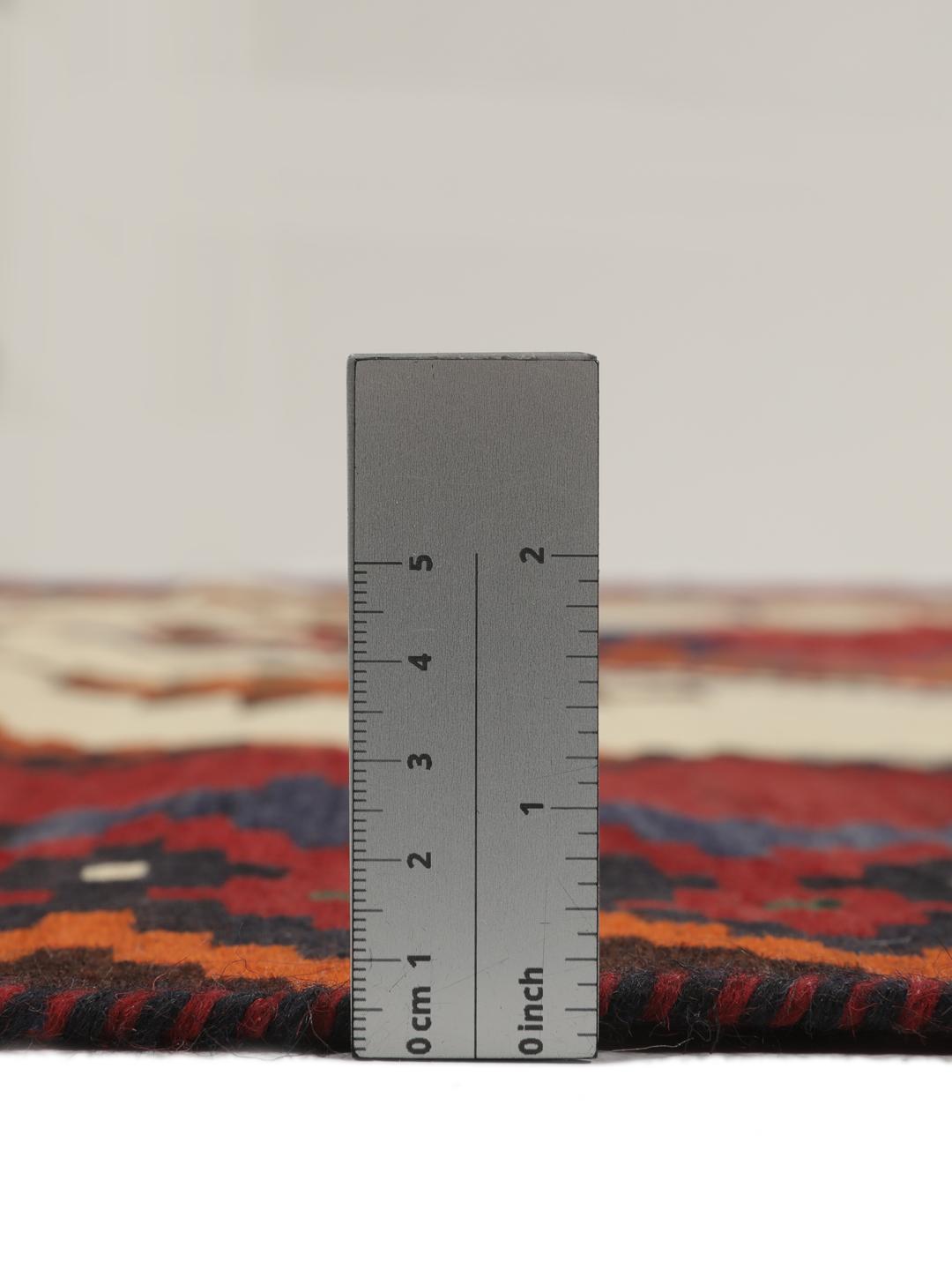
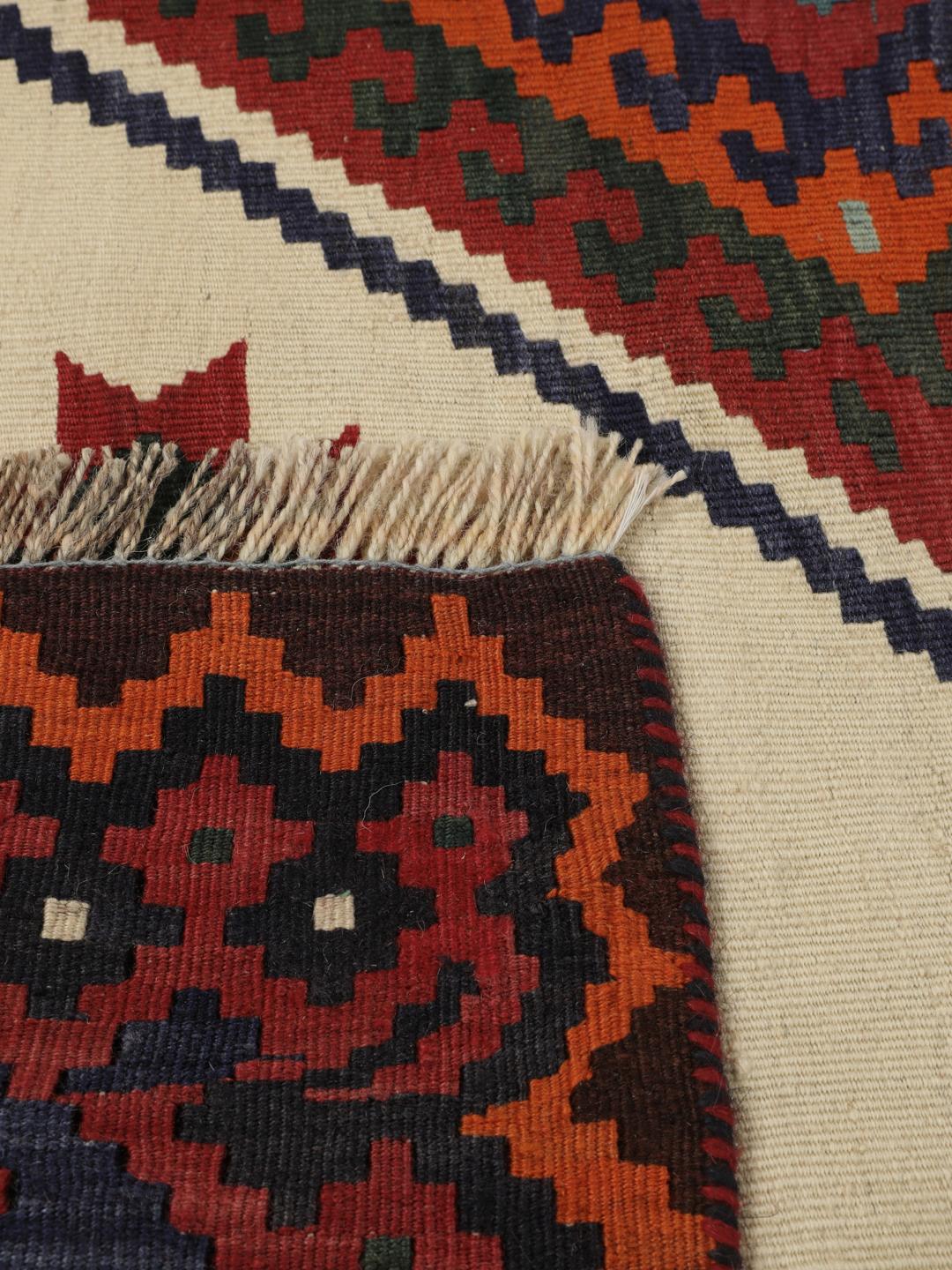
The term Kilim refers to the specific flat-weave technique where no pile is created, resulting in a durable, reversible textile. This construction is highly valued for its portability and strength. The weaver uses a tapestry-weave technique, where the weft threads are pulled tightly over the warp threads to conceal them, allowing for the precise, sharp geometric patterns that are characteristic of this style.
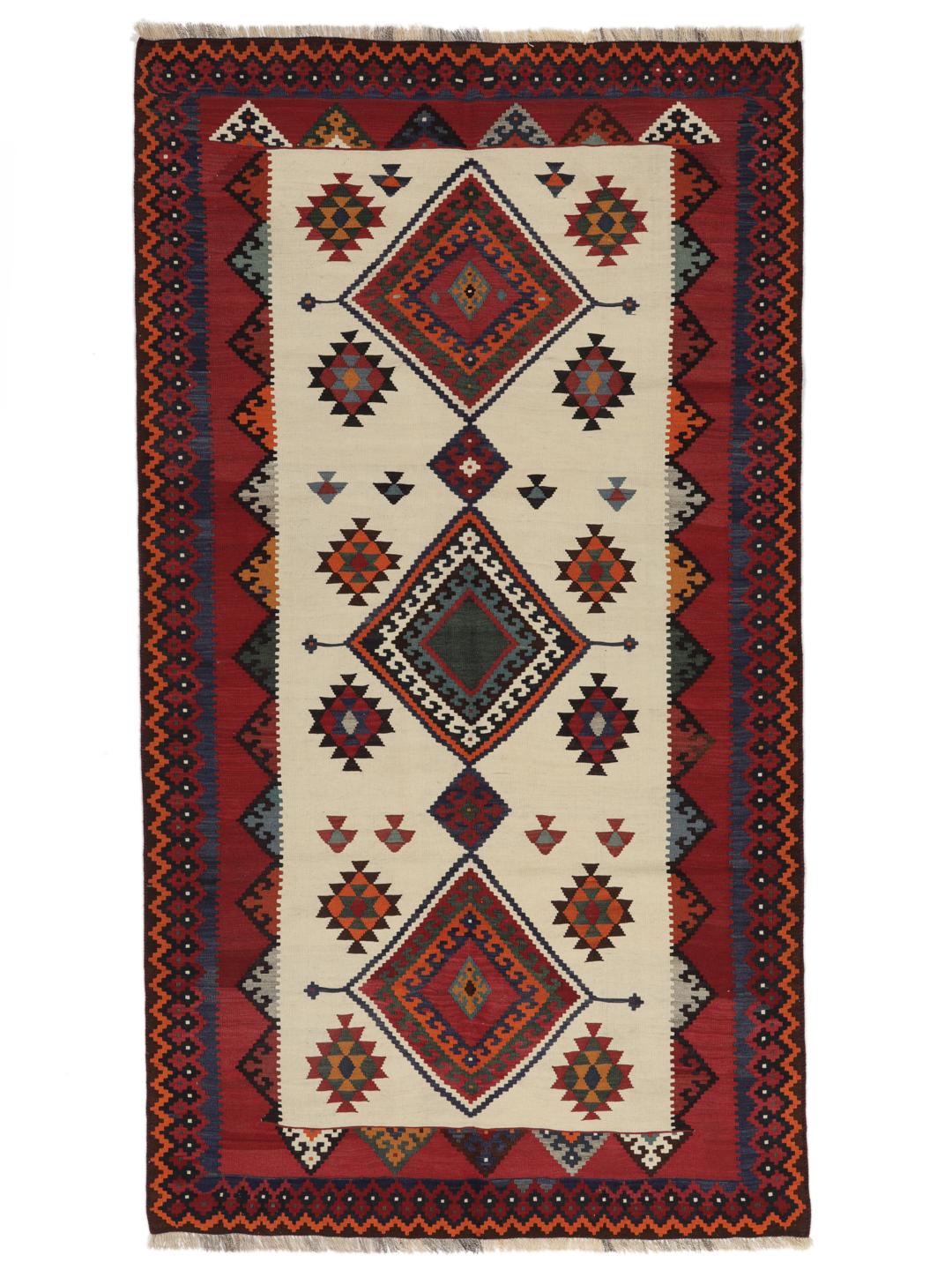
Signature design elements in this tradition often include bold geometric shapes, such as diamonds, triangles, and stylized floral motifs. Each symbol often holds traditional meaning, representing protection, fertility, or the weaver's hopes for the future. The use of vibrant, natural dyes creates a timeless aesthetic that has remained popular for centuries, bridging the gap between historical utility and modern decorative appeal.
Collecting vintage Kilims is an act of preserving cultural heritage. These rugs are highly prized by collectors for their authenticity and the unique narrative each piece carries. When you own a piece like this, you are not just acquiring a rug, but a tangible piece of history that reflects the skill and identity of the weavers who created it.