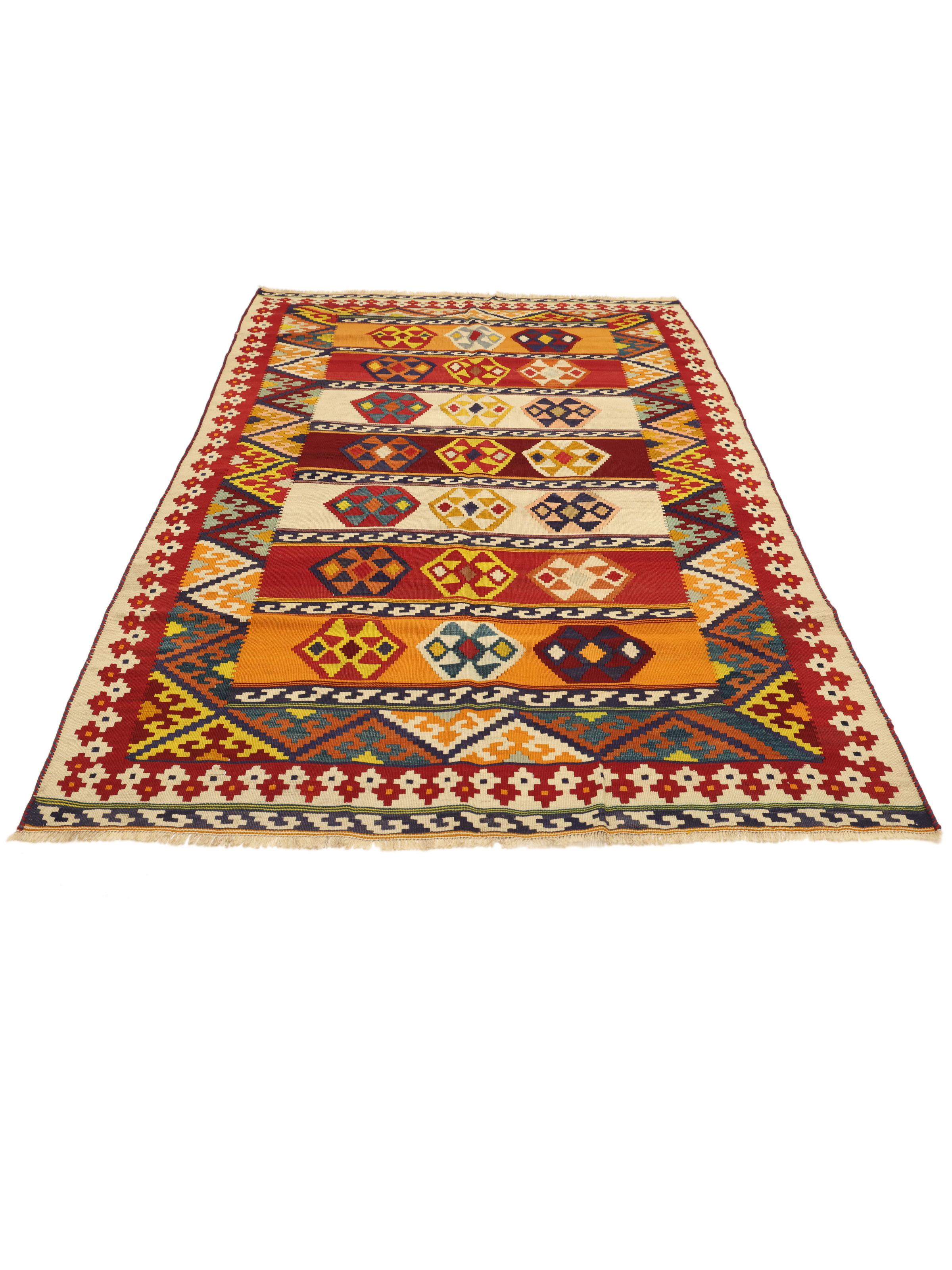
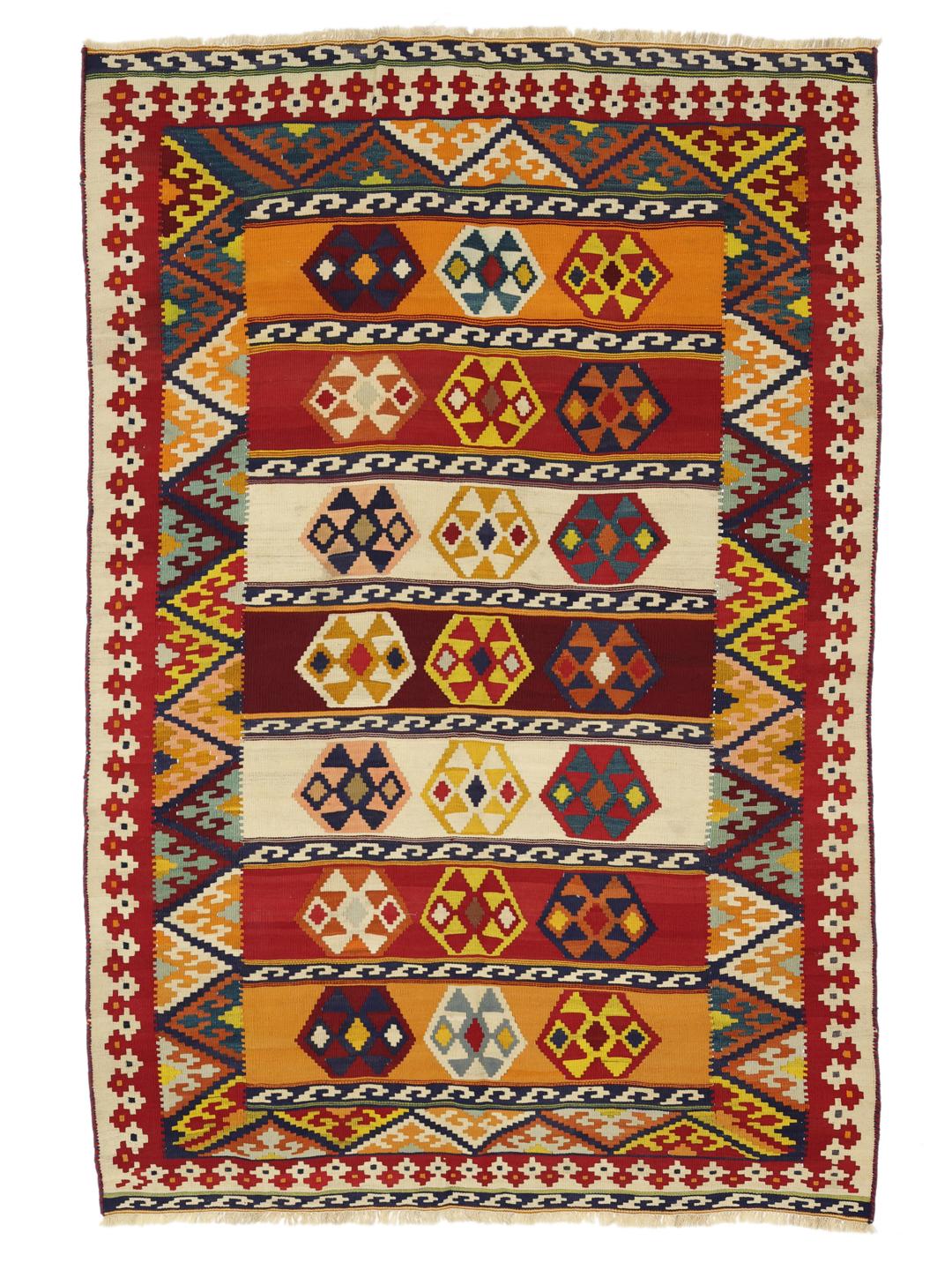
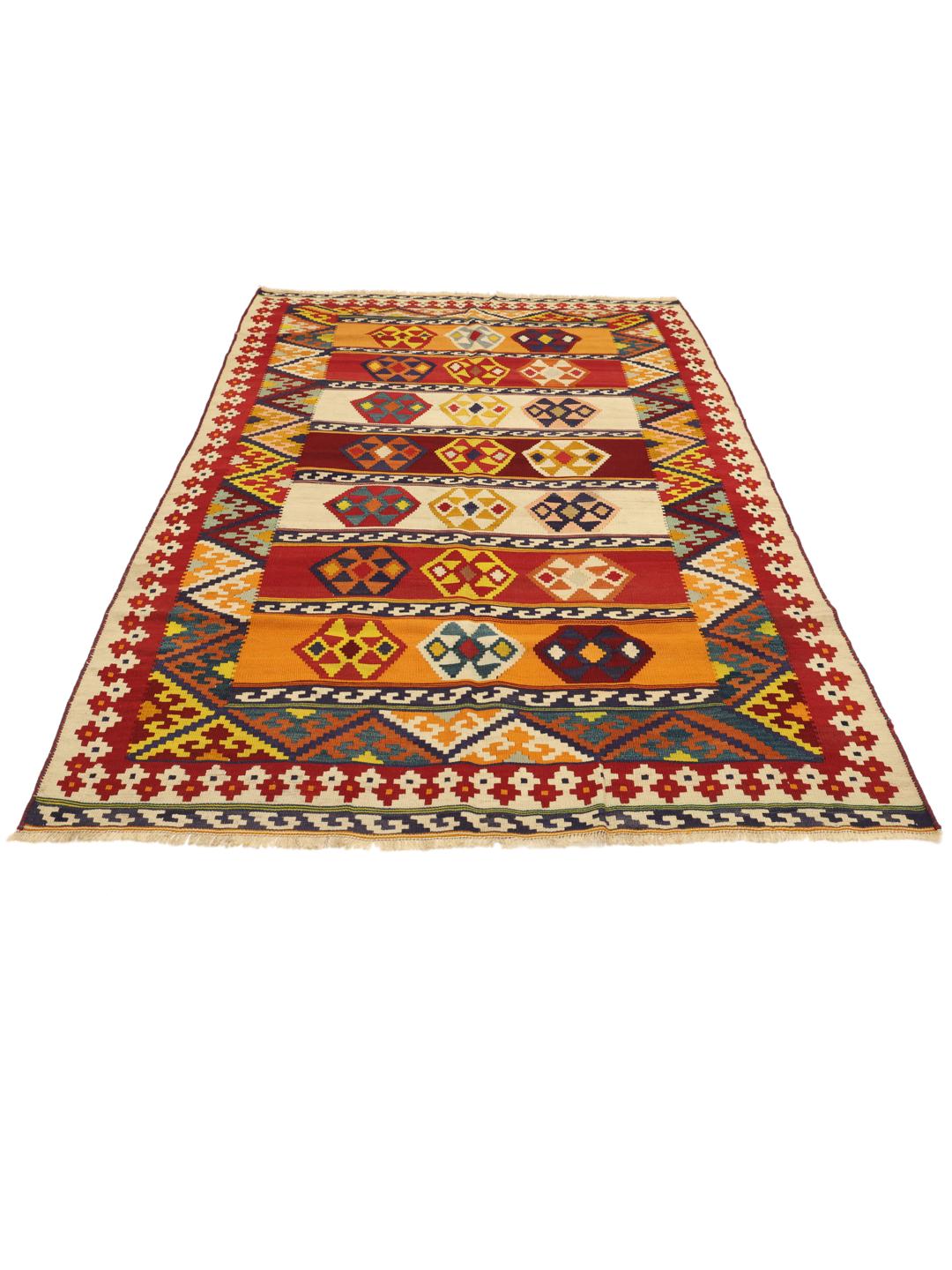
Kilim rugs have a deep heritage across Anatolia and the broader Middle East, where local weaving communities created flatwoven textiles for everyday domestic use. Originally woven by nomadic and village artisans, these rugs served as floor coverings, wall hangings, and warm blankets, carrying traditions passed down through generations.
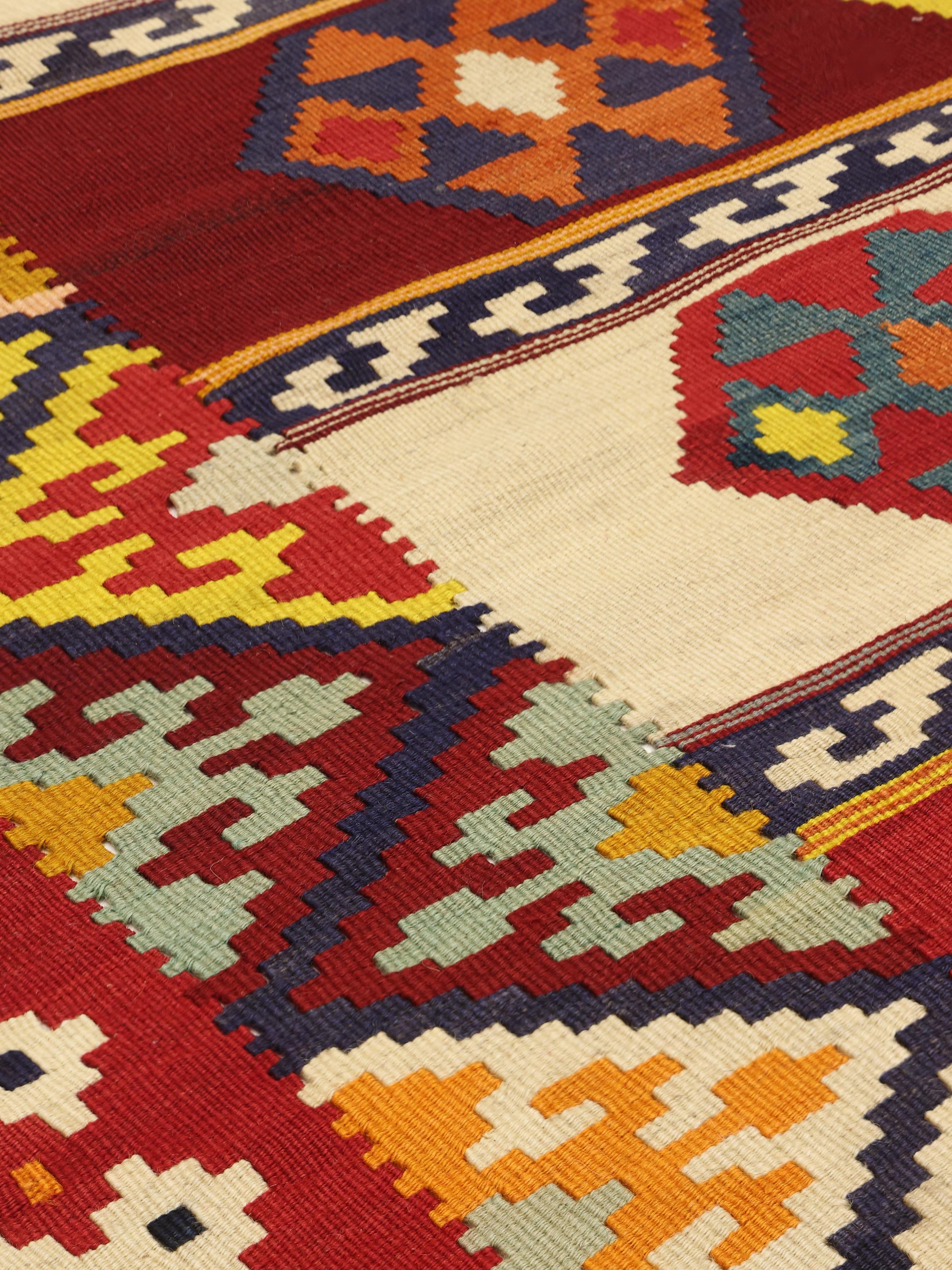
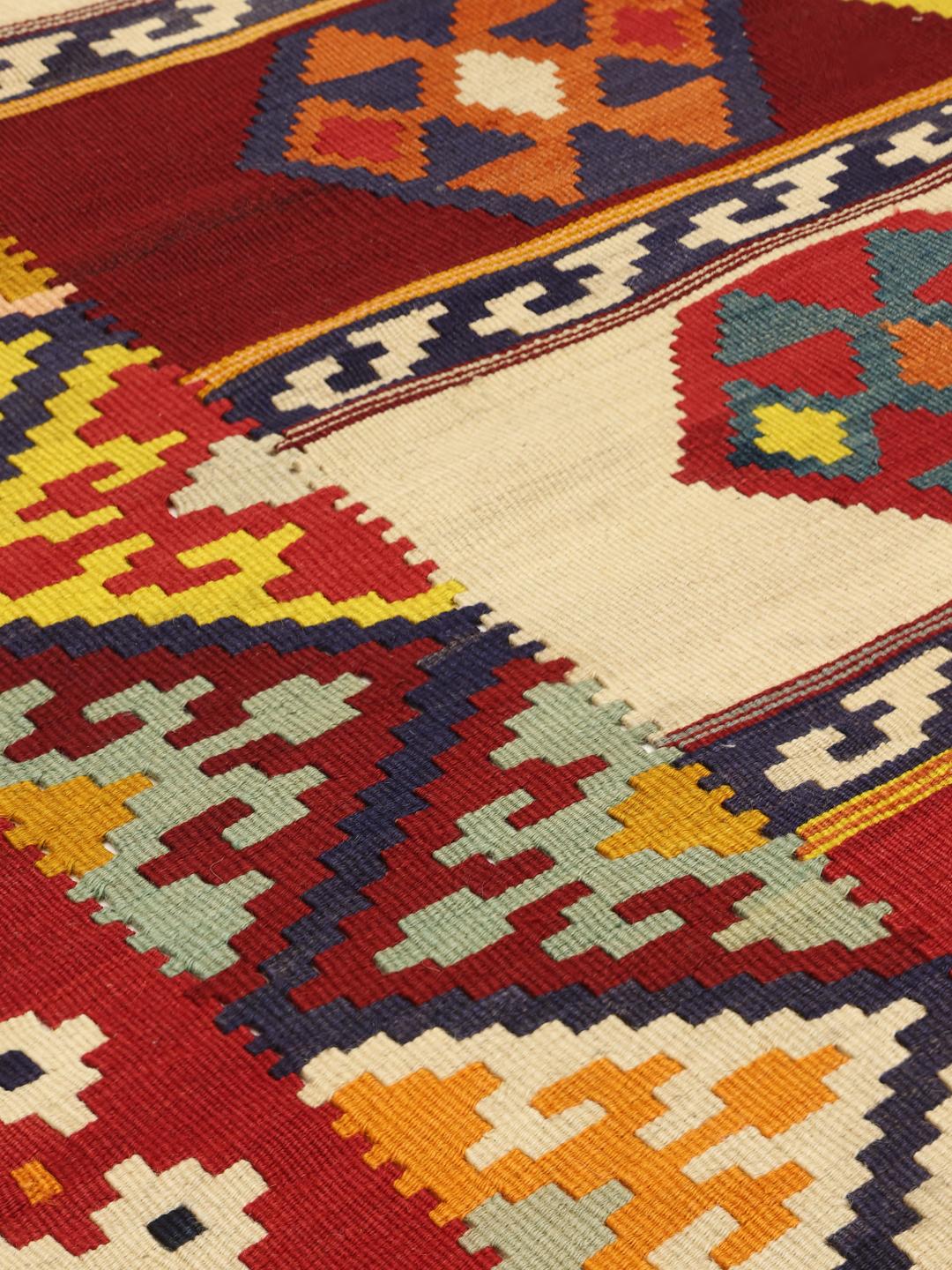
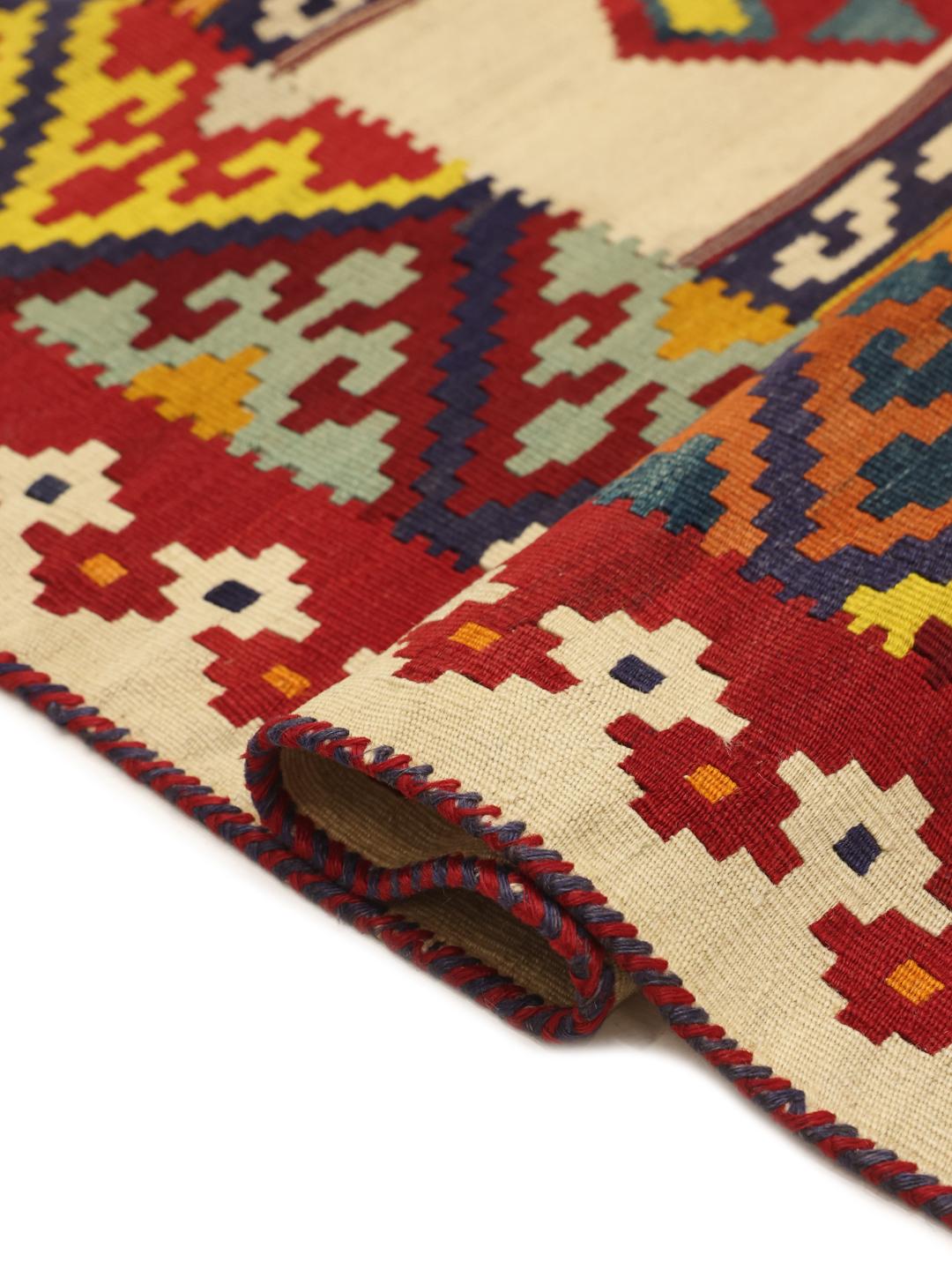
Unlike pile rugs, flatwoven Kilims are created by tightly weaving the weft strands over and under the warp threads. This technique creates a light, structure-driven textile with no raised pile, resulting in a flexible yet strong surface that is distinct from knotted rugs.
The visual language of Turkish Kilims is rooted in geometric forms, featuring diamonds, triangles, and repeating horizontal bands. Artisans traditionally wove regional motifs into the design, using contrasting dynamic colors to tell personal stories and signal family crests or local identity.
Vintage Kilims aged between 20 and 50 years are highly valued by collectors for their softening tones and authentic patina. Acquiring a vintage piece offers a direct link to authentic craft traditions, ensuring your floor covering carries real history and cultural weight.