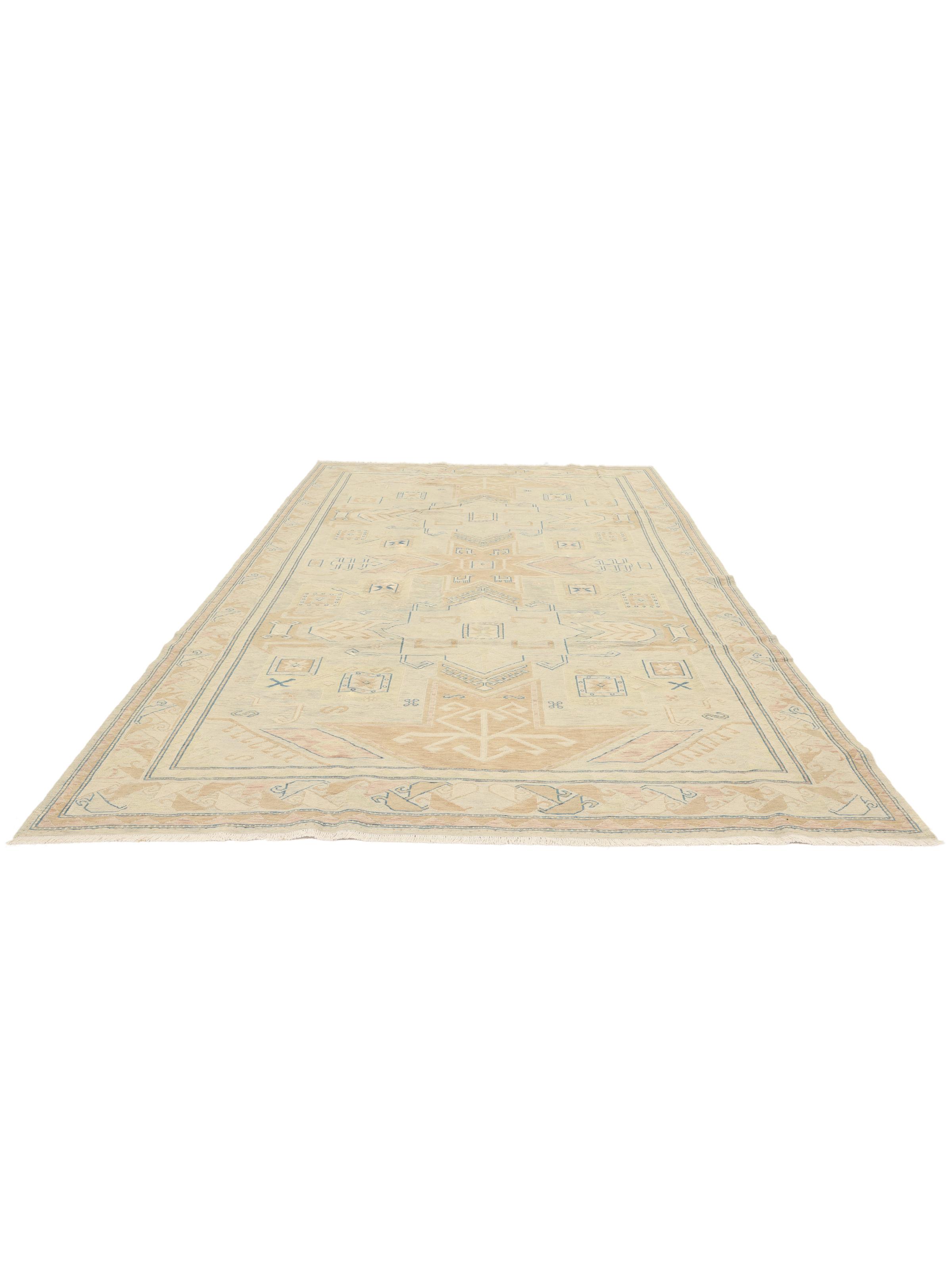
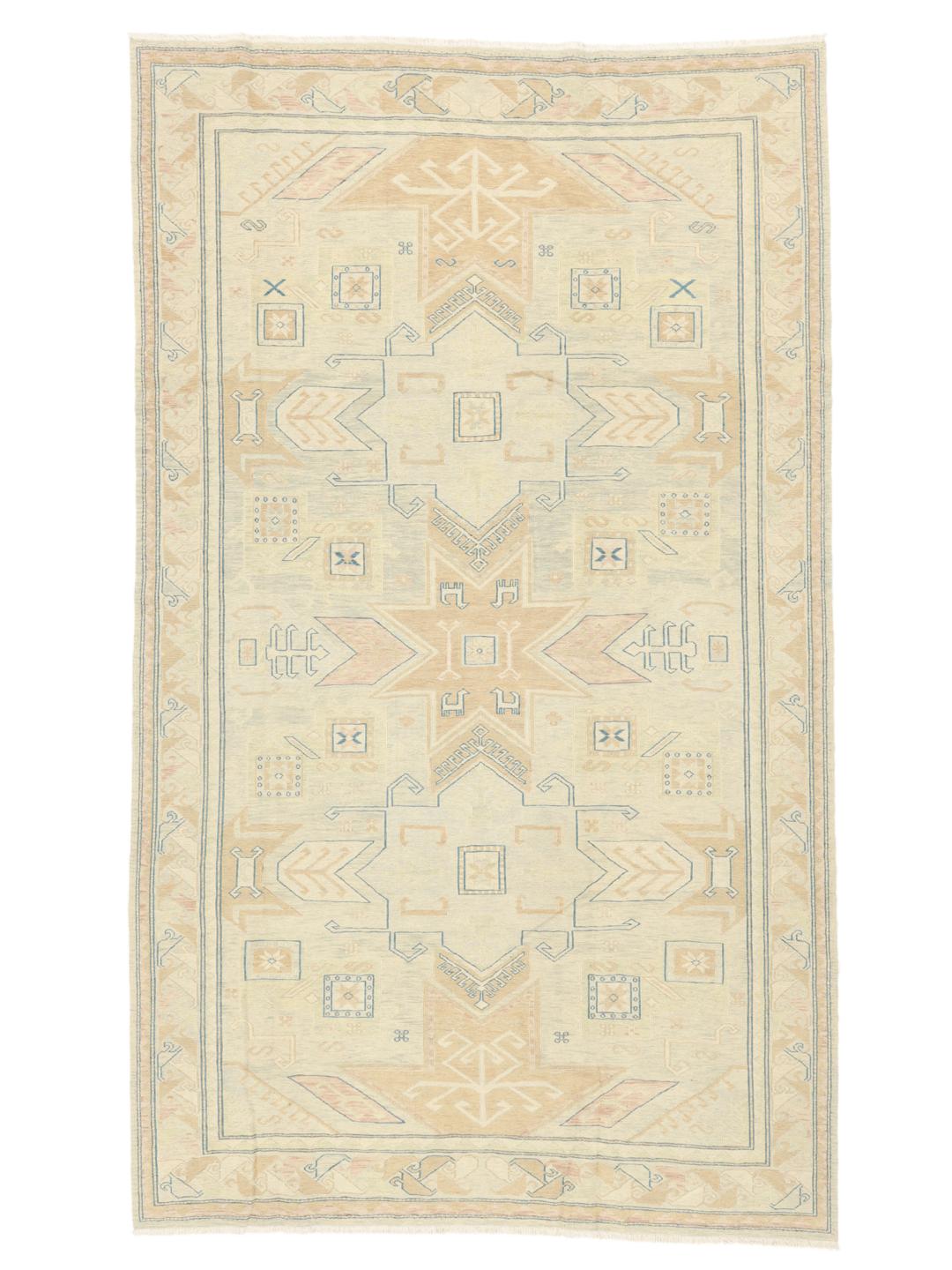
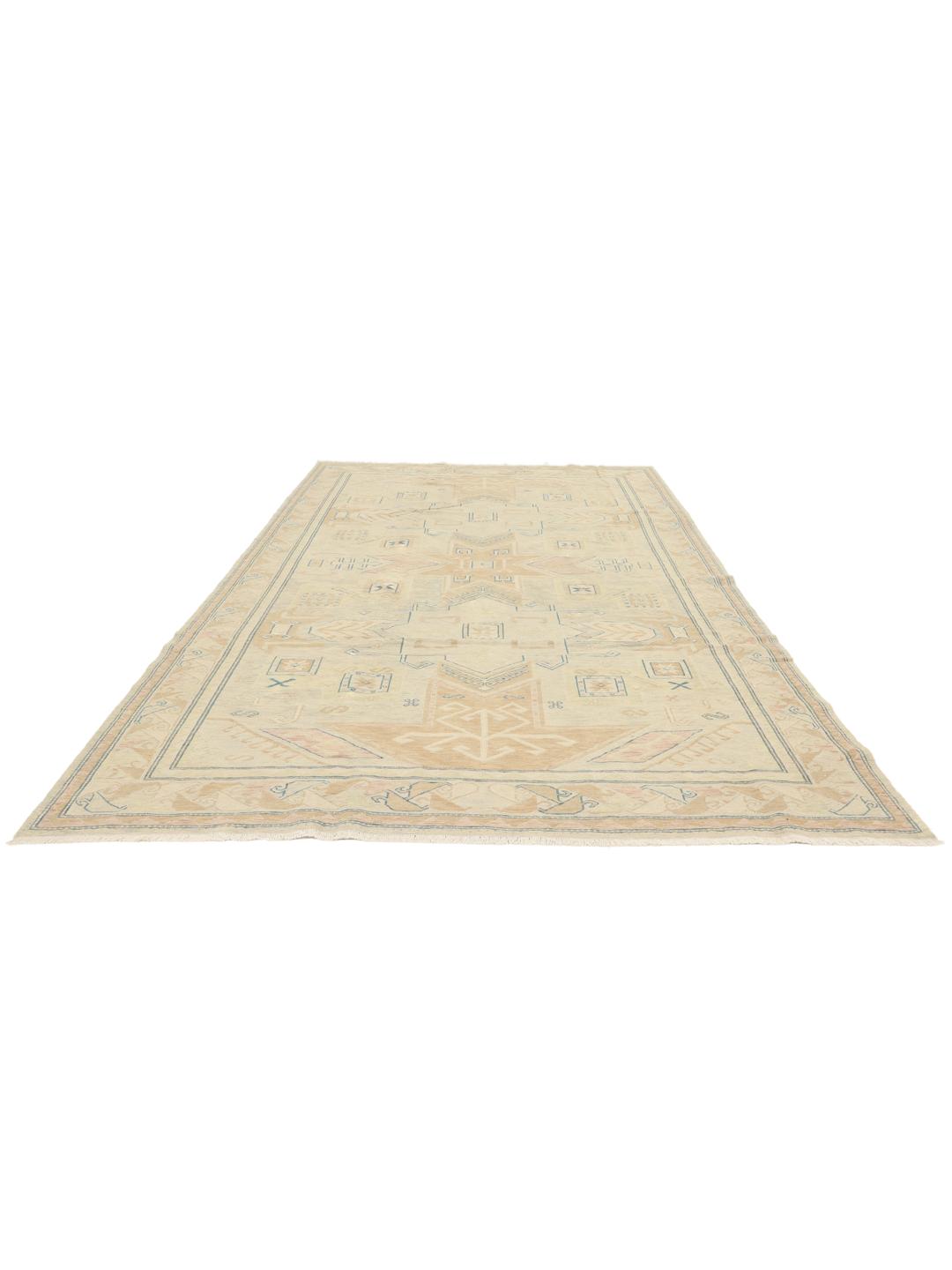
The Kelim Suzani tradition originates from the crossroads of Central Asian cultures, where nomadic heritage meets refined textile artistry. While the word 'Suzani' traditionally refers to intricate needlework, when applied to rugs, it captures a style inspired by these vibrant, embroidered patterns. These pieces are deeply rooted in the history of Afghanistan, a region with a storied legacy of weaving that has evolved over centuries.
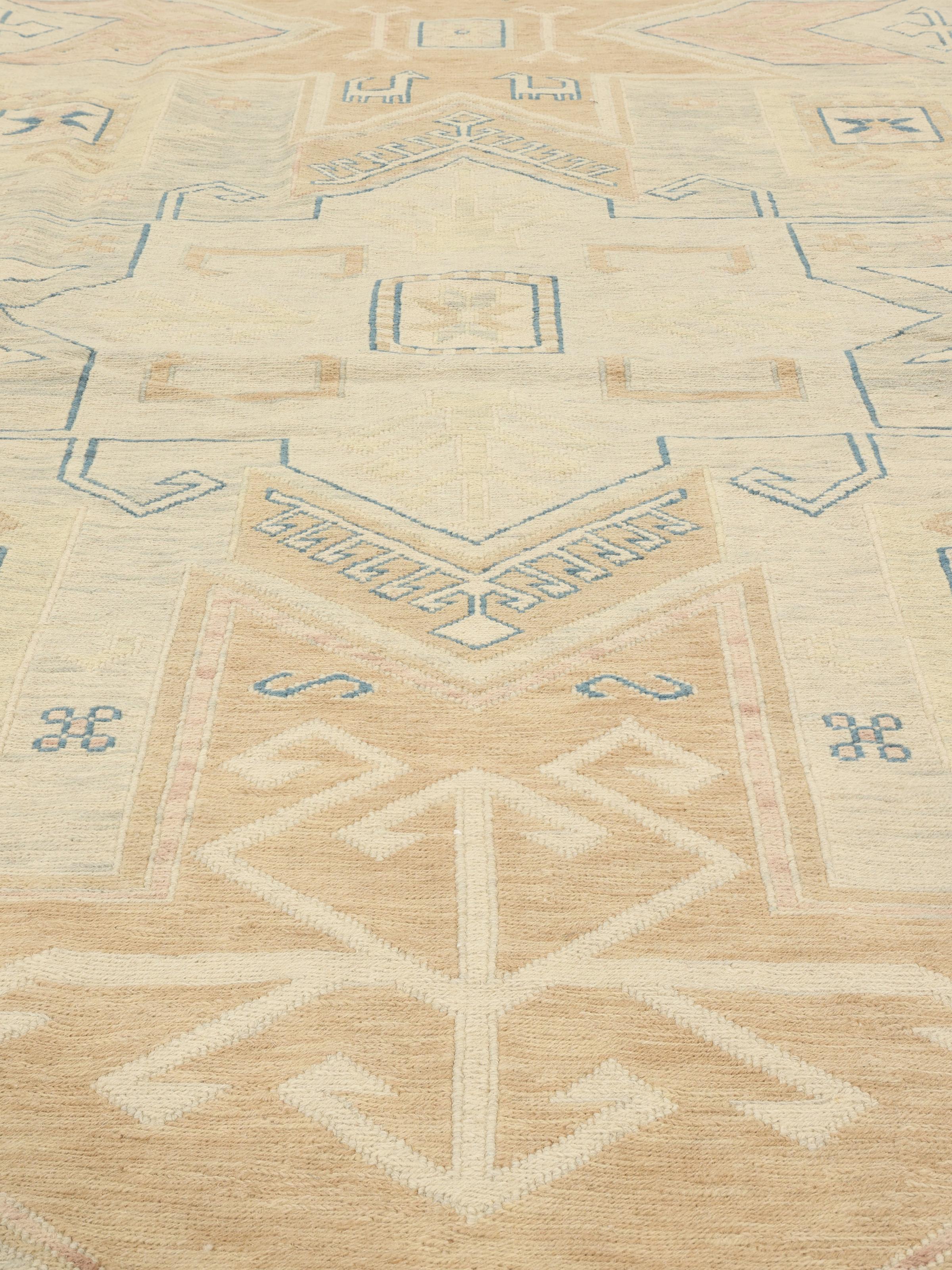
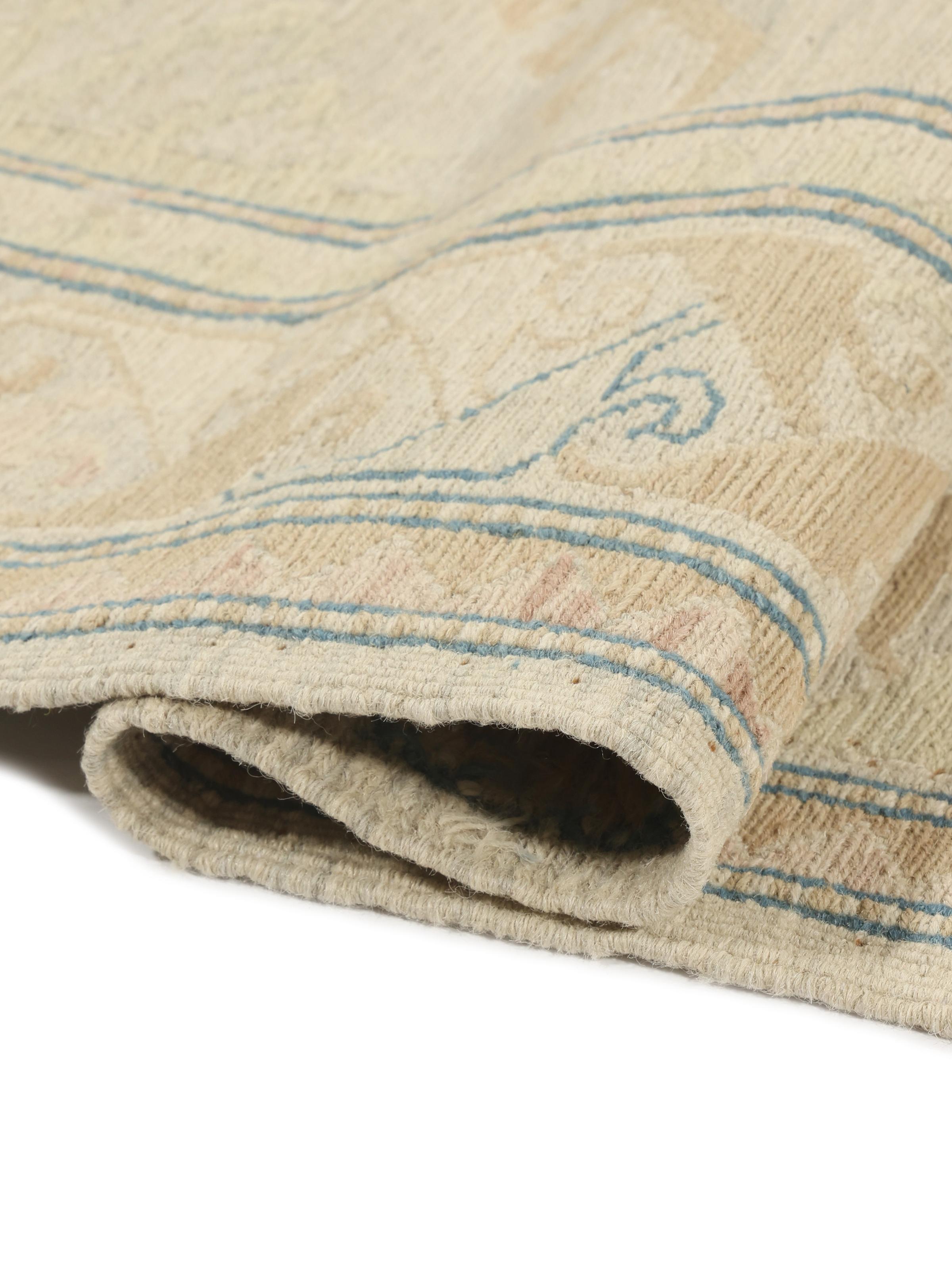
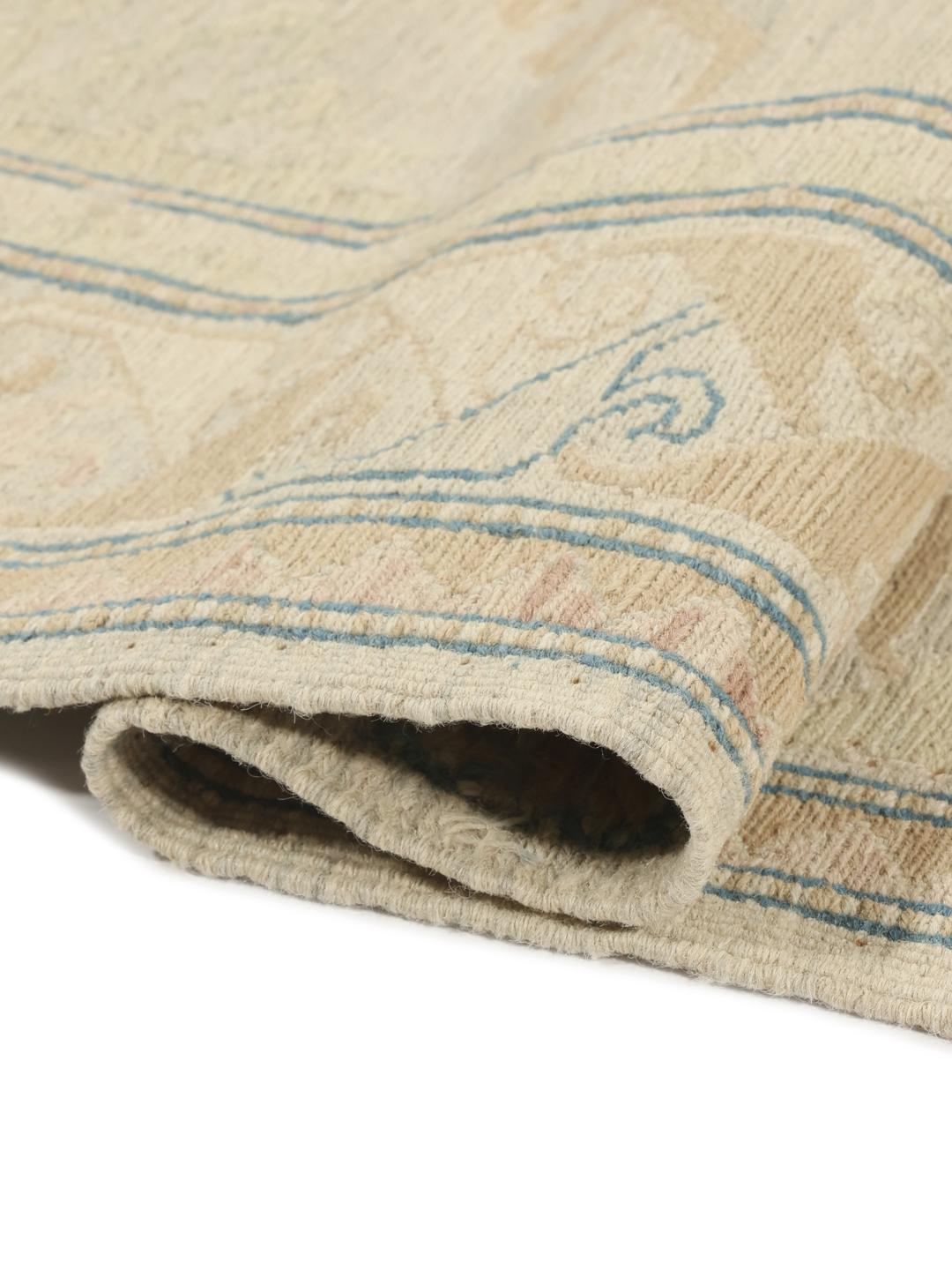
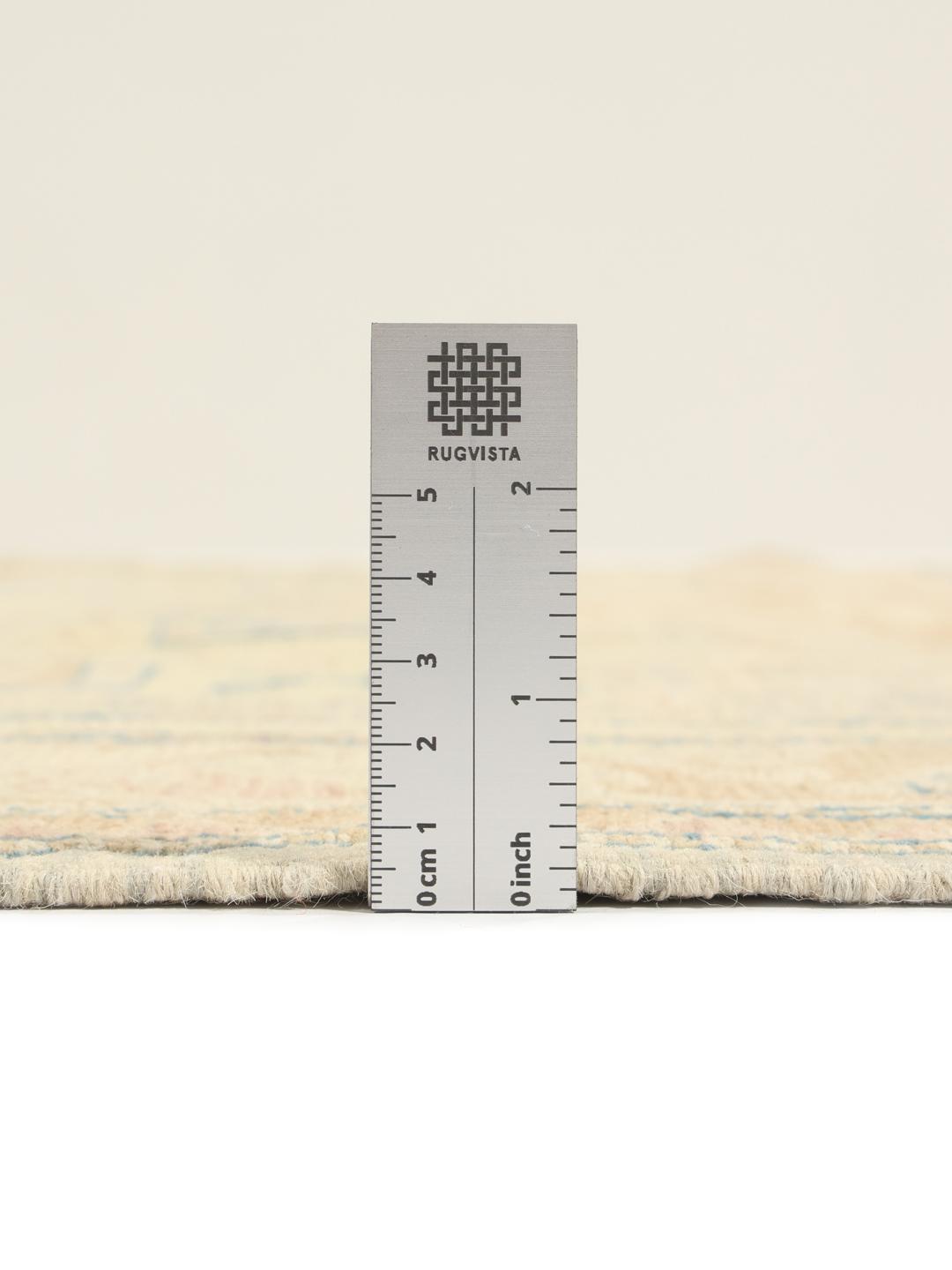
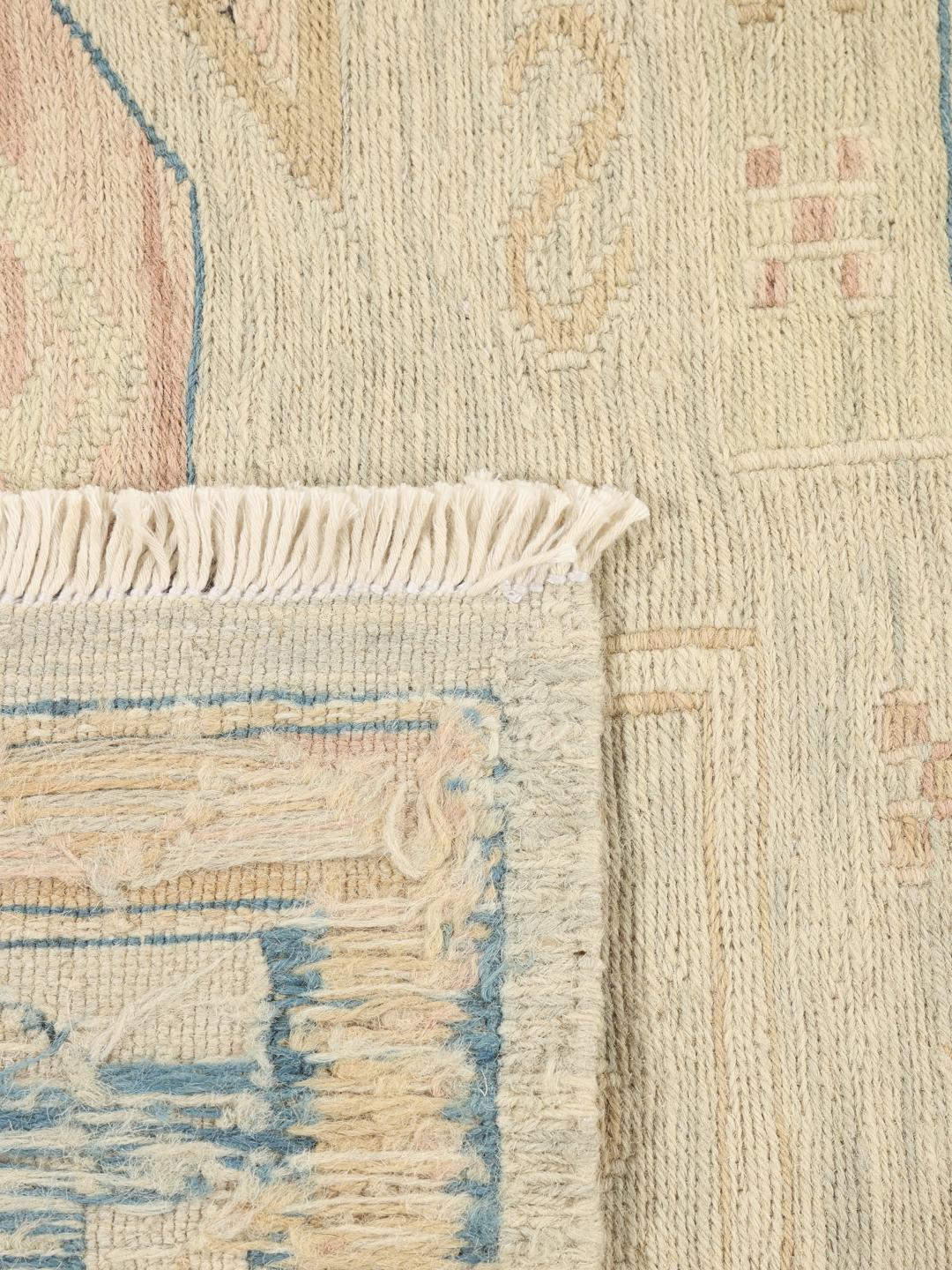
A 'Kelim' is technically a flat-woven rug, meaning it lacks a knotted pile. This construction method relies on the weaver passing the Wool weft over and under the warp threads to create the design directly within the structure of the fabric. This results in a lightweight, reversible, and highly versatile textile that has been a staple of Middle Eastern interiors for generations.
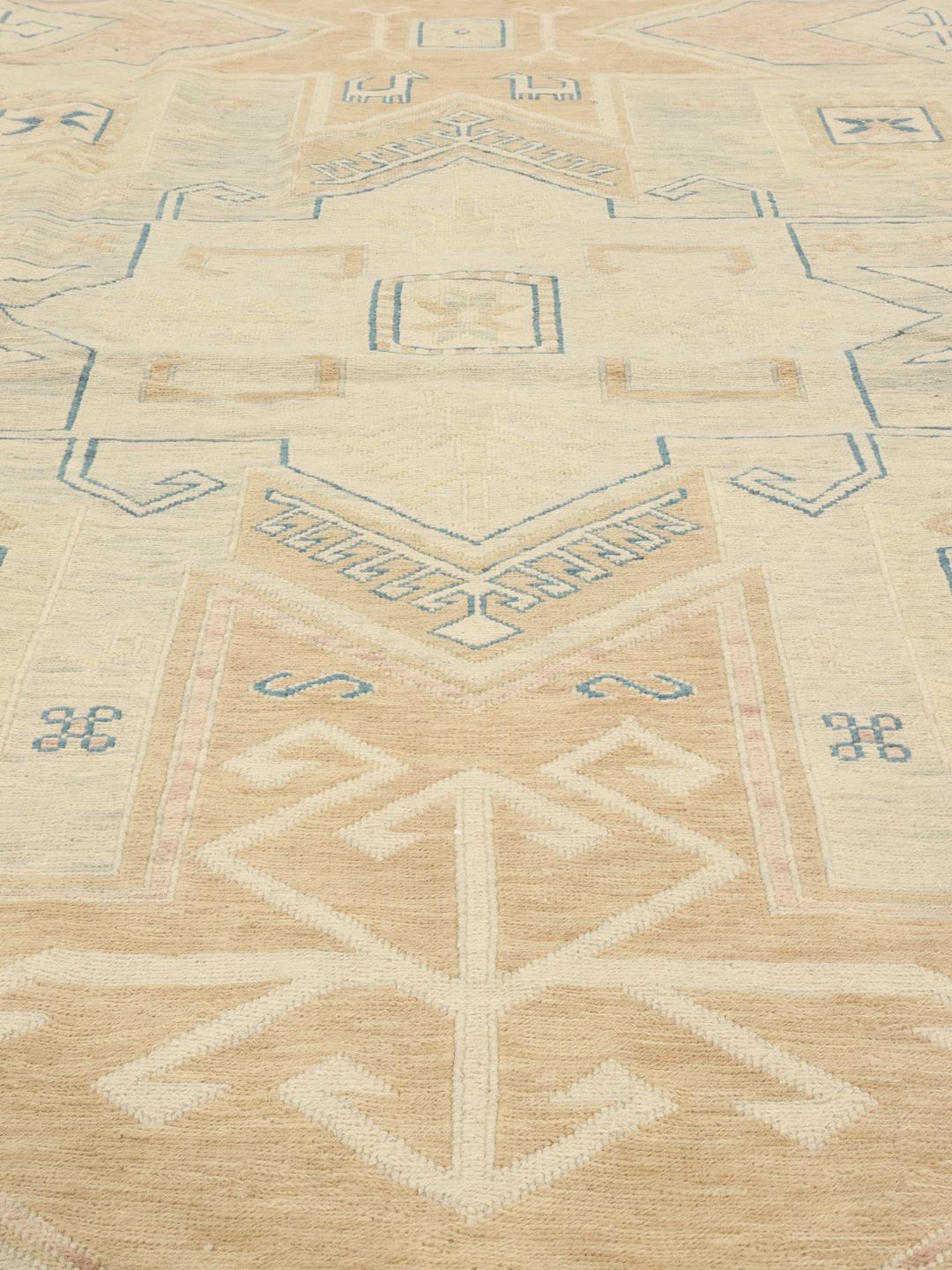
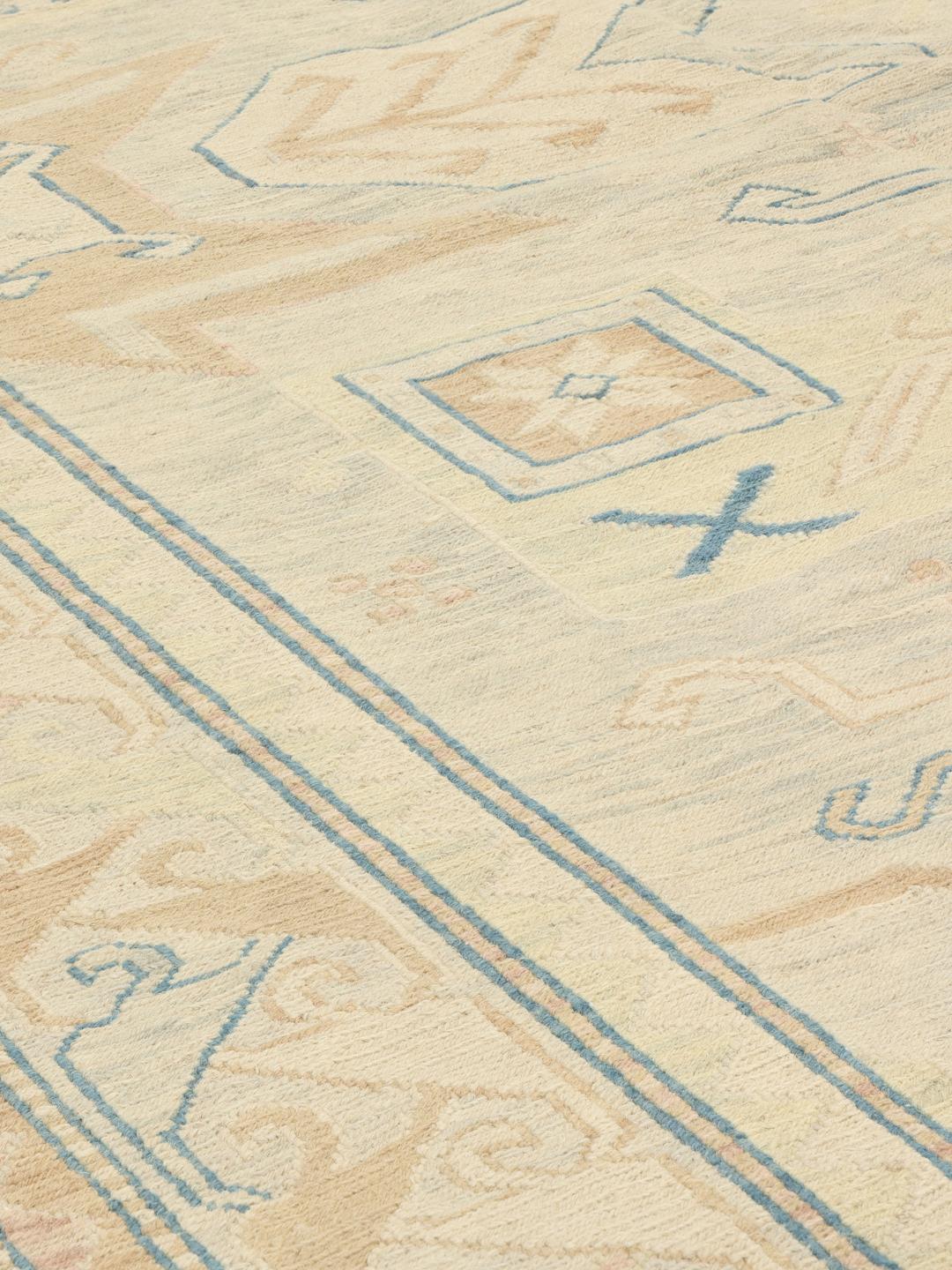
Visually, these rugs are defined by their geometric interpretation of floral and celestial motifs, often arranged in a structured, medallion-focused layout. The patterns are not merely decorative but often carry symbolic meaning, reflecting the natural environment and the artistic identity of the weaving communities. The use of soft, natural hues often seen in these pieces is a hallmark of the regional aesthetic, prioritising harmony and balance.
Collecting a Kelim Suzani is an investment in cultural heritage and human skill. These rugs are valued not just for their utility, but for the way they preserve ancient design languages in a contemporary format. Owning one is a way to anchor a room with a piece that represents a deep connection to the history of the Silk Road and the timeless beauty of manual craftsmanship.