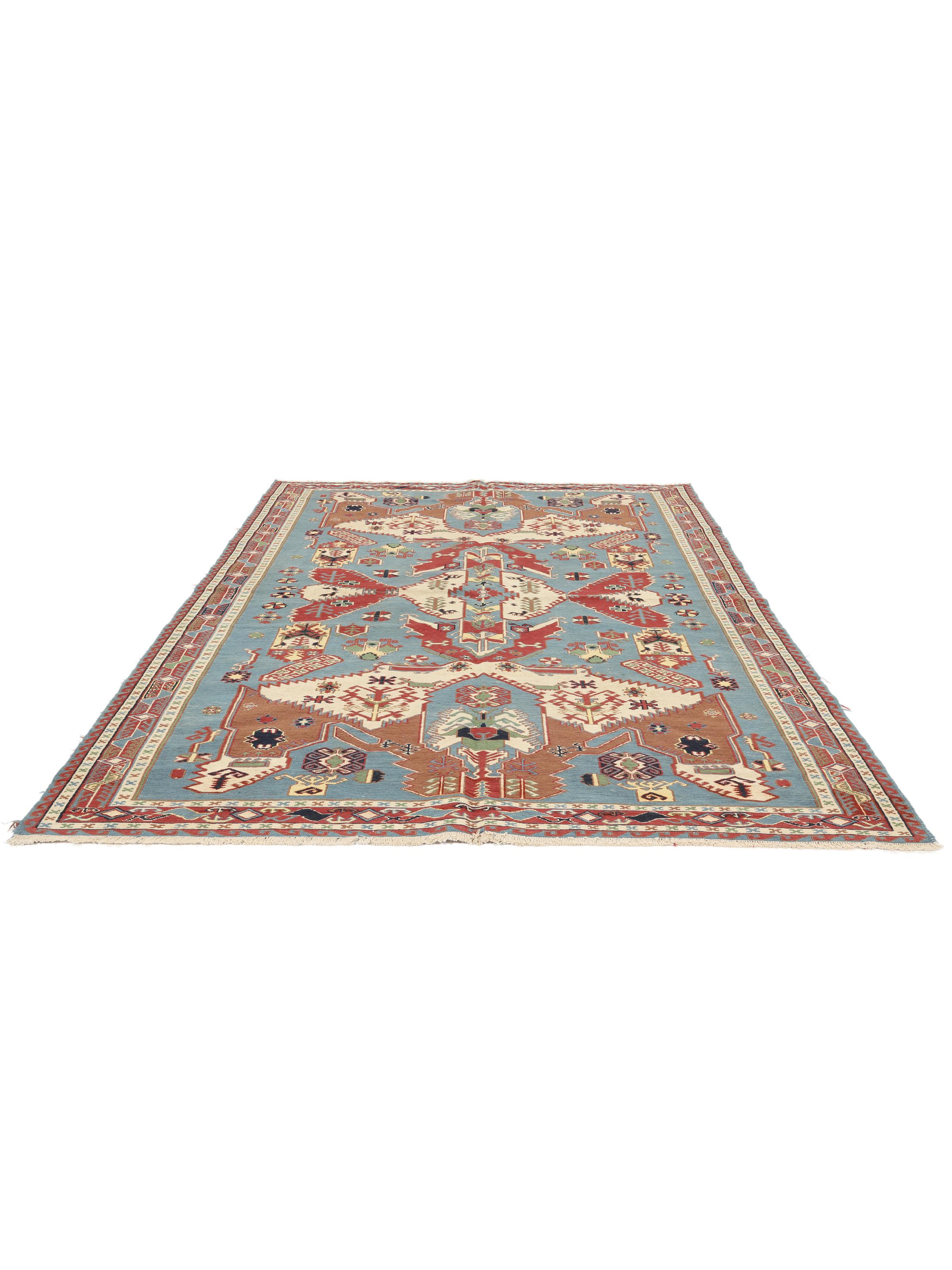
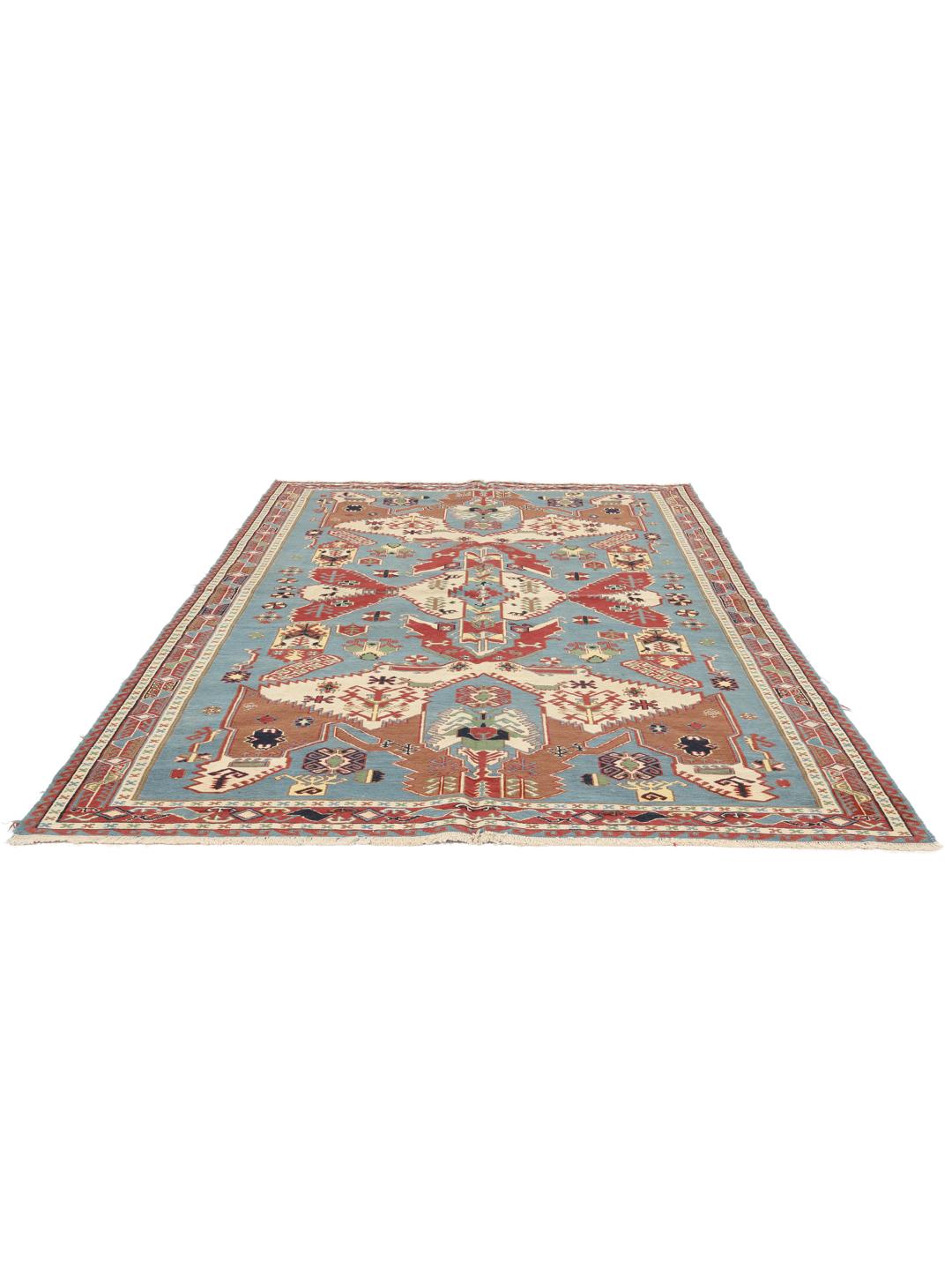
The Kelim tradition is one of the most storied in the Middle East, originating from nomadic cultures that required beautiful yet portable floor coverings. These rugs are not just functional items but are deeply embedded in the cultural fabric of Afghanistan, where the art of flat-weaving has been perfected over centuries as a means of storytelling and artistic expression.
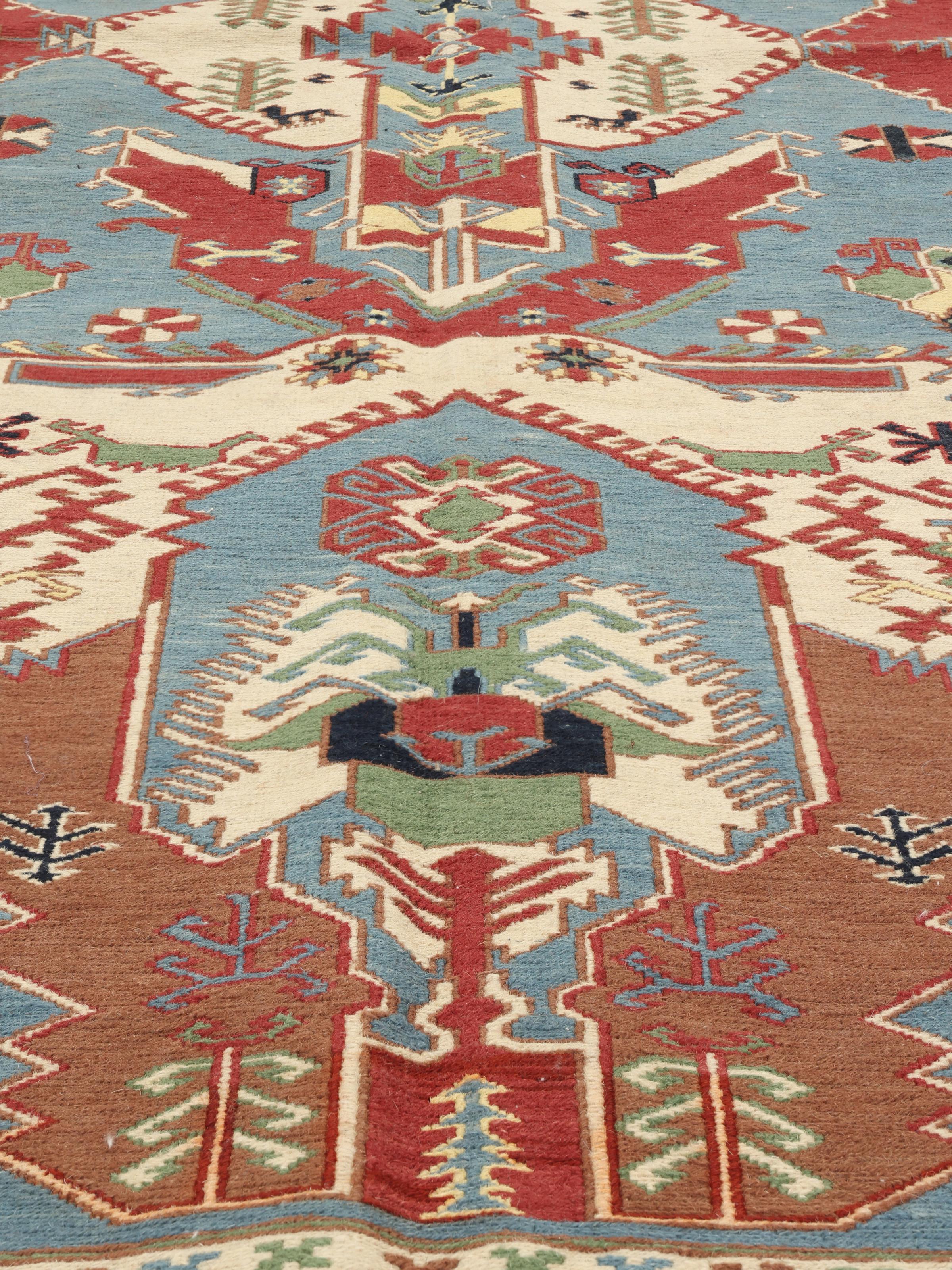
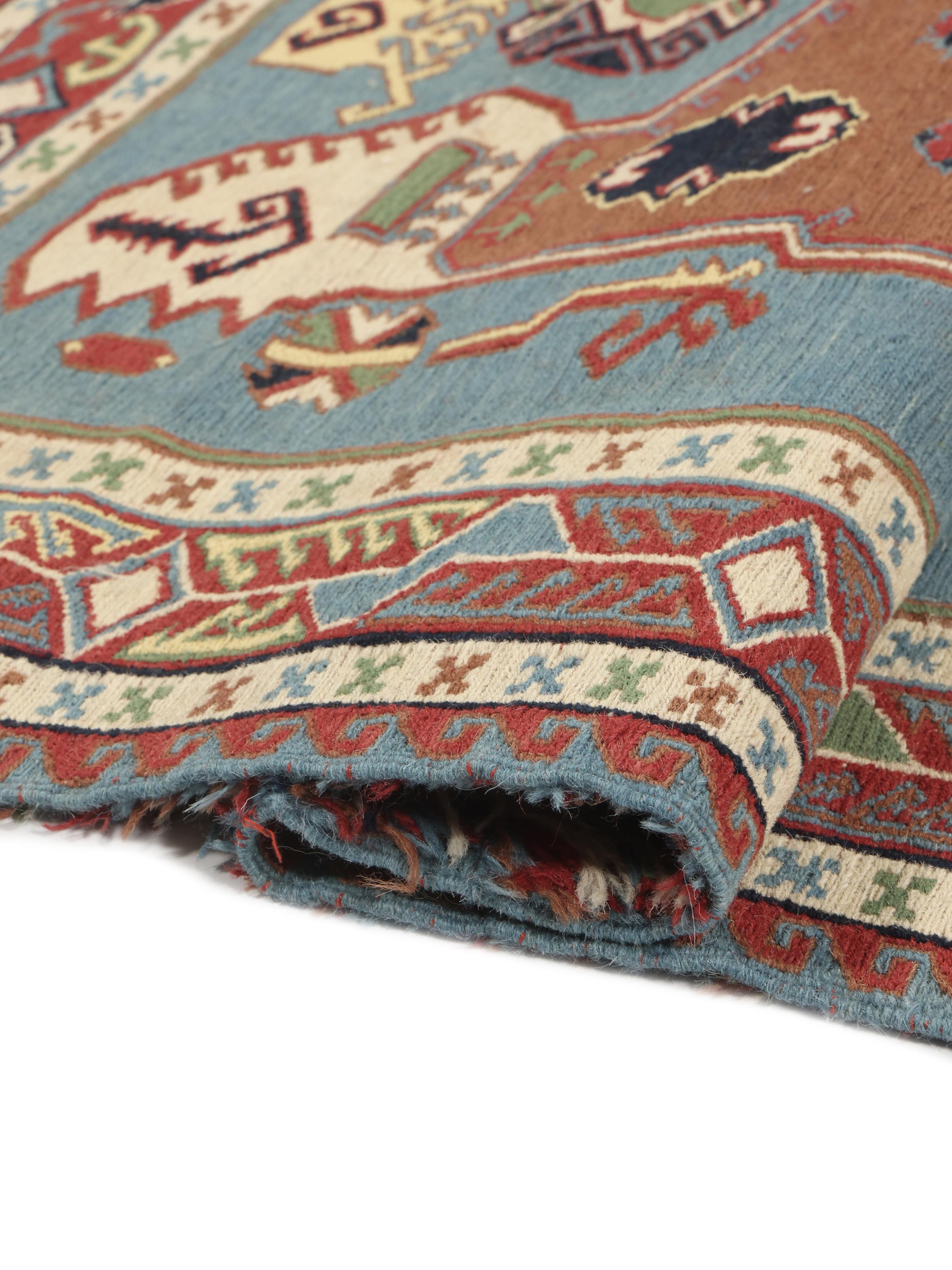
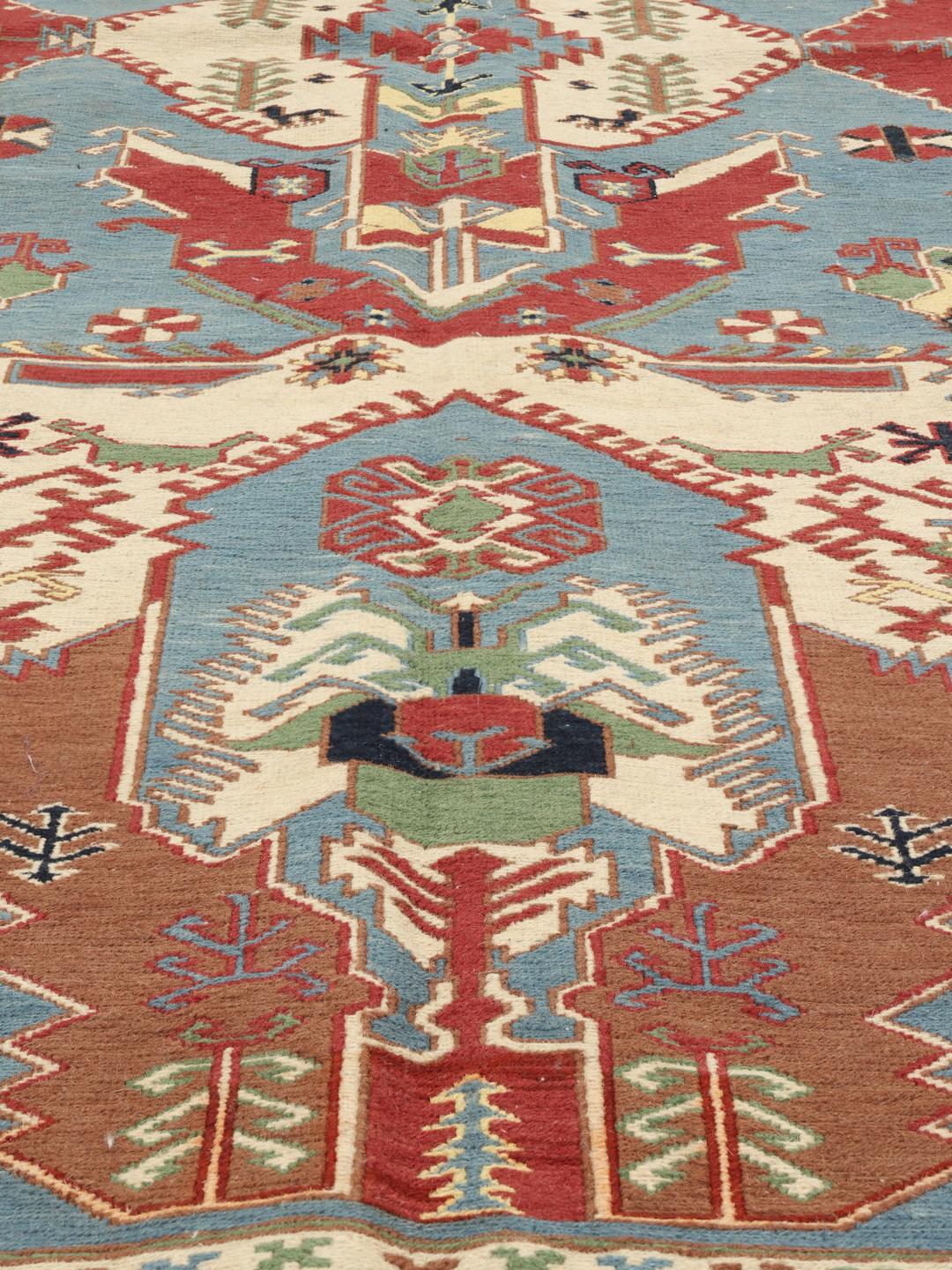
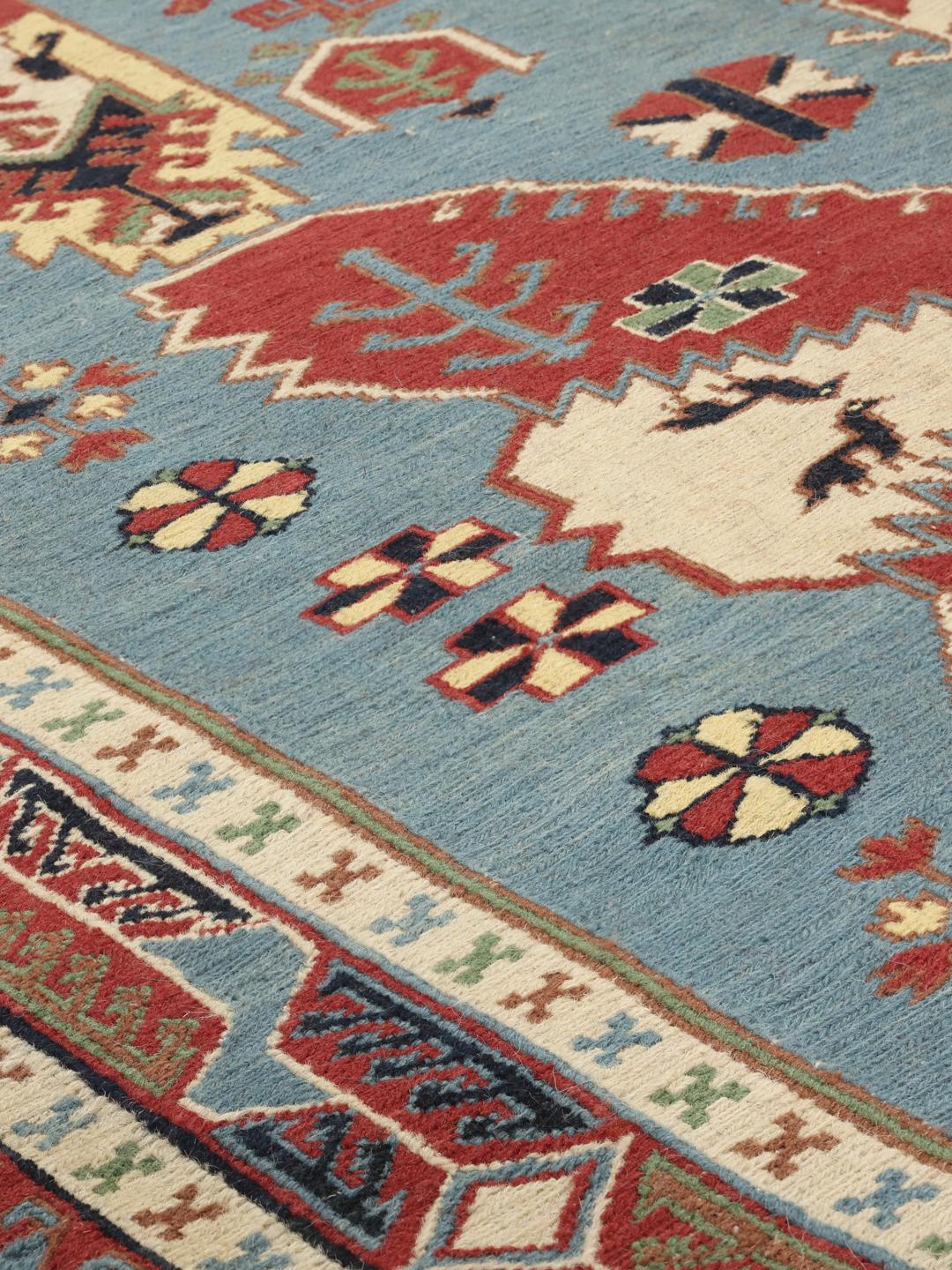
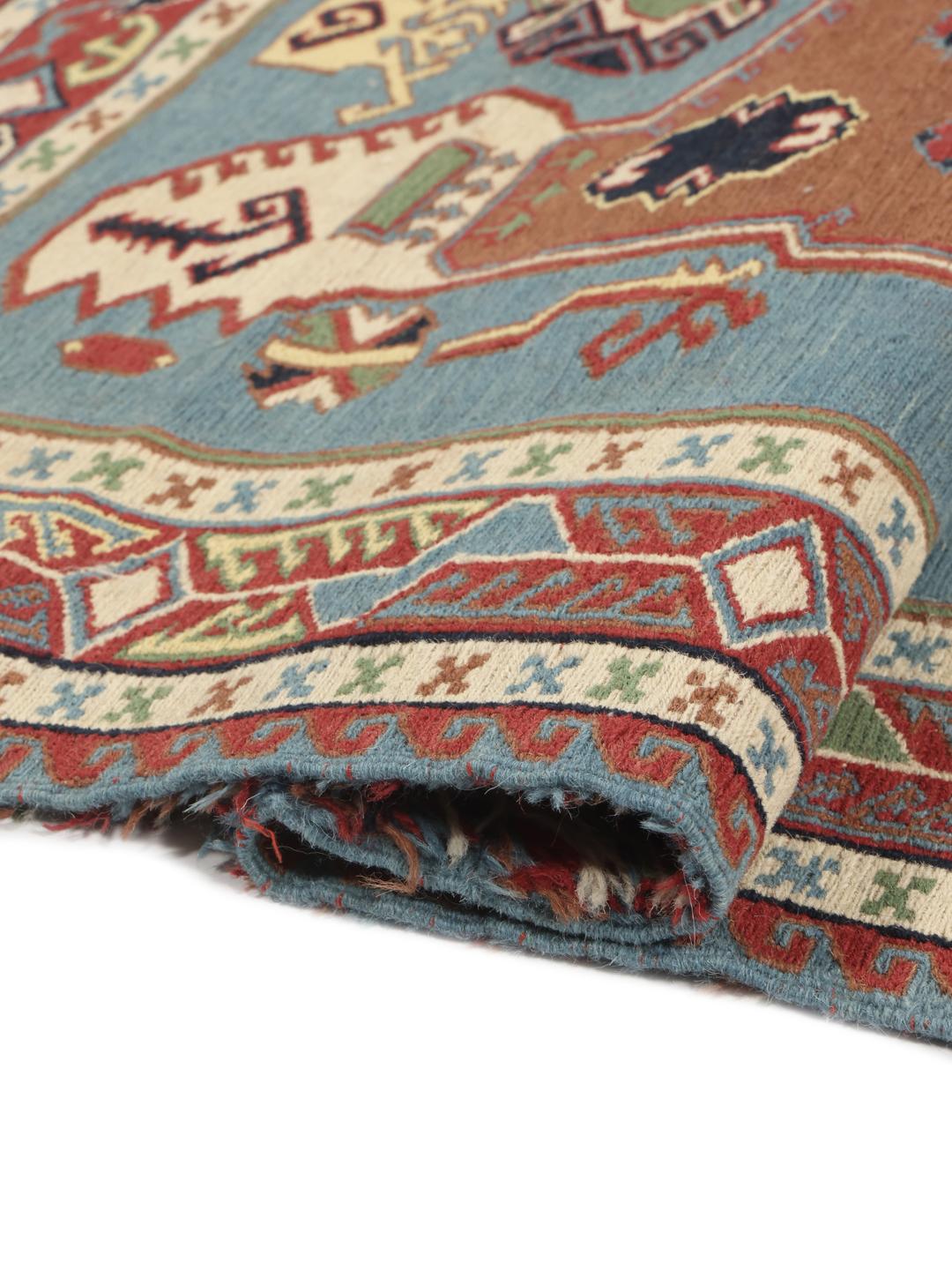
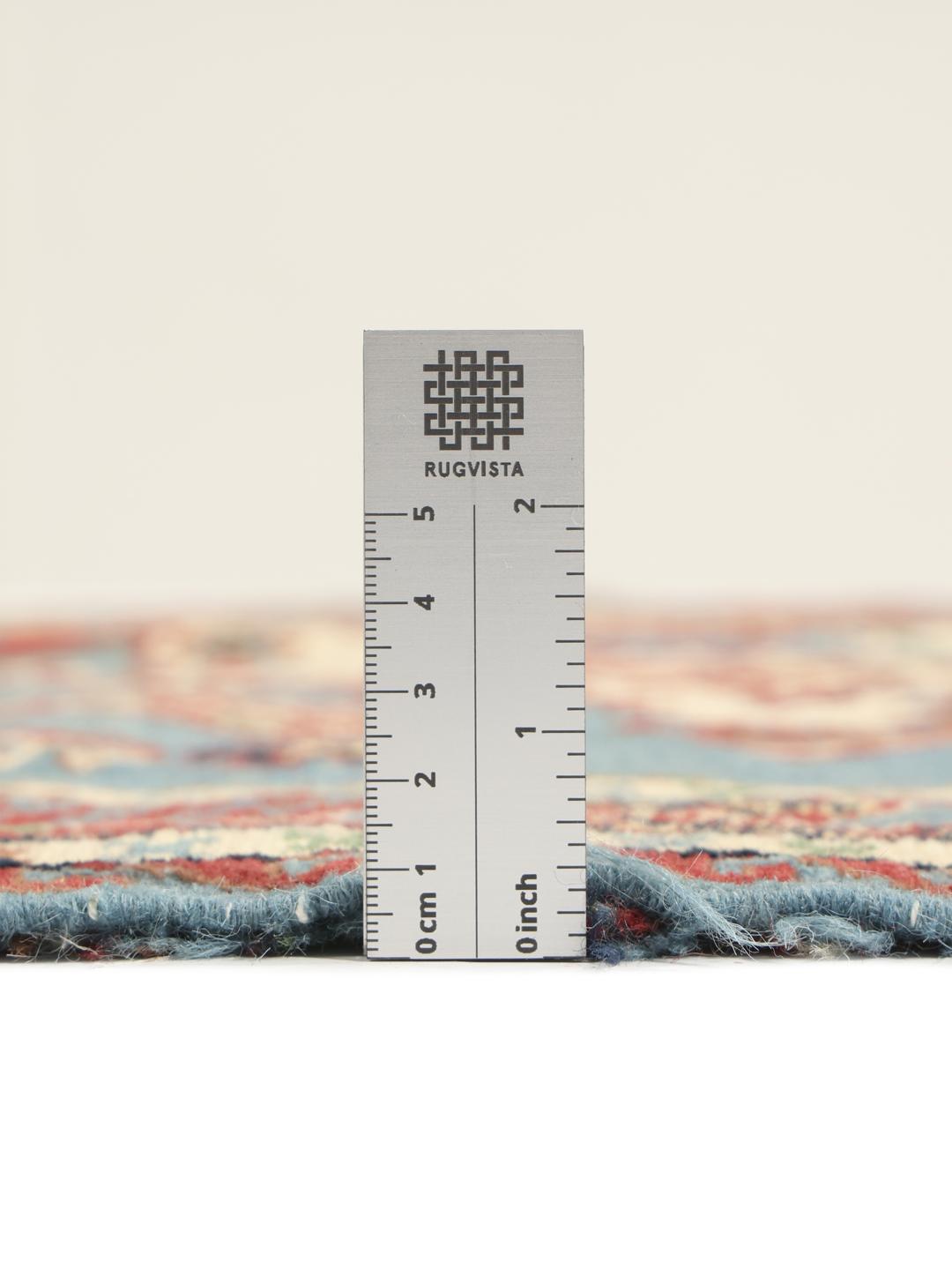
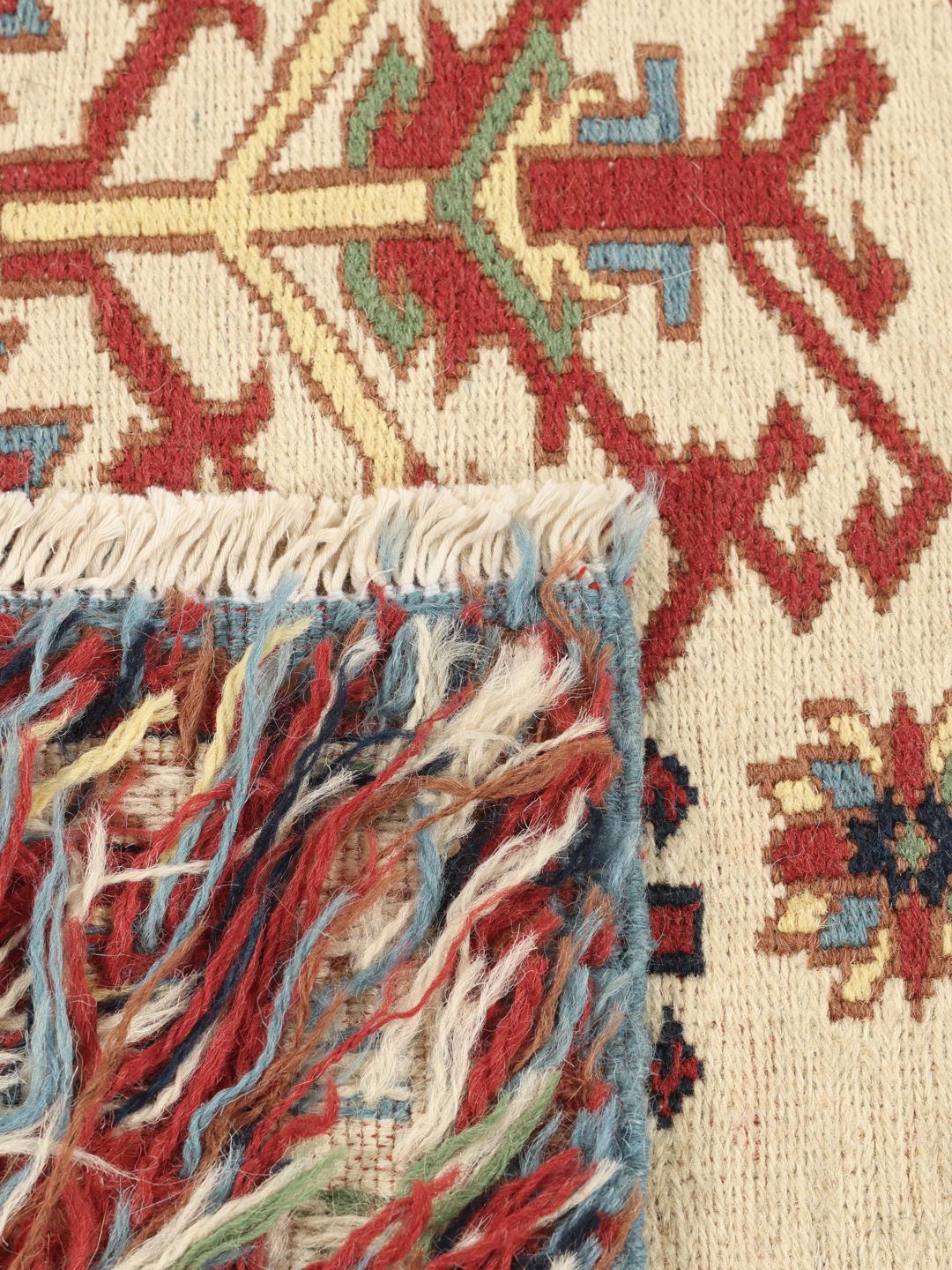
Flat-weaving, or the Kelim technique, is defined by the absence of a pile. Instead of knotting individual strands into a foundation, the weaver interlocks the weft threads with the warp threads to create the design. This produces a rug that is lightweight, incredibly strong, and versatile, allowing for crisp, clean lines and bold geometric patterns that are characteristic of this style.
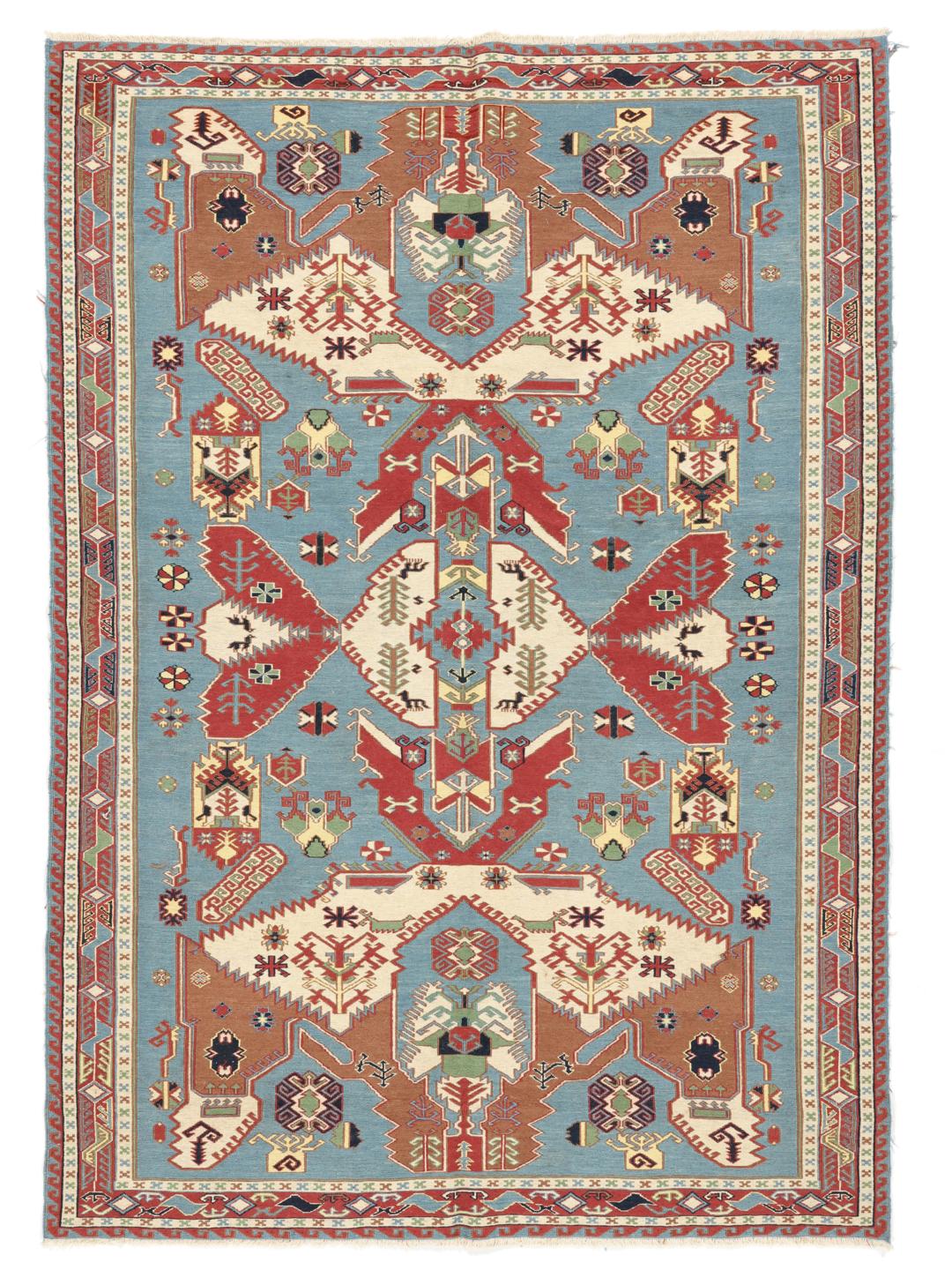
Design elements in these rugs often draw from ancient tribal motifs, featuring stylized floral, medallion, and geometric shapes. The Suzani influence, characterised by its ornate, needlework-inspired patterns, brings a sophisticated, decorative edge to the traditional Kelim format. This specific rug uses these motifs to create a rhythmic, balanced composition that feels both historical and timeless.
Collectors value these rugs for their authenticity and the sheer skill required to produce them without the aid of modern machinery. Owning an Afghan Kelim is an investment in human heritage, representing a connection to a slow, thoughtful way of making that prioritises lasting quality and deep cultural meaning over convenience.