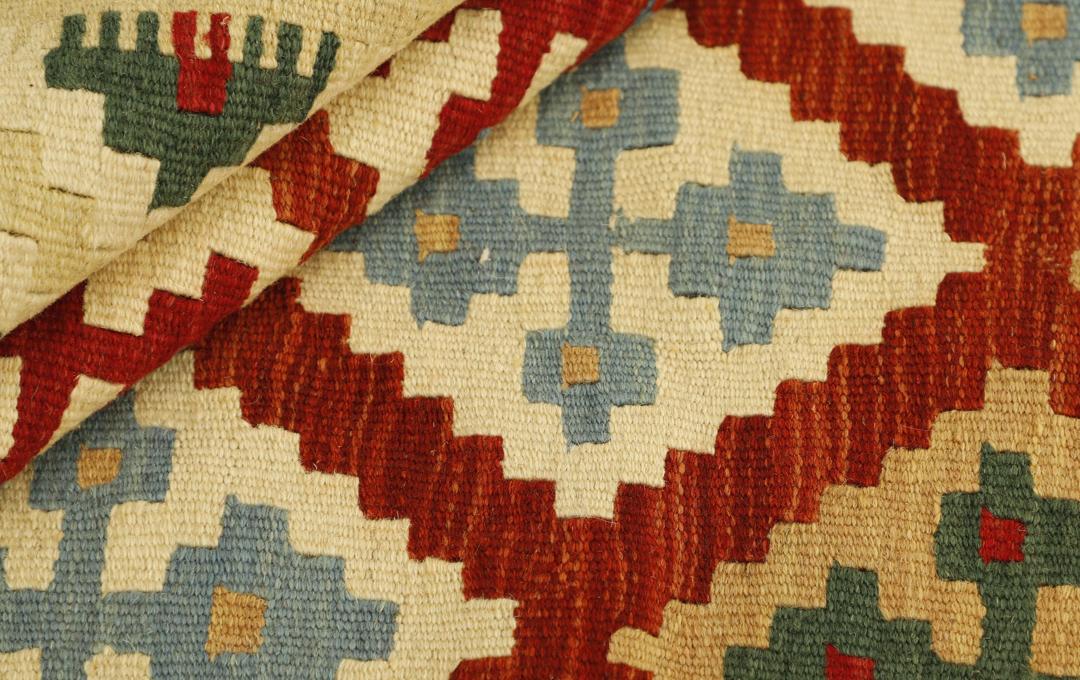
Kilim rugs represent one of the most enduring and storied traditions in the Middle East. These flat-woven textiles have been crafted for centuries by nomadic and village communities, serving not only as floor coverings but as essential functional items for daily life, including blankets, bags, and wall hangings.
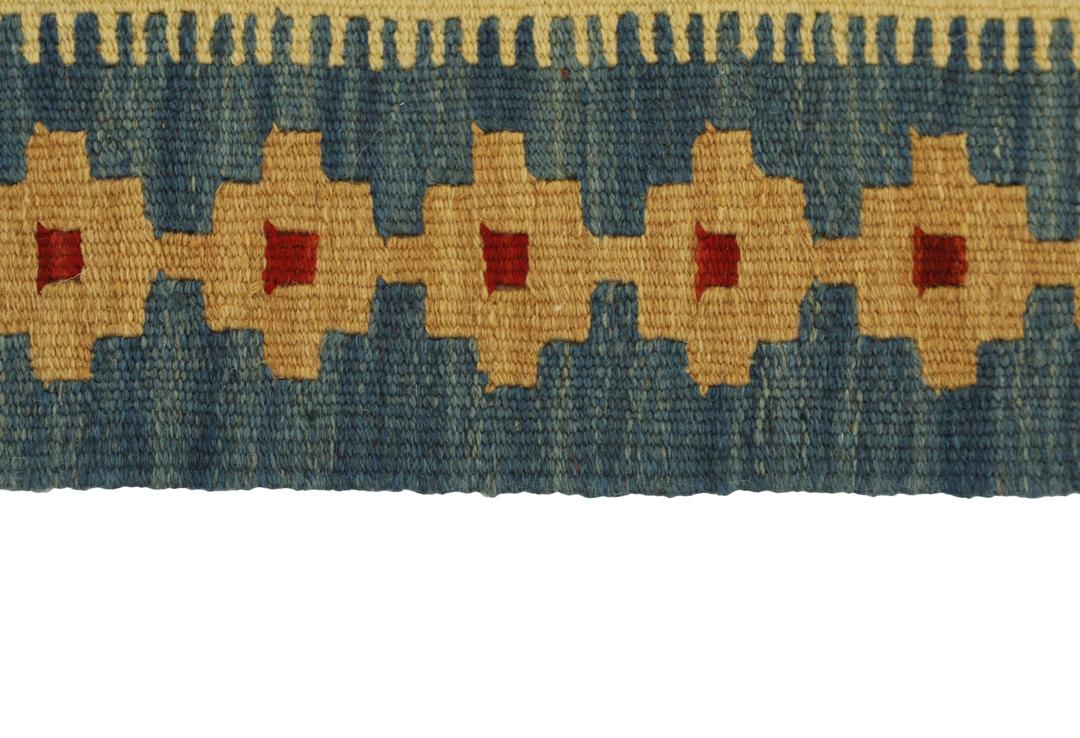
The term 'kilim' refers specifically to the tapestry-weave technique, where the weft strands are passed back and forth through the warp threads. This method creates a rug without a pile, resulting in a lightweight, reversible, and incredibly durable textile. The absence of pile allows for exceptionally sharp, clear geometric designs that are iconic to this style.
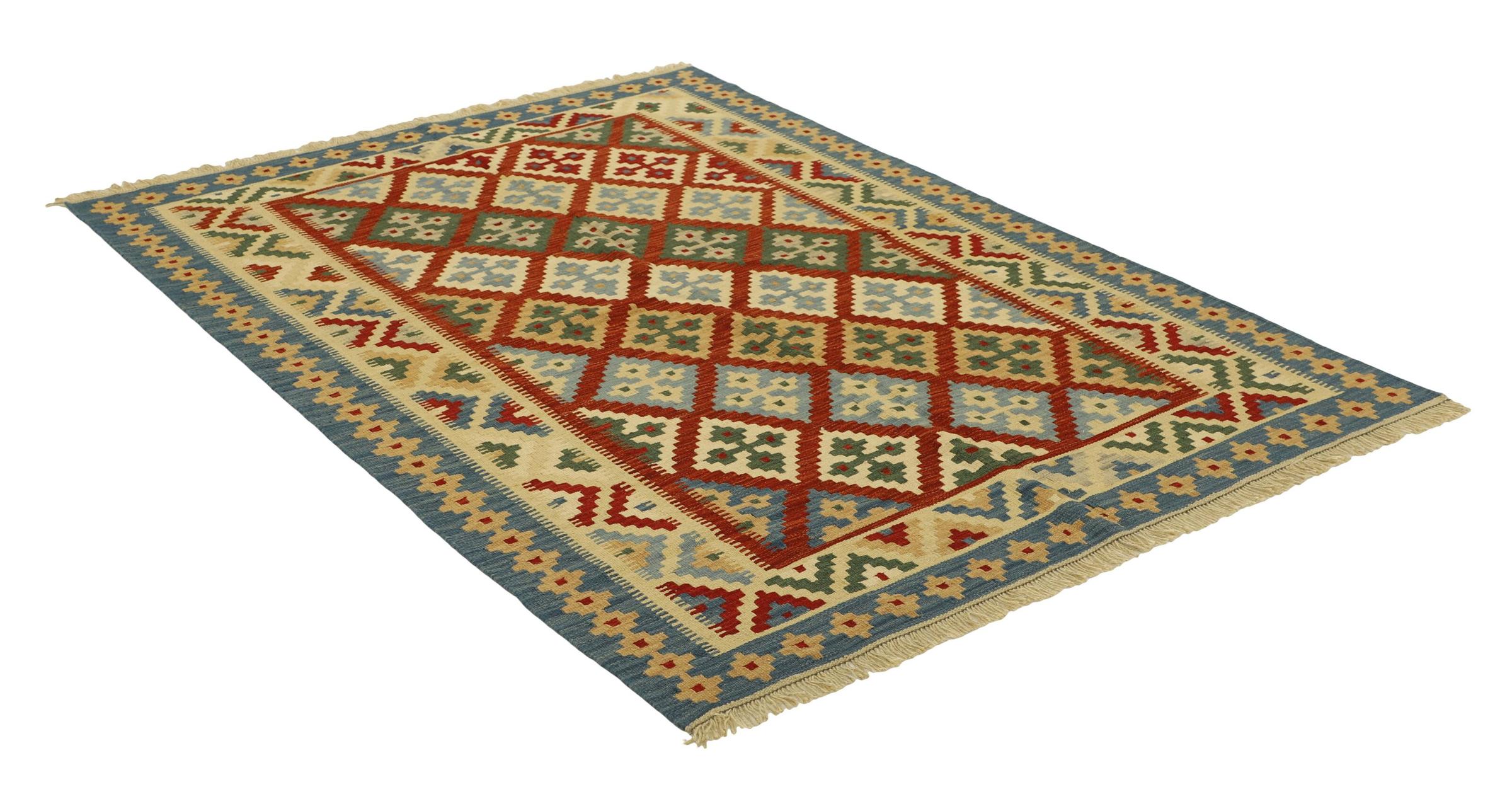
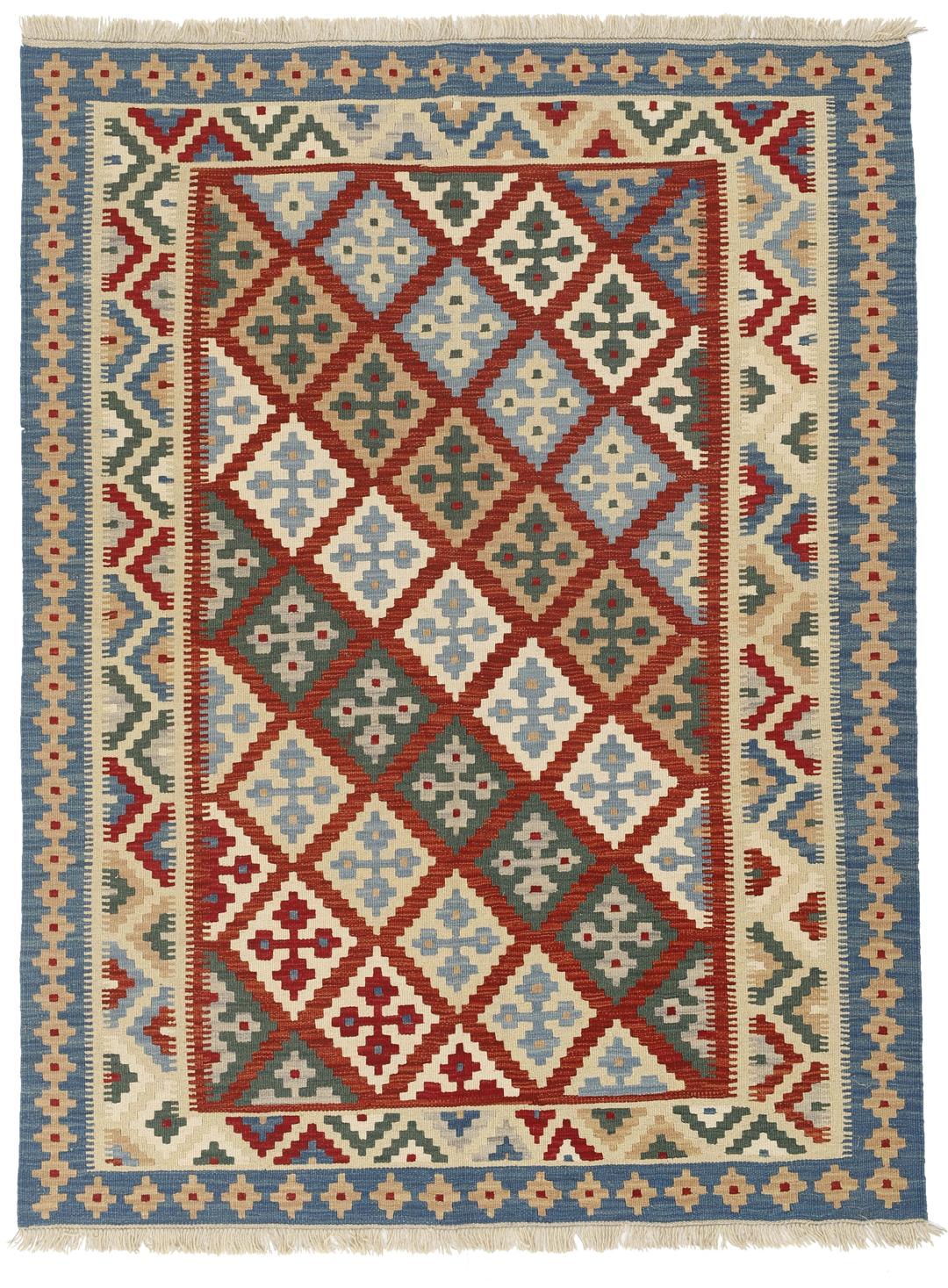
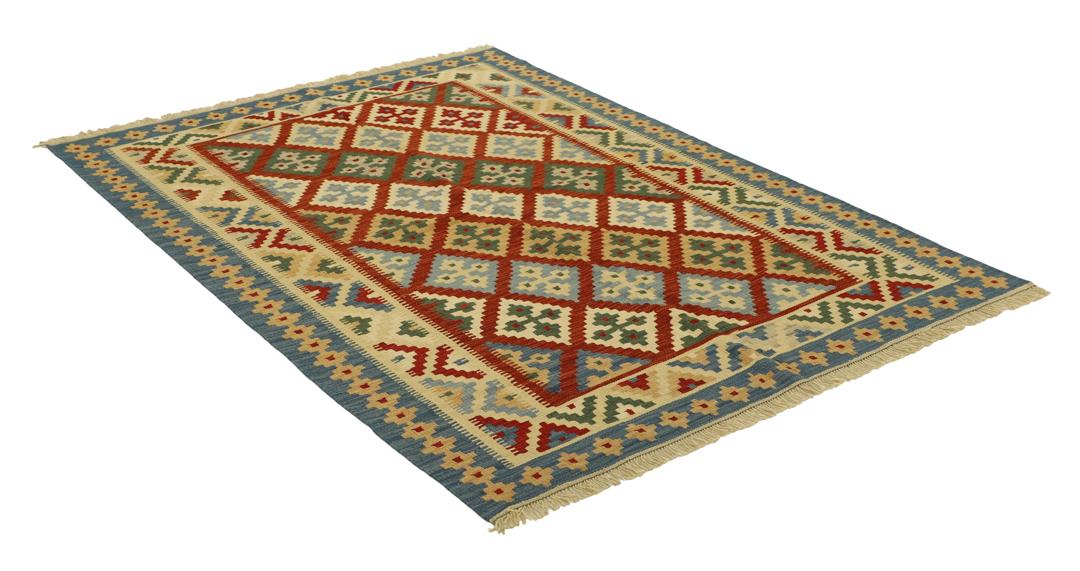
Signature design elements often include bold geometric shapes, such as the repeating diamonds seen here, which are frequently imbued with cultural symbolism related to protection and prosperity. The borders often feature intricate, repetitive motifs that frame the central field, showcasing the weaver's ability to balance complex patterns with a harmonious colour palette.
Collecting these rugs is an investment in cultural heritage. Because they are often produced in small batches or as individual expressions of the weaver's skill, they possess a level of authenticity that mass-produced items cannot match. Owning a kilim is a way to connect with a history of nomadic artistry and the collective knowledge of generations of weavers.