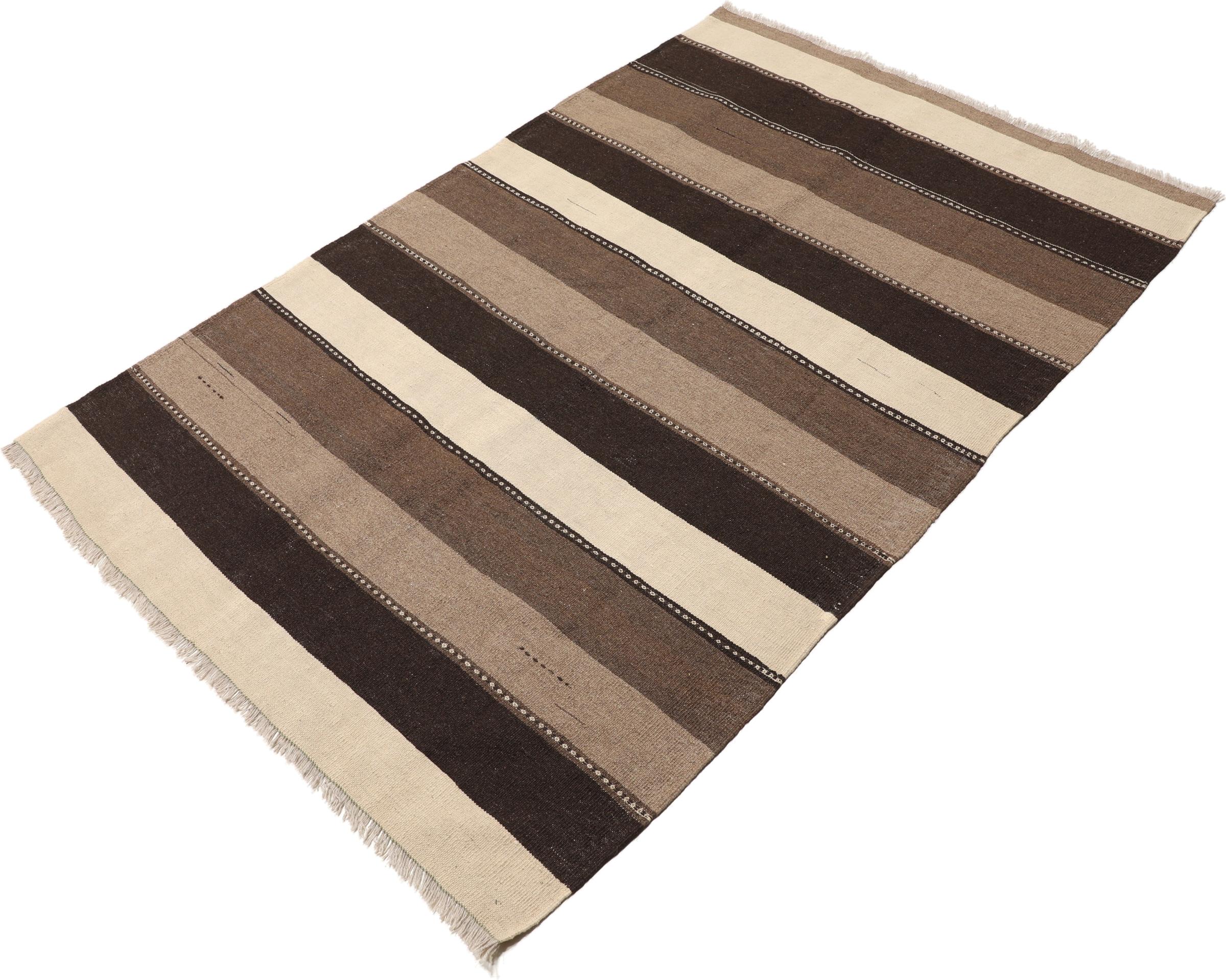
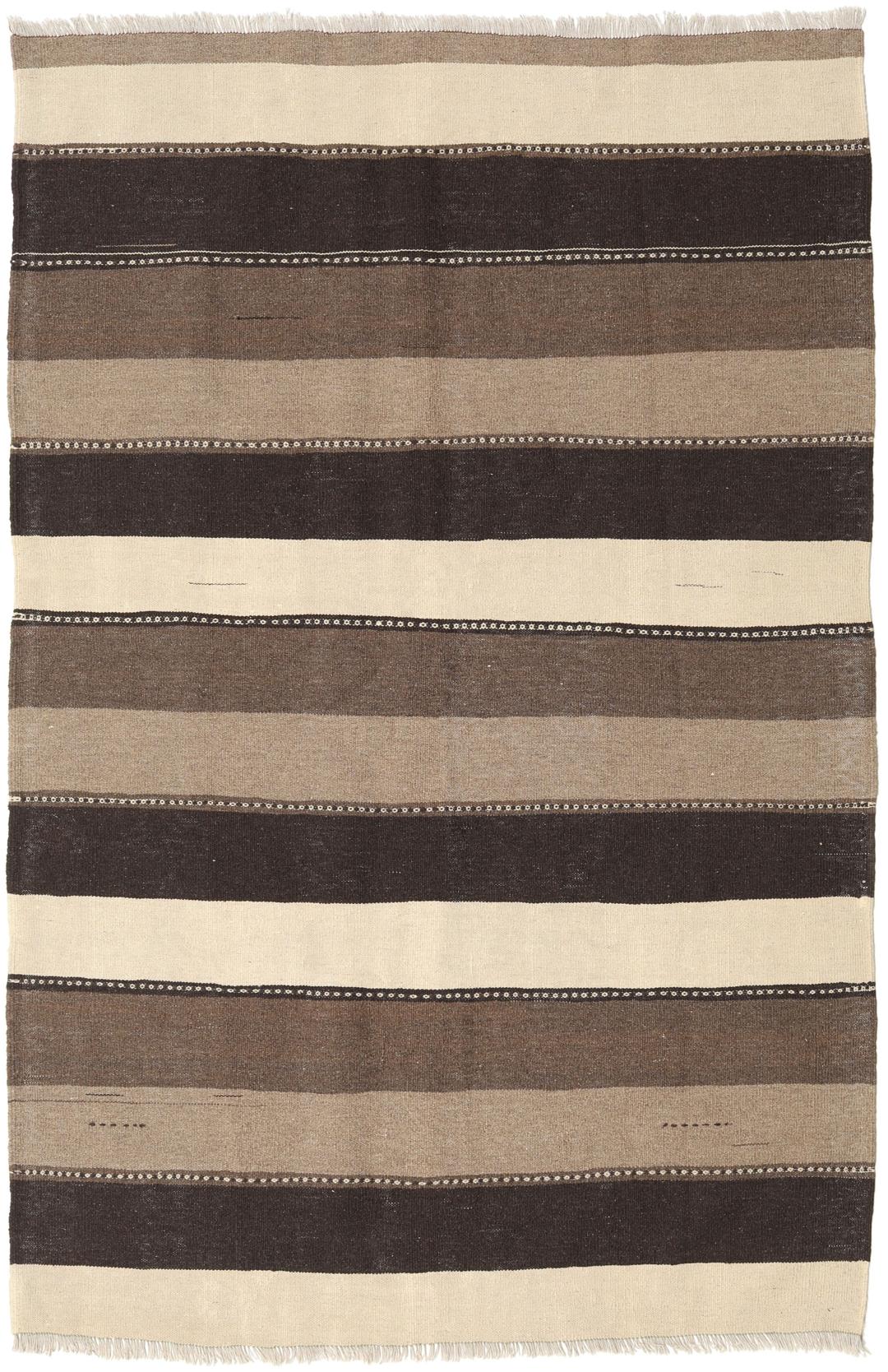
Kilim rugs originate from a rich tradition of flat-weaving practised by nomadic and semi-nomadic tribes across the Middle East. Historically, these rugs served as essential household items, functioning as blankets, floor coverings, and storage bags, reflecting the resourcefulness and artistry of the weaving communities.
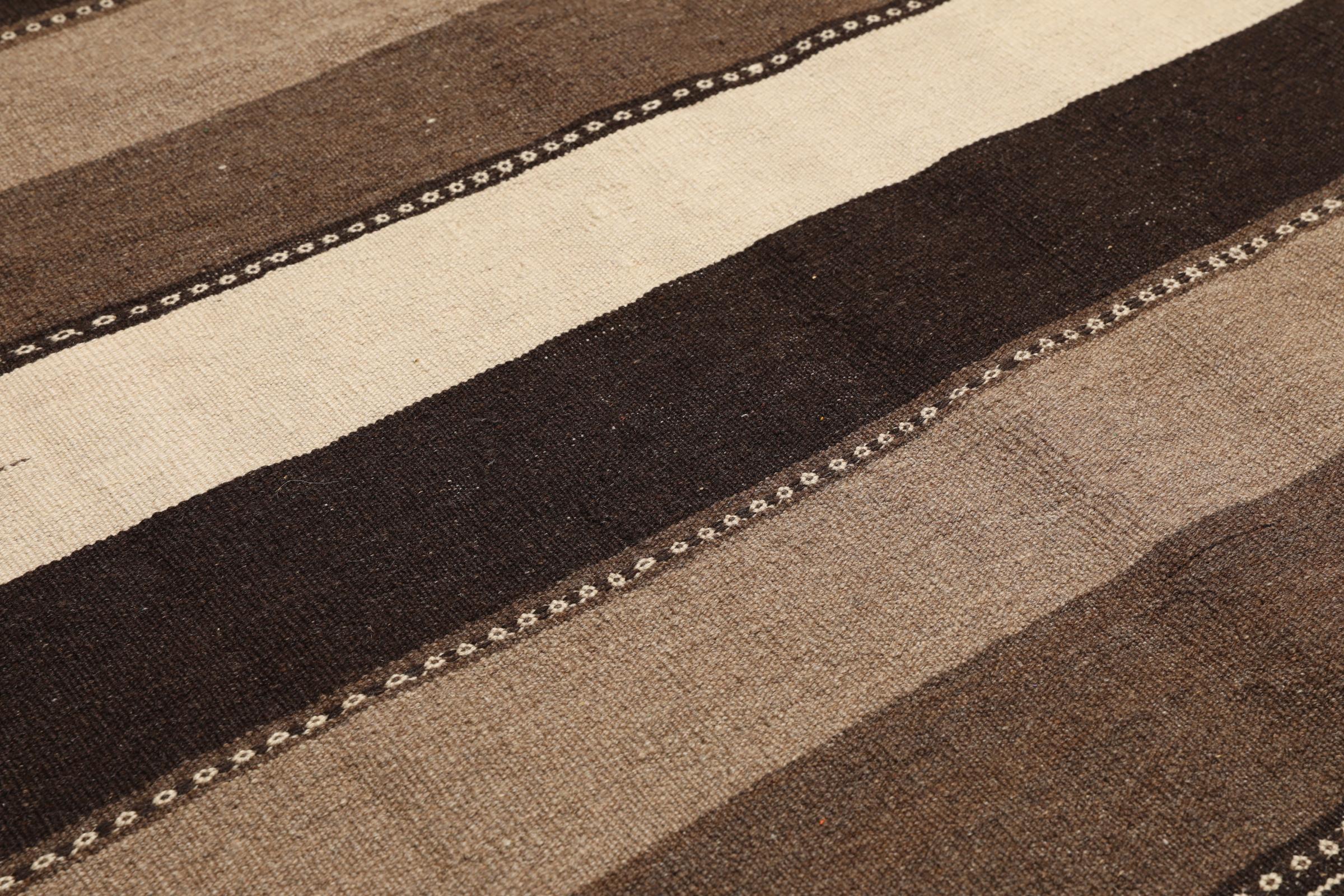
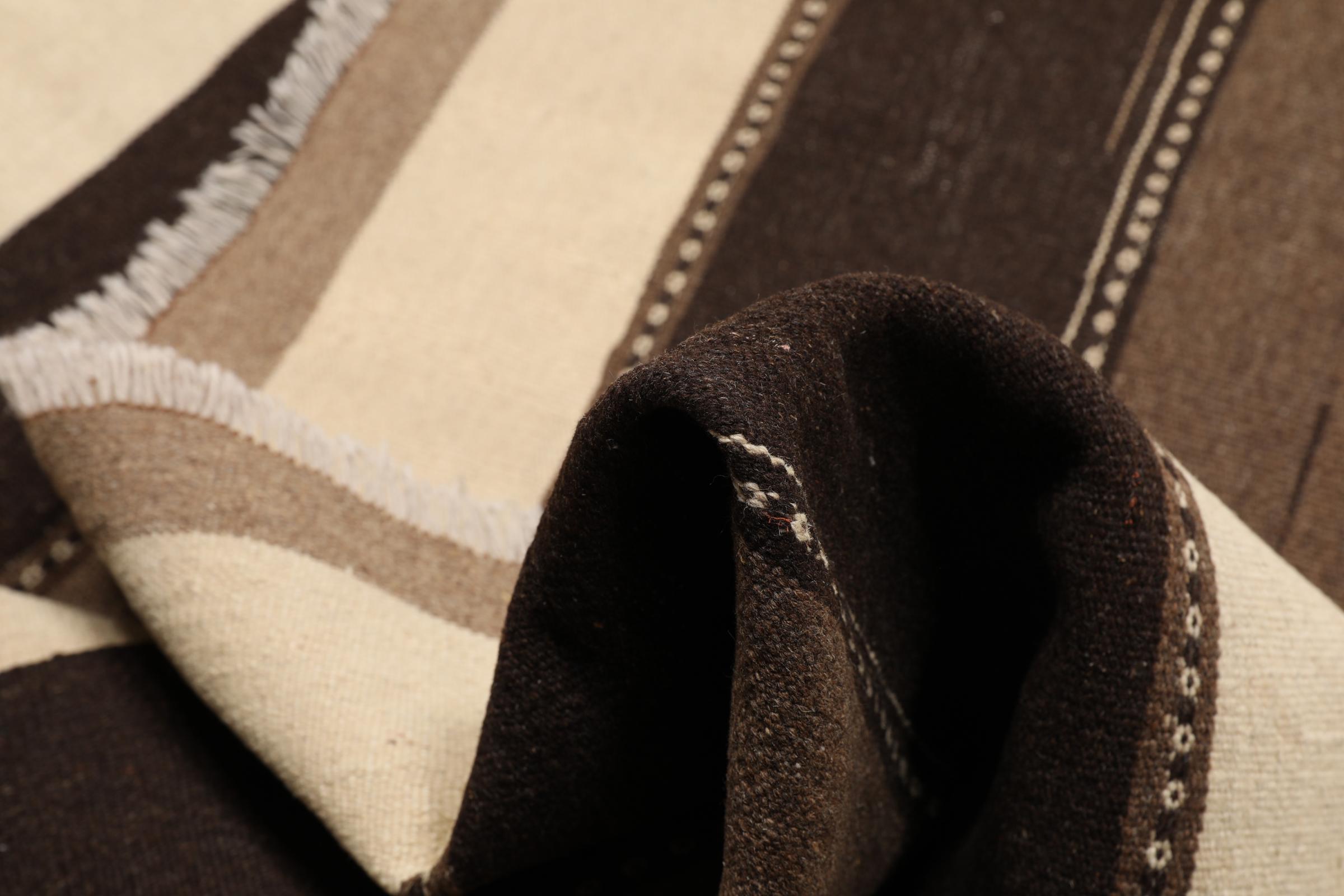
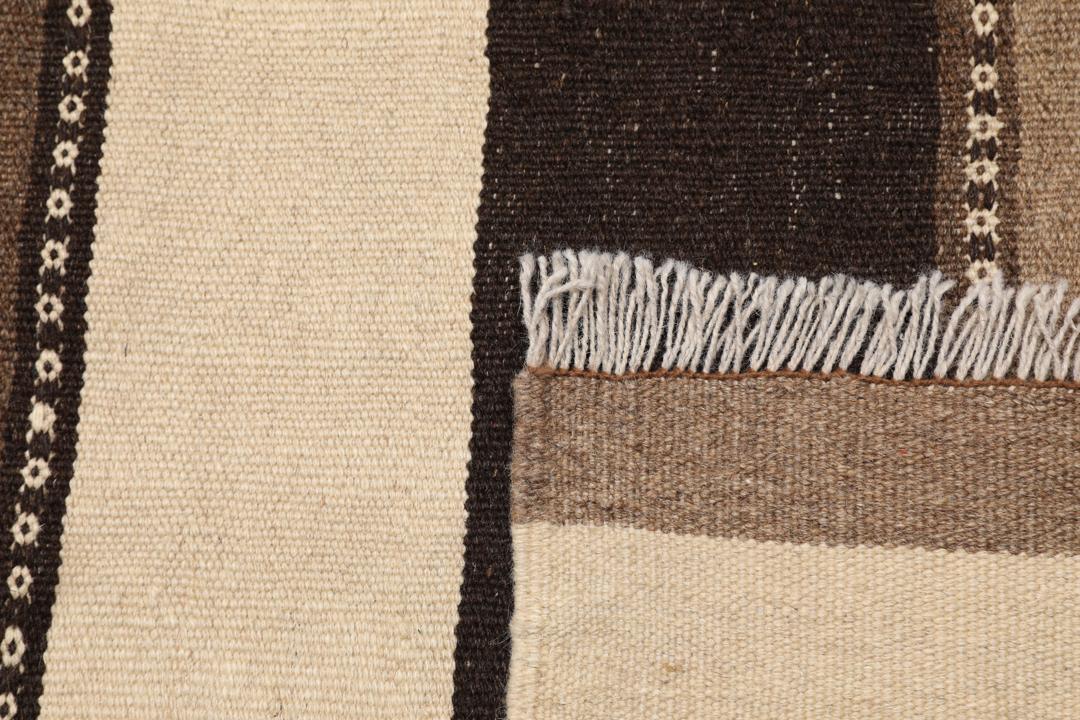
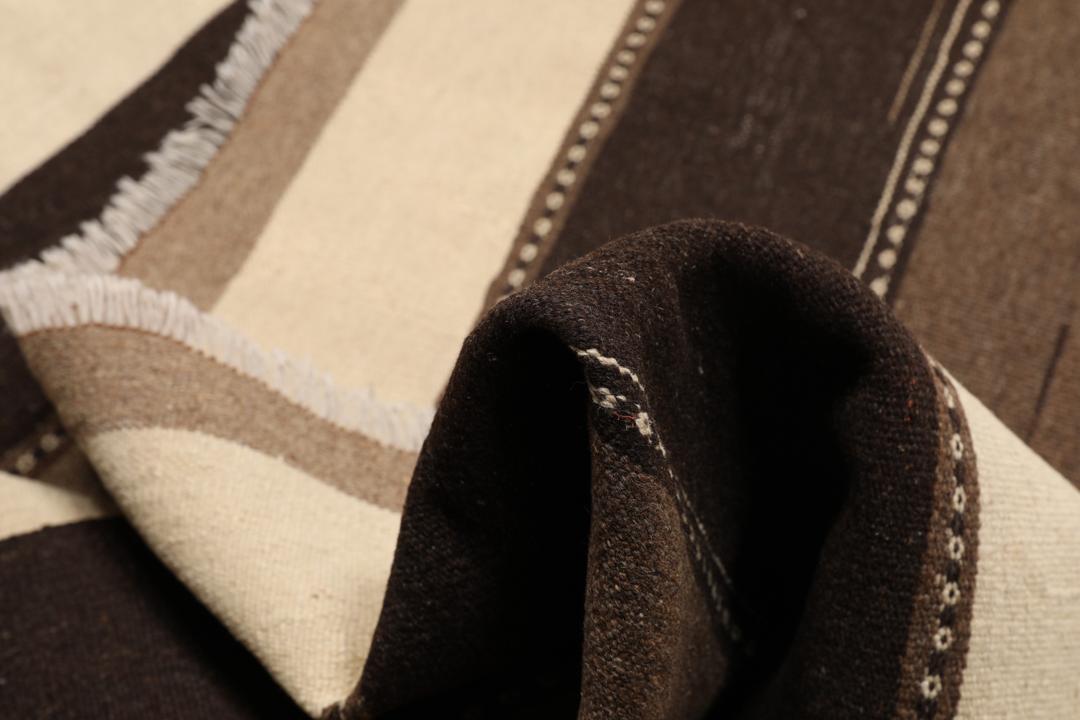
The term Kilim refers specifically to the slit-weave technique, where the horizontal threads are tightly packed against the vertical foundations to create the final design. This lack of pile results in a lightweight yet exceptionally durable rug that is prized for its clean lines and graphic clarity.
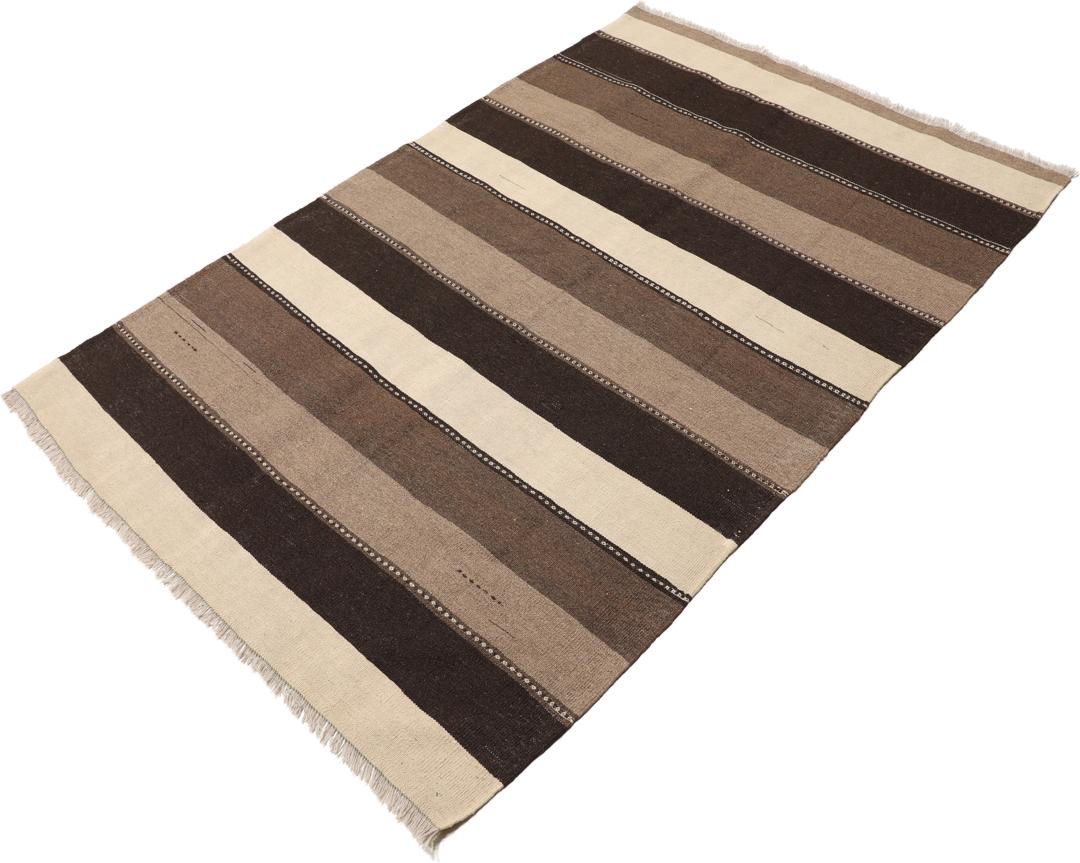
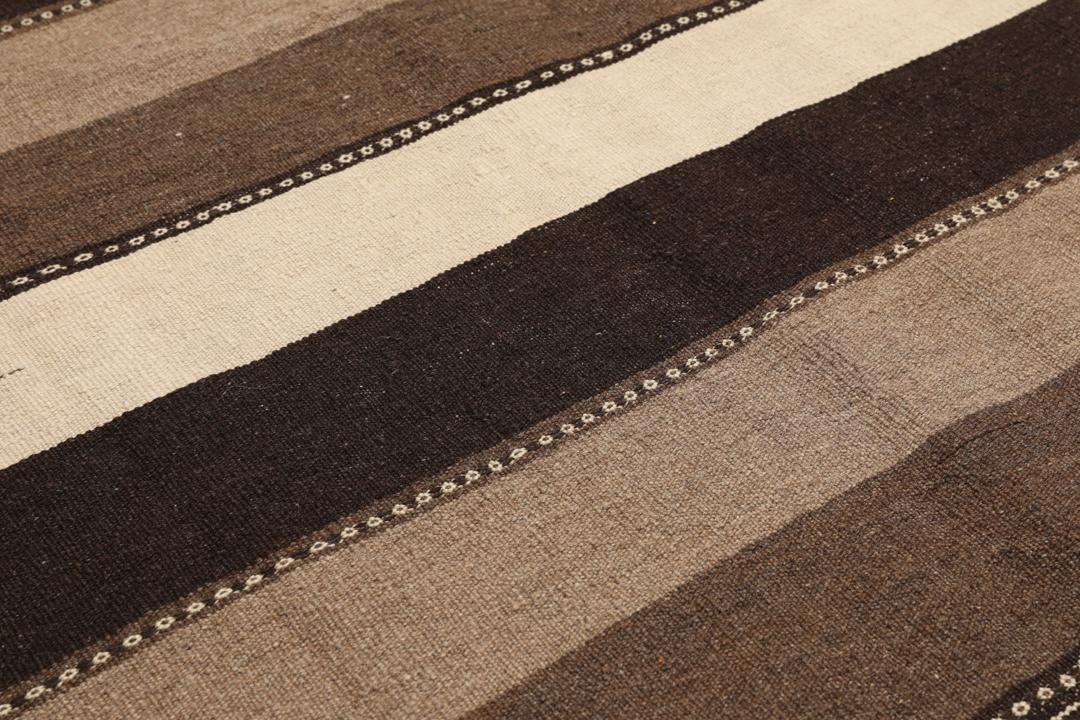
The visual language of this tradition is defined by bold geometric shapes and stripes, often derived from symbolic motifs that carry cultural meaning. While traditional designs often feature vibrant dyes, this piece highlights the beauty of natural, undyed Wool shades, showcasing the raw elegance inherent in the craft.
Owning a Kilim is an invitation to connect with a long-standing heritage of craftsmanship. These rugs are highly collected because they represent an authentic expression of human skill, where every thread is placed with intention, preserving a legacy of design that has been passed down through generations.