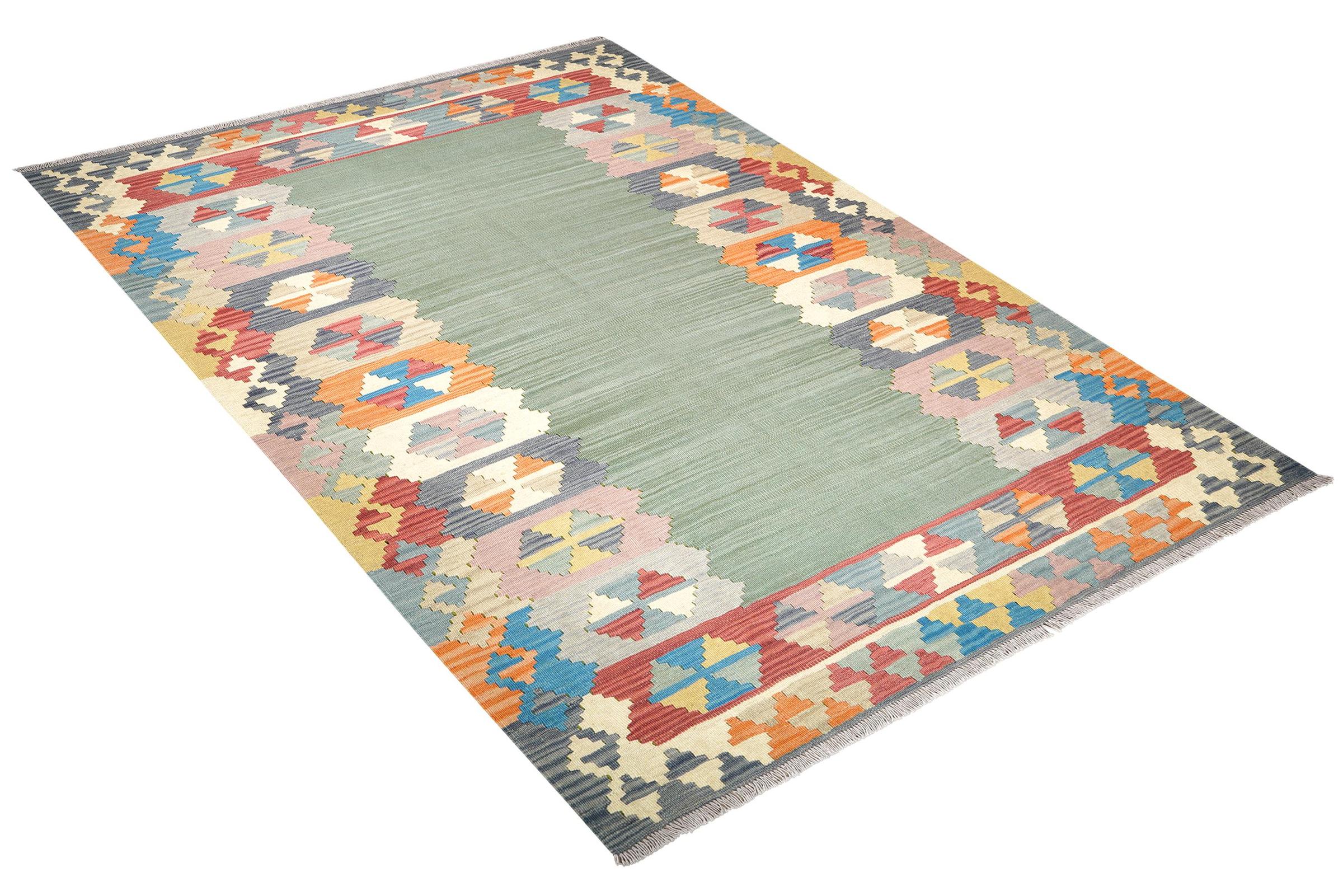
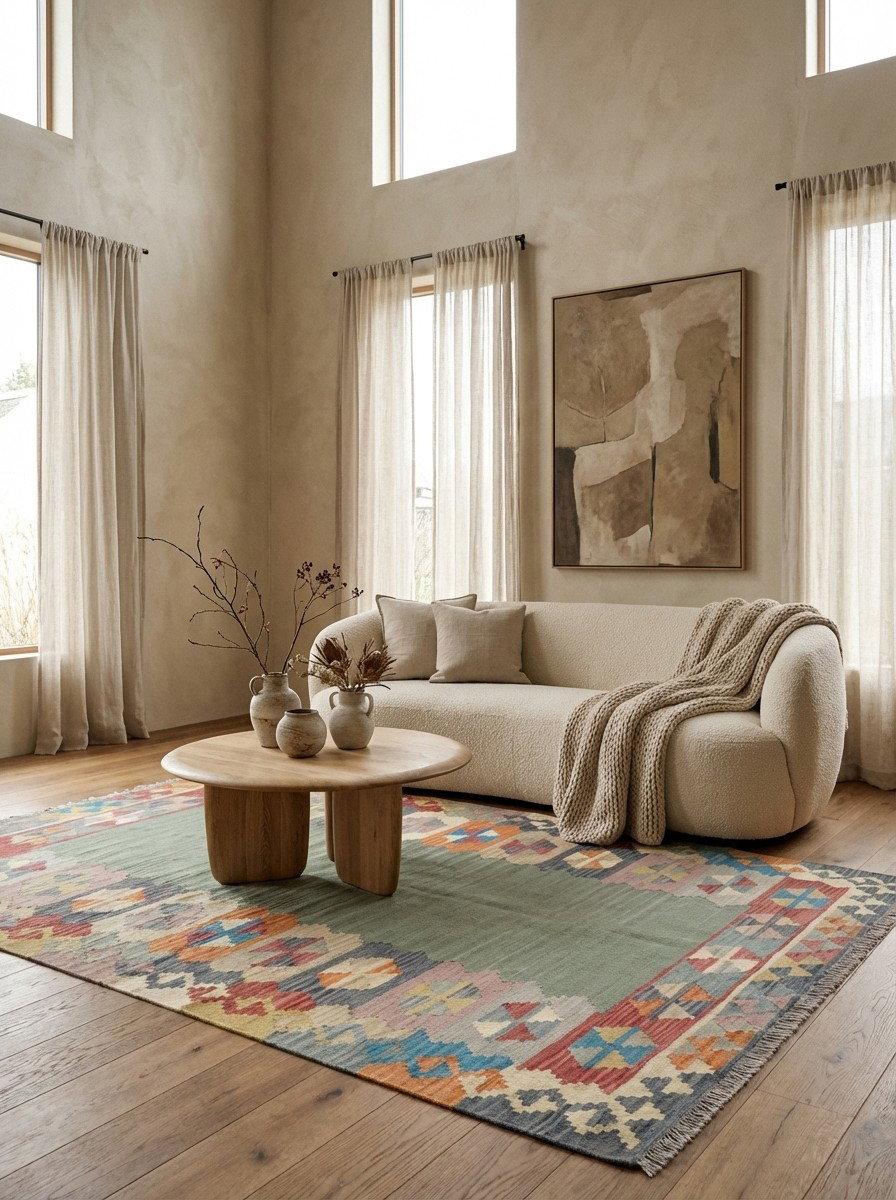
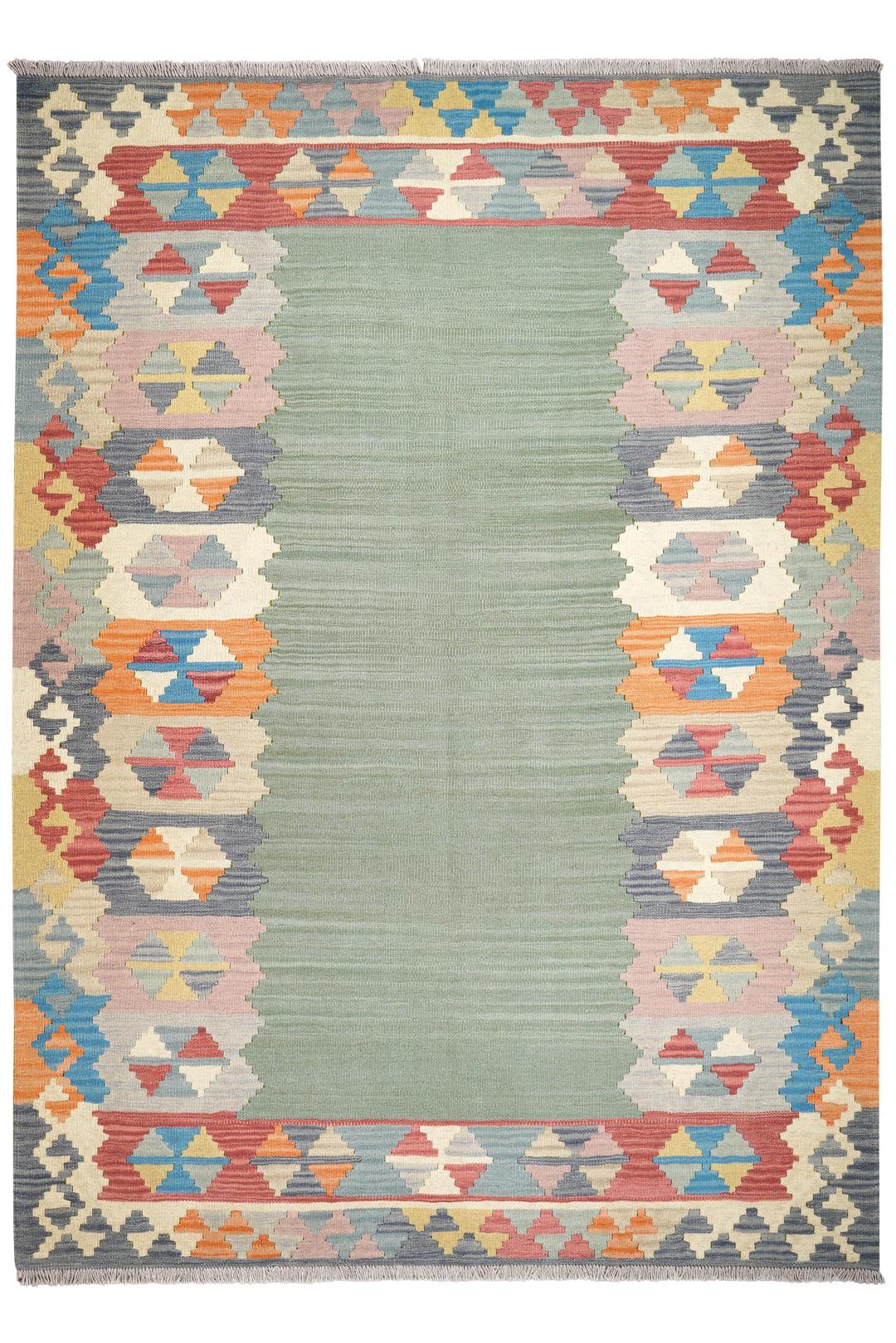
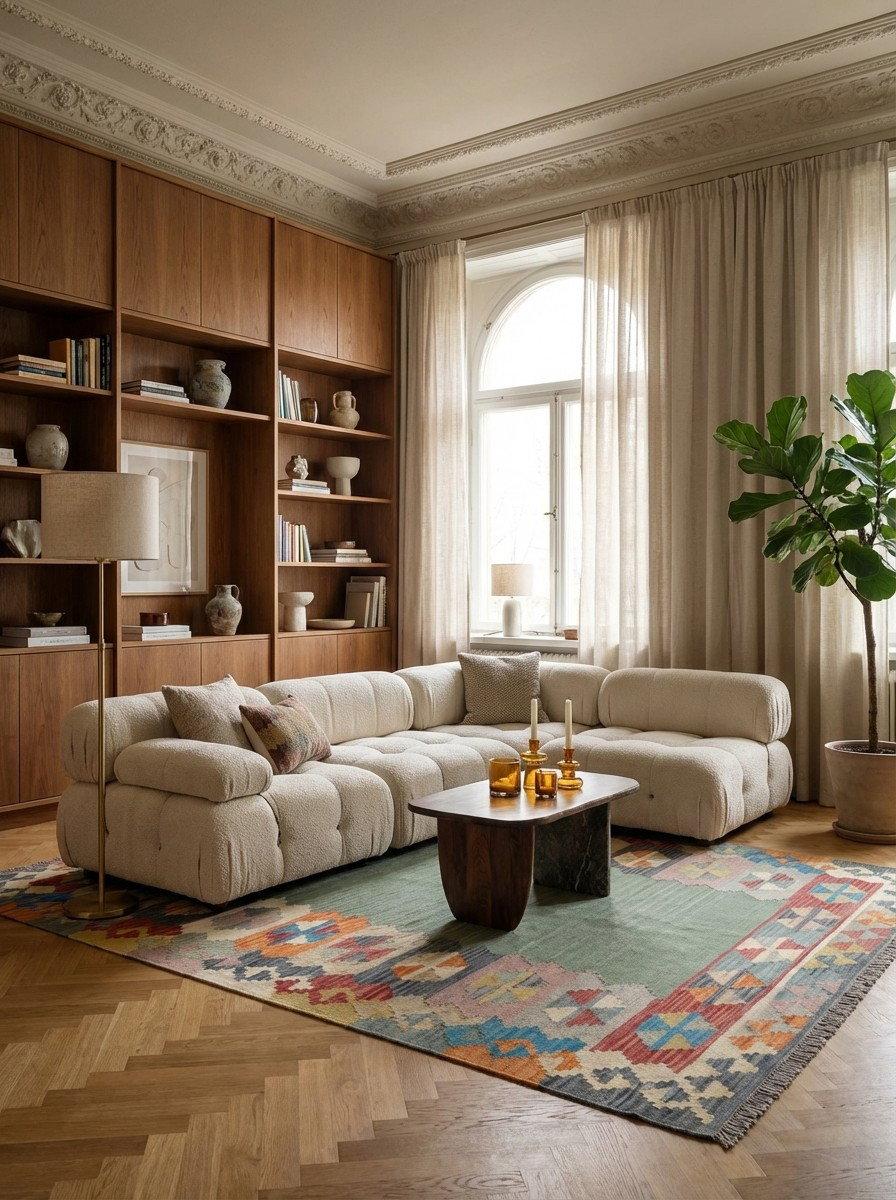
The Kilim Qashqai tradition originates from the nomadic tribes of the Middle East, a culture renowned for their resilience and deep connection to the land. These rugs were historically woven for practical, everyday use, serving as floor coverings, tent dividers, and storage bags during the seasonal migrations of the Qashqai people.
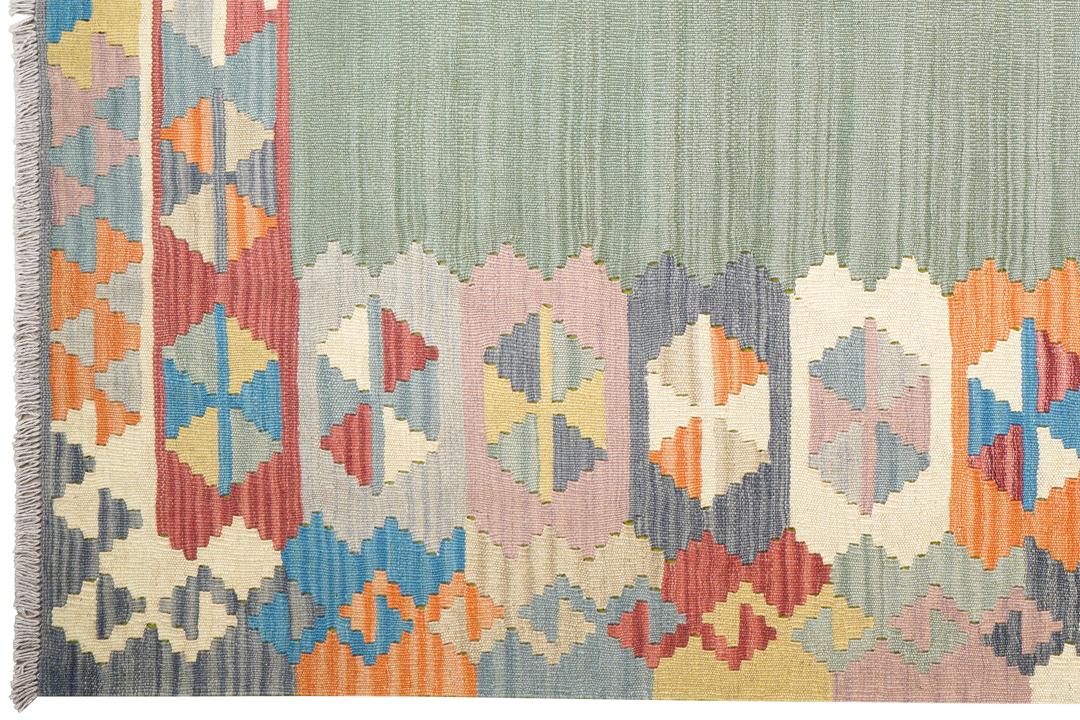
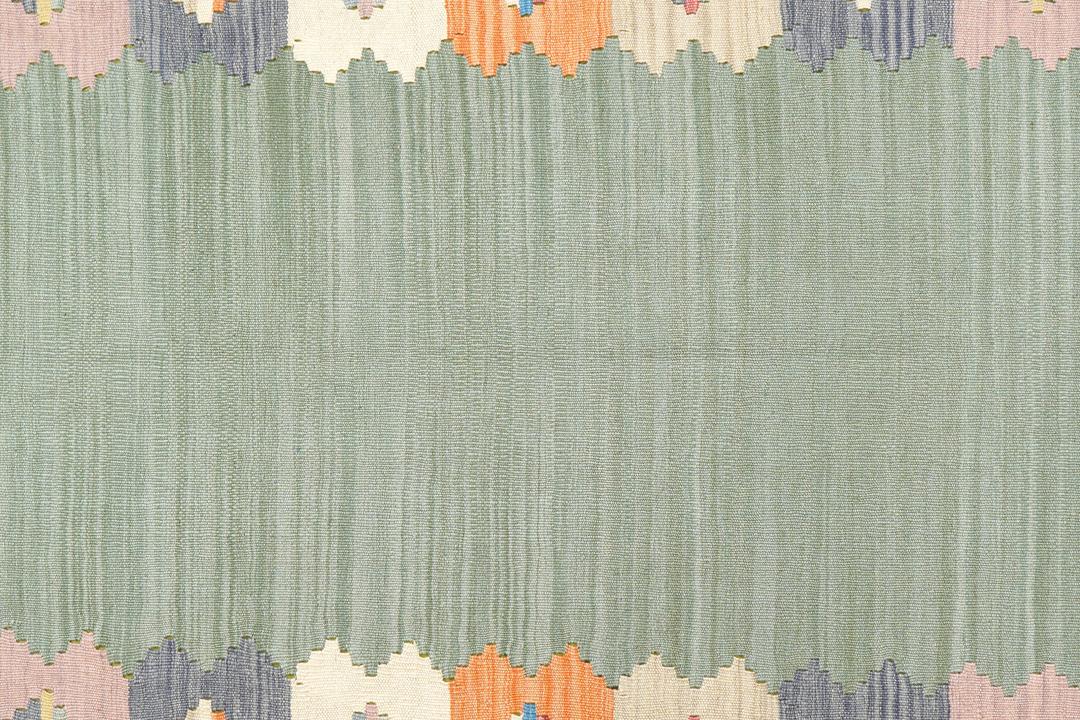
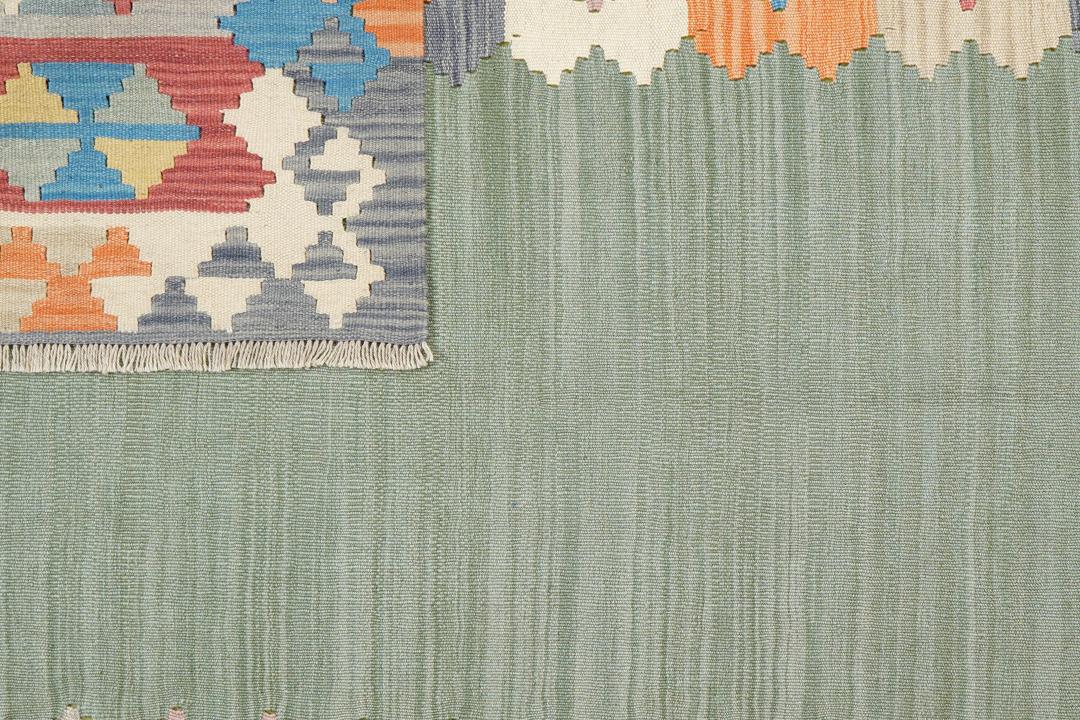
In terms of craft, a kilim is defined by its flat-woven technique, where the weft strands are pulled tightly over the warp to create a smooth, pileless surface. This technique allows for the characteristic crisp, geometric lines that define the style, as the weaver builds the pattern by interlocking different coloured threads, resulting in a design that is often identical on both sides.
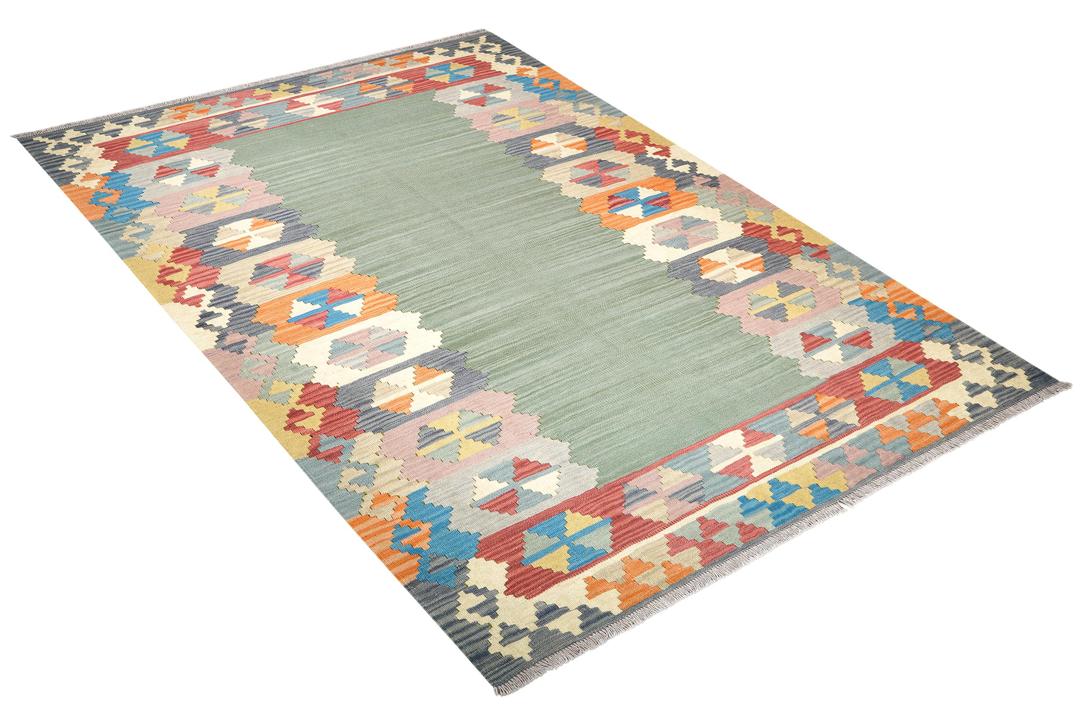
Signature design elements of this tradition include bold geometric medallions and repeating tribal symbols. The use of vibrant, natural dyes often tells a story of the surrounding landscape, with colours like deep reds, blues, and earthy greens taking centre stage. This particular rug captures that spirit, balancing traditional motifs with a distinctive, modern colour palette.
Collecting these rugs is an investment in human history. They are valued not only for their aesthetic beauty but as emblems of a nomadic heritage that has resisted the homogenisation of modern manufacturing. Owning a Kilim Qashqai connects your home to a lineage of makers who prioritise skill, community, and the preservation of ancient design languages.