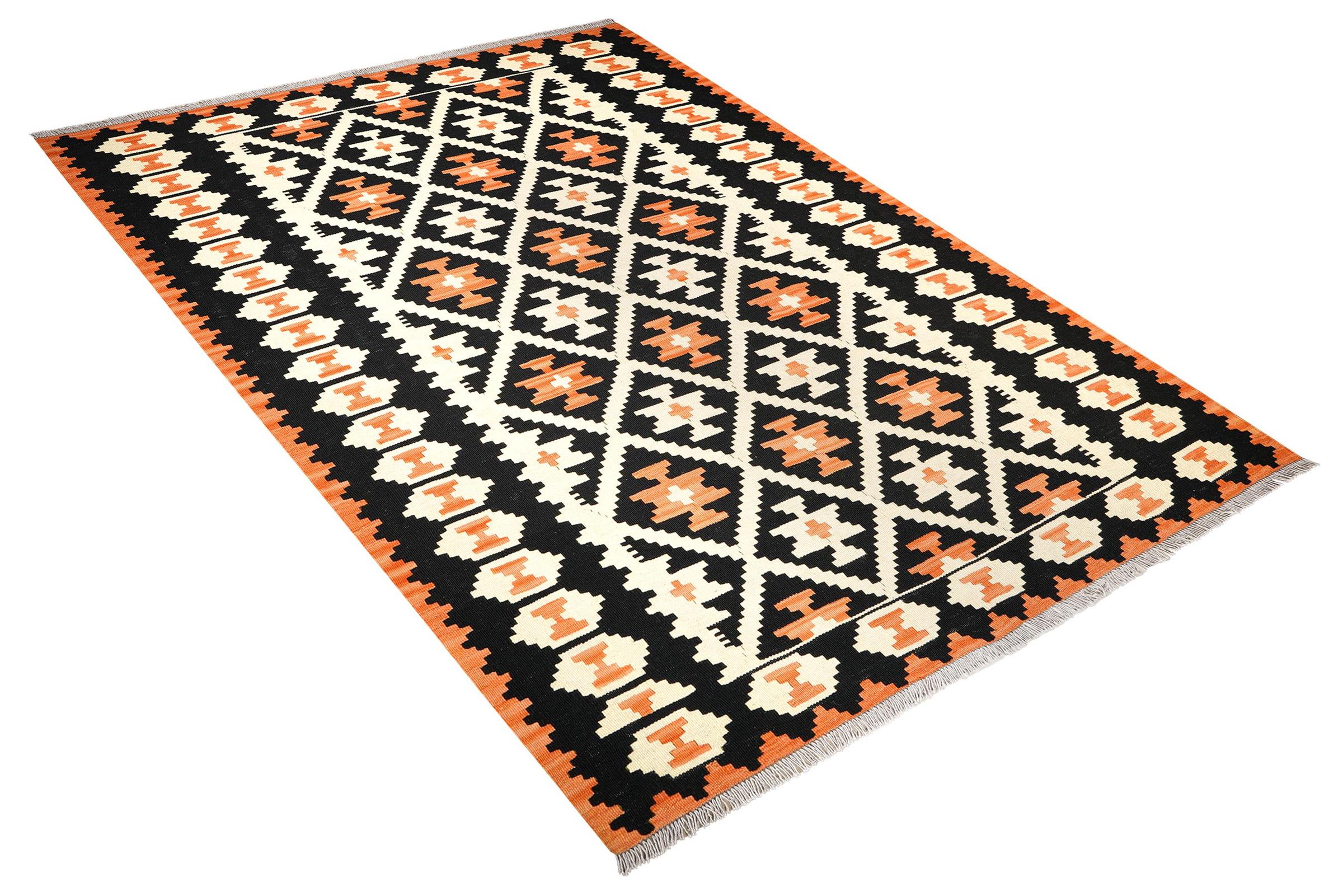
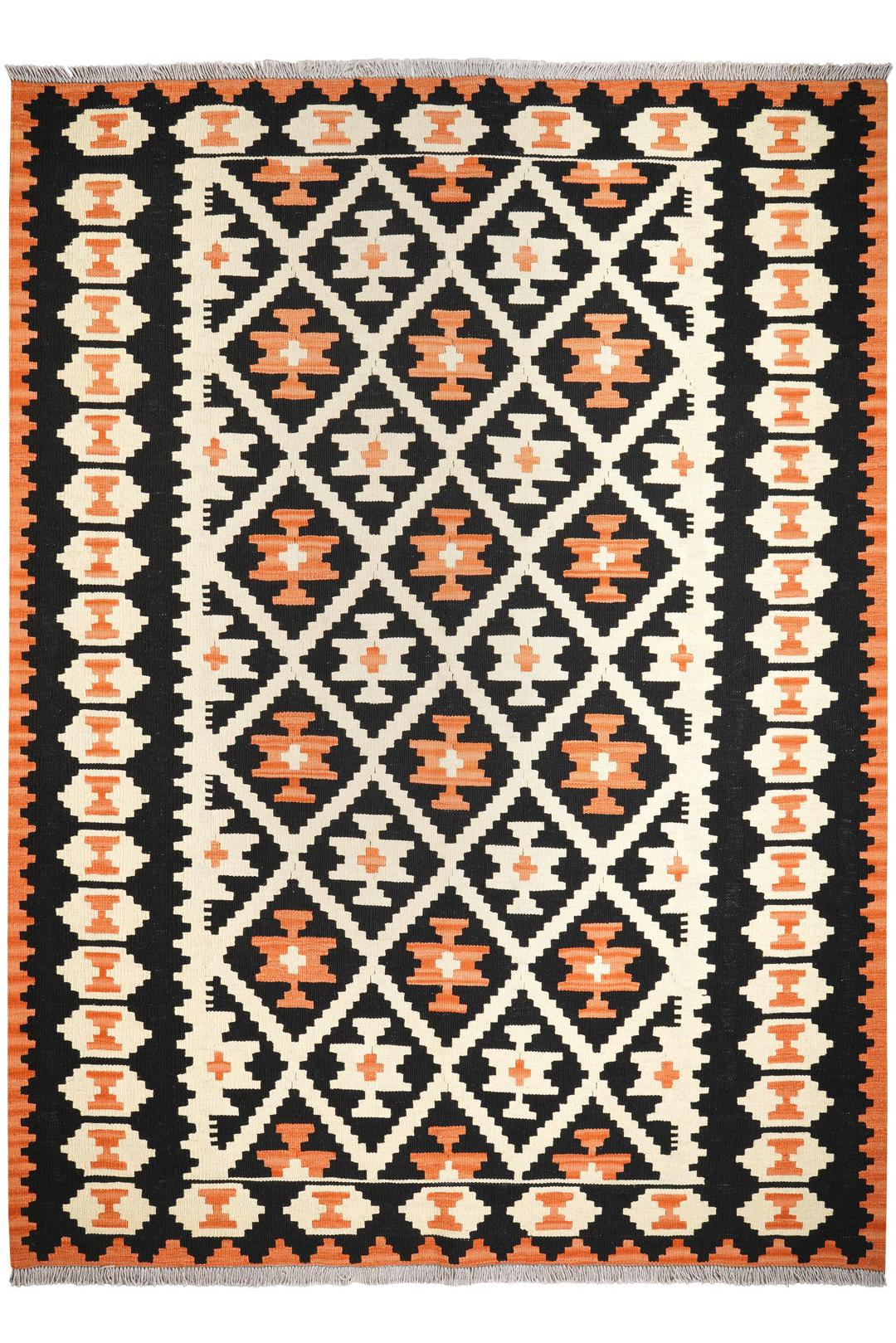
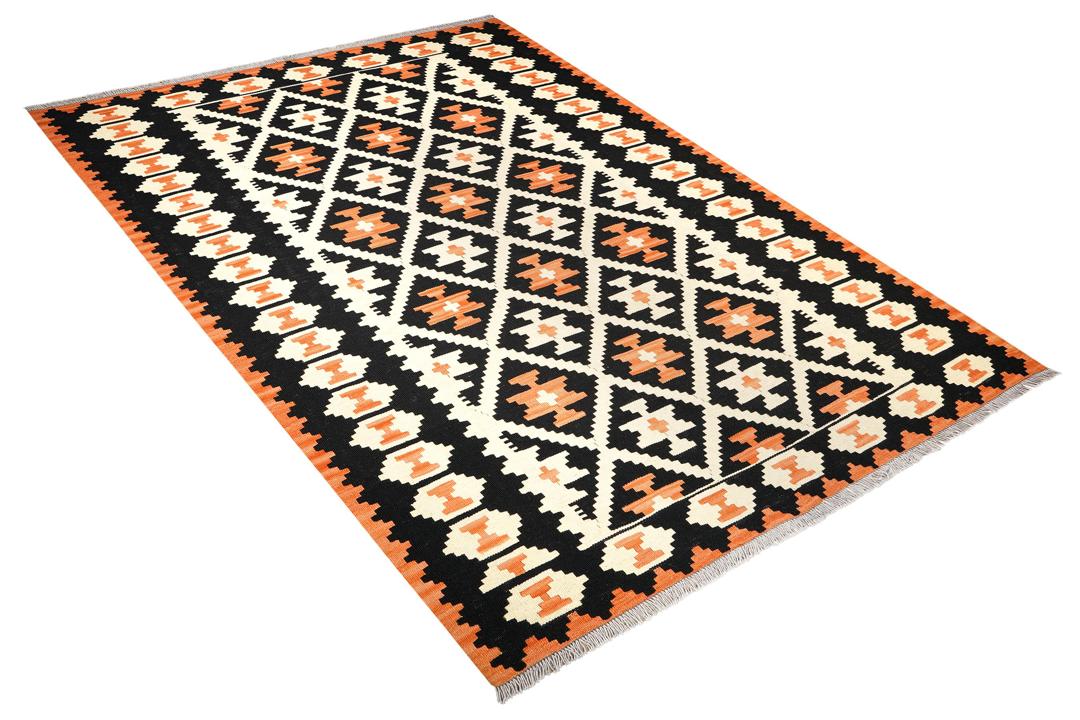
Kelim Ghashghai rugs originate from the nomadic and semi-nomadic Ghashghai tribes of the southern Middle East. Historically woven by women for practical everyday use inside tribal tents, these textiles were created as floor coverings, blankets, and storage bags designed to withstand frequent travel.
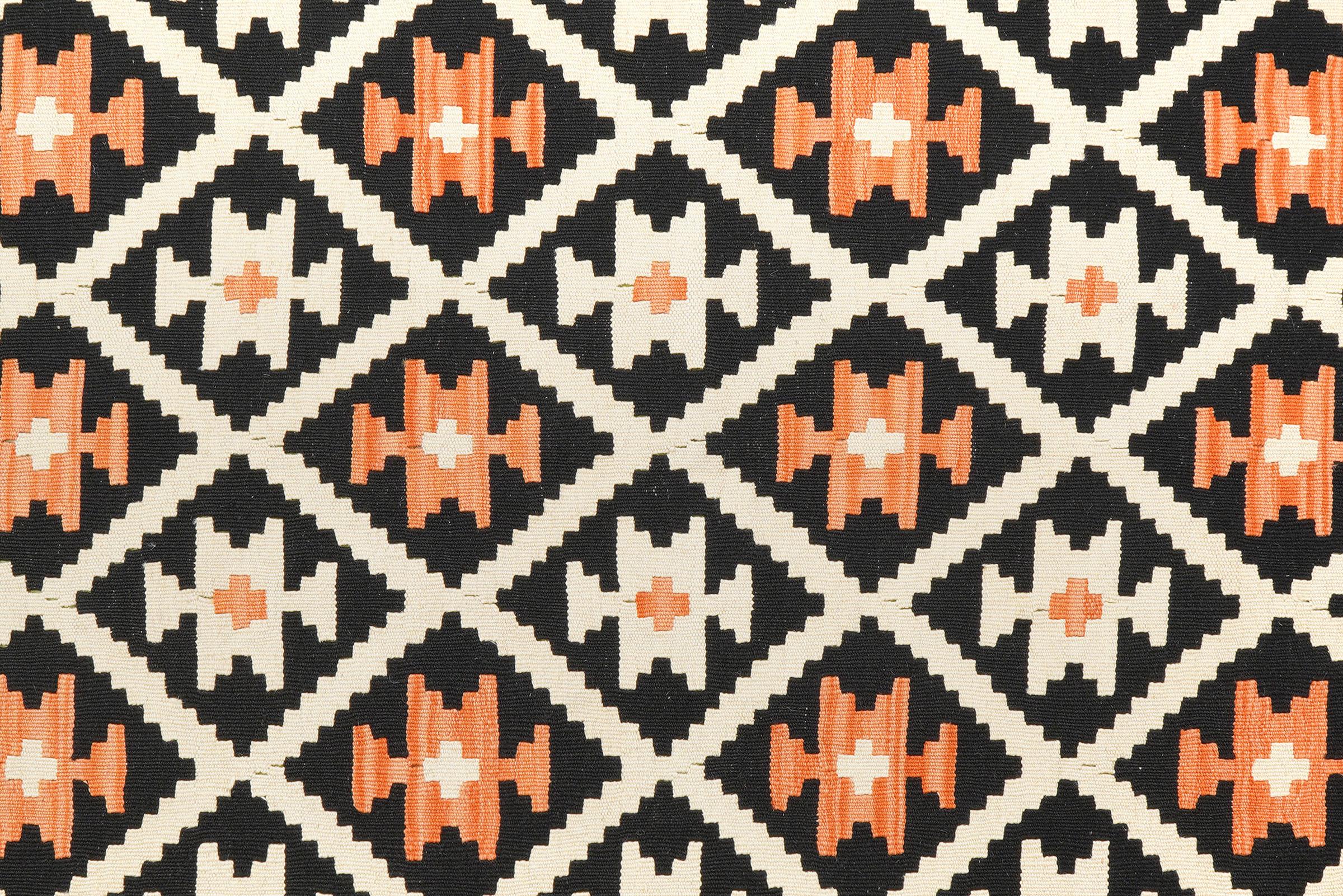
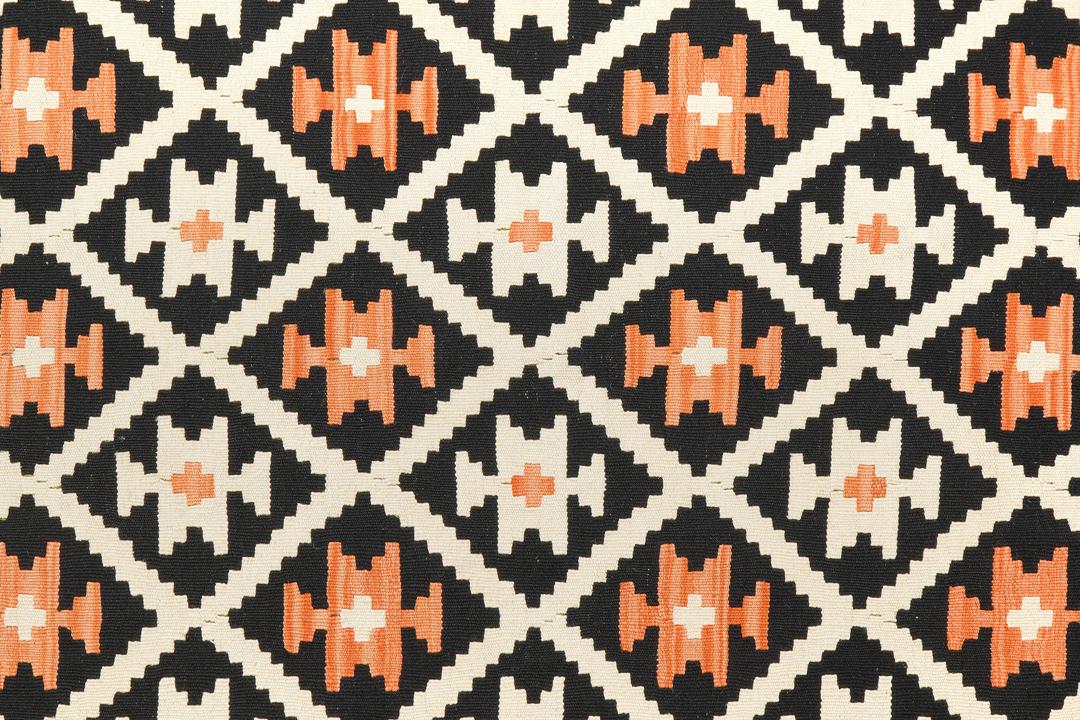
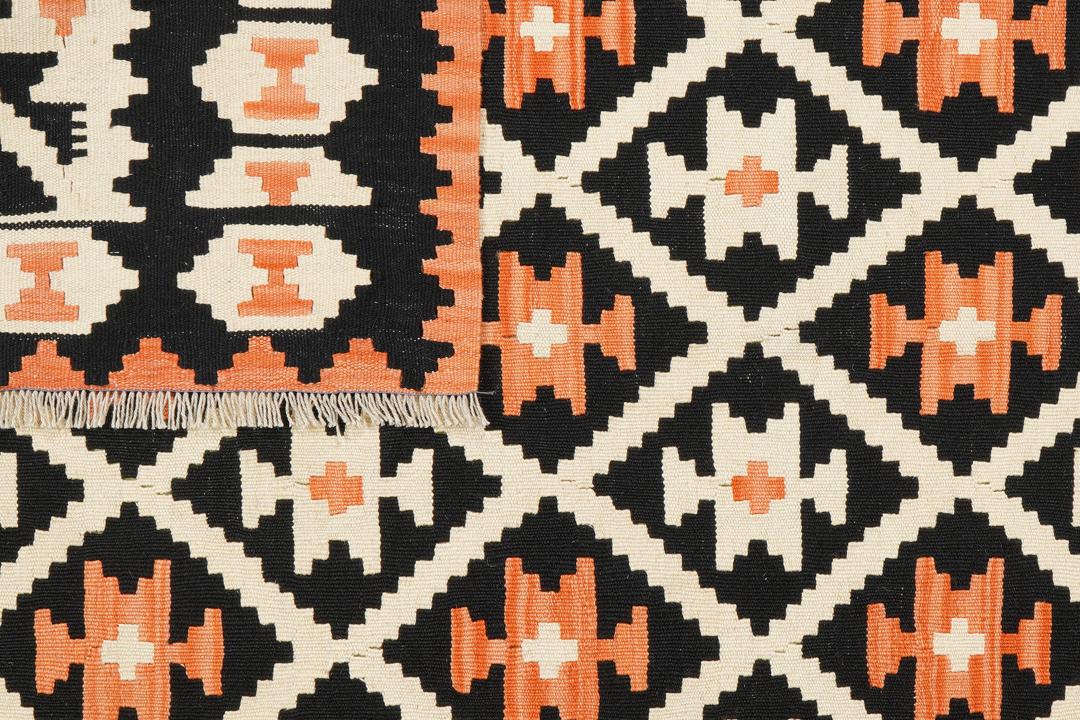
The term kelim refers specifically to a flatwoven tapestry fabric where the horizontal weft threads tightly cover the vertical warp threads. Unlike pile rugs, kelims have no tufted surface, resulting in a lightweight, double-sided textile with a firm, woven grain and distinct structural clarity.
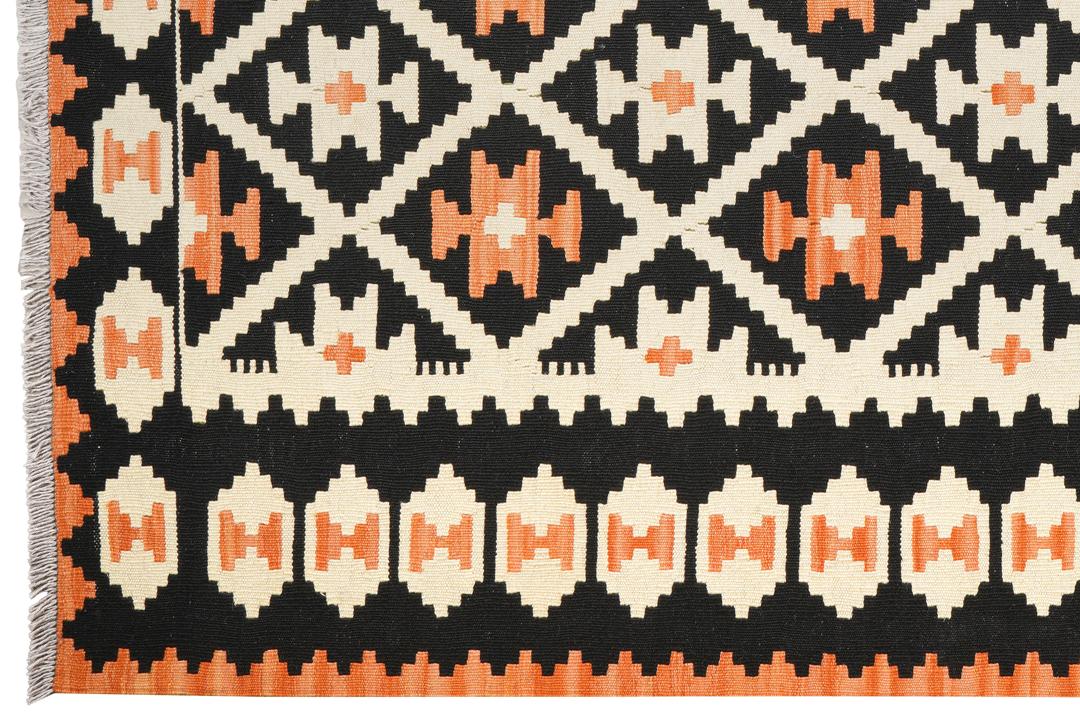
Visual storytelling defines the Ghashghai tradition. Weavers rely on memory and individual creative expression rather than printed patterns, filling the field with bold diamond motifs, serrated borders, and symbolic tribal emblems. High-contrast combinations of deep black, crisp white, and fiery orange give these rugs their famous rhythmic graphic presence.
Ghashghai flatweaves are prized globally by collectors and design enthusiasts for their unpretentious authenticity and powerful graphic language. Owning a Ghashghai kelim means acquiring a genuine piece of nomadic heritage that bridges centuries of oral tradition and artistic skill.