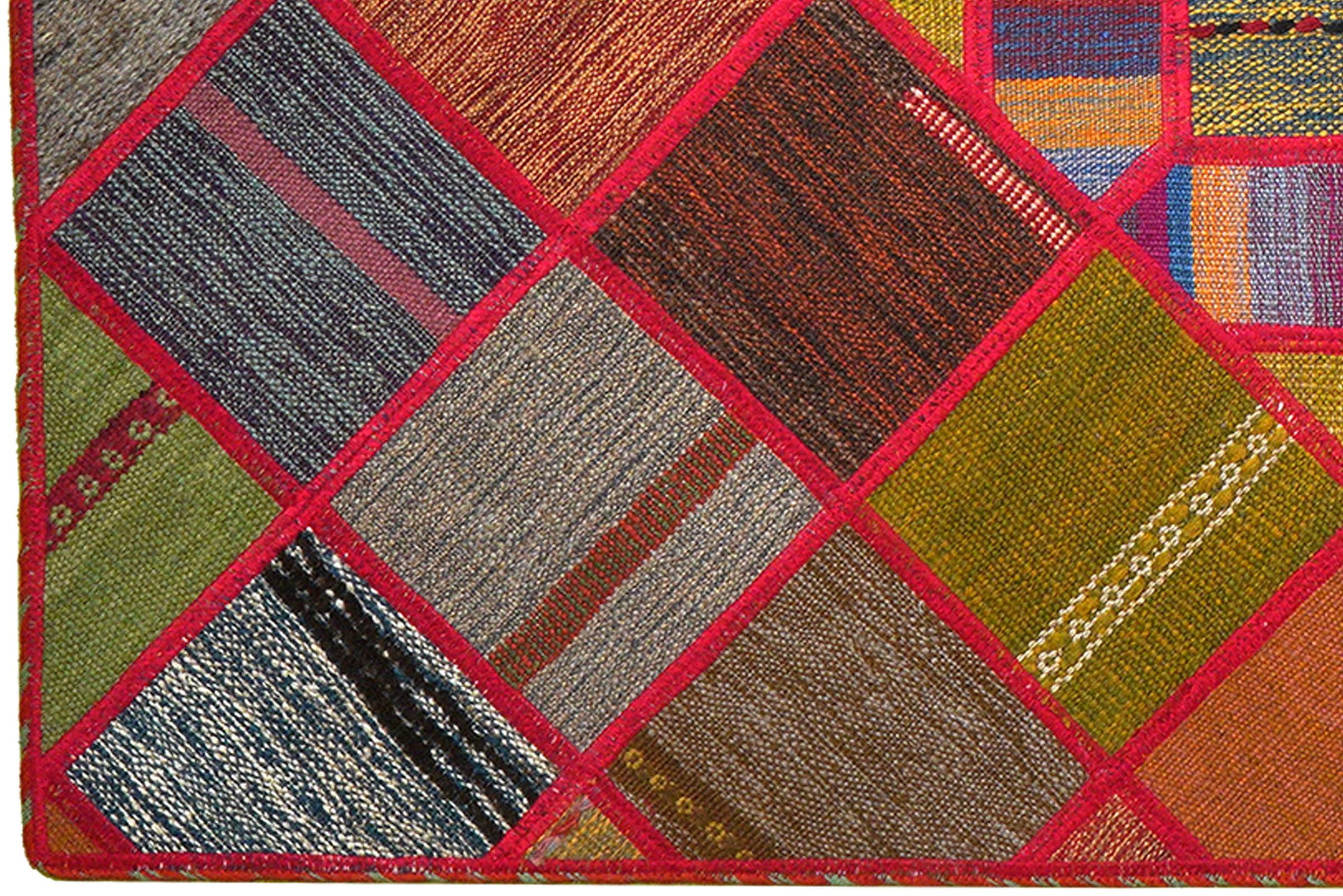
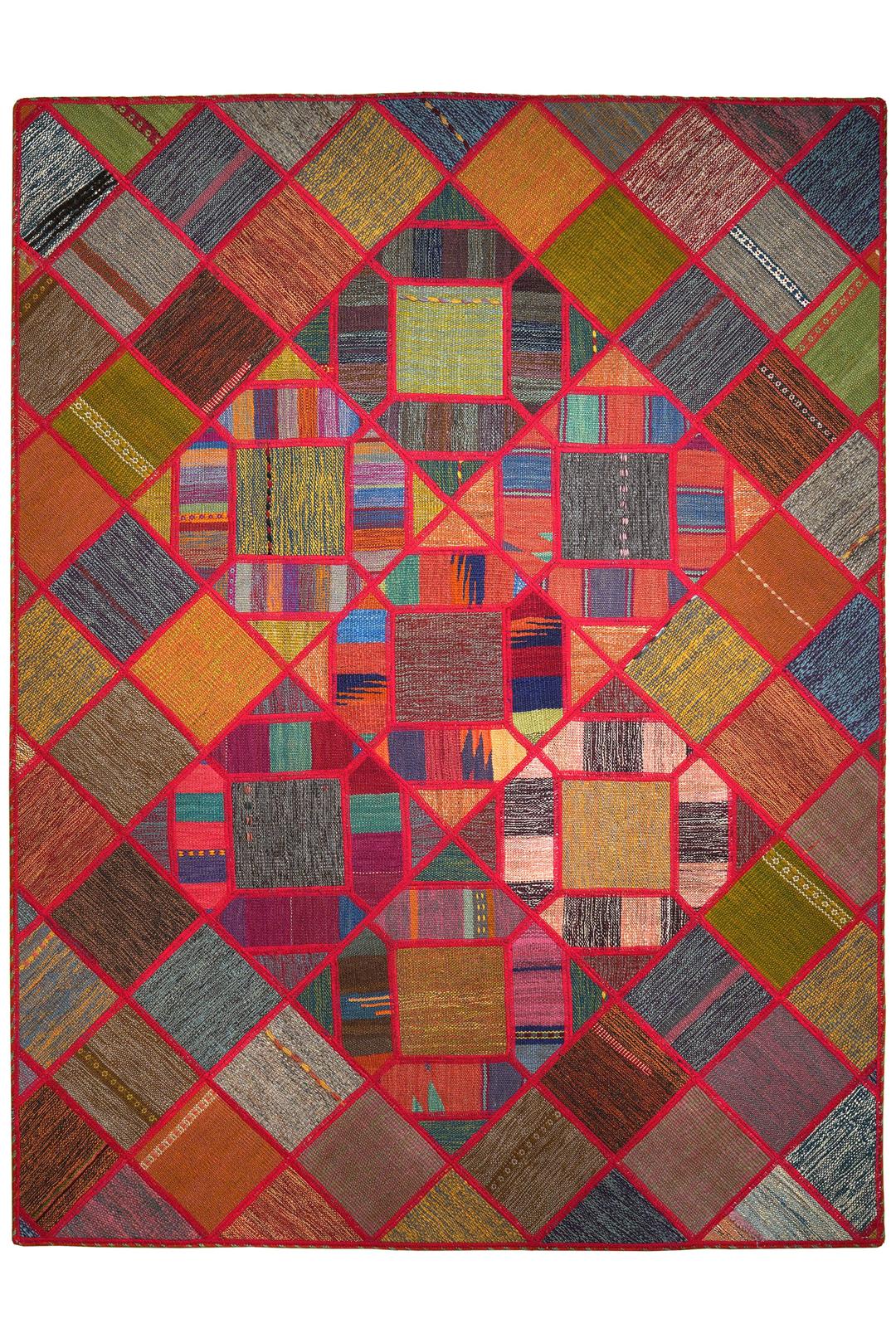
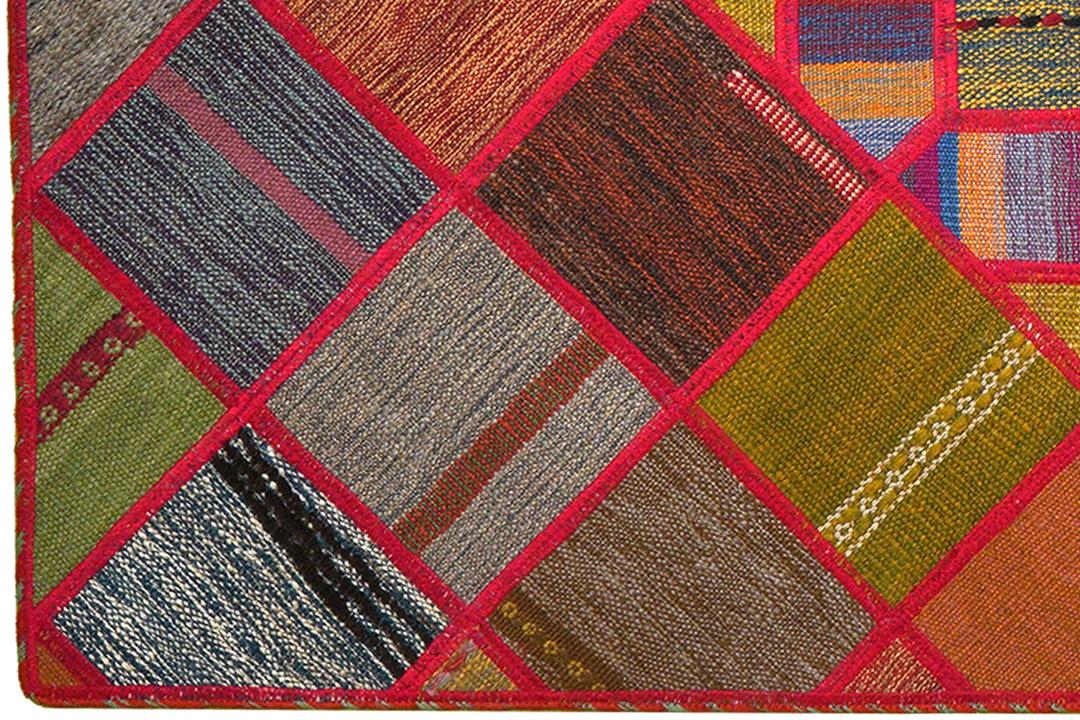
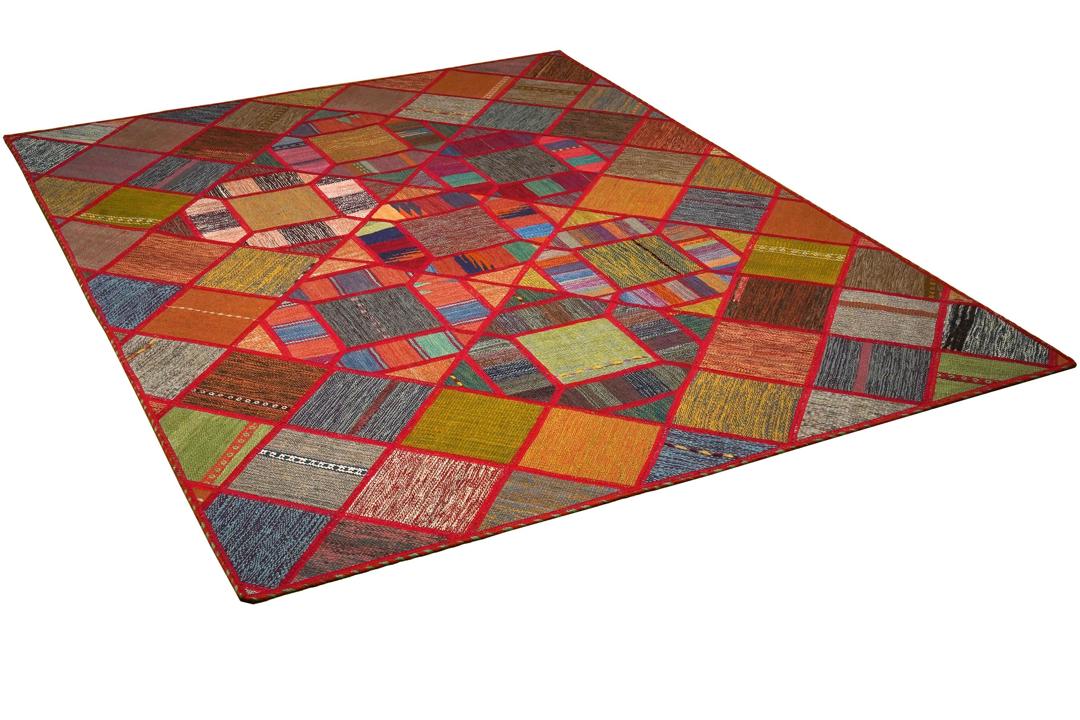
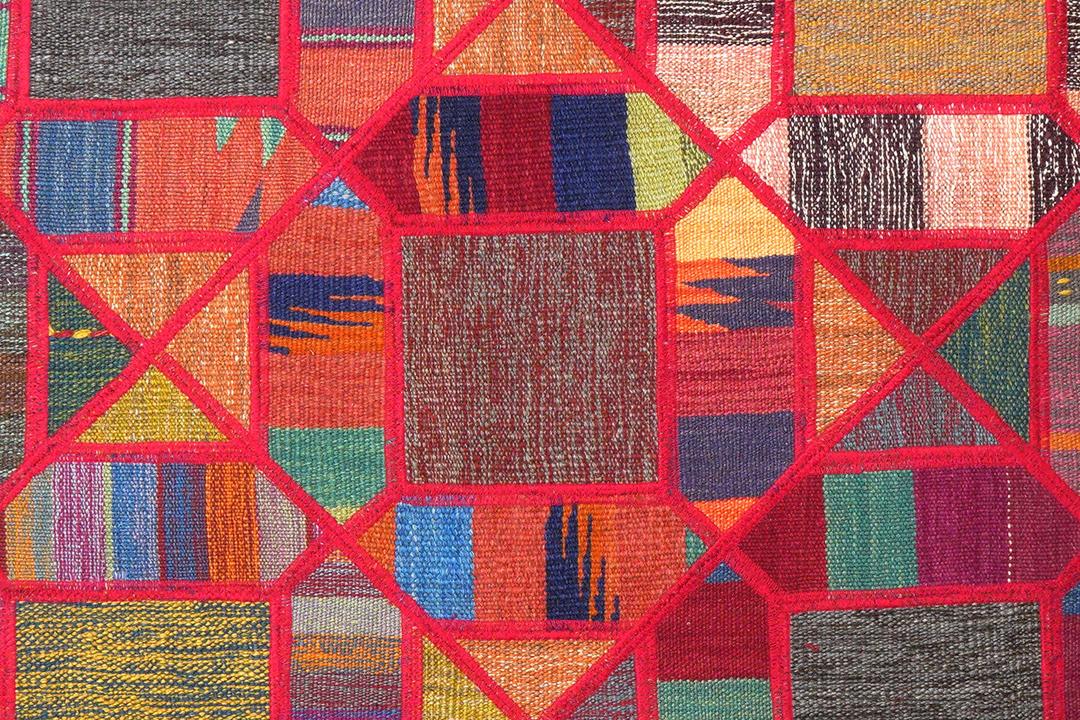
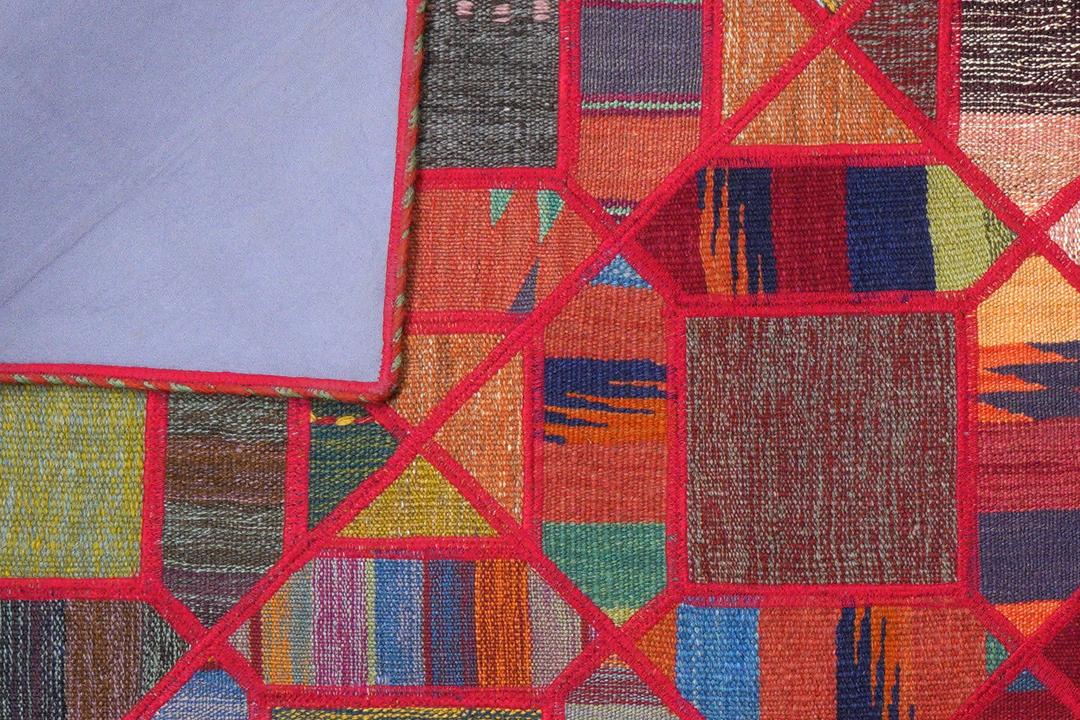
Patchwork kelims represent a modern adaptation of historic Anatolian weaving traditions. In rural regions across Turkey, flatwoven kelims were traditionally crafted for daily household use, serving as floor coverings, wall hangings, and storage bags. Over time, well-preserved sections of older rugs were gathered and reassembled into new artistic compositions.
The flatweave technique used to produce the original panels involves interlacing the warp and weft strands tightly to create a pileless surface. Because wool was the primary local fiber, weavers relied on it for both structure and pile, producing lightweight yet exceptionally resilient textiles capable of enduring decades of use.
Visual storytelling is central to Turkish kelim design. The panels in patchwork rugs often feature traditional geometric shapes, diamond motifs, and protective symbols that were woven from memory by tribal artisans. By combining different panels, the rug brings together multiple regional patterns and color palettes within a single frame.
Vintage Turkish kelims aged 20 to 50 years are highly valued for their unique character and softer, naturally aged tones. Owning a reassembled piece allows you to preserve and enjoy authentic regional craftsmanship, bringing a genuine sense of provenance and culture into your home.