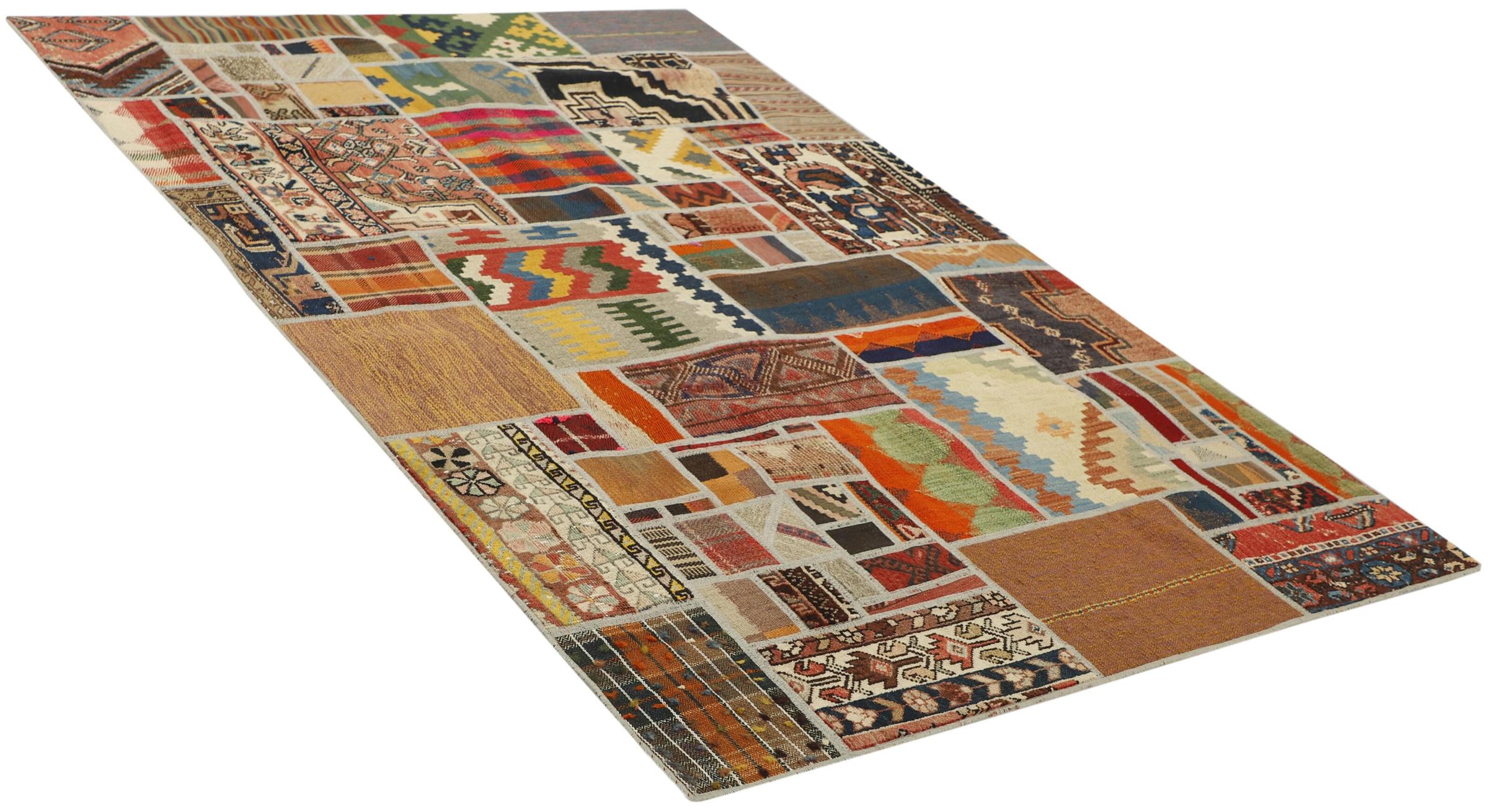
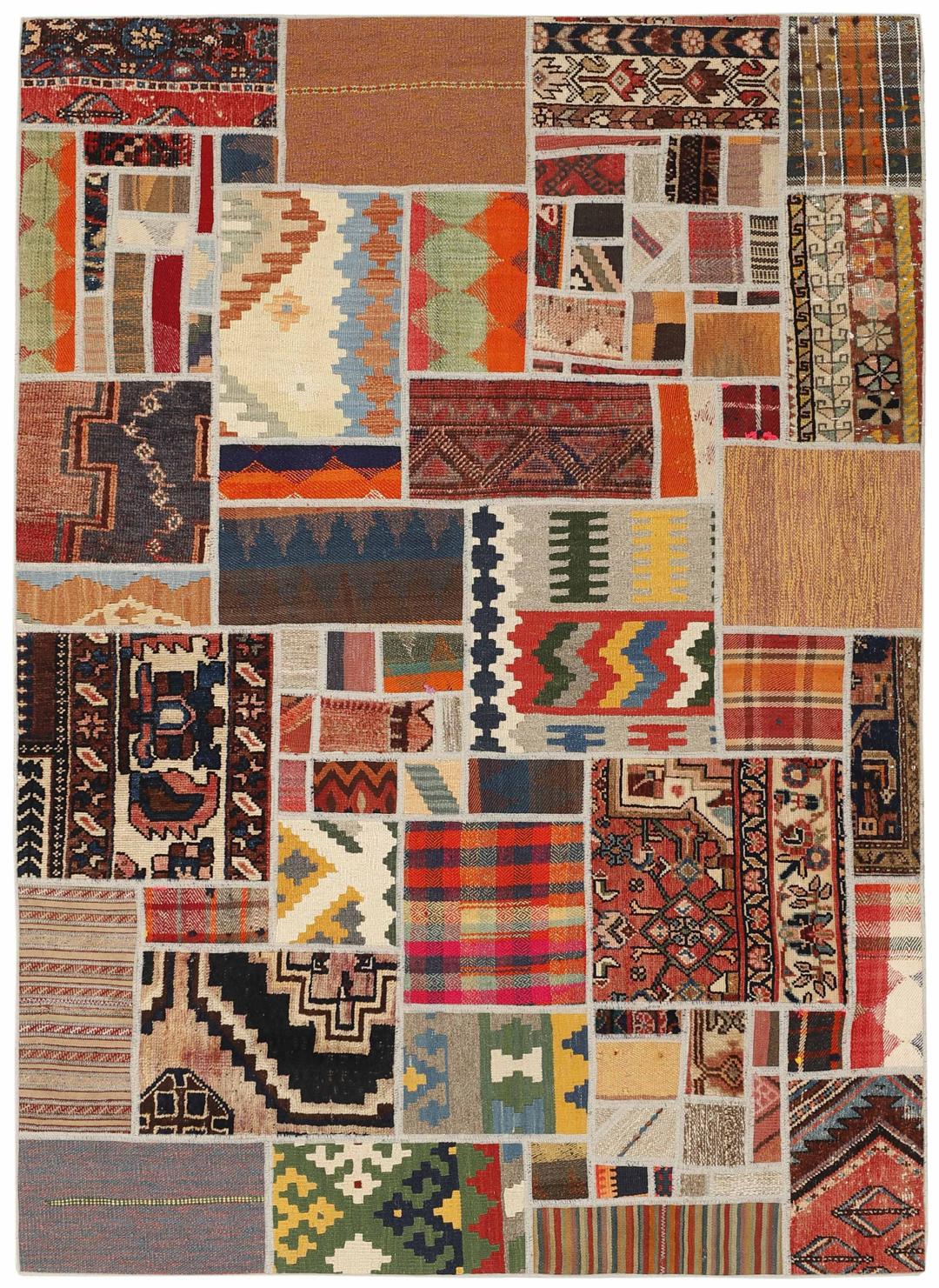
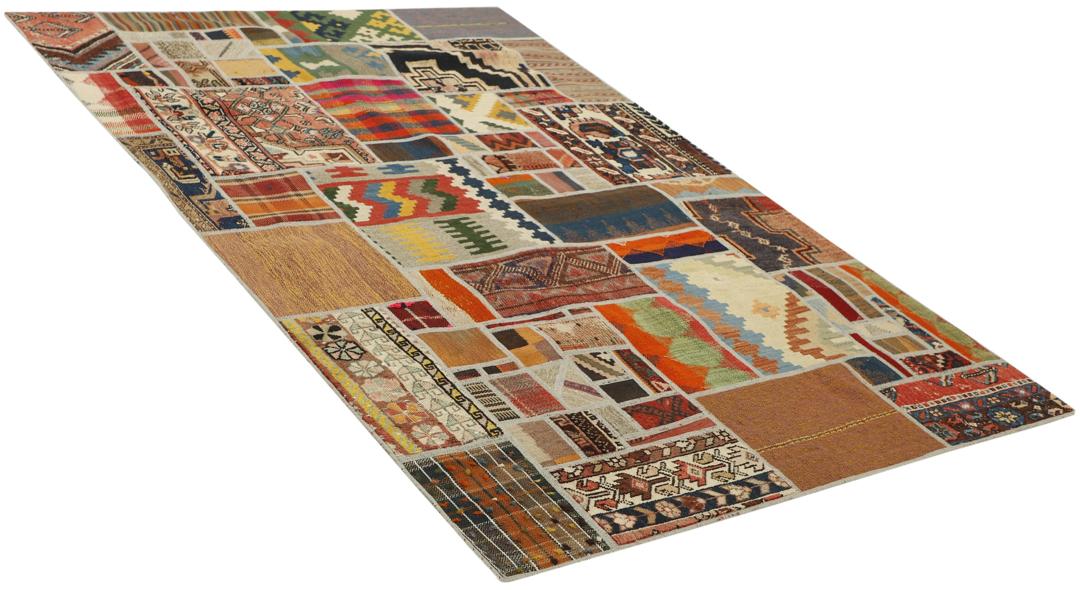
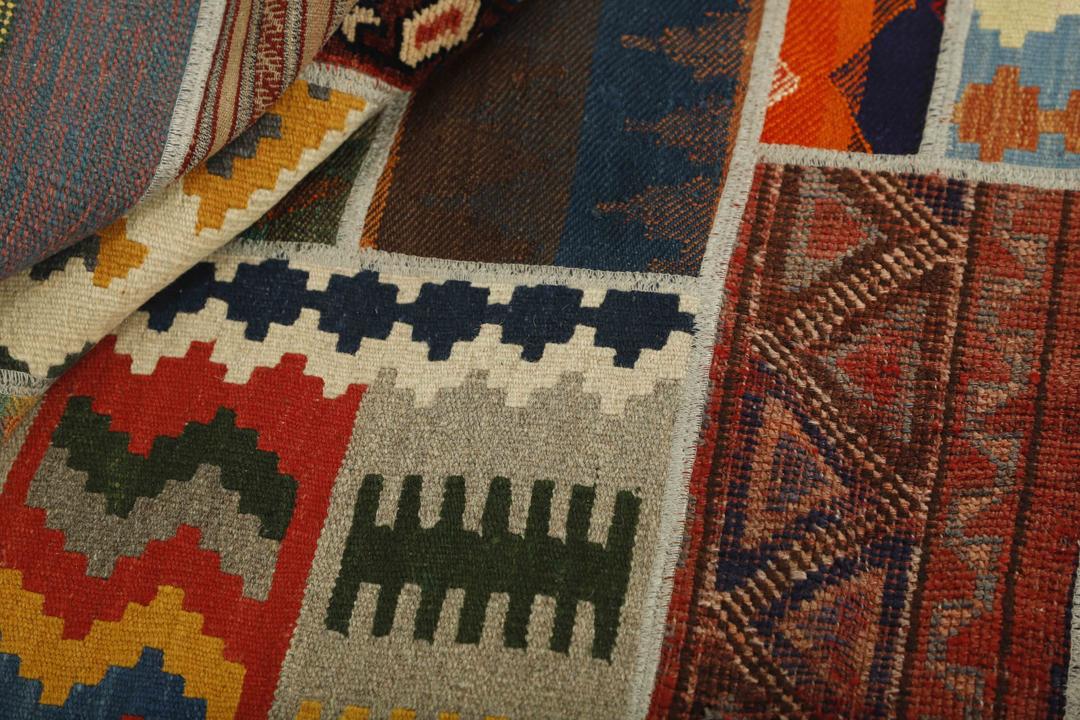
Patchwork Kelim rugs represent a clever evolution in the long tradition of Middle Eastern flatweaving. Rather than letting older, damaged, or leftover sections of traditional flatweaves go to waste, skilled craftspeople repurpose these surviving fragments into entirely new compositions, giving historic textiles a second life in contemporary homes.
The flatwoven Kelim technique itself is an ancient craft practiced by nomadic and village communities across the region. Unlike knotted pile rugs, flatweaves are created by tightly interlacing warp and weft threads on a vertical loom, resulting in a lightweight, durable fabric without a raised pile.
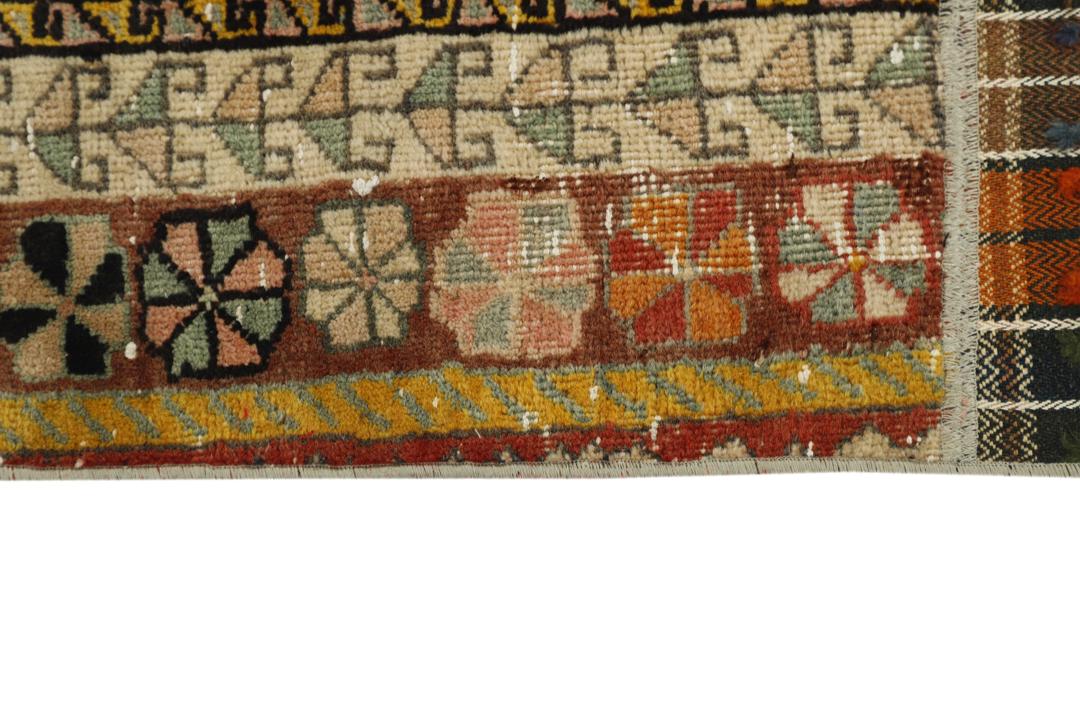
The individual patches showcase a diverse visual language, featuring geometric motifs, traditional border patterns, and tribal symbols that have been passed down through generations. Each fragment carries the distinct aesthetic of the weaver who originally crafted it, often reflecting the specific region or tribal group from which it came.
Collecting a patchwork rug is a way to preserve textile heritage while embracing sustainable design. It brings together multiple historical narratives into a single floor covering, offering a tangible connection to the rich craft traditions of the Middle East.