The Kilim Nimbaft tradition originates from the rugged, mountainous landscapes of the Middle East, a region with a deep-rooted history of textile production. Nimbaft rugs are celebrated for their flat-weave technique, which distinguishes them from knotted pile rugs. This style has evolved over centuries, serving both functional purposes in nomadic life and as a medium for artistic expression that reflects the cultural identity of the weavers.
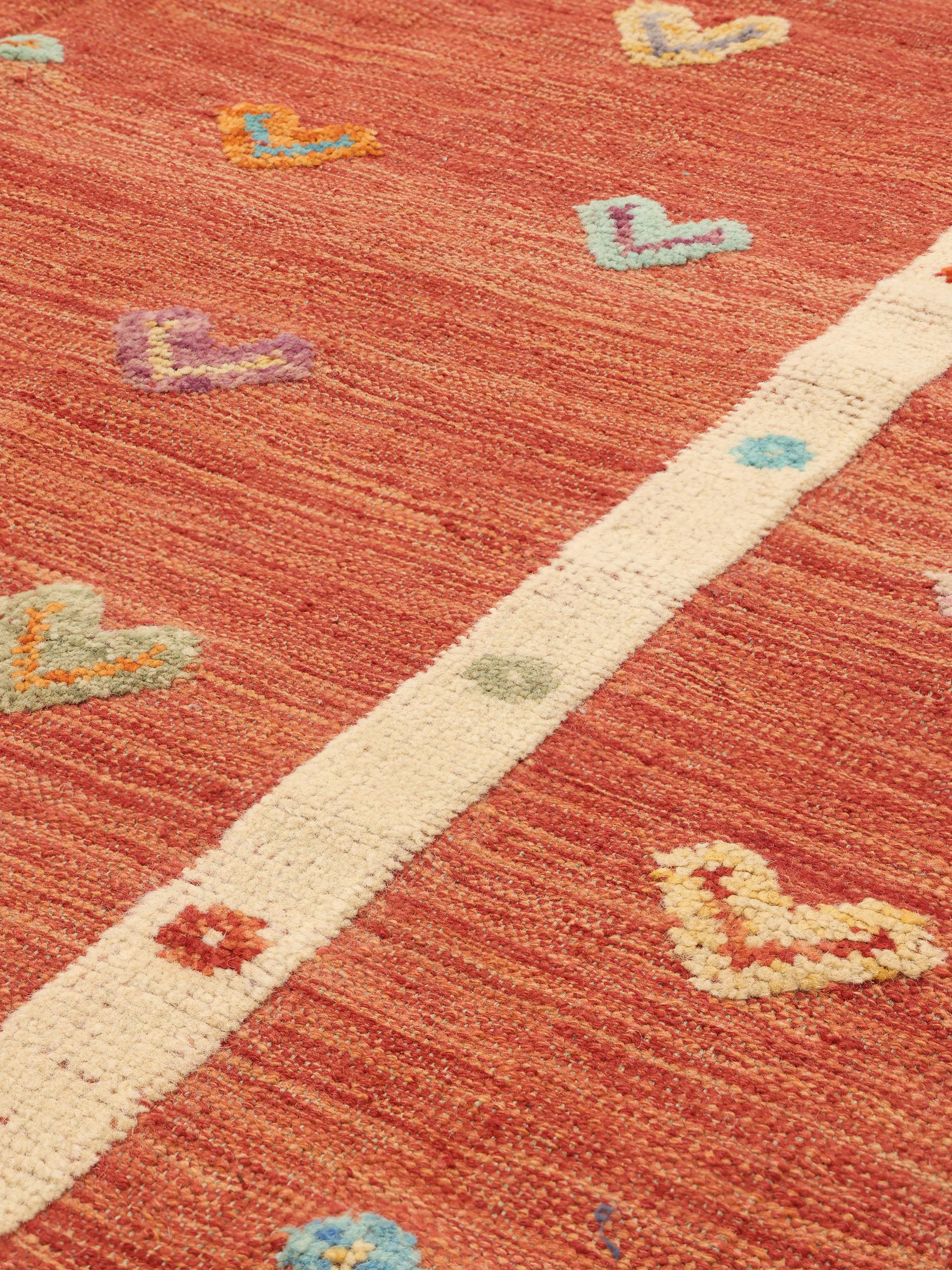
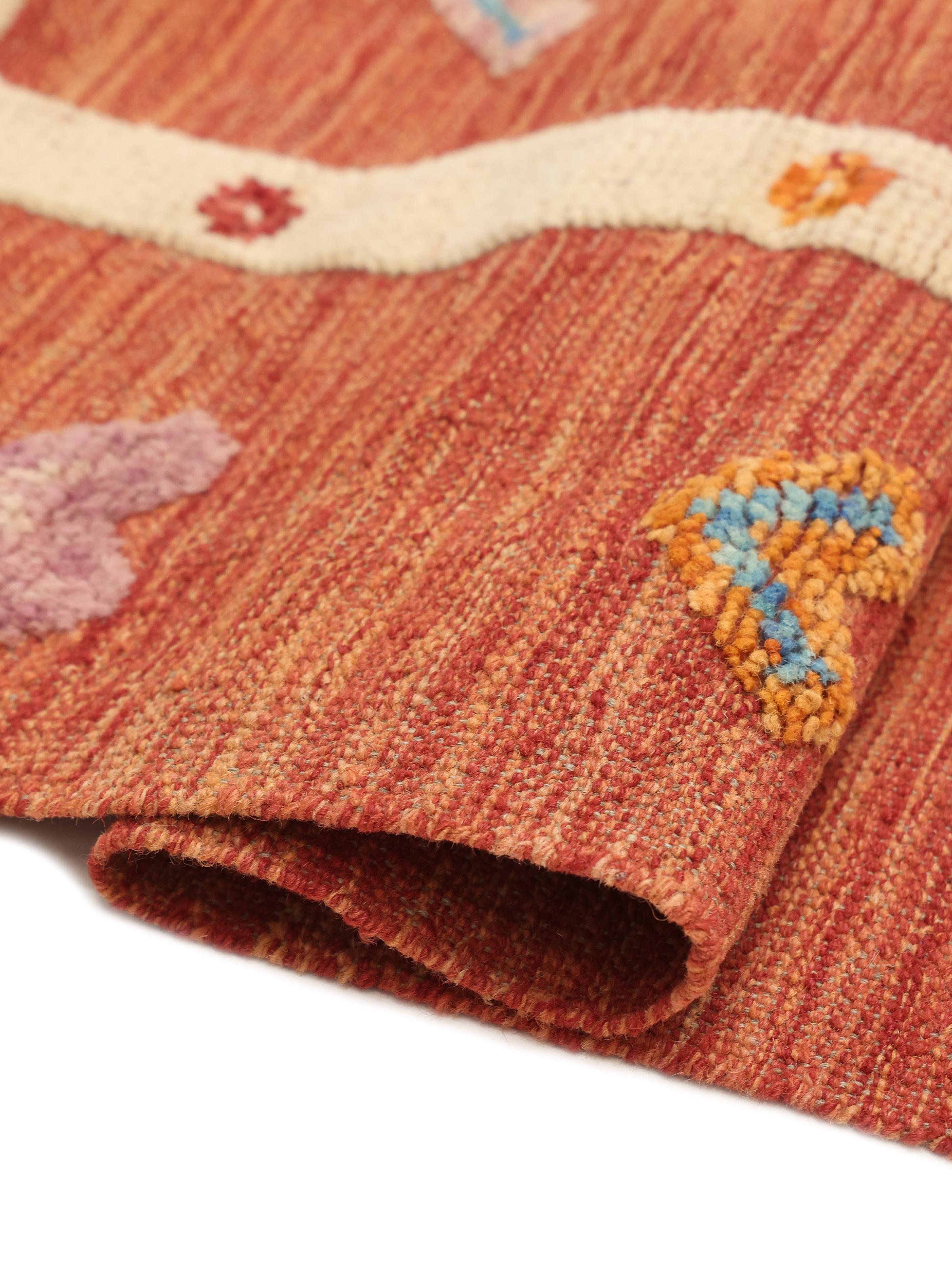
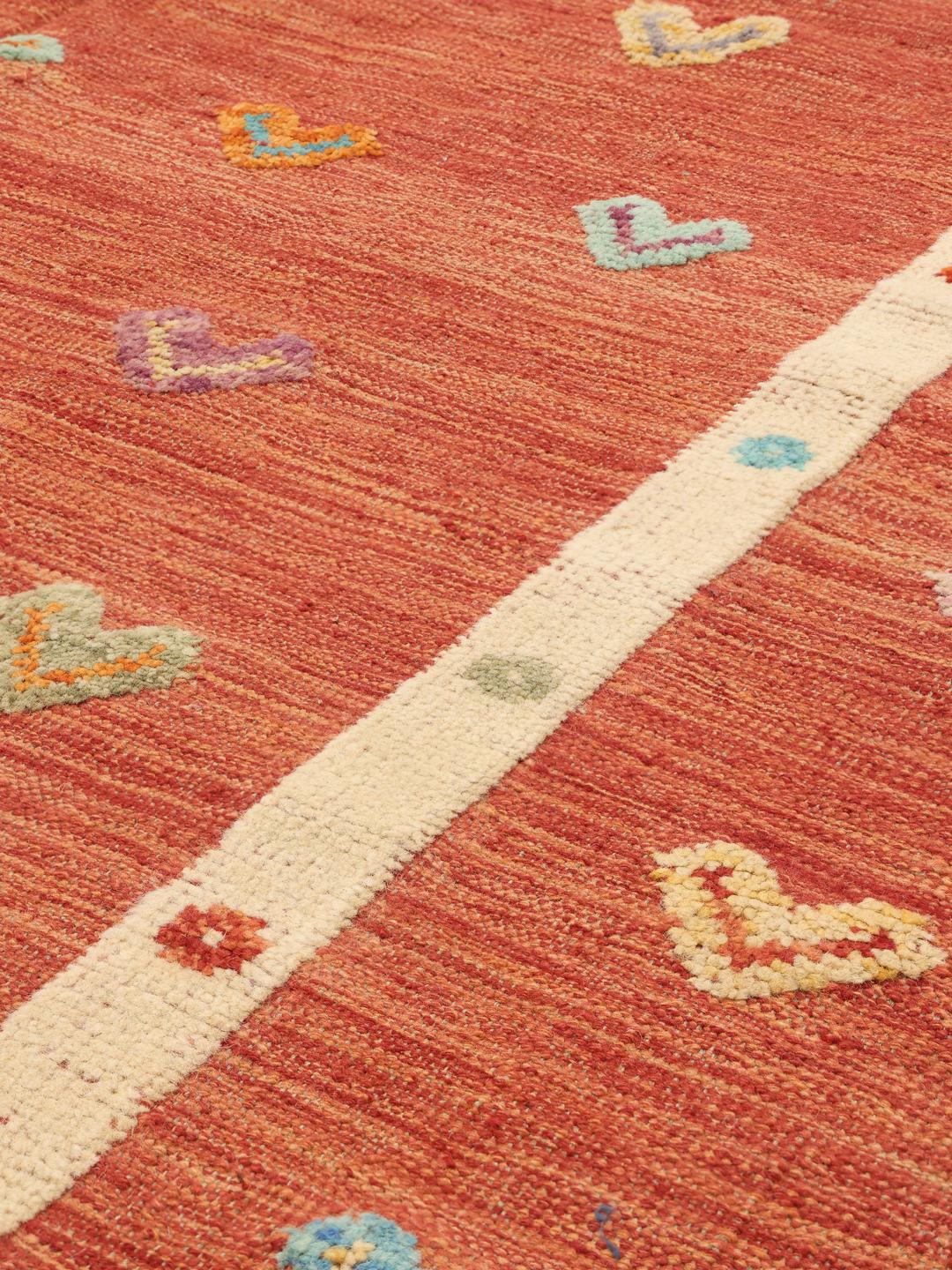
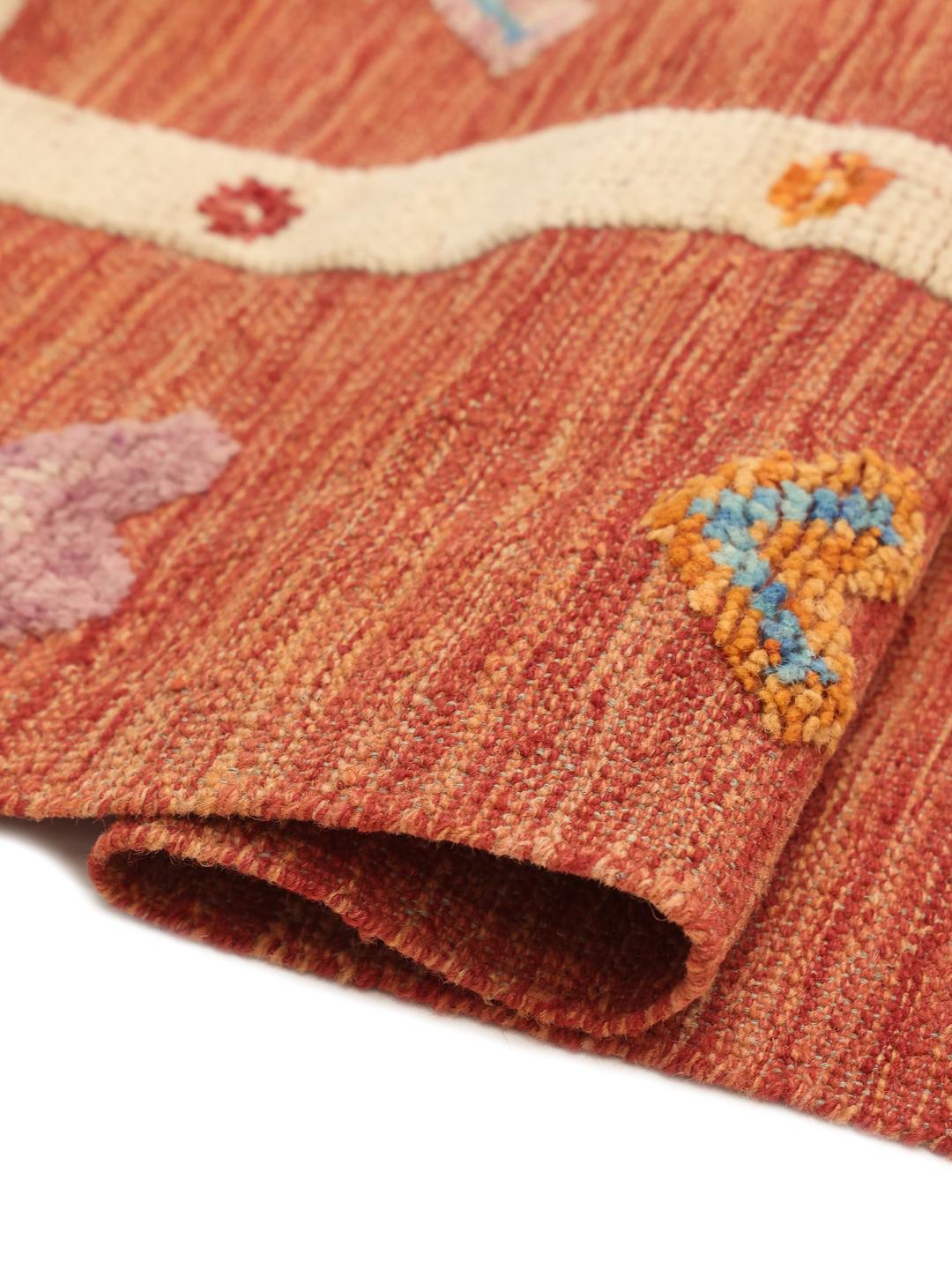
The term 'Kelim' refers to the specific tapestry-weave technique where the weft threads are passed through the warp to create the pattern. This method results in a reversible rug with no pile, making it exceptionally versatile and durable. The Nimbaft style specifically emphasises a clean, graphic approach to design, where the focus is on the interplay of colour and geometry rather than the complexity of raised textures.
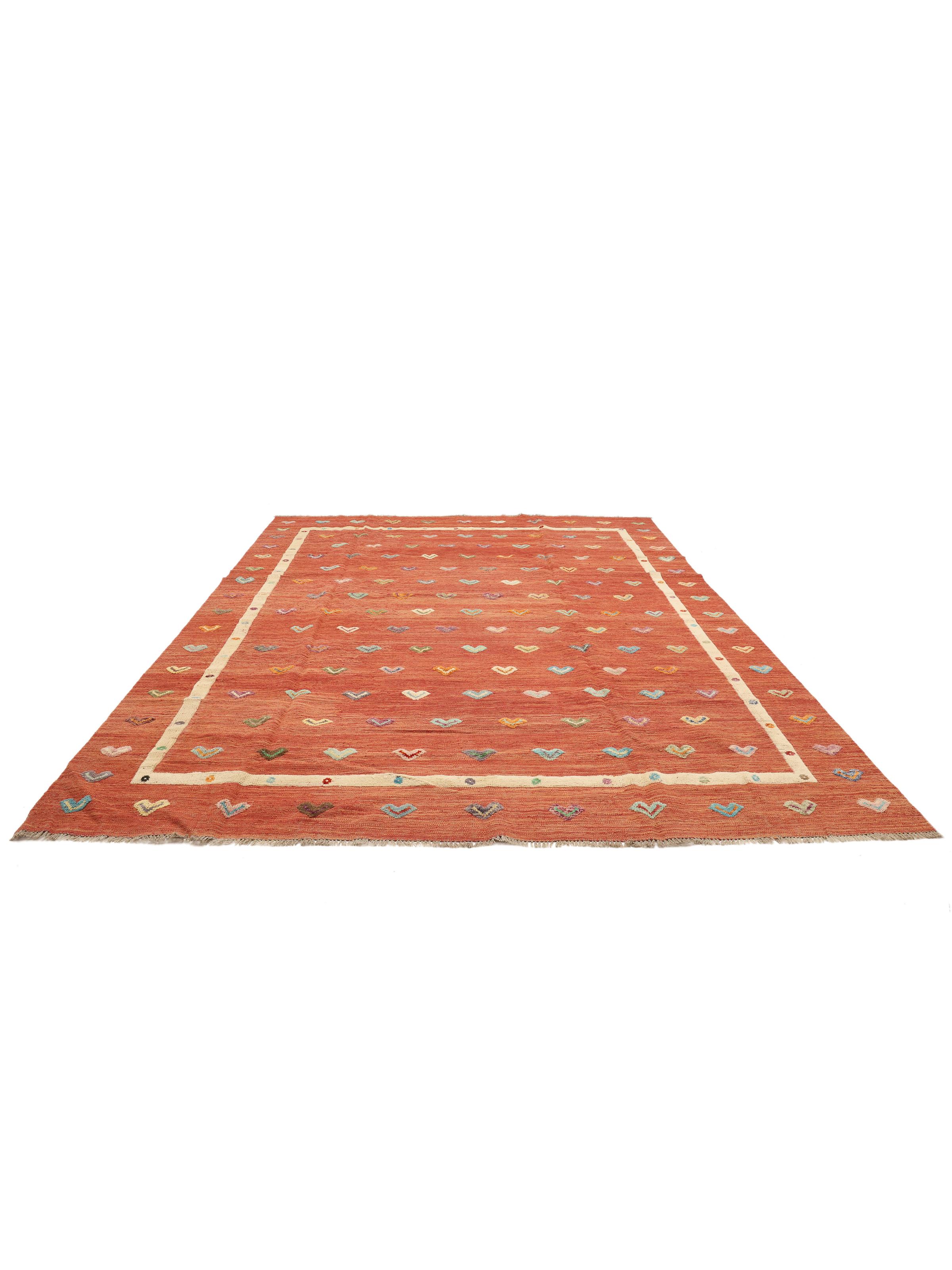
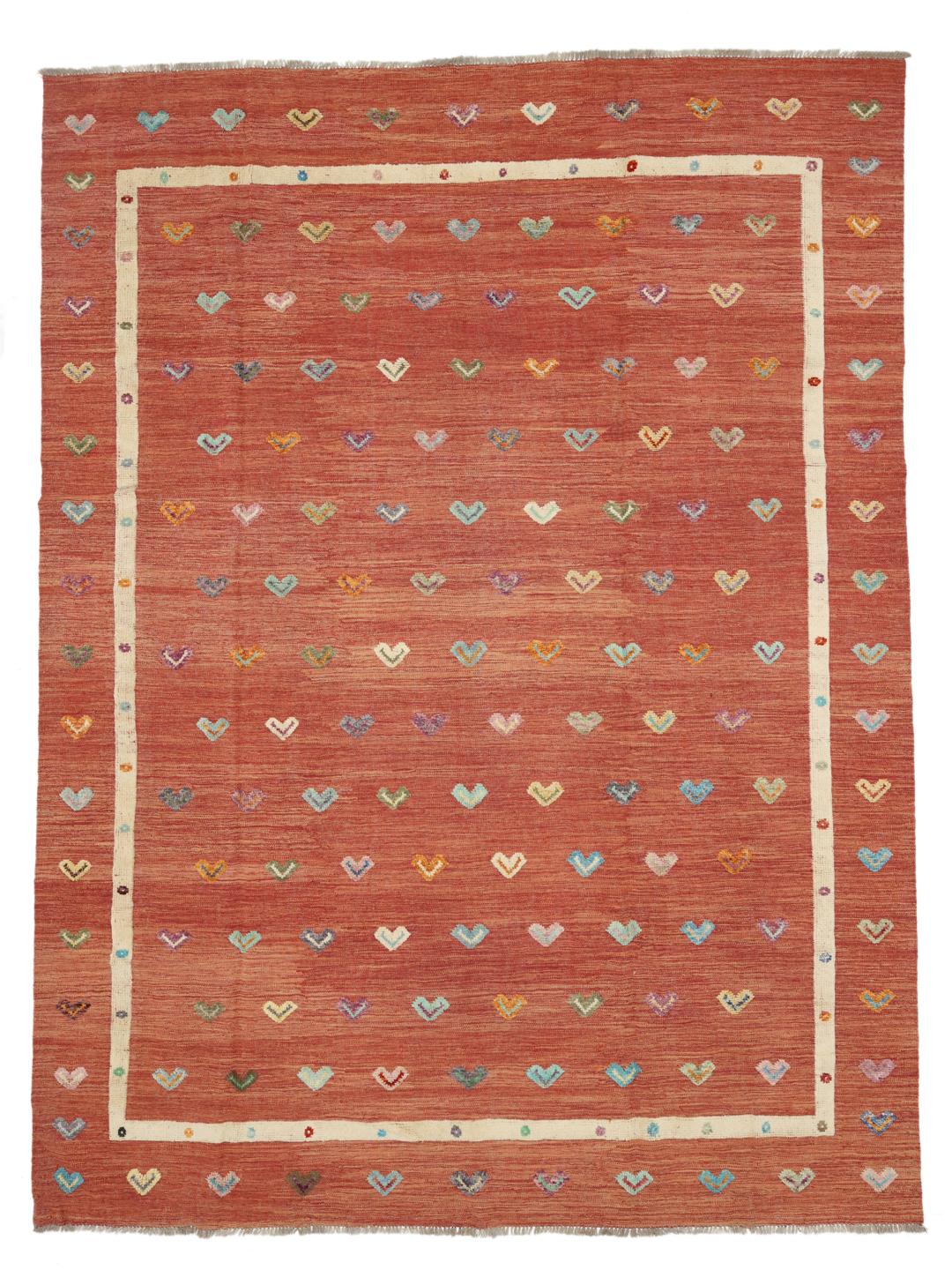
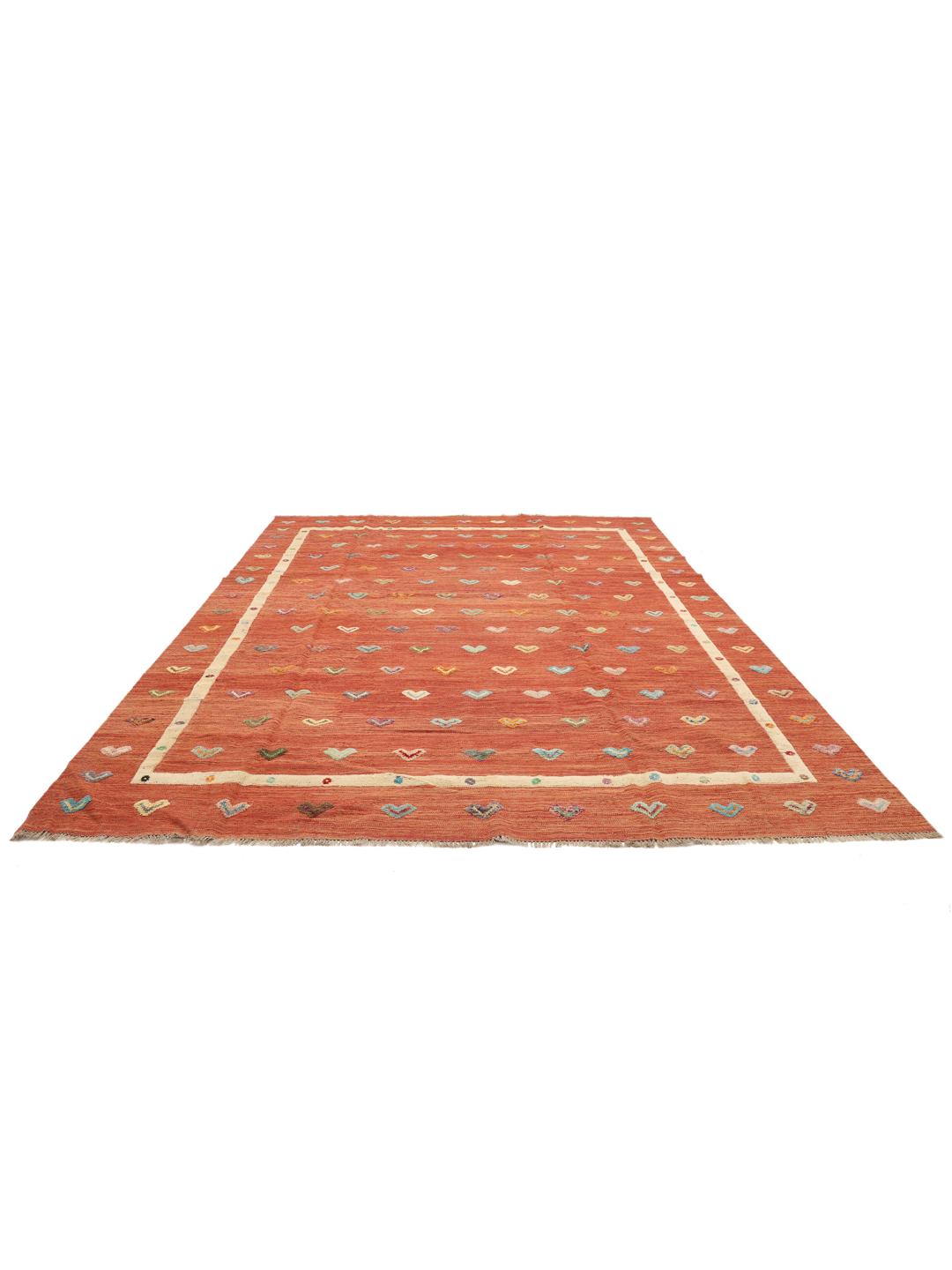
In this particular piece, the signature design elements include the rhythmic repetition of heart motifs across the field. While traditional Middle Eastern Kilims often feature geometric or tribal symbols, the inclusion of hearts provides a modern, whimsical twist that remains grounded in the authentic weaving traditions of the region. The clean, contrasting border frames the pattern perfectly, drawing the eye across the entire surface of the rug.
Kilim rugs from the Middle East are highly valued by collectors for their authenticity and the human effort embedded in every thread. Owning a piece like this is an investment in cultural heritage, representing a bridge between ancient techniques and contemporary design. It is a testament to the enduring skill of artisans, offering a sense of depth and character that mass-produced floor coverings simply cannot provide.