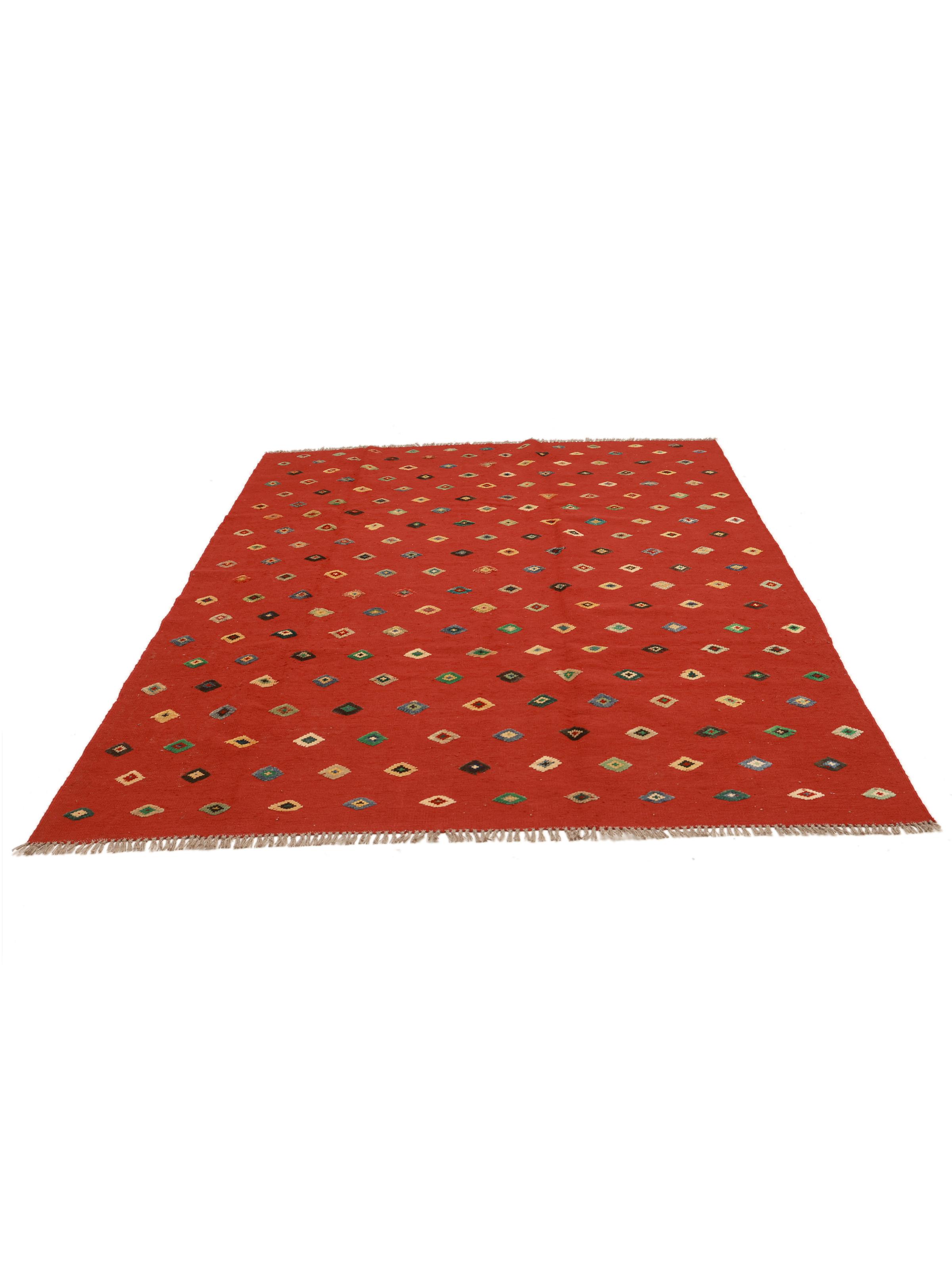
The tradition of weaving kilims in Afghanistan is deeply rooted in the nomadic and village cultures of the region. These flat-woven rugs have been produced for centuries, serving as essential, versatile items for daily life, ranging from floor coverings and blankets to storage sacks. The art of the kilim has evolved through generations, with Afghan weavers refining their techniques to produce textiles that are both functional and highly expressive of their cultural heritage.
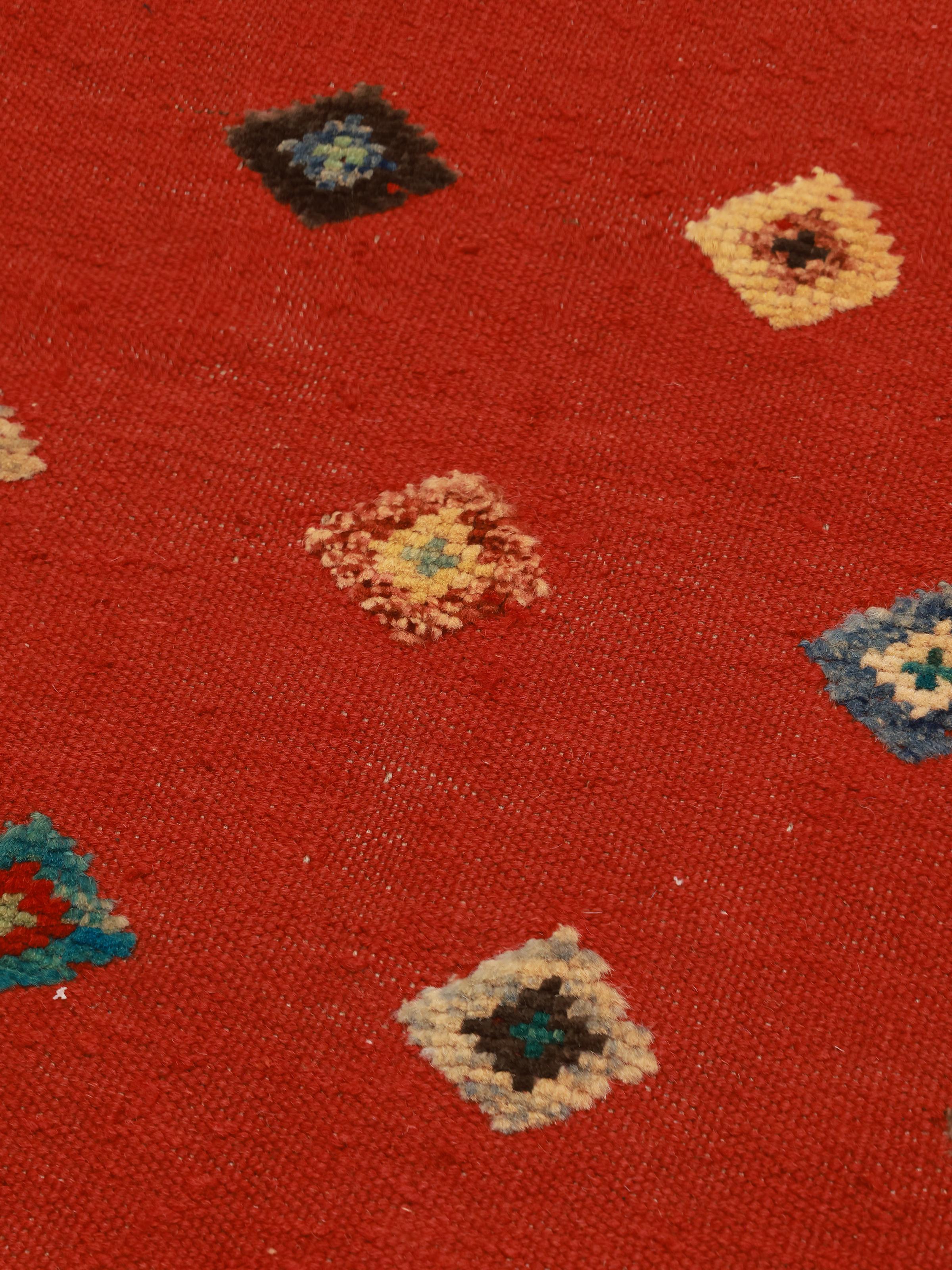
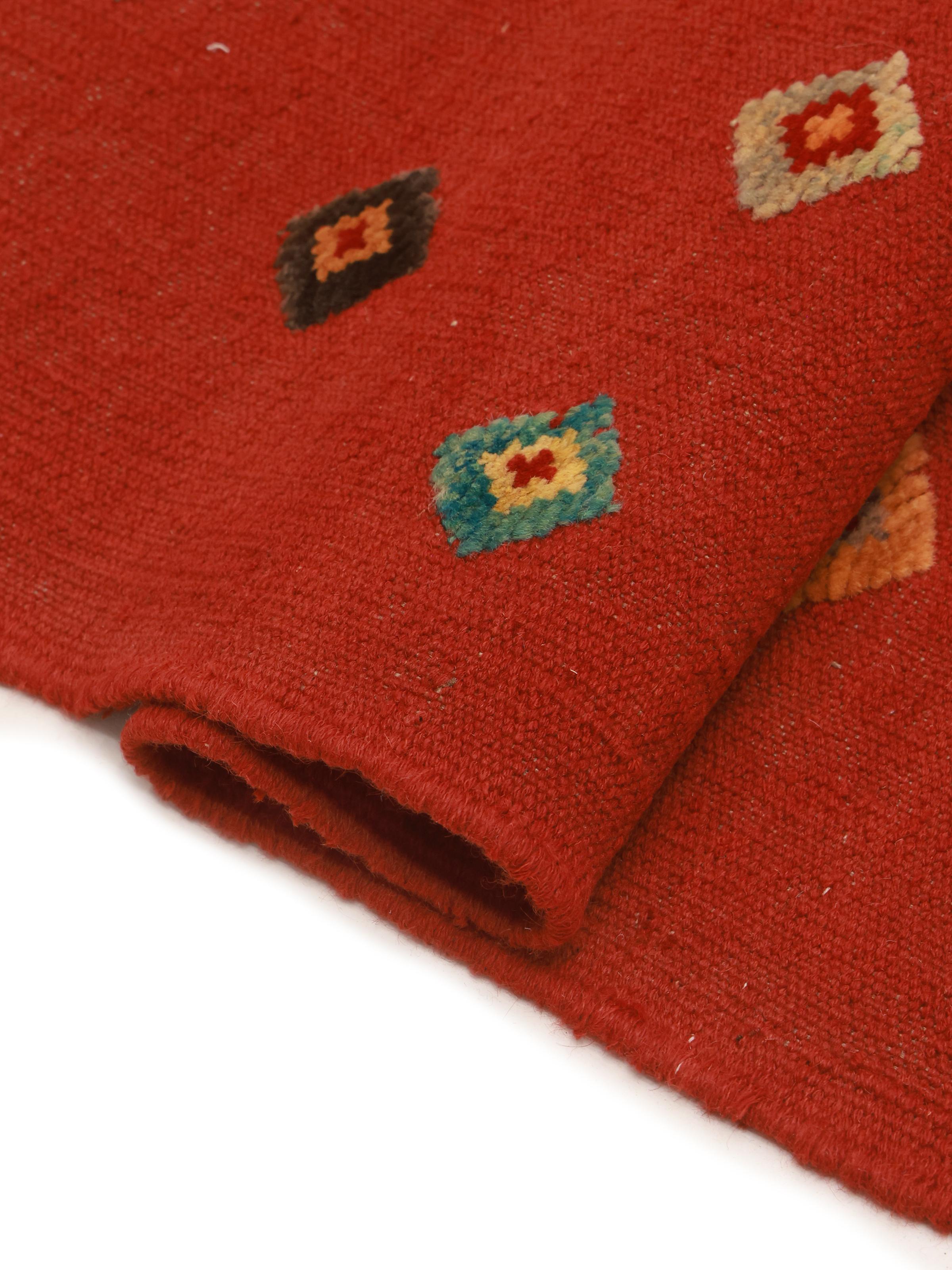
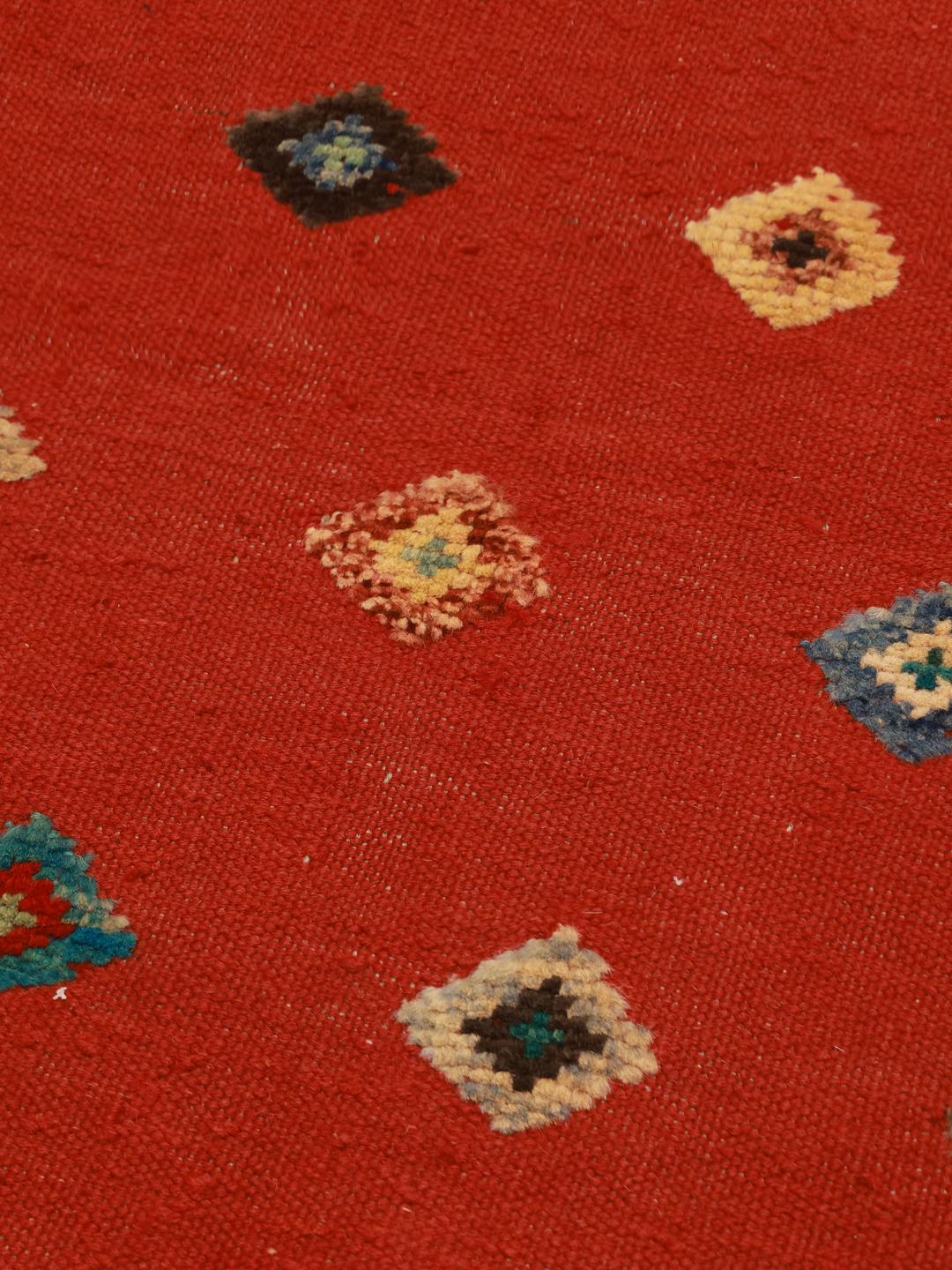
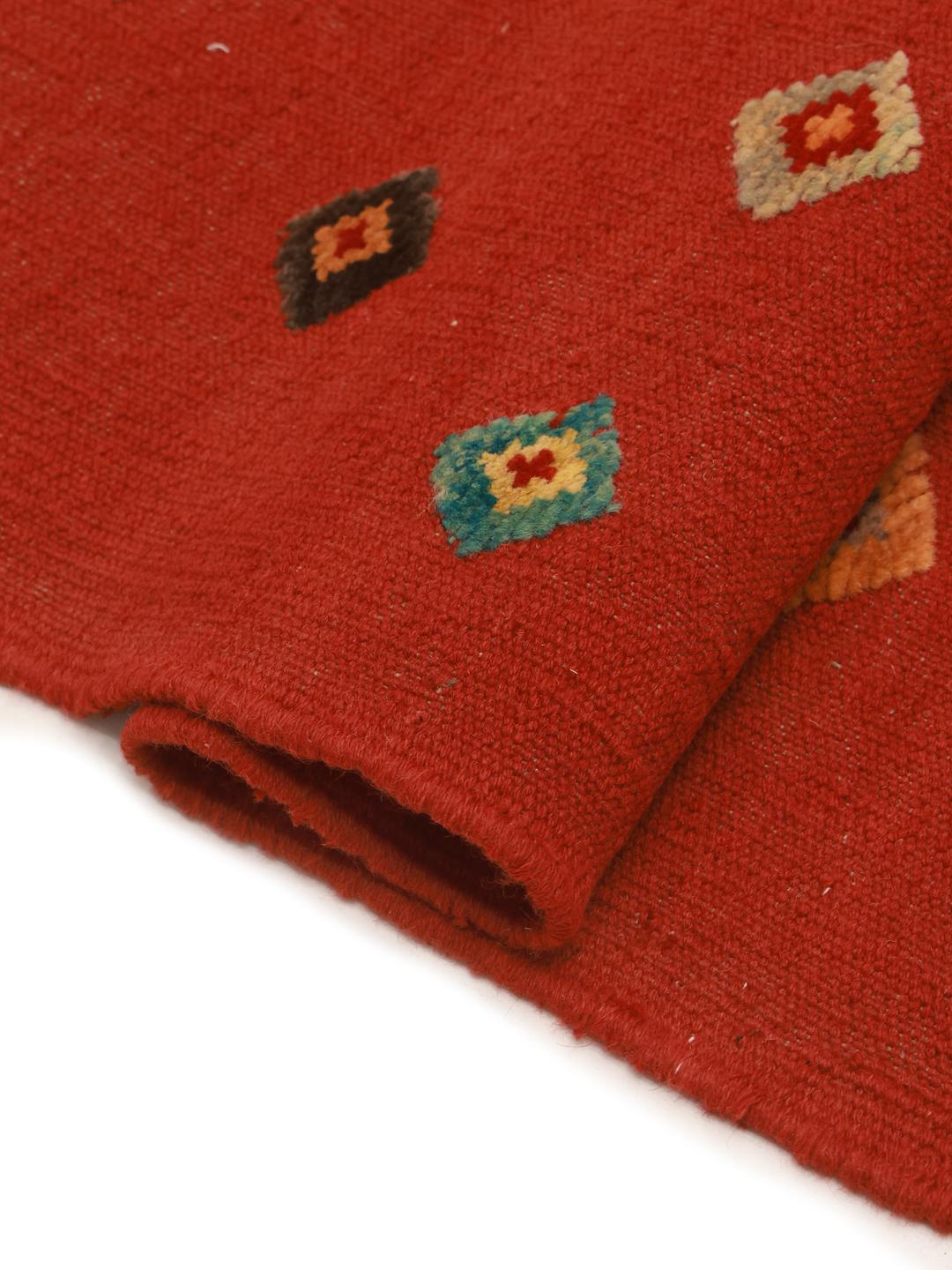
The term 'Nimbaft' refers to the specific weaving style and the quality of the construction, often characterised by its tight, precise weave. In a flat-weave construction, the warp threads are completely covered by the weft threads, which creates the distinct, smooth surface that defines this category. This technique is highly valued because it results in a rug that is reversible and remarkably durable, capable of withstanding the rigours of both nomadic life and modern home environments.
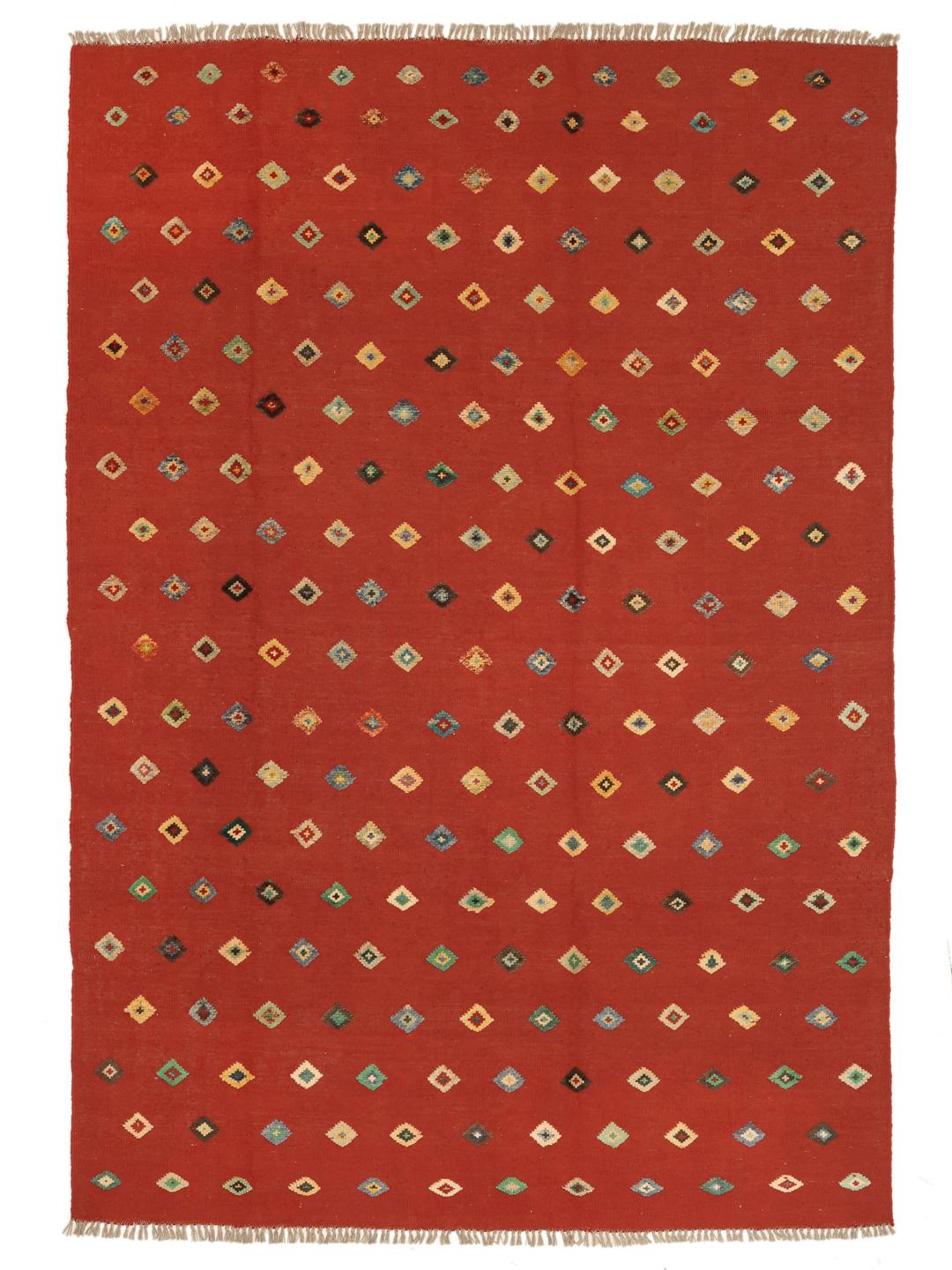
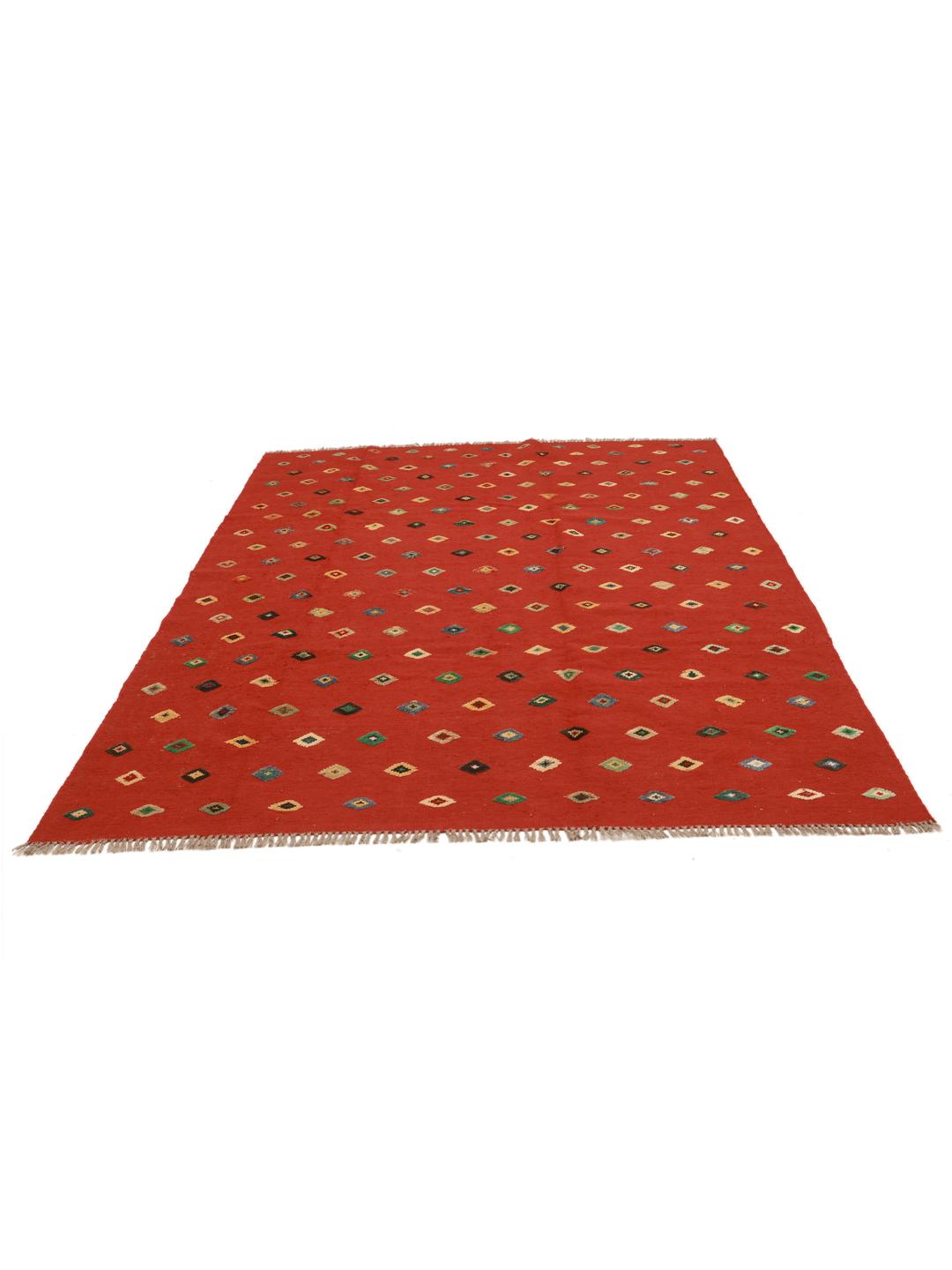
The visual language of this rug is dominated by the repeating diamond motif, a classic element in Middle Eastern textile design. Diamonds, often interpreted as protective symbols or stylised representations of local flora and fauna, are arranged here in a grid that feels both orderly and alive with colour. The use of a vibrant red field is a signature of the region, utilising natural dyes that have been perfected over decades to achieve such deep, lasting saturation.
Owning a piece like this is a way to connect with a storied craft tradition. It represents the skill of the weaver and the legacy of a region where rug-making is not just a profession, but a fundamental part of social and cultural identity. Collectors value these rugs for their authenticity, the quality of the natural materials used, and the fact that each piece serves as a permanent record of the specific moment and artisan involved in its creation.