The art of Kilim weaving is deeply embedded in the history of the Middle East and Central Asia. These flat-woven rugs were traditionally created by nomadic tribes for functional purposes, serving as floor coverings, wall hangings, or saddlebags. Over centuries, the craft evolved into a sophisticated art form known for its bold geometric patterns and vibrant, natural dyes.
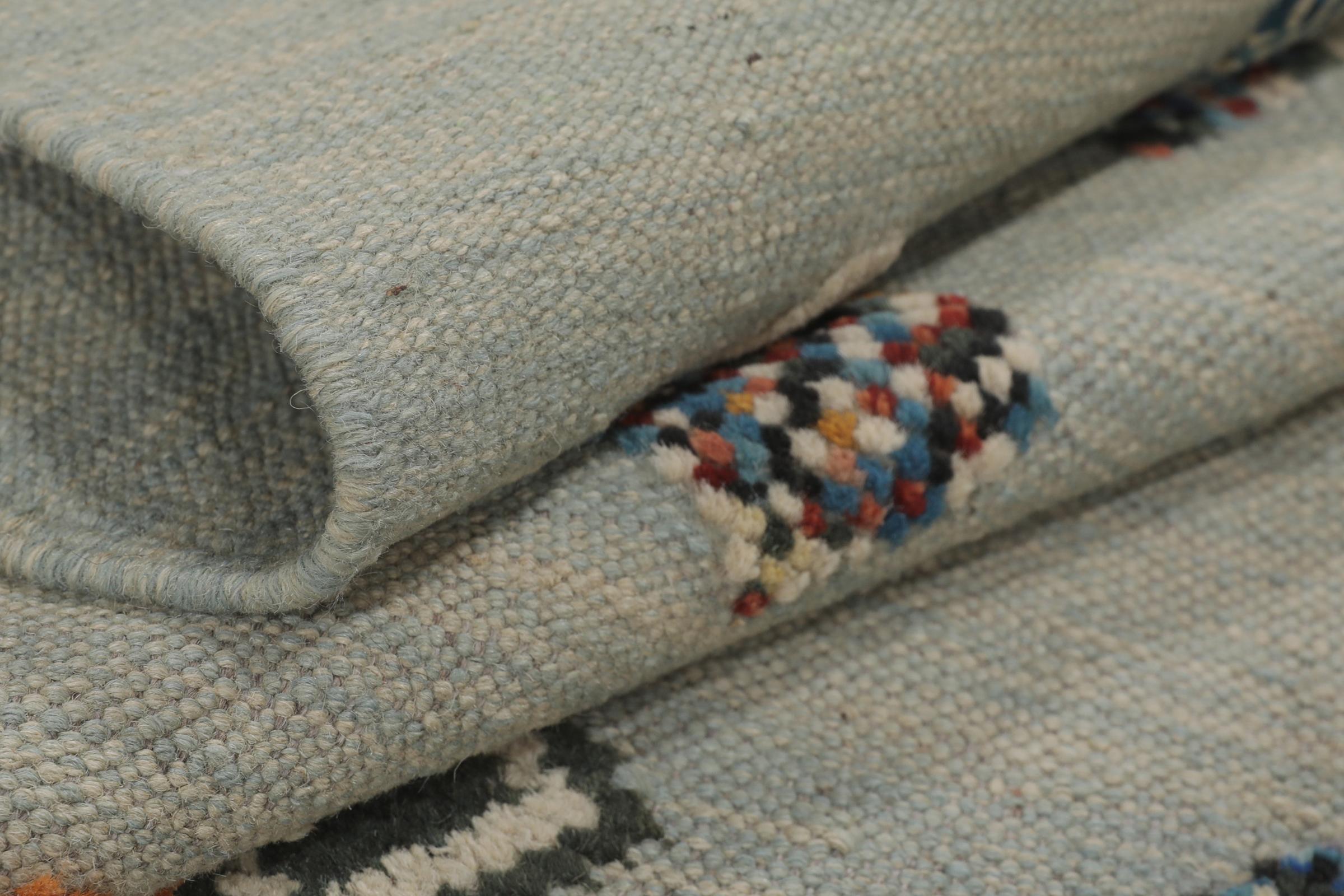
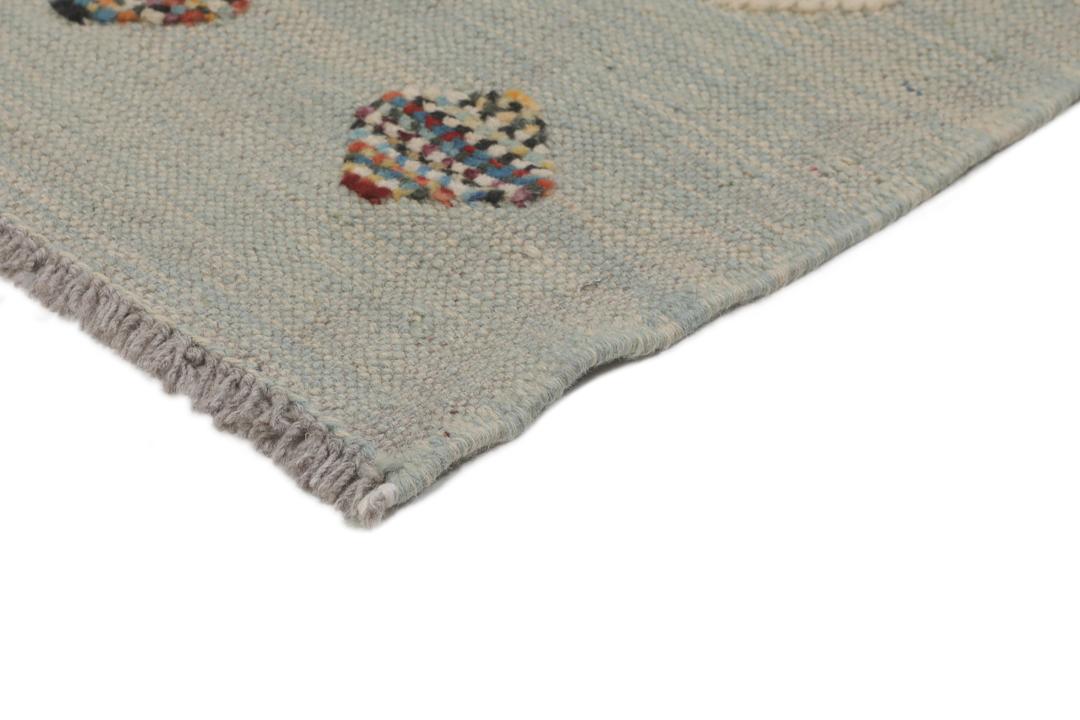
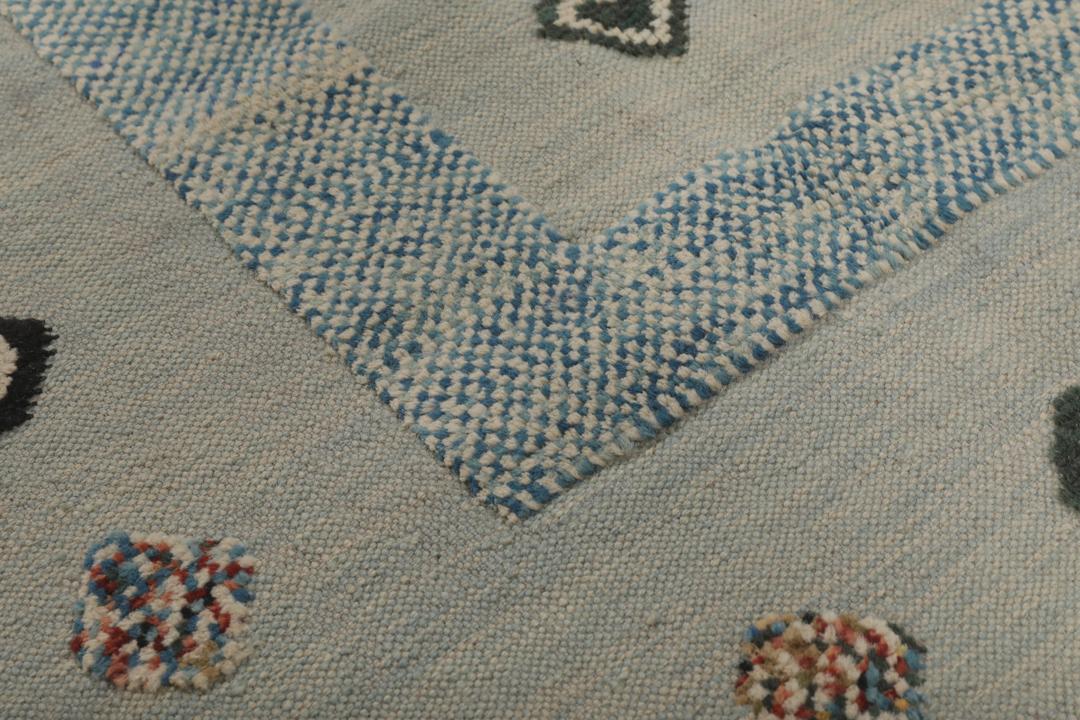
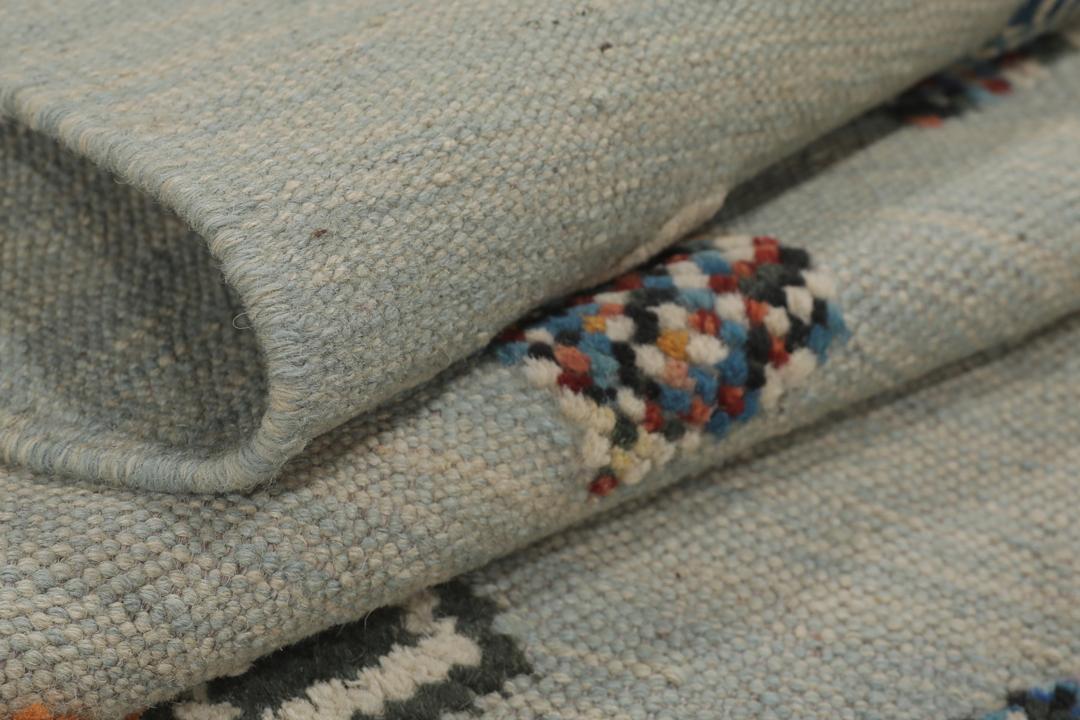
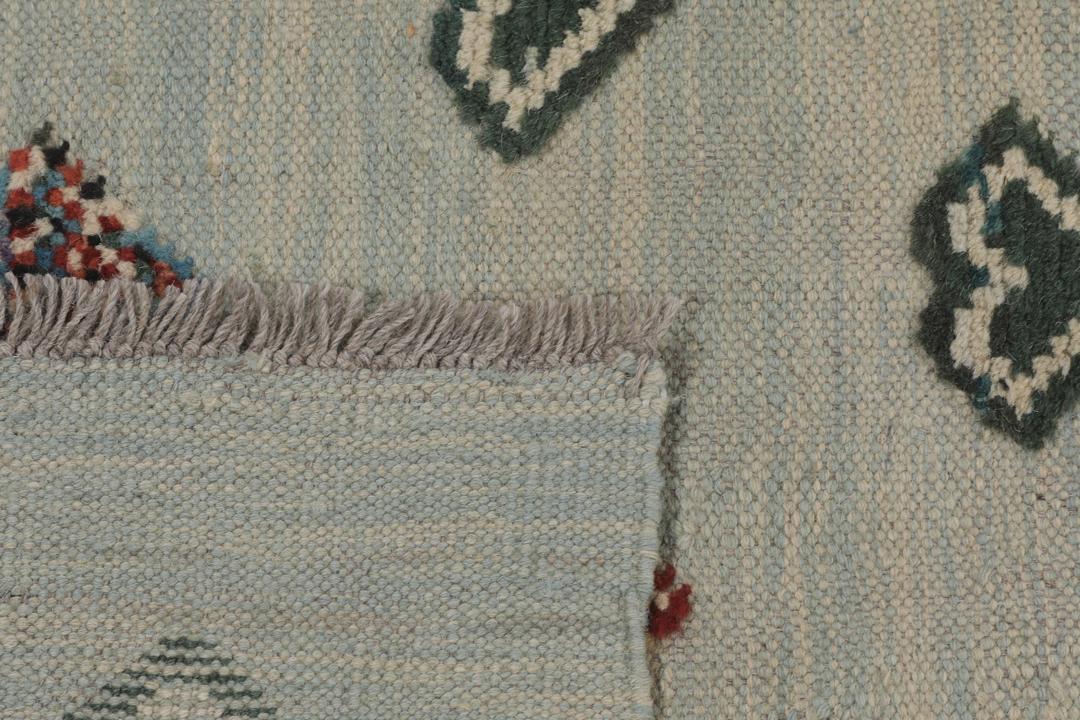
The term Nimbaft refers to a specific style of weaving that balances durability with a lighter, more flexible structure compared to pile rugs. This technique allows for the creation of intricate, sharp patterns that are visible on both sides of the rug. It is a testament to the weaver's ability to maintain tension and precision throughout the entire process.
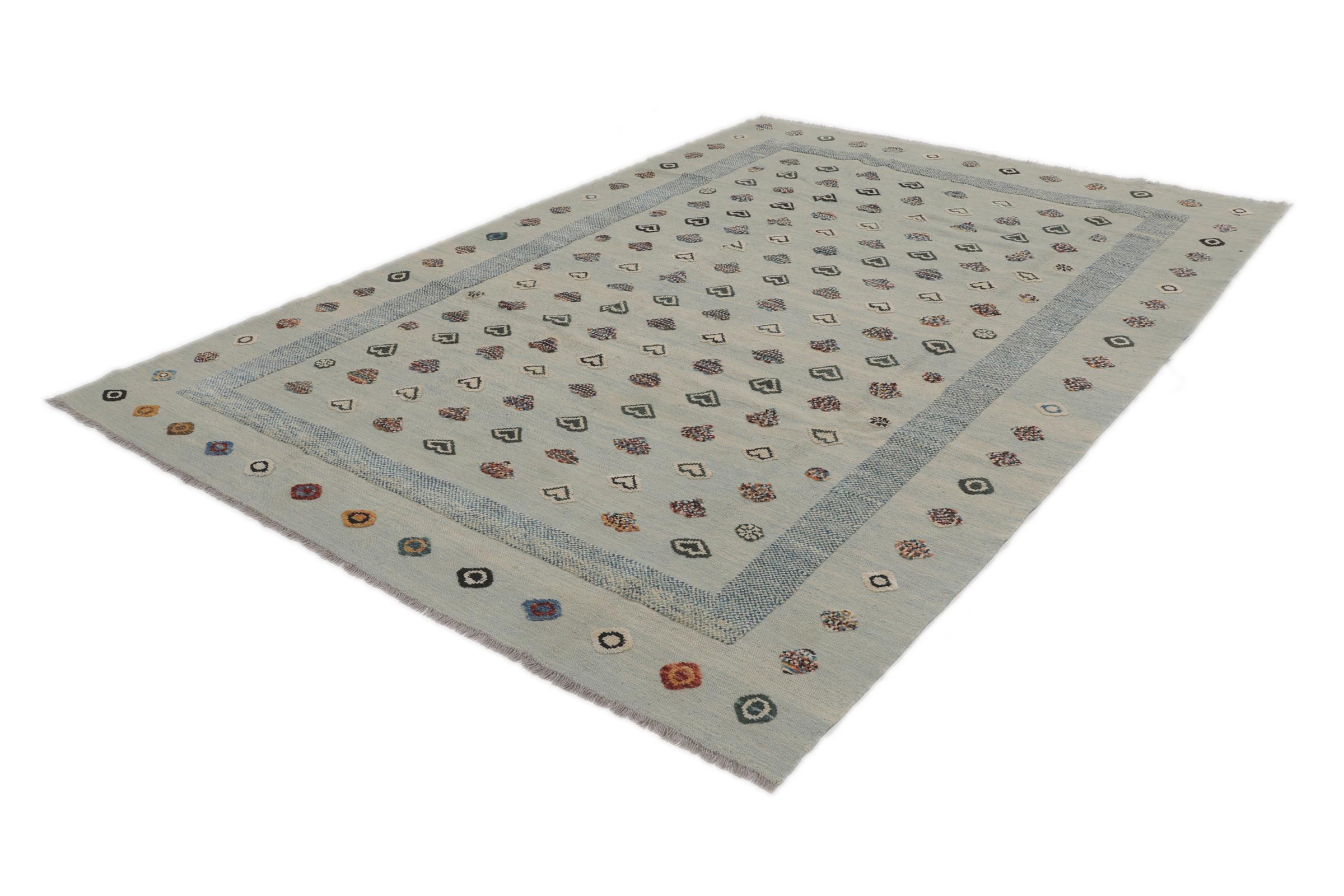
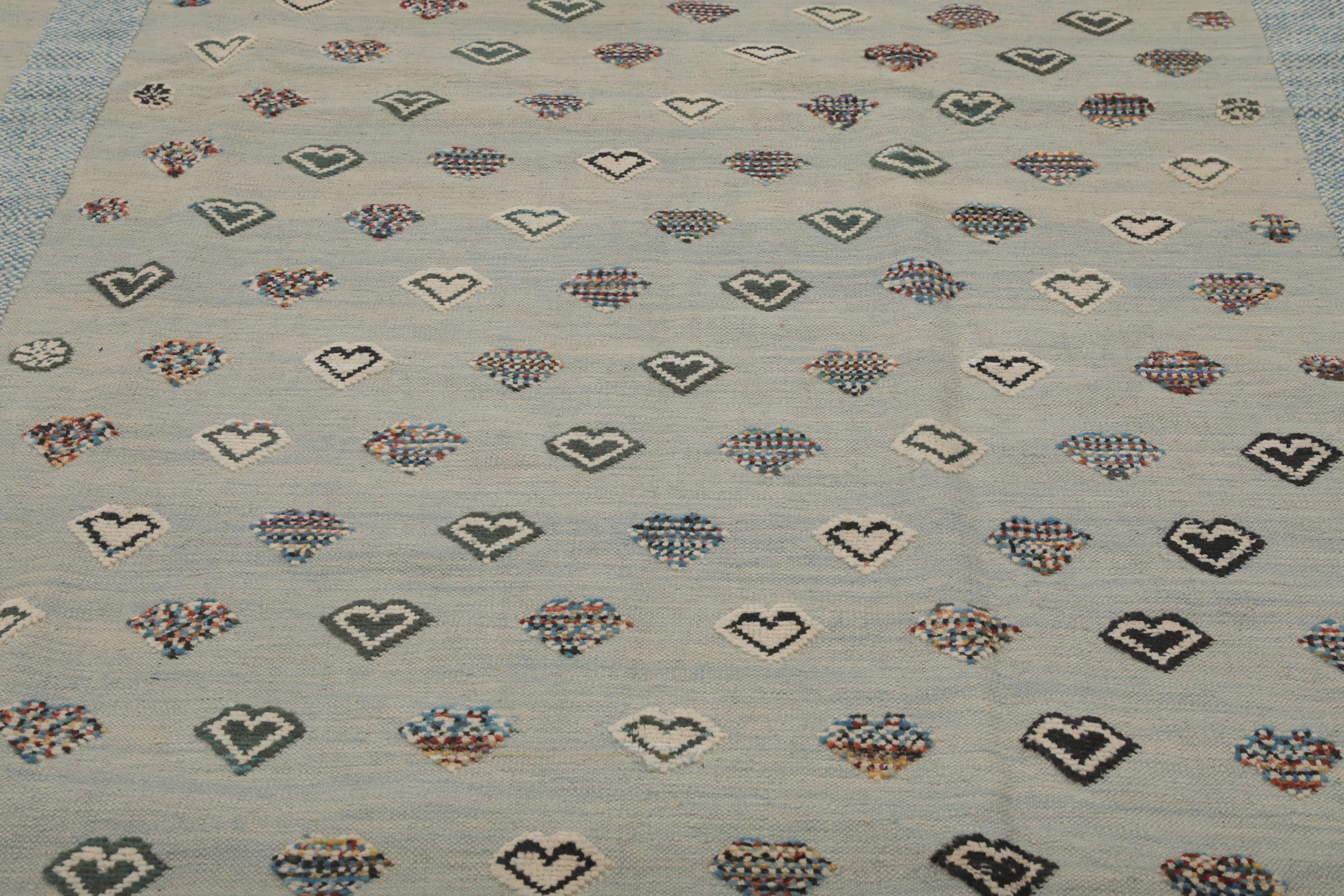
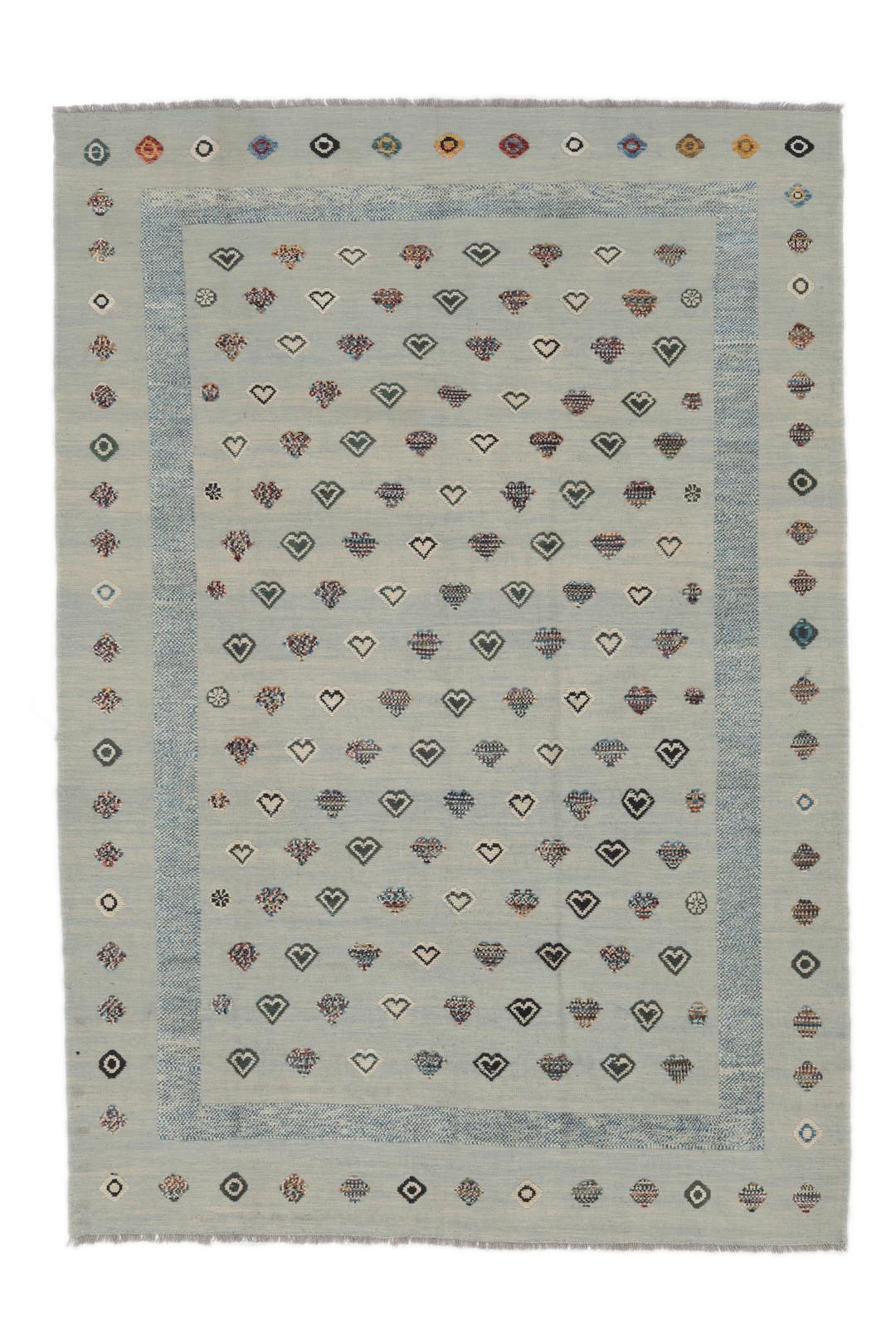
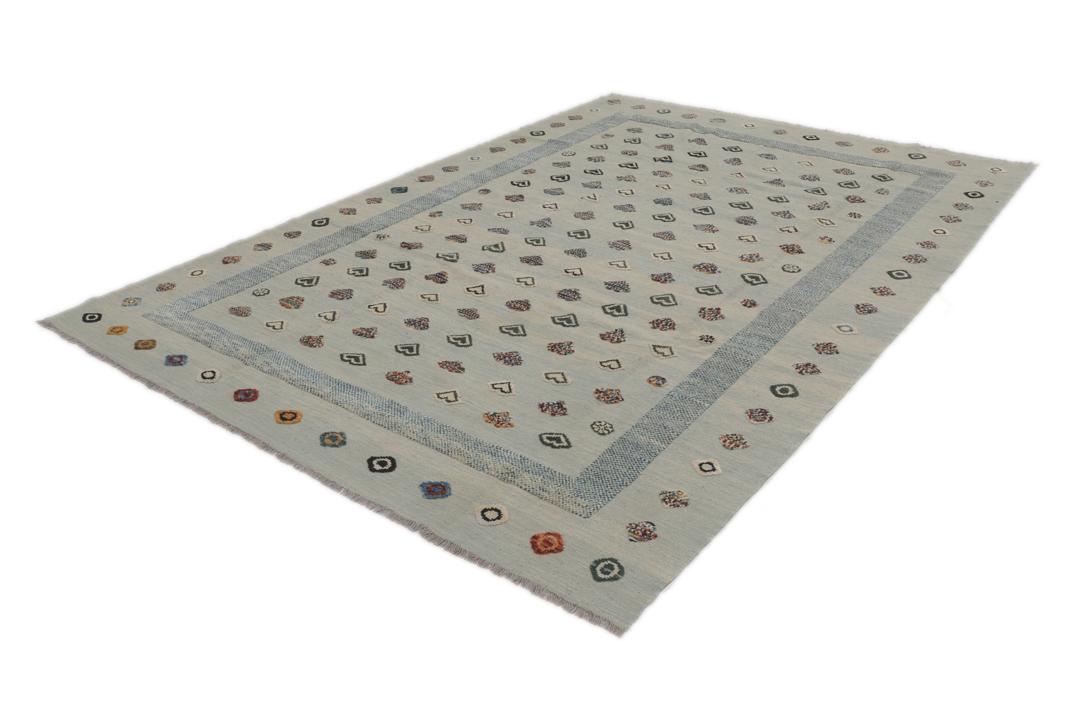
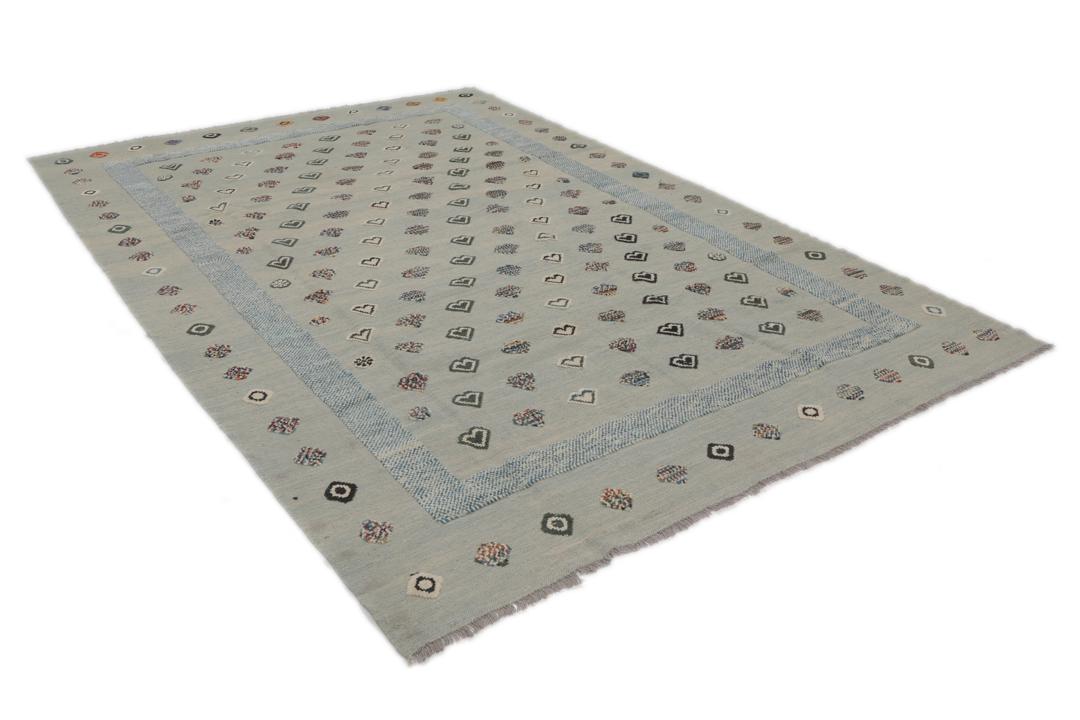
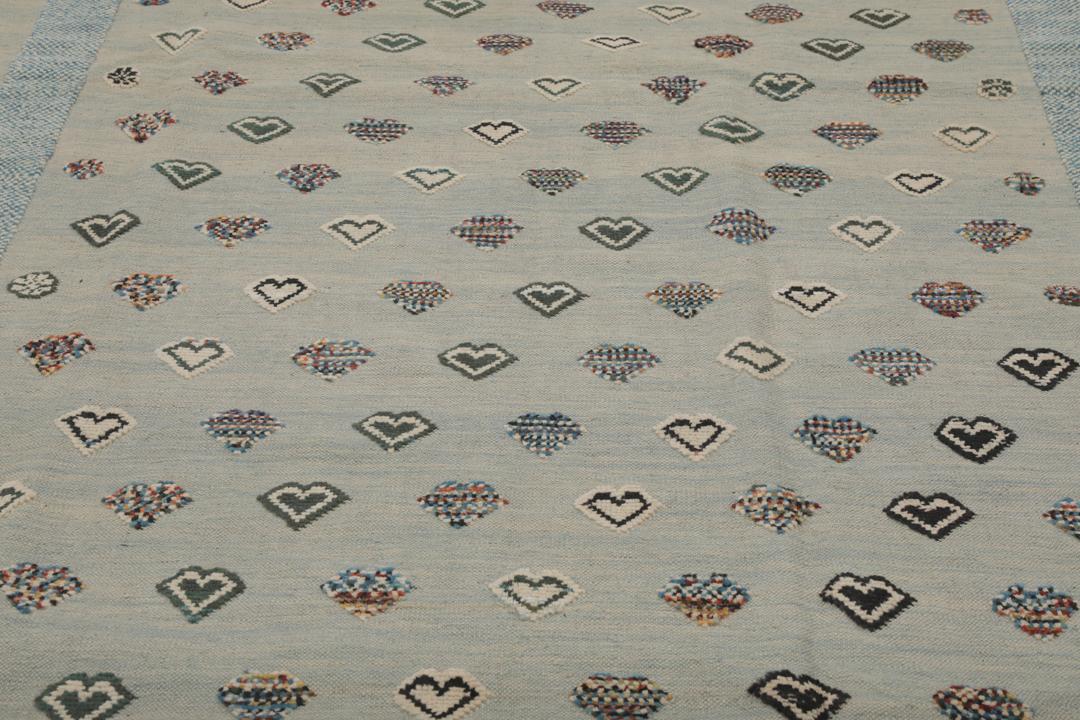
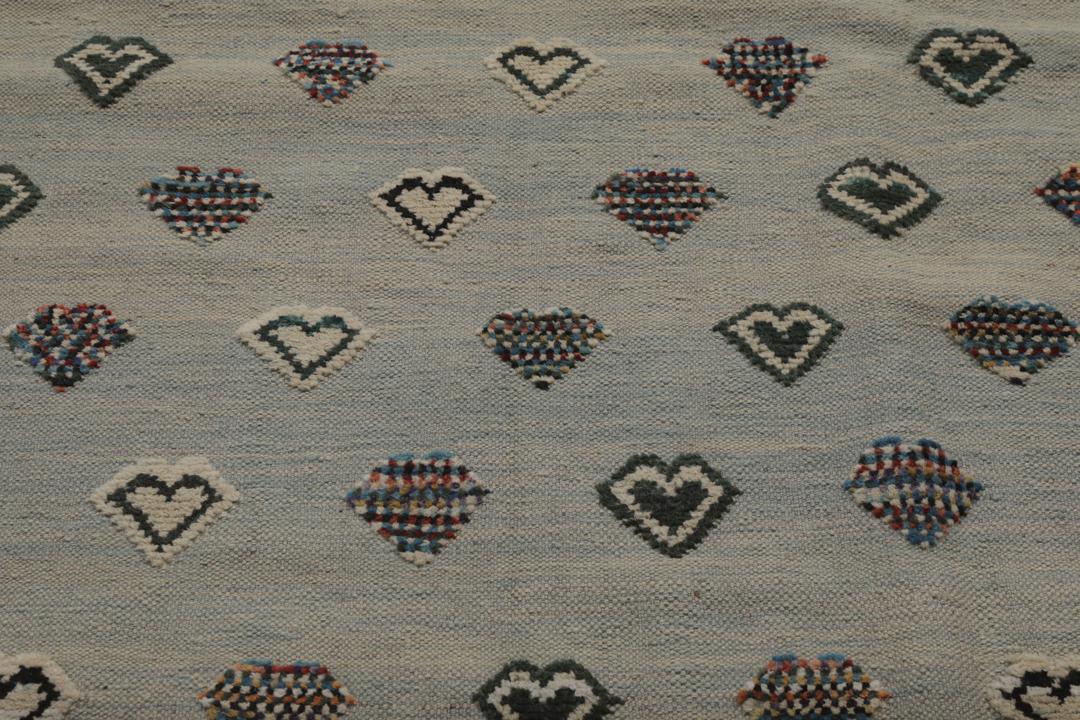
The design of this particular rug features a repeating heart motif, a charming departure from the more traditional tribal medallions. While many Kilims focus on angular geometric shapes to represent cultural symbols, the inclusion of hearts adds a contemporary, joyful layer to the historical language of Afghan weaving.
Owning a Kilim is more than just a decor choice; it is an investment in a living heritage. These pieces are highly valued by collectors for their authenticity and the human story behind every thread. By bringing this rug into your home, you are preserving a centuries-old tradition and supporting the talented artisans who keep it alive today.