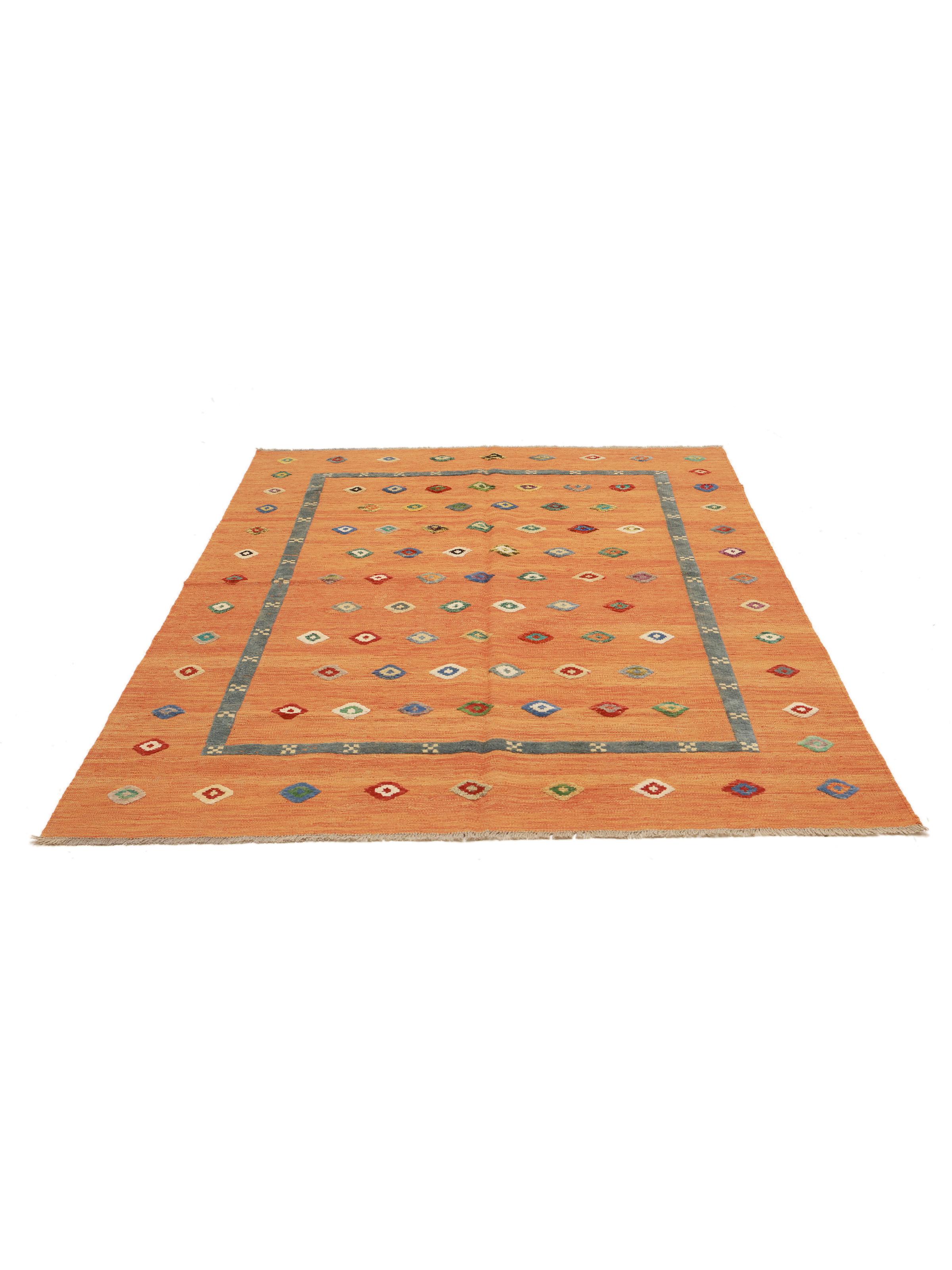
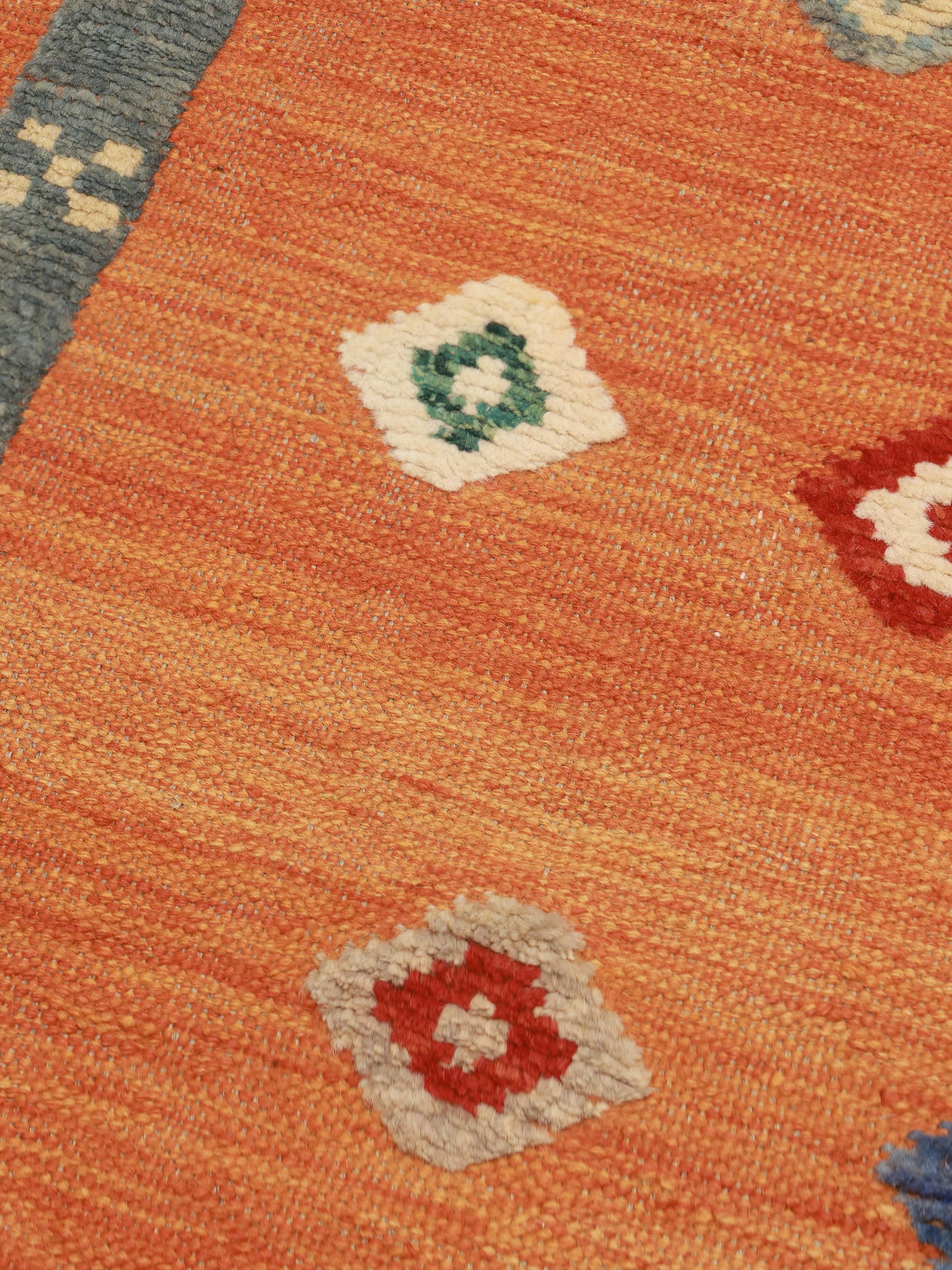
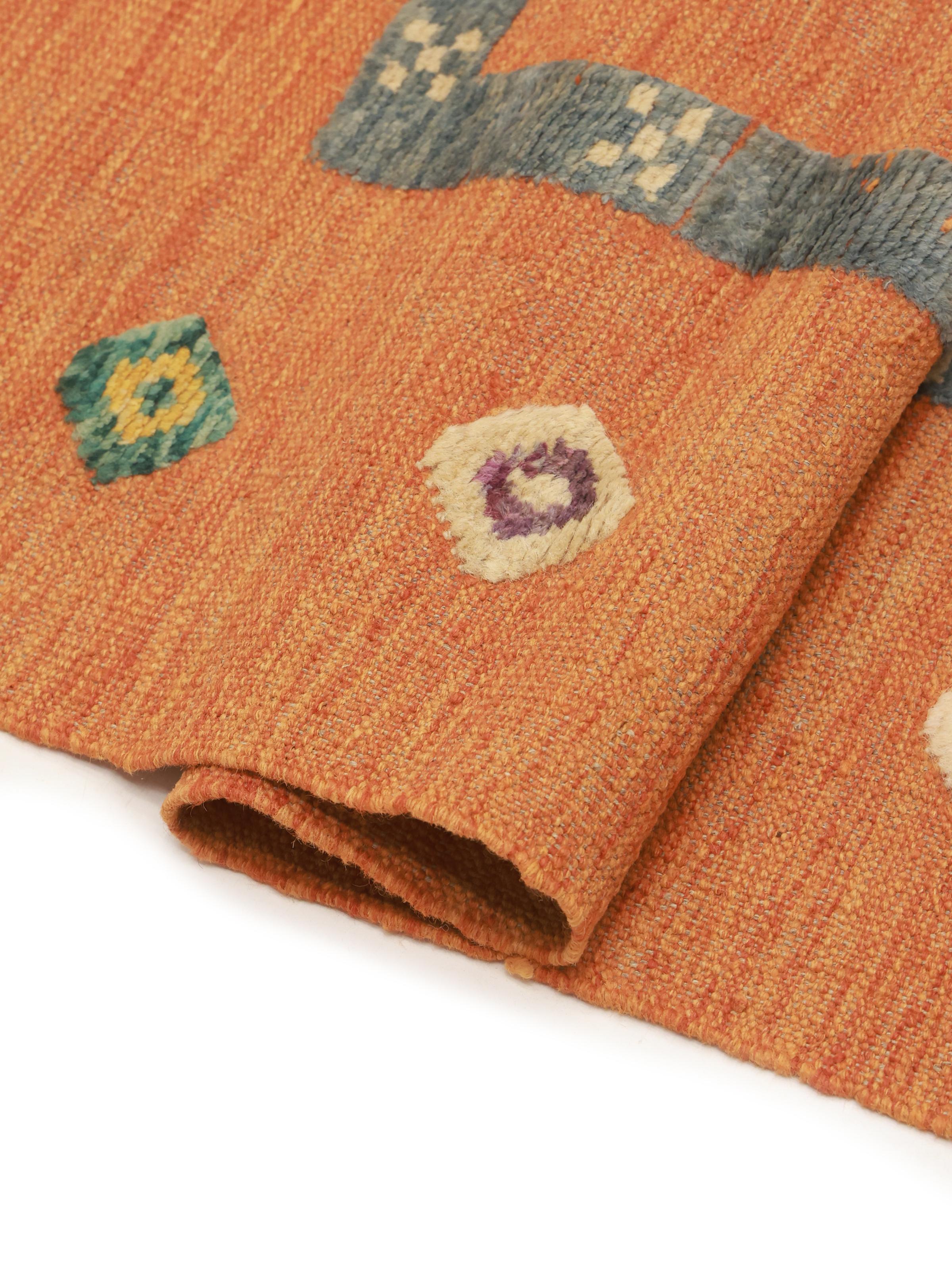
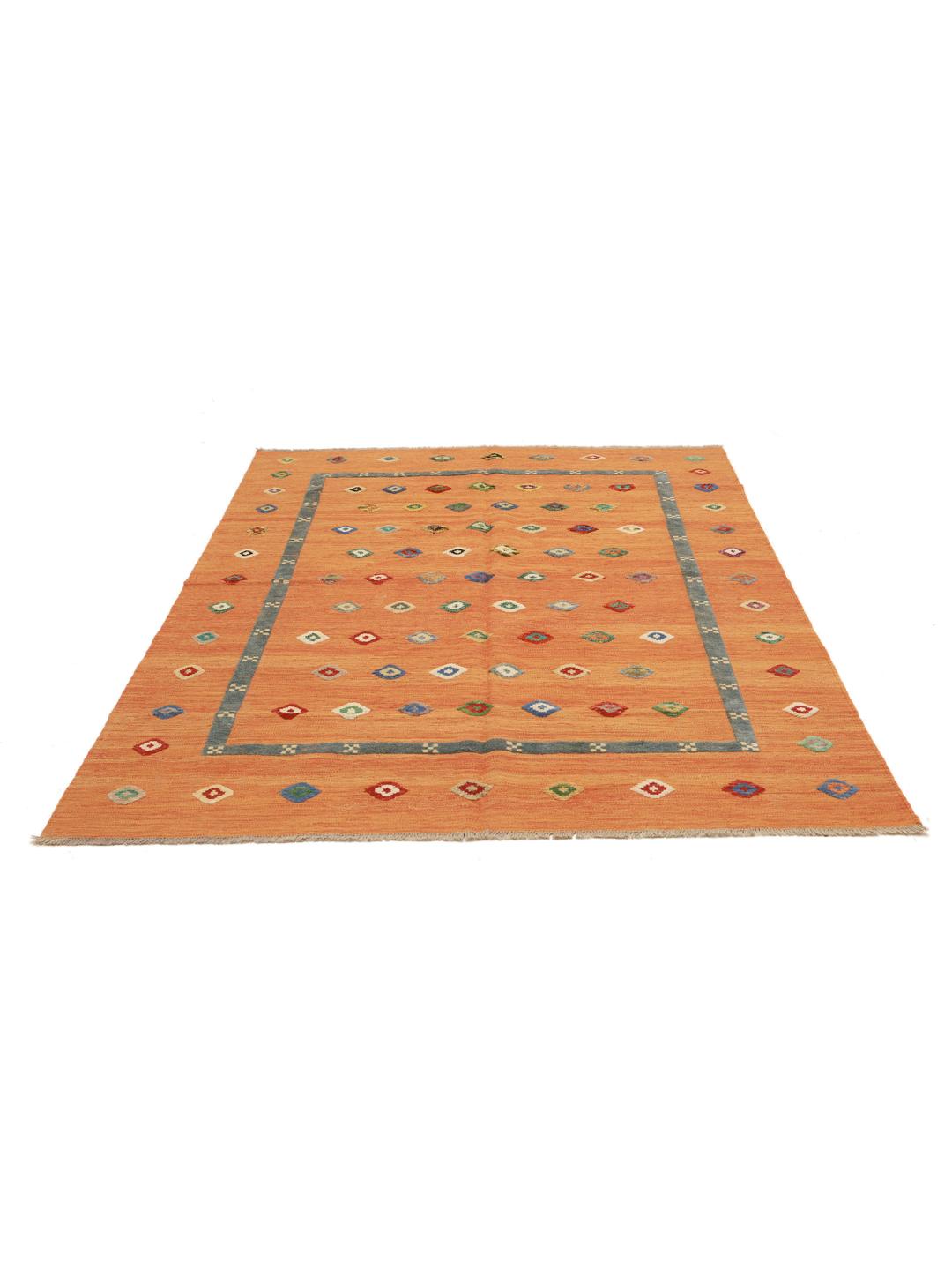
The Kelim Nimbaft belongs to the storied tradition of flat-woven rugs from the Middle East and Central Asia. The word 'Kilim' refers to a pileless weaving technique where the weft threads are pulled tightly over the warp to create a smooth, durable surface. These rugs have been used for centuries by nomadic and village tribes for everything from floor coverings to storage bags, valued for their portability and exceptional strength.
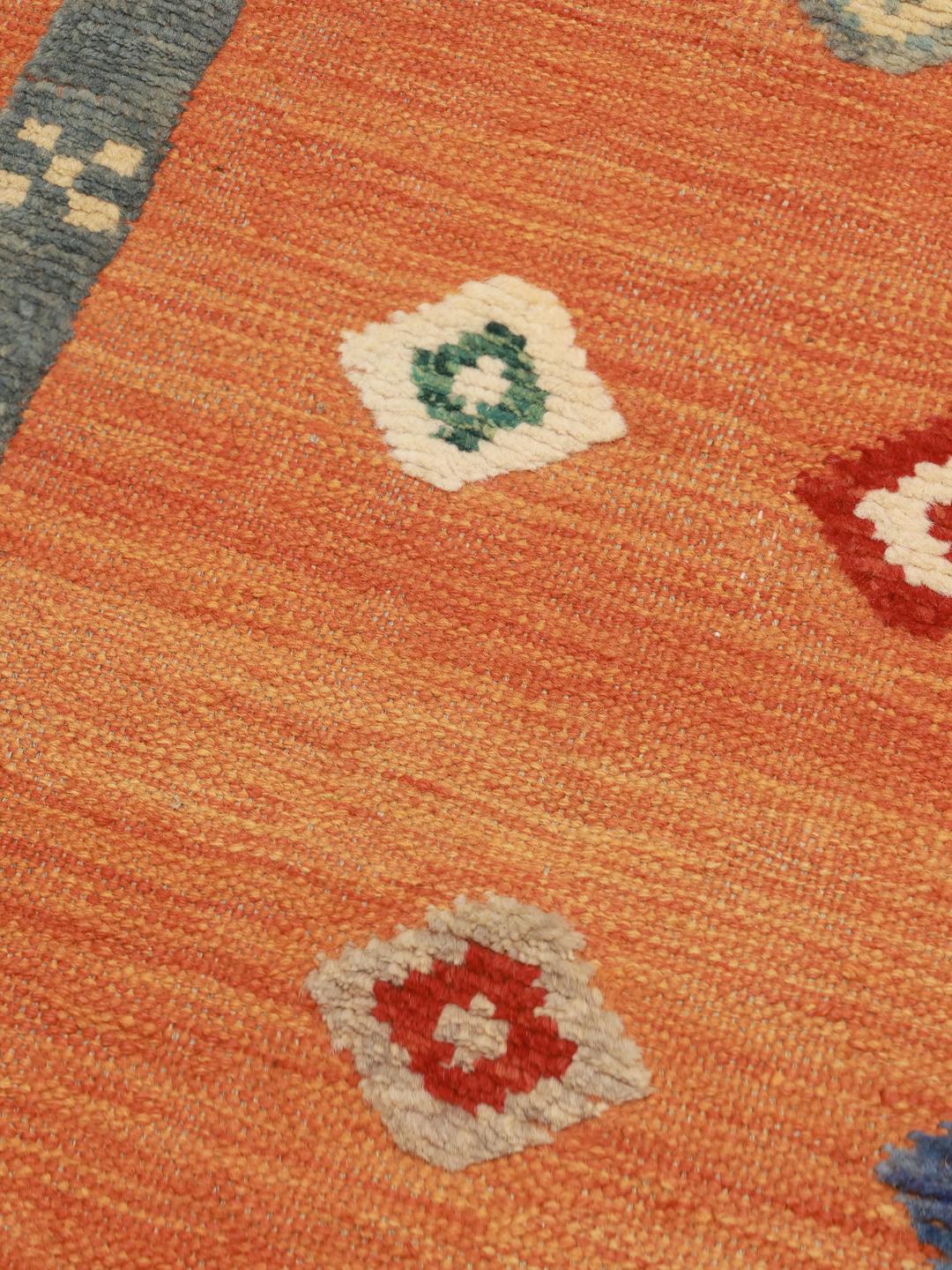
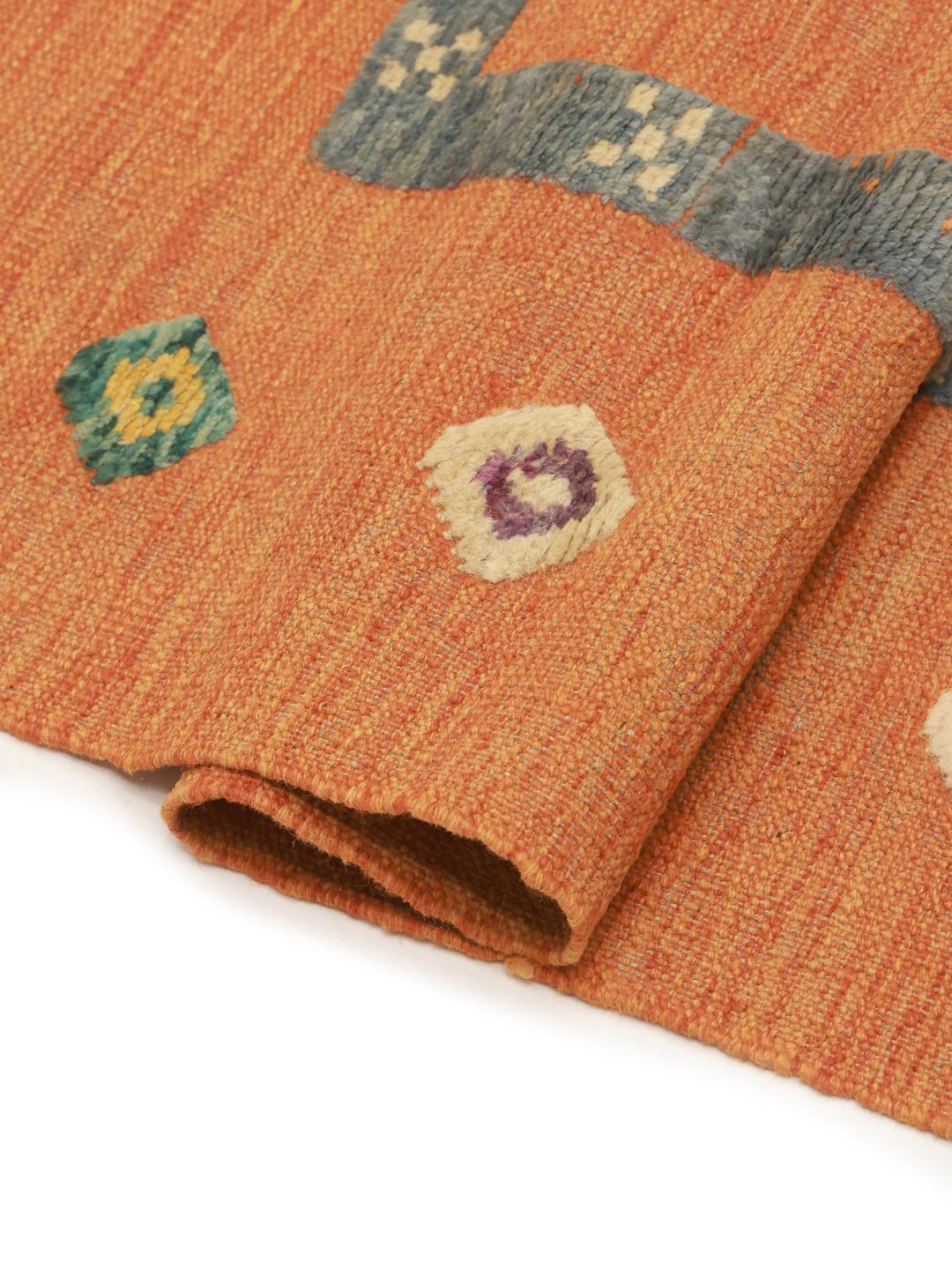
The term 'Nimbaft' identifies a specific approach to these flat-woven textiles, often characterised by a refined, tight weave that enhances both the clarity of the pattern and the structural stability of the rug. This technique allows for the intricate geometric motifs often found in Afghan weaving to stand out with crisp precision. For the owner, this means a rug that maintains its shape and visual appeal even with regular use.
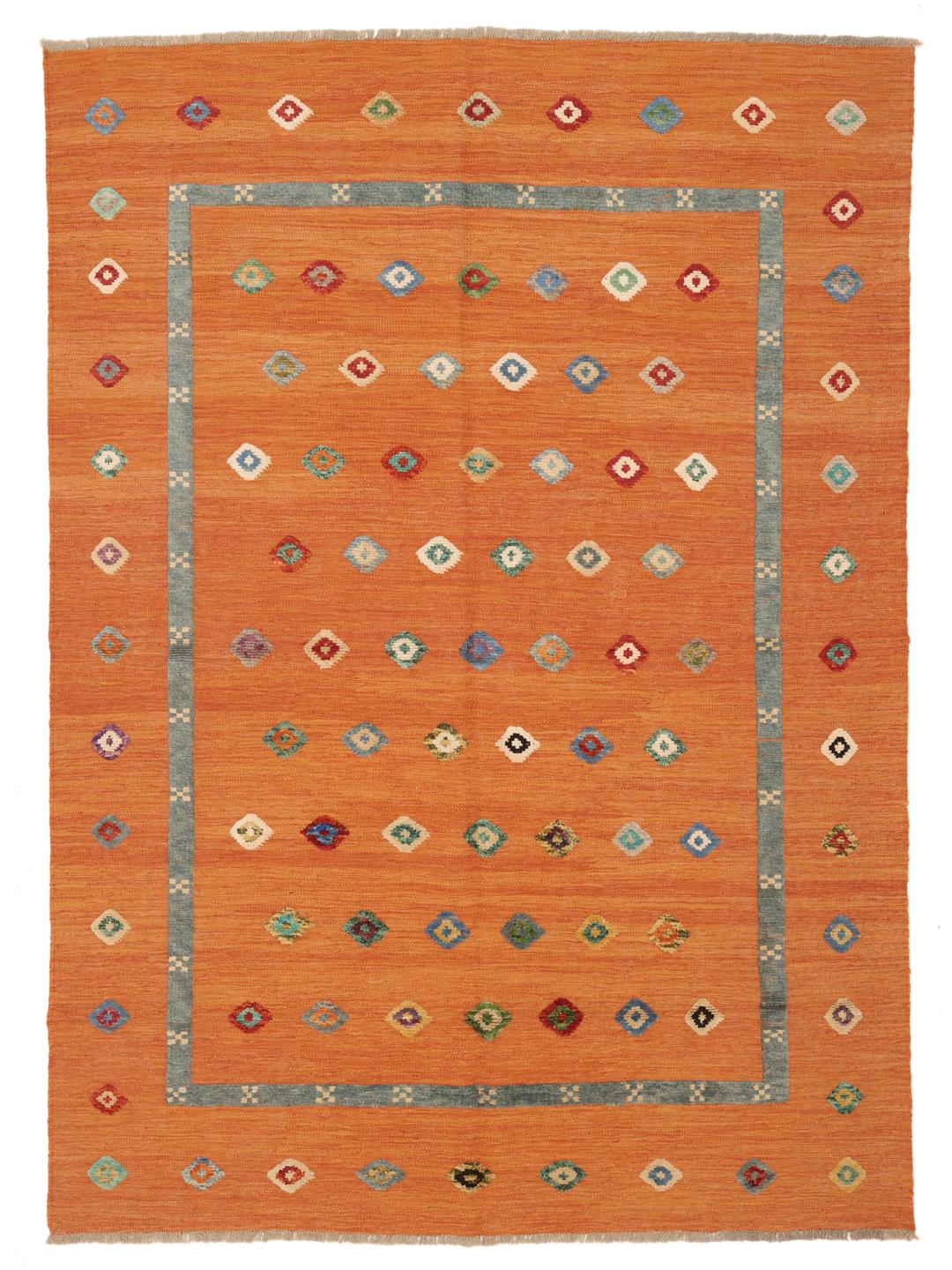
Visually, these rugs are defined by their reliance on geometric abstraction. Instead of curved or floral designs, the weaver uses the grid of the loom to create diamonds, triangles, and lines. In this specific piece, the use of a bold orange background provides a modern, warm canvas for the varied colours of the motifs. Such choices in colour and pattern are deeply rooted in regional aesthetics, often reflecting the natural dyes and local visual language of the weaver's community.
Today, these rugs are highly sought after by collectors who value the intersection of utility and folk art. Owning a Kelim Nimbaft is an opportunity to connect with a living history, as each rug embodies the skill, patience, and cultural identity of its maker. They are treasured not just for their aesthetic impact, but as enduring artefacts of a craft that continues to thrive in the modern home.