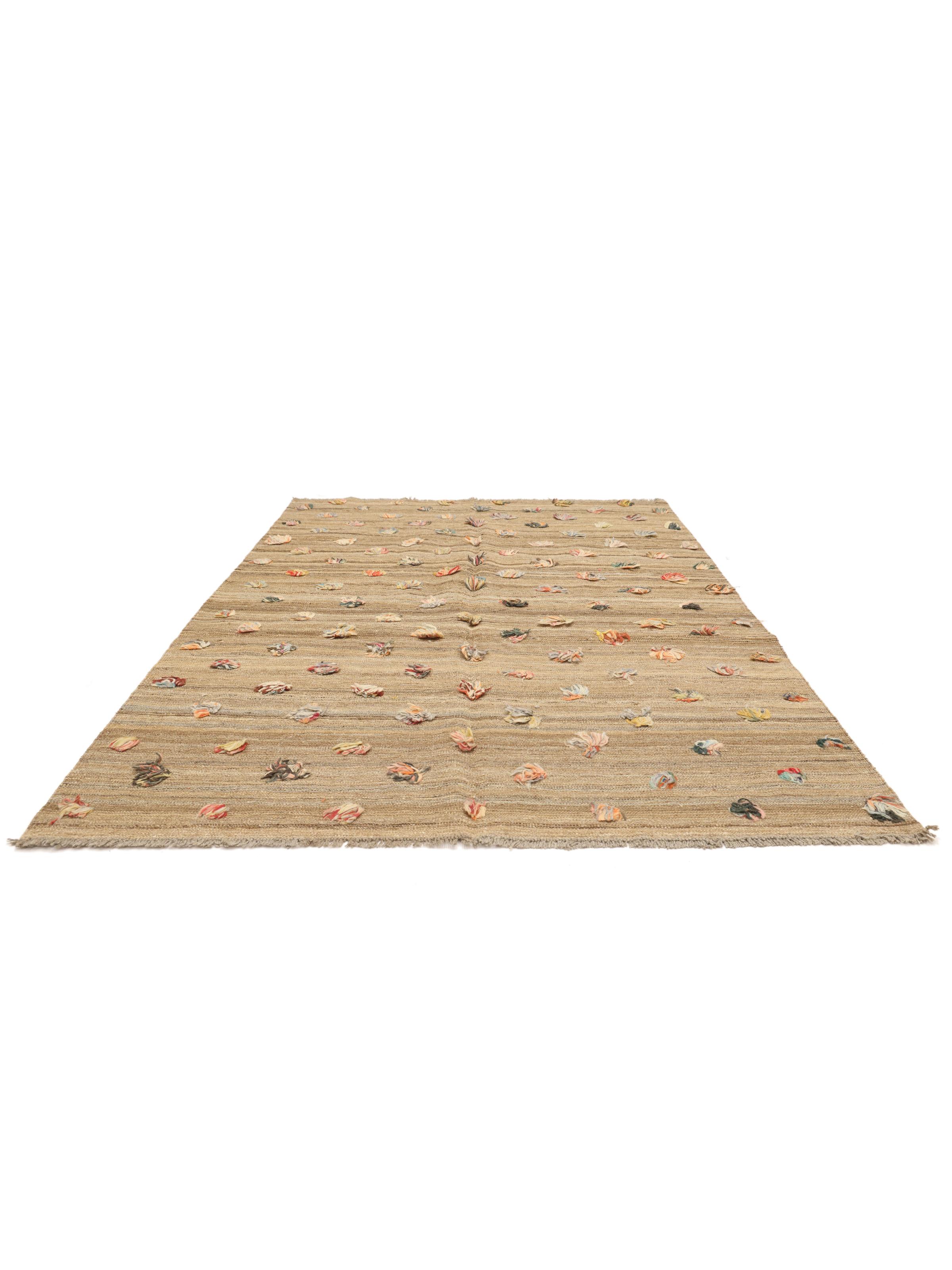
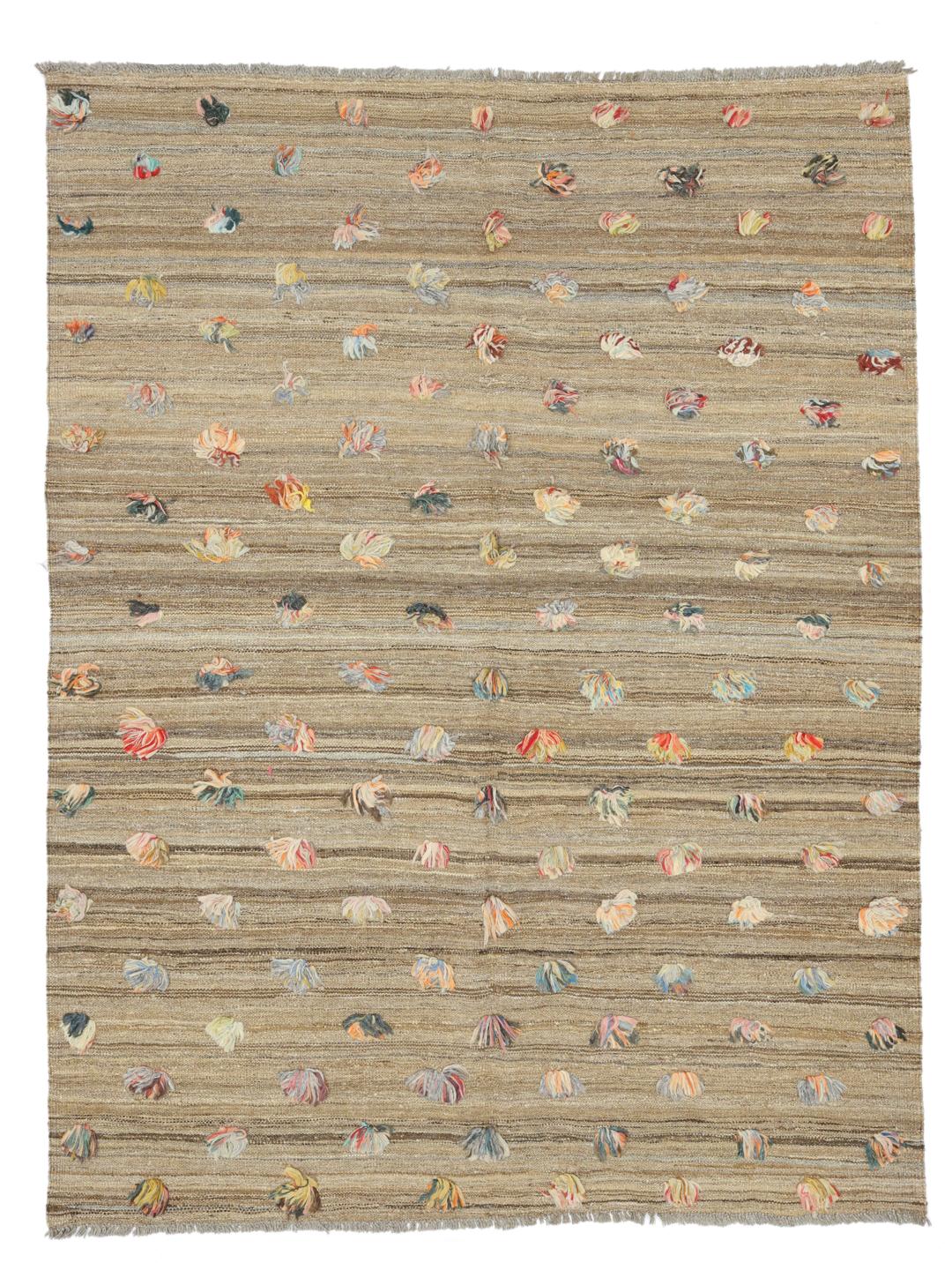
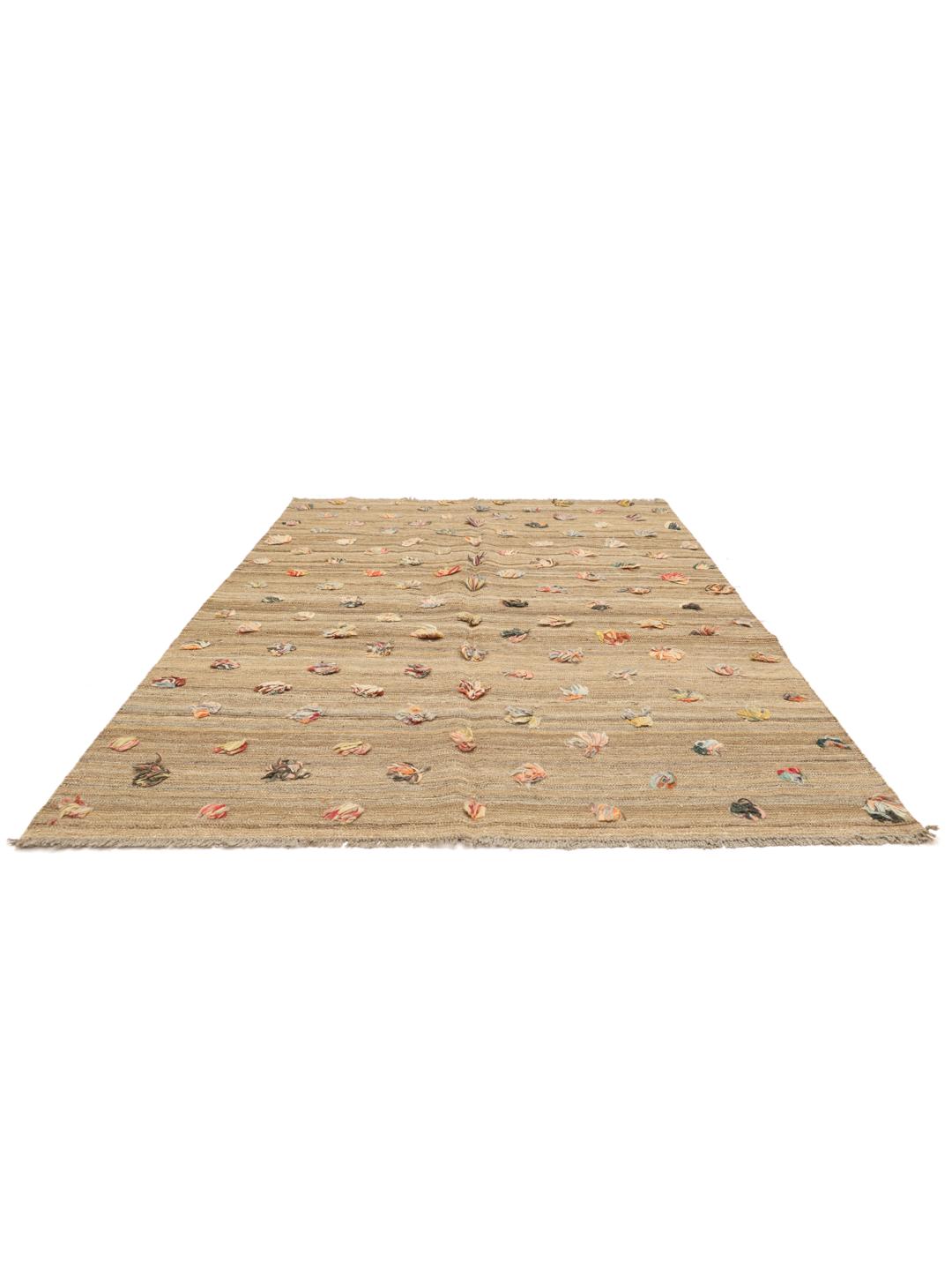
The Kelim Nimbaft originates from the rich weaving heritage of Afghanistan, a region where rug making has been a central pillar of cultural and economic life for centuries. These rugs are deeply connected to the nomadic and semi-nomadic traditions of the area, where weaving was not just a craft but a way to record stories and express identity. The techniques used here have been passed down through generations, maintaining a connection to the ancient Silk Road trade routes that once crossed these lands.
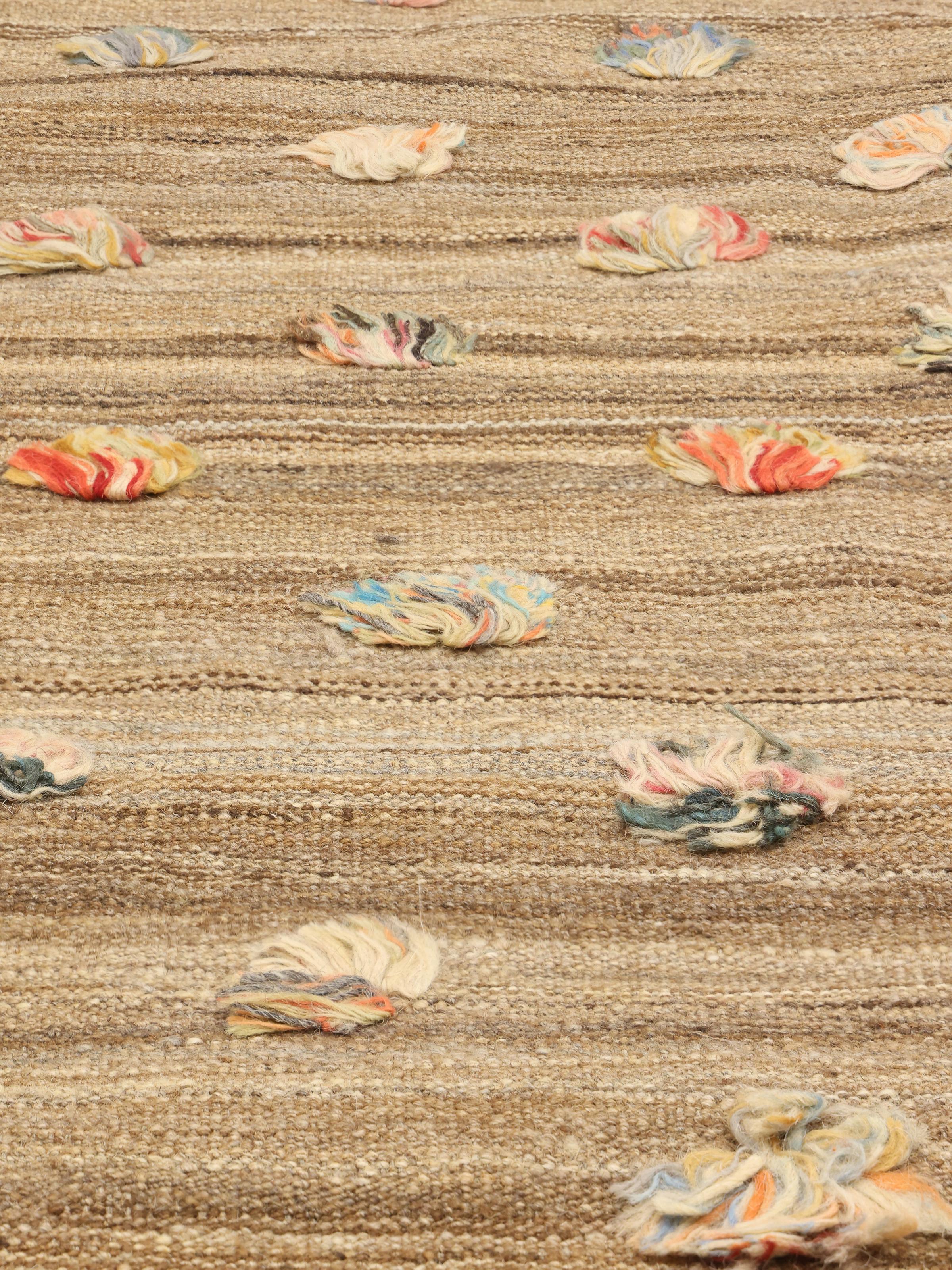
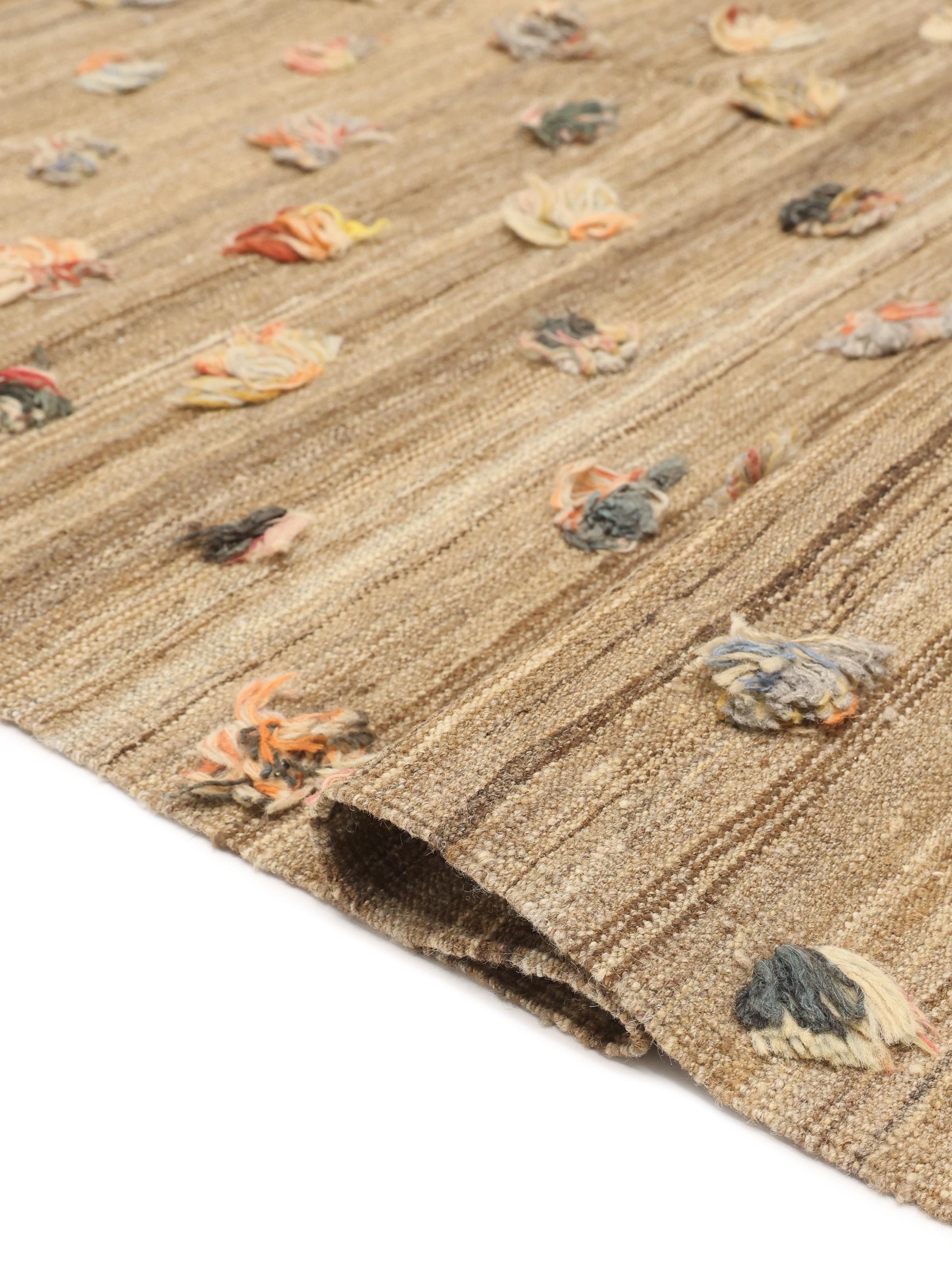
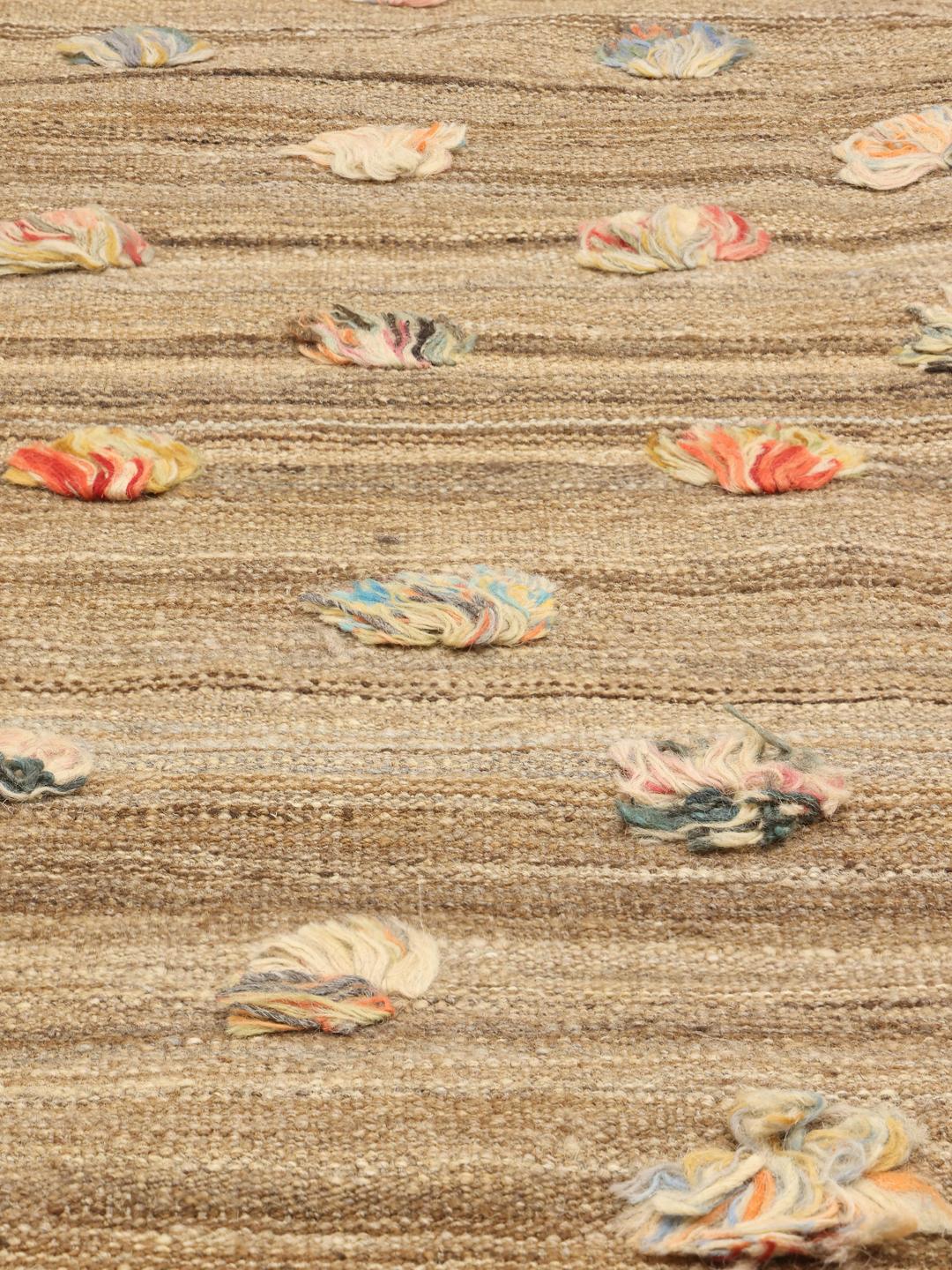
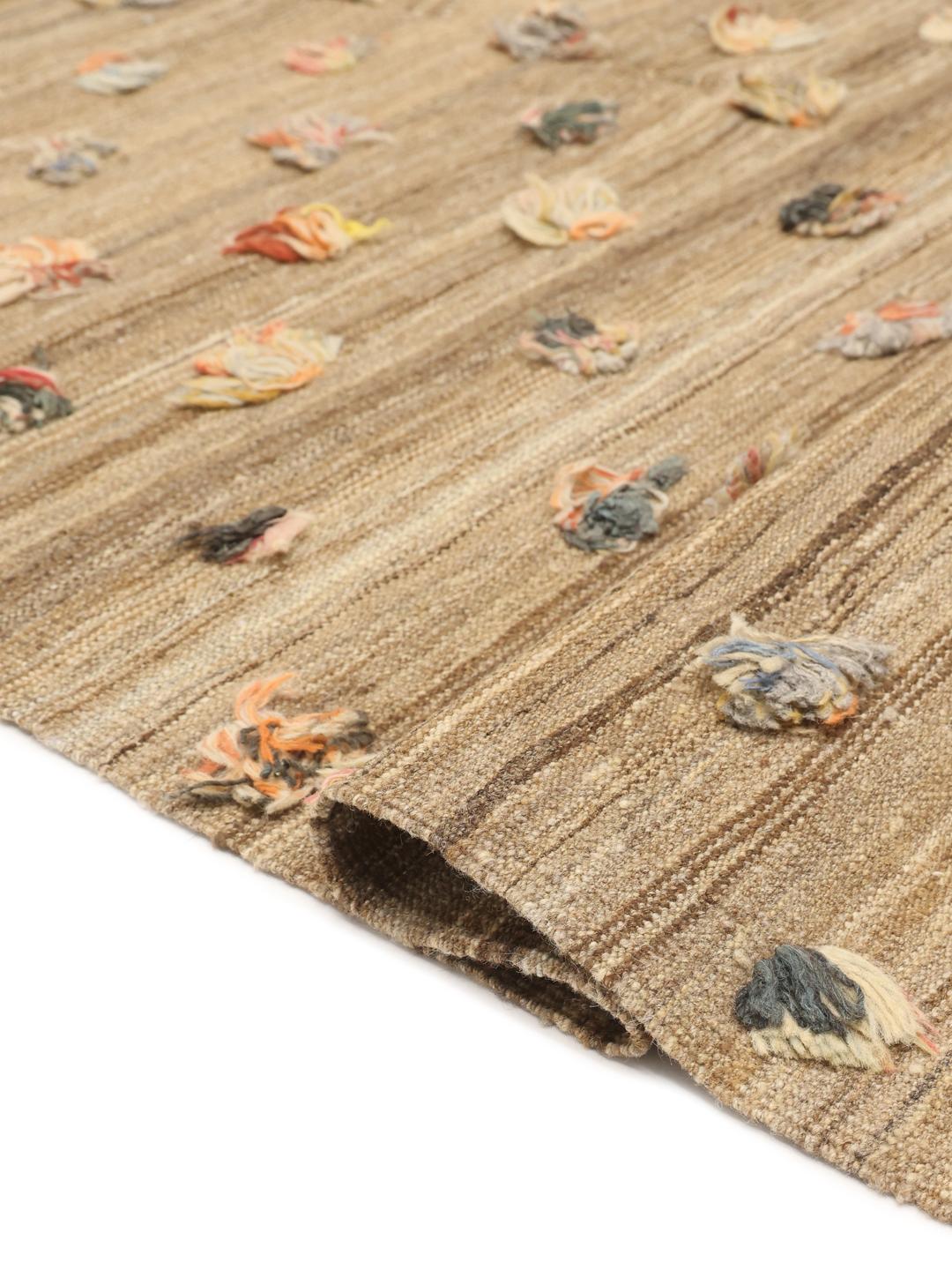
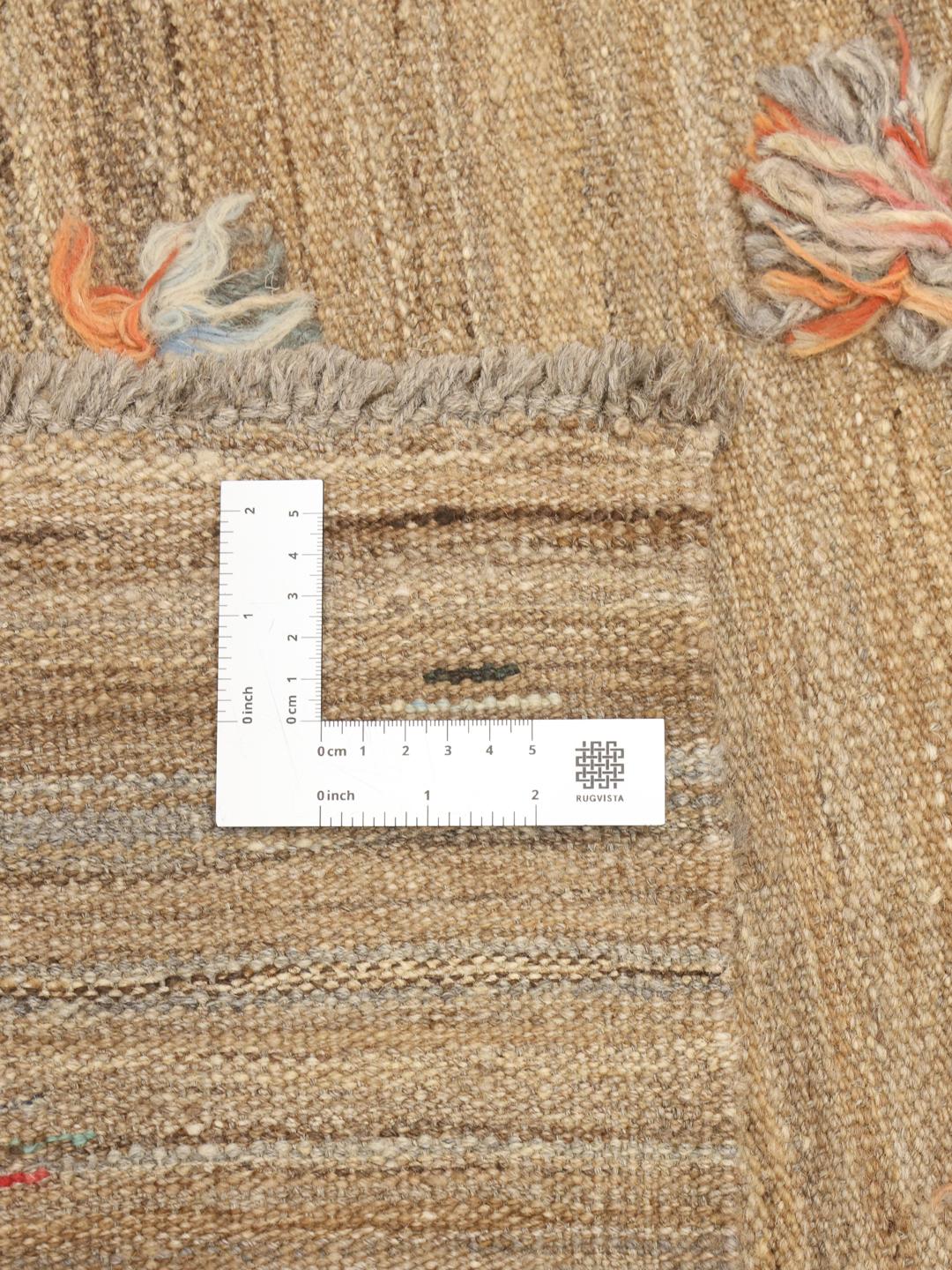
The term 'Kelim' refers to a flat-woven rug technique that is celebrated for its versatility and durability. Unlike pile rugs, these are created by interlacing warp and weft threads, resulting in a lighter, thinner, and more portable rug. The 'Nimbaft' style adds a layer of complexity by incorporating tufted elements, which requires a specialised approach to ensure the tufts are securely anchored within the flat-woven foundation, creating a texture that is both sophisticated and pleasing to the touch.
Visually, these rugs are defined by their honest use of natural materials and earthy palettes, often punctuated by vibrant splashes of colour. The design of this particular piece, with its scattered, colourful tufts, reflects a modern interpretation of traditional motifs. While traditional rugs often rely on complex geometric patterns, this style celebrates the beauty of simplicity and the natural variations found in hand-dyed Wool, making it a standout example of contemporary Afghan weaving.
Owning a piece of this calibre is a commitment to heritage and skilled workmanship. Collectors and enthusiasts value these rugs not only for their aesthetic appeal but for the history they represent. Each rug is a record of the artisan's choices, reflecting the cultural landscape of their origin. By bringing this rug into your home, you are preserving a legacy of craft that values the human hand over the efficiency of the machine, ensuring that this tradition continues to thrive.