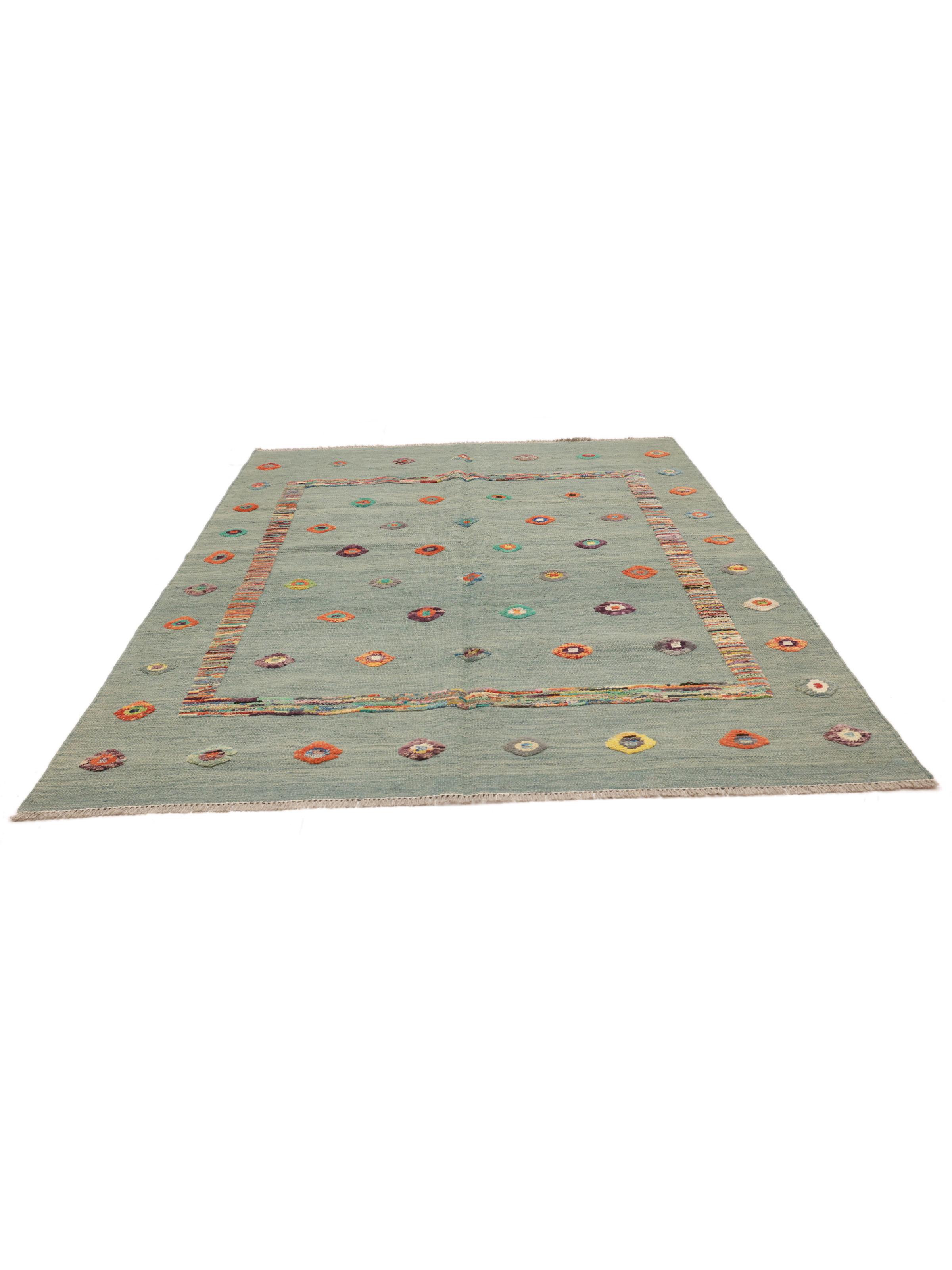
The art of the Kelim, or flat-weave, is deeply rooted in the nomadic traditions of the Middle East and Central Asia. Originally created by tribal weavers for practical purposes such as floor coverings, tent dividers, and storage bags, these rugs were designed to be lightweight, durable, and easily transportable. Over centuries, these functional objects evolved into a sophisticated art form, with each region developing its own distinct visual vocabulary.
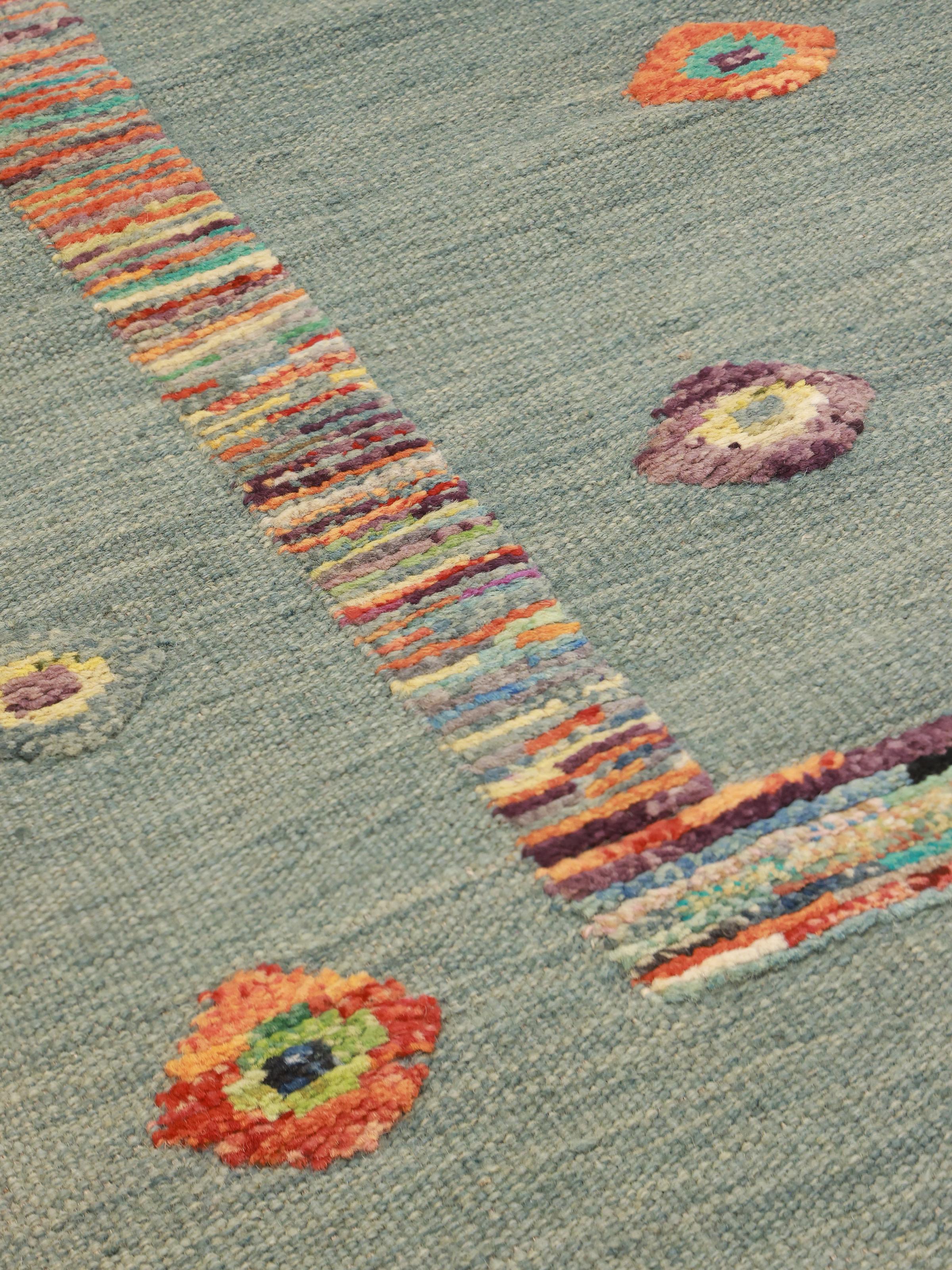
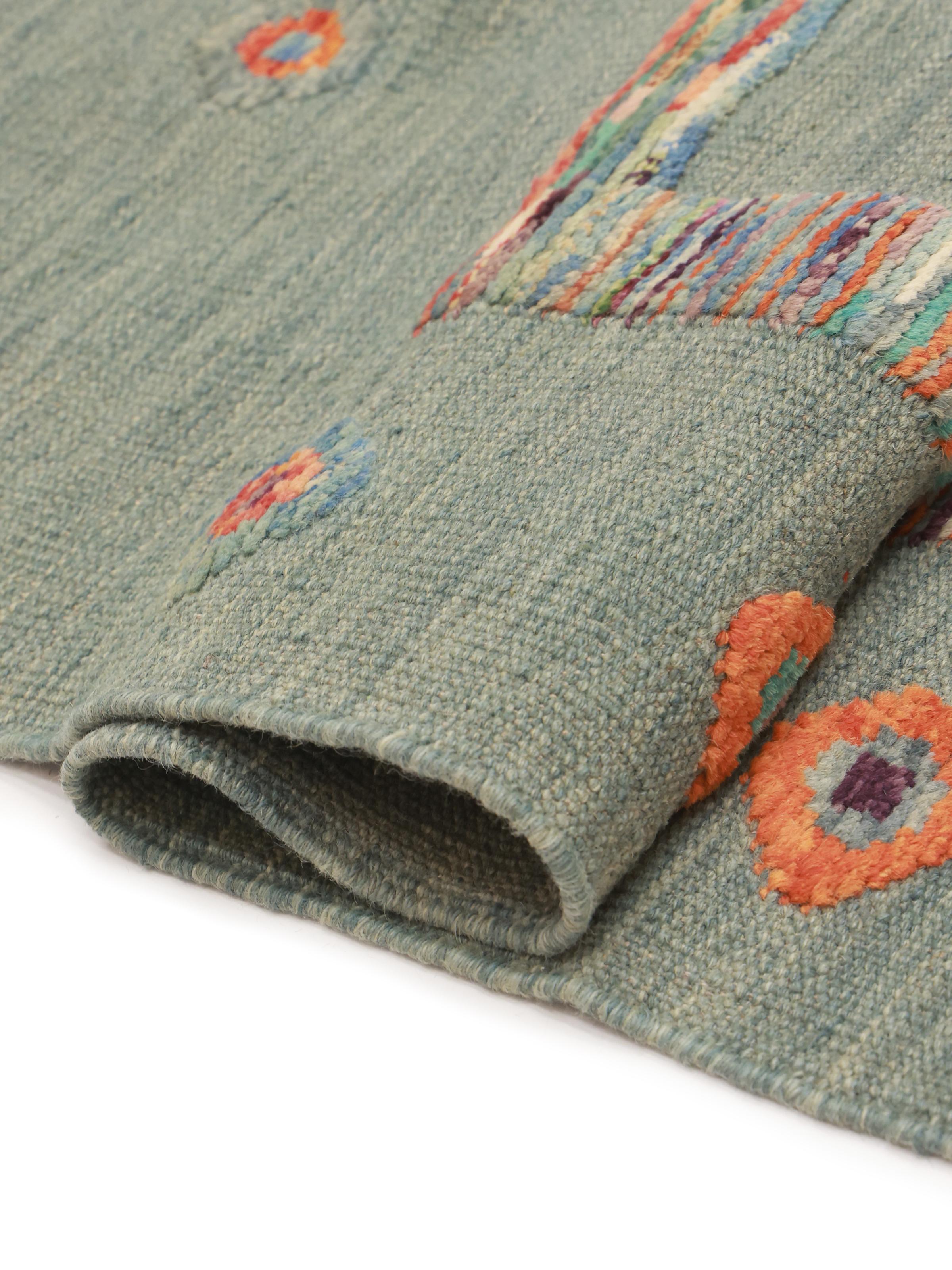
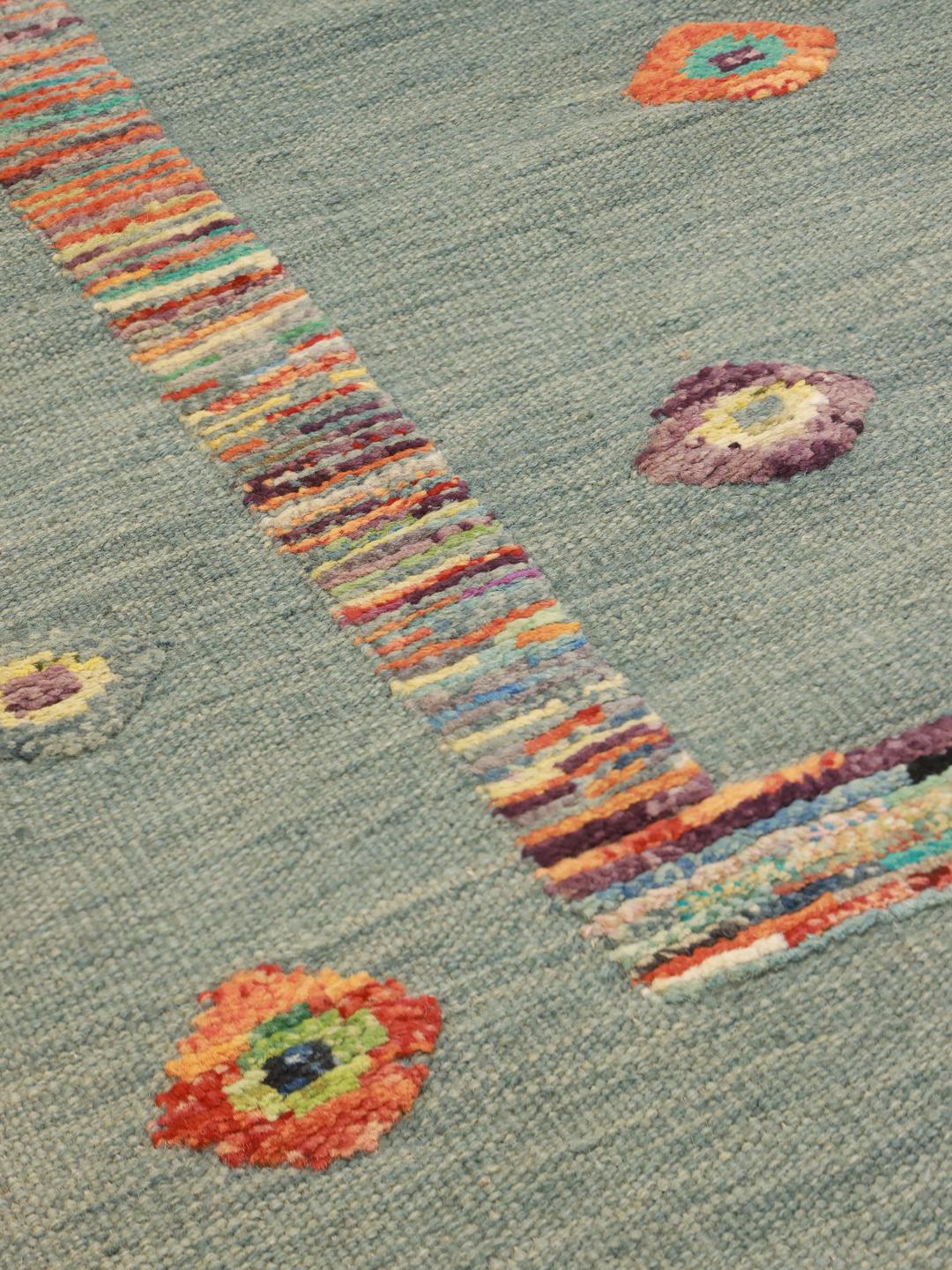
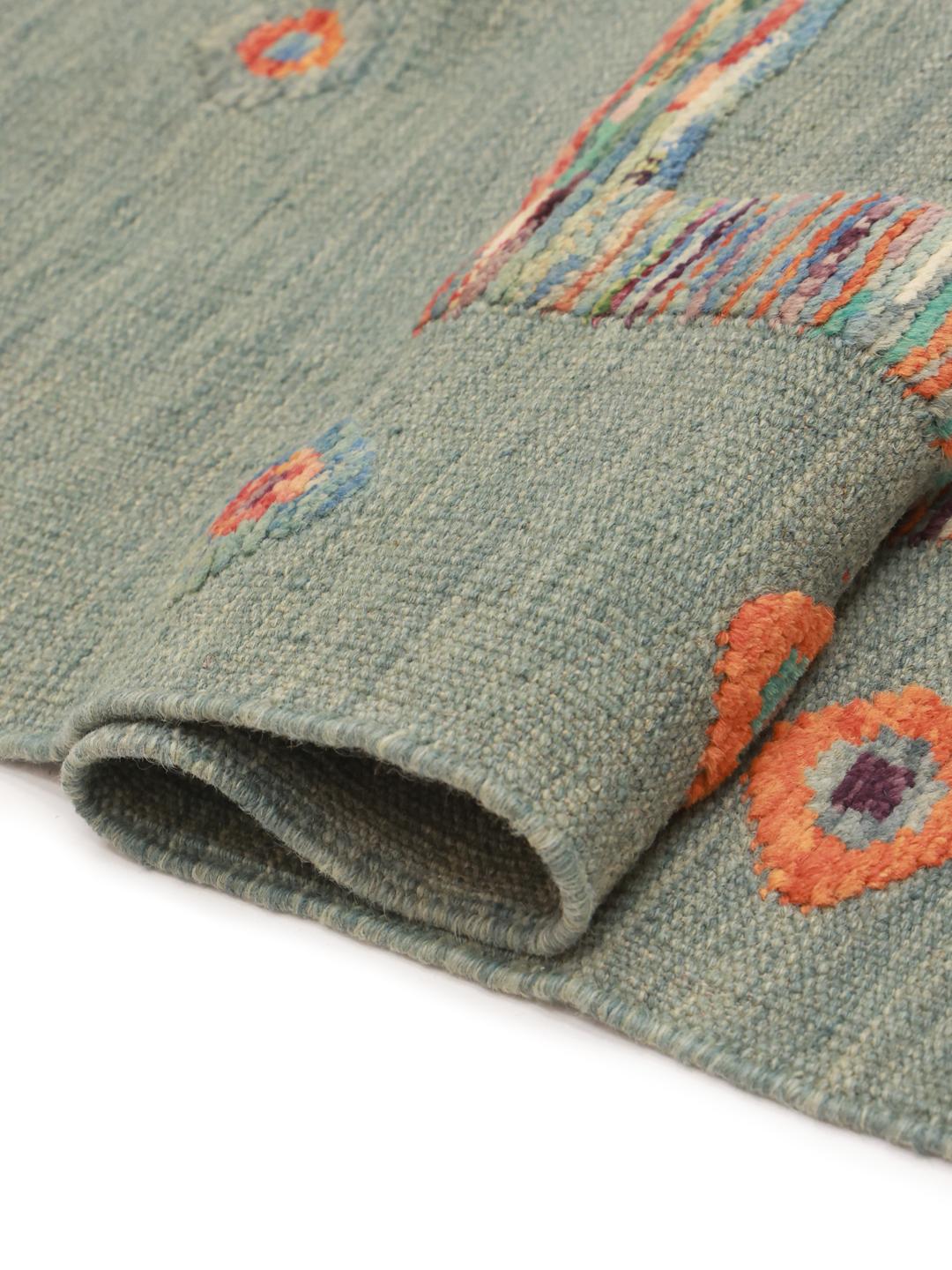
The term 'Kelim' refers to a specific weaving technique where the weft threads are passed through the warp threads to create a completely flat surface without a pile. This style is prized for its versatility and the clarity of its patterns, as the absence of pile allows the geometric designs to remain sharp and vibrant. In the case of the Nimbaft, the technique reflects a heritage of precision, where the tension of the weave is managed by hand to ensure the rug remains perfectly flat and structurally sound.
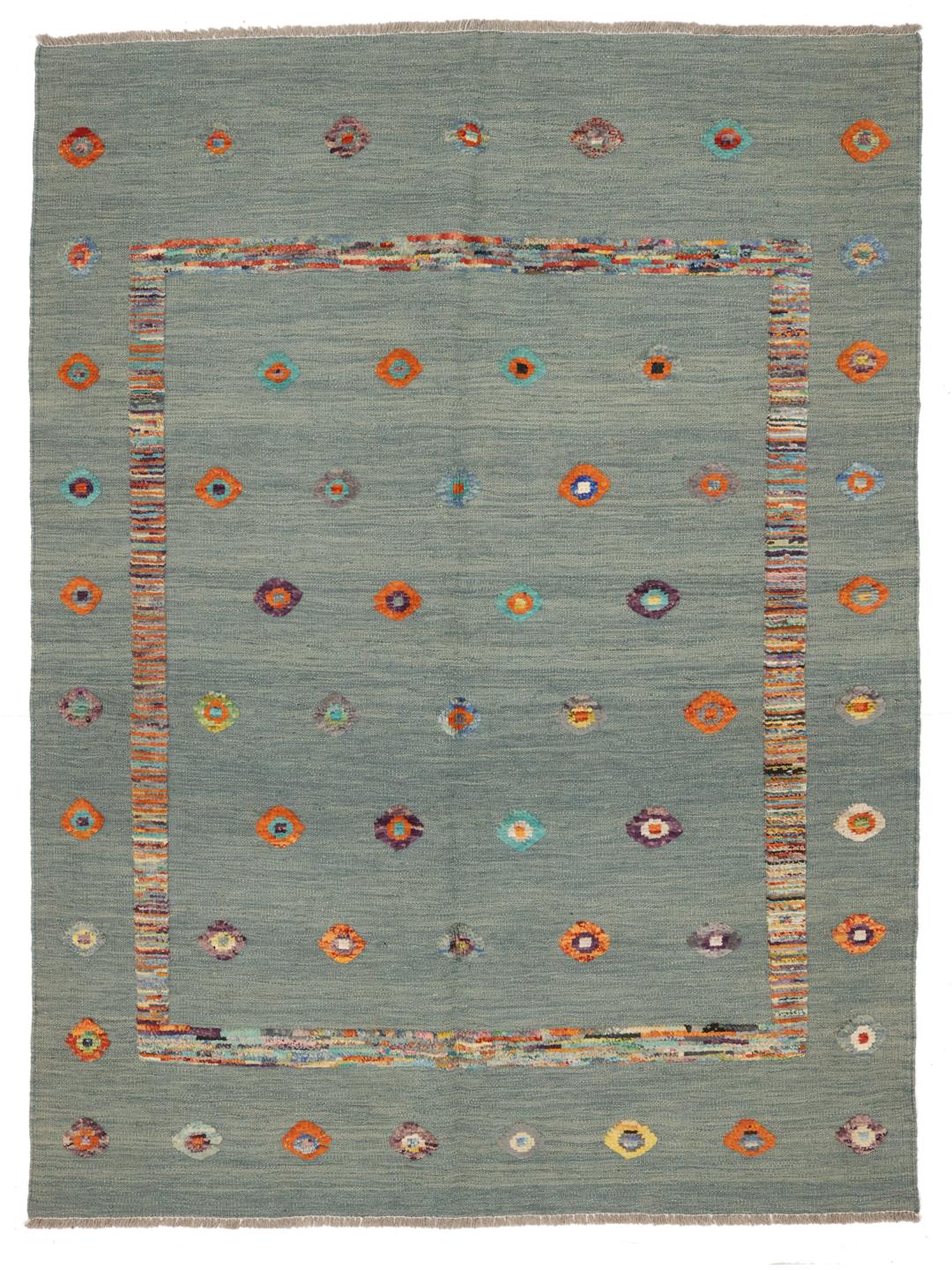
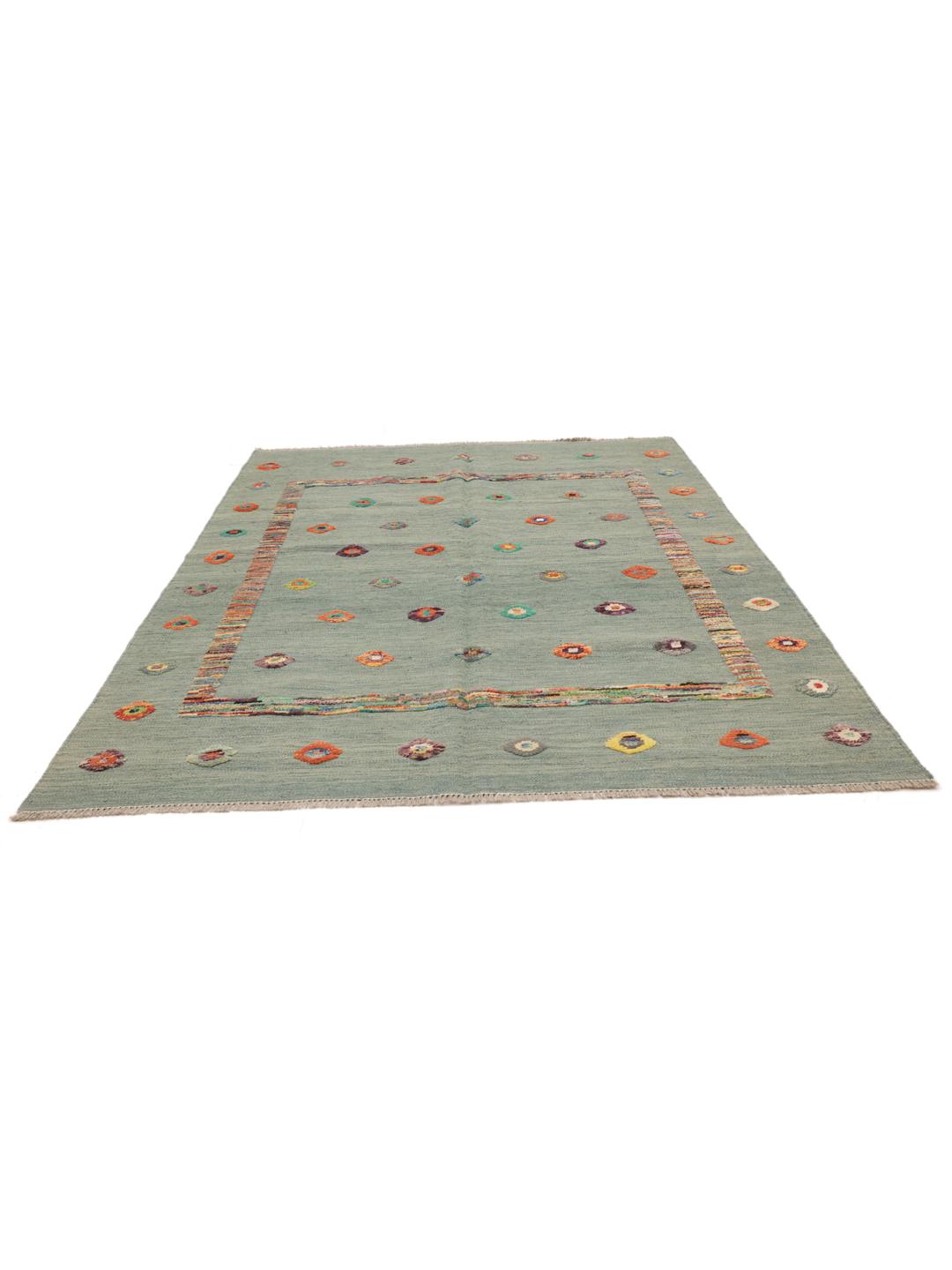
The visual language of the Kelim Nimbaft is defined by its minimalist yet expressive aesthetic. While many traditional rugs rely on dense, interconnected patterns, this piece uses a more open composition, allowing the teal field to breathe and the scattered geometric motifs to stand out as individual points of interest. This style of 'negative space' is a sophisticated choice that speaks to a modern appreciation for balance and clarity, while still honouring the traditional tribal motifs that define the Afghan weaving style.
Today, these rugs are highly sought after by collectors and enthusiasts who value the human element in their decor. Owning a piece from this tradition is an act of preserving a cultural heritage that has survived for generations through the hands of skilled weavers. It represents a commitment to authentic craft and the belief that the most beautiful items in a home are those that carry the stories, skills, and traditions of the people who created them.