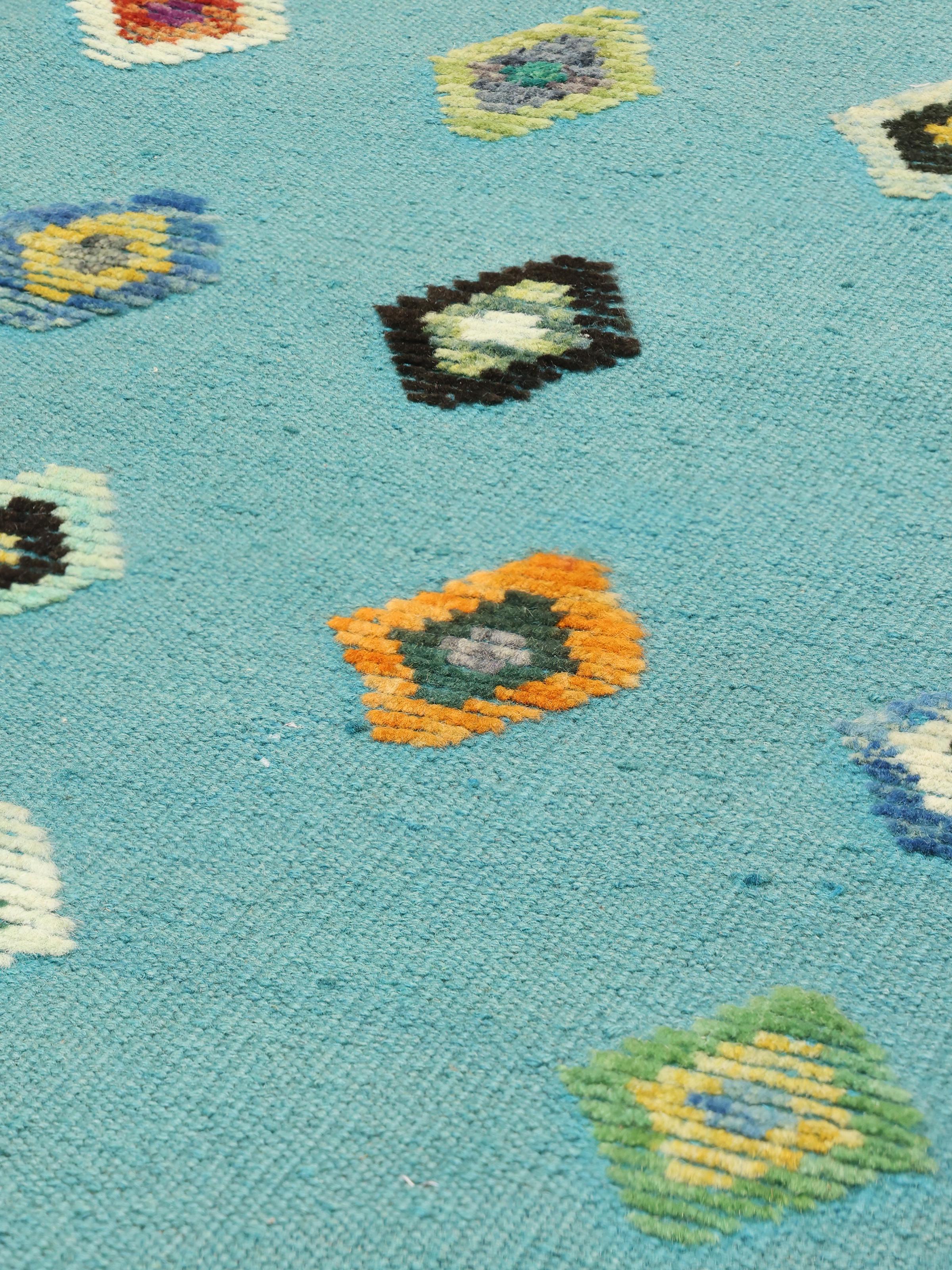
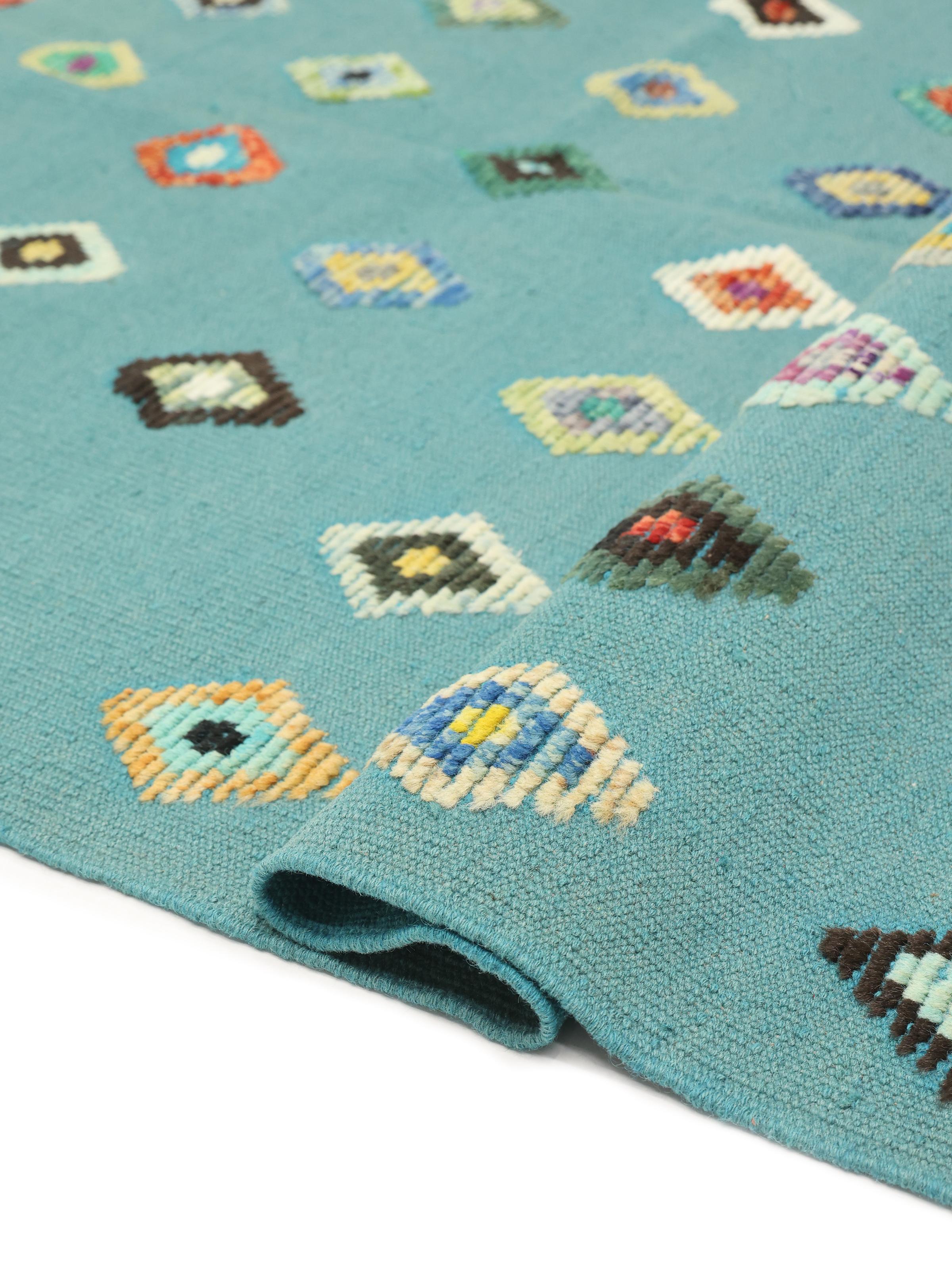
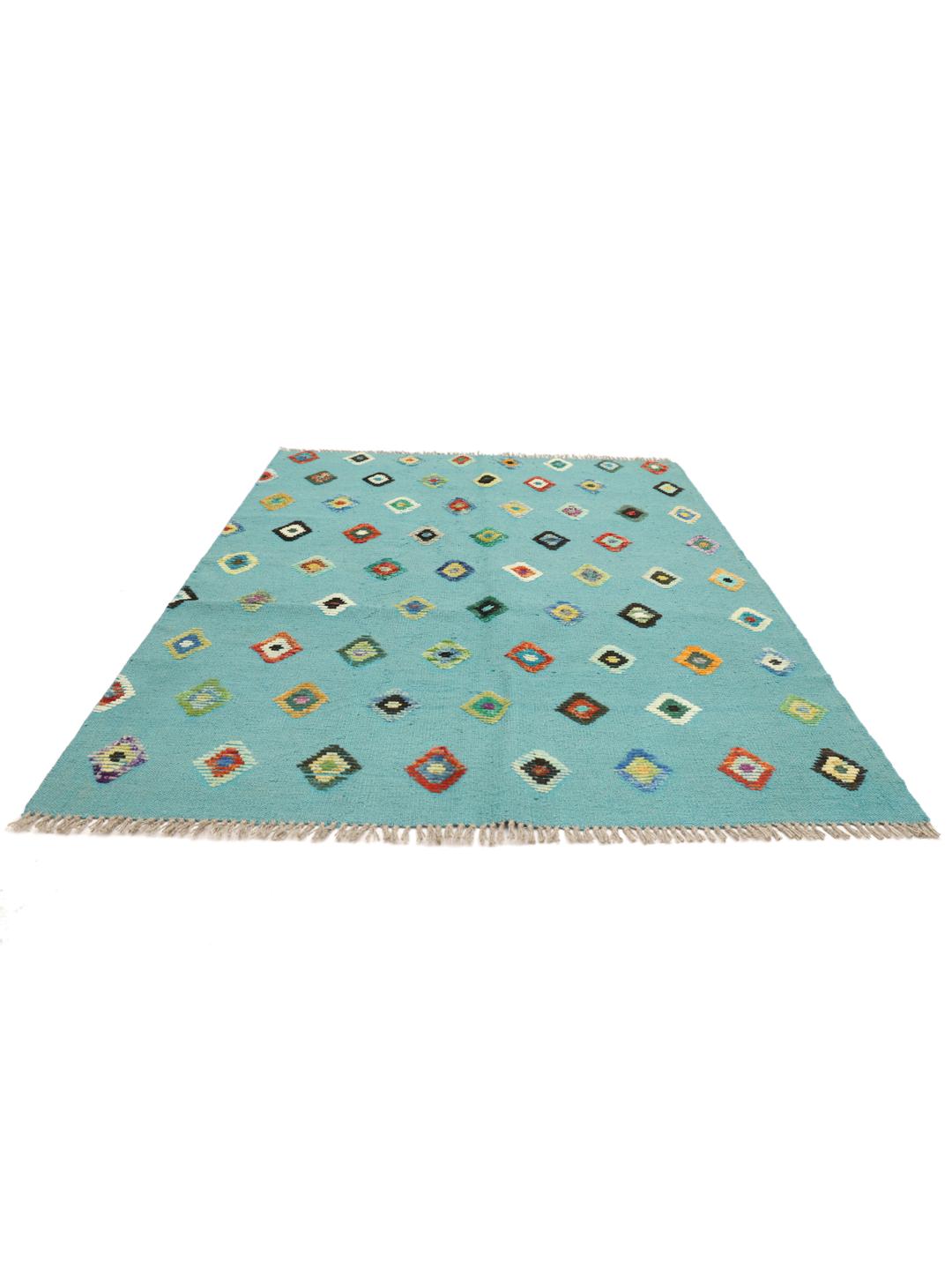
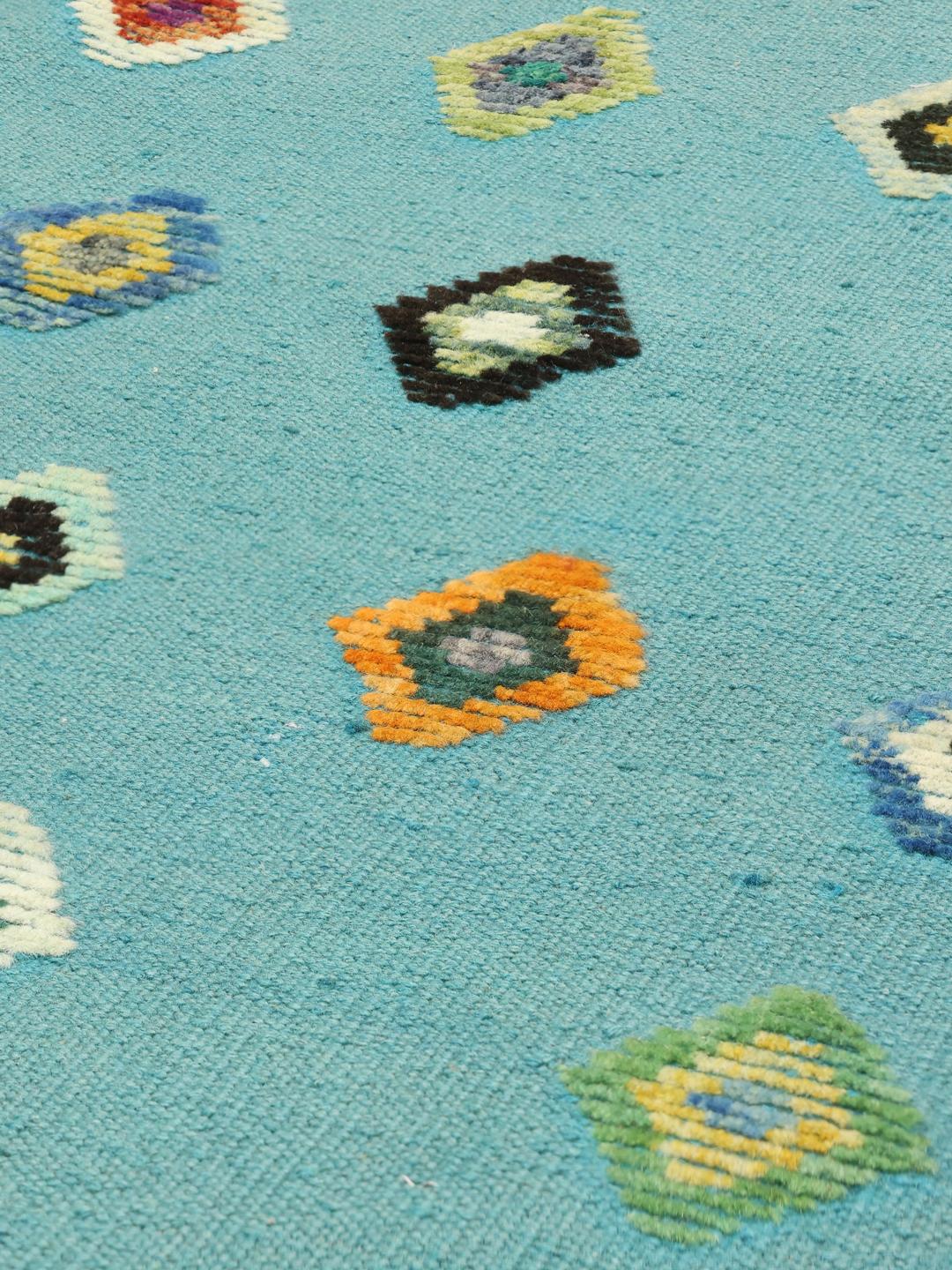
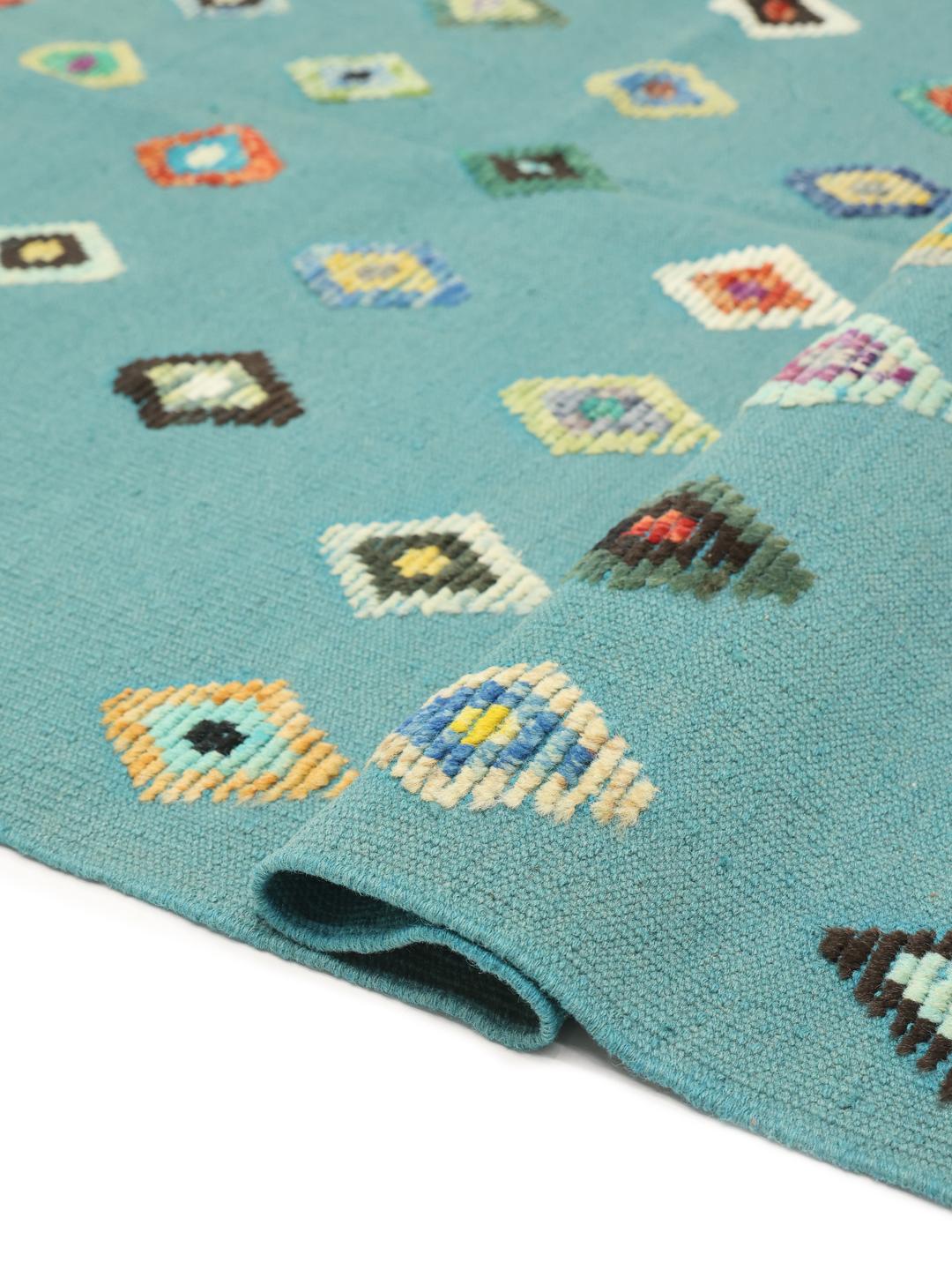
Kelim rugs have a storied history rooted in the nomadic traditions of the Middle East and Central Asia. The term 'Kelim' refers to a flat-woven textile, distinct from pile rugs due to its lack of knotted strands. Historically, these pieces were essential for nomadic tribes, serving as floor coverings, wall hangings, and even storage sacks, prized for their portability and durability in harsh environments.
The Nimbaft style represents a specific evolution of these weaving traditions, often characterised by a focus on geometric clarity and harmonious colour palettes. In Afghanistan, the craft of weaving has been refined over centuries, with local artisans developing unique ways to manage tension and pattern complexity. The resulting textiles are celebrated for their strength and the subtle variations that arise from hand-dyed yarns.
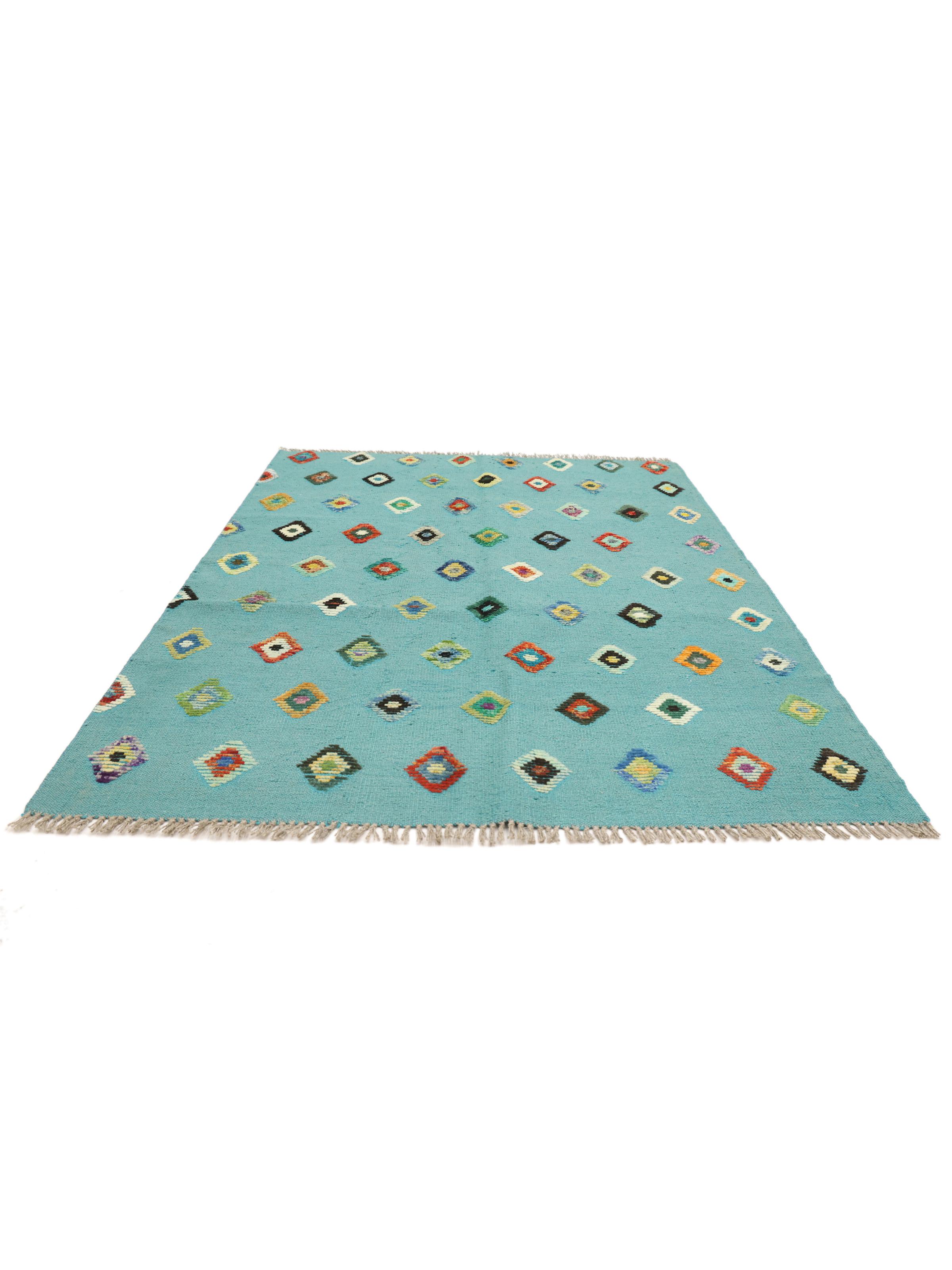
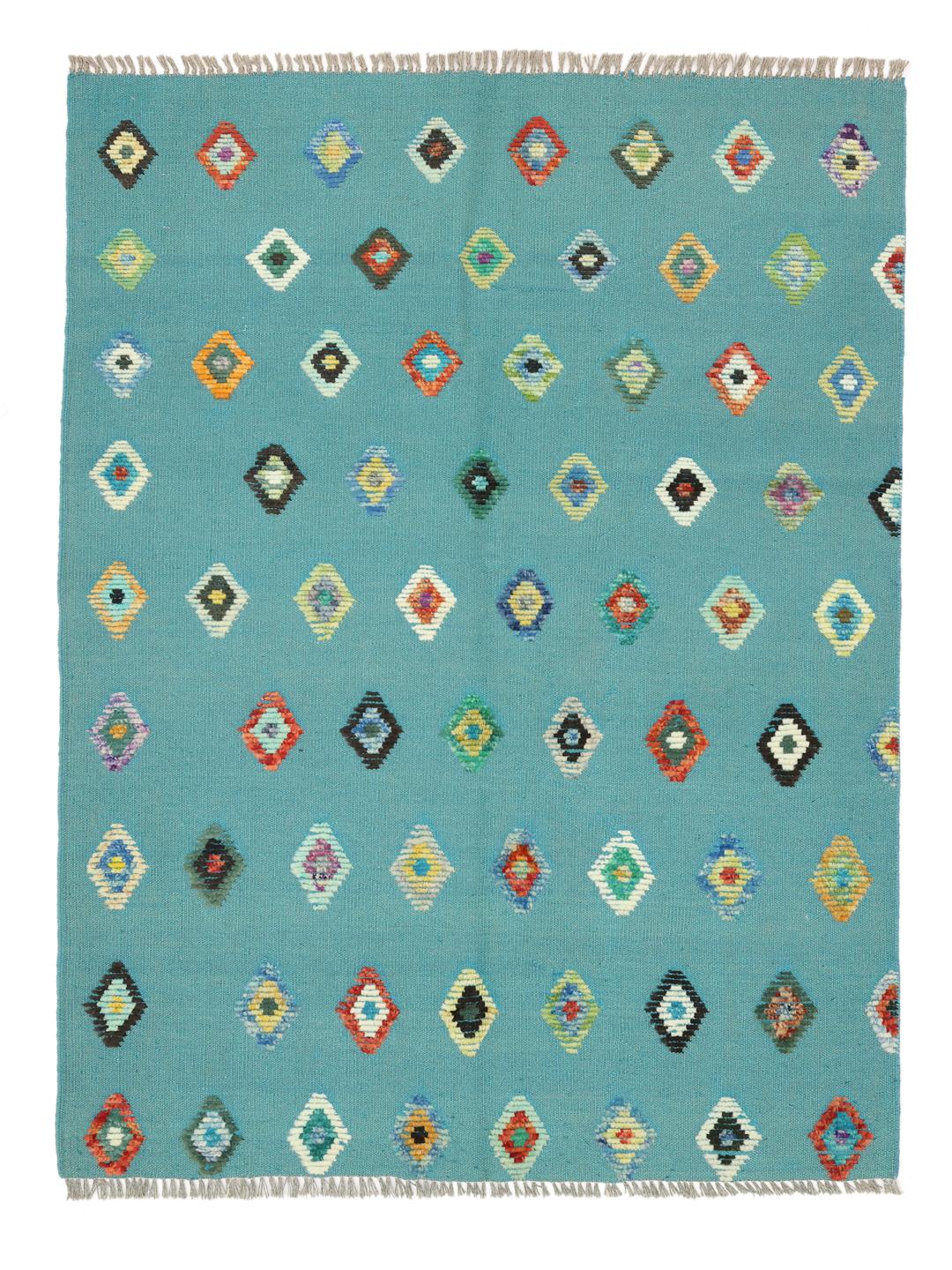
Design-wise, the use of repeating diamond motifs is a hallmark of this tradition. These shapes often carry symbolic meaning, representing protection, fertility, or the natural landscape. In this specific rug, the play of different colours within each diamond against the teal field showcases a modern sensibility while remaining deeply connected to the traditional visual language of the region.
Collectors value these rugs not only for their aesthetic appeal but for the cultural narrative they carry. Owning a piece of this quality signifies an appreciation for the human element in production and a commitment to preserving traditional crafts. It is a functional heirloom that connects your home to a long lineage of skilled artistry and regional heritage.