Kilim rugs are a foundational element of the textile heritage of the Middle East and Central Asia. Historically, these flat-woven rugs were created by nomadic and village communities as functional items, serving as floor coverings, wall hangings, and even as durable storage bags for life on the move.
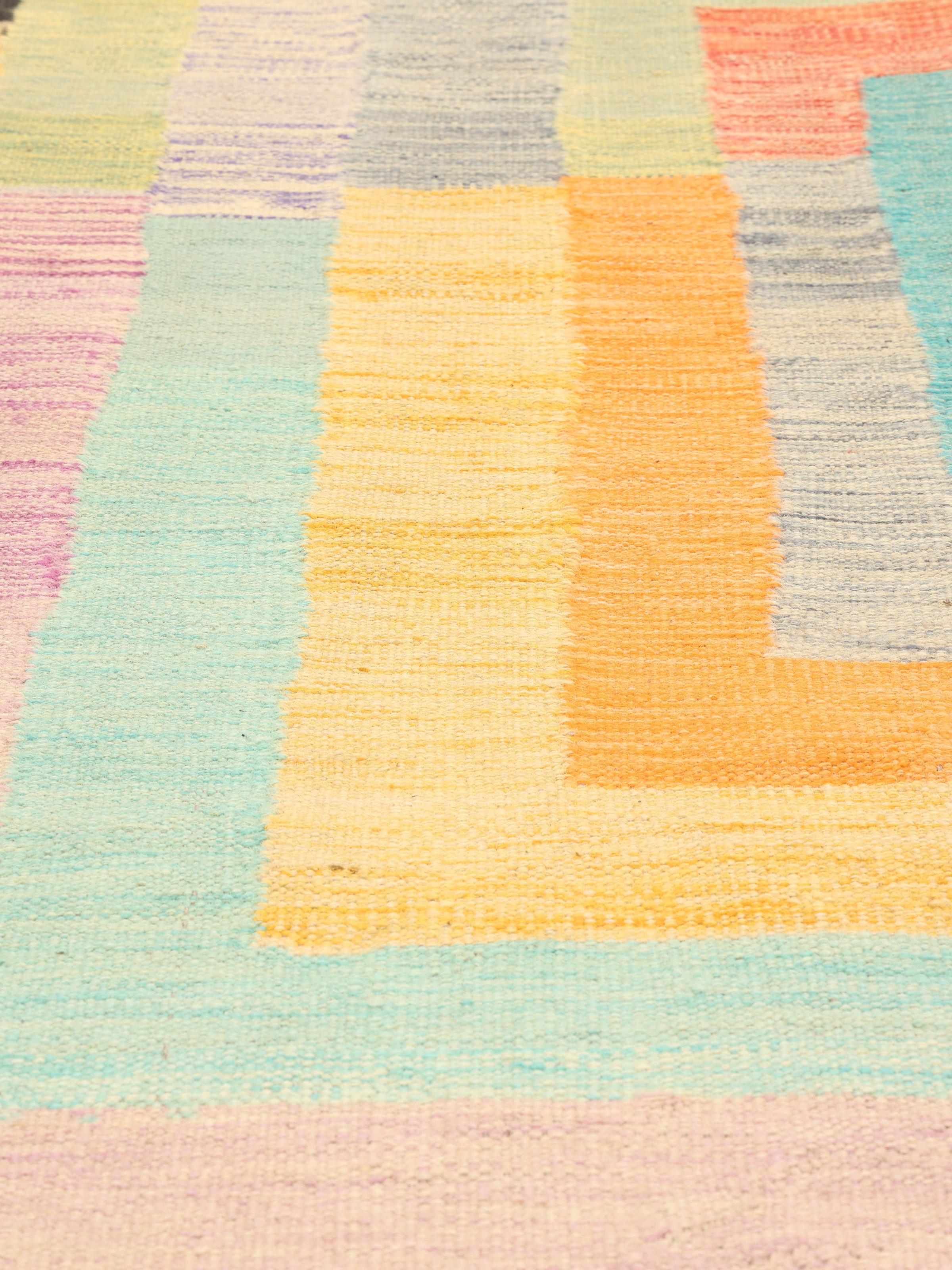
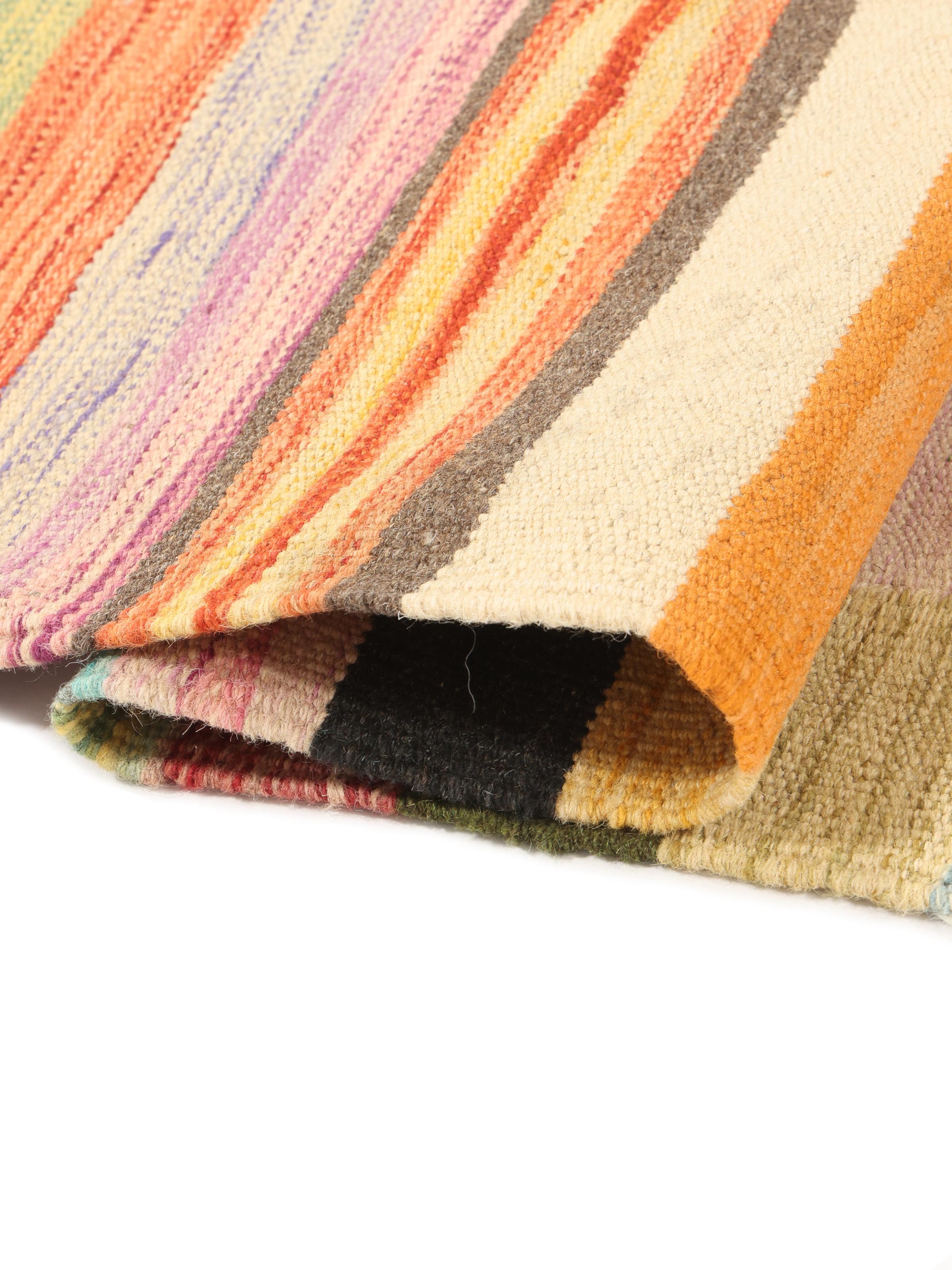
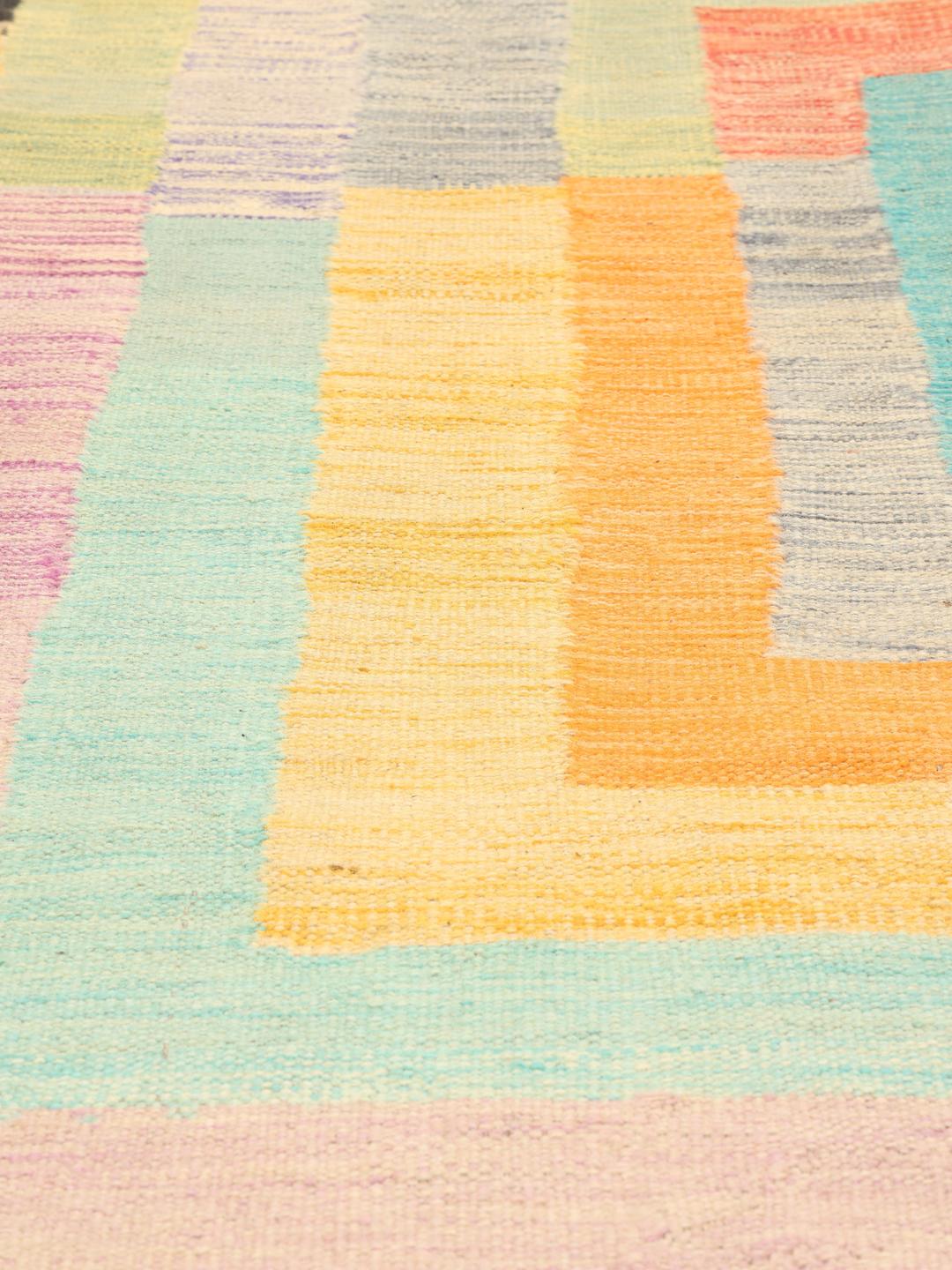
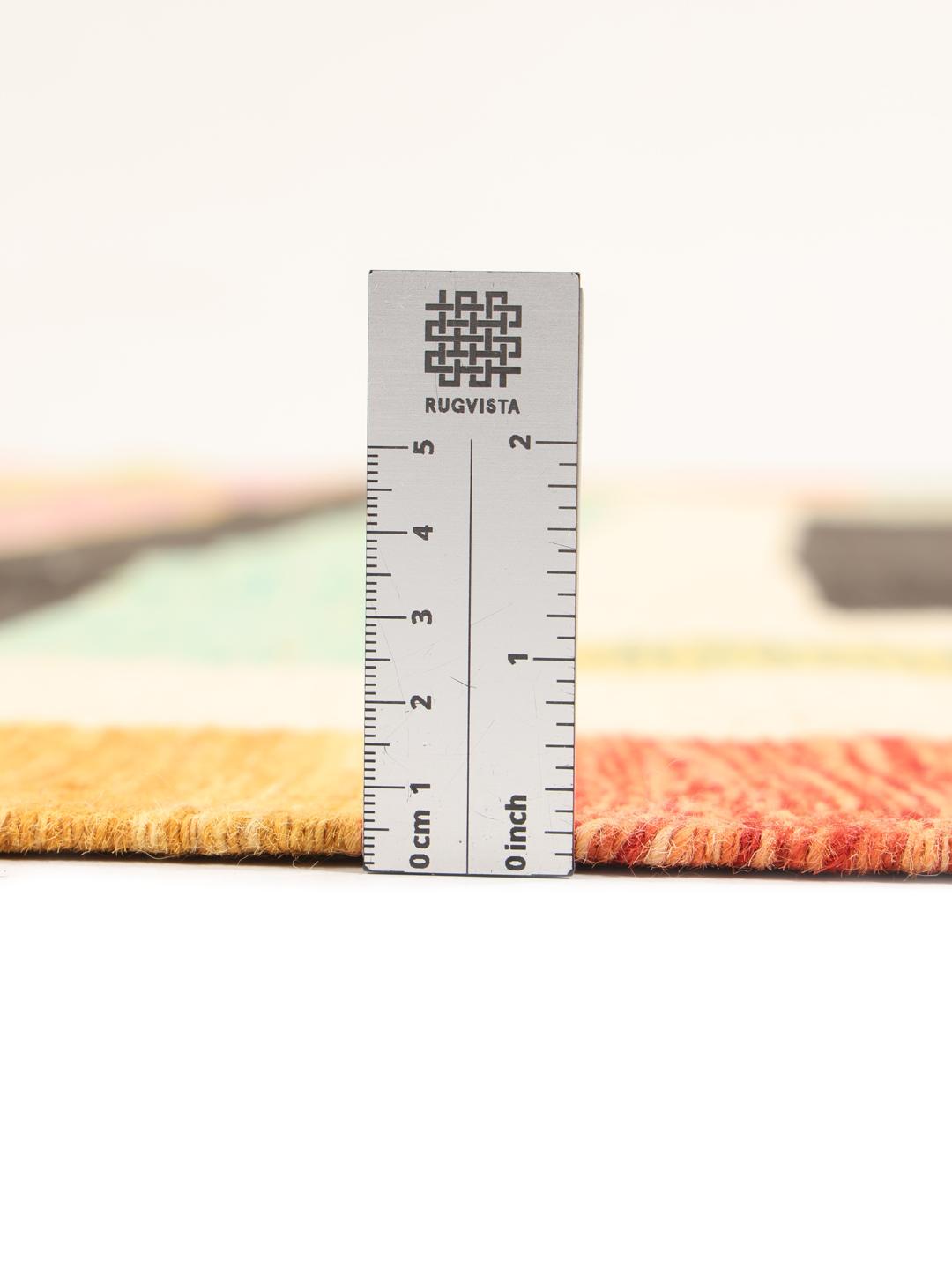
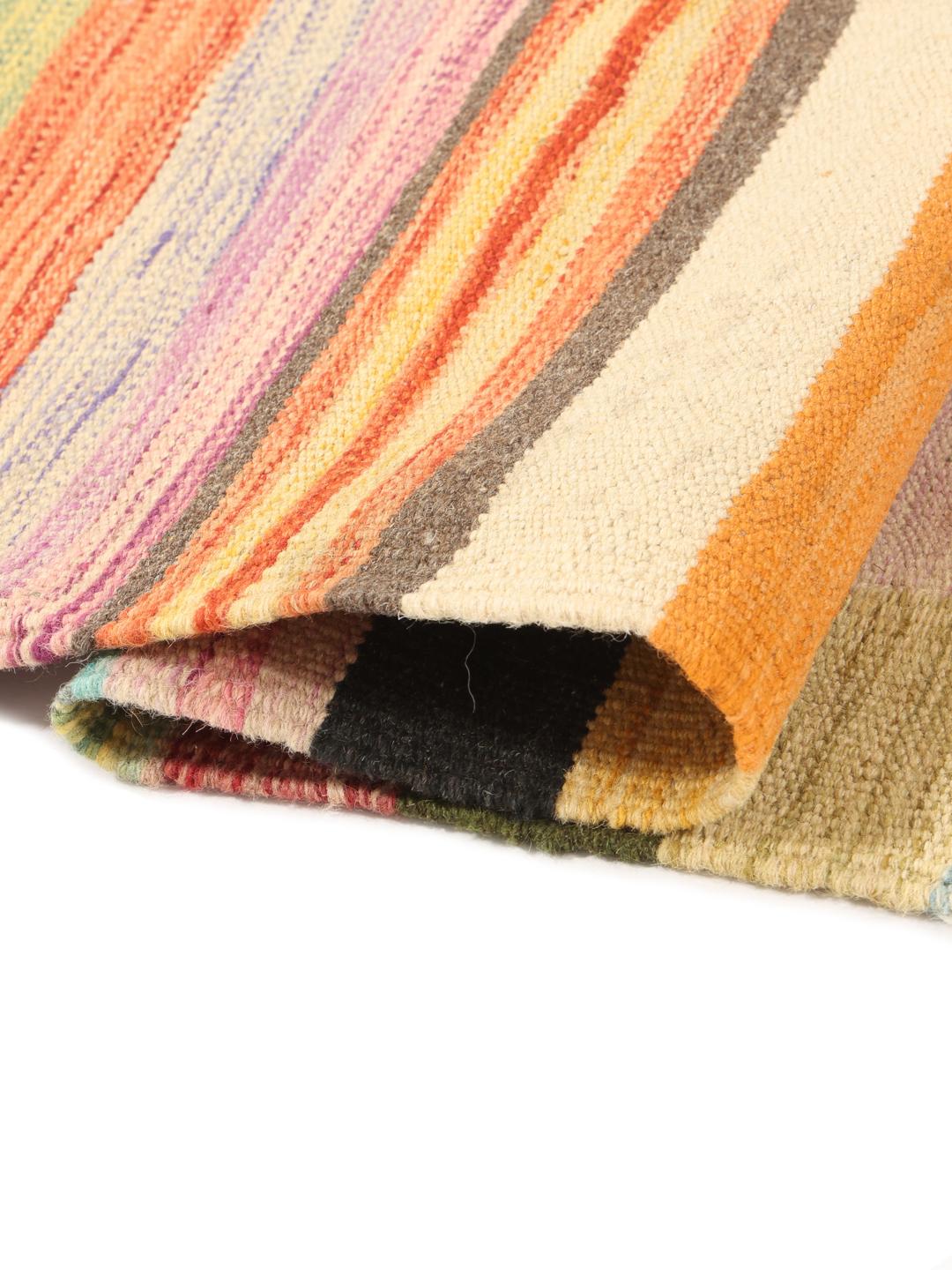
The term 'kilim' specifically refers to the tapestry-weave technique, which is distinct from pile rugs because it lacks a knotted surface. In this method, the coloured weft threads are woven tightly over the warp, resulting in a smooth, durable, and reversible textile that showcases the purity of the weave and the skill of the artisan.
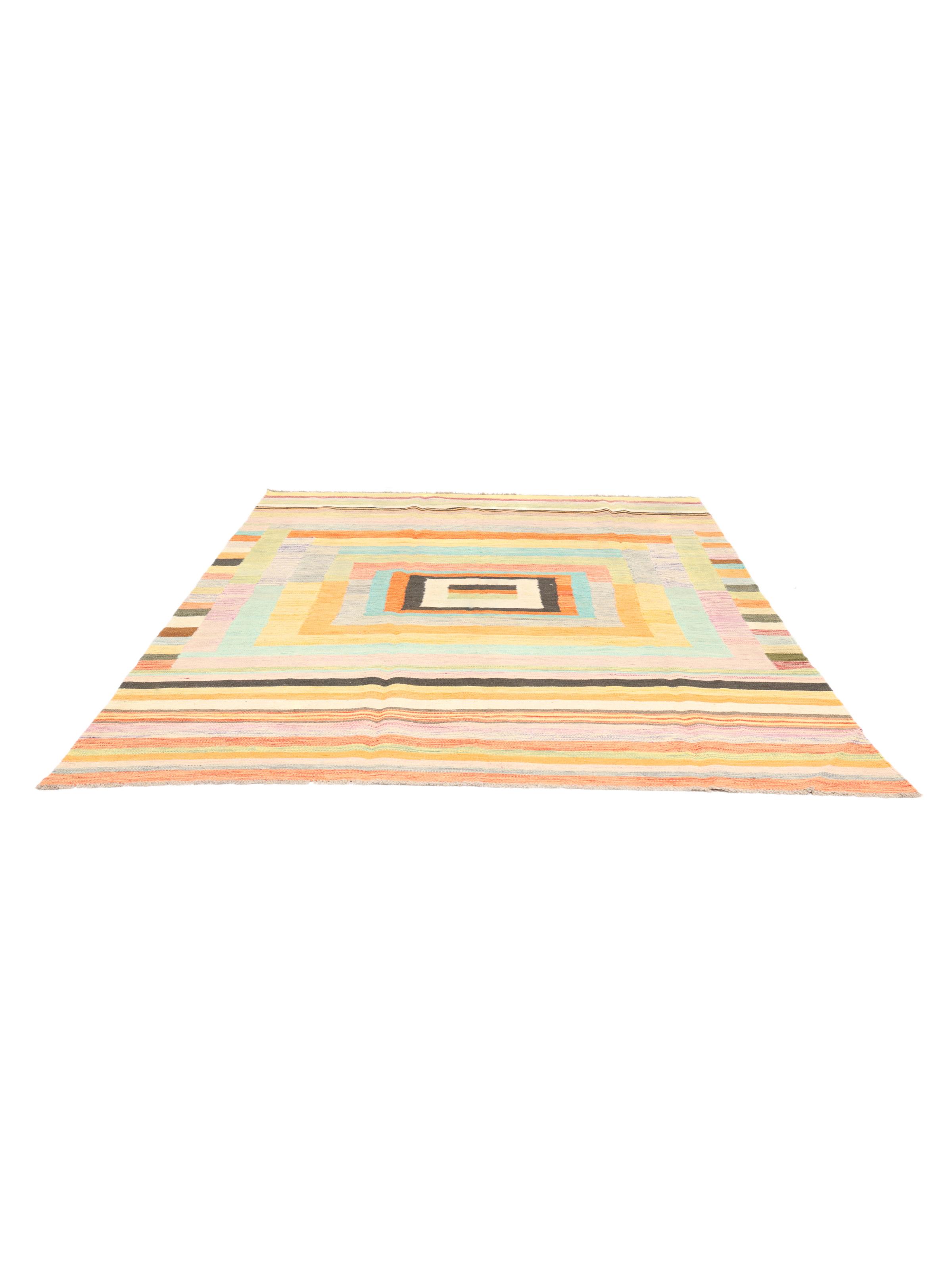
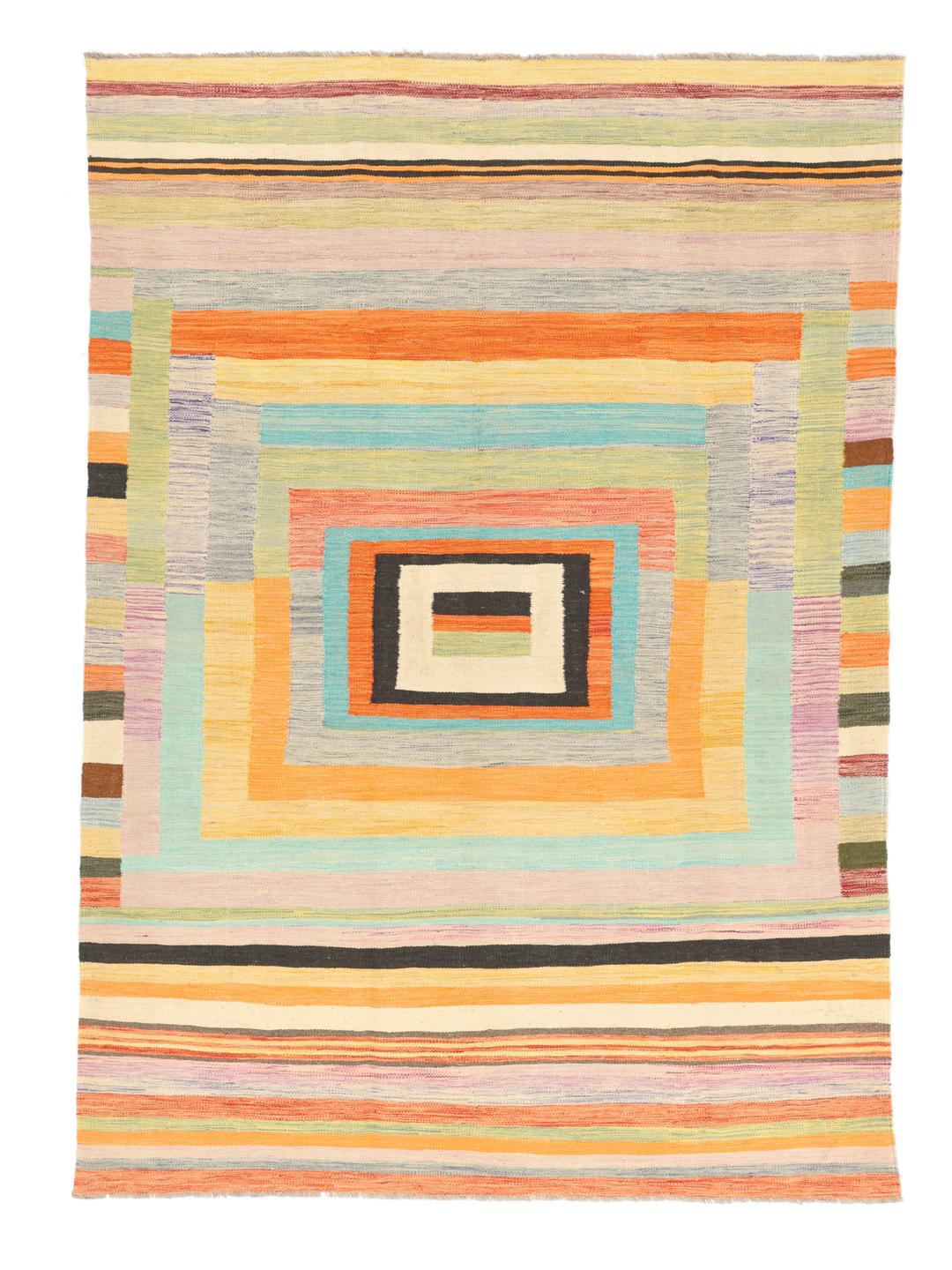
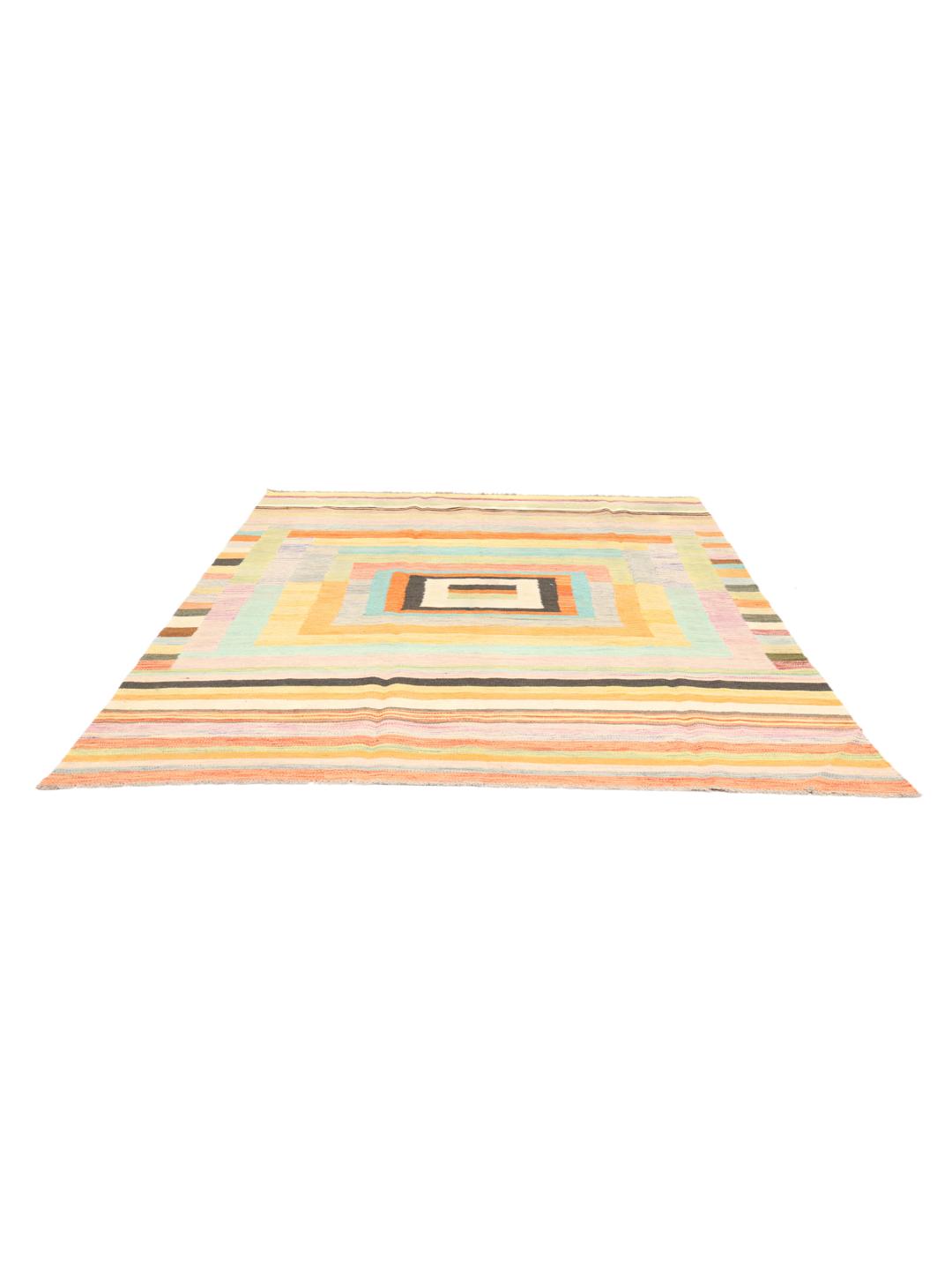
Signature design elements in modern kilims often feature bold, geometric arrangements like the concentric squares seen here. While traditional nomadic kilims often utilised tribal motifs and earth tones, contemporary pieces like this one embrace a more adventurous colour palette, reflecting a modern evolution in design that maintains deep respect for the ancestral flat-weaving technique.
Collecting a hand-woven kilim is a way to celebrate a craft that has survived for centuries. These rugs are highly valued for their portability, their resilience, and the sheer human effort required to create them without the aid of modern technology. Owning one is an investment in a living tradition that bridges the gap between historical utility and contemporary design.