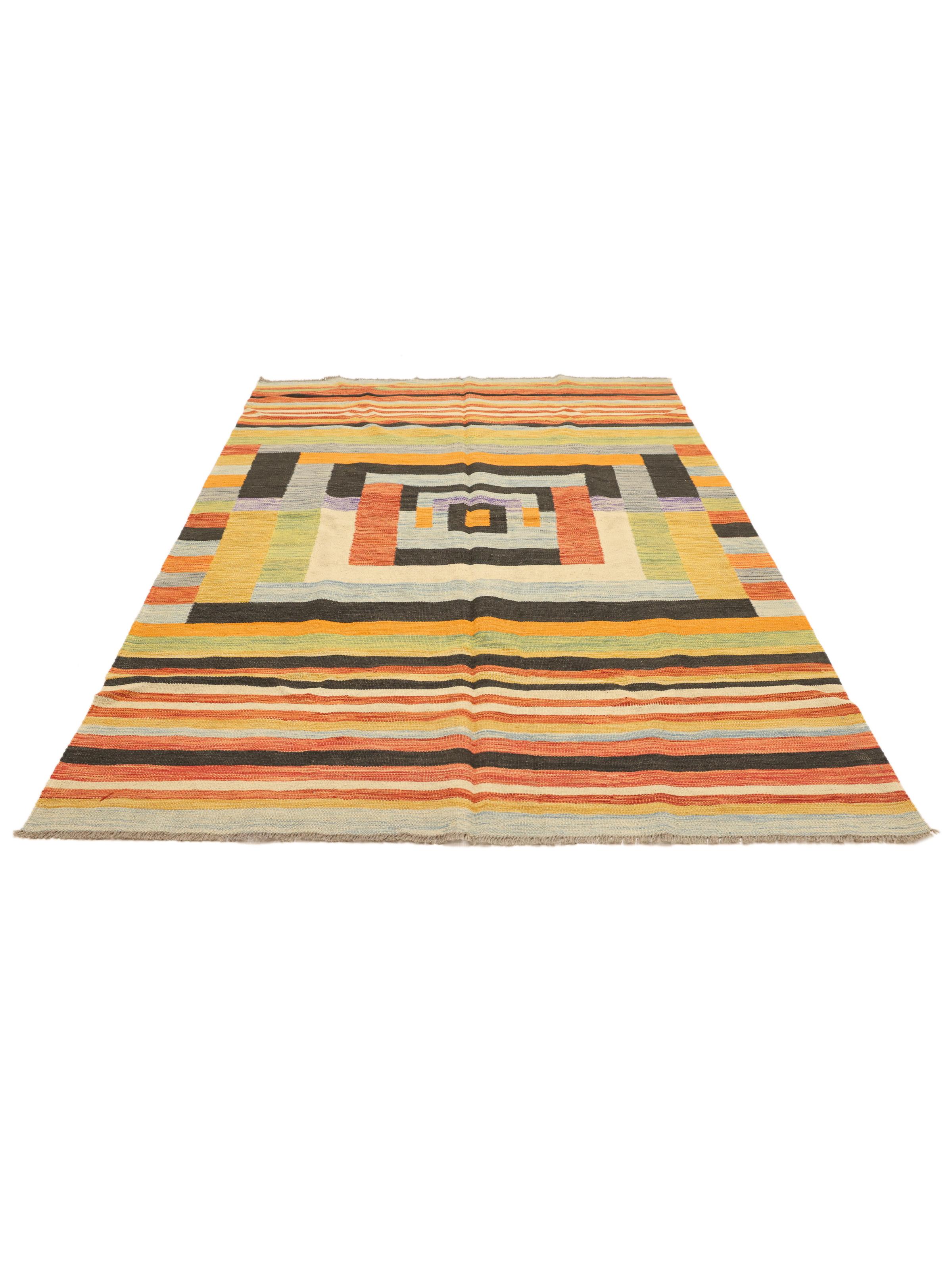
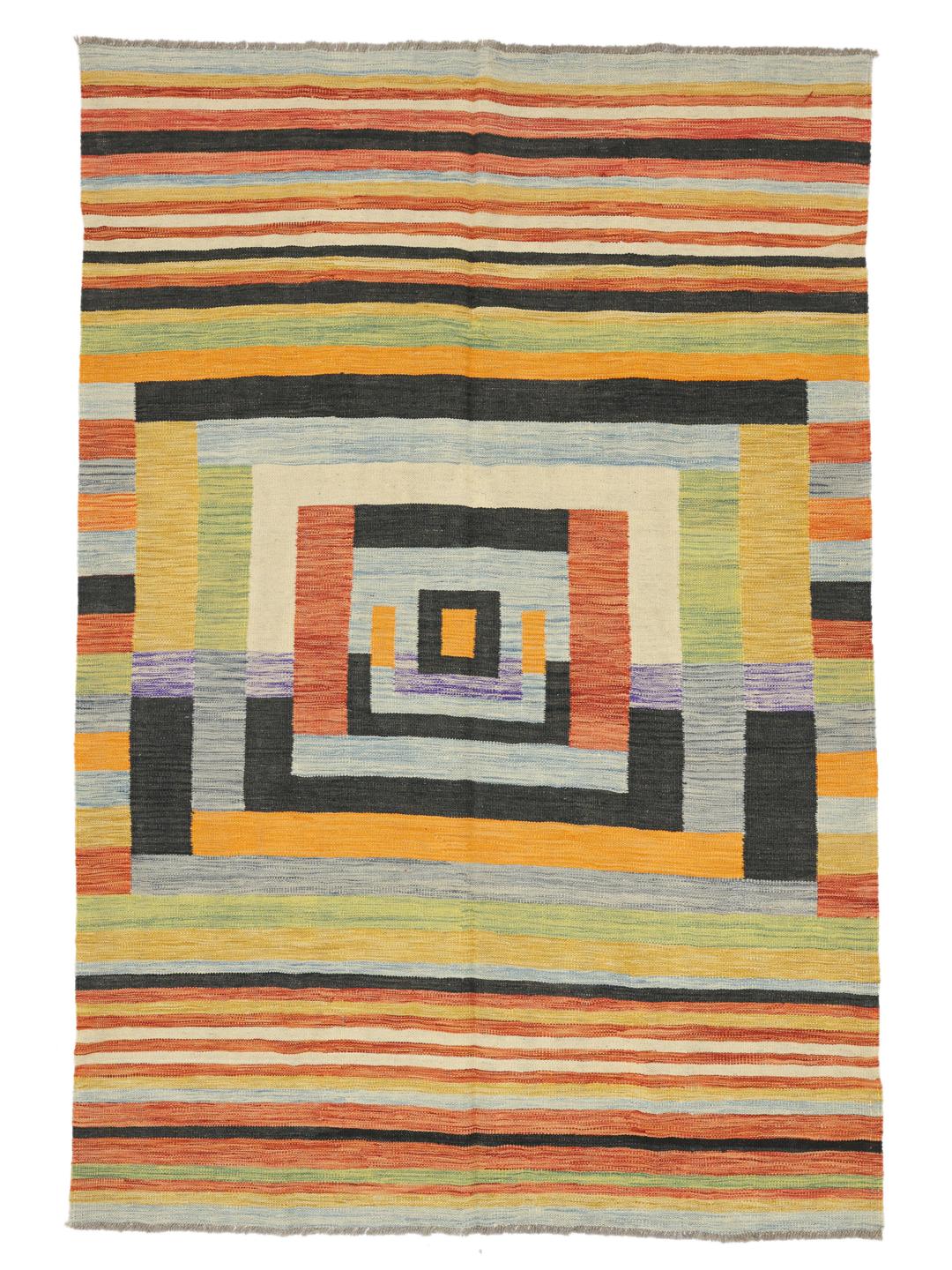
Kilim rugs are a foundational element of textile art across the Middle East, Central Asia, and the Balkans. These flat-woven rugs have served as practical, everyday textiles for nomadic and village communities for centuries, acting as floor coverings, wall hangings, and storage bags for families on the move.
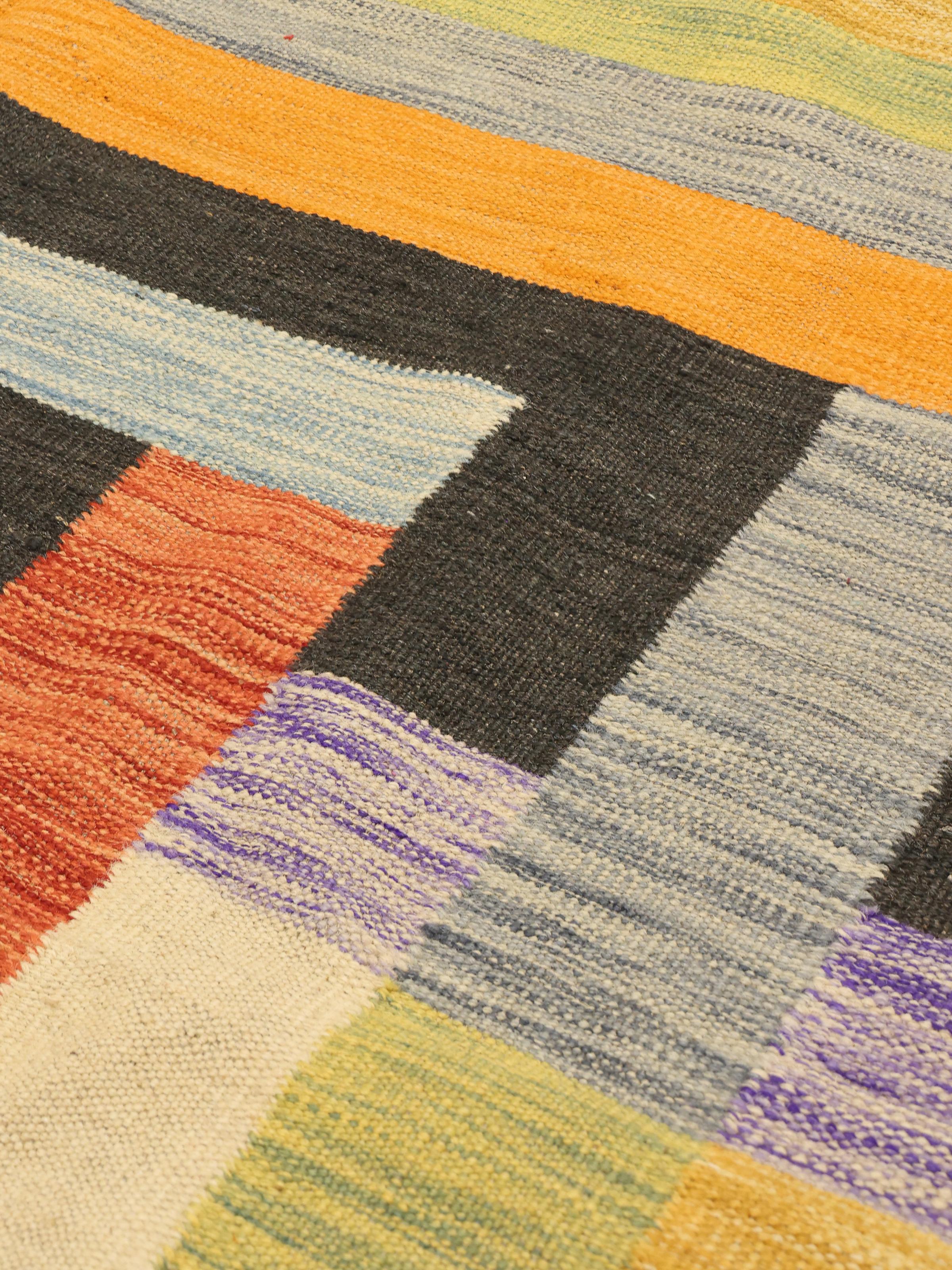
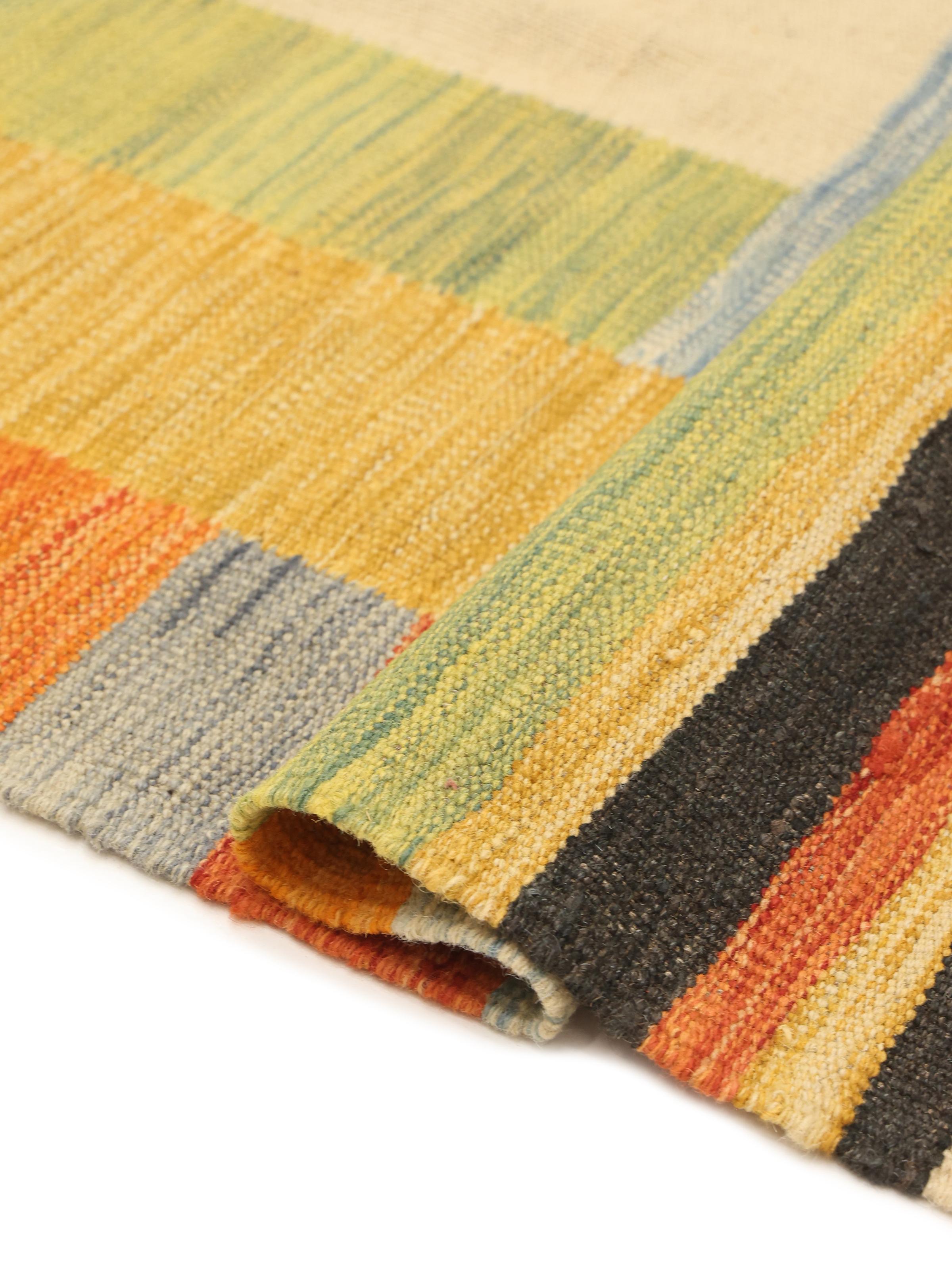
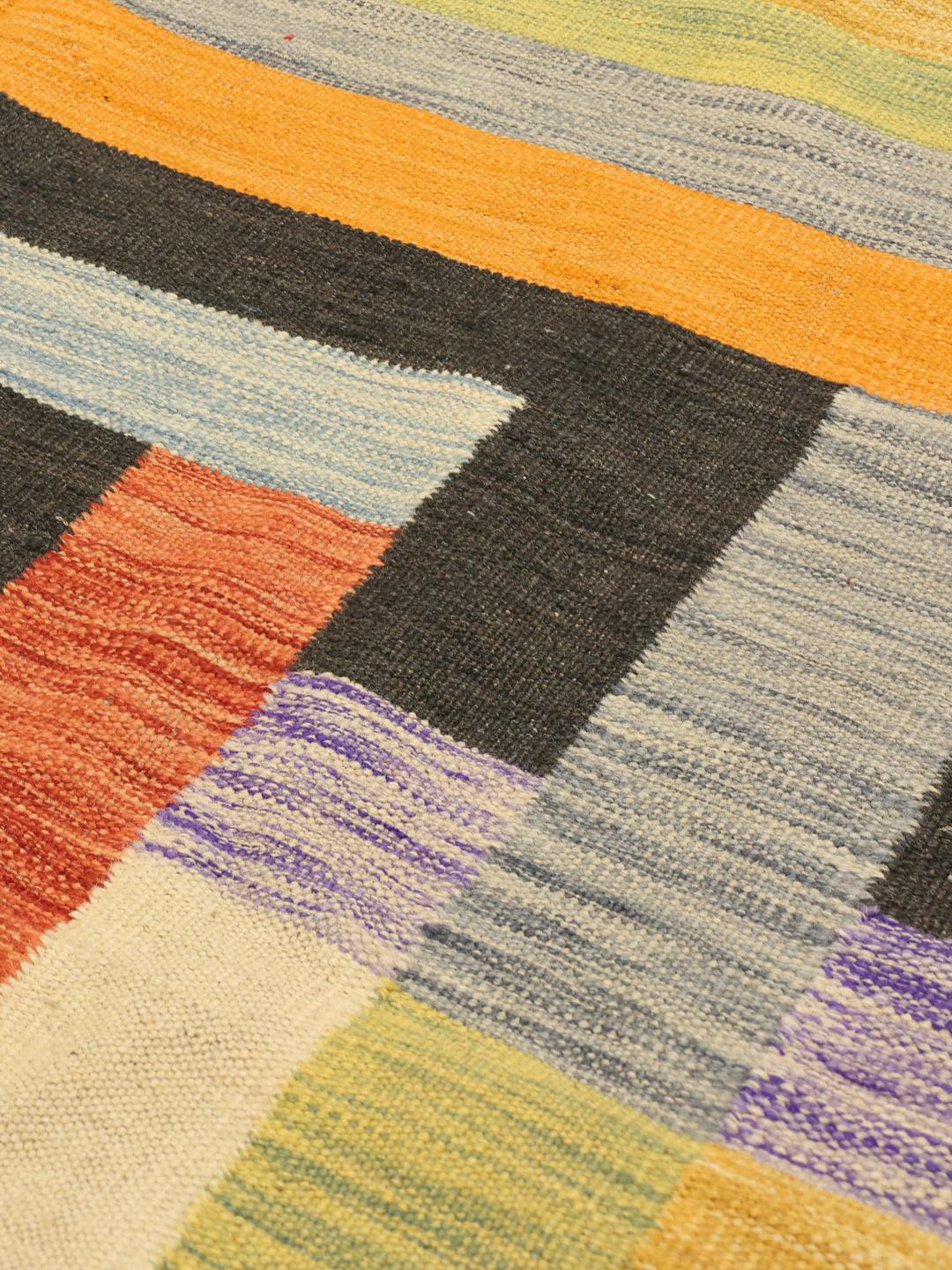
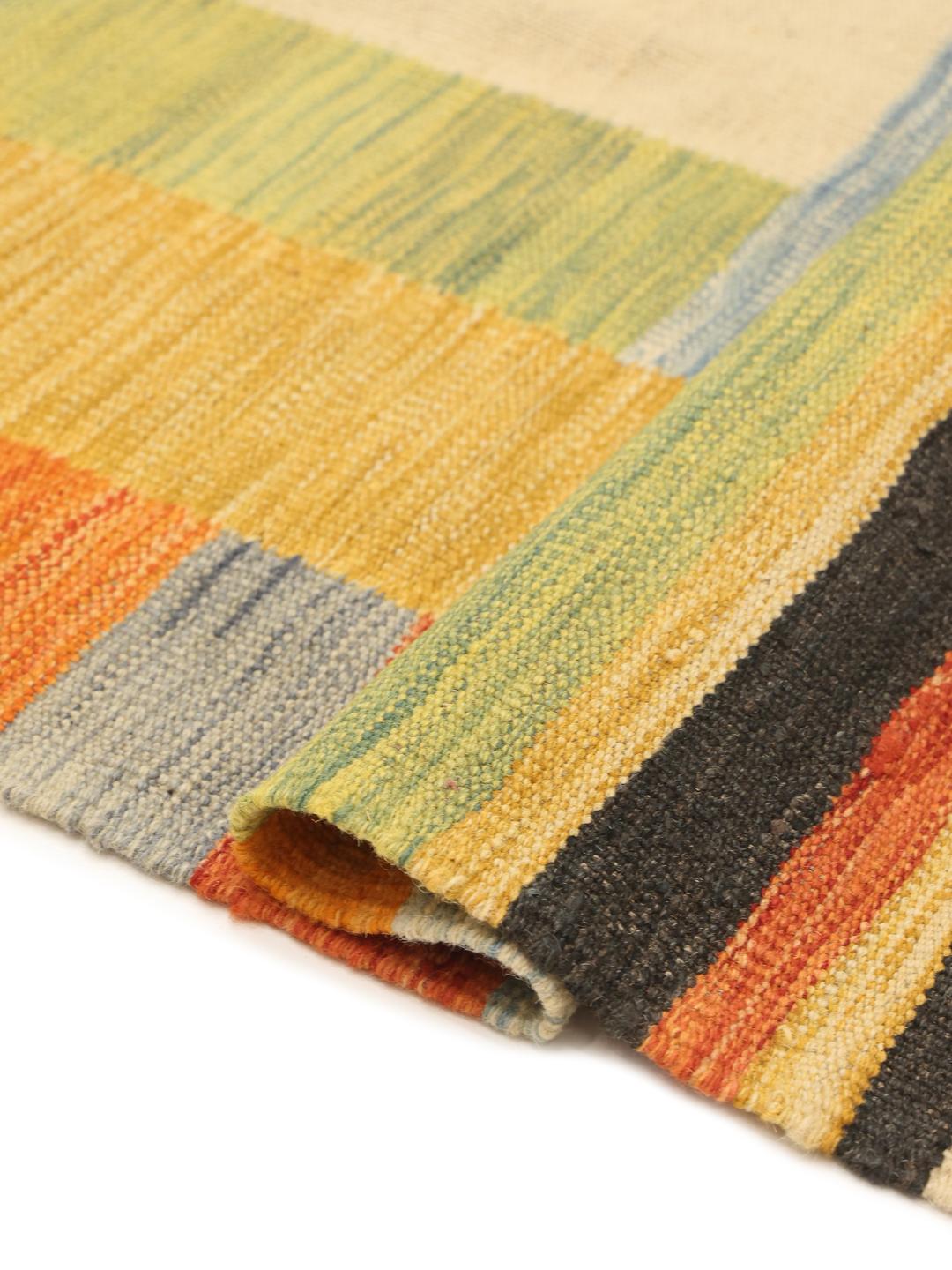
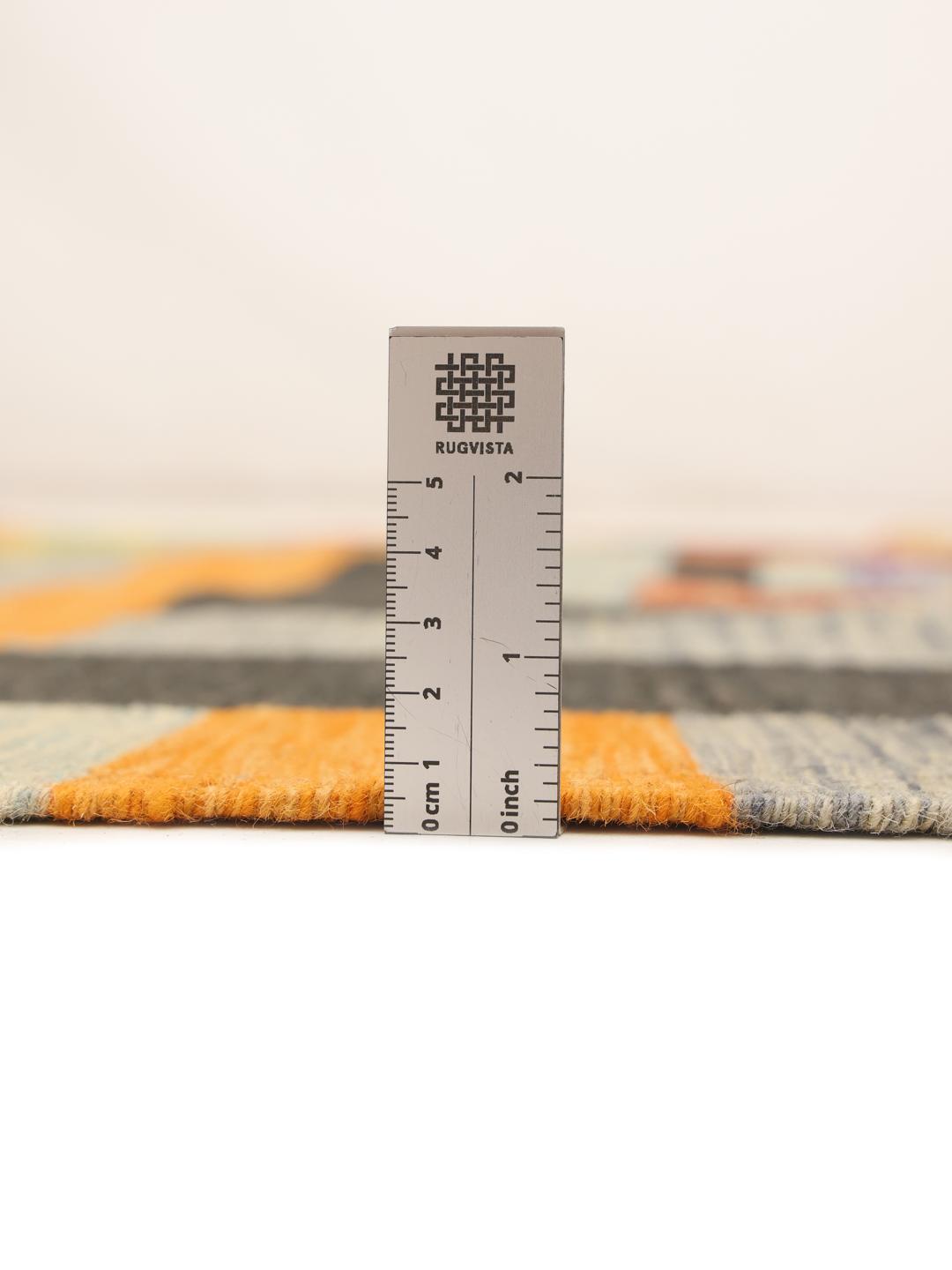
The term Kilim refers to the specific technique of interlocking the horizontal weft threads with the vertical warp threads to create the pattern. Because there is no pile, the resulting rug is lightweight and reversible, yet remarkably strong. This method allows for sharp, clean lines and intricate geometric motifs that have become the signature aesthetic of the tradition.
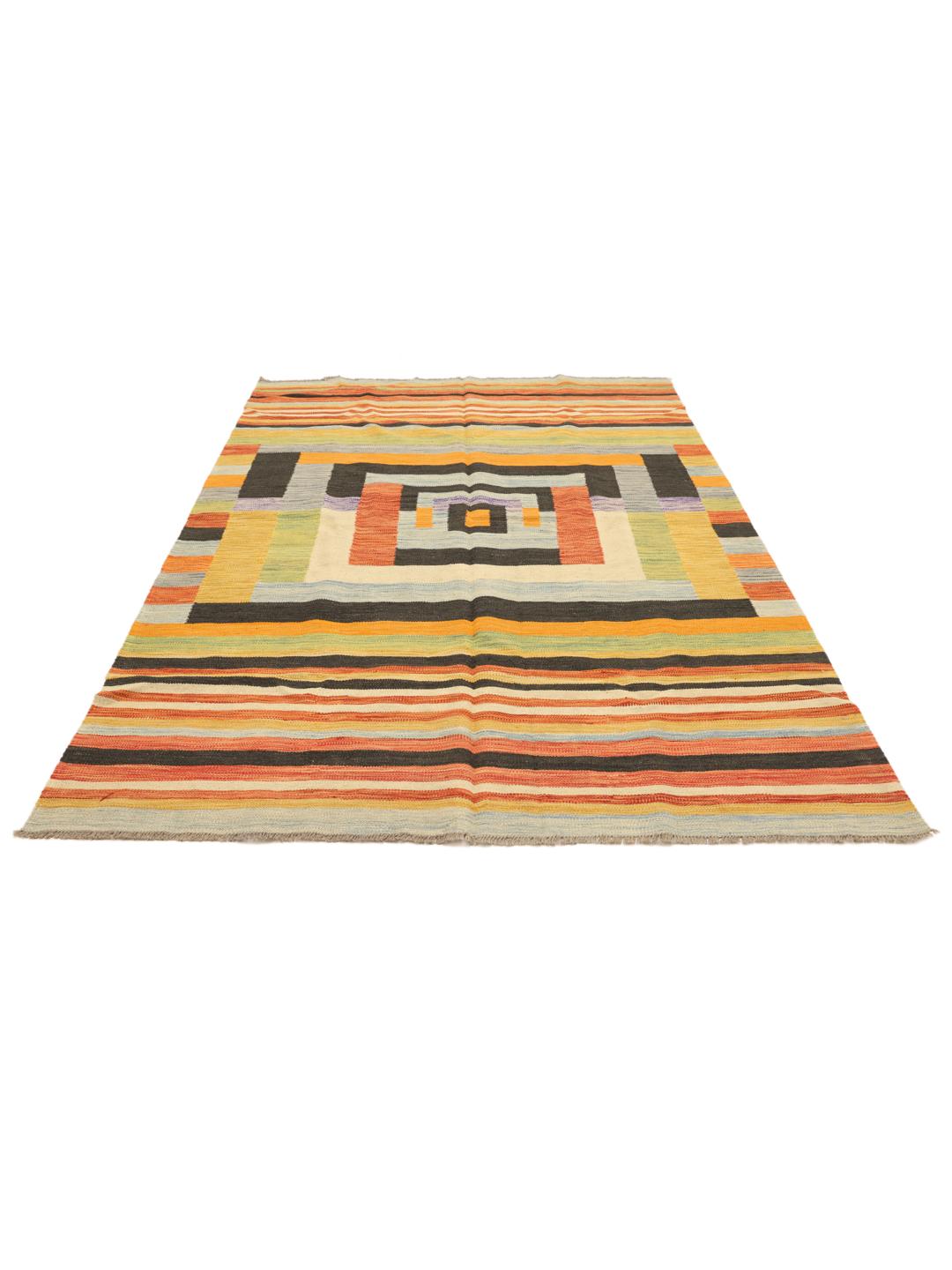
Visually, this rug tradition is celebrated for its bold use of colour and symbolic geometry. Motifs often carry deep, traditional meanings related to protection, fertility, or the natural world. In this modern interpretation, those classic geometric motifs are reimagined with a contemporary focus, creating a balance between heritage techniques and modern interior tastes.
Collectors value these rugs for their authenticity and the human story behind every thread. Acquiring a Kilim is more than just a purchase; it is an investment in a storied craft tradition. These pieces are prized for their ability to bring a sense of history and warmth into modern homes, offering a unique aesthetic that mass-produced items cannot replicate.