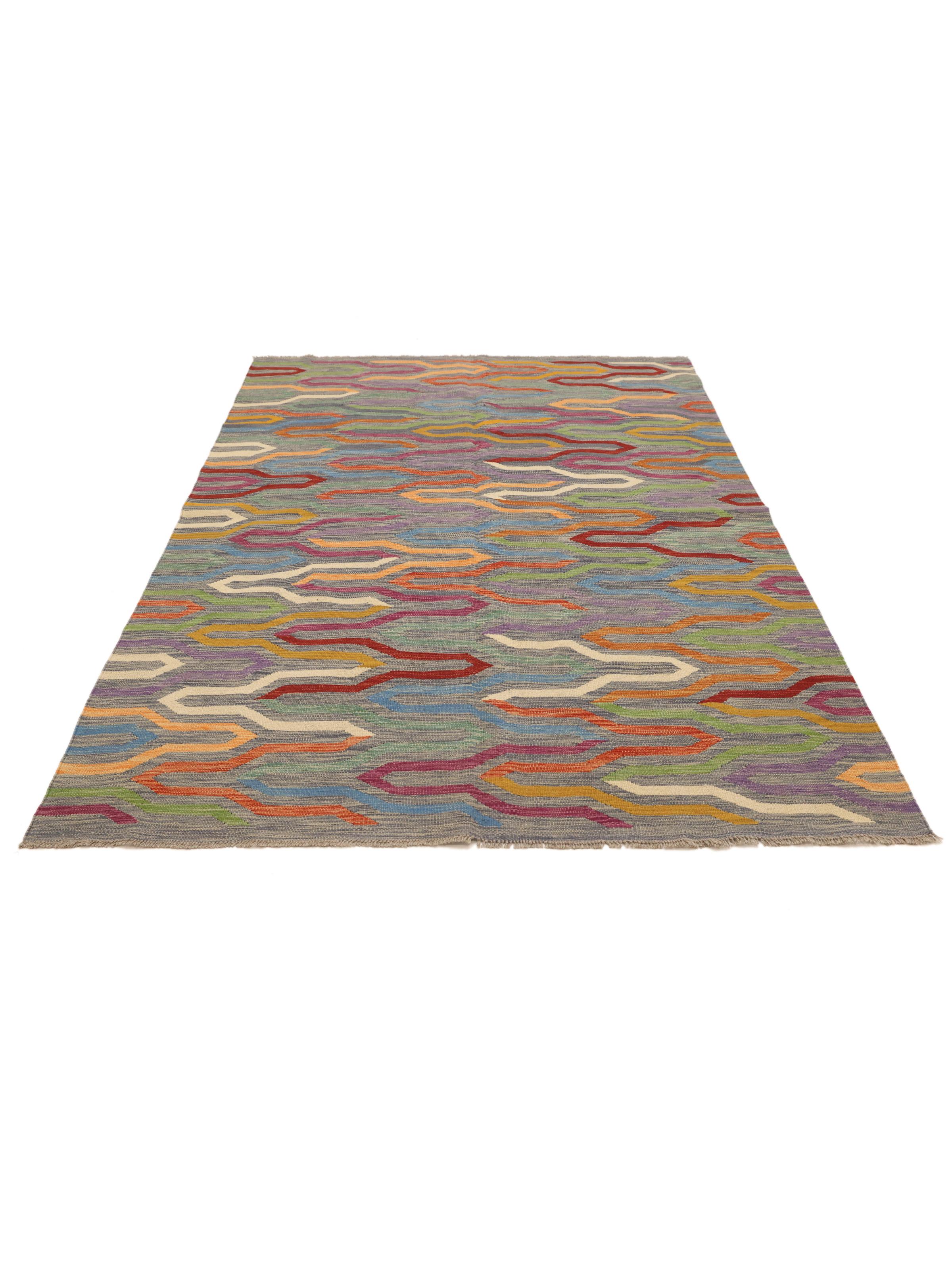
Kilim rugs have deep roots in the nomadic cultures of the Middle East and Central Asia, serving as functional, portable, and highly decorative items for centuries. Originally crafted by tribal weavers, these flat-woven textiles were used as floor coverings, wall hangings, and bags, reflecting the specific regional aesthetics and cultural narratives of the people who created them.
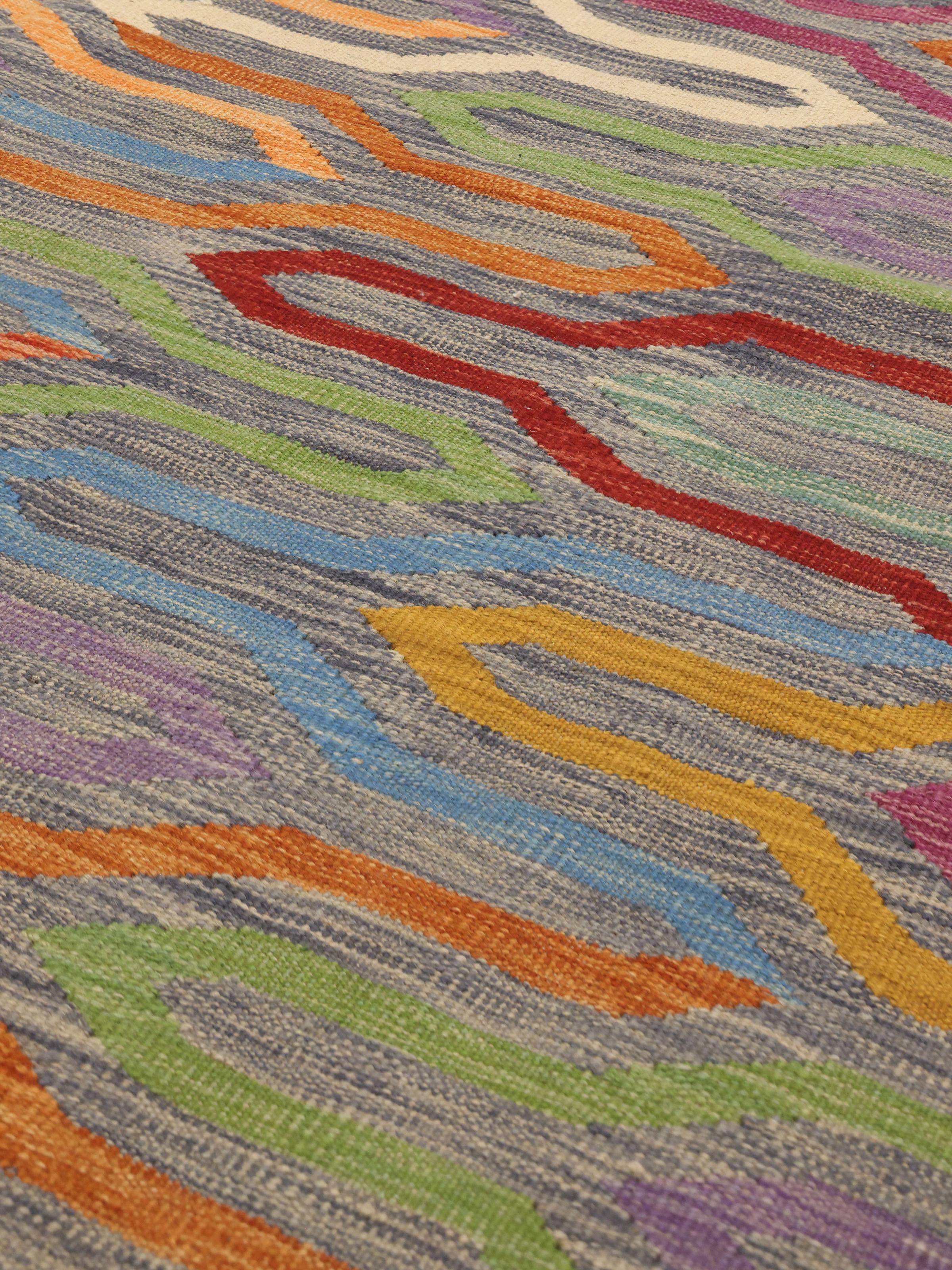
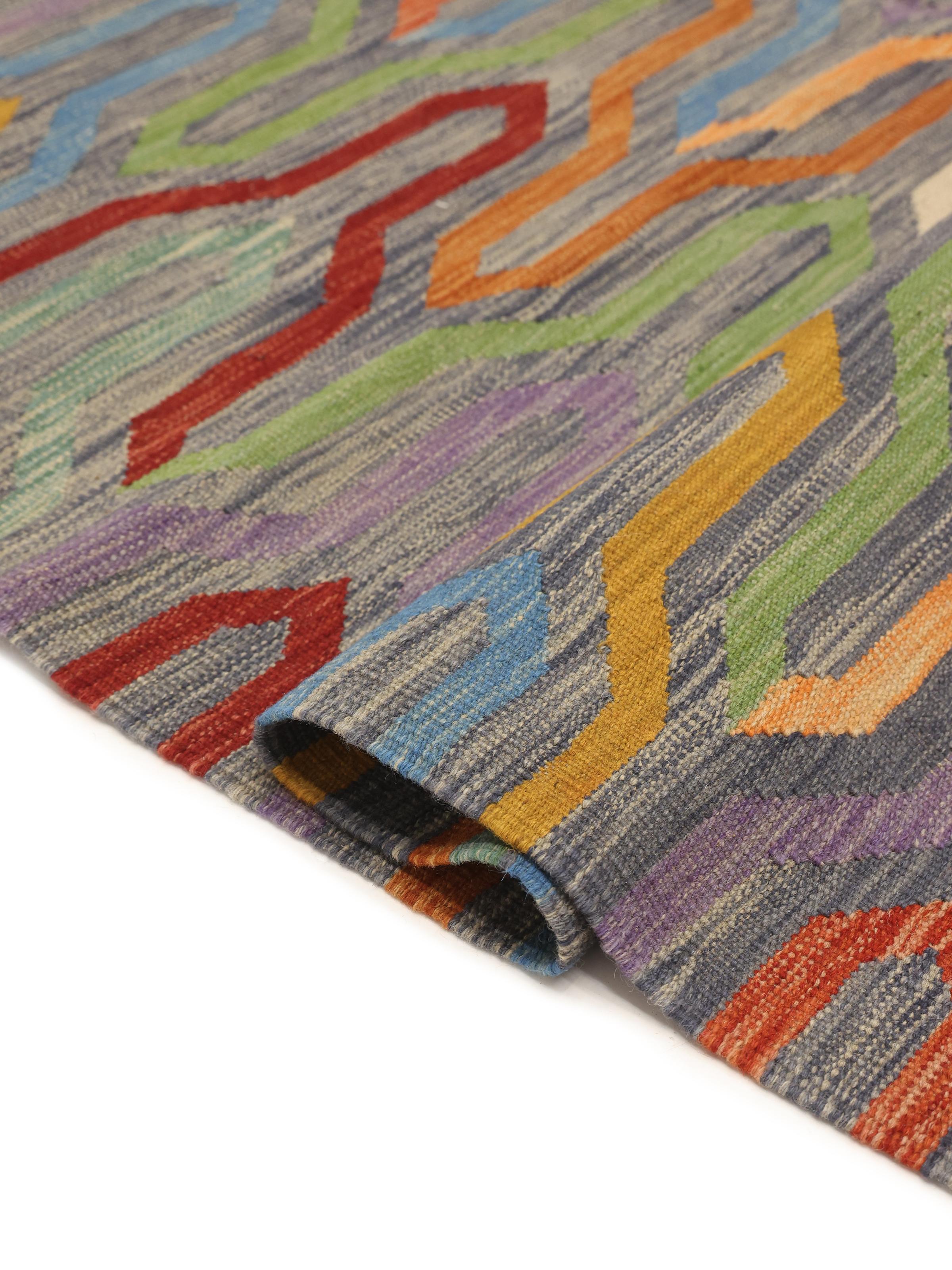
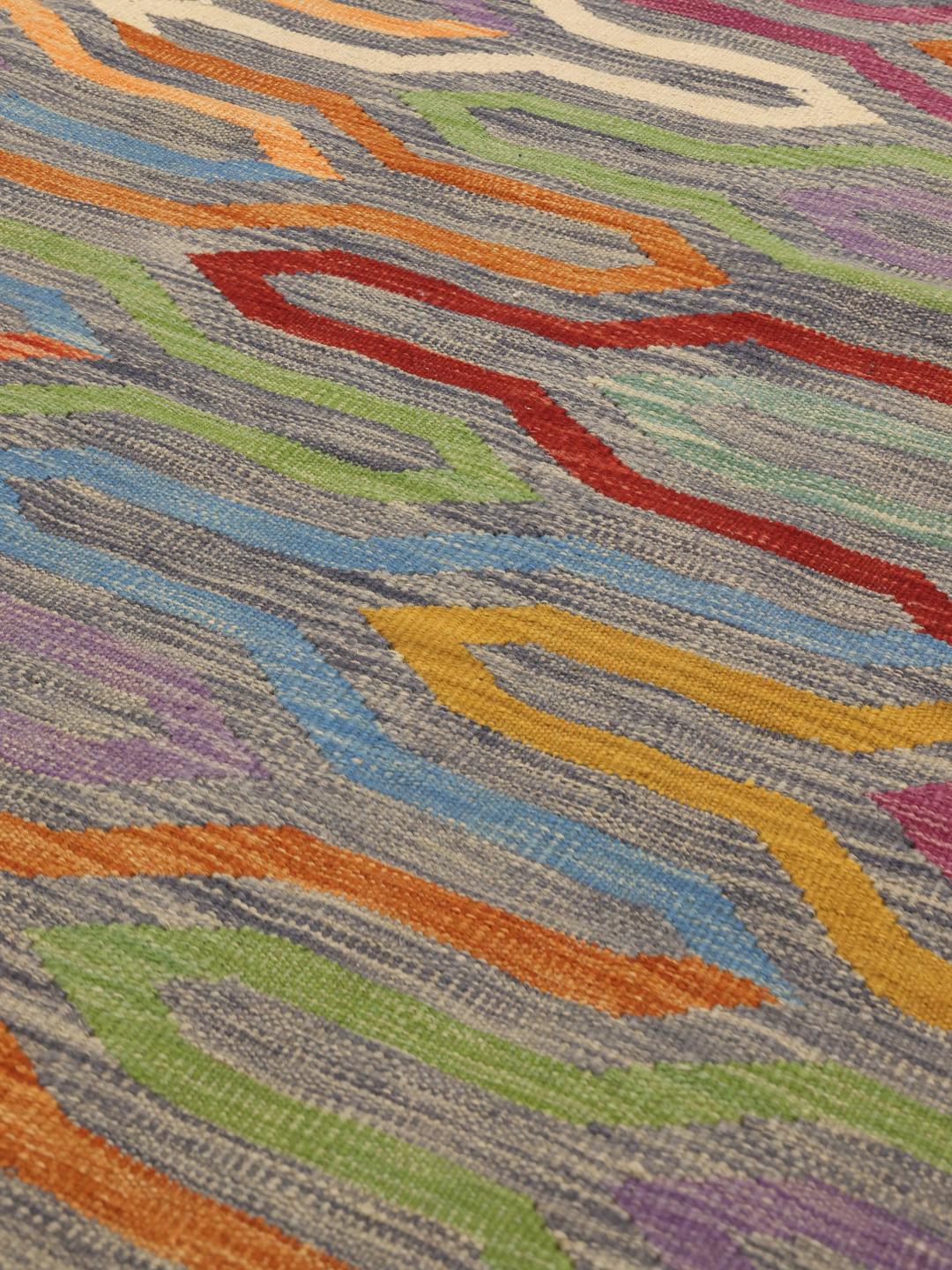
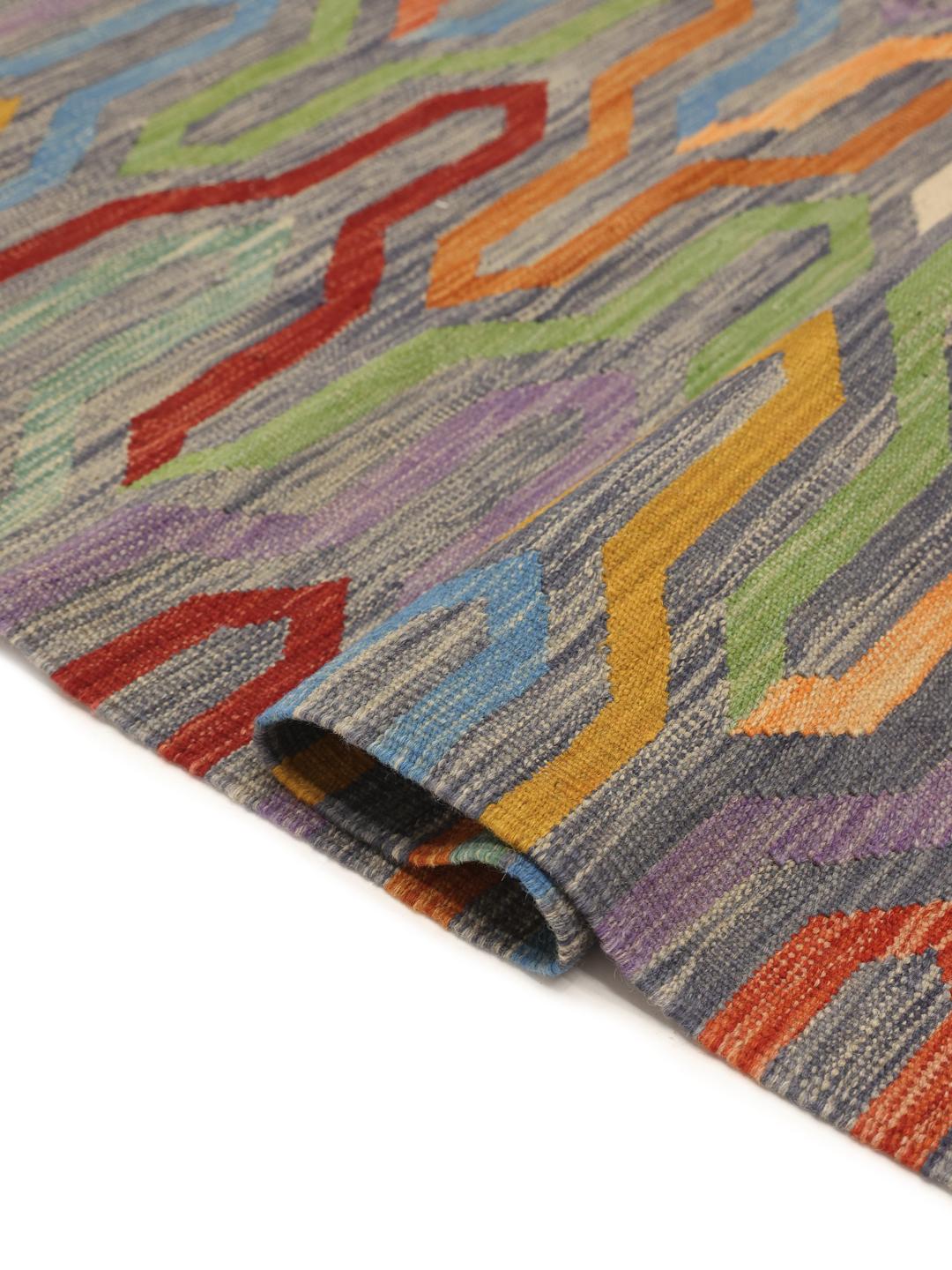
The term 'kilim' specifically refers to the tapestry-weave technique where the pattern is created by tightly interlacing the weft threads through the warp. This method results in a durable, reversible, and lightweight rug without a pile, which allows the intricate geometric motifs and bold color transitions to remain crisp and clear.
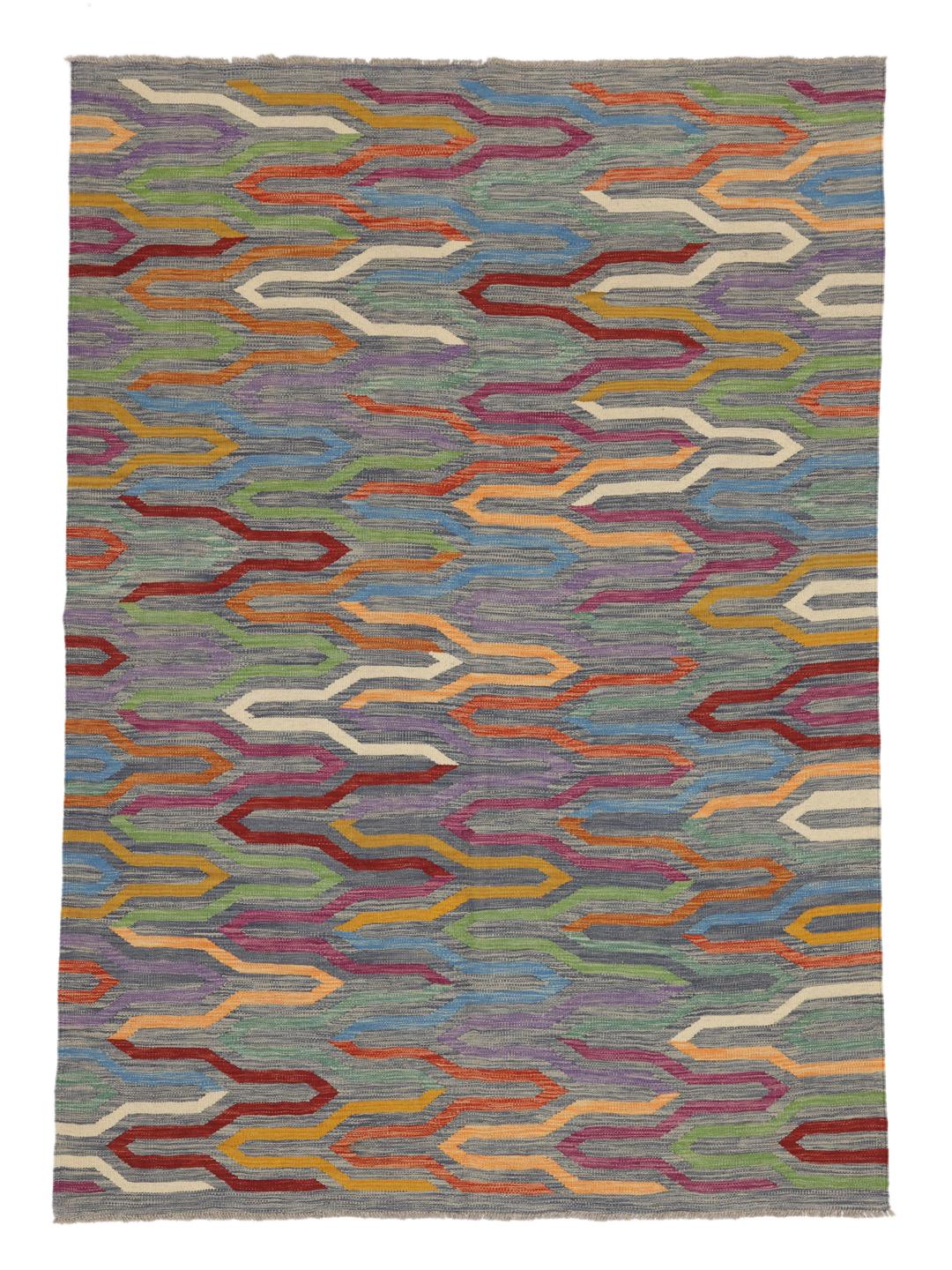
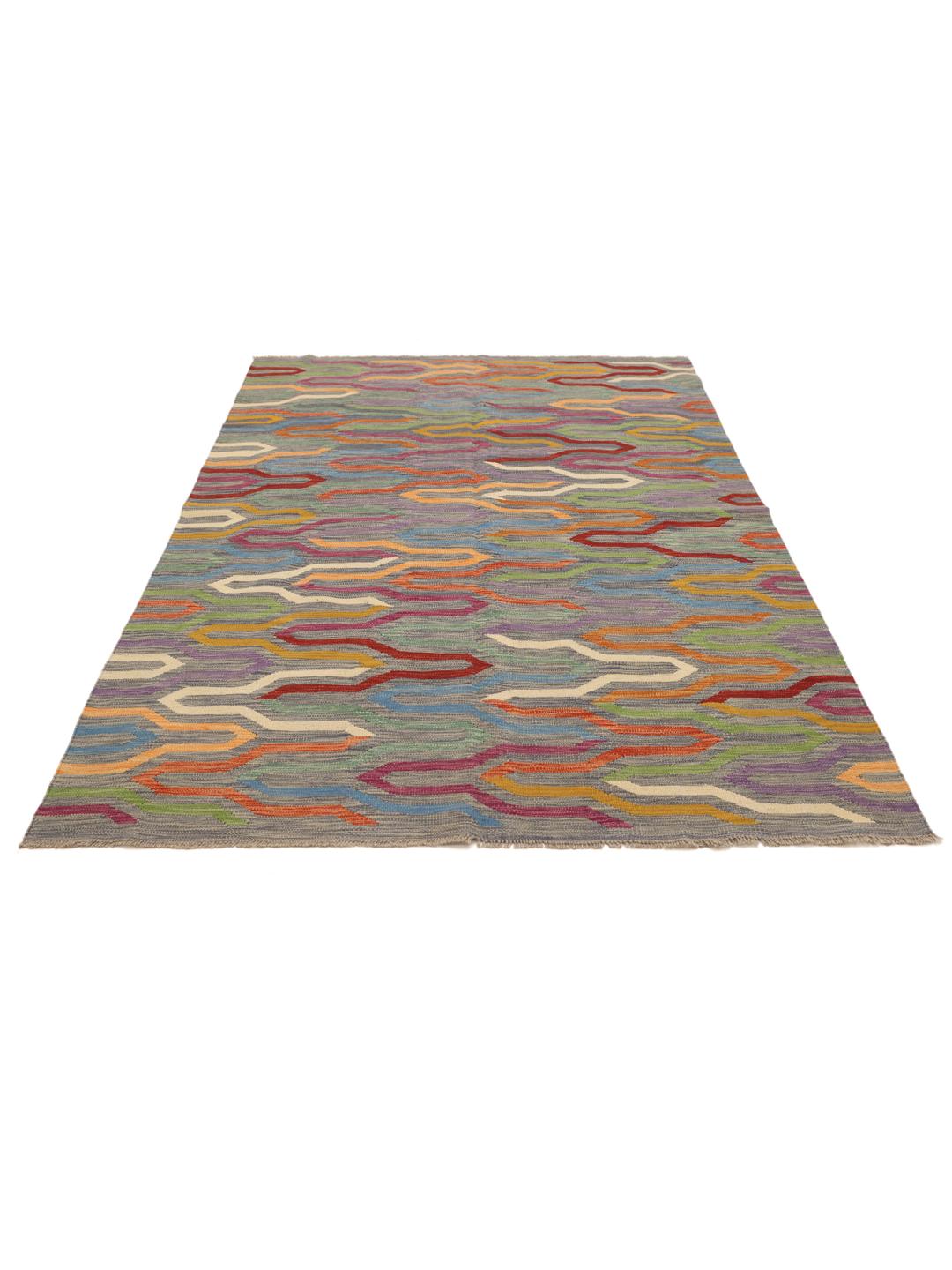
Signature design elements in modern kilims often build upon these ancient geometric foundations, incorporating rhythmic, repeating motifs that suggest movement and energy. While traditional kilims often leaned toward earthy, naturally dyed tones, contemporary pieces like this one embrace a broader, more expressive palette, bridging the gap between historical craft and modern interior aesthetics.
Collecting a hand-woven kilim is an investment in human skill and cultural continuity. These rugs are valued not only for their visual impact but also for the story they tell of the artisan's hand and the evolution of a craft that has survived for generations, making them cherished items for those who value authenticity and heritage in their homes.