Kilim rugs represent one of the most enduring weaving traditions in the Middle East and Central Asia. Historically, these flat-woven textiles were crafted by nomadic and village communities as versatile, functional household items, used as floor coverings, wall hangings, or storage bags while travelling across the region.
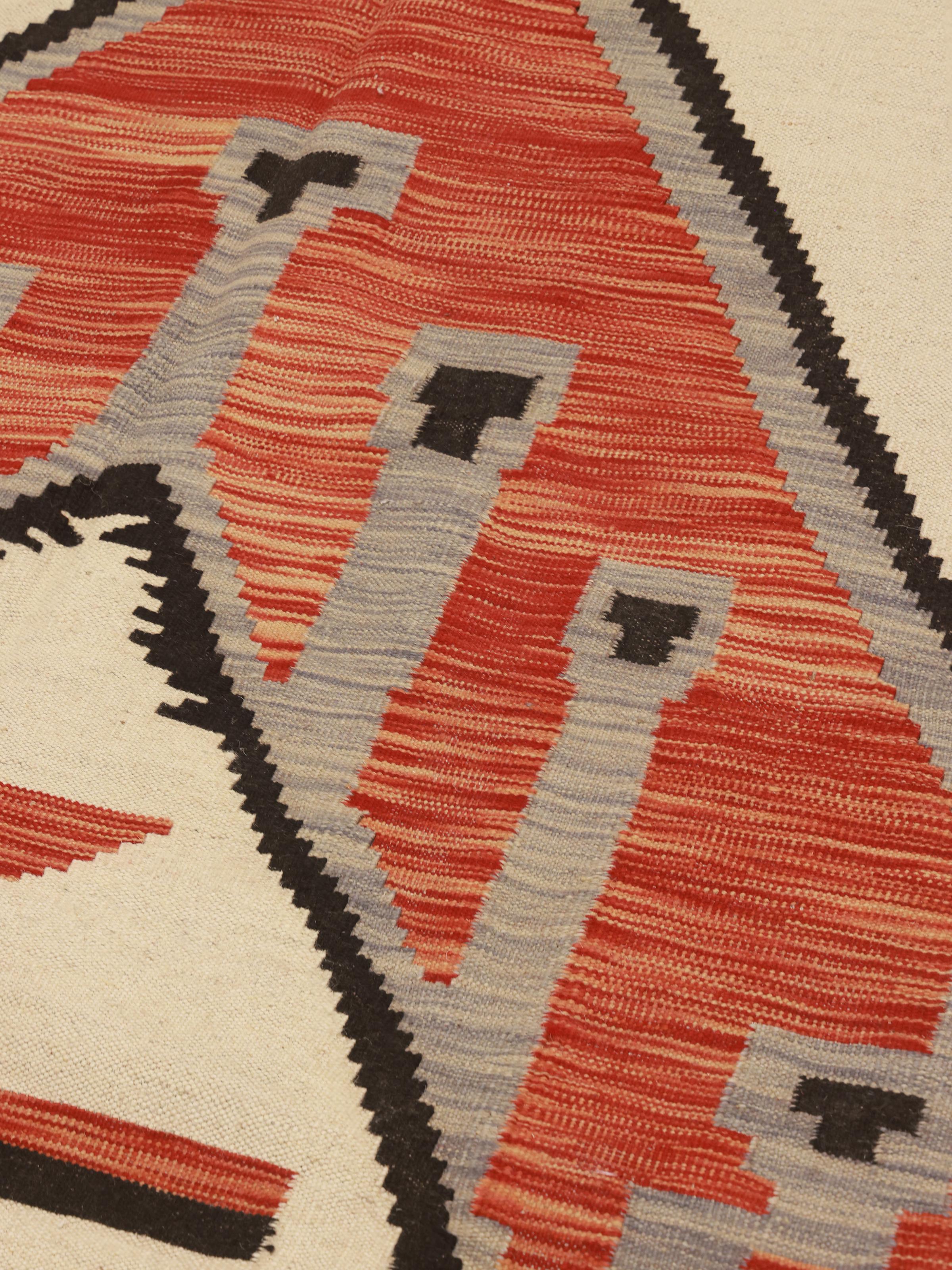
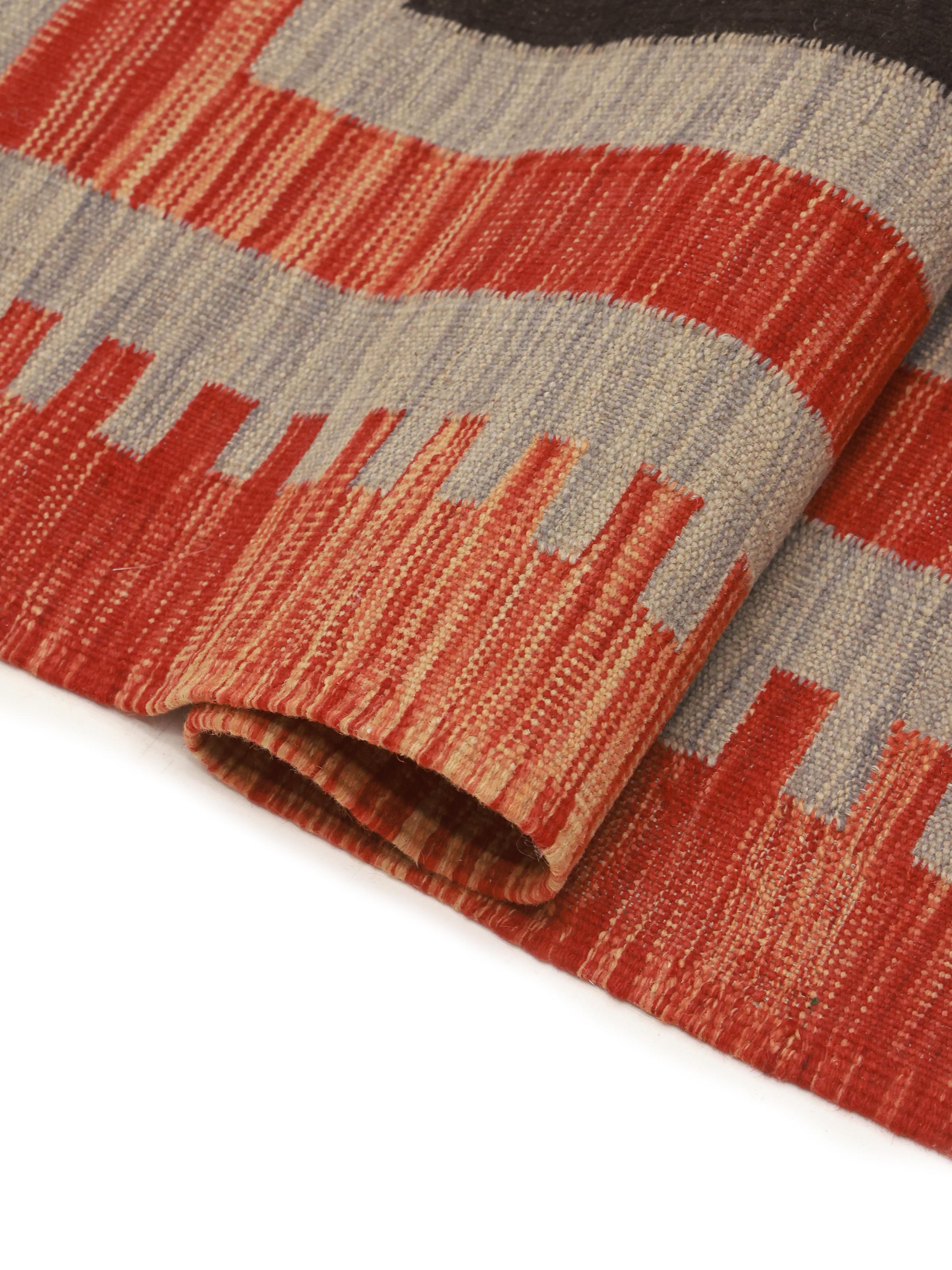
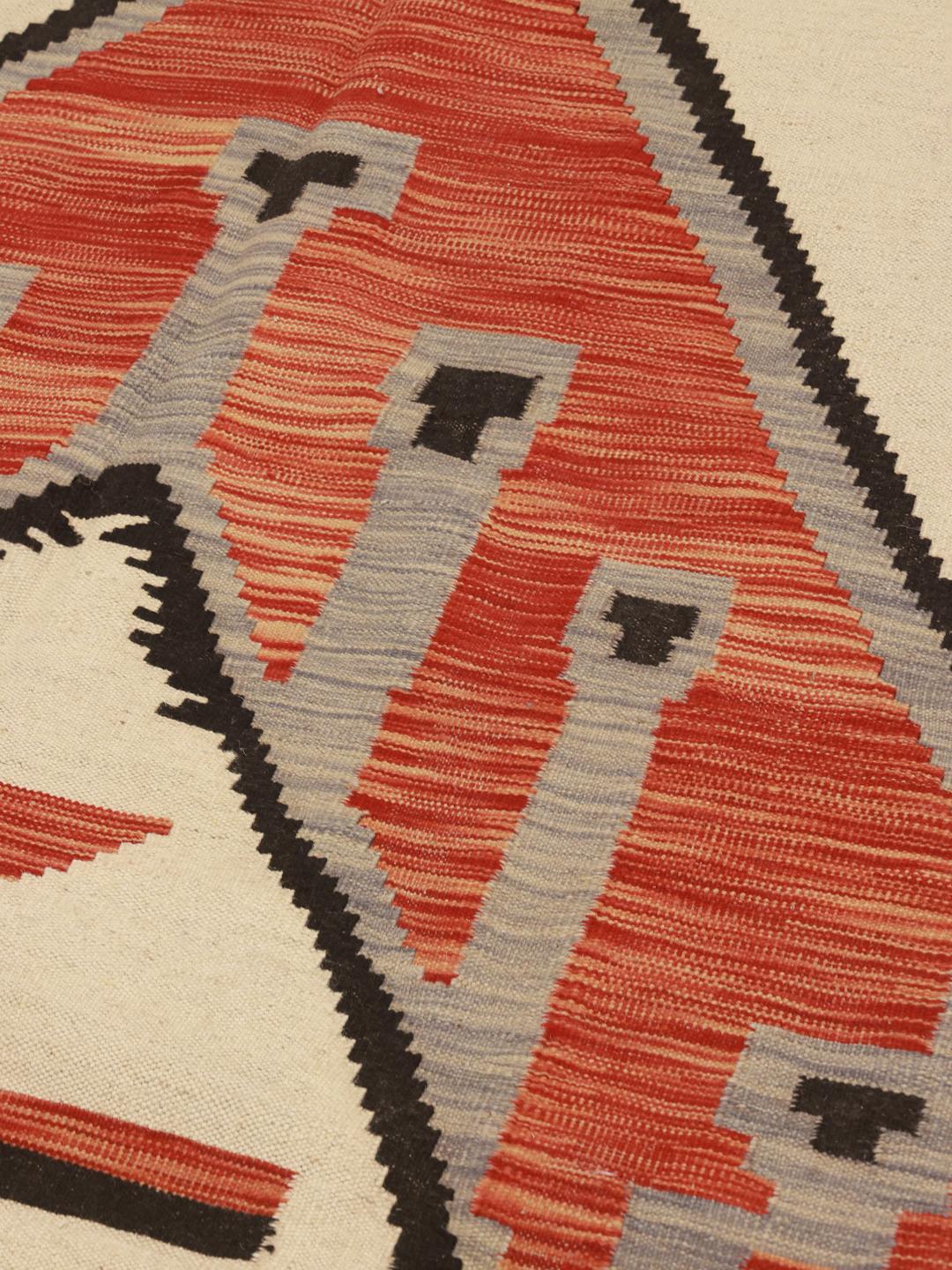
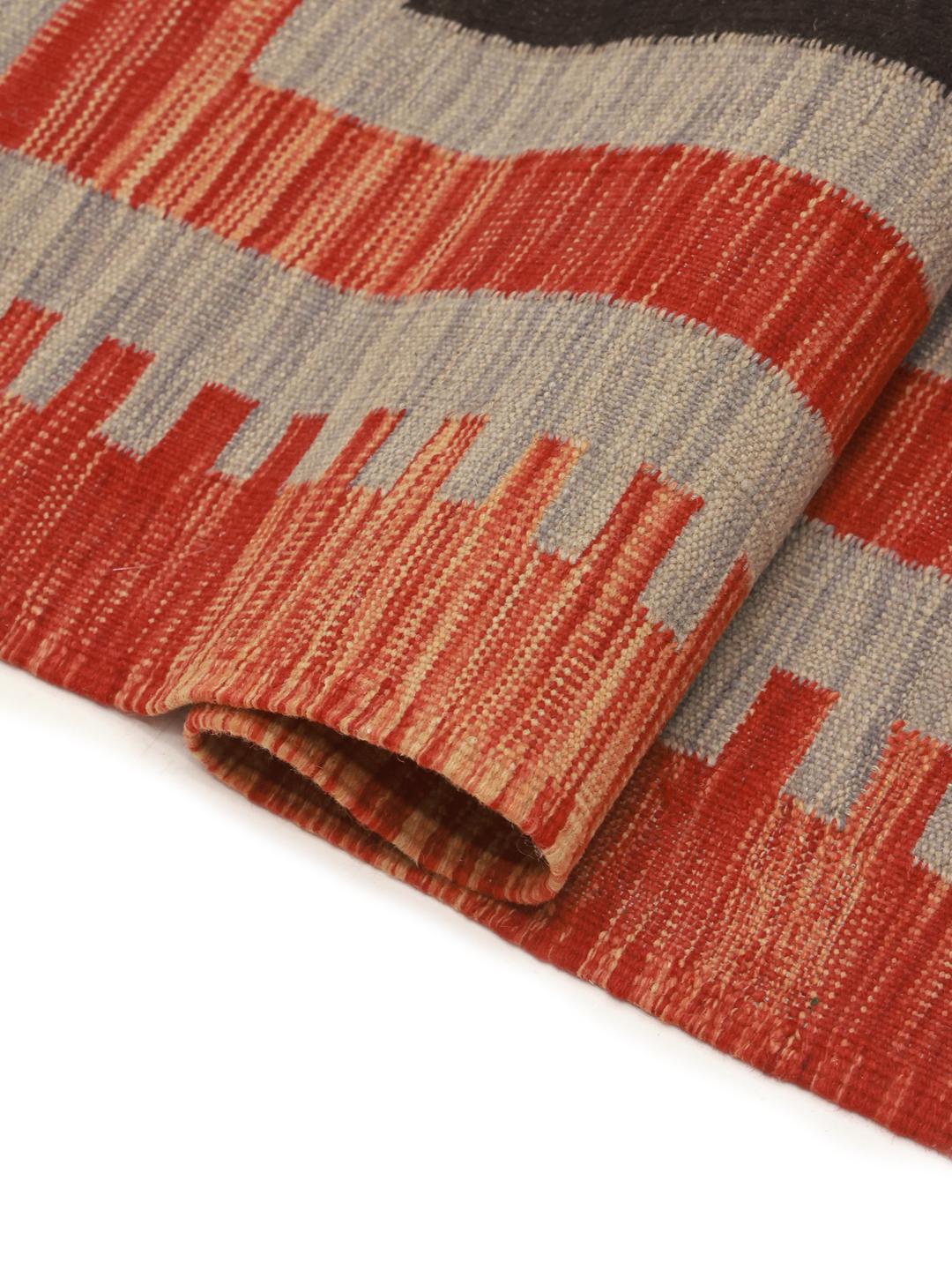
The term 'Kilim' refers specifically to the technique of tapestry weaving, where the horizontal threads are pulled tightly over the vertical foundation to create a smooth, pileless surface. This construction method is what gives these rugs their signature durability and crisp, clean lines, allowing for the intricate geometric patterns that define the style.
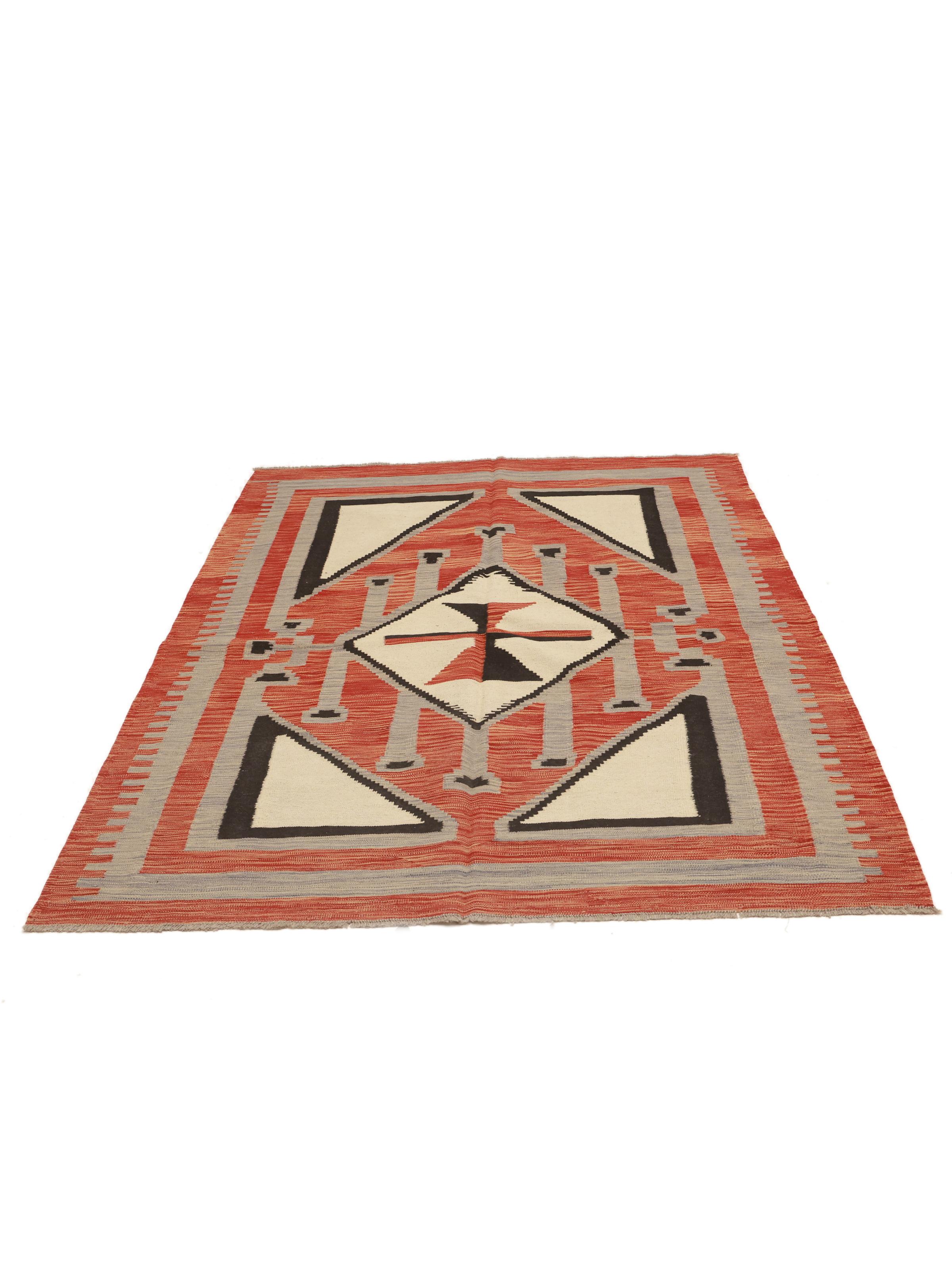
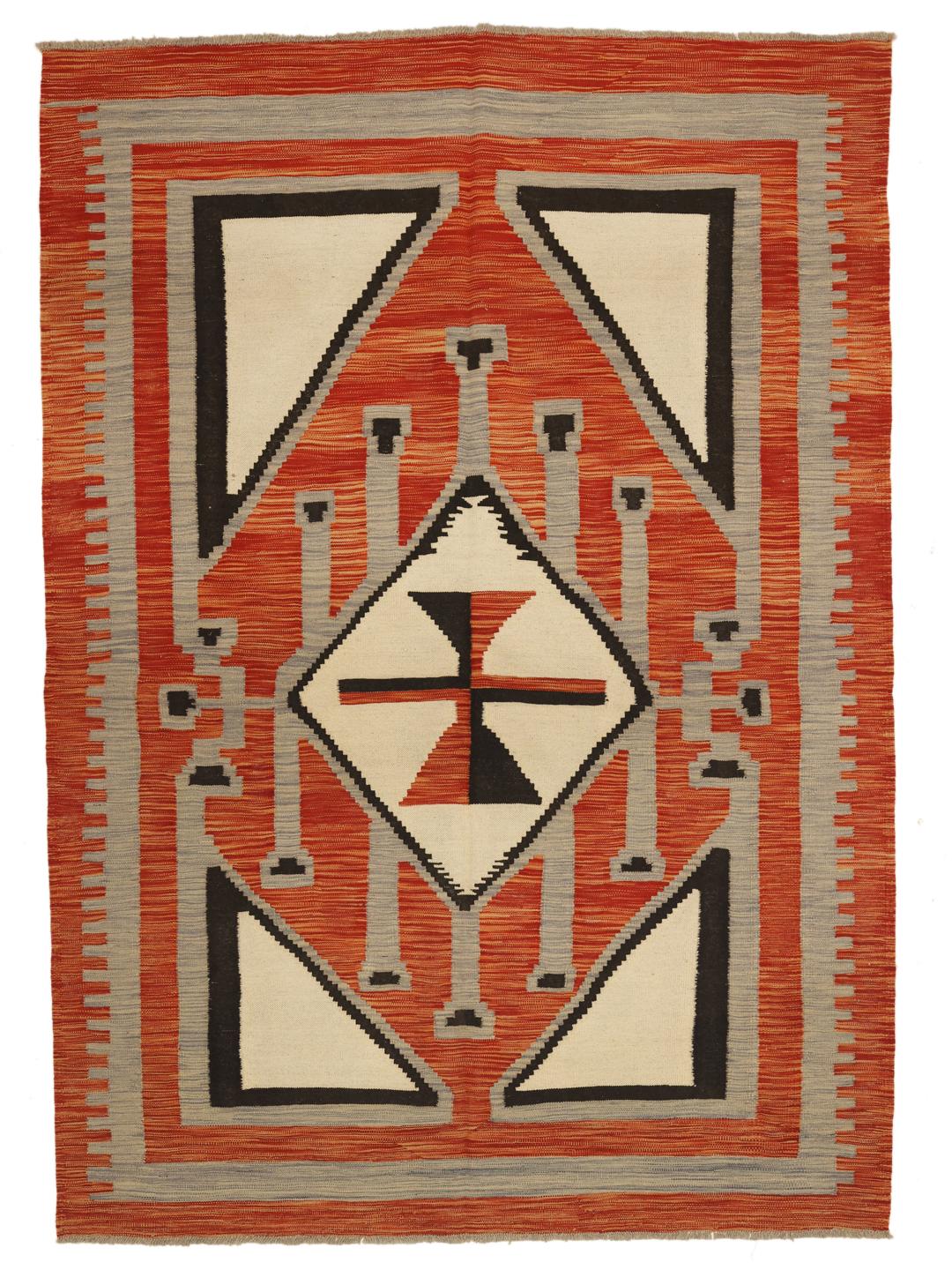
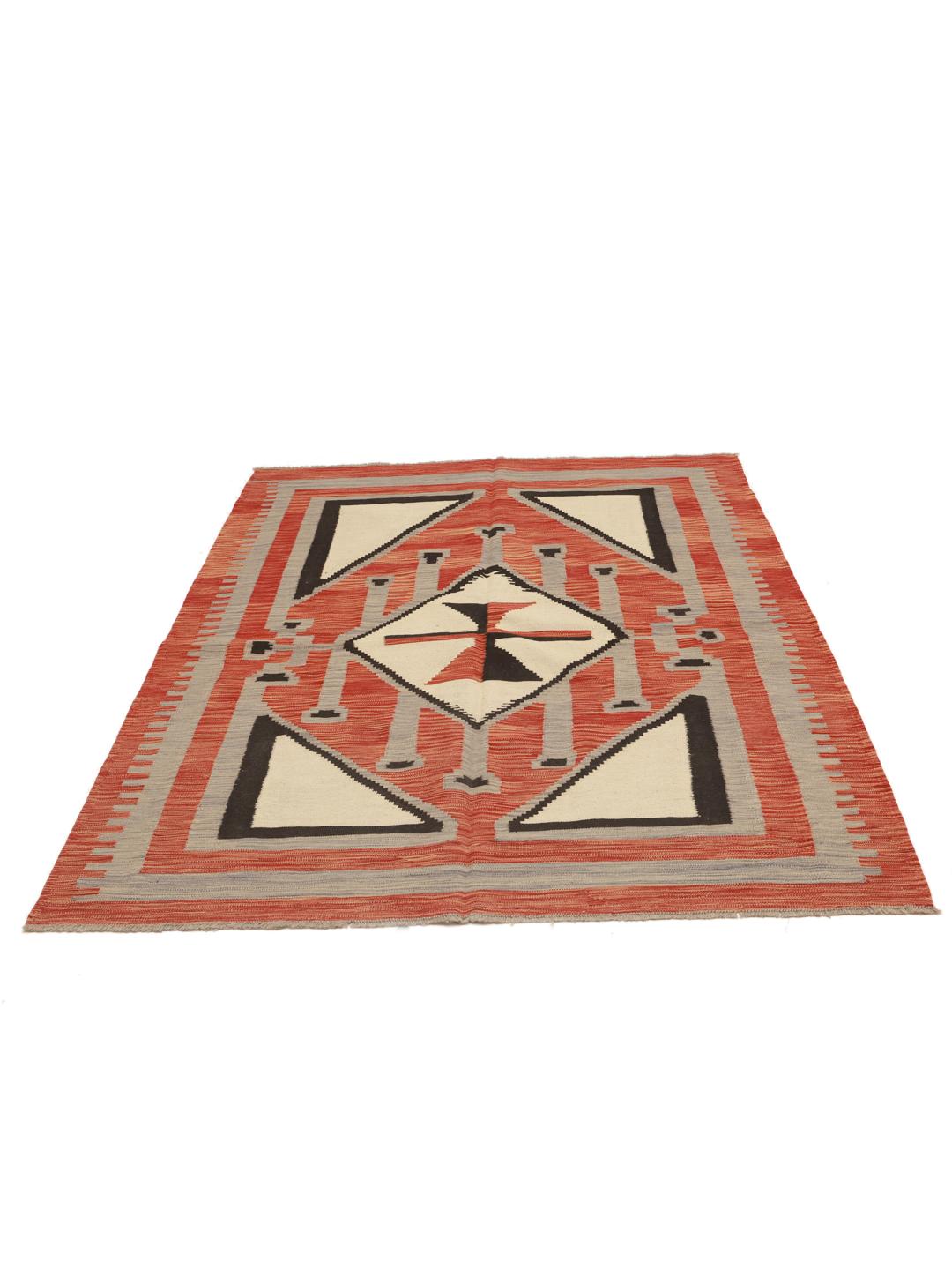
The design vocabulary of these rugs is centred around geometric abstraction, often utilising symbolic motifs that have been refined over centuries. This specific piece features bold, angular shapes and a strong colour palette, which are characteristic of modern interpretations that honour the historic preference for symmetry and bold, graphic impact.
Collecting a Kilim is an investment in cultural heritage and artisanal skill. These pieces are valued for their ability to bridge the gap between historical craft and contemporary interior design, offering a level of authenticity and human connection that mass-produced items simply cannot replicate.