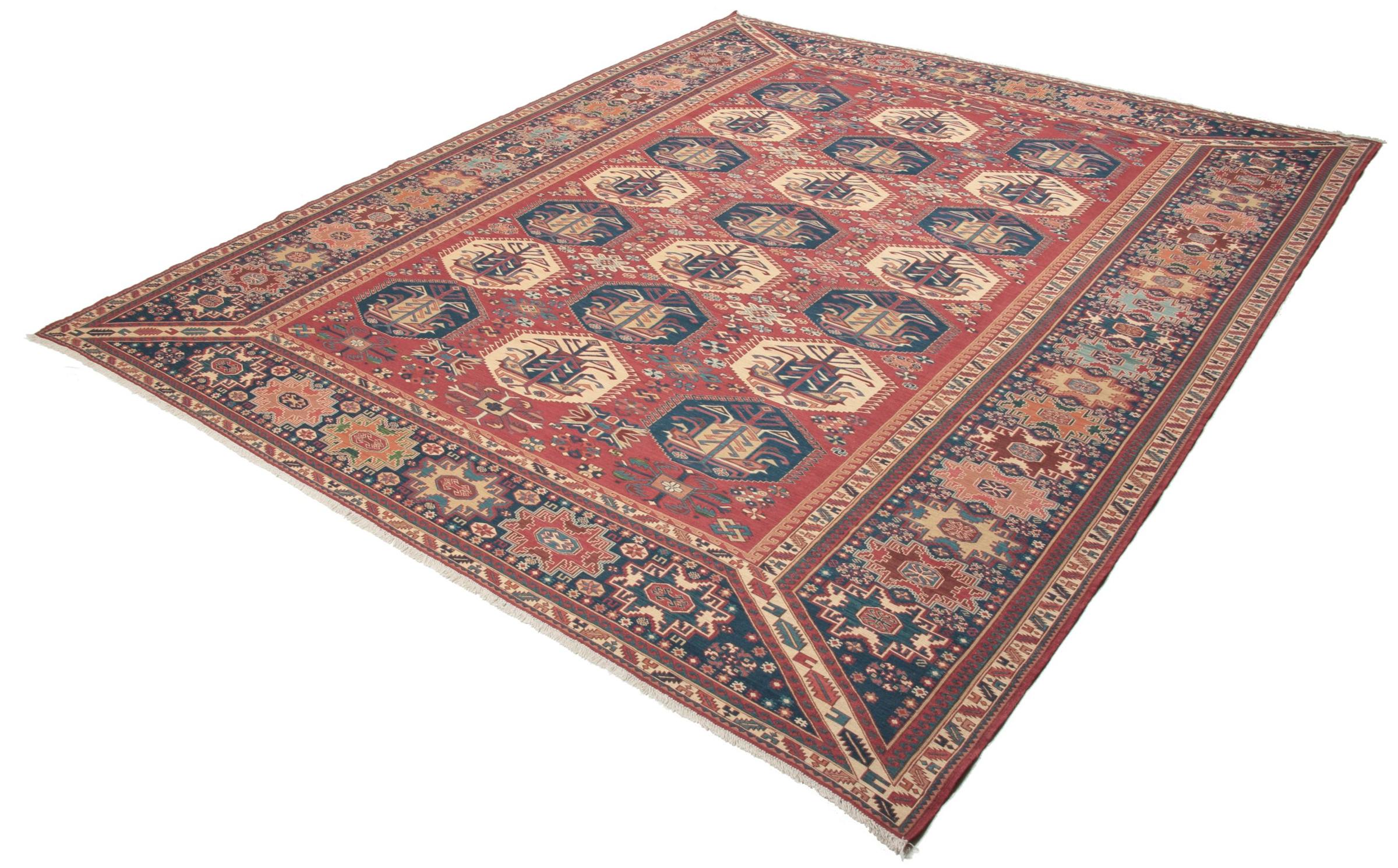
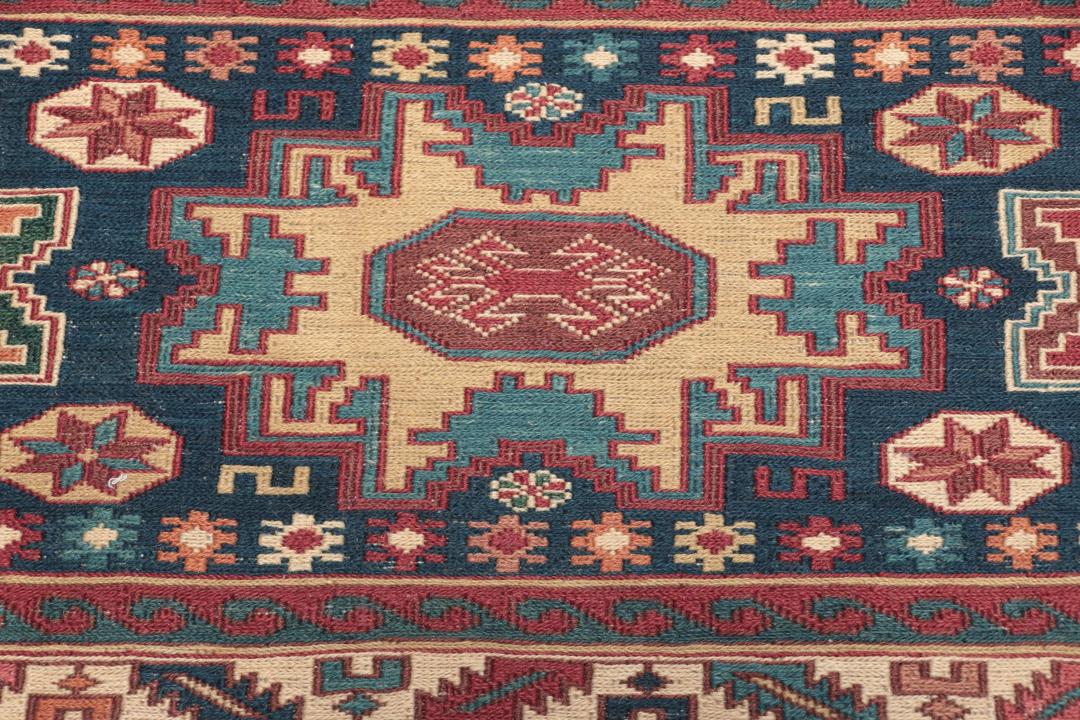
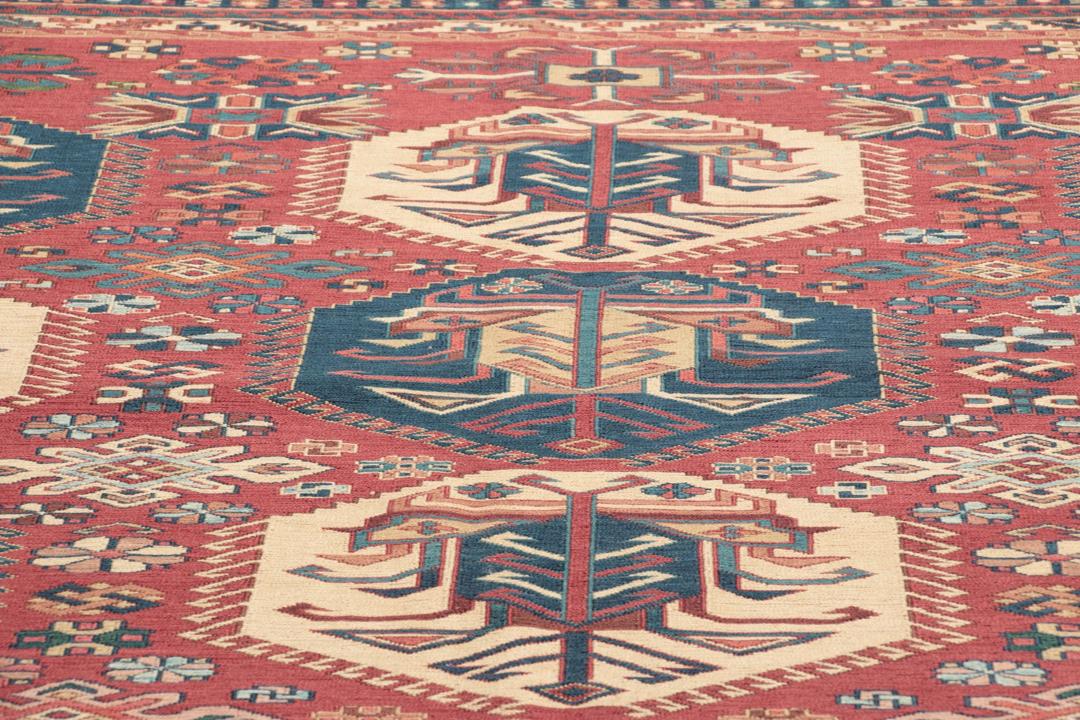
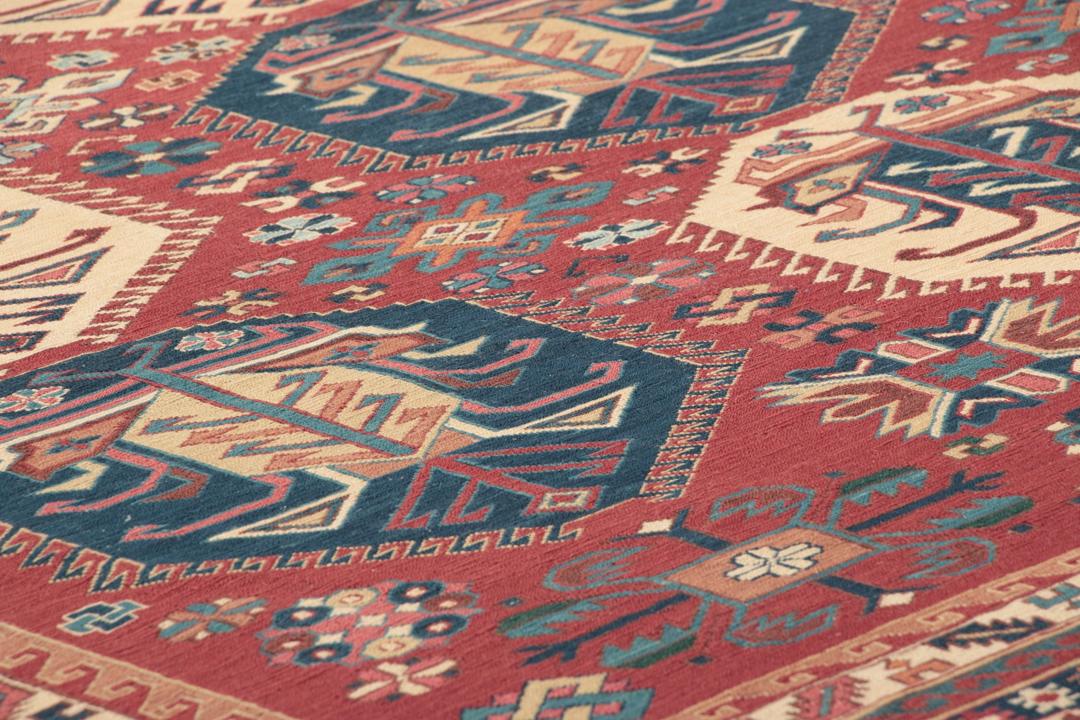
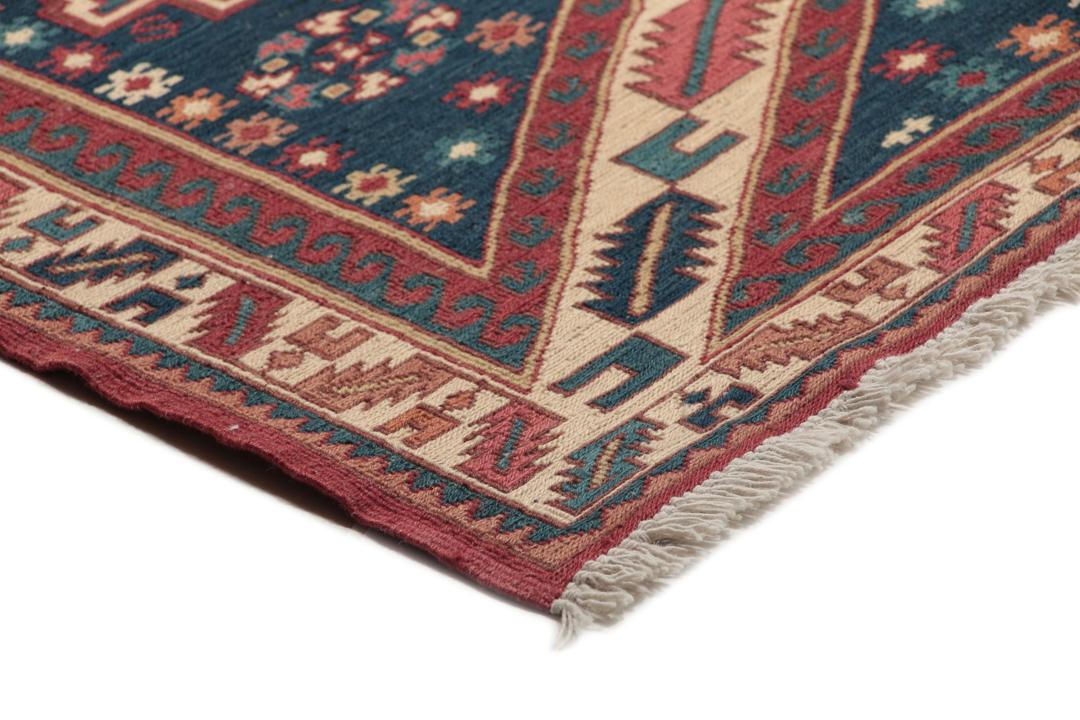
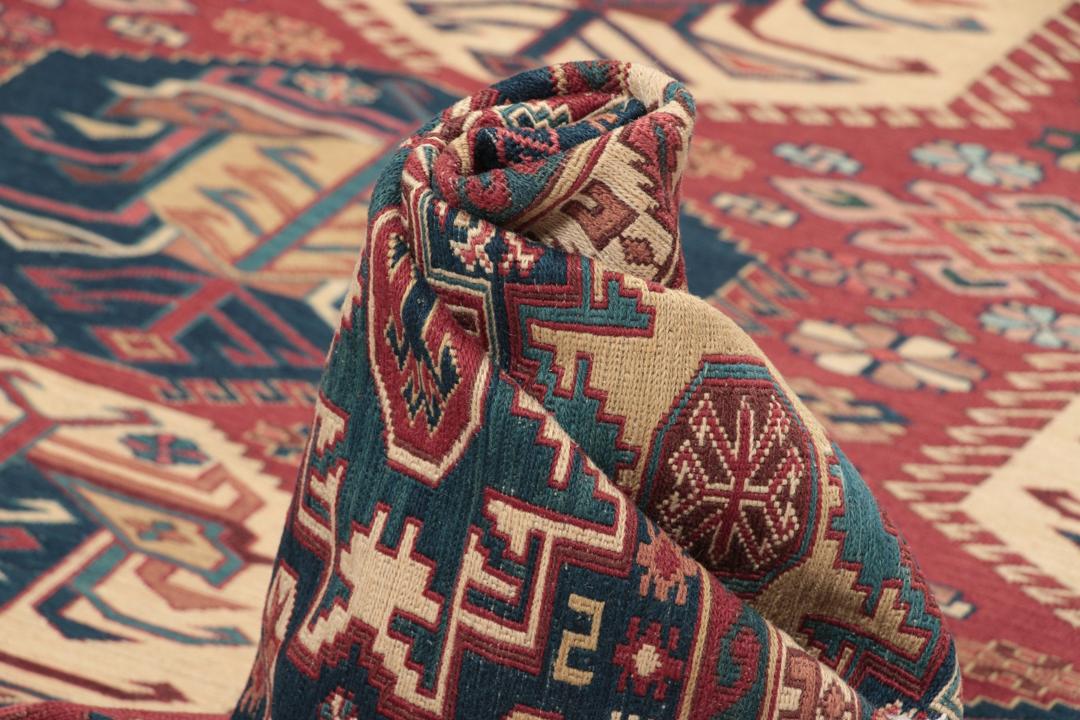
The Kelim Golbarjasta Soumakh represents a fascinating evolution within Afghan textile traditions. While traditional kilims are flat-woven, the Golbarjasta style is a specialised evolution that incorporates a supplementary weaving technique to create raised, embossed-like patterns. This tradition has flourished in Afghanistan, where weavers blend ancestral knowledge with regional aesthetics to produce textiles that are celebrated for their durability and striking visual impact.
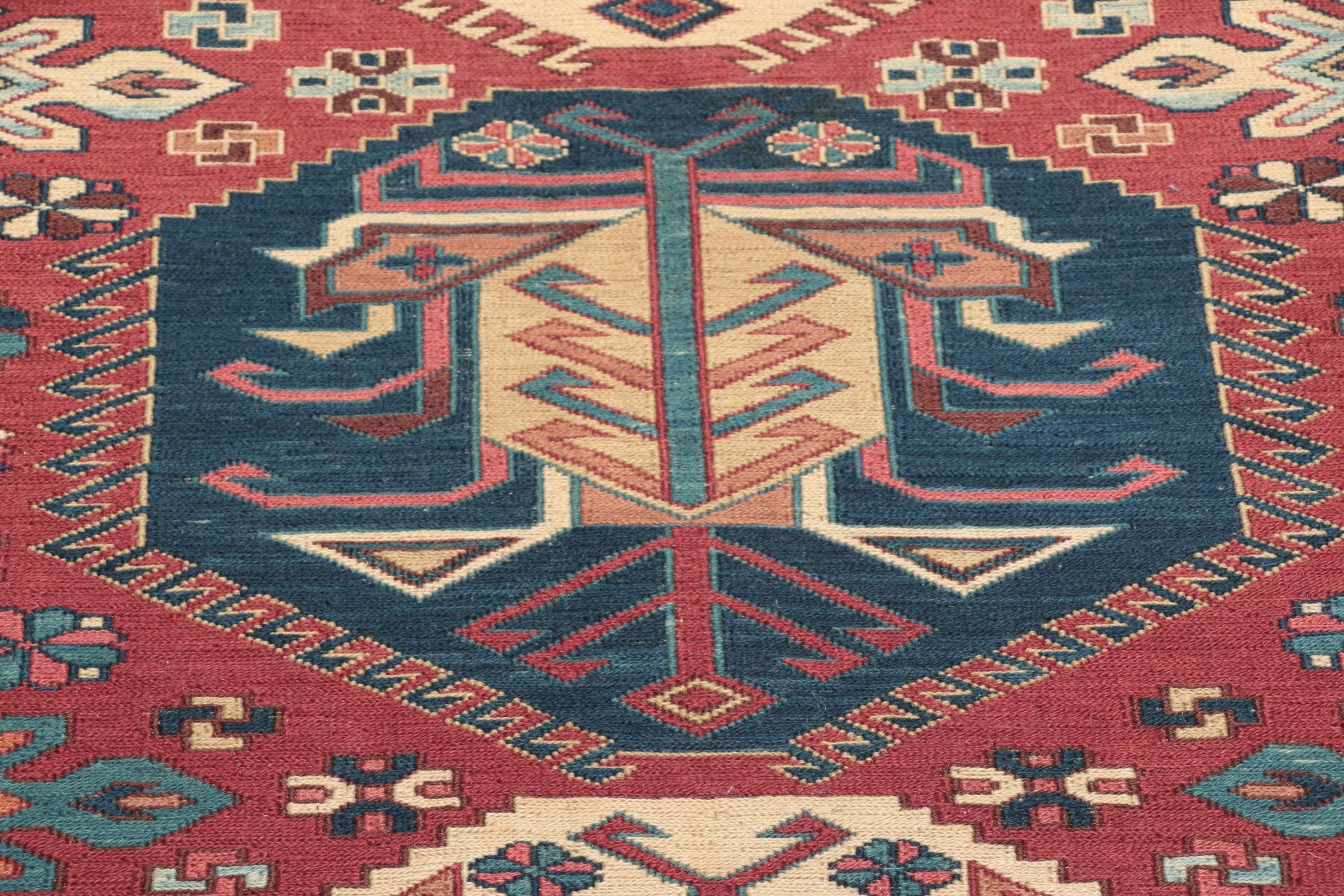
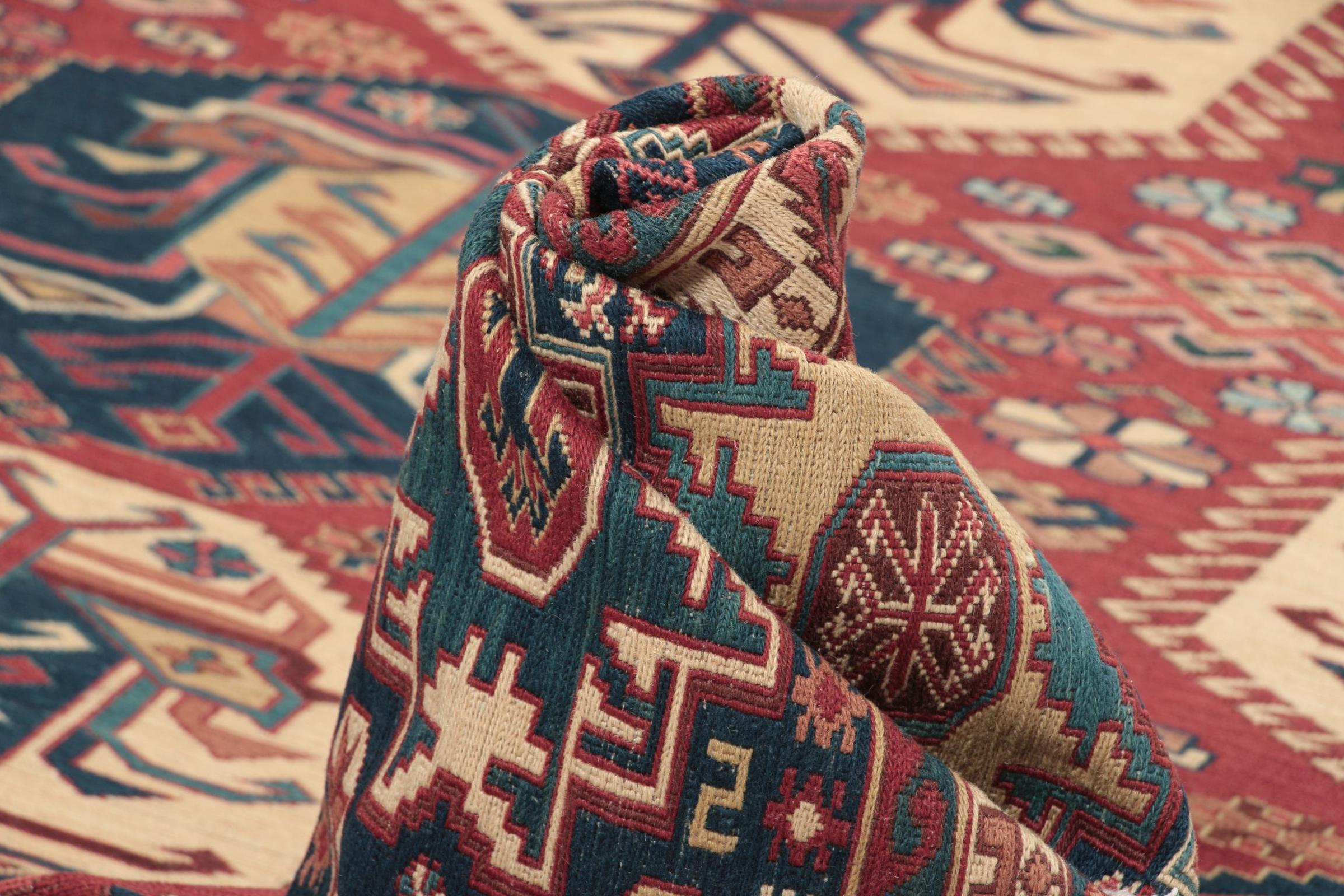
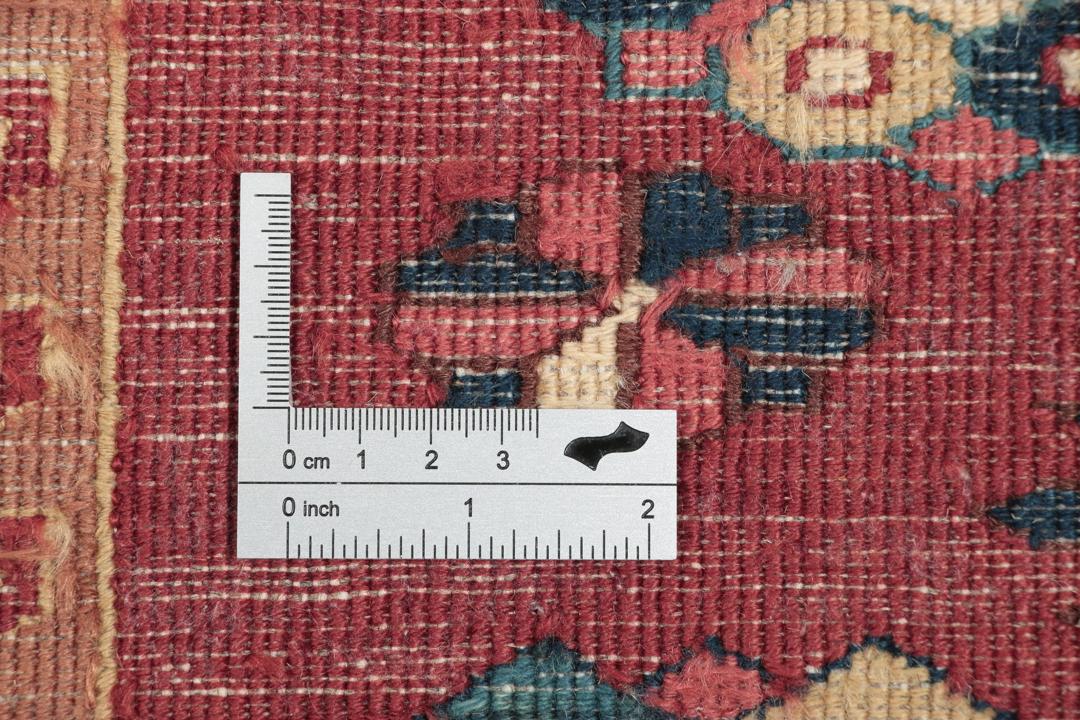
The Soumakh technique itself is a form of brocading that uses a discontinuous weft, where the Wool is wrapped around pairs of warp threads. This creates a surface that is often compared to a tapestry, providing significantly more thickness and weight than a standard flat-weave. This method is highly valued because it allows for intricate, sharp-edged geometric designs that remain stable and clear, even after decades of use.
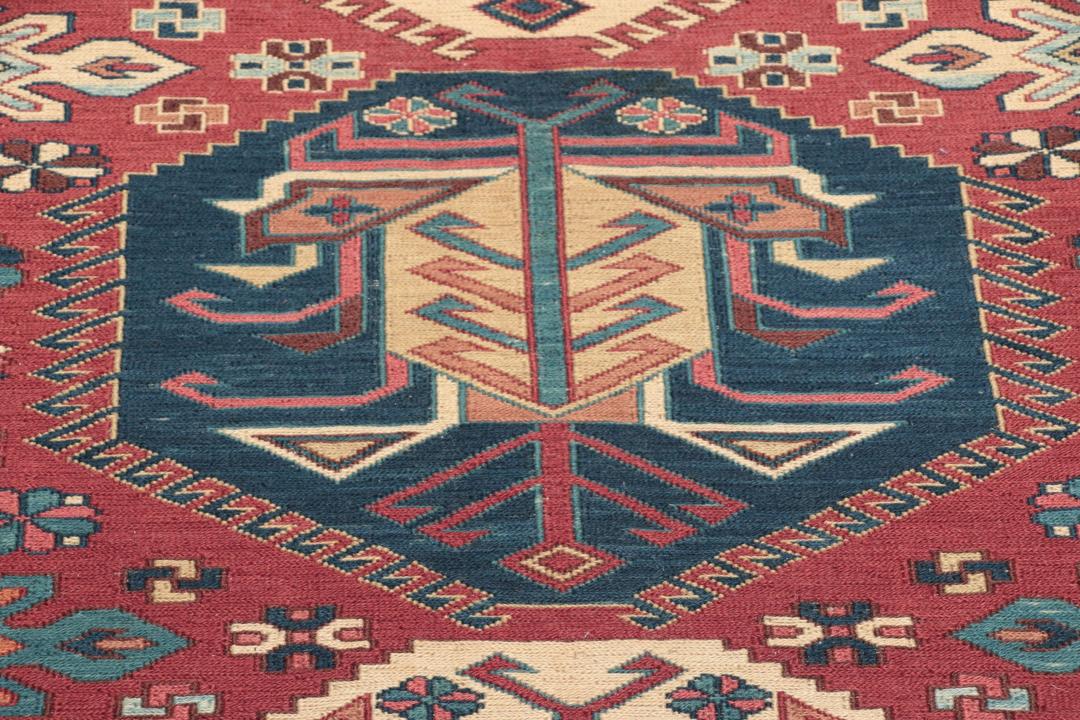
Visually, these rugs are defined by their bold, repeating motifs, often centred around medallions or stylised tree-of-life symbols. The borders are typically complex, framing the central field with a series of smaller, rhythmic patterns that provide a balanced aesthetic. The use of deep red dyes, derived from natural sources, is a hallmark of this region, providing a warm, inviting backdrop that highlights the secondary colours used in the geometric detailing.
Collecting a Golbarjasta Soumakh is an investment in cultural heritage and human skill. Because these rugs are produced in limited numbers, they represent a connection to a slow-paced, deliberate way of life. Each piece acts as a historical document, preserving the motifs and techniques passed down through generations of families who have dedicated their lives to the art of the loom.