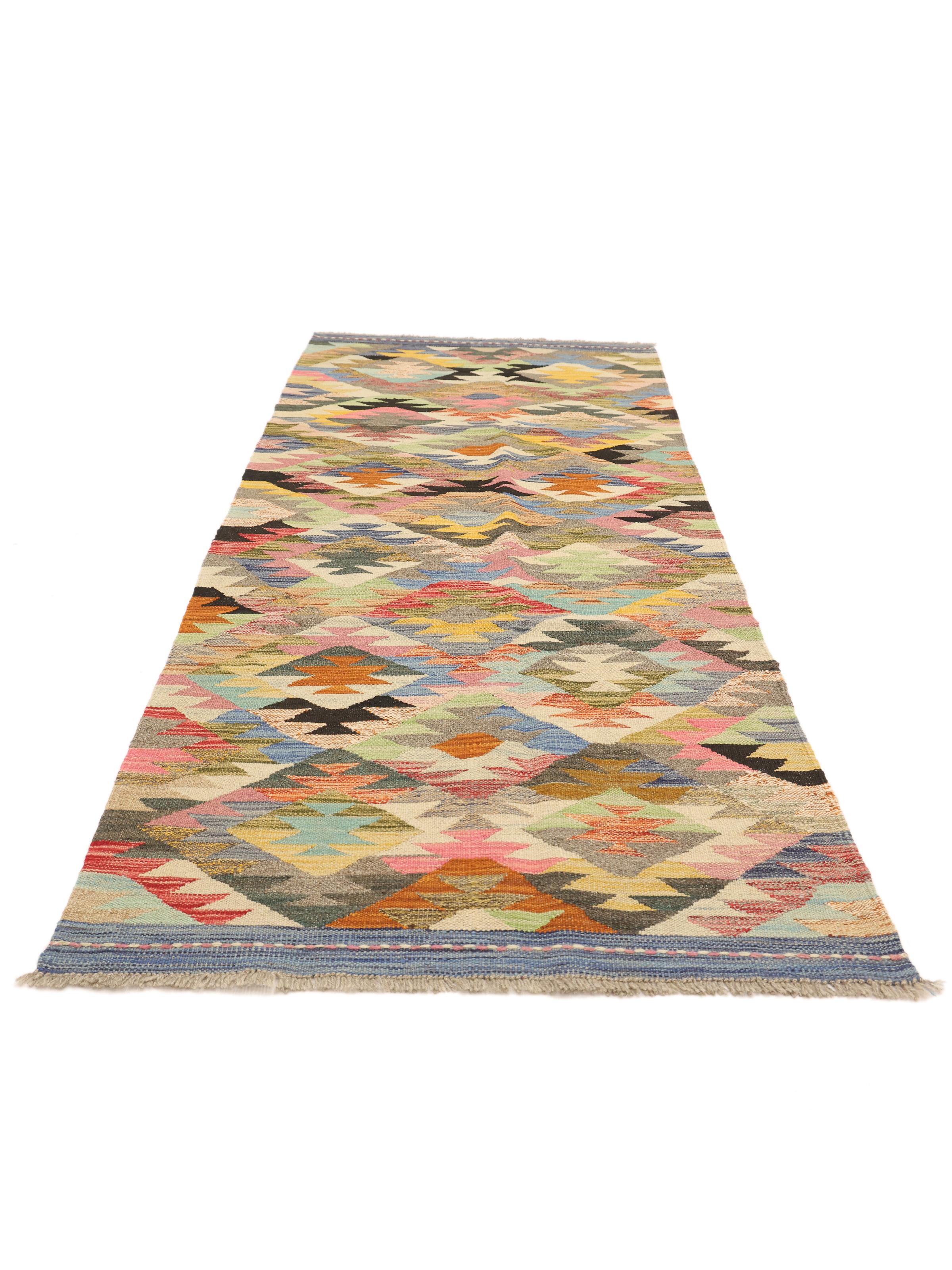
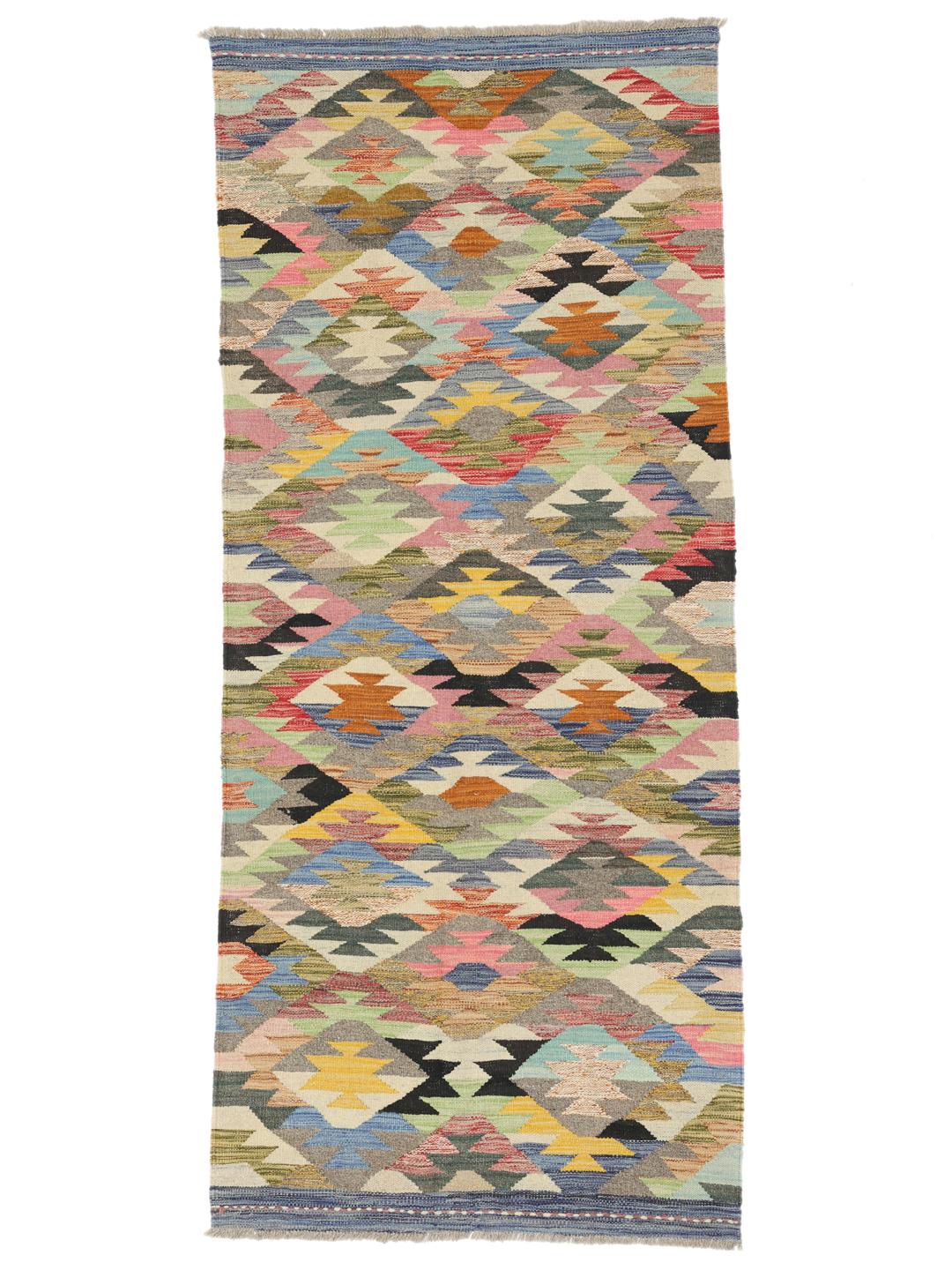
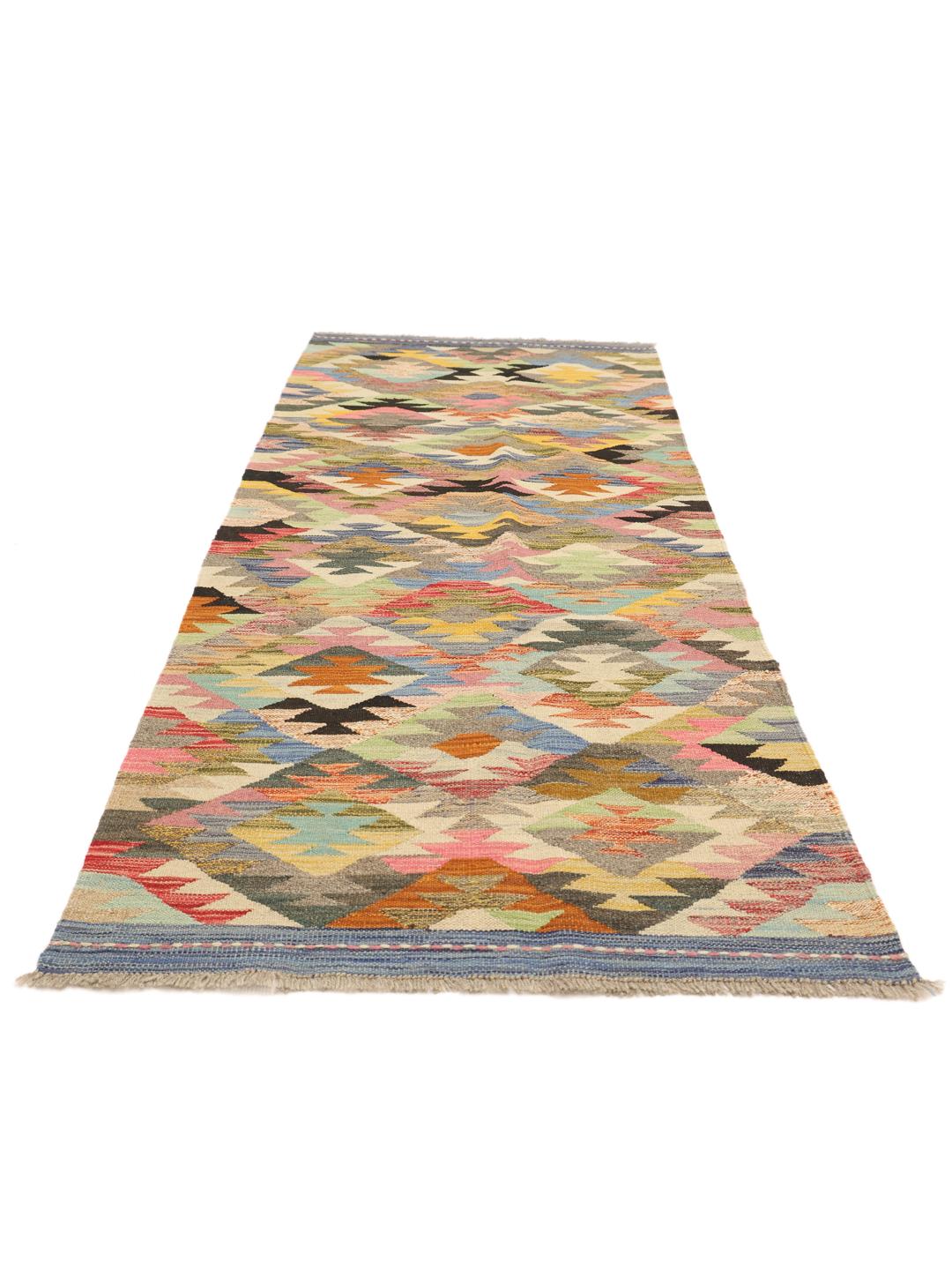
Kilim rugs are a cornerstone of nomadic and village weaving traditions across the Middle East and Central Asia. Historically, these rugs were created by tribal groups as multi-purpose functional items, used as floor coverings, wall hangings, and even as durable storage bags for transport.
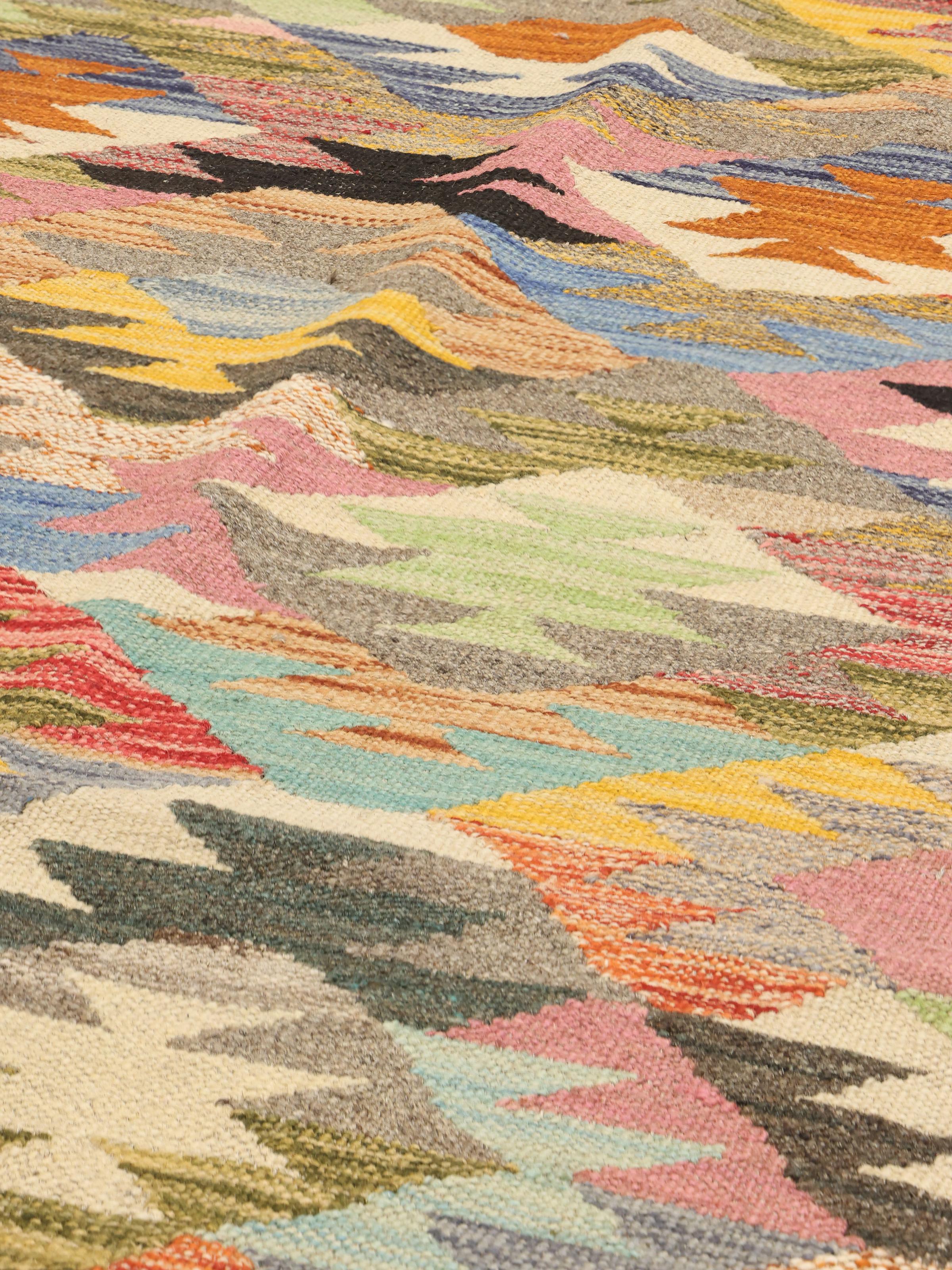
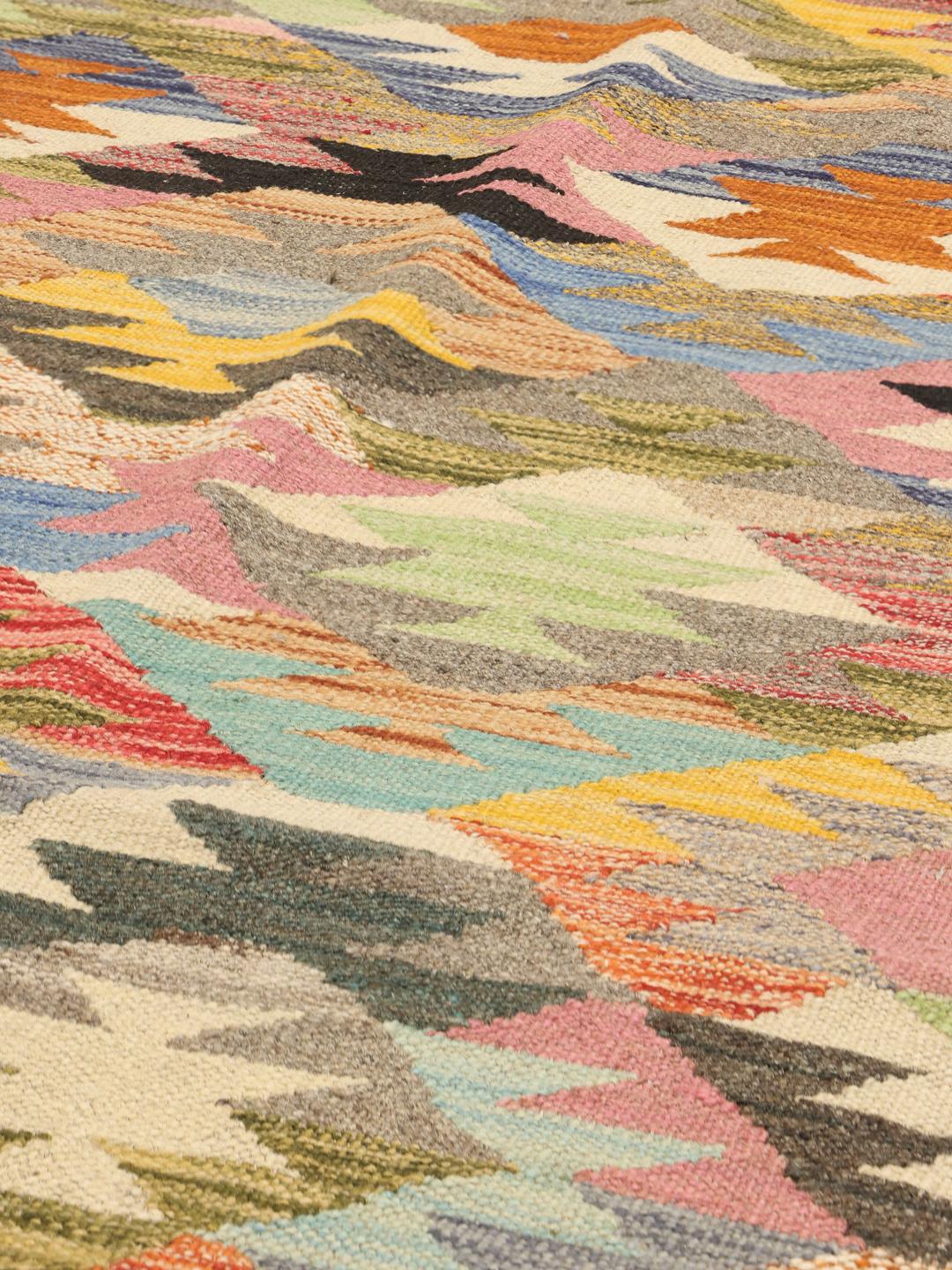
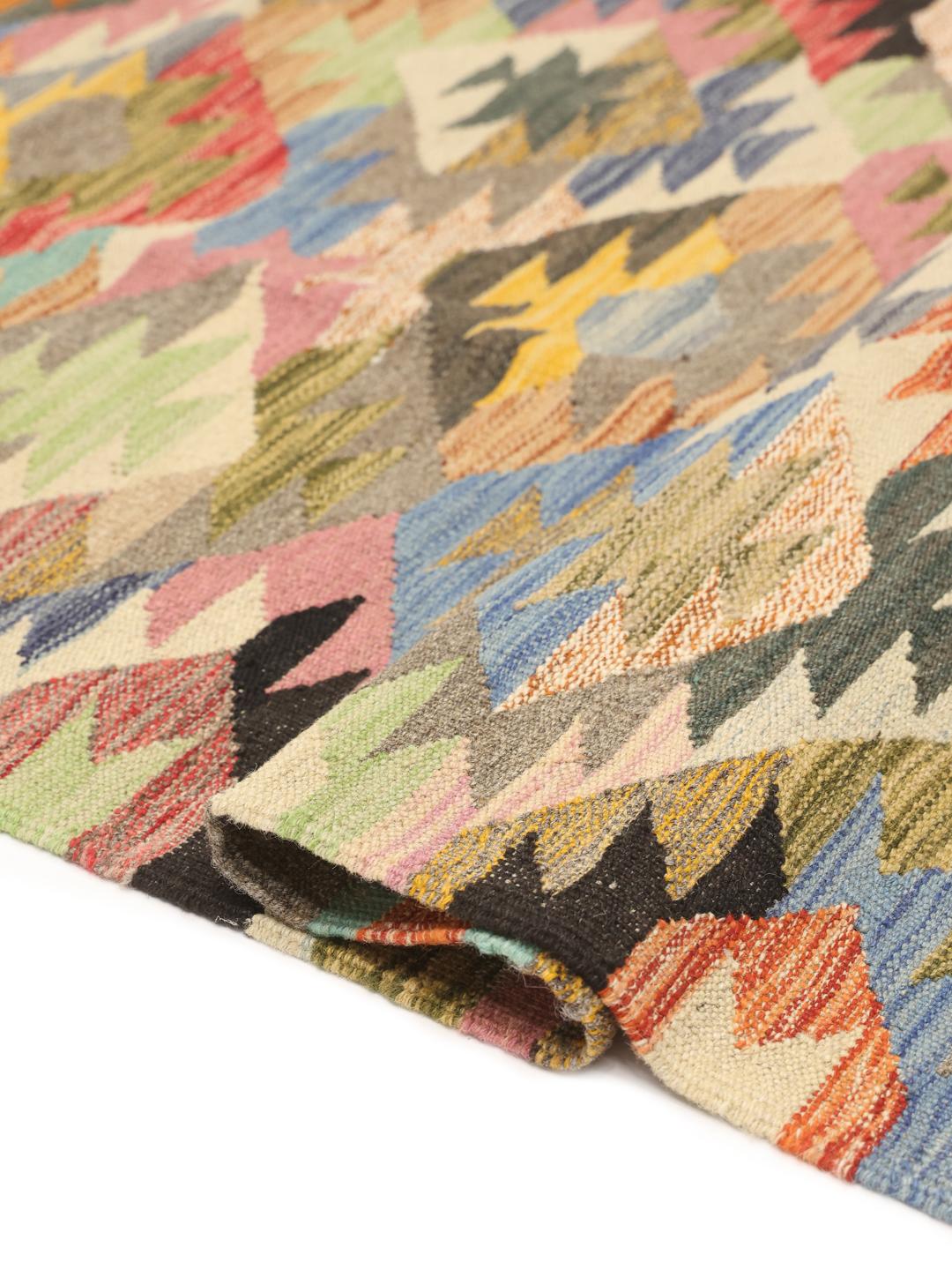
The term Kilim refers to a flat-weaving technique where the horizontal threads are pulled tightly over the vertical ones to create a smooth, pileless surface. Unlike knotted rugs, the pattern in a Kilim is created by the weave itself, requiring the artisan to manage precise colour changes to form sharp, geometric motifs.
The Ariana style is a modern evolution of these ancient methods, specifically developed in Afghanistan to bring traditional patterns to contemporary homes. These rugs often feature a refined colour palette and a cleaner look, while still honouring the centuries-old geometric language of their predecessors.
Collecting a Kilim is an investment in a living heritage. Each piece acts as a narrative of the region's artistic evolution, where skilled hands continue to pass down techniques that have remained largely unchanged for generations. Owning such a rug is a way to celebrate traditional human craft in a modern living space.