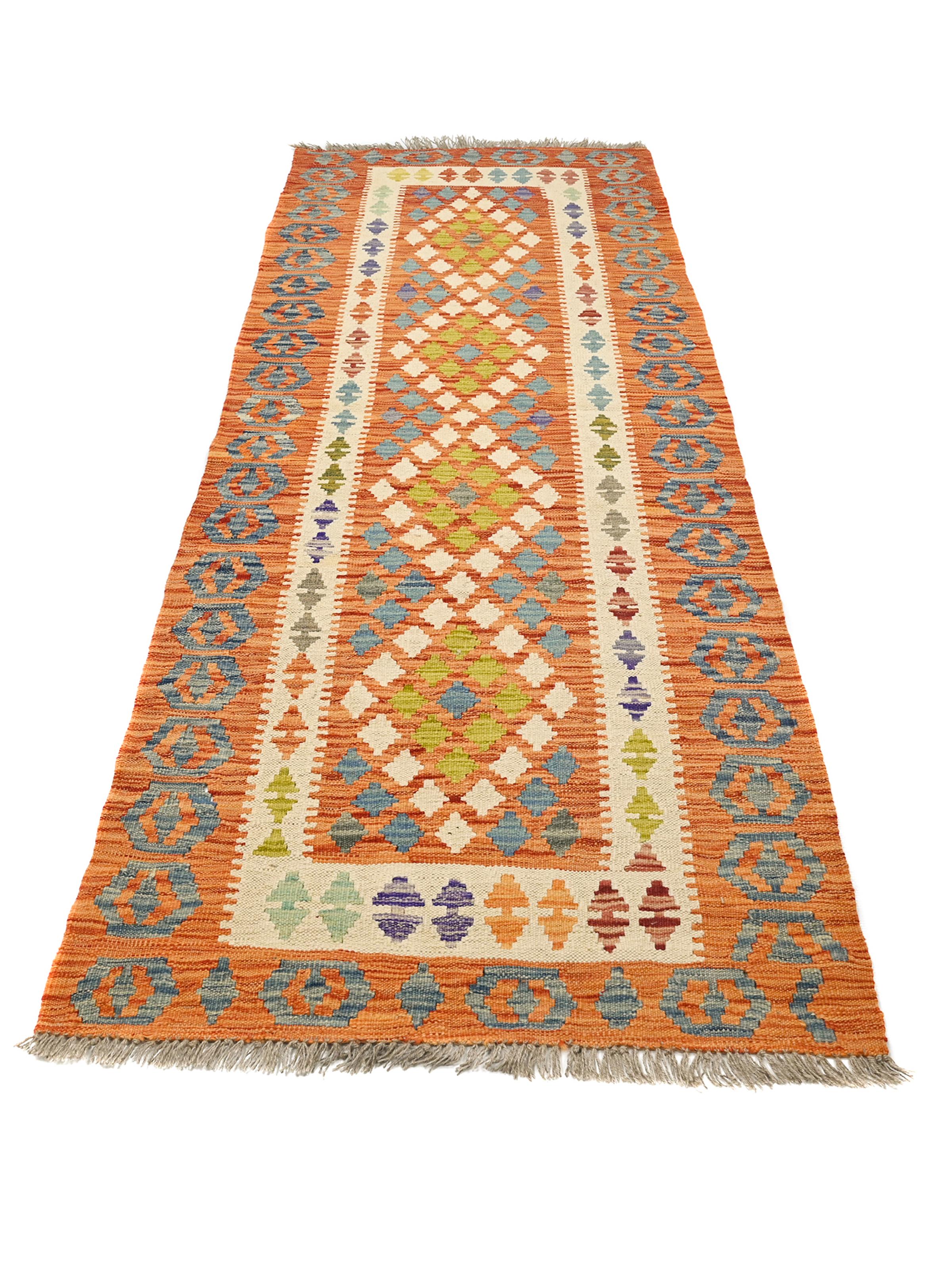
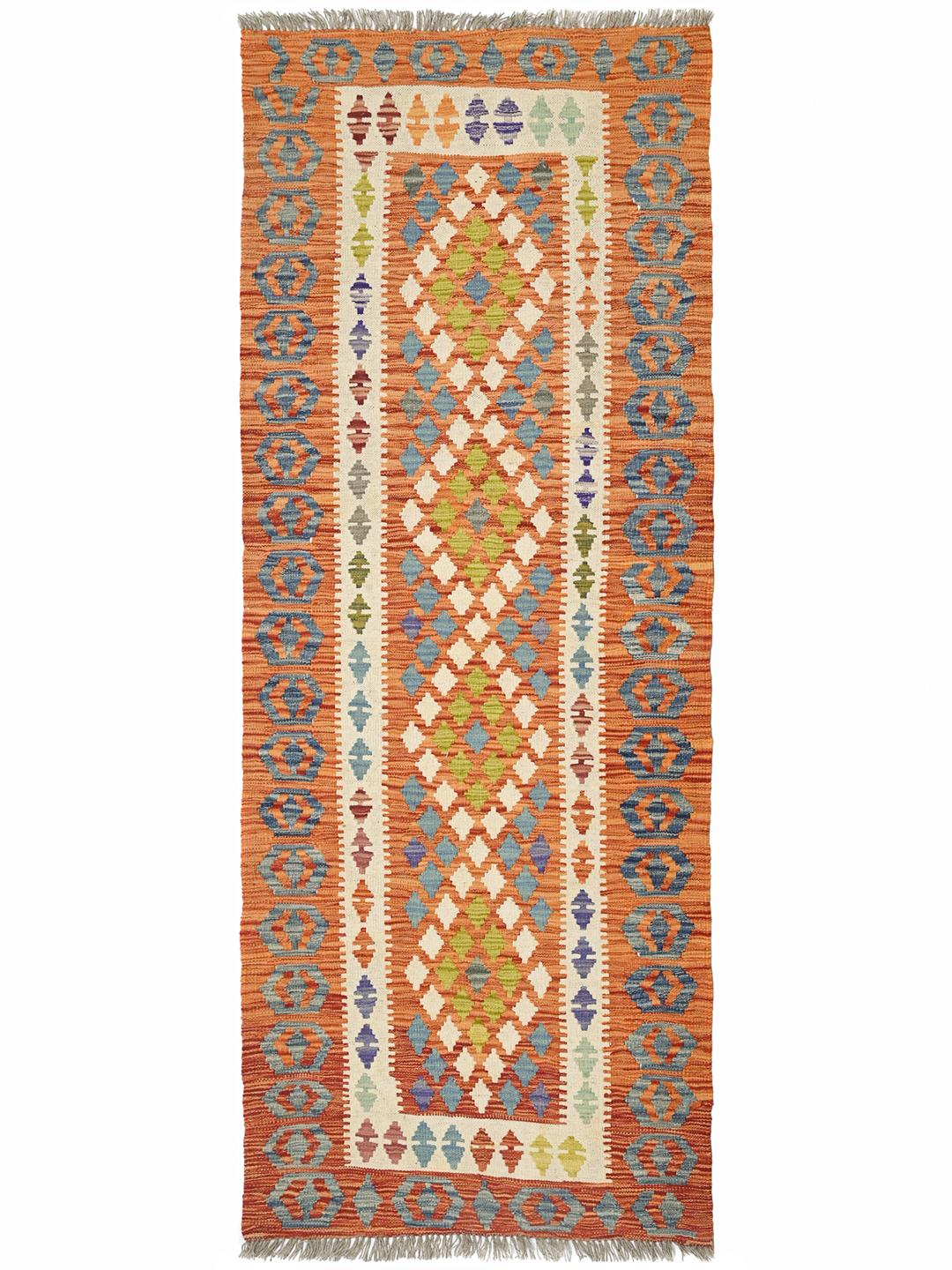
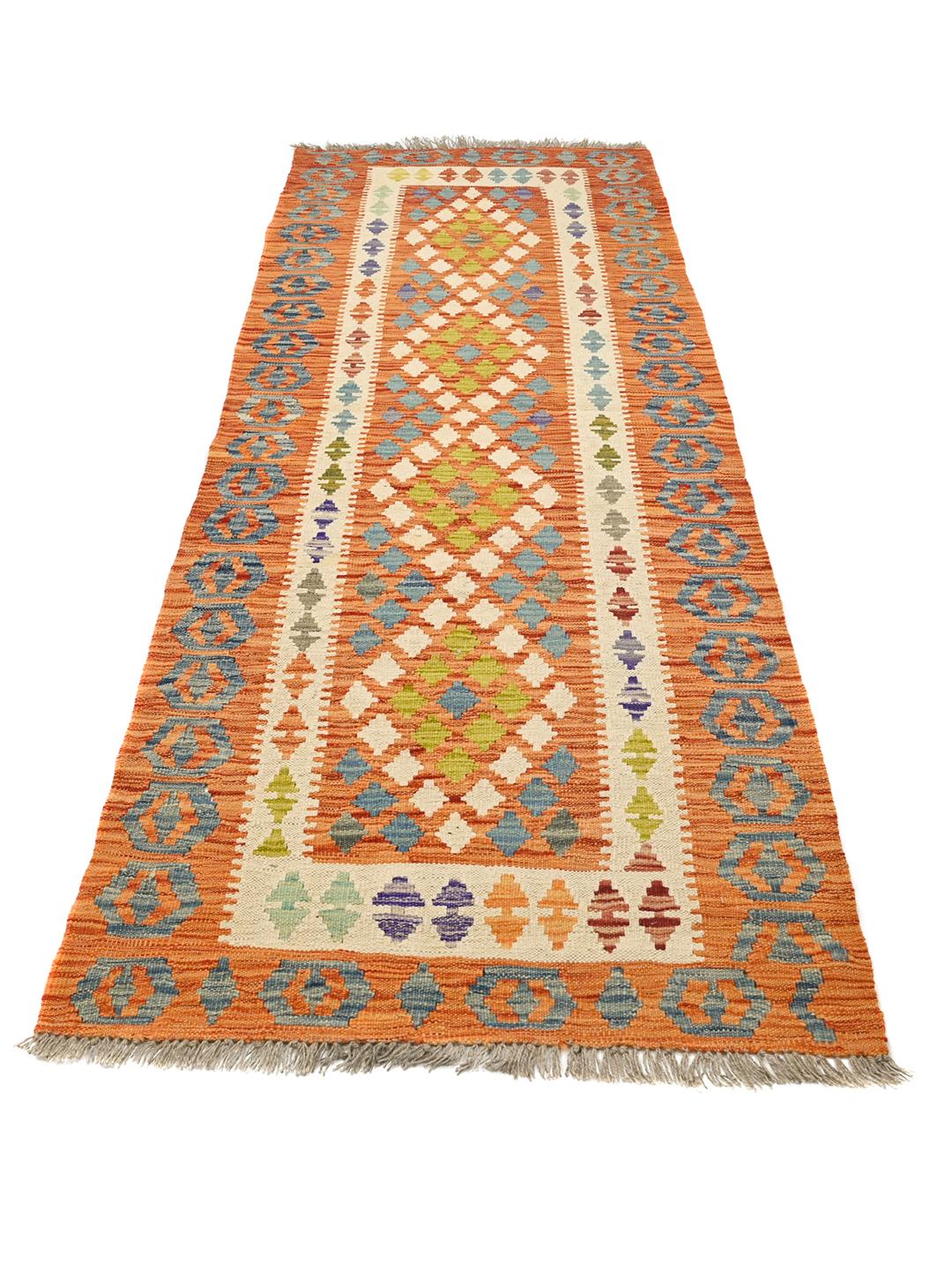
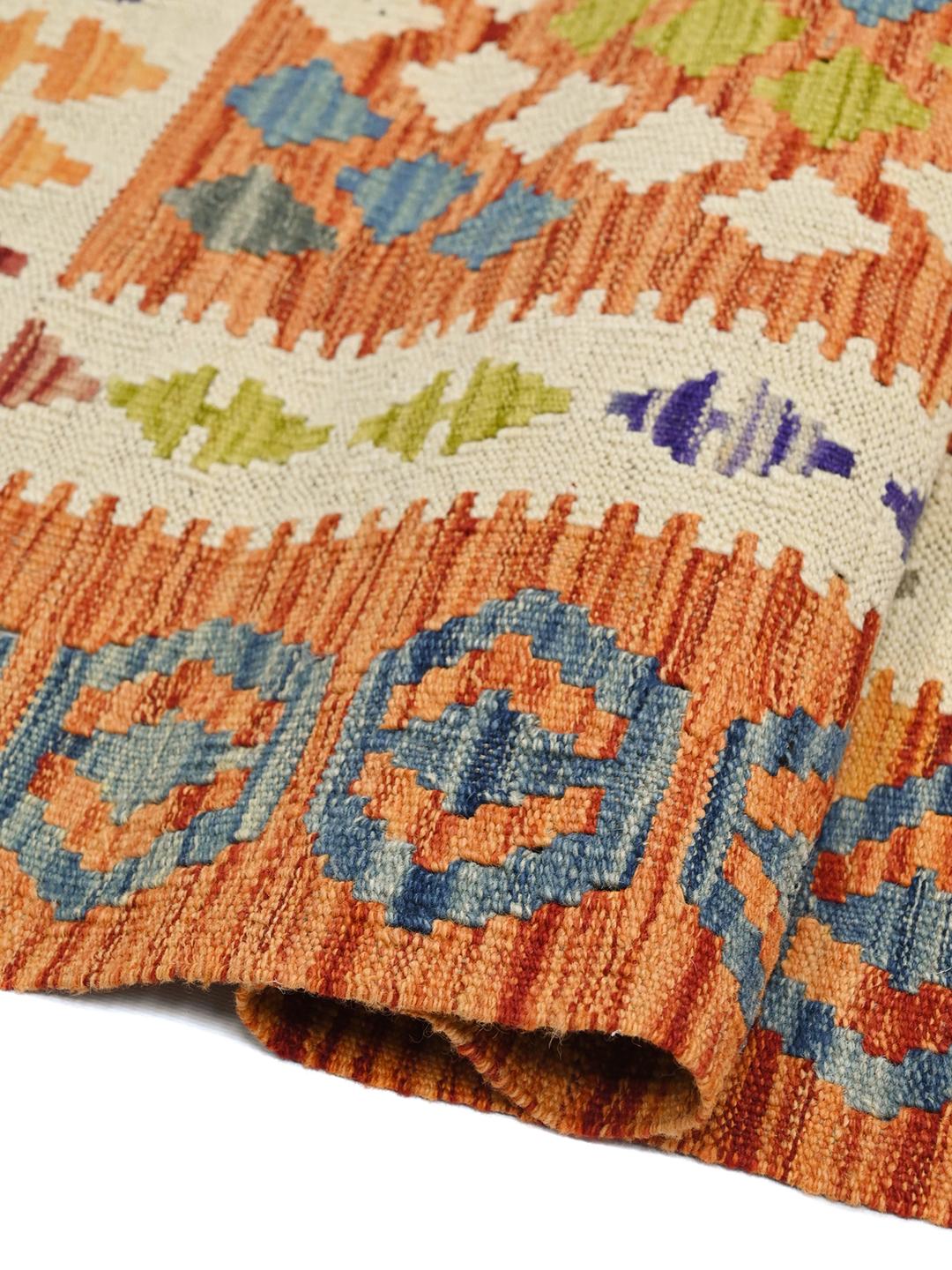
Kelim weaving has deep roots across Central Asia and Afghanistan, where pastoral nomadic communities originally created these flatwoven textiles for practical use. Crafted as floor coverings, warm blankets, and storage bags, kelims were built to endure regular travel and harsh climates while expressing regional identity.
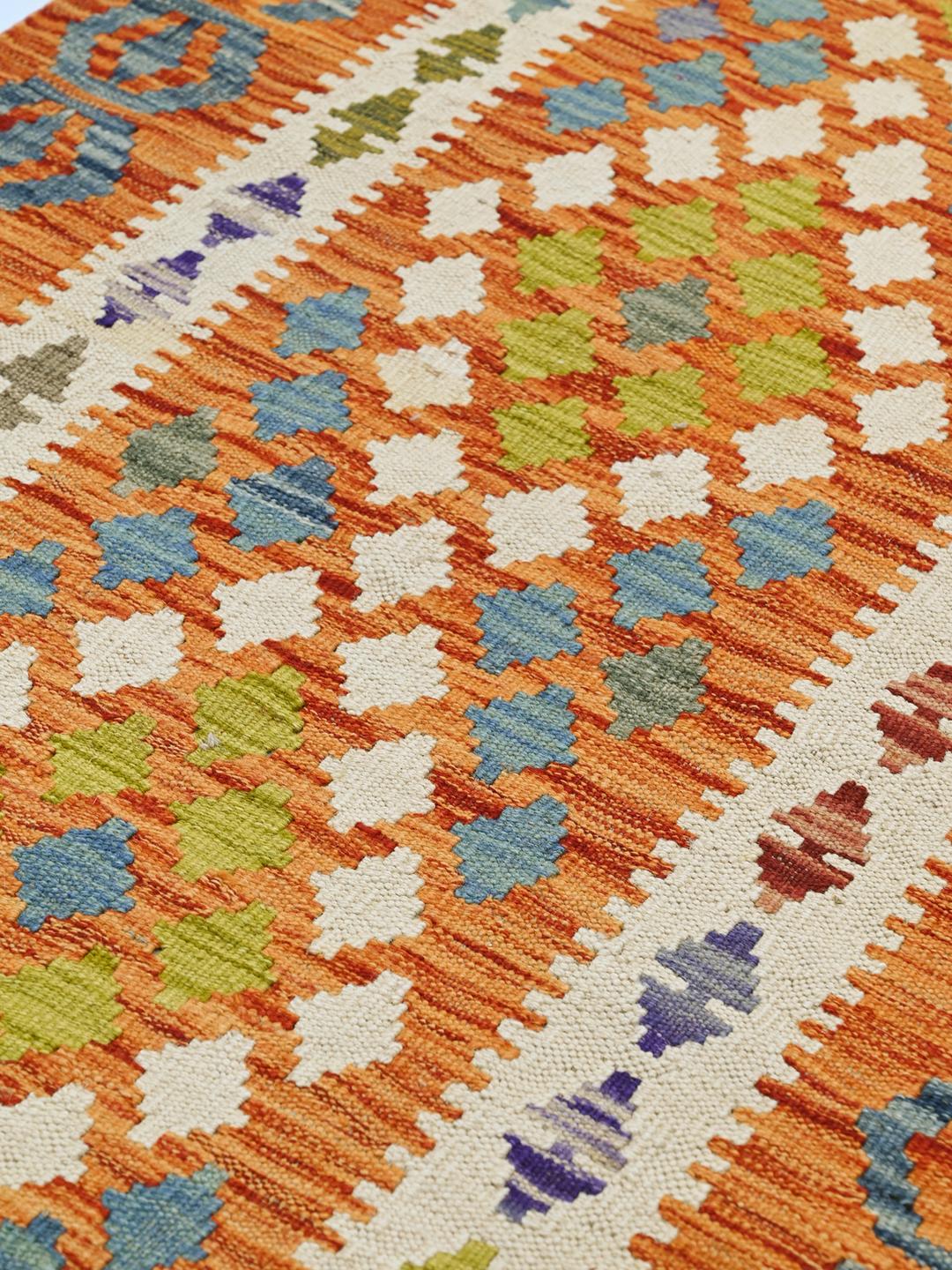
Unlike pile rugs, a kelim is created using a flatweave technique where the coloured weft threads are tightly woven over the warp strands. This process creates a smooth, pileless surface with clean line definitions, producing a lighter, highly flexible textile that retains exceptional structural integrity.
The Afghan Old Style visual language relies on bold geometric forms, repeating diamond medallions, and protective border motifs. Historically, these geometric arrangements and vibrant natural dyes held symbolic meaning, representing tribal ties, landscape elements, and good fortune for the household.
Today, traditional Afghan kelims are cherished worldwide for their expressive geometry and honest craftsmanship. Acquiring a vintage-inspired flatweave means owning a piece of enduring regional culture that bridges historical craft with modern interior design.