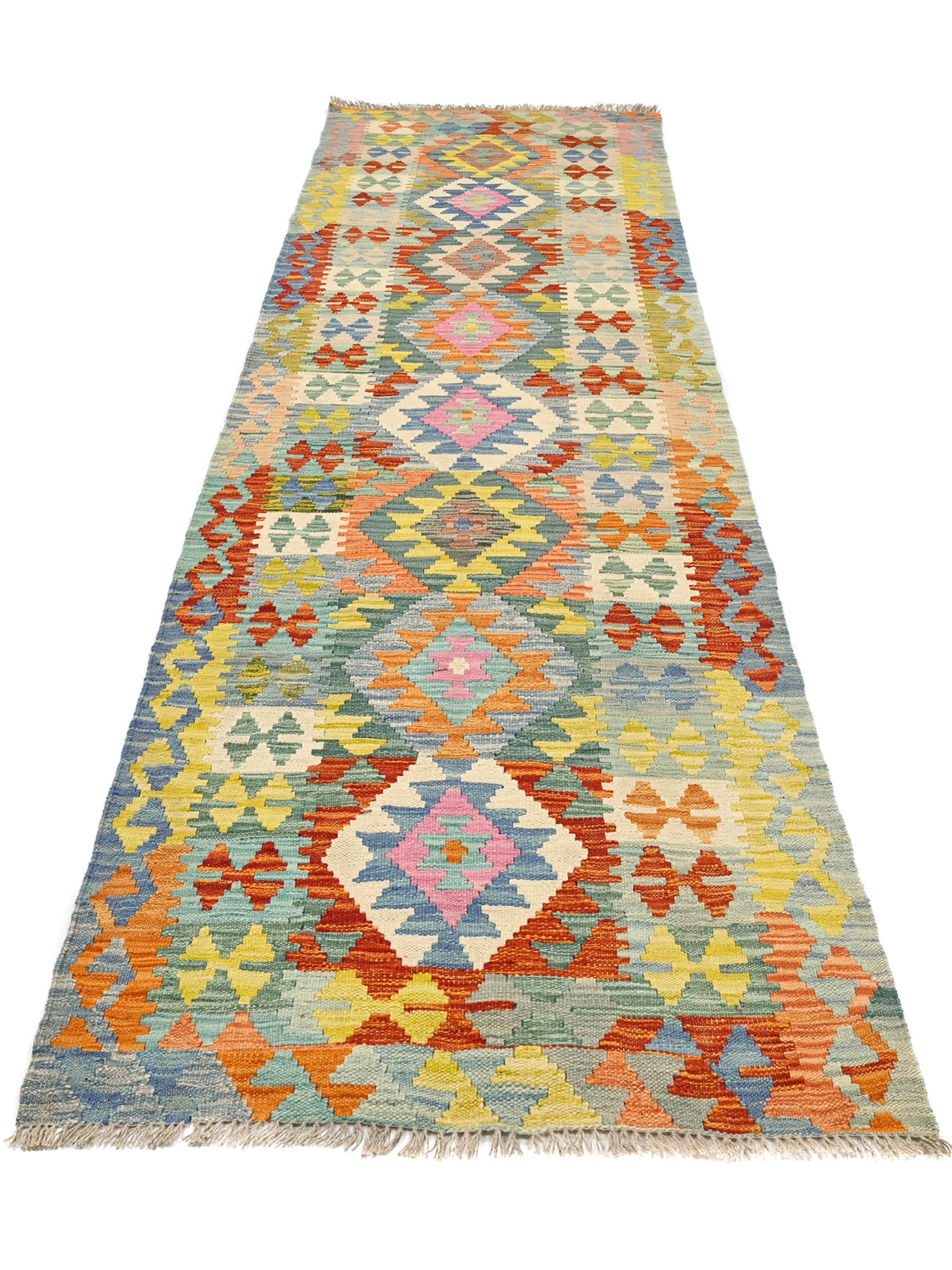
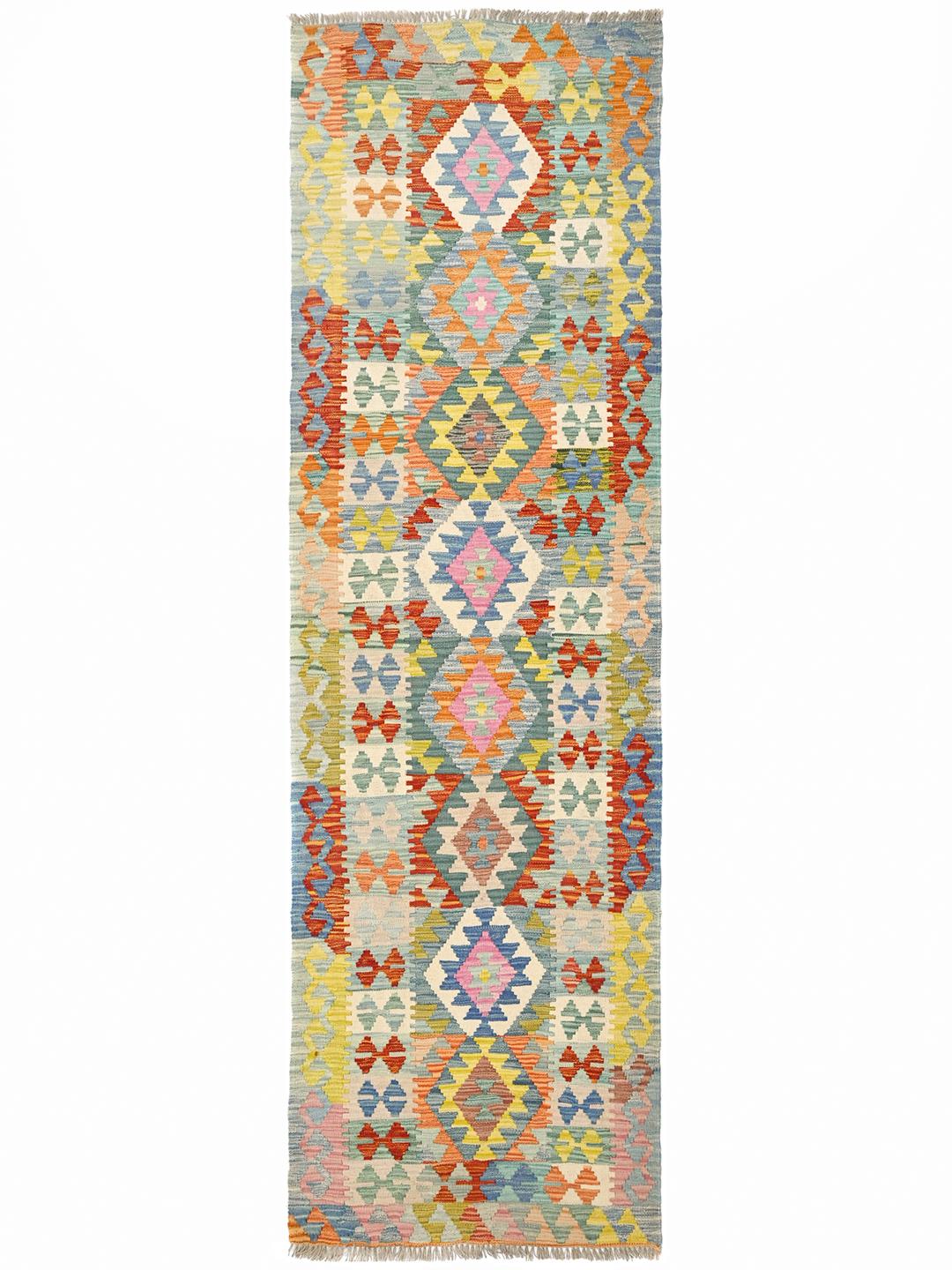
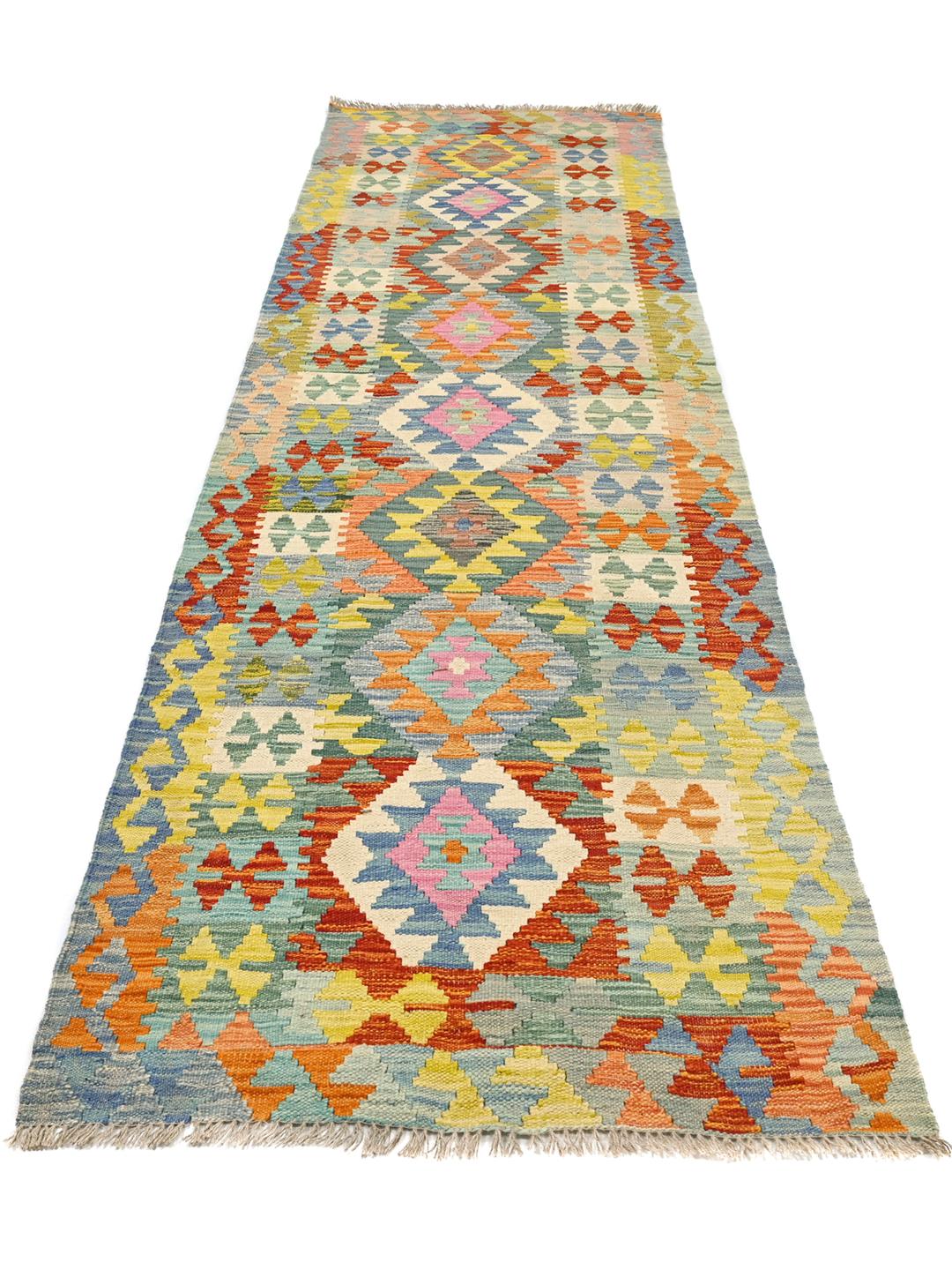
Afghan Kelims have a long and storied tradition rooted in the nomadic and village cultures of Central Asia. Traditionally woven for everyday practical use within tents and homes, these flatwoven textiles were made to be easily folded, transported, and laid out across diverse living environments.
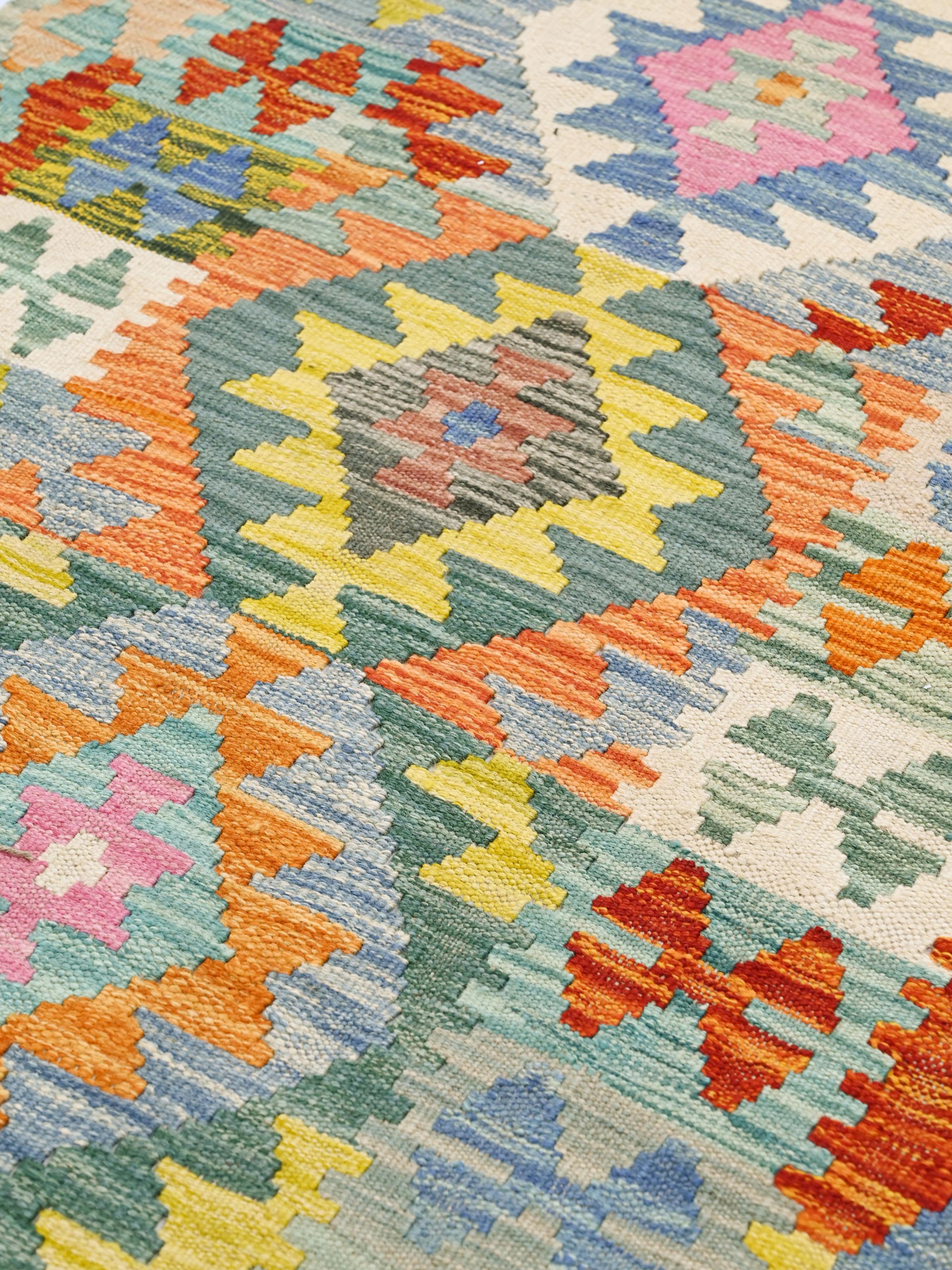
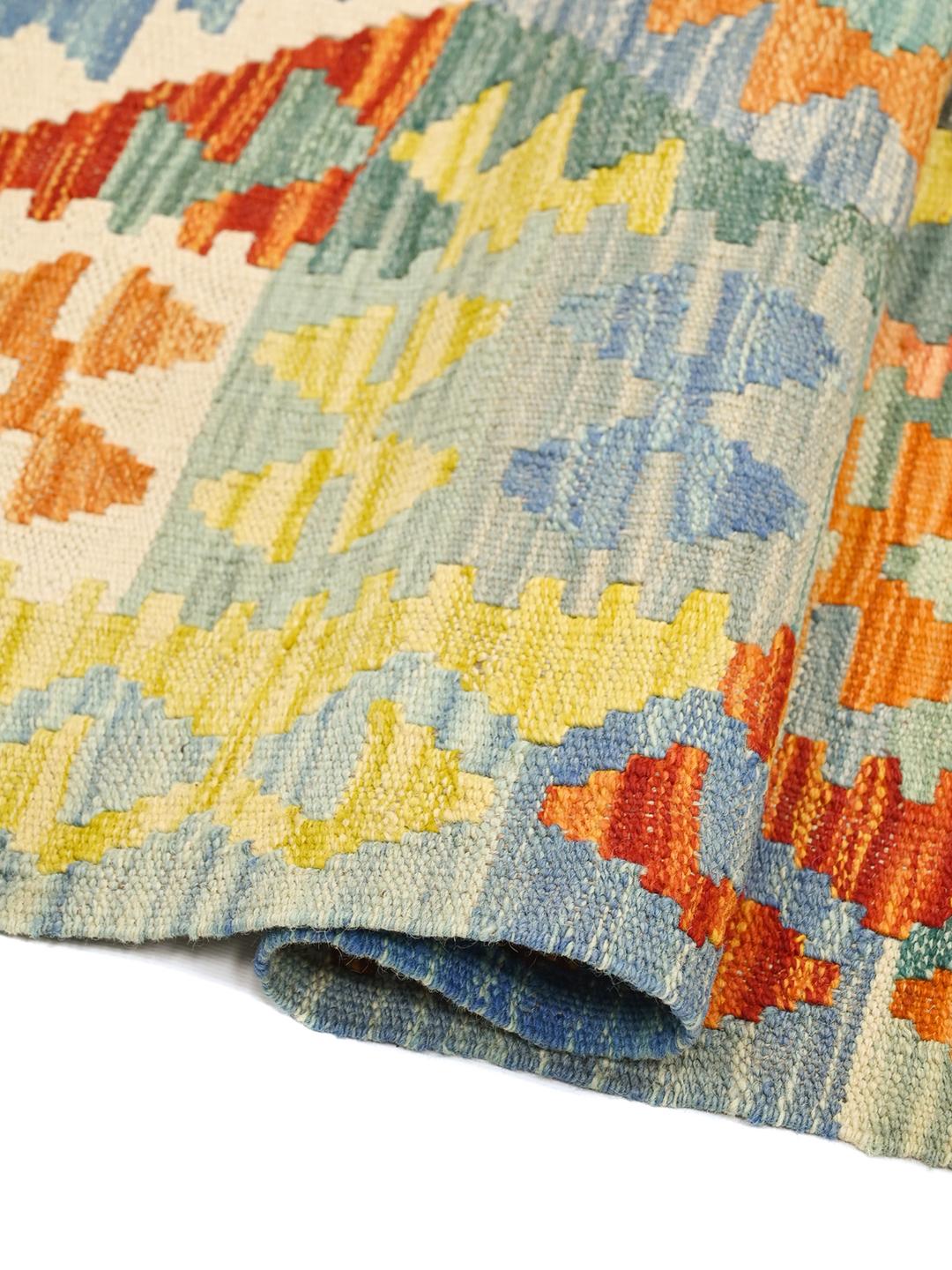
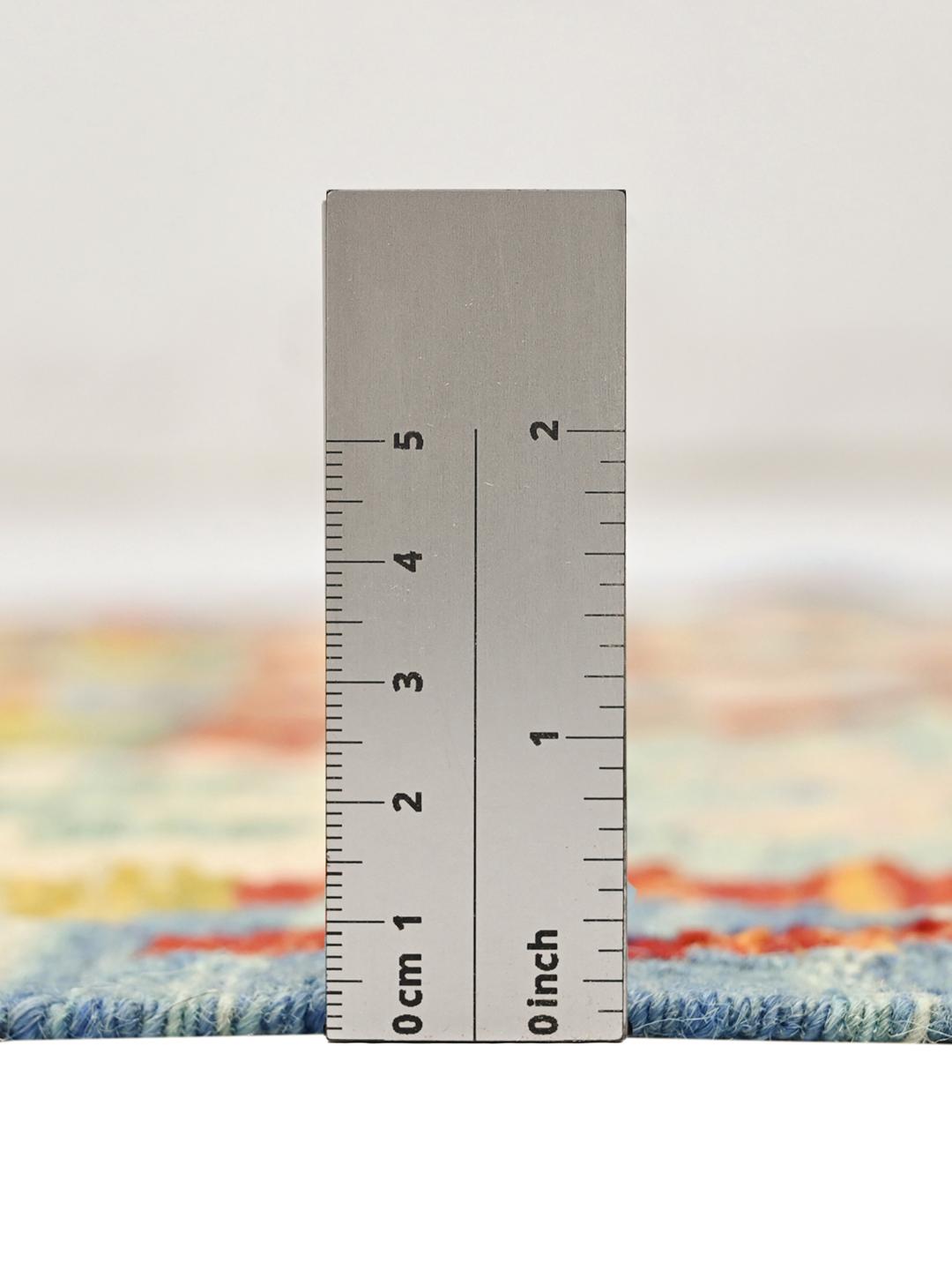
The term flatweave or Kelim describes a construction technique where the weft threads are tightly woven through the warp to create both the physical structure and the visual pattern. Unlike piled rugs, Kelims have no upright tufts, resulting in a smooth, low-profile finish that is exceptionally resilient.
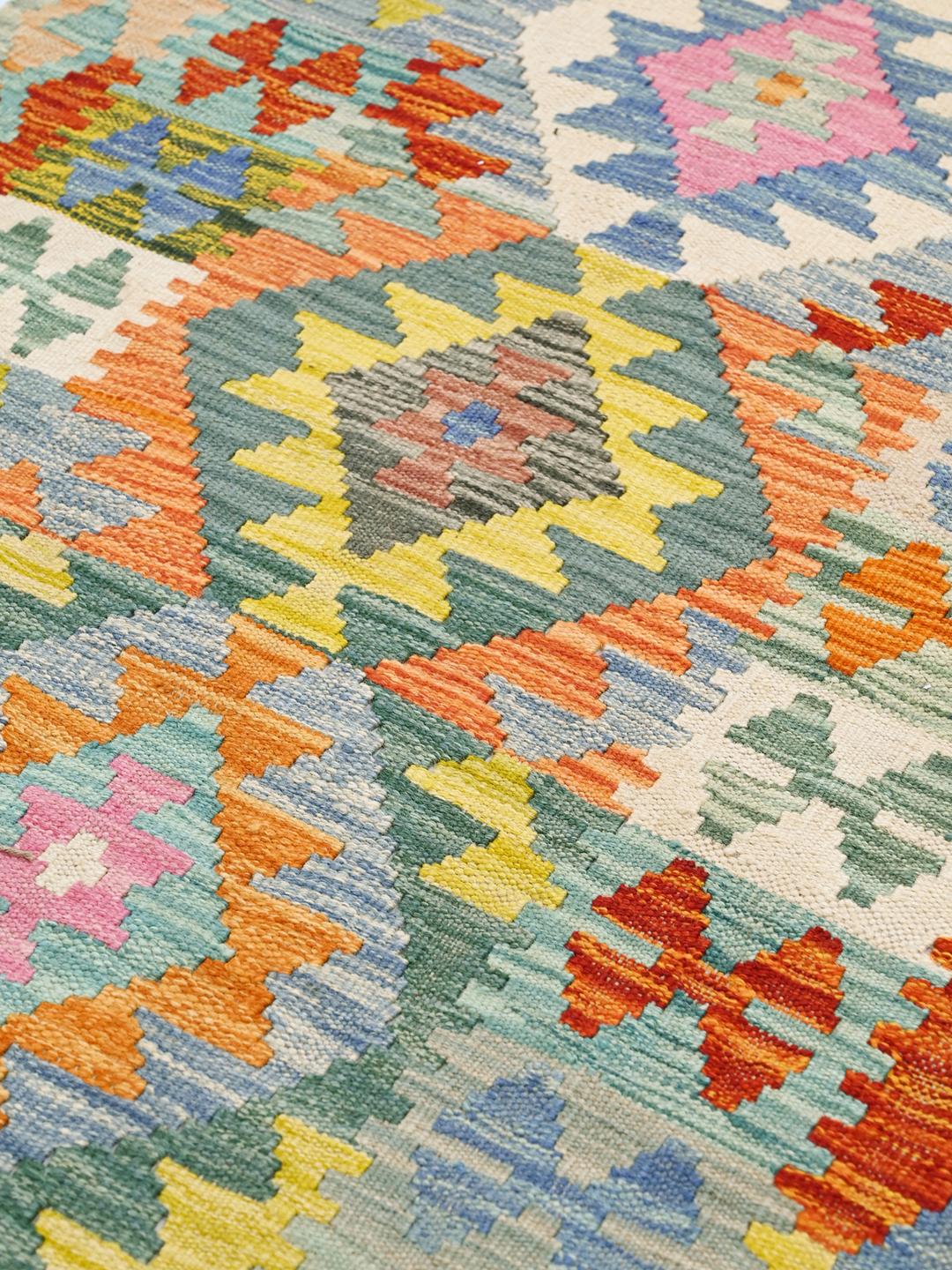
Visually, Afghan Kelims are famous for their bold geometric language. Diamond medallions, serrated borders, and stepped latch-hook motifs are more than simple decoration; they carry regional heritage and artistic preferences passed down through generations of weavers. Each color combination reflects the weaver's creative choices at the loom.
Today, vintage Afghan Kelims remain highly valued by collectors and interior enthusiasts alike. Their flat texture, enduring wool construction, and graphic designs make them versatile decorative pieces that bring depth and cultural context into modern homes.