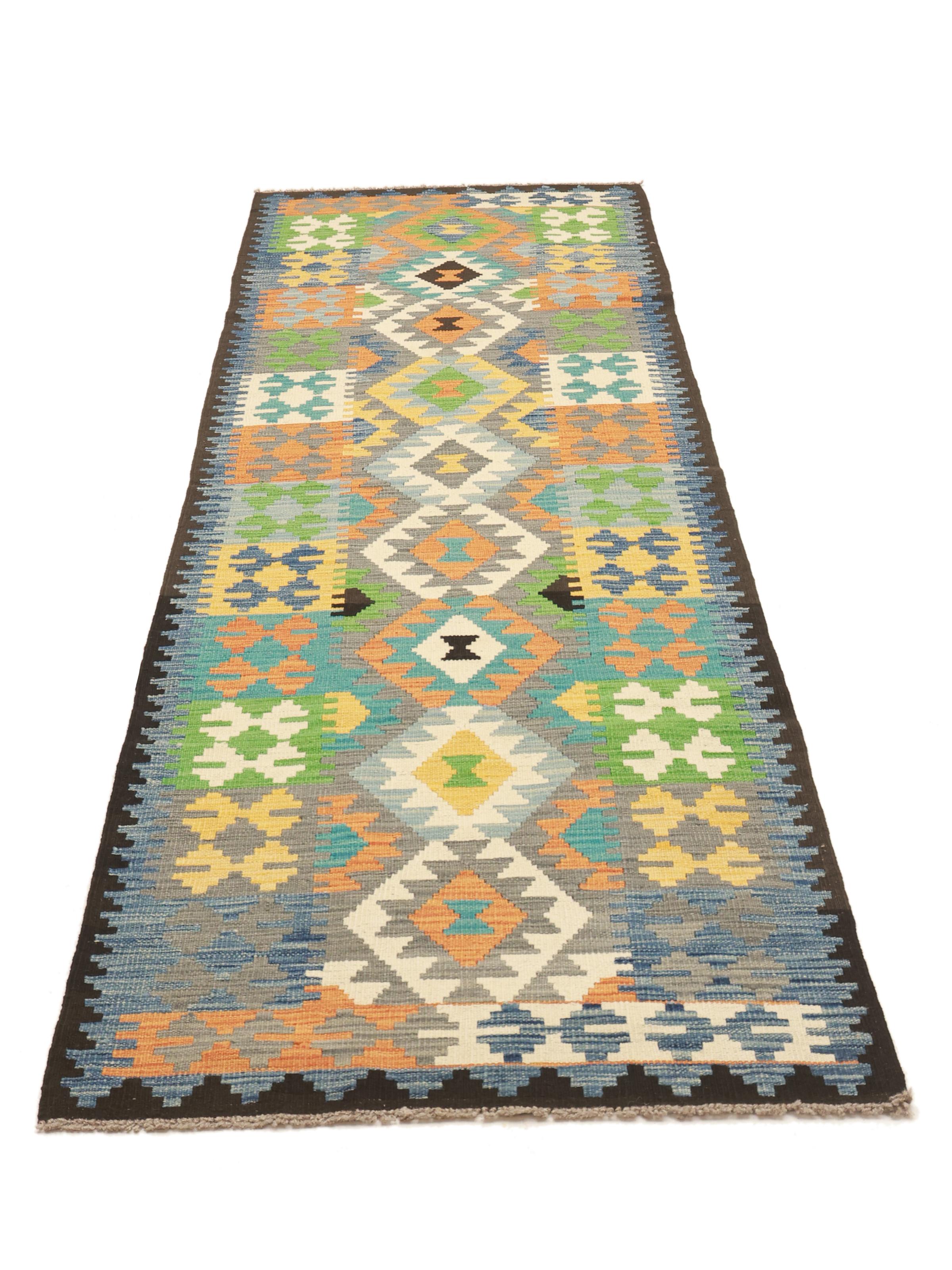
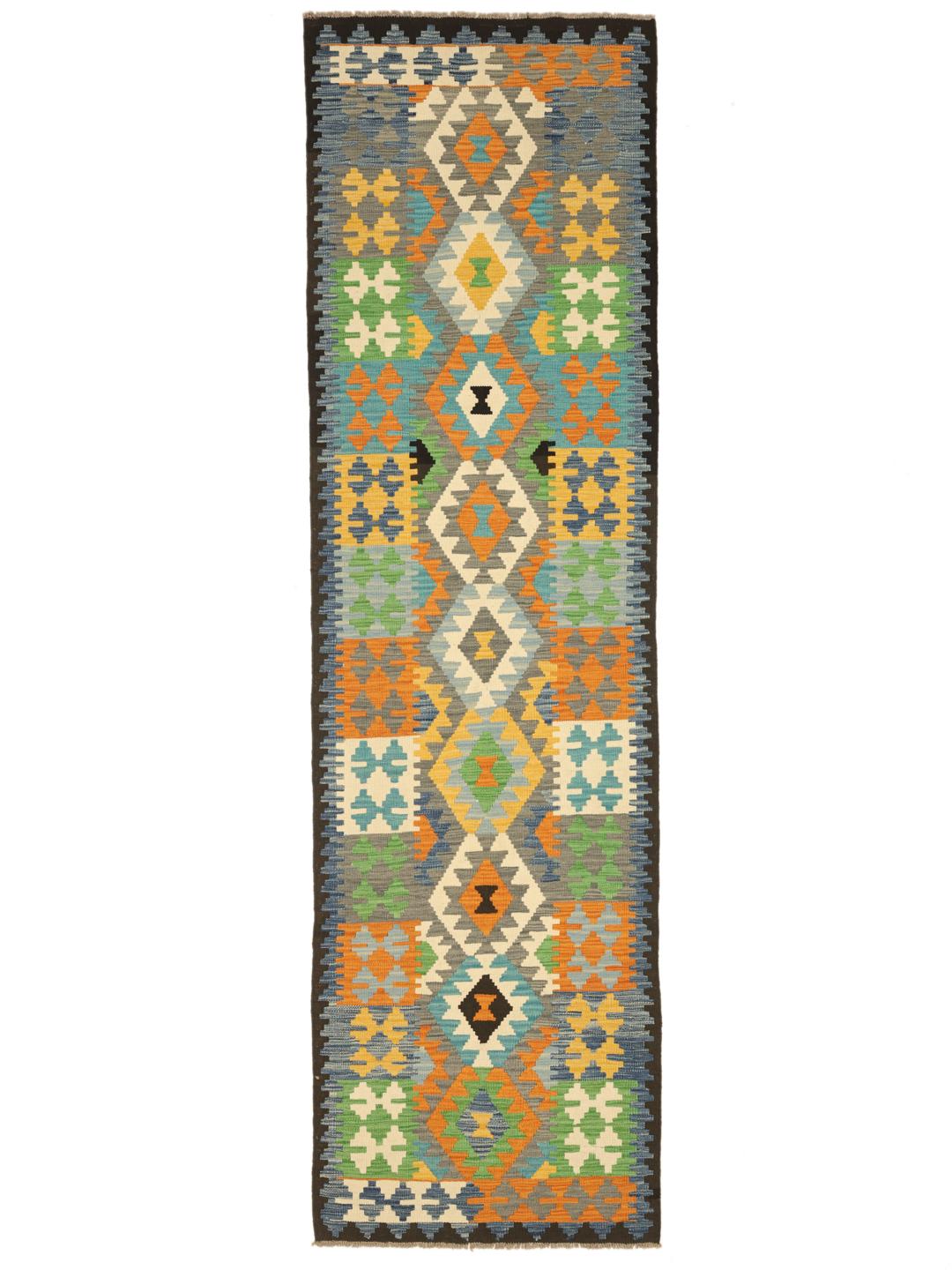
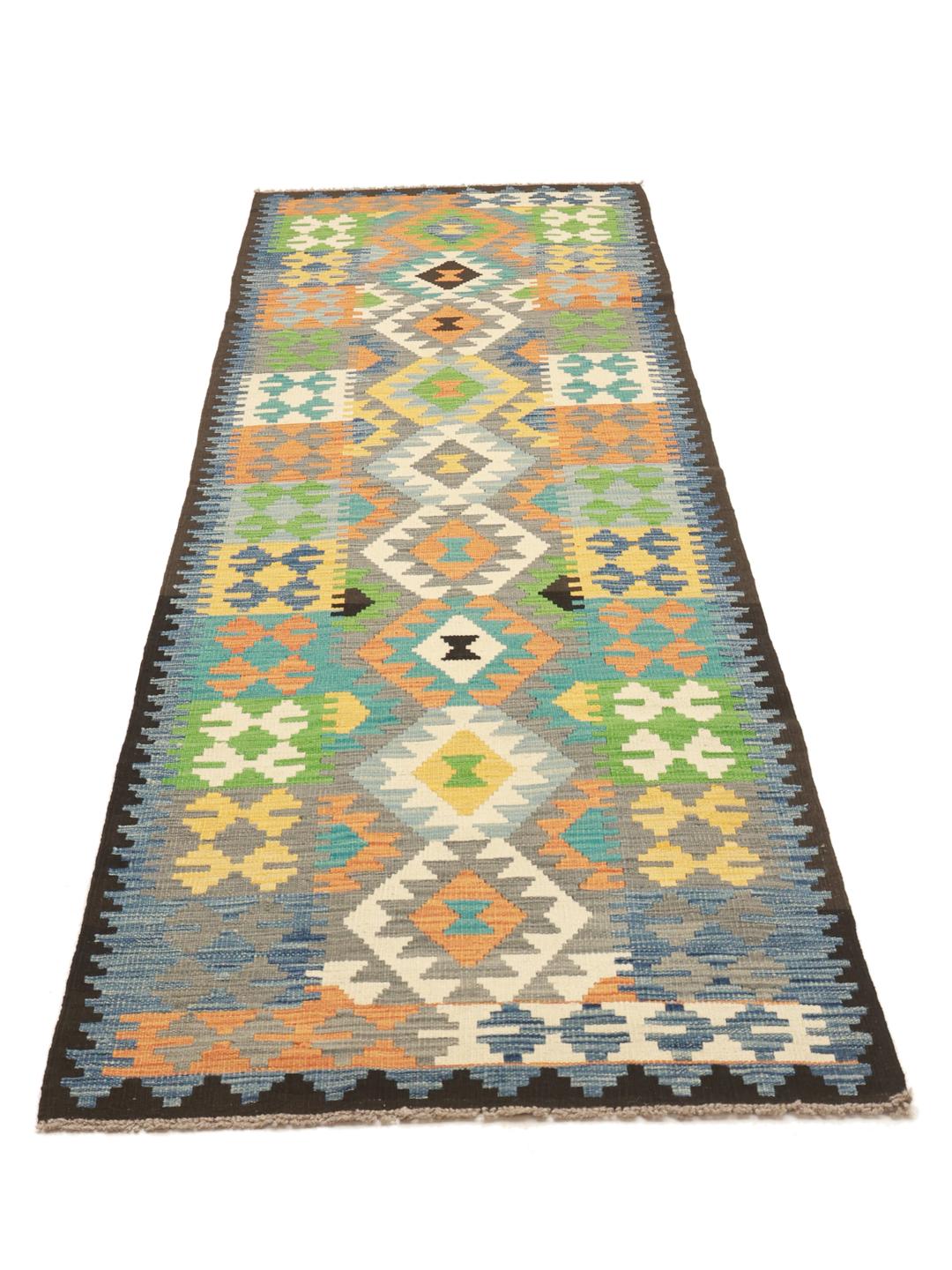
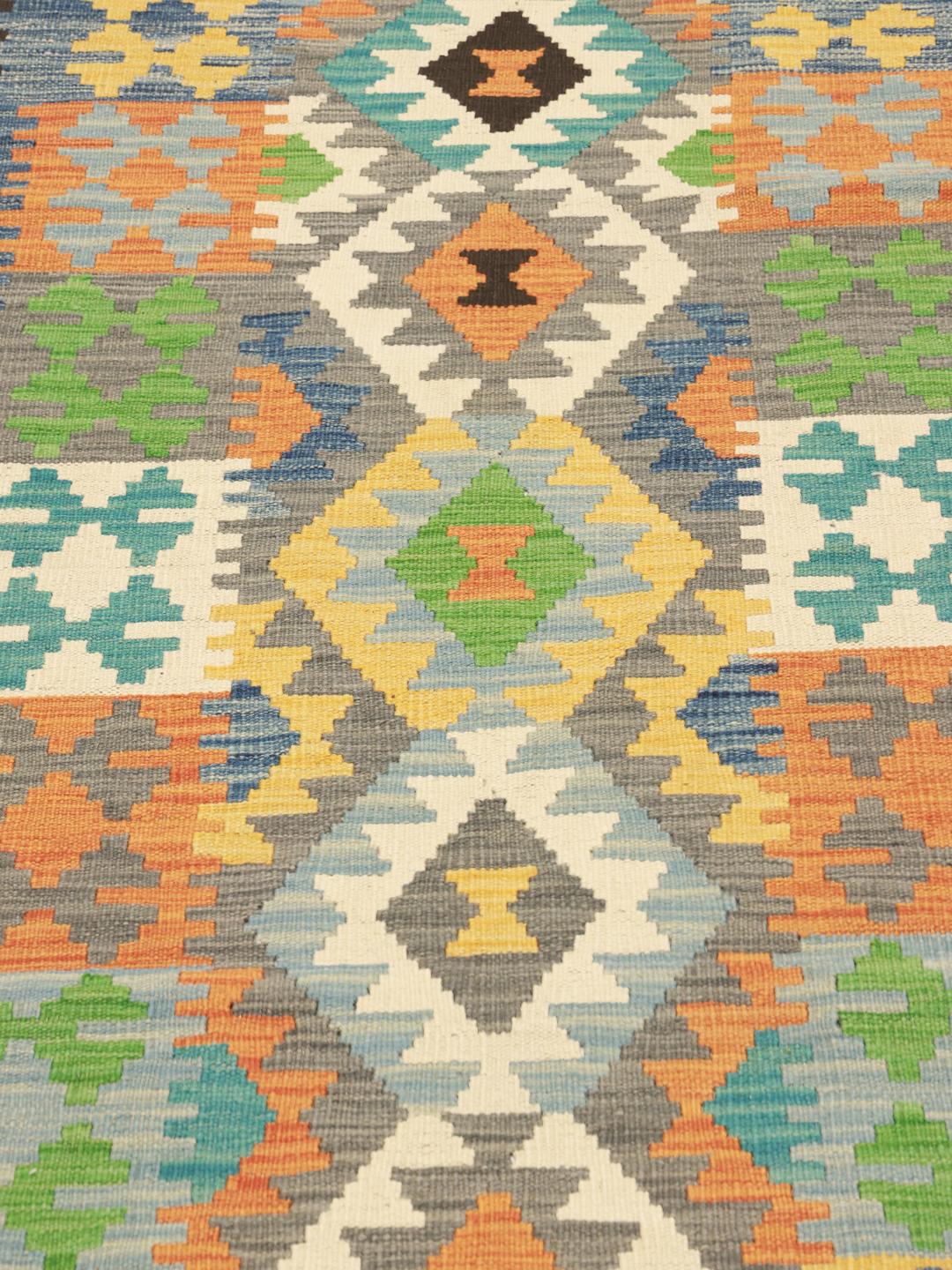
The Kelim tradition originates from the nomadic tribes of the Middle East and Central Asia, where these flat-woven textiles were essential for daily life. Historically, these pieces served as floor coverings, blankets, and storage bags, designed to be durable enough for travel while being beautiful enough to signify tribal identity and artistic expression.
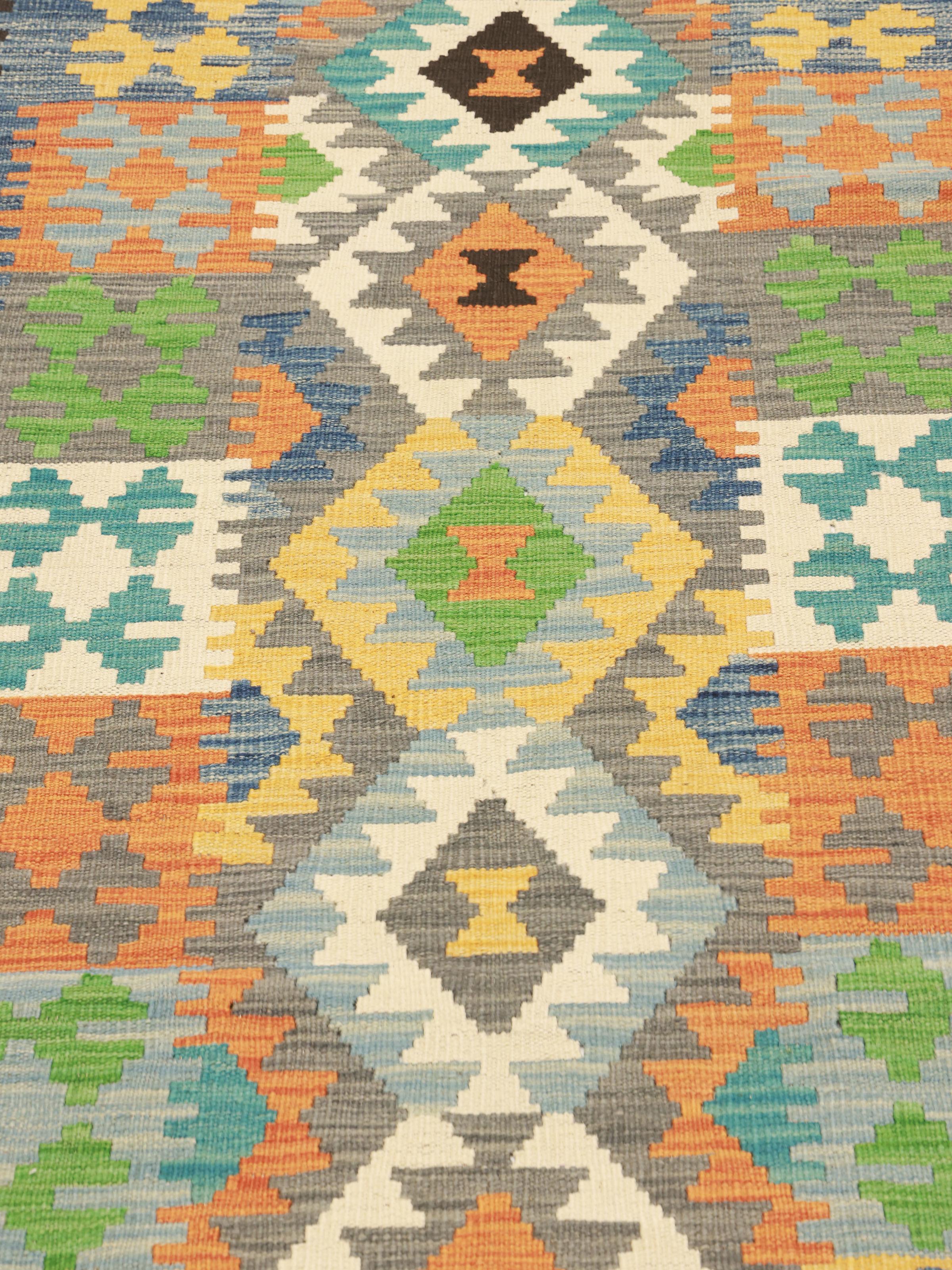
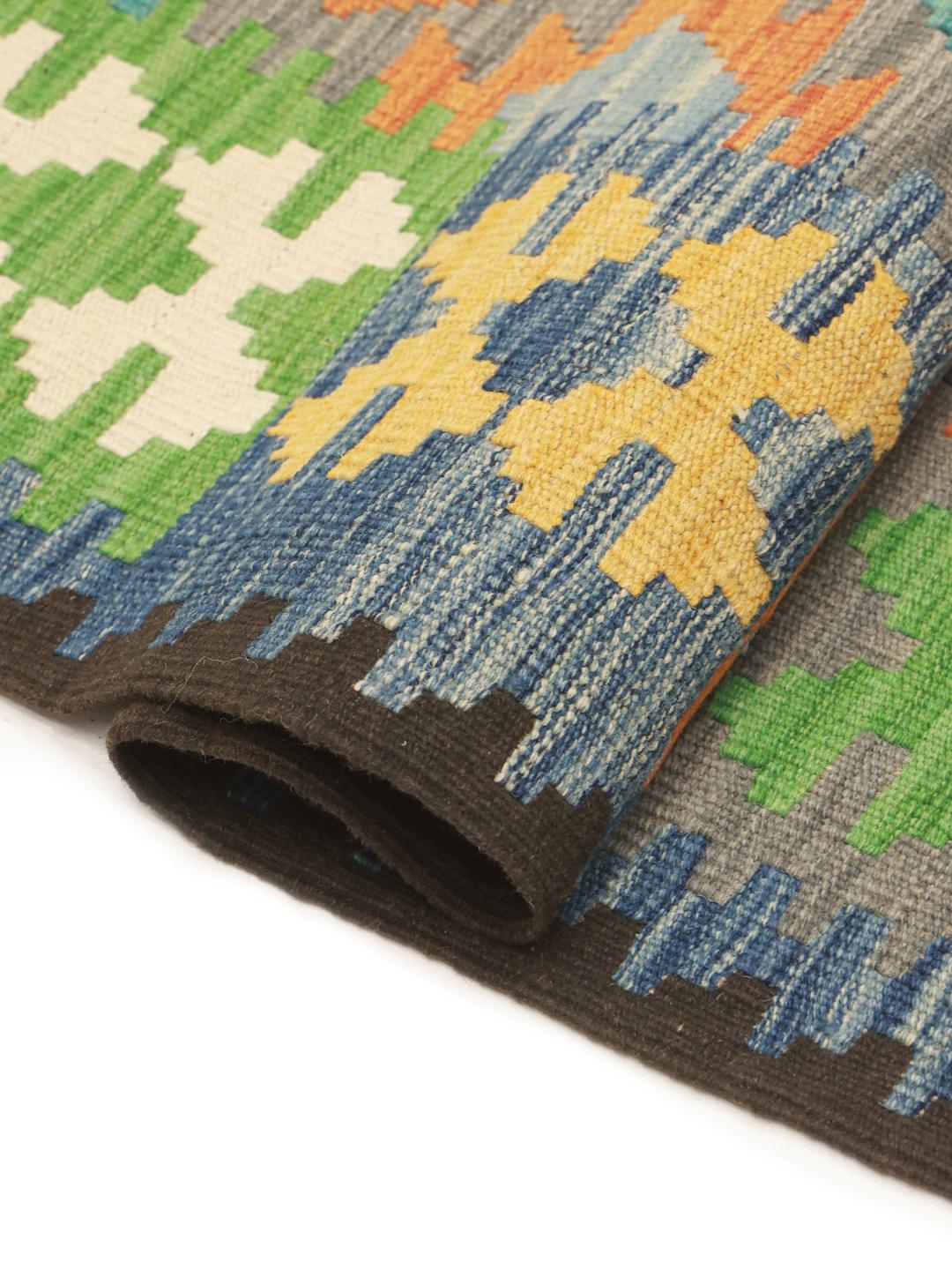
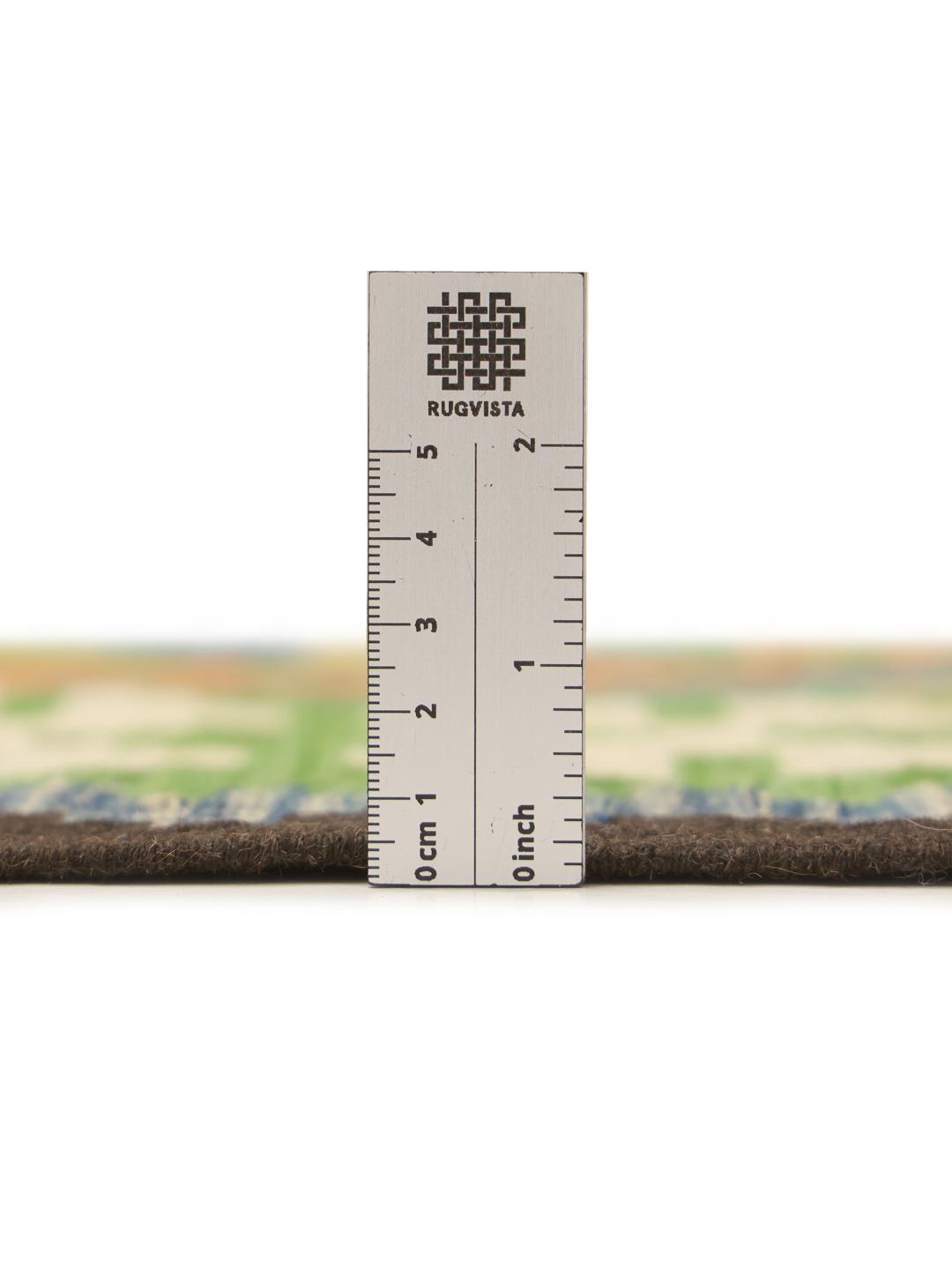
Kelim refers to a specific weaving technique where no pile is created, resulting in a thin, reversible rug that is lightweight and versatile. This flat-weave construction is what gives these rugs their signature crisp, clean lines and allows for complex geometric designs that are woven directly into the foundation of the piece.
The visual language of the Afghan Kelim is characterised by bold geometric shapes, such as diamonds and stylised tribal motifs, which are often arranged in repeating sequences. These designs are not merely decorative but are deeply symbolic, often reflecting the environment, beliefs, and stories of the weavers who created them through generations of shared knowledge.
Owning an Afghan Kelim is an opportunity to connect with a long-standing heritage of craftsmanship. These rugs are highly valued by collectors for their authenticity and the human story behind every thread. By bringing one into your home, you are preserving an ancient tradition and adding a layer of cultural depth to your living space.