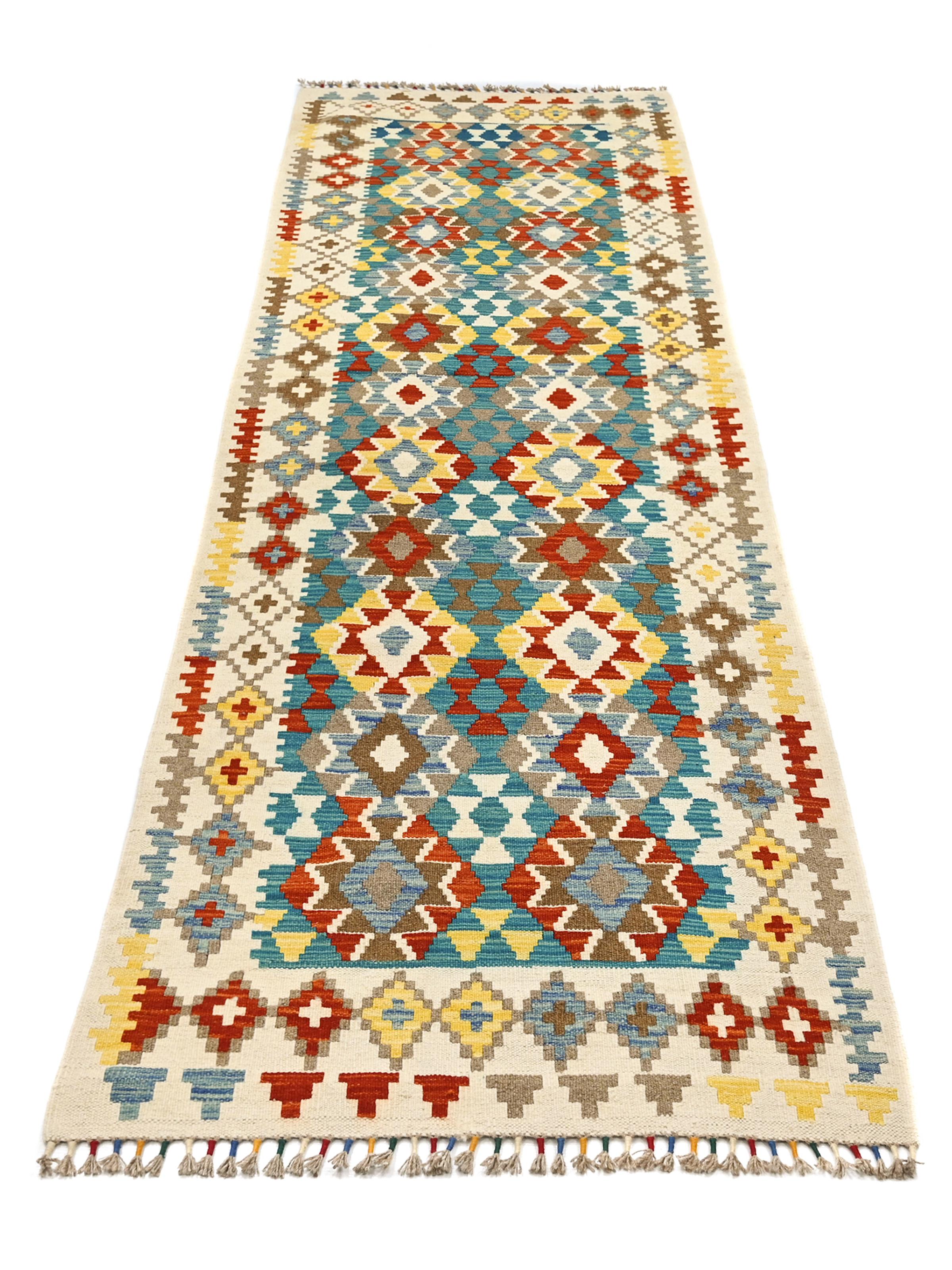
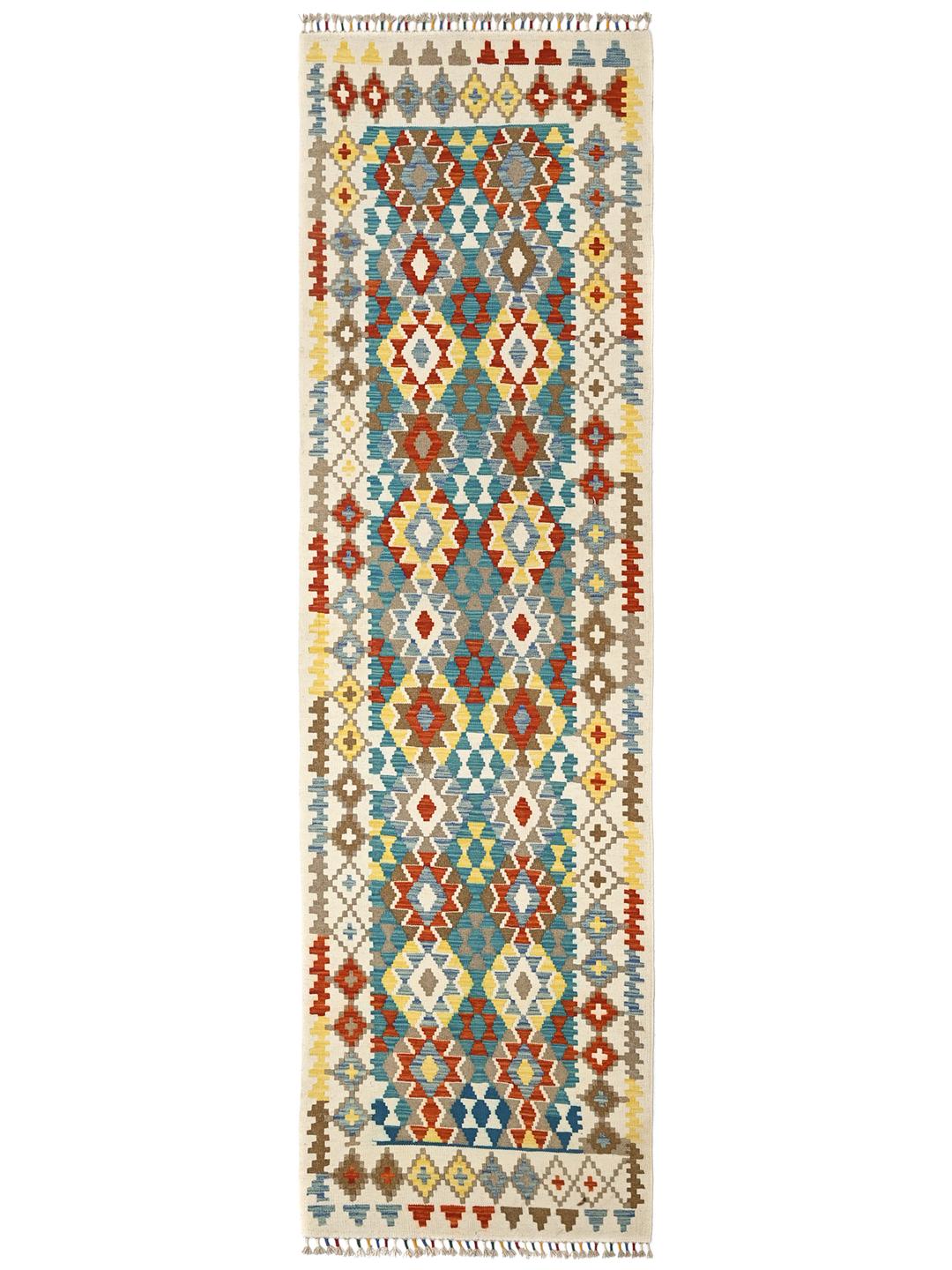
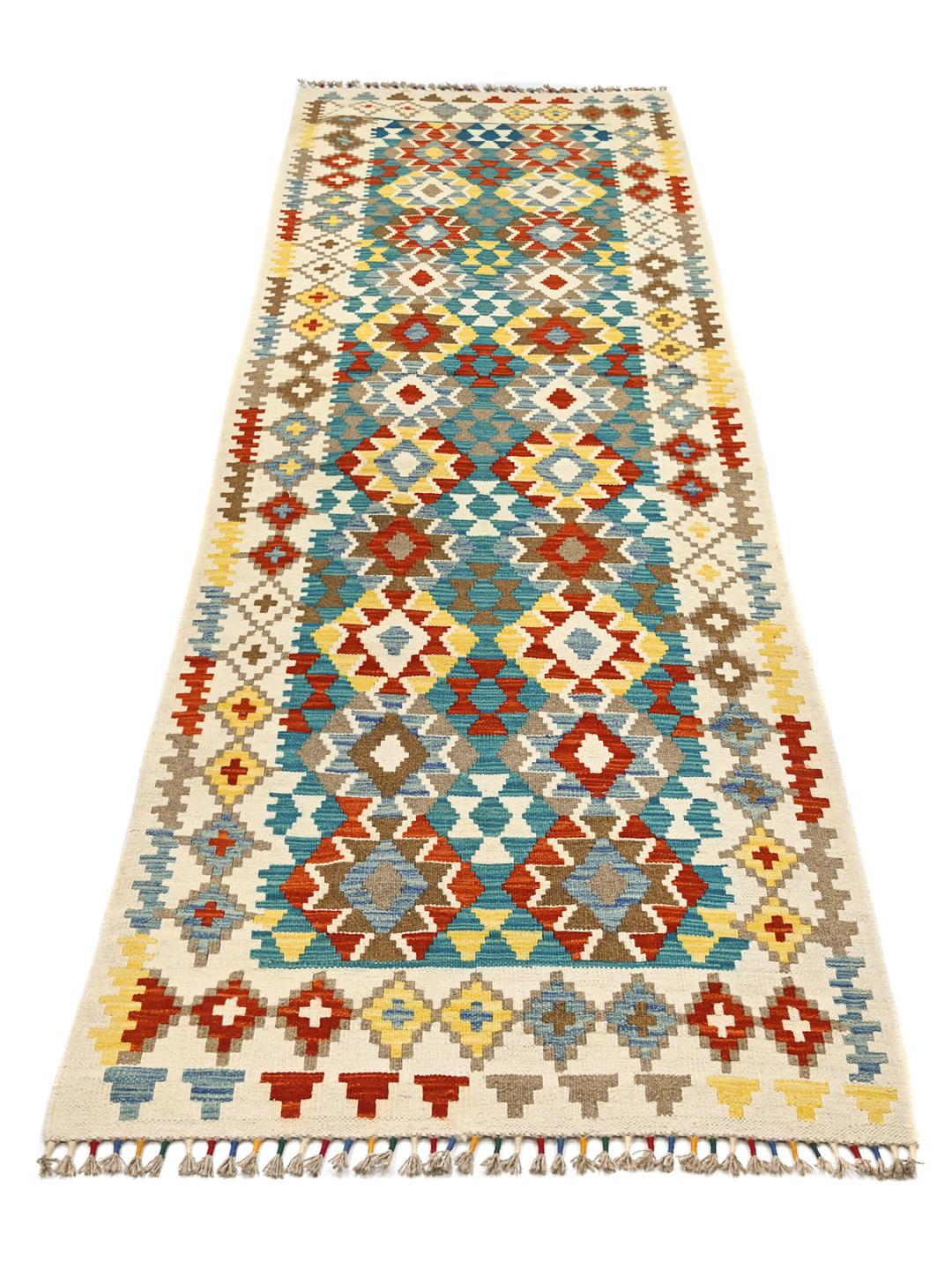
The Kelim tradition in Afghanistan is deeply rooted in the nomadic lifestyles of the region, where flat-woven rugs were essential for their versatility and portability. These rugs have been crafted for centuries, serving as both functional floor coverings and decorative elements that define the interior of a home with their bold, geometric language.
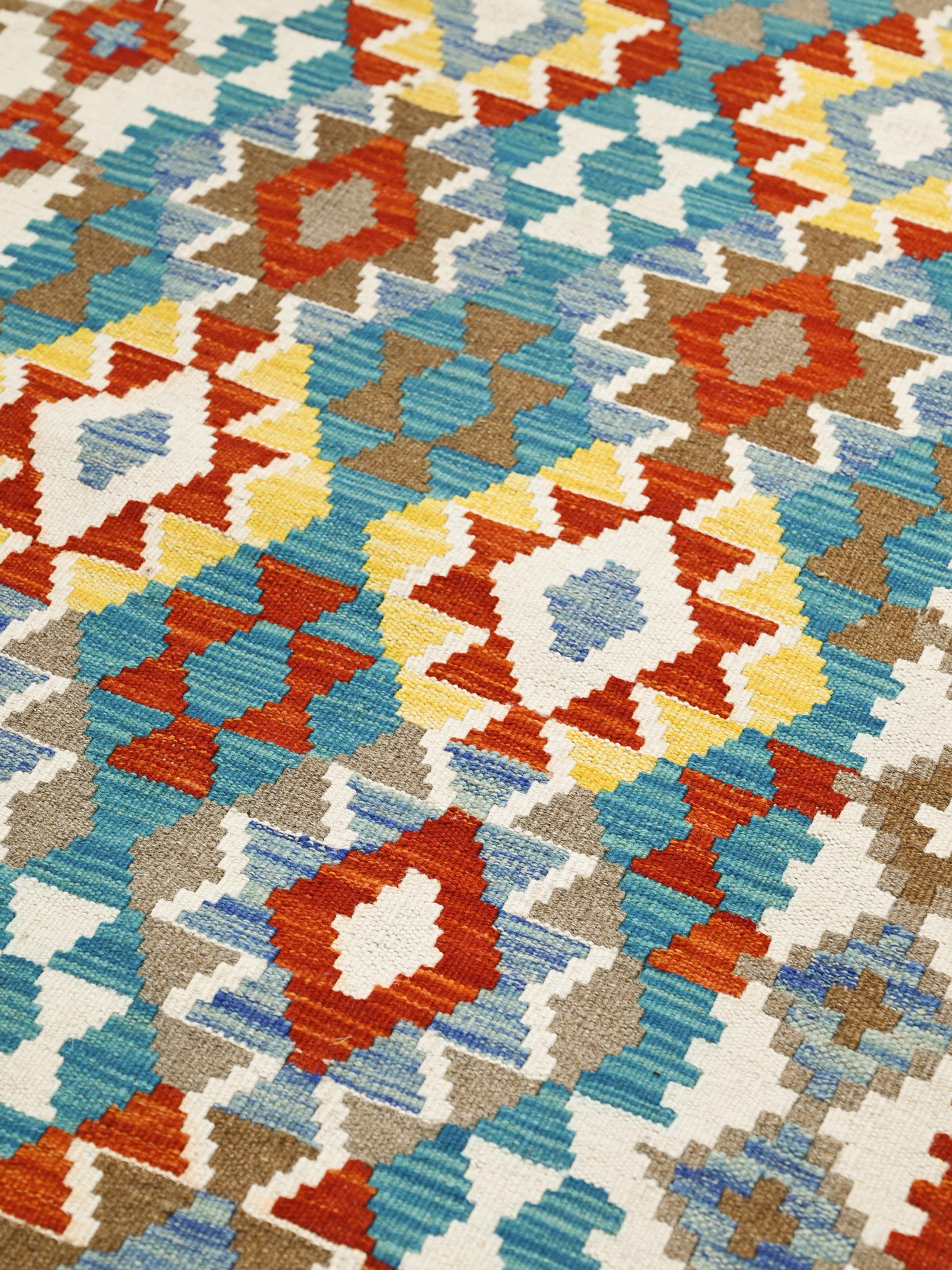
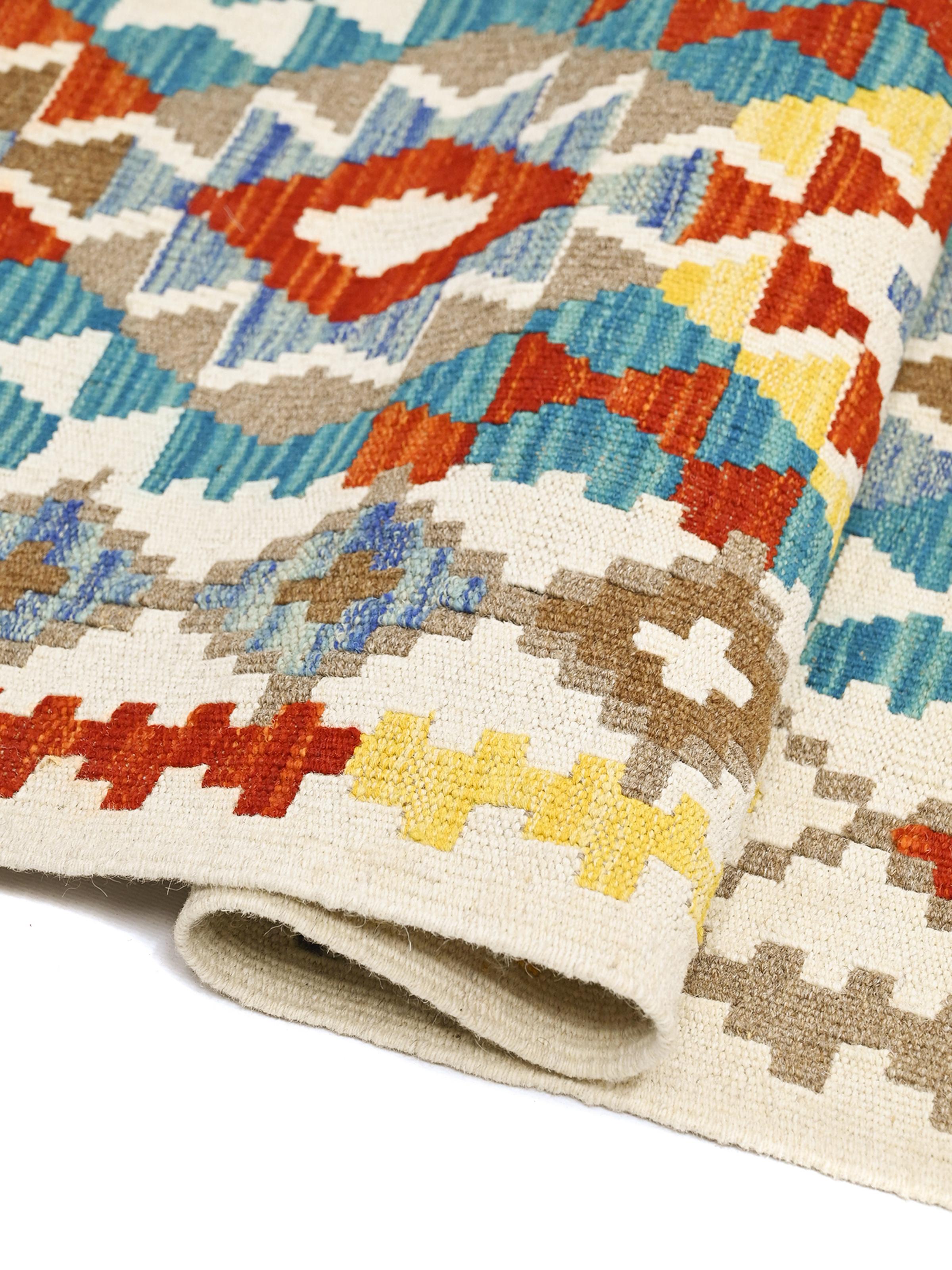
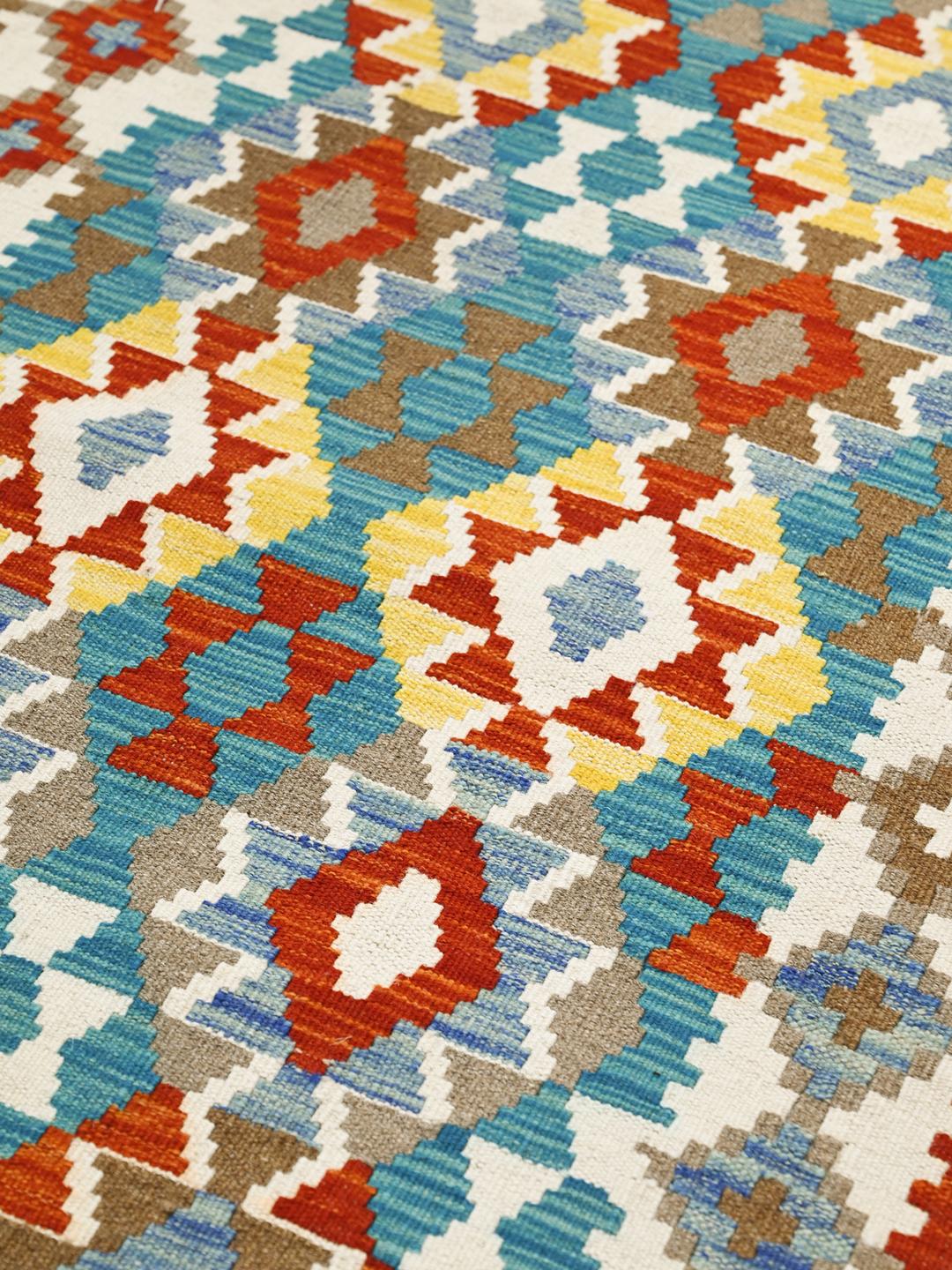
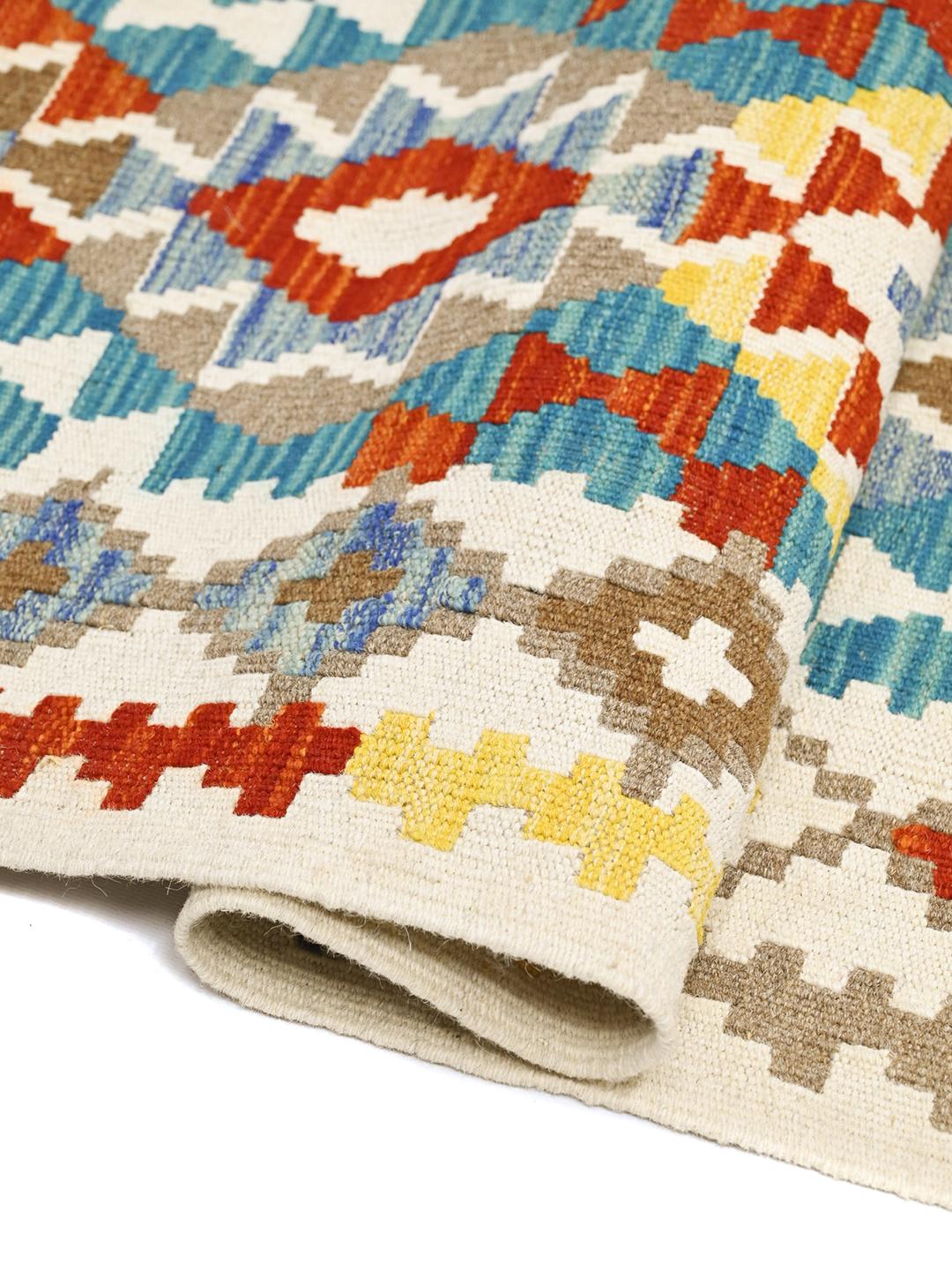
The term 'Kelim' refers to the specific flat-weaving technique where the warp and weft are interlaced tightly to create a durable, pileless fabric. This method is highly valued because it results in a reversible, lightweight rug that is remarkably strong, making it a practical choice for long-term use in busy households.
Signature design elements in these Afghan pieces typically include intricate geometric arrangements, such as diamonds, triangles, and stylised floral motifs. These patterns are often framed by decorative borders, creating a structured yet dynamic composition that draws on centuries of regional artistry and tribal symbolism.
Collectors value these rugs for their authentic connection to traditional craft and the unique variations that occur in each piece. Owning a Kelim is more than just acquiring a decor item; it is about preserving a legacy of skill and heritage, ensuring that the art of hand-weaving continues to be appreciated for its beauty and cultural significance.