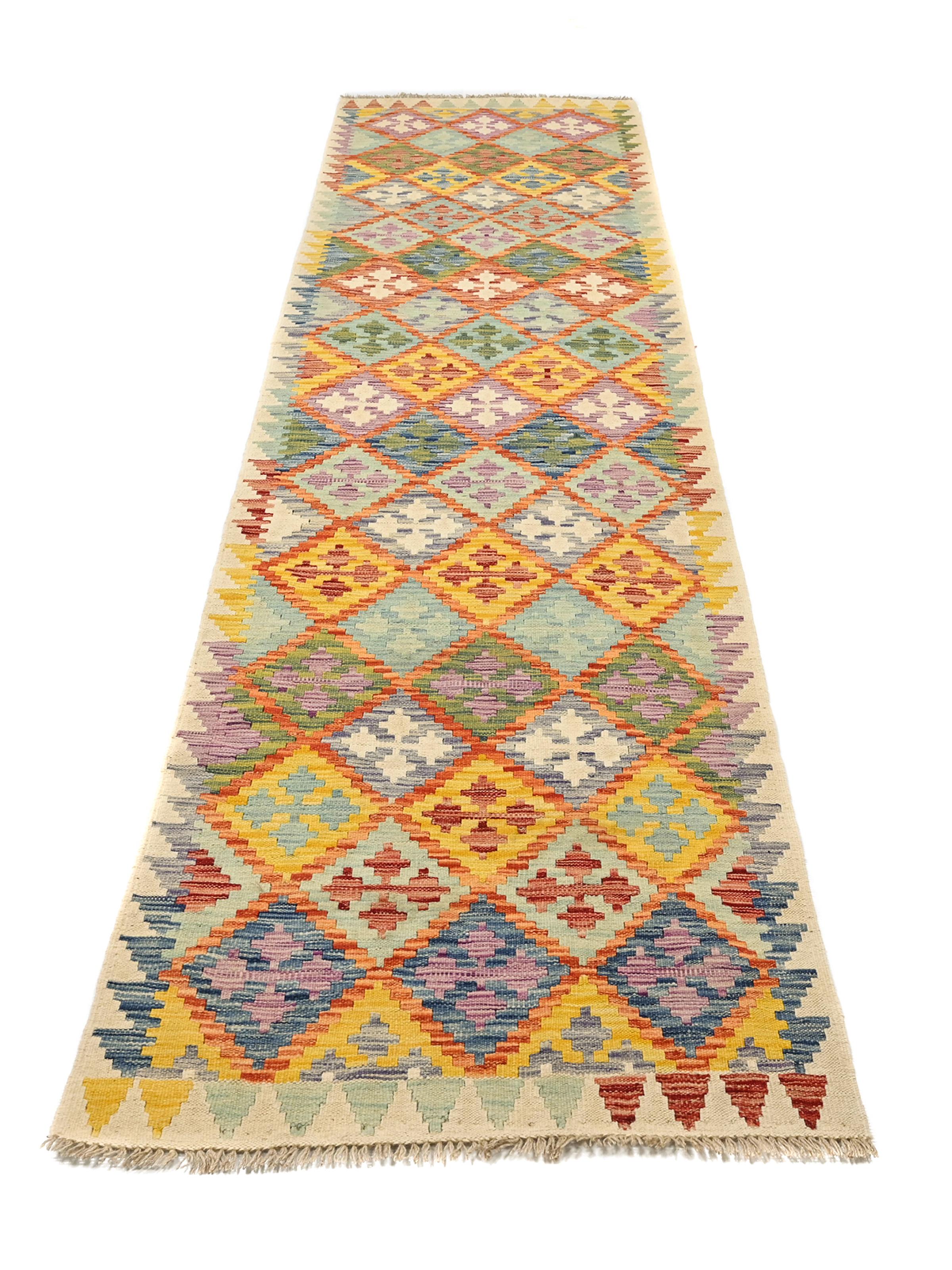
Kelim weaving in Afghanistan is an ancient nomadic art form, developed by tribal groups who required durable, lightweight textiles that could be easily packed and transported. These flatwoven rugs served not only as floor coverings but also as blankets, storage bags, and protective tent hangings.
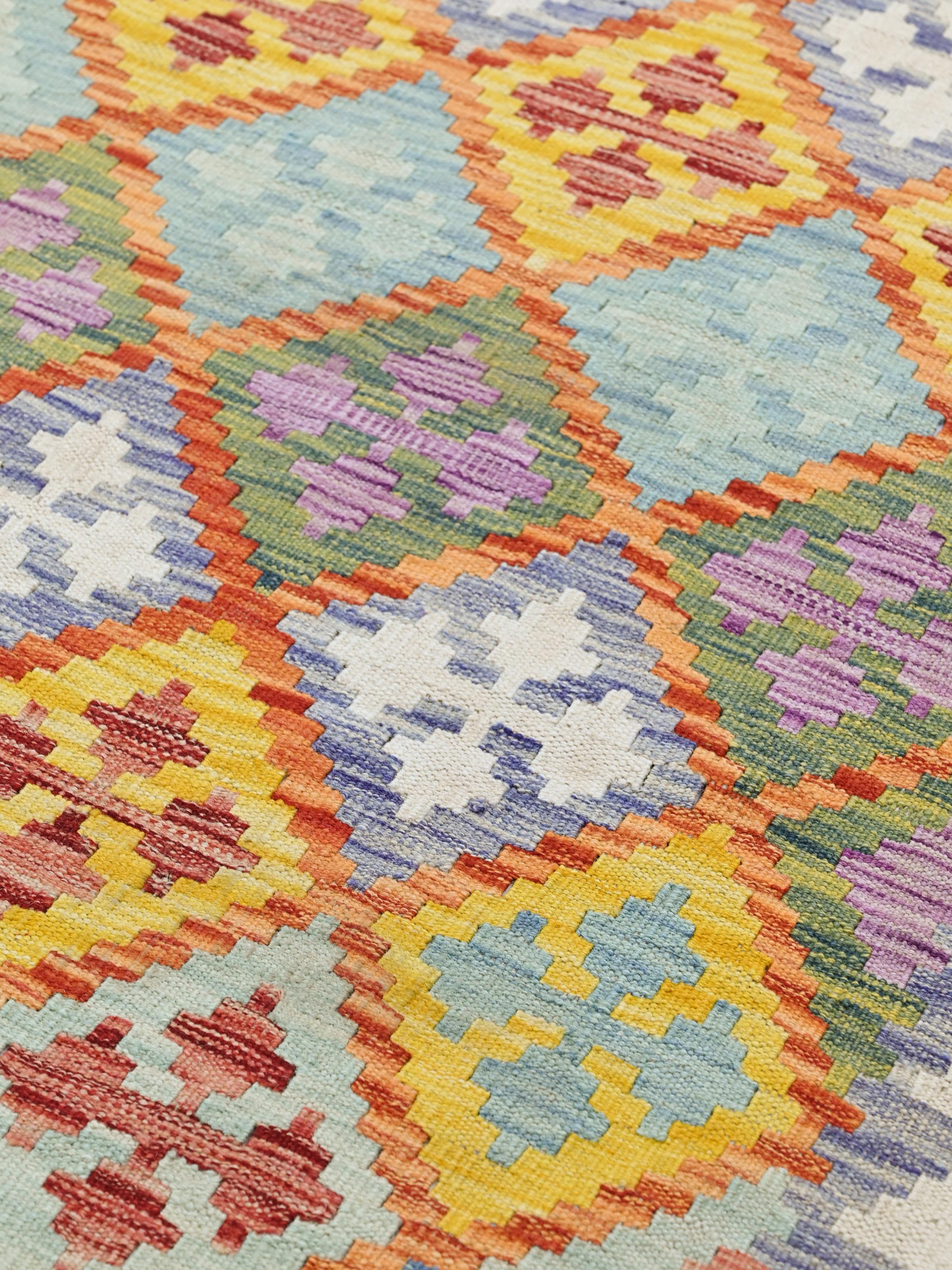
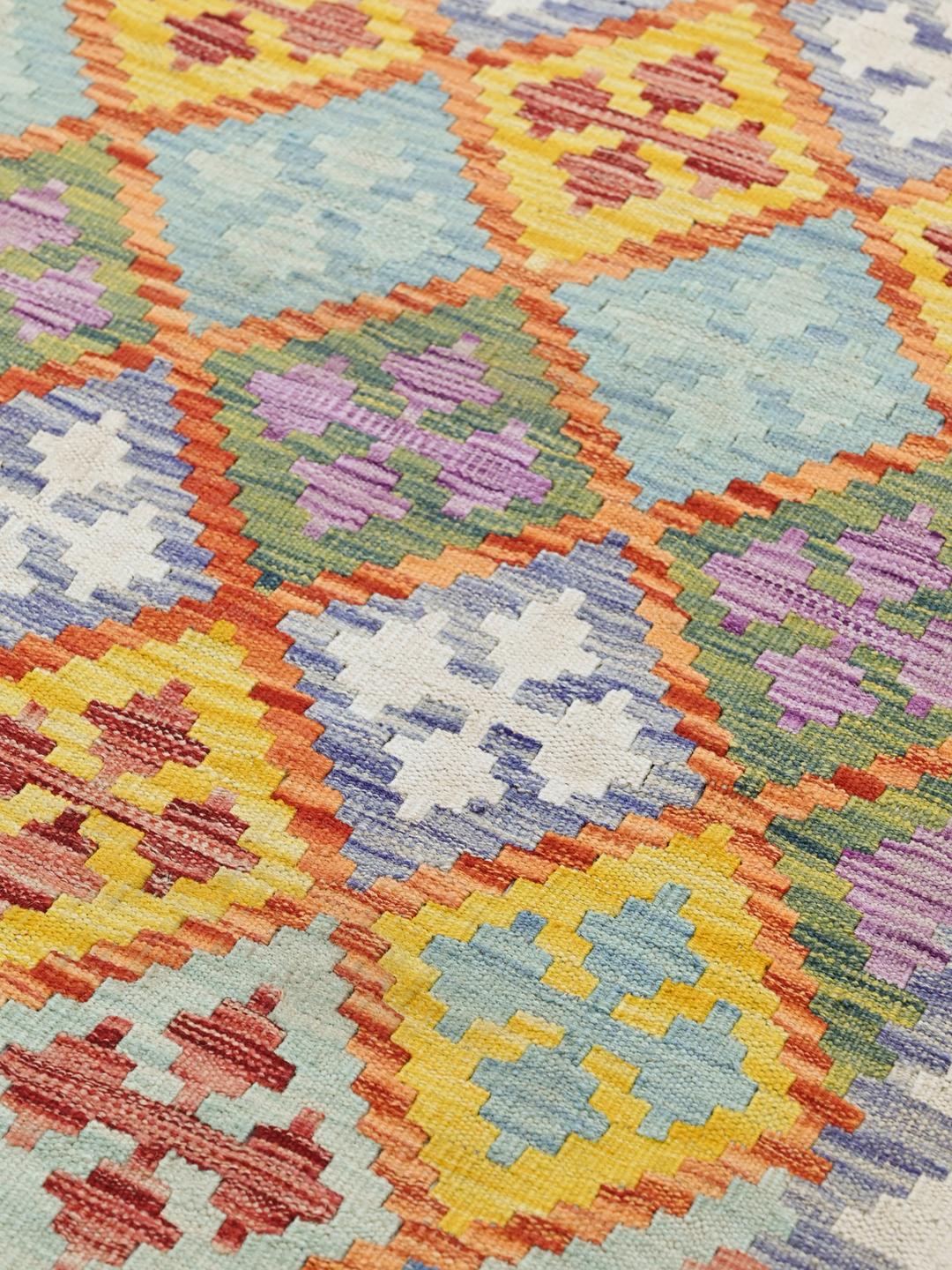
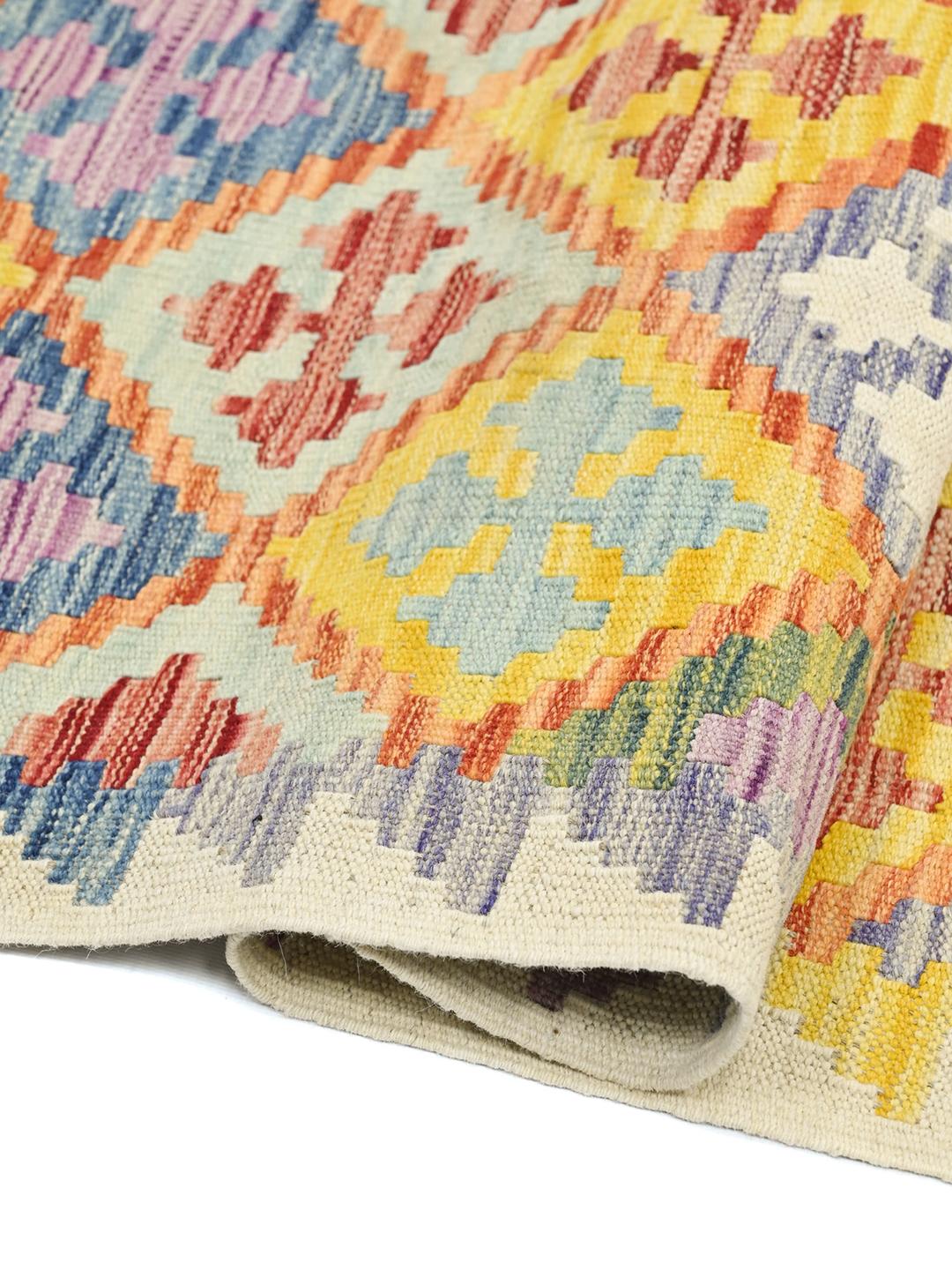
The term Kelim refers specifically to a flat, pileless rug made using a tapestry-weave technique. By tightly packing the weft threads over the warp, weavers create a smooth surface where the patterns are identical on both sides, making many of these traditional pieces fully reversible.
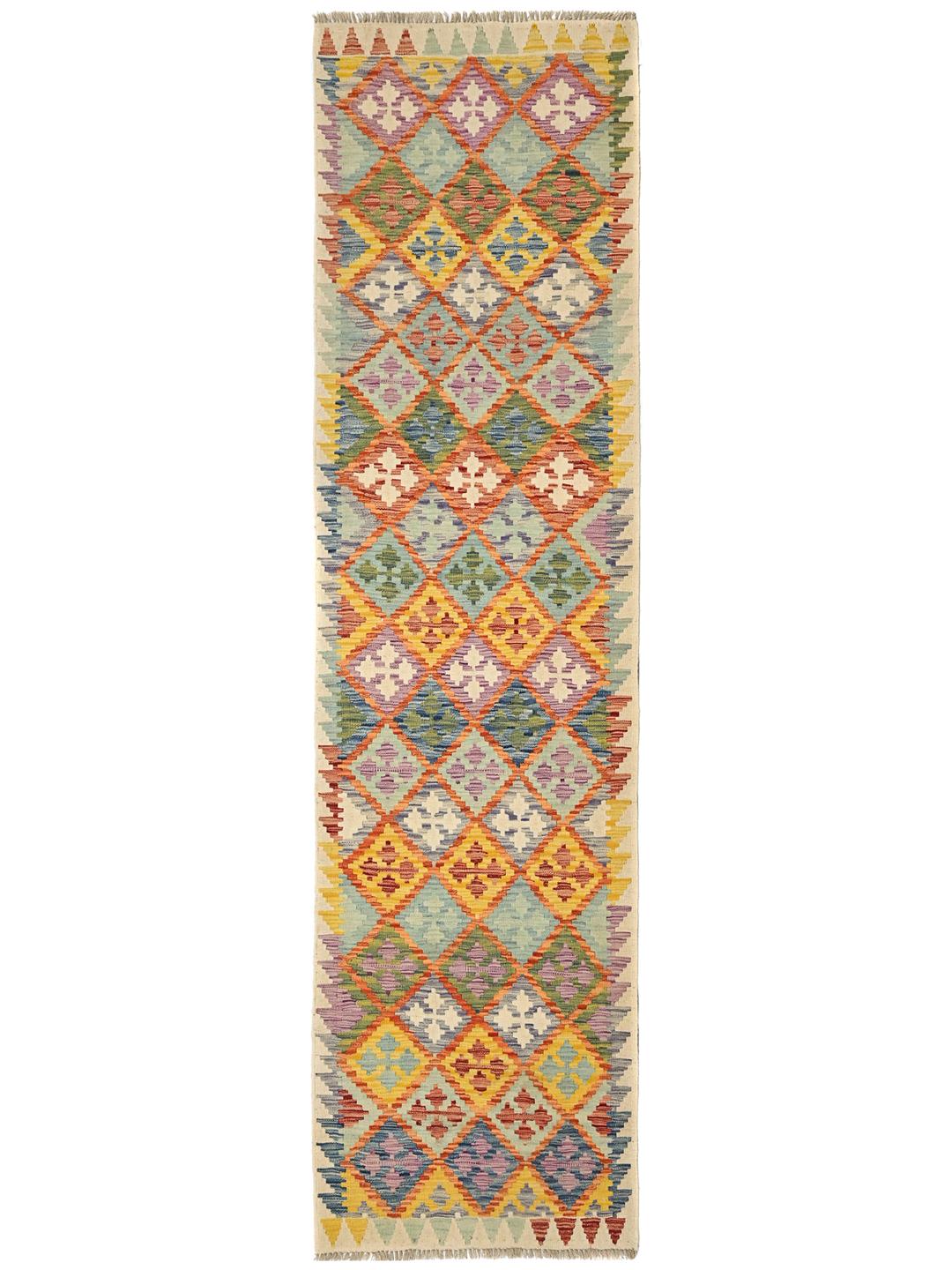
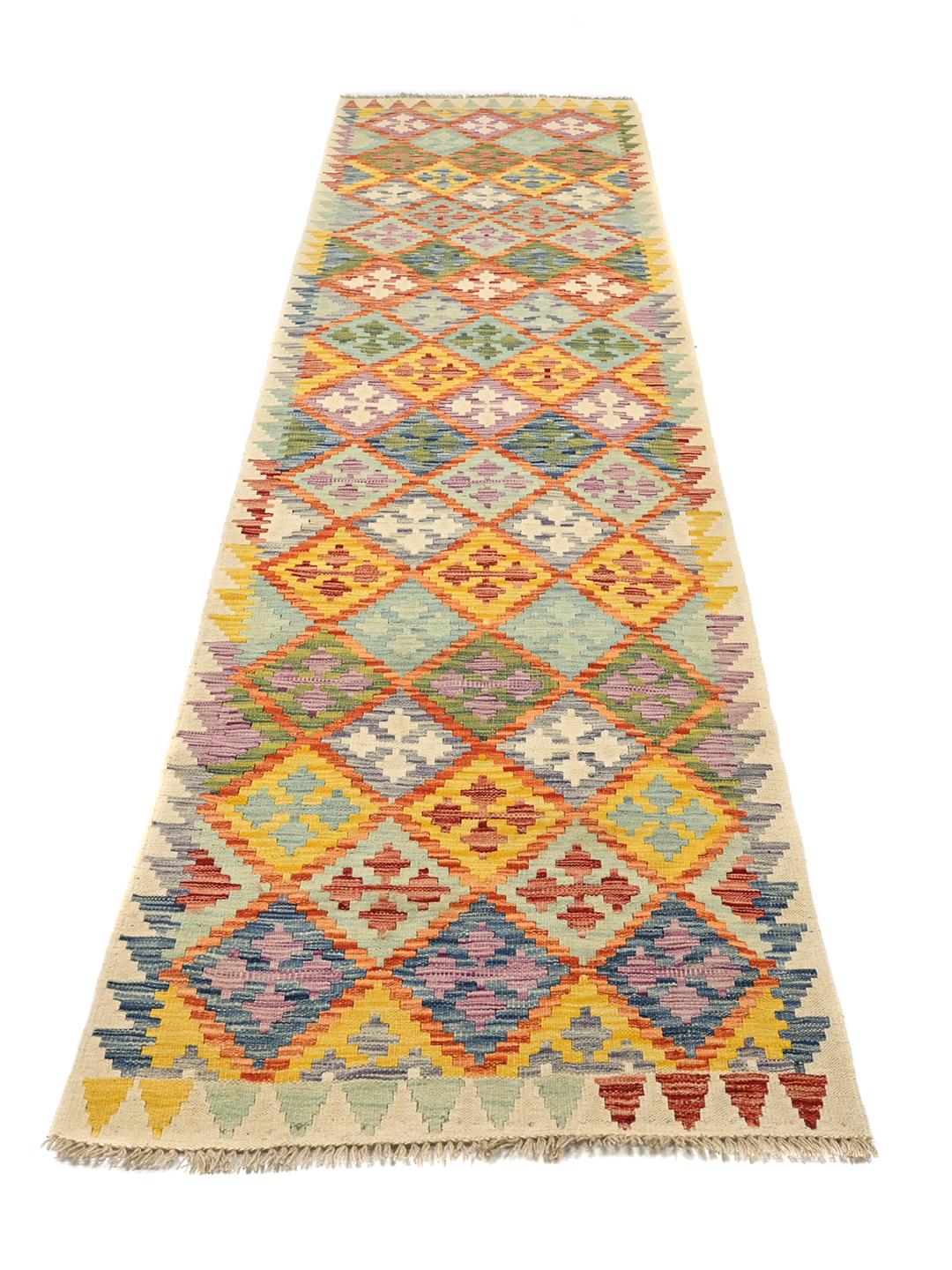
The visual language of the Afghan Kelim is dominated by geometric shapes, particularly the diamond or lozenge, which historically carried symbolic meanings related to protection and family life. The vibrant multicolor palette is achieved through traditional dyeing methods, creating rich contrasts against the natural beige background.
Today, these rugs are highly valued by collectors and homeowners alike for their graphic modern appeal and deep cultural roots. Owning an Afghan Kelim means bringing a piece of living history into your home, celebrating a craft that has remained largely unchanged for centuries.