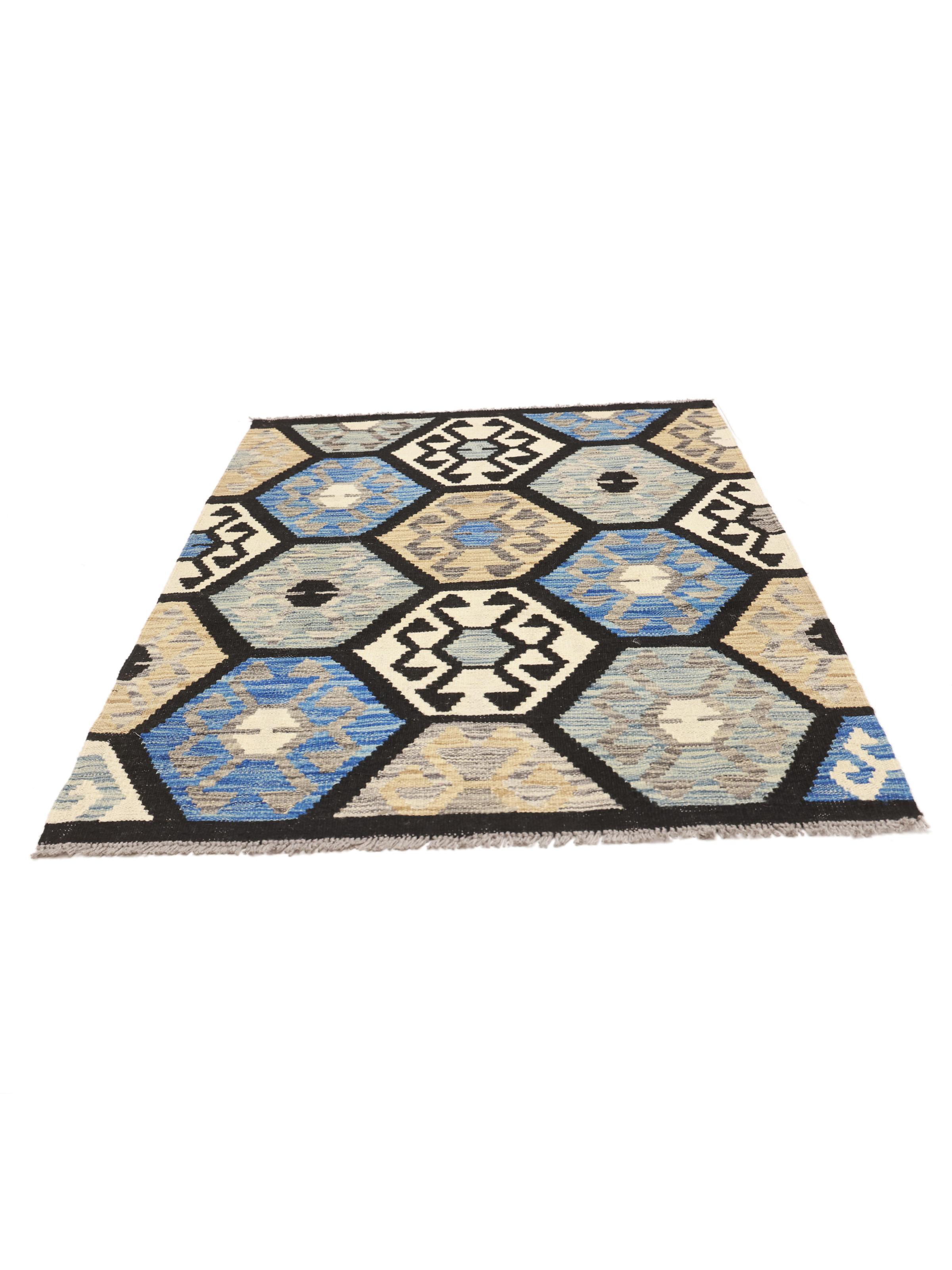
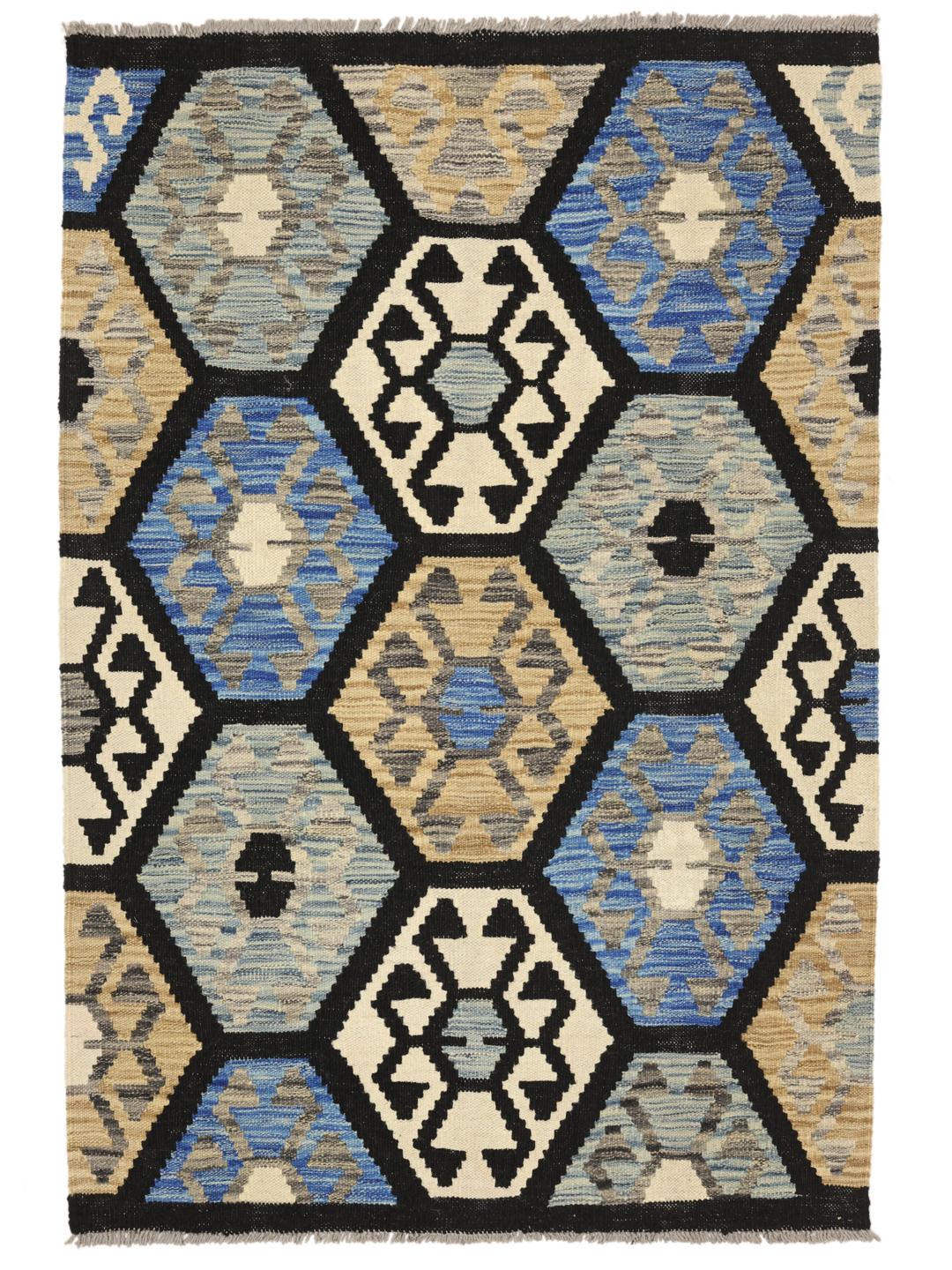
The Kelim tradition in Afghanistan is deeply rooted in the nomadic and semi-nomadic cultures of the region, where these flat-woven rugs served as essential, portable furnishings for tents and homes. These rugs are woven without a pile, relying on the tight interweaving of warp and weft threads to create their distinctive, durable structure. This style has evolved over centuries, drawing from a rich tapestry of tribal influences across Central Asia.
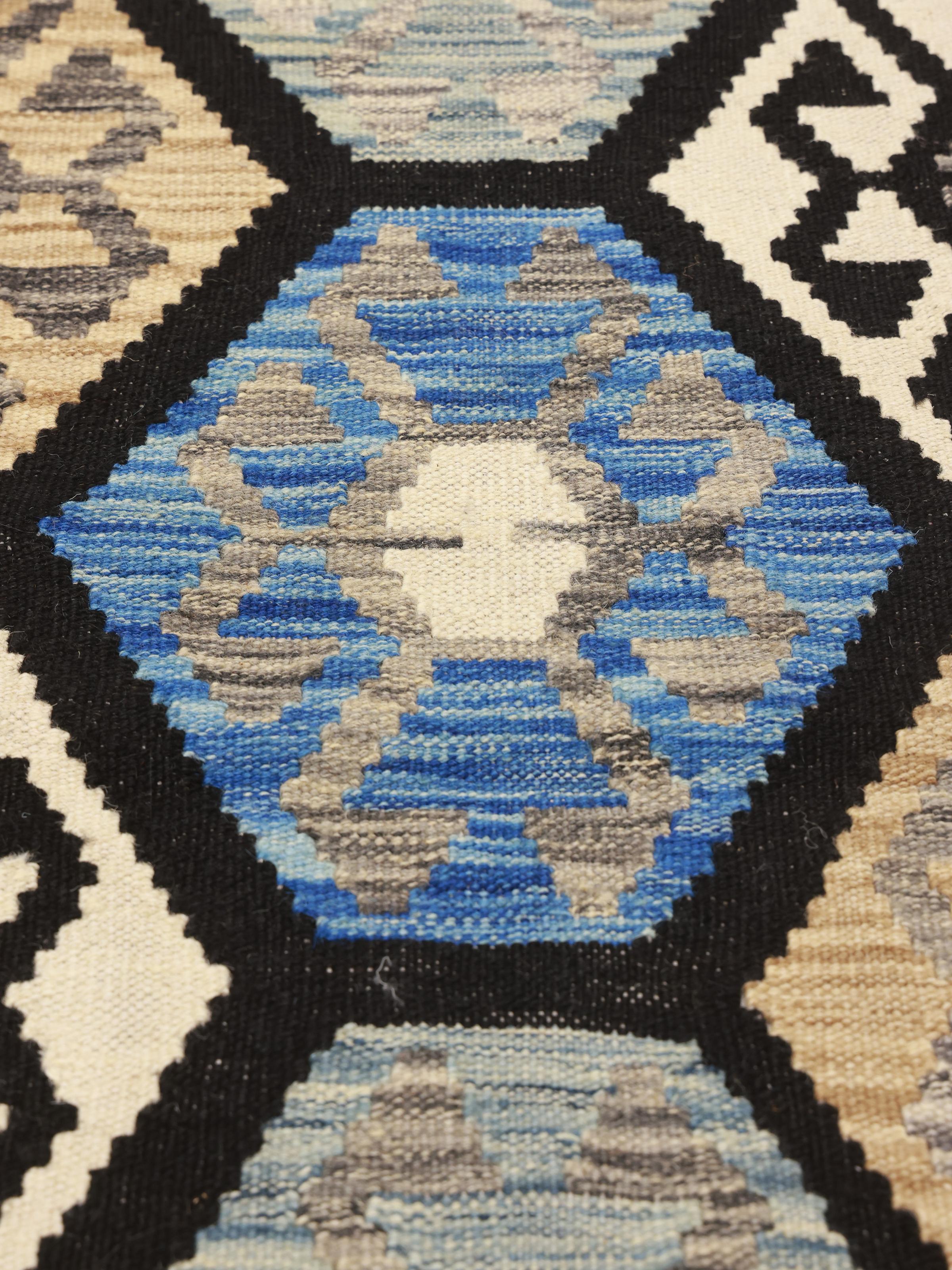
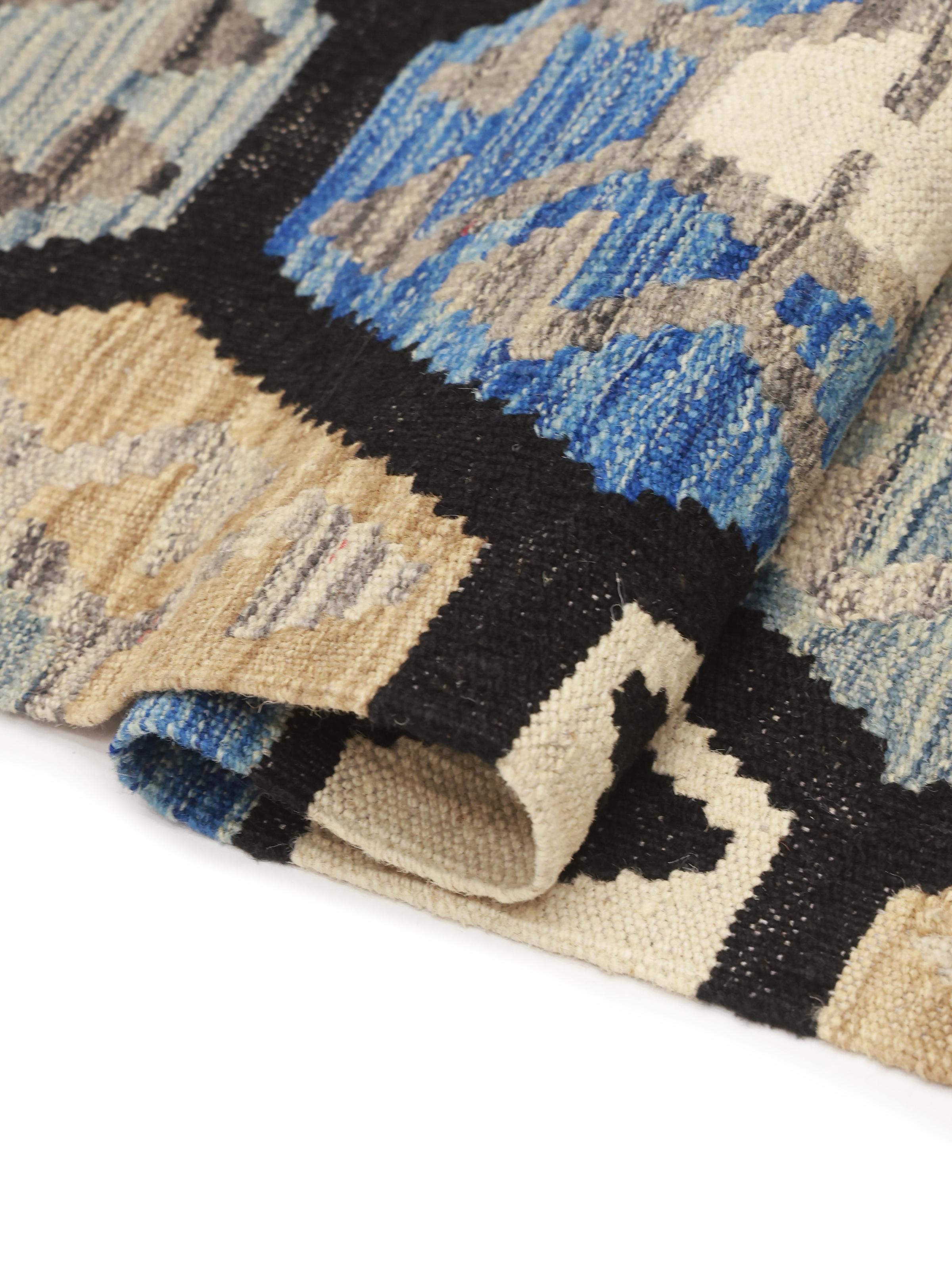
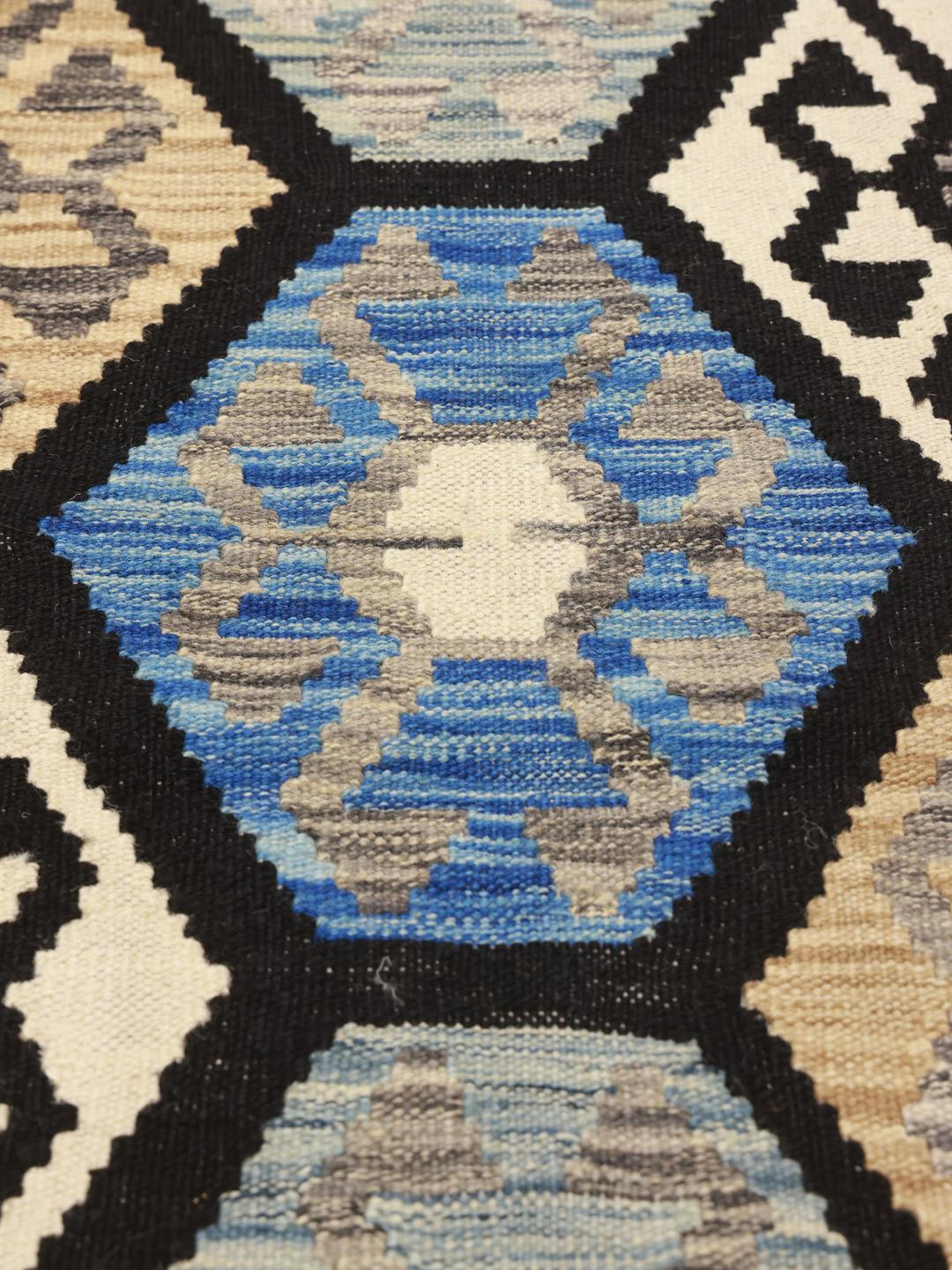
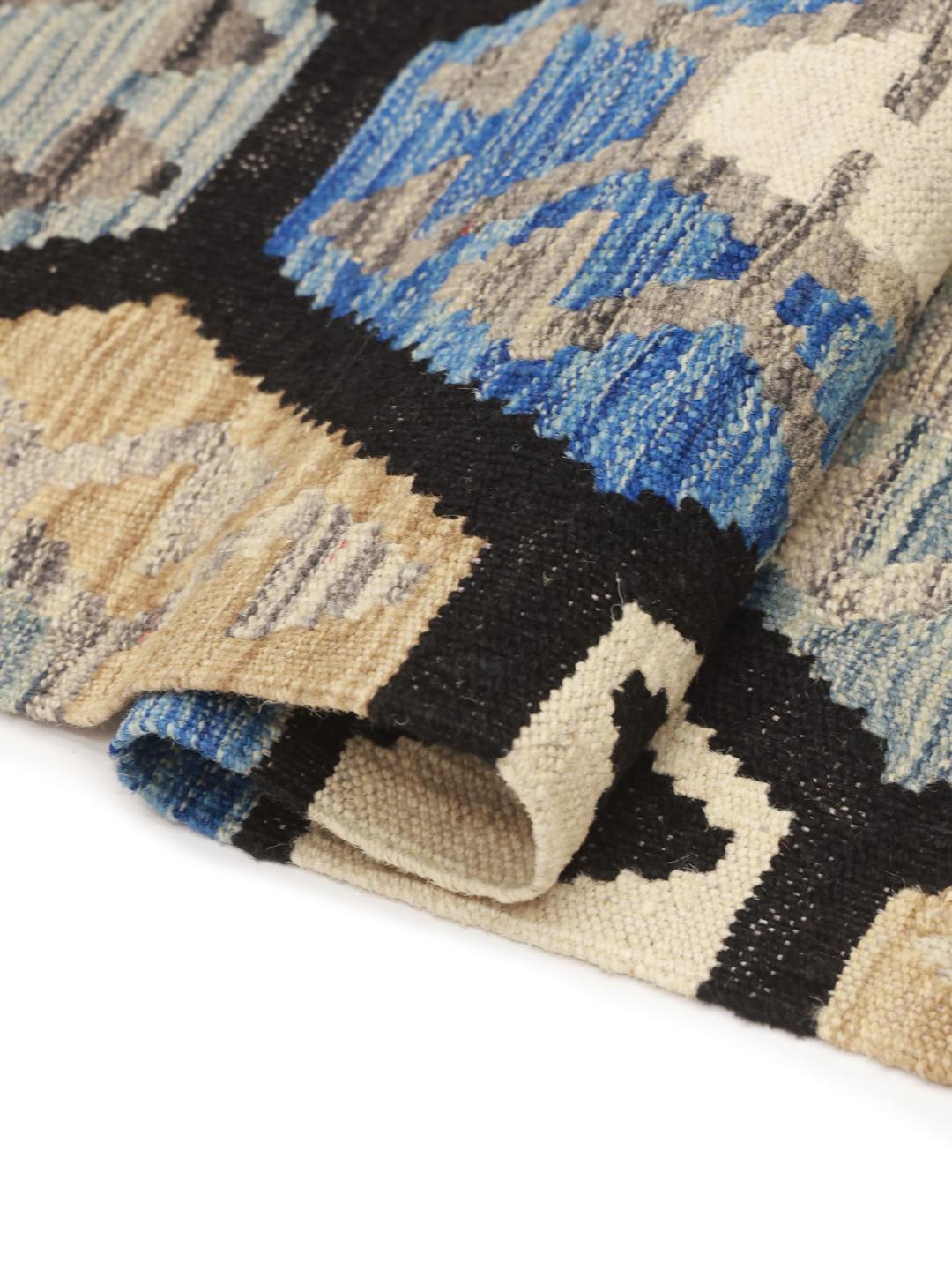
The term Kelim refers to this specific flat-weaving technique, which is distinct from knotted pile rugs. Because there are no knots, the design is created by the colour changes in the weft threads as they pass over and under the warp. This technical limitation actually defines the aesthetic, leading to the sharp, angular geometric motifs that are the hallmark of the style. The result is a rug that is reversible and remarkably resilient.
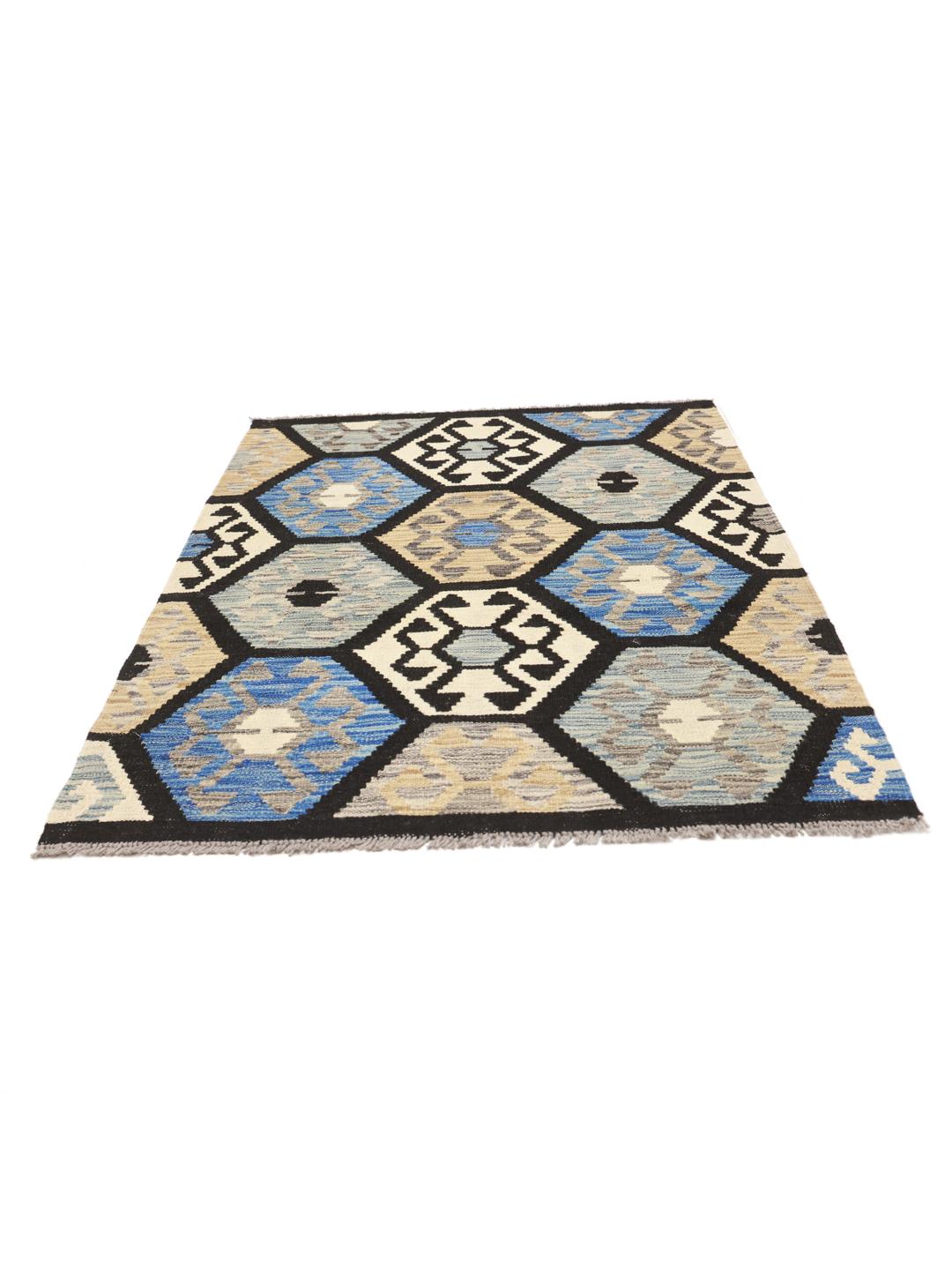
The design of this particular rug centres on the repeating hexagonal motif, a classic element in tribal textile art. These shapes are often interpreted as symbols of protection or stylised representations of the natural world. The use of a bold, contrasting colour palette—combining deep, cooling blues with warm, earthy browns—is a sophisticated take on traditional Afghan colour schemes, providing a modern edge to an ancient format.
Collecting these rugs is an opportunity to preserve a living craft tradition. Each piece acts as a historical document, capturing the specific aesthetic preferences and technical skills of the artisan community that produced it. By bringing a piece like this into your home, you are not just acquiring a floor covering; you are connecting with a long-standing legacy of human artistry and cultural expression.