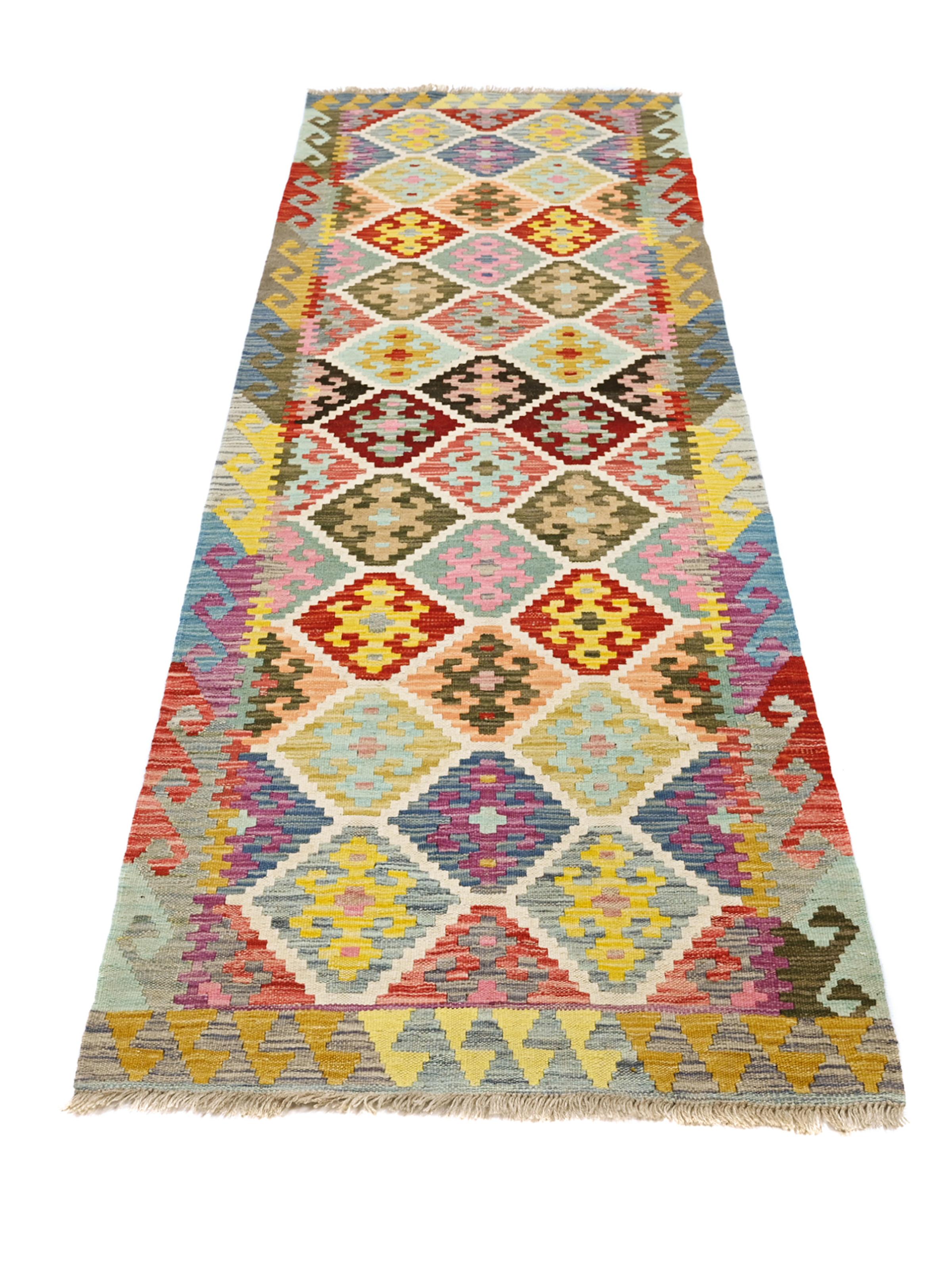
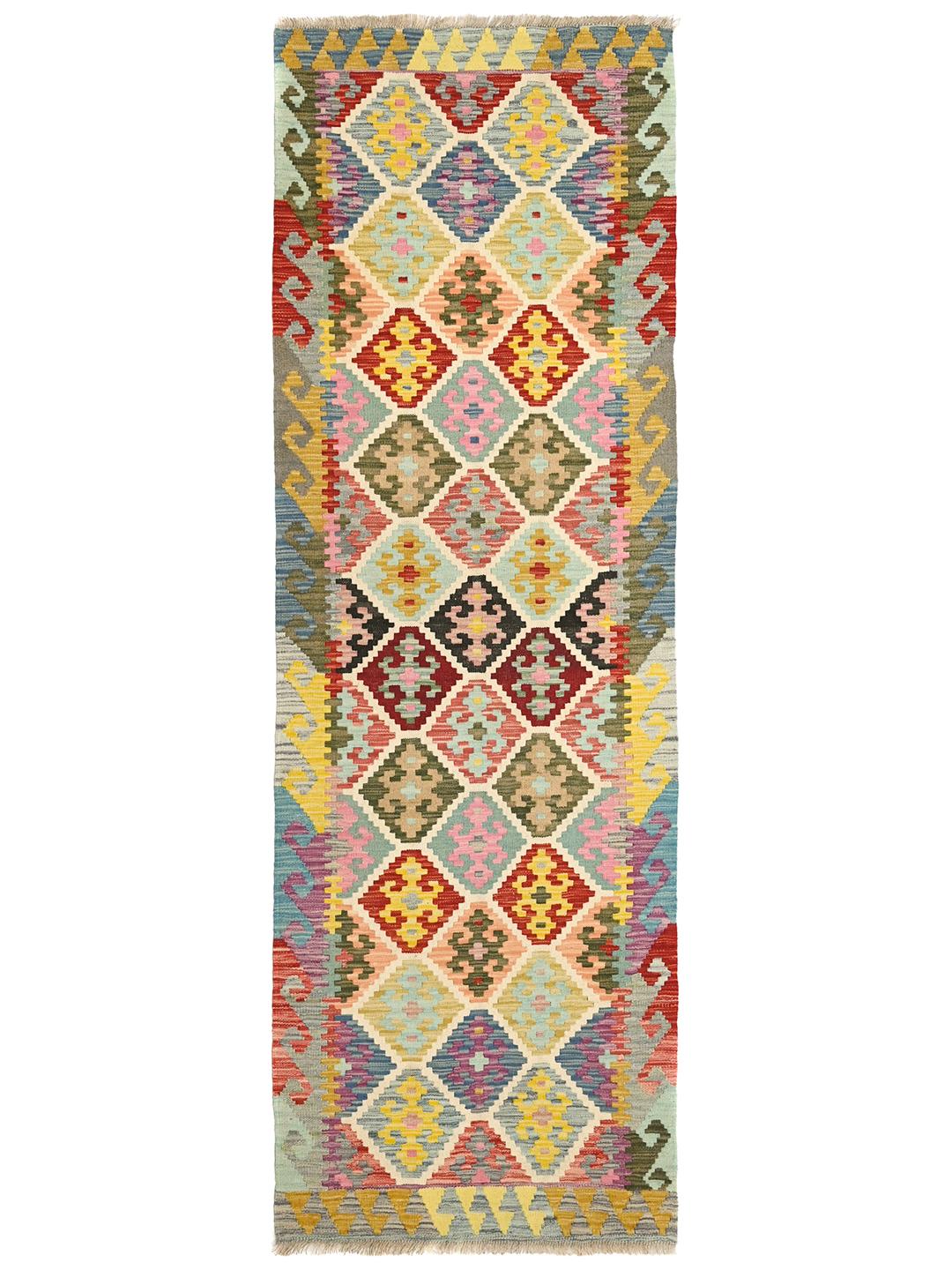
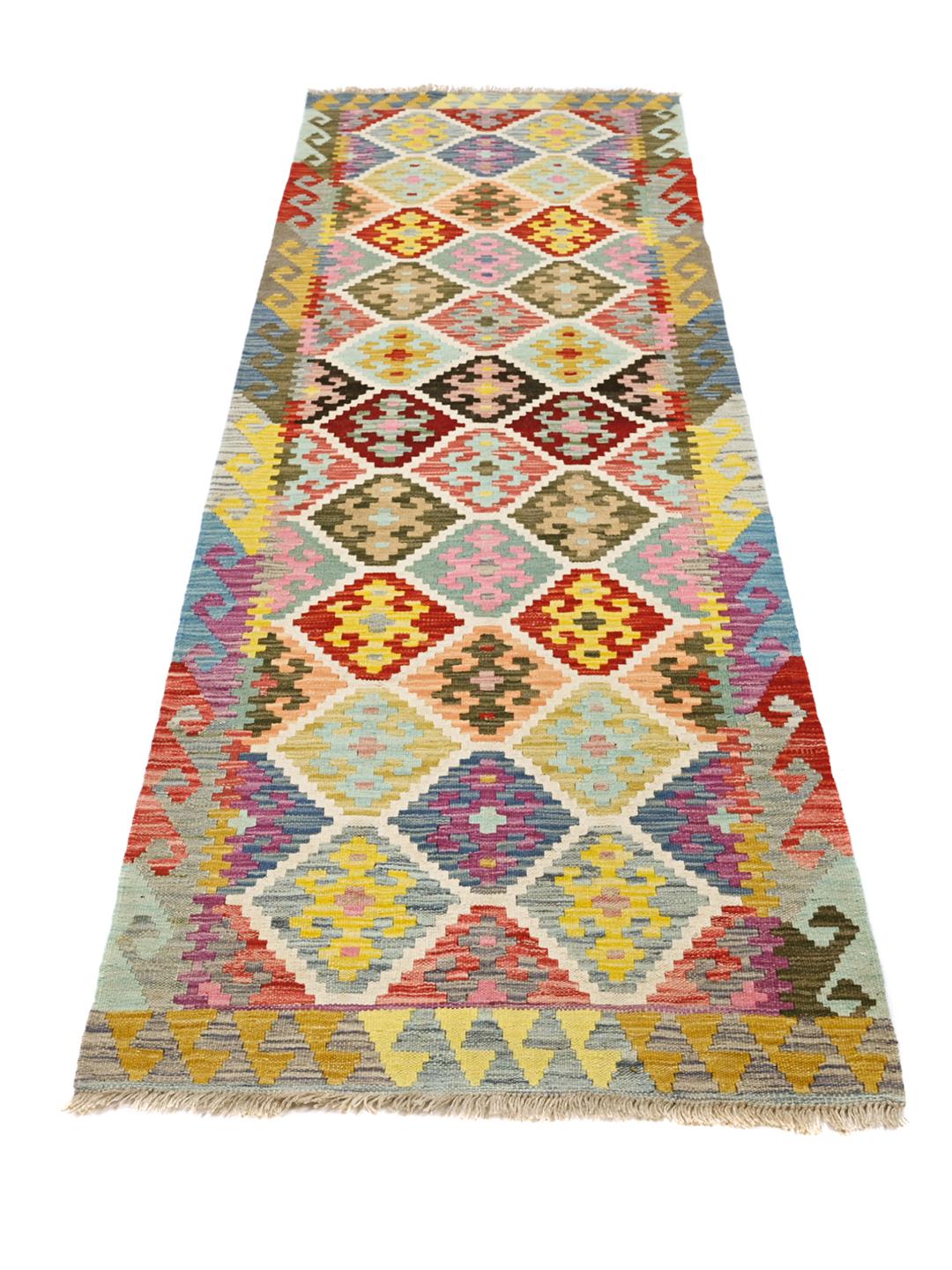
The Kelim tradition in Afghanistan is deeply rooted in the nomadic history of the region. These rugs are born from a culture that values portability and utility, with techniques passed down through generations of families. The art of flat-weaving, or kelim, has long been a way for artisans to translate their environment into abstract, geometric language, serving as both functional floor coverings and expressions of identity.
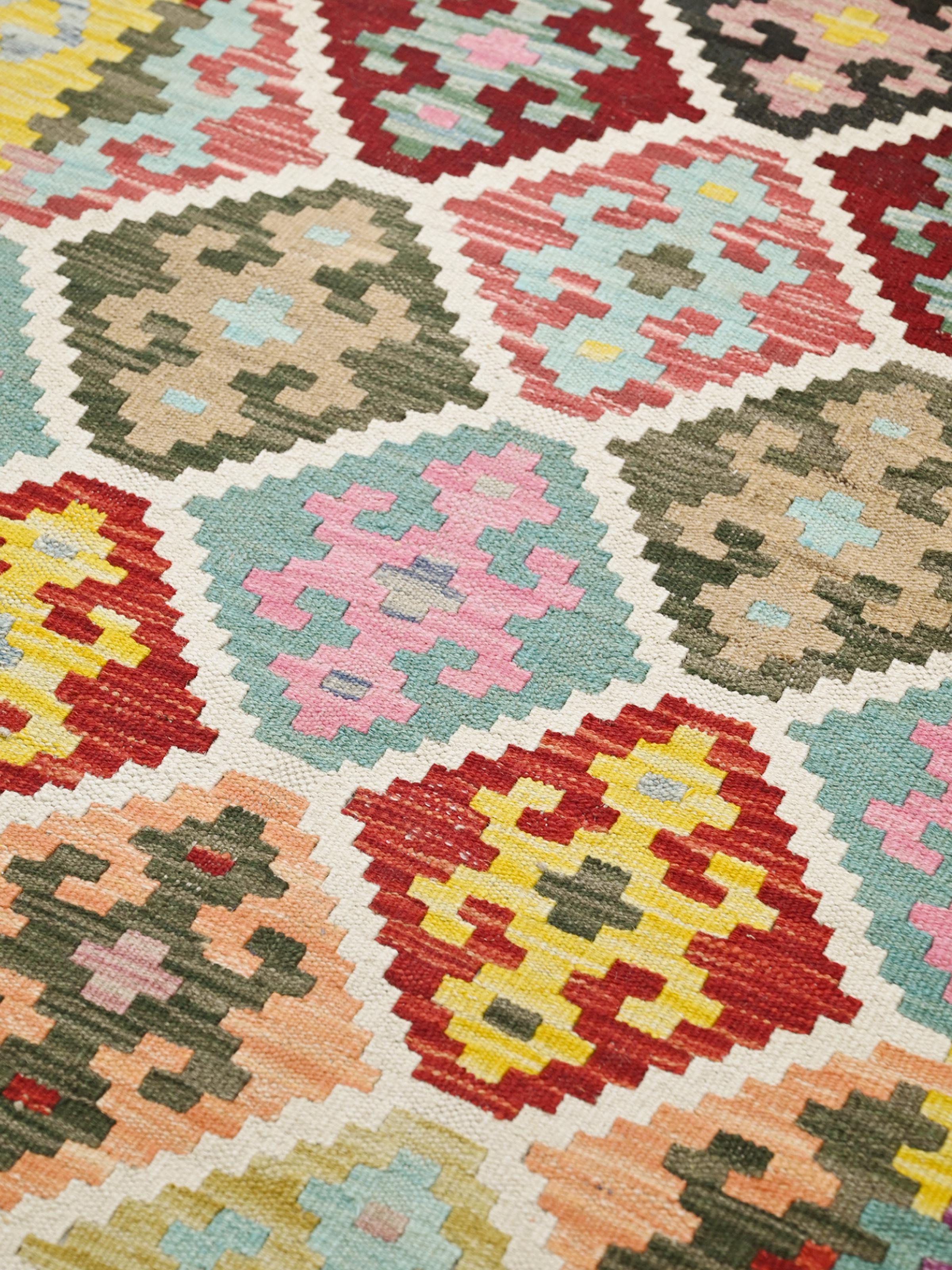
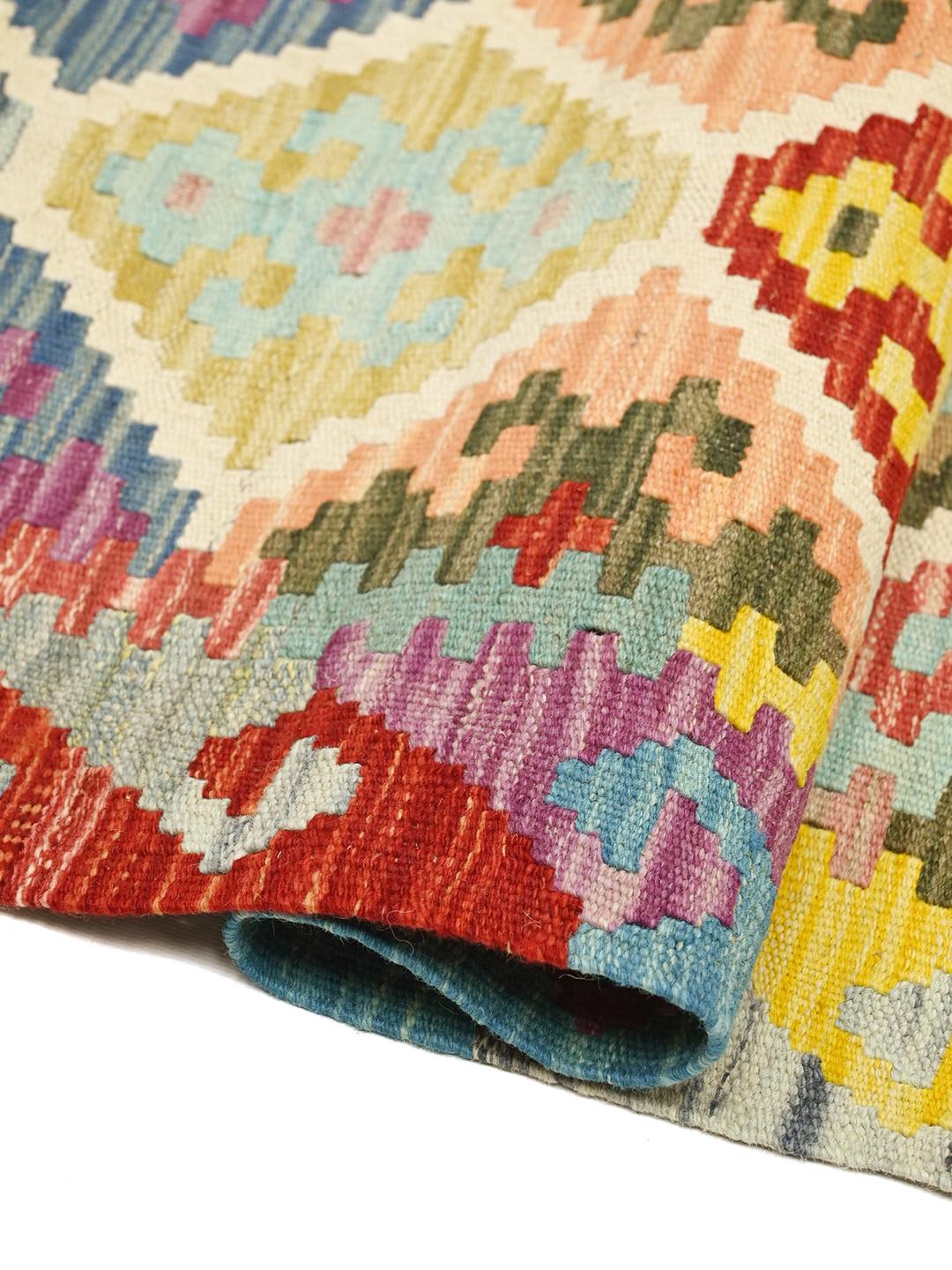
The term 'Kelim' refers to the specific technique of tapestry weaving where the weft threads are passed through the warp to create the design. Because there is no pile, the rug is reversible and incredibly durable. This construction method allows for sharp, clean lines in the pattern, which are characteristic of the bold diamond motifs found in these traditional Afghan pieces.
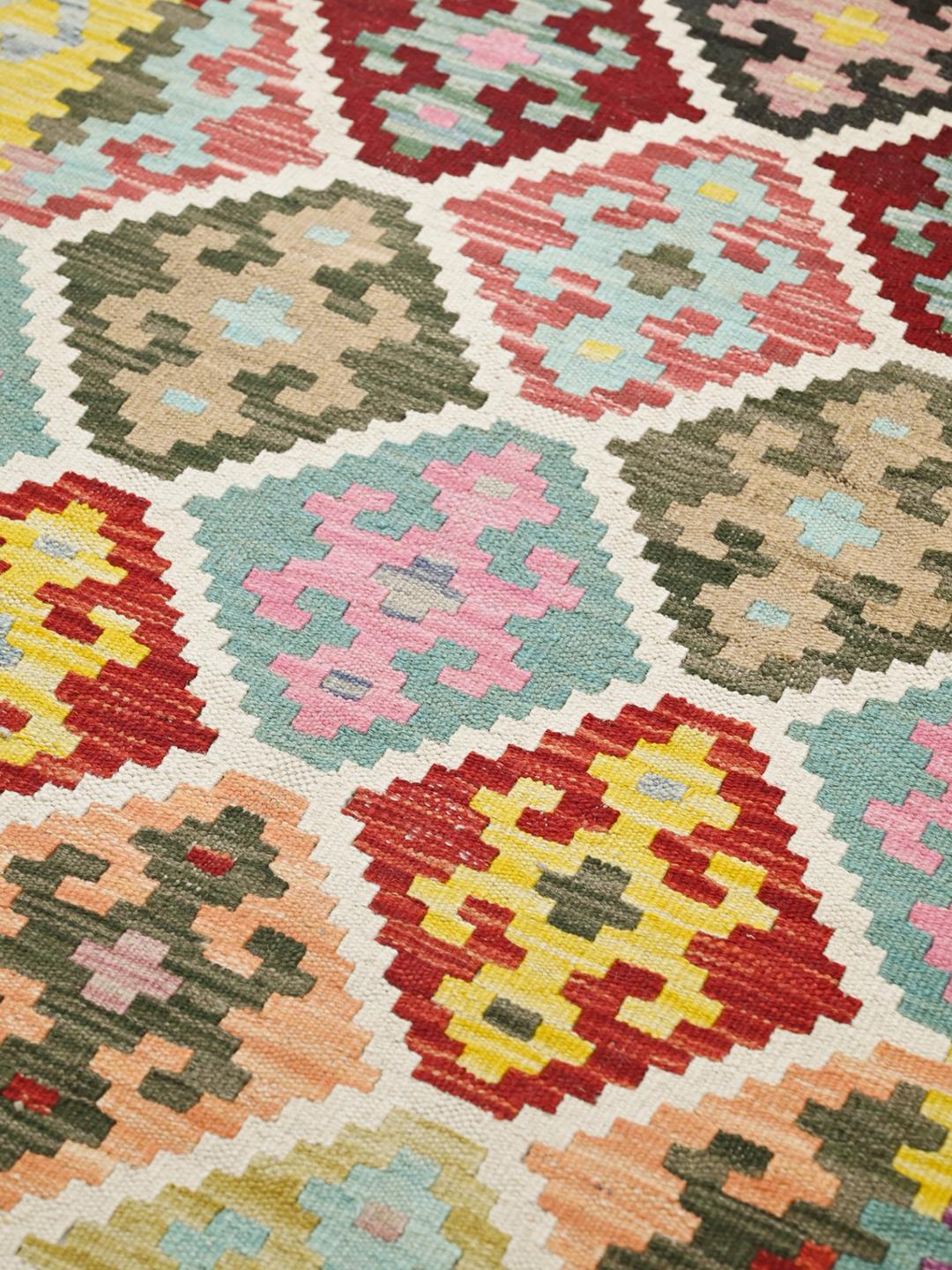
Visually, these runners are defined by their use of repeating geometric shapes and a warm, earthy, yet vibrant colour palette. The diamond motifs are often symbolic, representing protection or prosperity within the weaver's community. This specific rug showcases a particularly lively interpretation of these classic designs, using a wide array of hues that make it a standout piece in any contemporary or traditional setting.
Collecting a hand-woven Afghan runner is a way to preserve a rich cultural legacy. These rugs are highly valued for their authenticity and the human story behind every thread. By bringing this piece into your home, you are not just acquiring a decorative item, but a testament to a craft that has survived for centuries, maintaining its relevance through its sheer beauty and enduring quality.