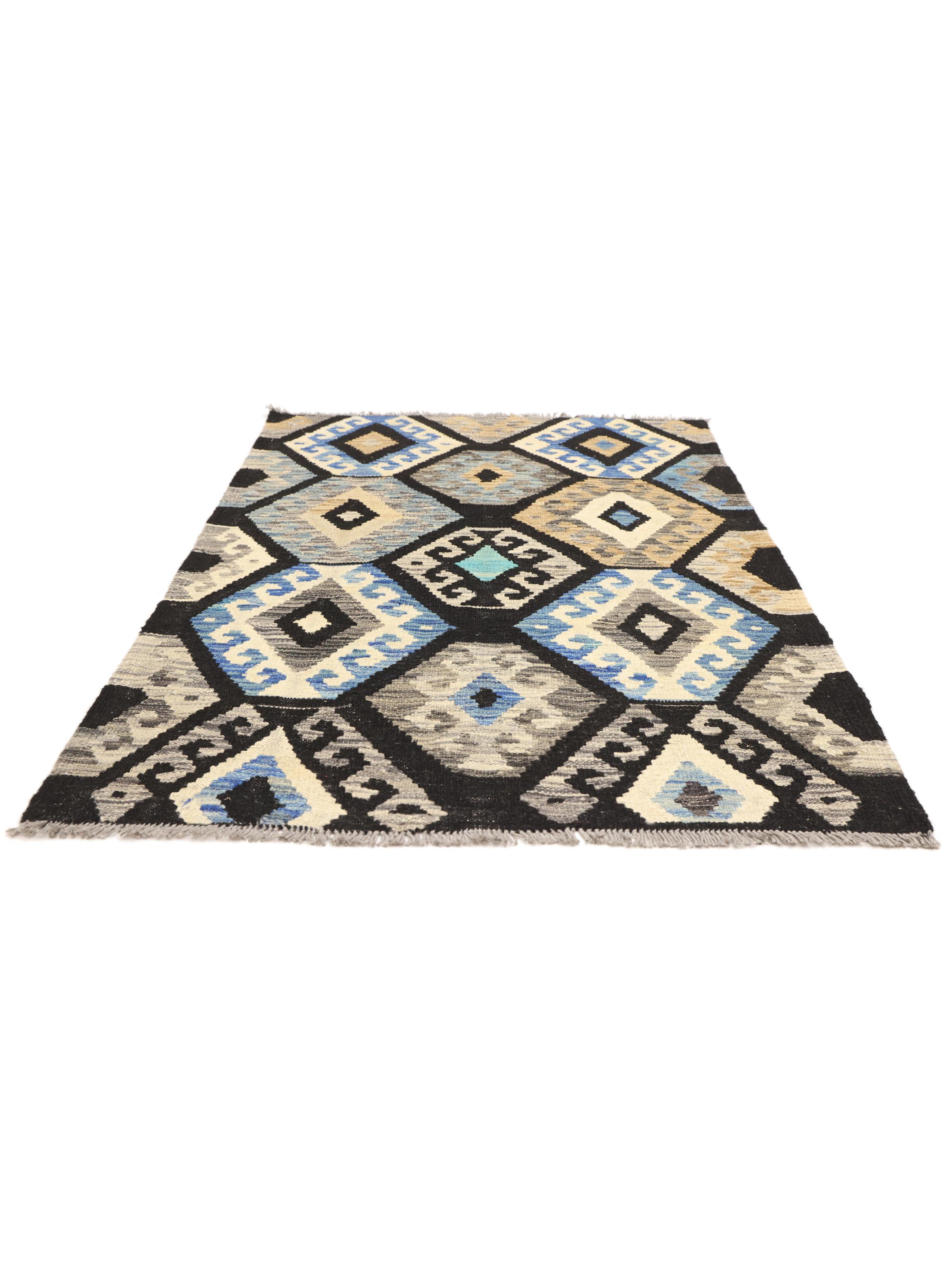
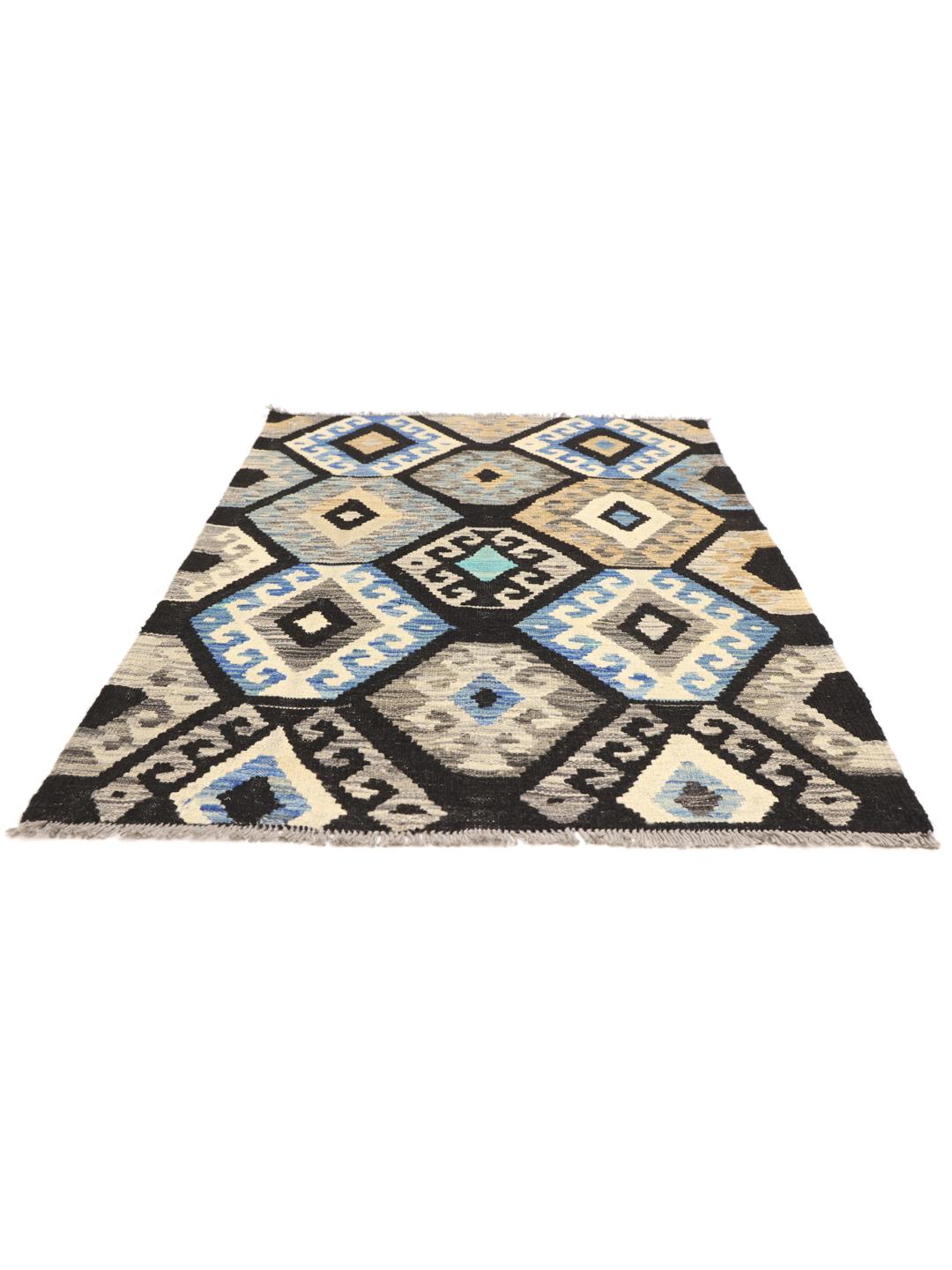
The Kelim tradition in Afghanistan is deeply rooted in the nomadic lifestyle of the region. Historically, these flat-woven rugs were essential for daily life, serving as floor coverings, tent partitions, and storage bags for families on the move. They represent a cultural legacy where utility and beauty are perfectly integrated.
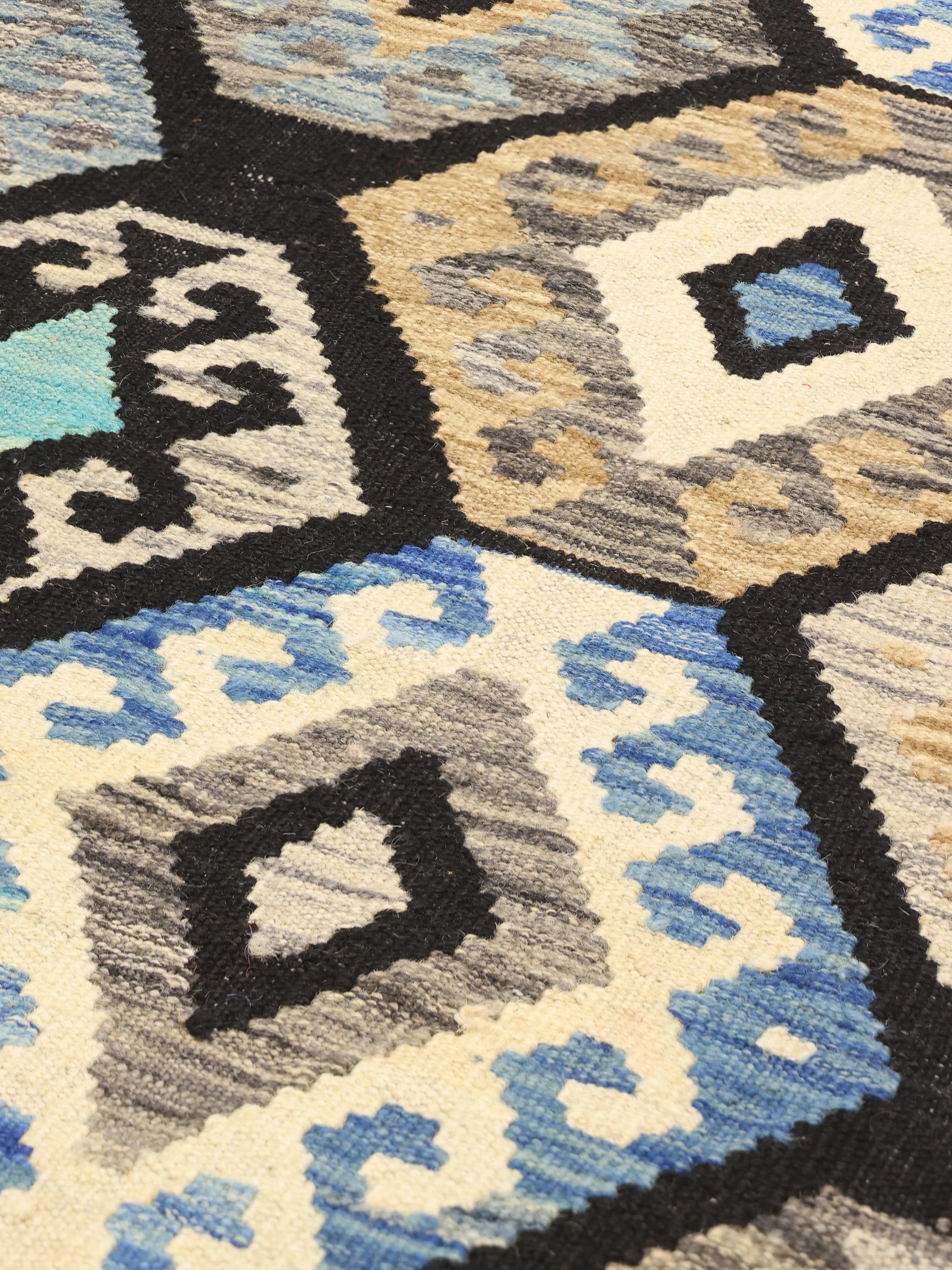
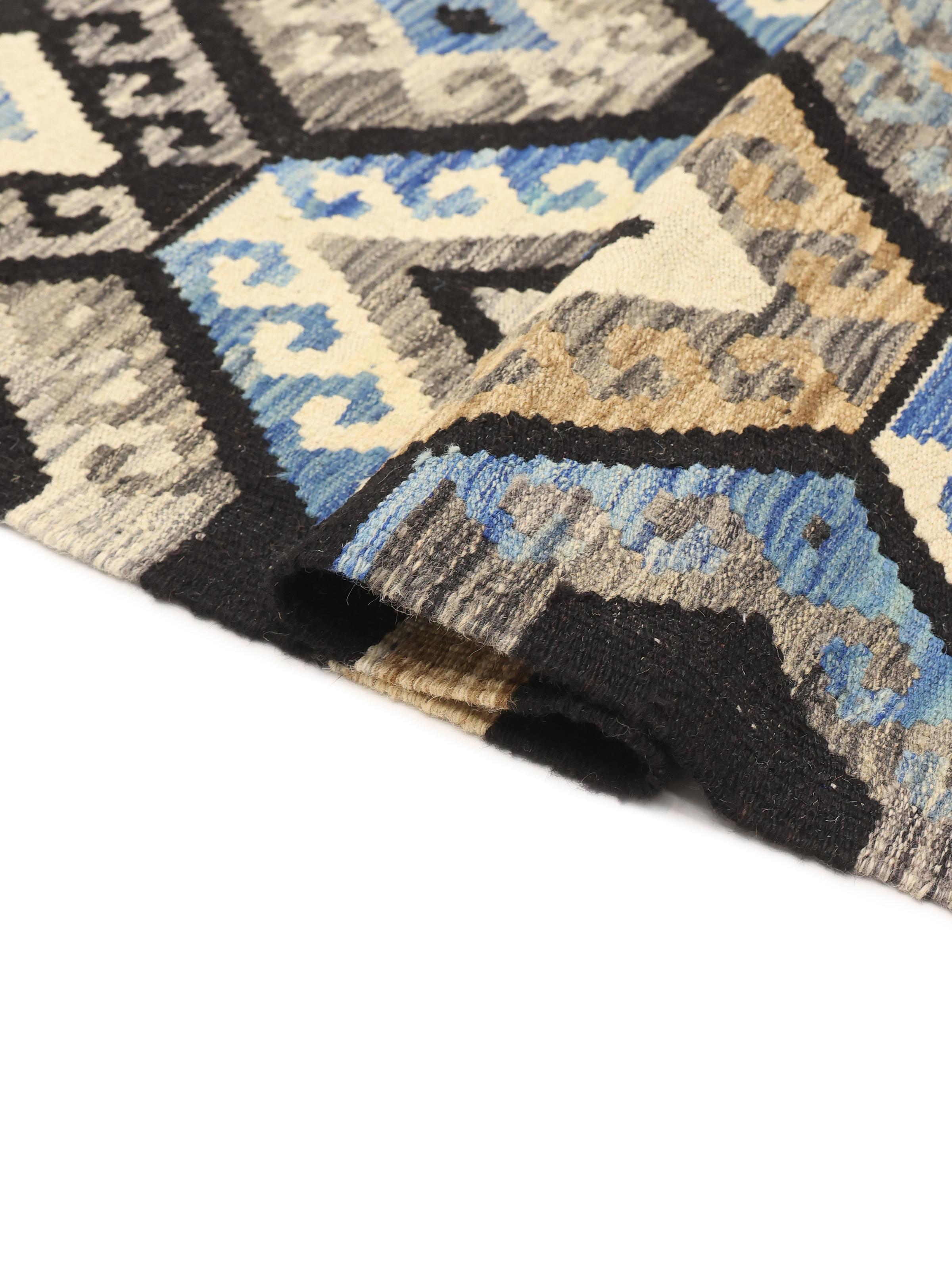
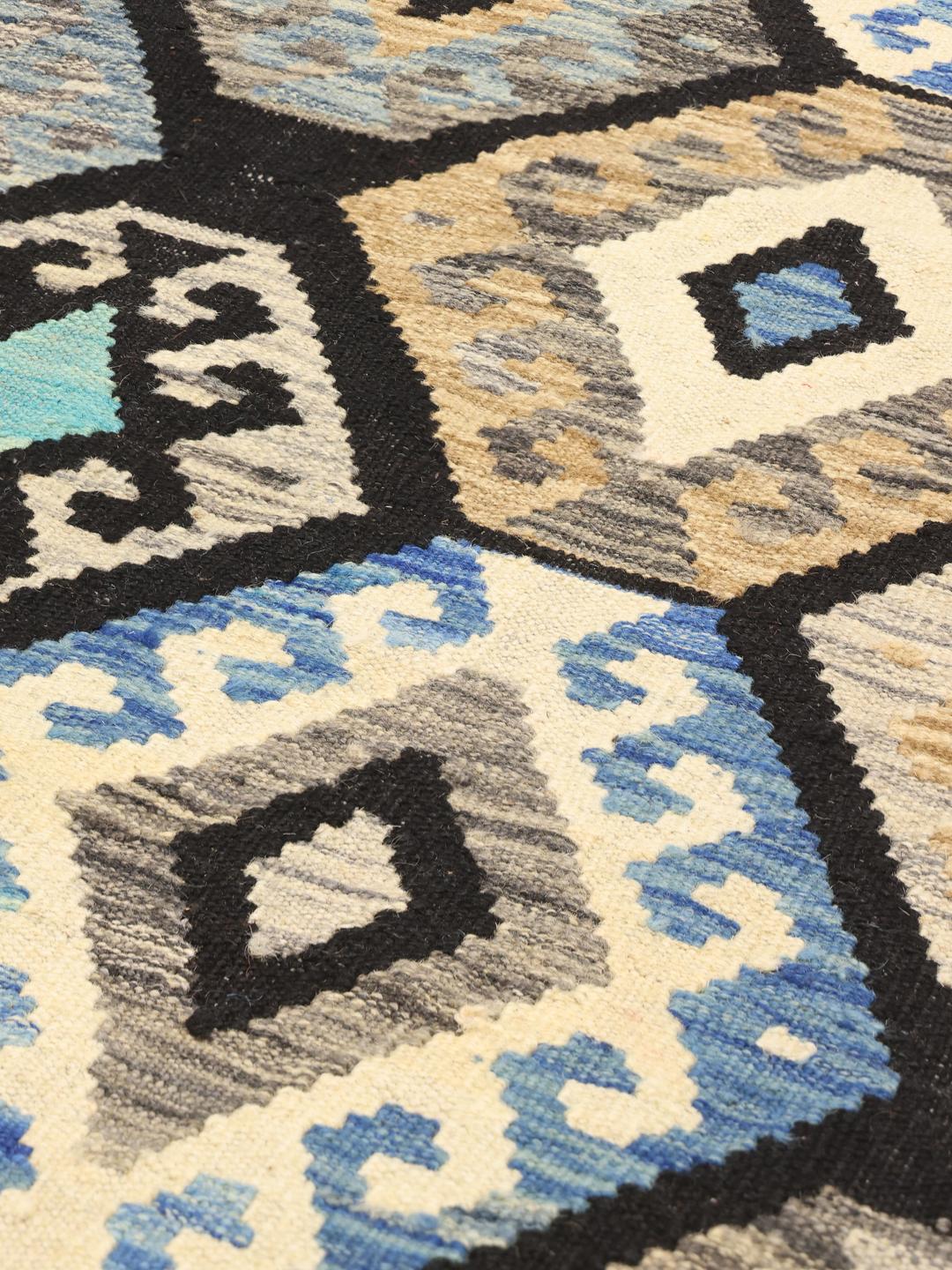
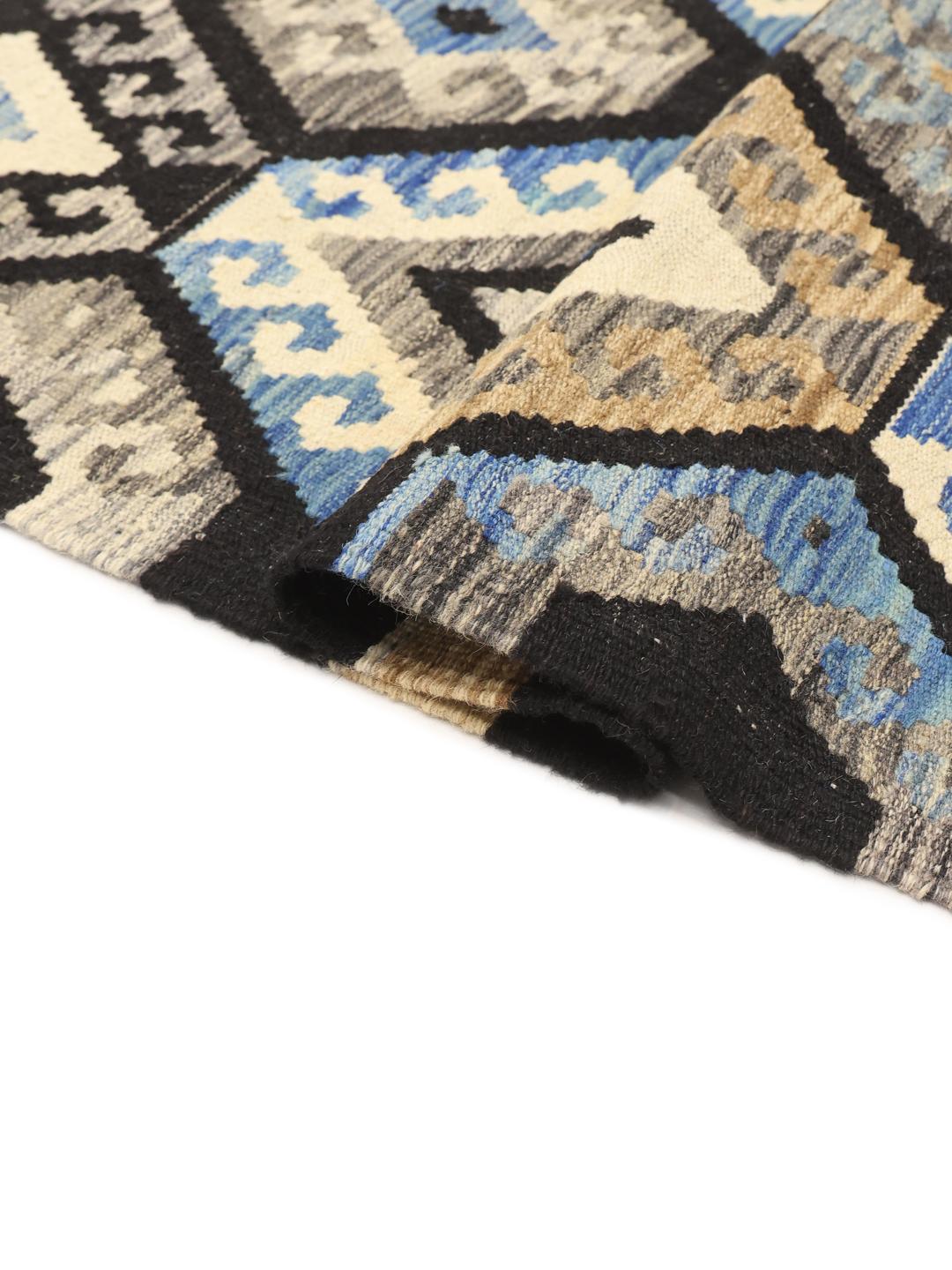
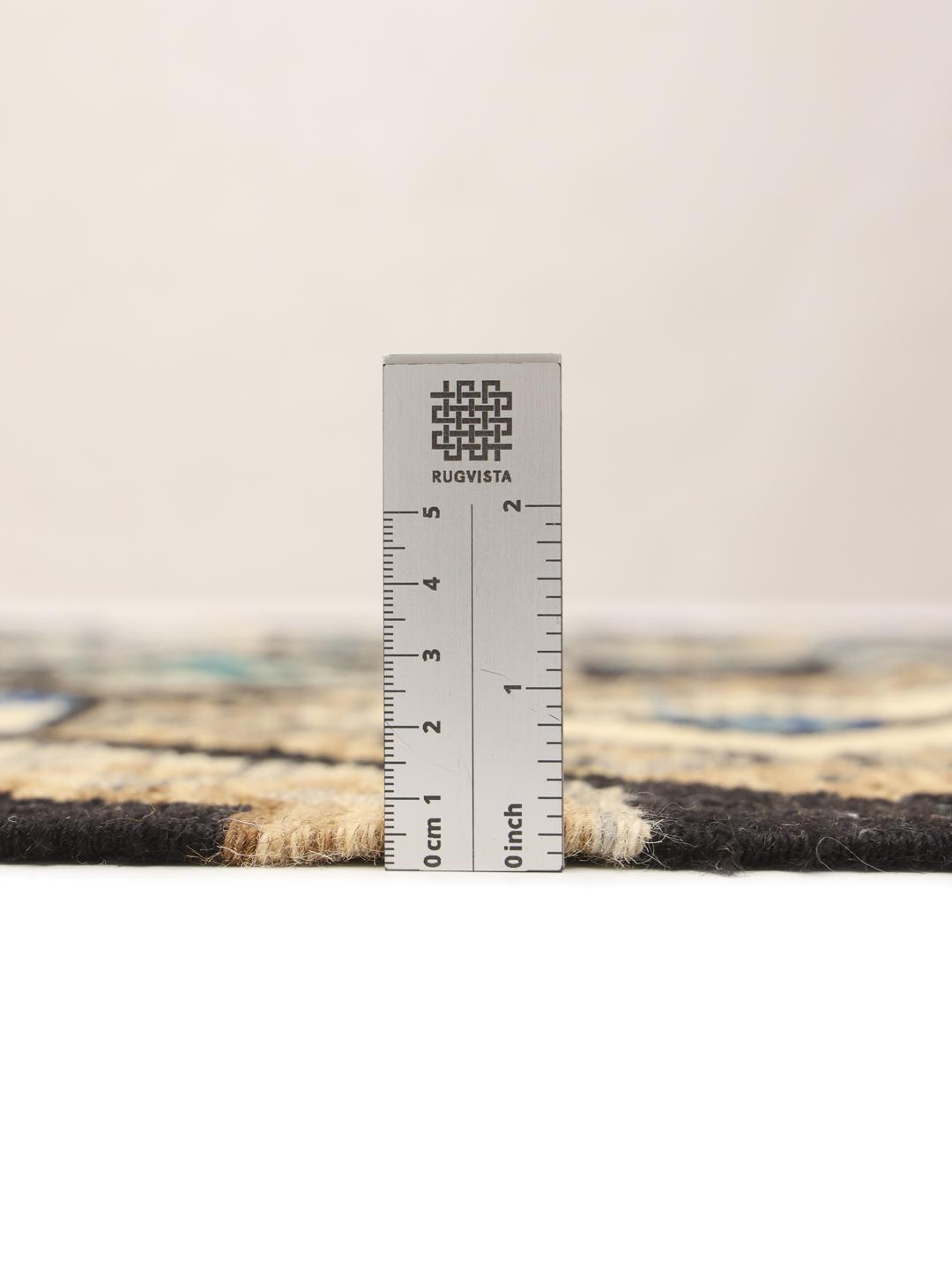
The term 'Kelim' refers to the specific tapestry-weave technique used, where the warp and weft threads are interlaced to create a smooth, pileless surface. This method is highly effective for producing sharp, geometric patterns, as the design is essentially built into the very structure of the rug rather than being knotted onto a foundation.
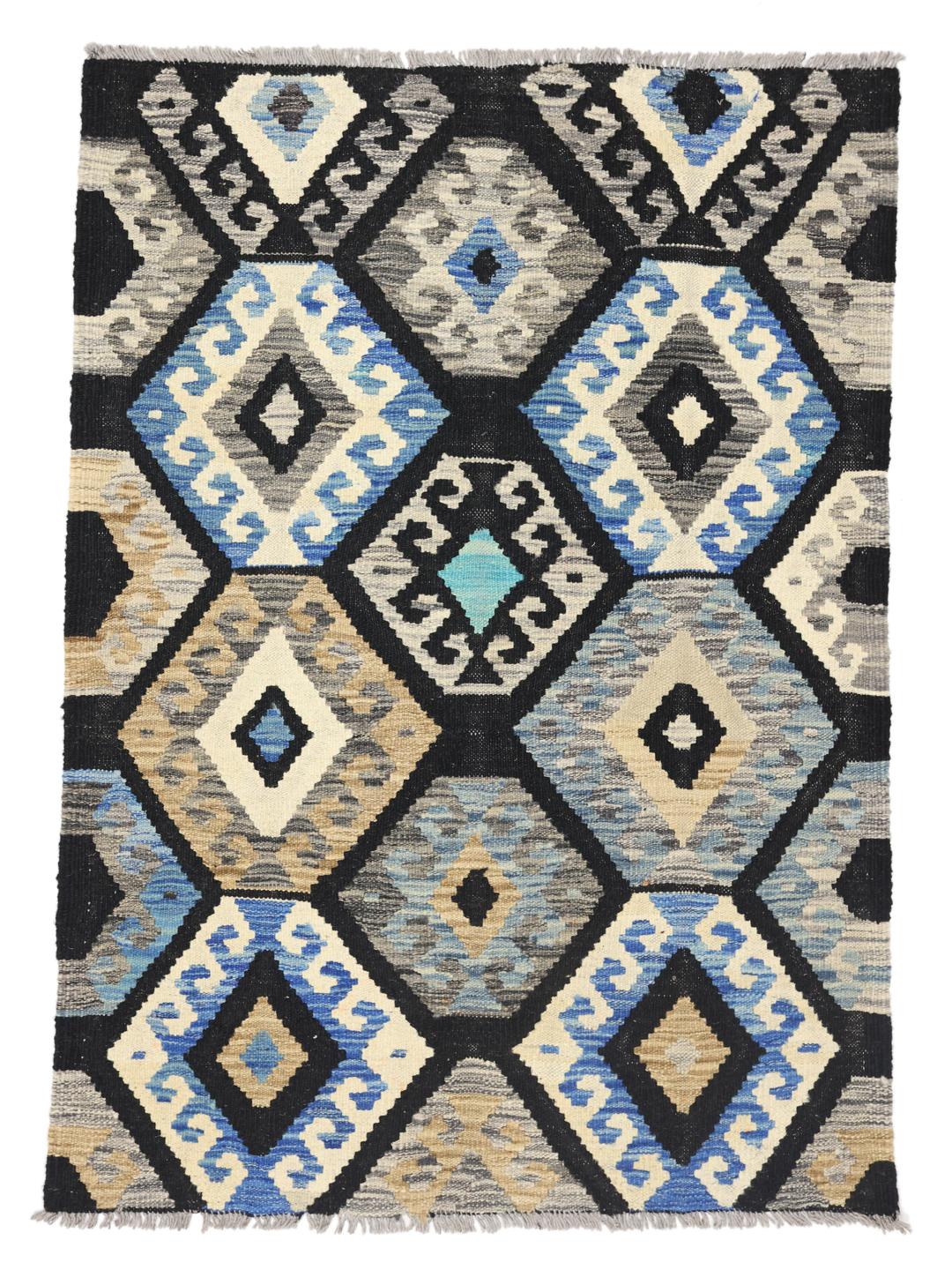
The visual language of these rugs is defined by bold, angular motifs. You will often find diamonds, triangles, and intricate decorative borders that reflect the tribal origins of the weaver. The use of natural dyes and traditional colour palettes, such as the deep blacks and blues seen here, anchors these pieces in the rich visual history of the Middle East.
Collecting Afghan Kelims is an investment in cultural heritage. They are valued not only for their aesthetic appeal but for the immense human skill they embody. By choosing this rug, you are preserving a centuries-old craft tradition and bringing a piece of living history into your modern home.