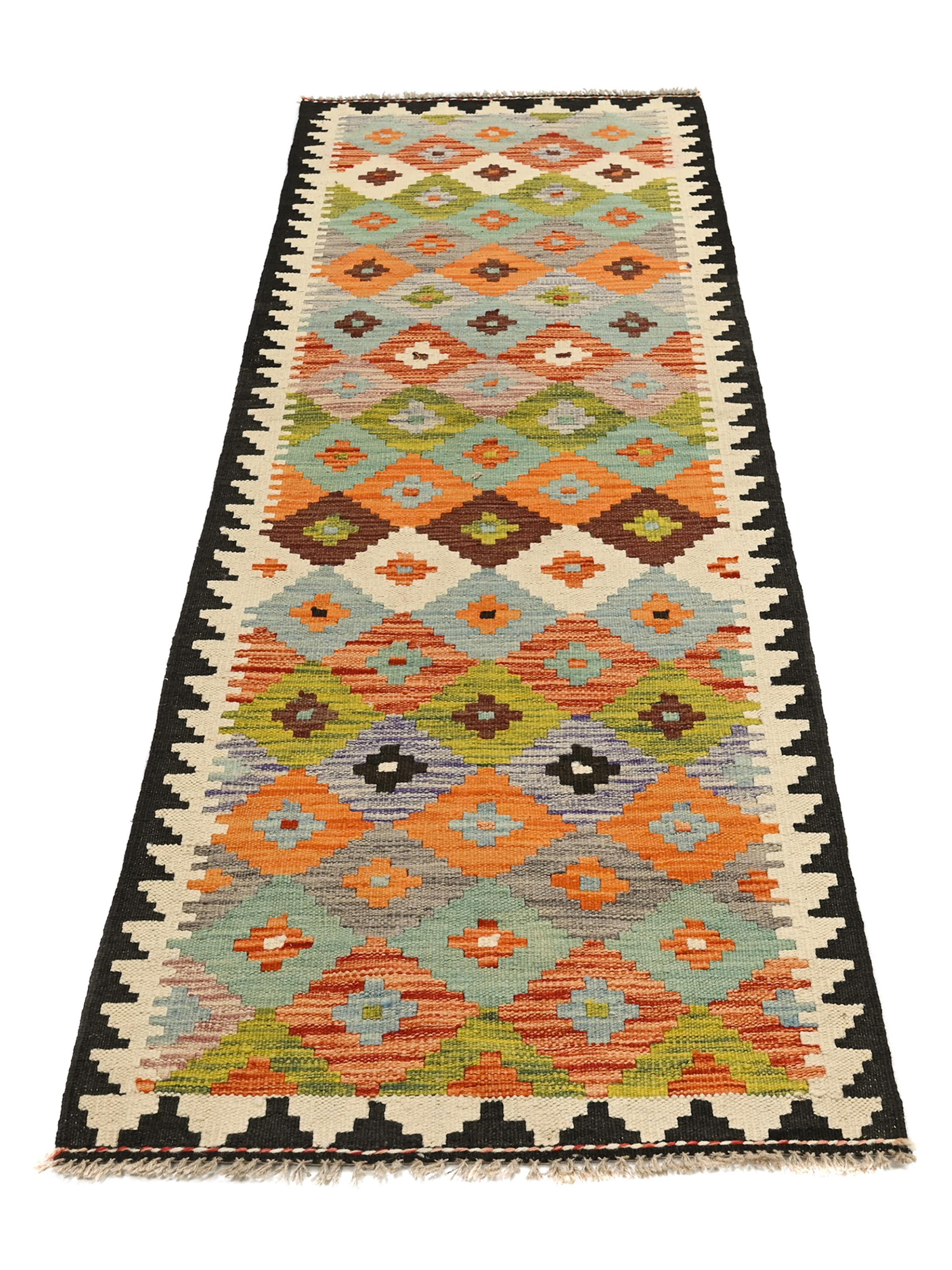
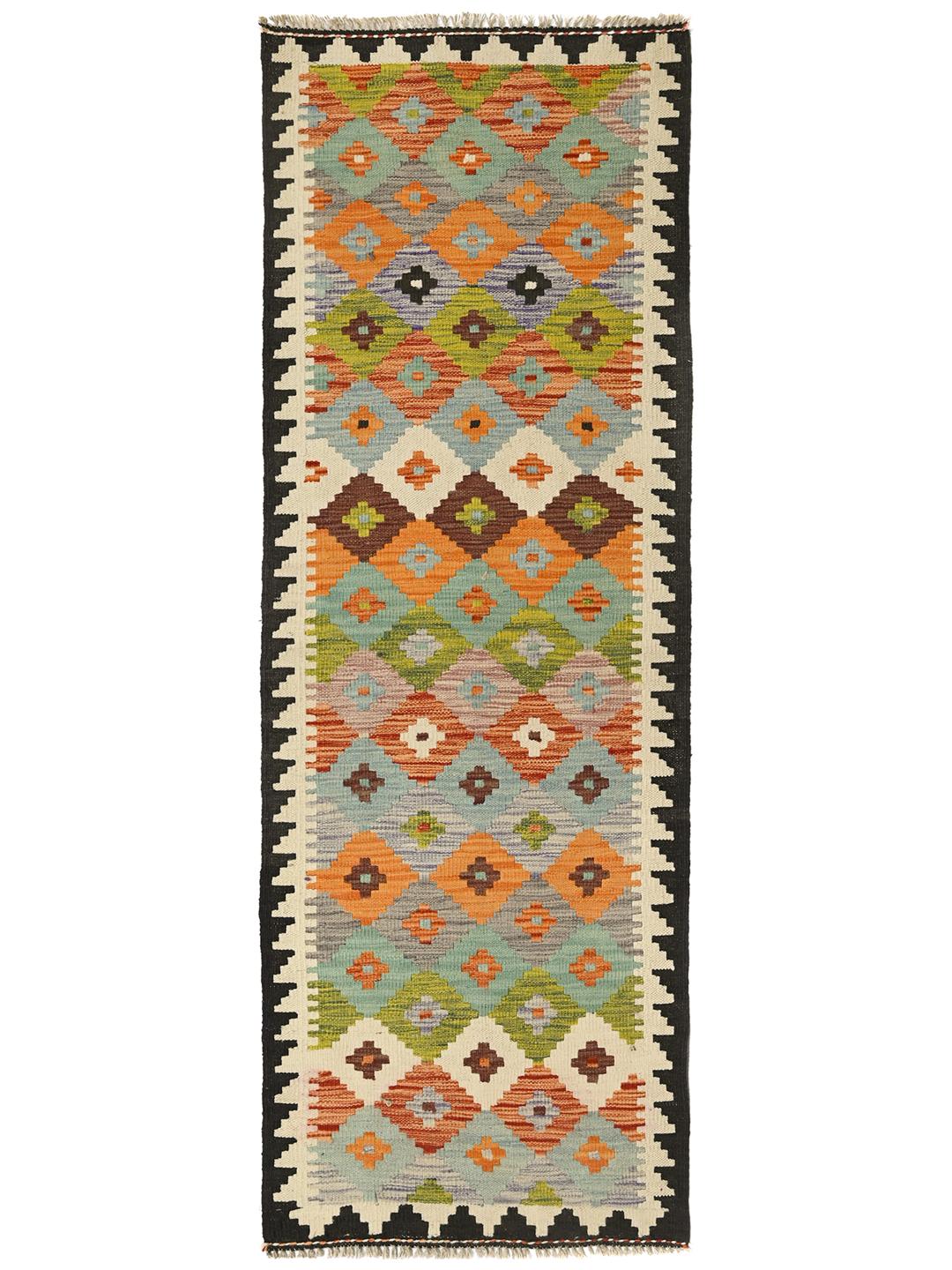
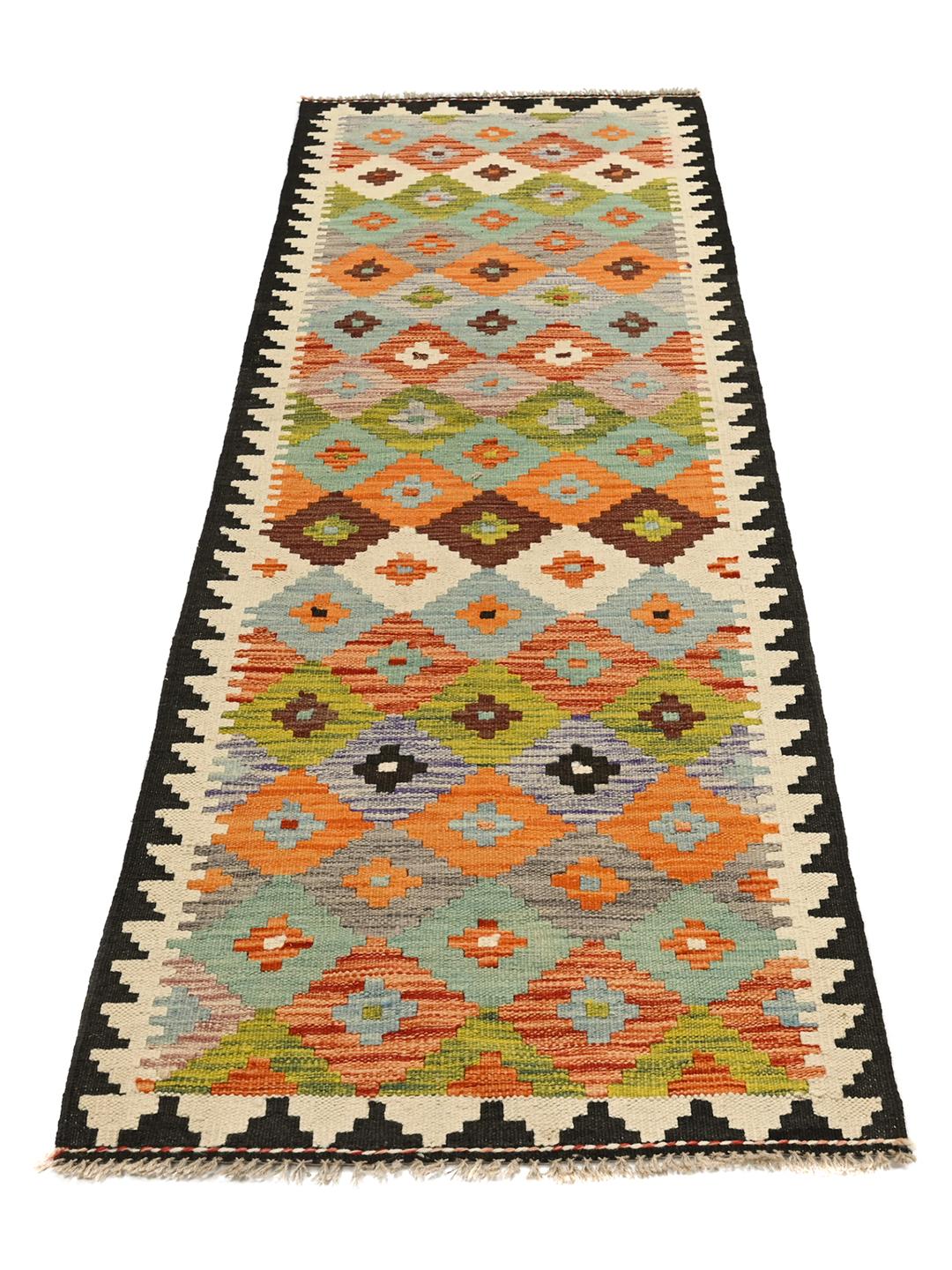
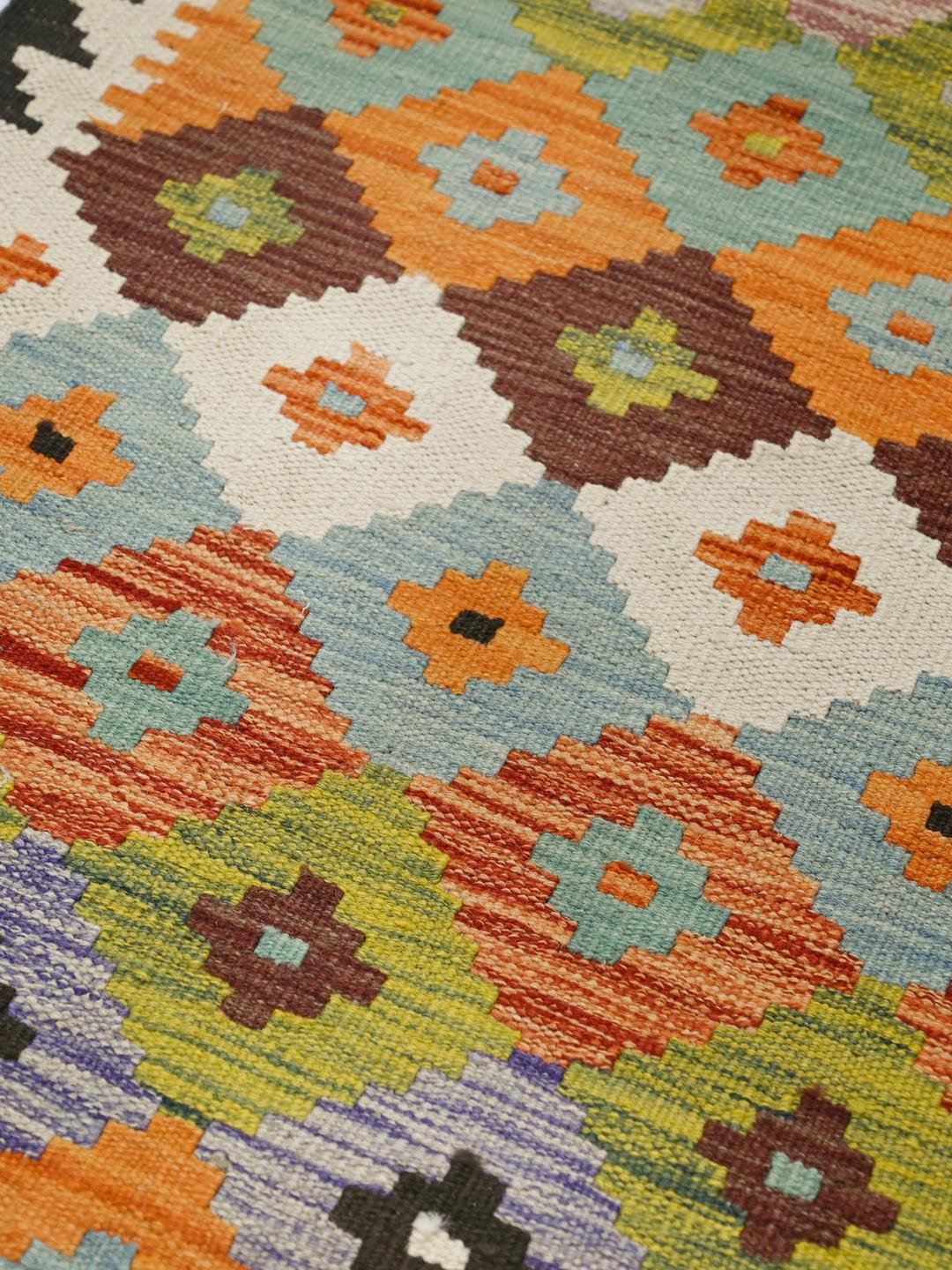
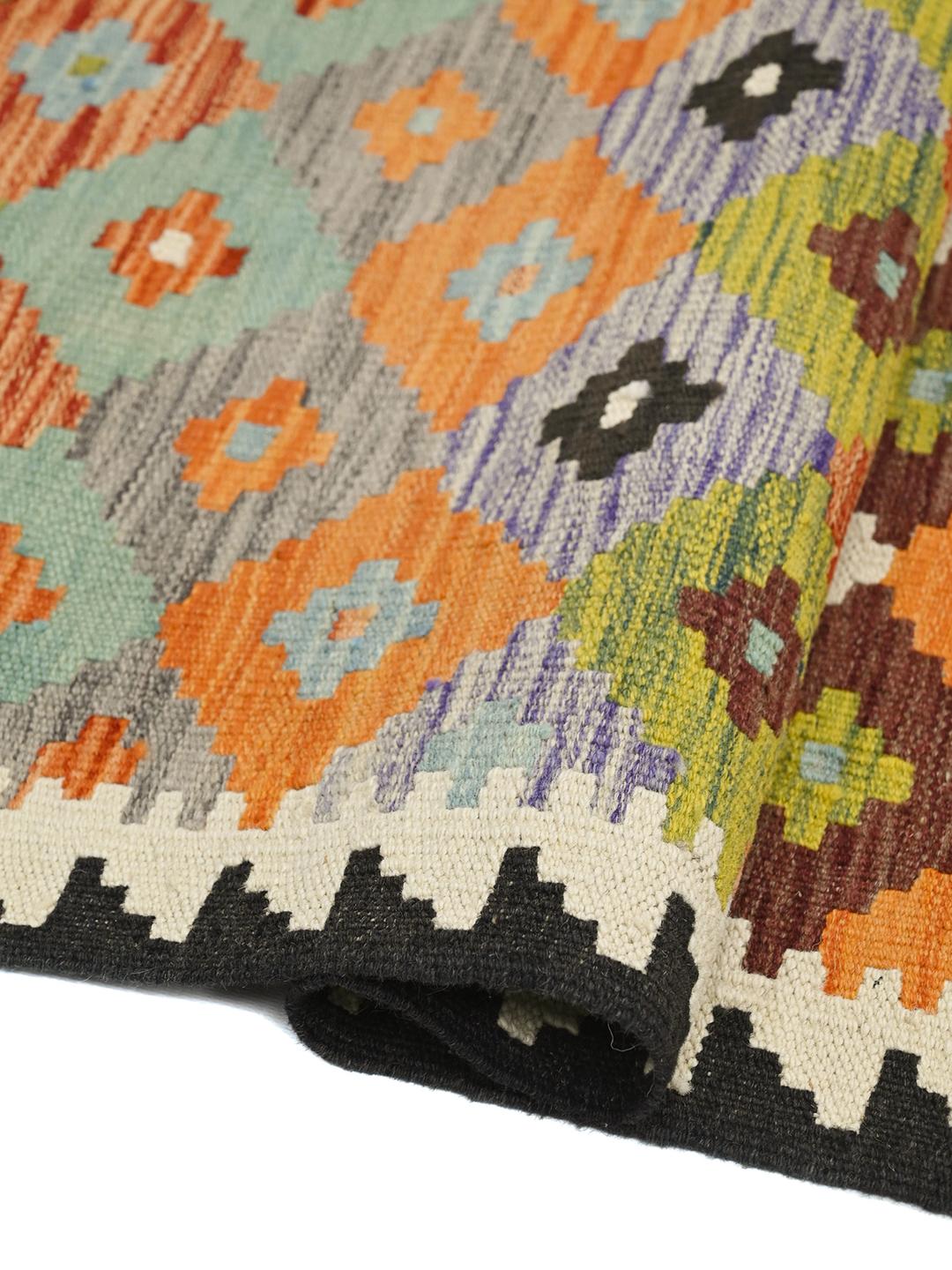
The Kelim tradition in Afghanistan is deeply rooted in the nomadic history of the region, where these flat-woven rugs served as essential, portable furnishings. Historically, they were used as floor coverings, blankets, or even saddlebags, reflecting the need for versatile and durable items that could withstand the rigours of a travelling lifestyle.
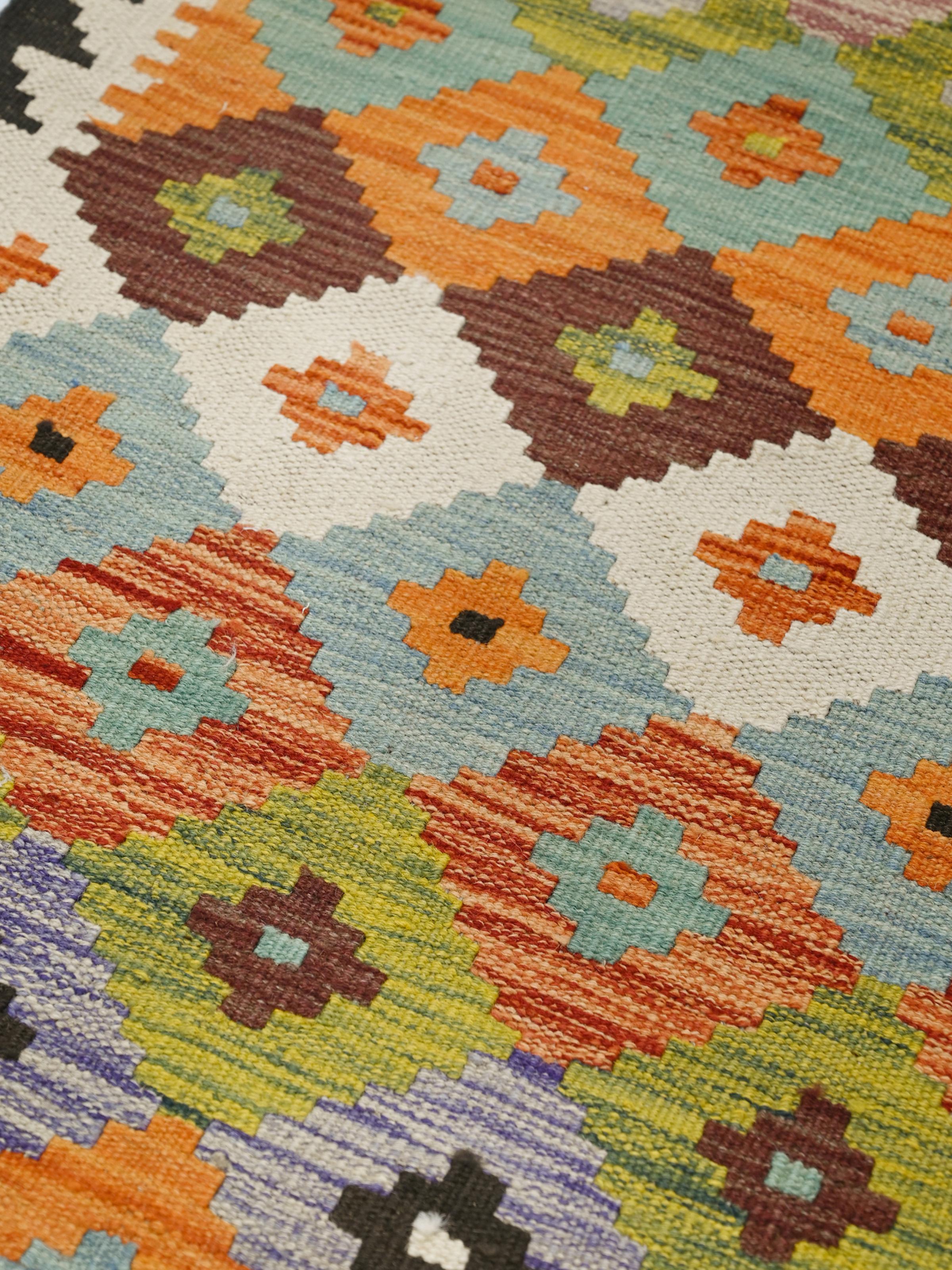
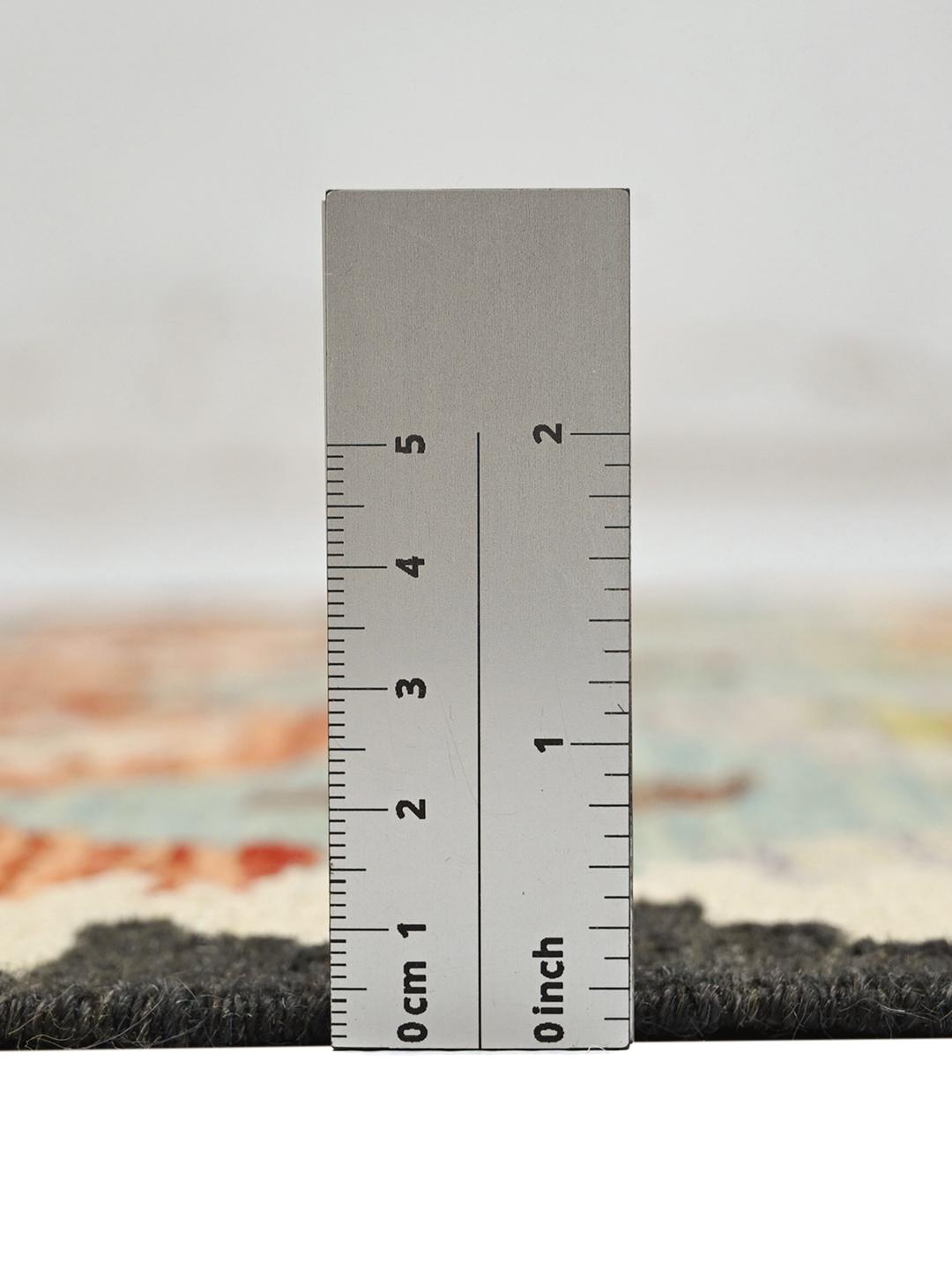
The term 'Kelim' refers specifically to the tapestry-weave construction, which lacks a pile. This technique is what gives these rugs their signature thin, lightweight profile. By using a warp-faced or weft-faced weave, artisans are able to create sharp, clear geometric designs that are visible from both sides, a hallmark of traditional craftsmanship that has been passed down through generations.
Design-wise, these rugs are defined by their bold geometric language. The use of diamonds, triangles, and repeating motifs is not merely decorative; these symbols often carry cultural significance, representing protection, fertility, or the natural landscape of the mountains in the Middle East. The vibrant colours are traditionally derived from natural dyes, giving them a depth and character that synthetic alternatives simply cannot match.
Today, these rugs are highly valued by collectors and enthusiasts who appreciate the human effort behind every thread. Owning a Kelim is more than just purchasing a floor covering; it is an investment in a living tradition. Each piece acts as a bridge to the past, preserving the aesthetic identity of weaving from the Middle East while providing a warm, grounded presence in contemporary homes.