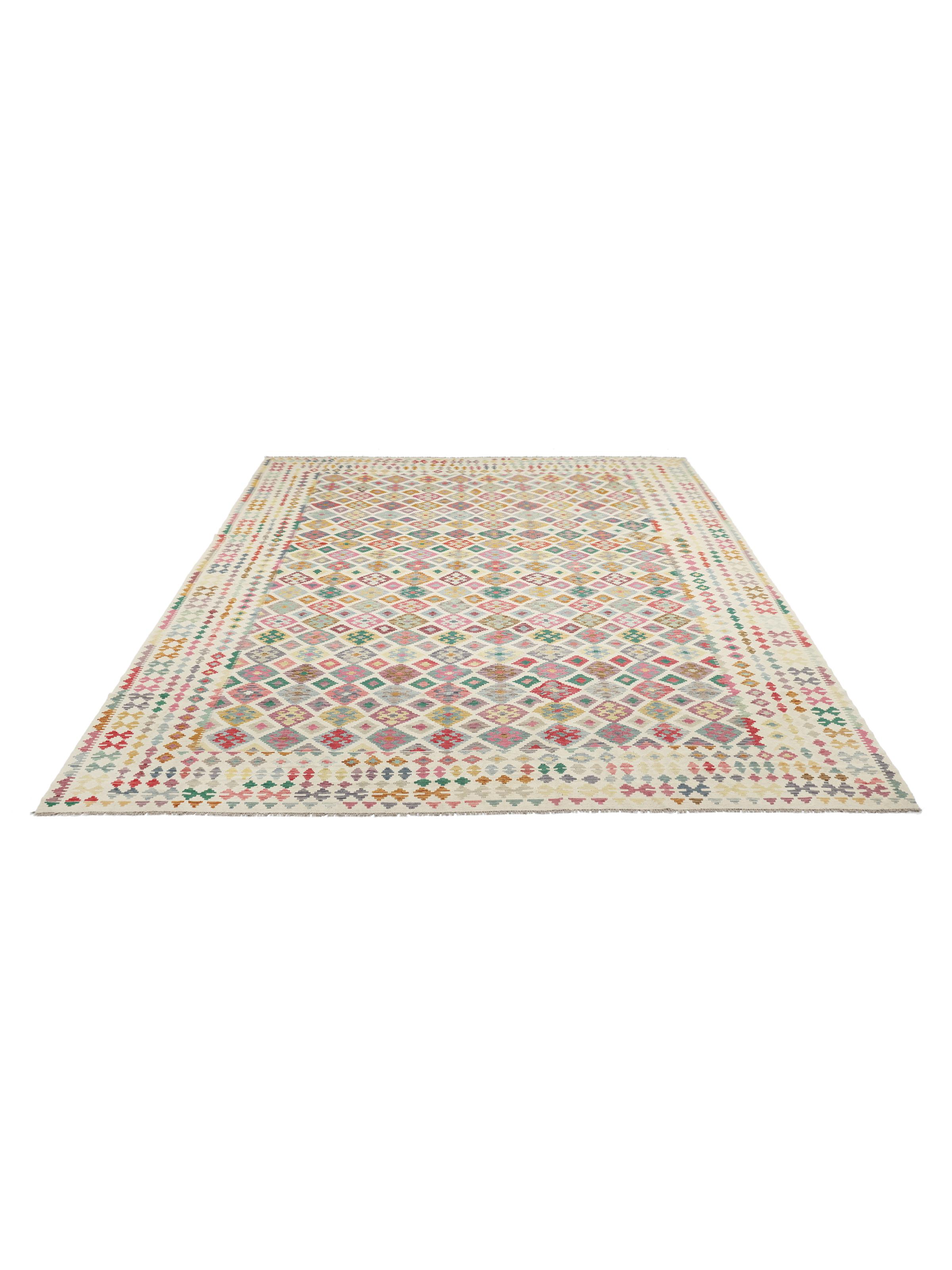
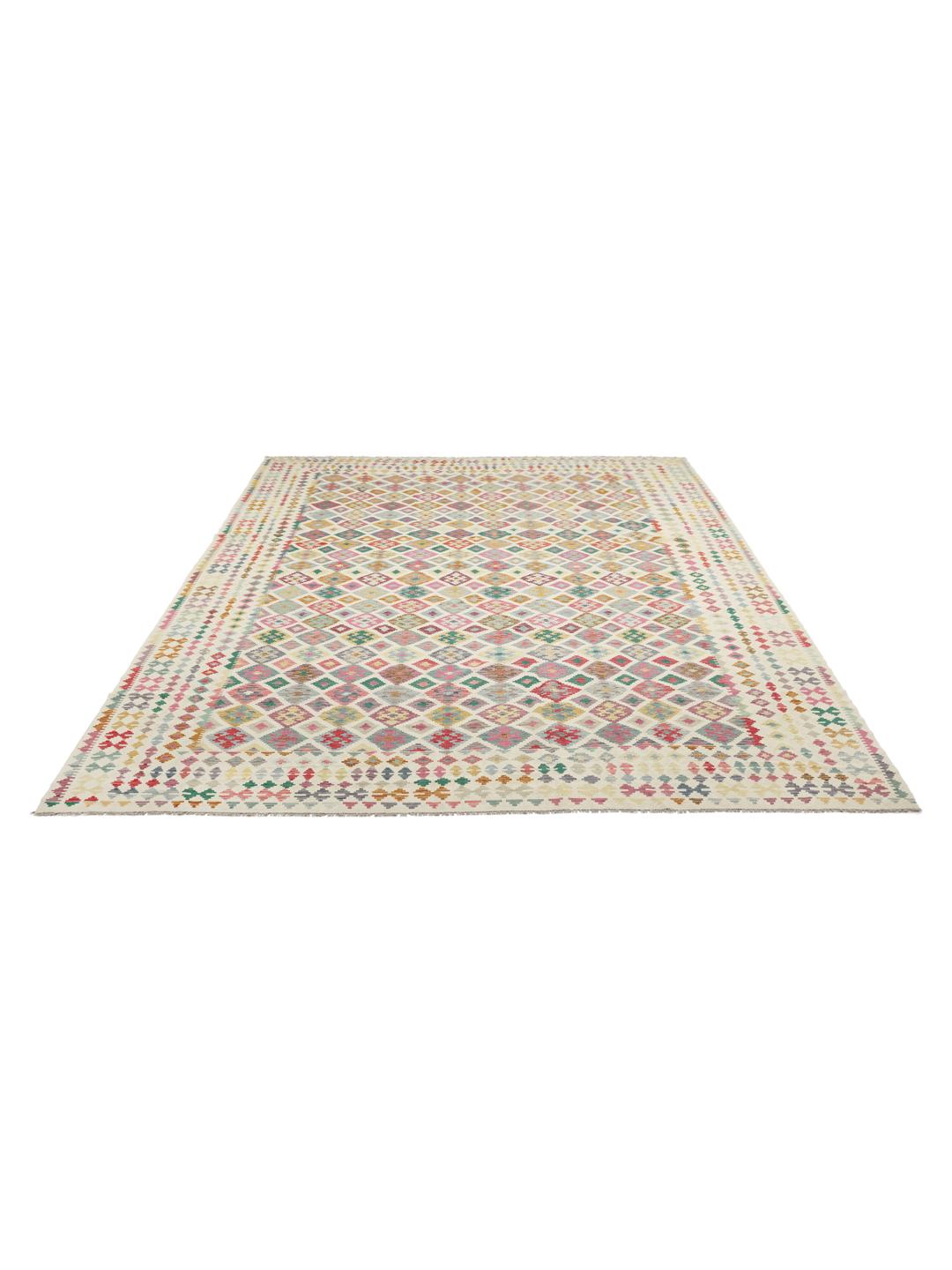
Kelim rugs have long been a cornerstone of nomadic life across the Middle East and Central Asia. Originally designed as functional, lightweight textiles that could be easily transported, these flat-woven rugs served as everything from floor coverings to storage bags and tent dividers. The tradition of weaving these pieces in Afghanistan is particularly rich, reflecting a history of diverse cultural influences and deep-seated artisanal practices.
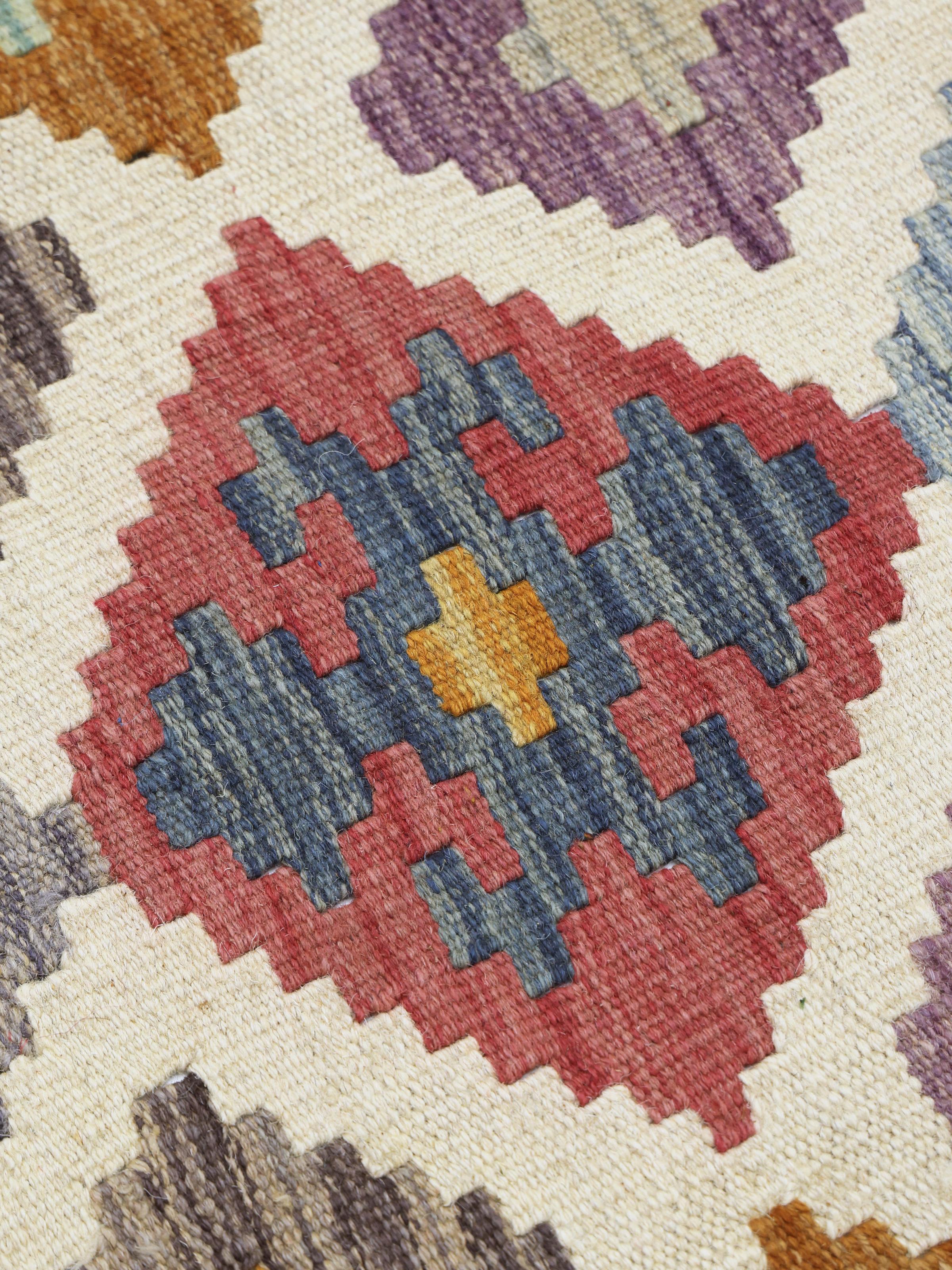
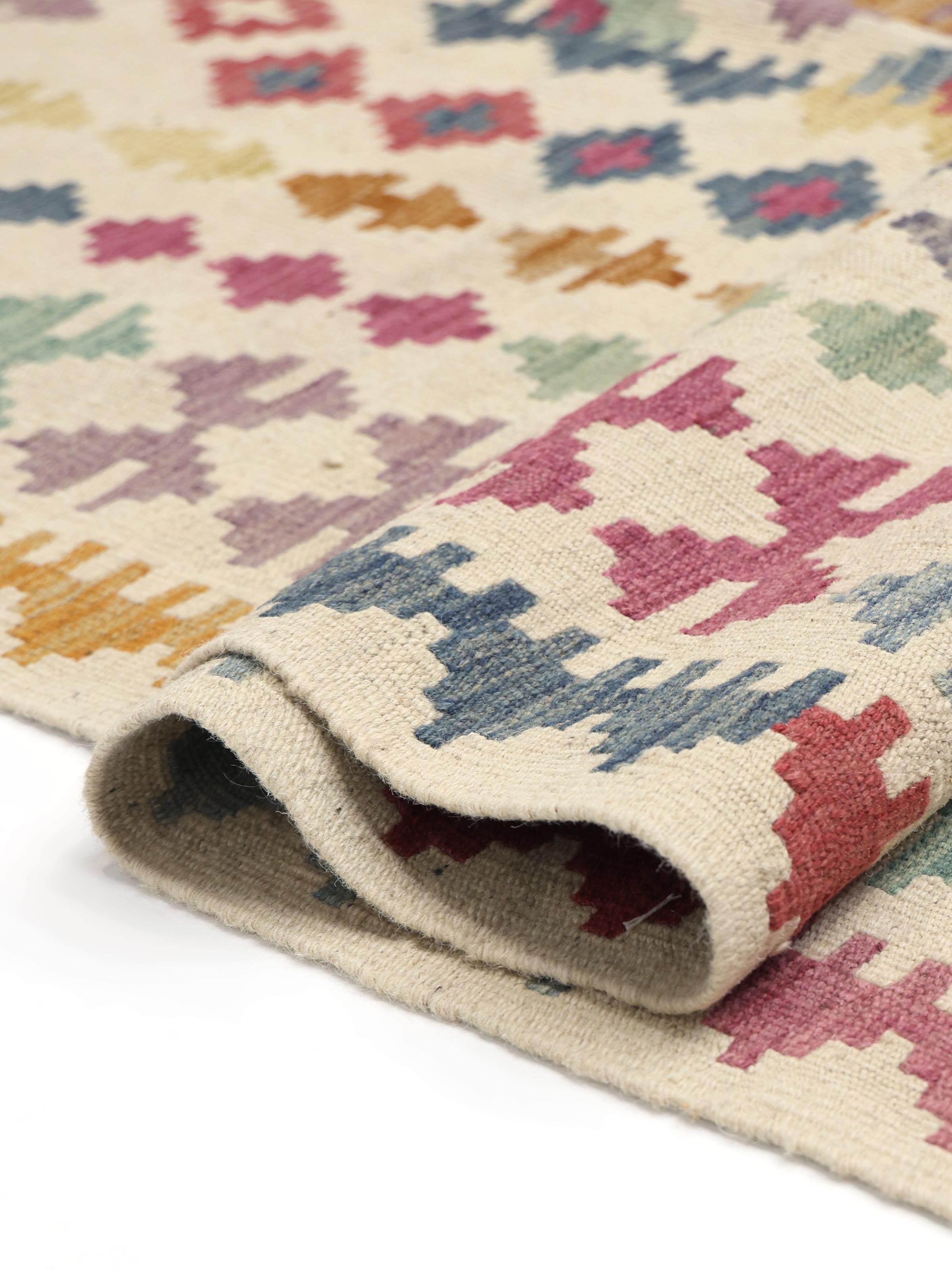
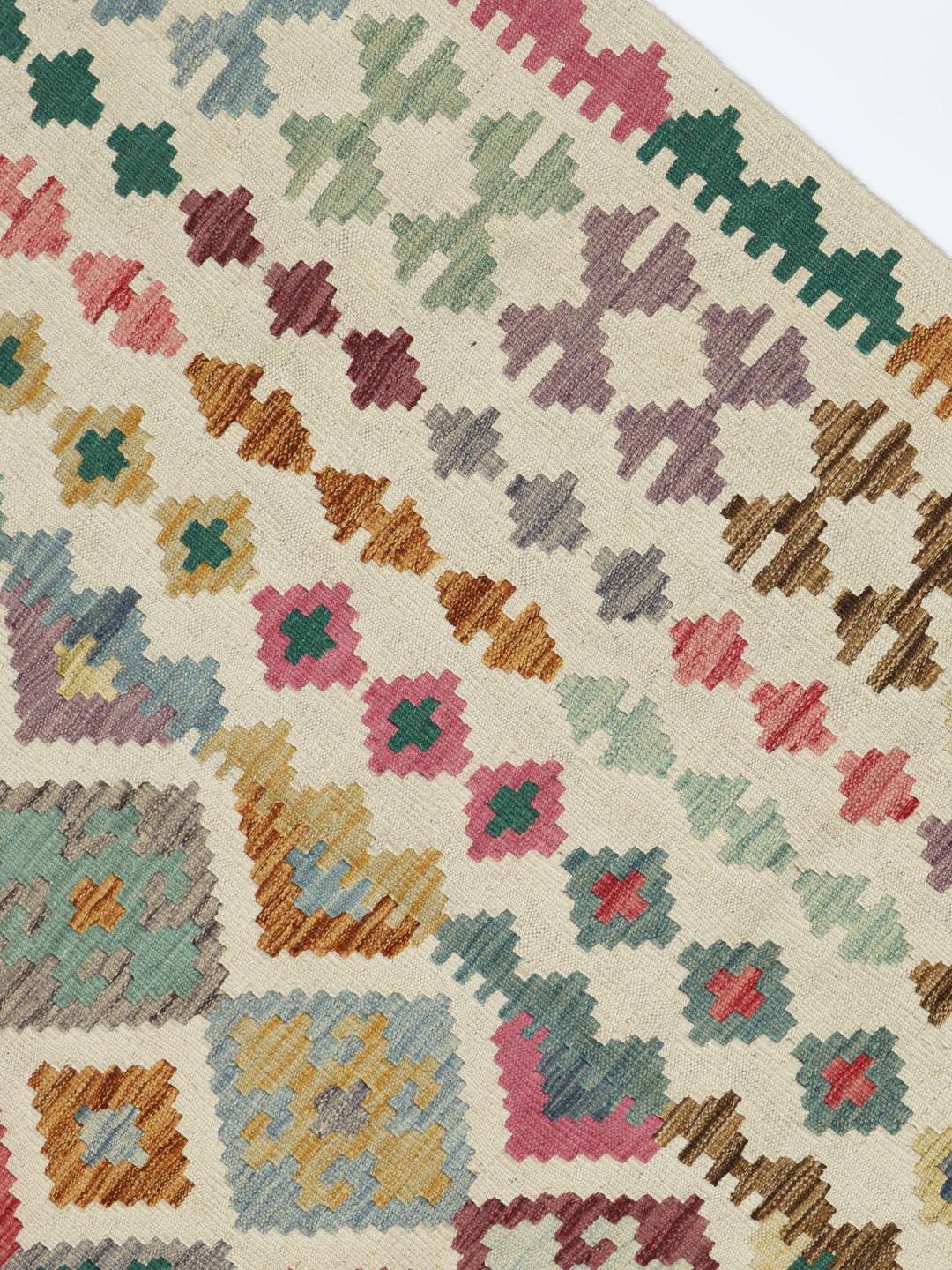
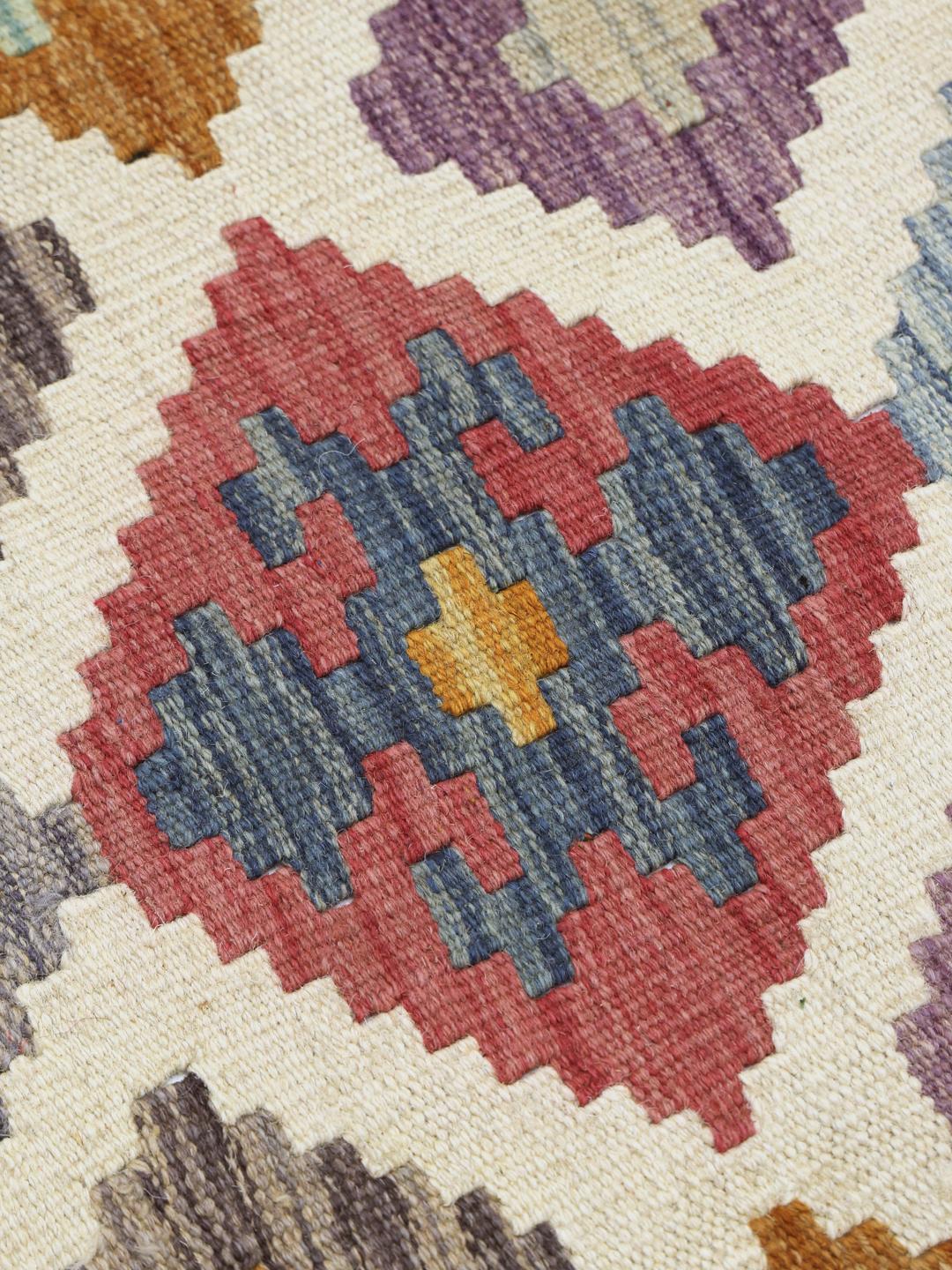
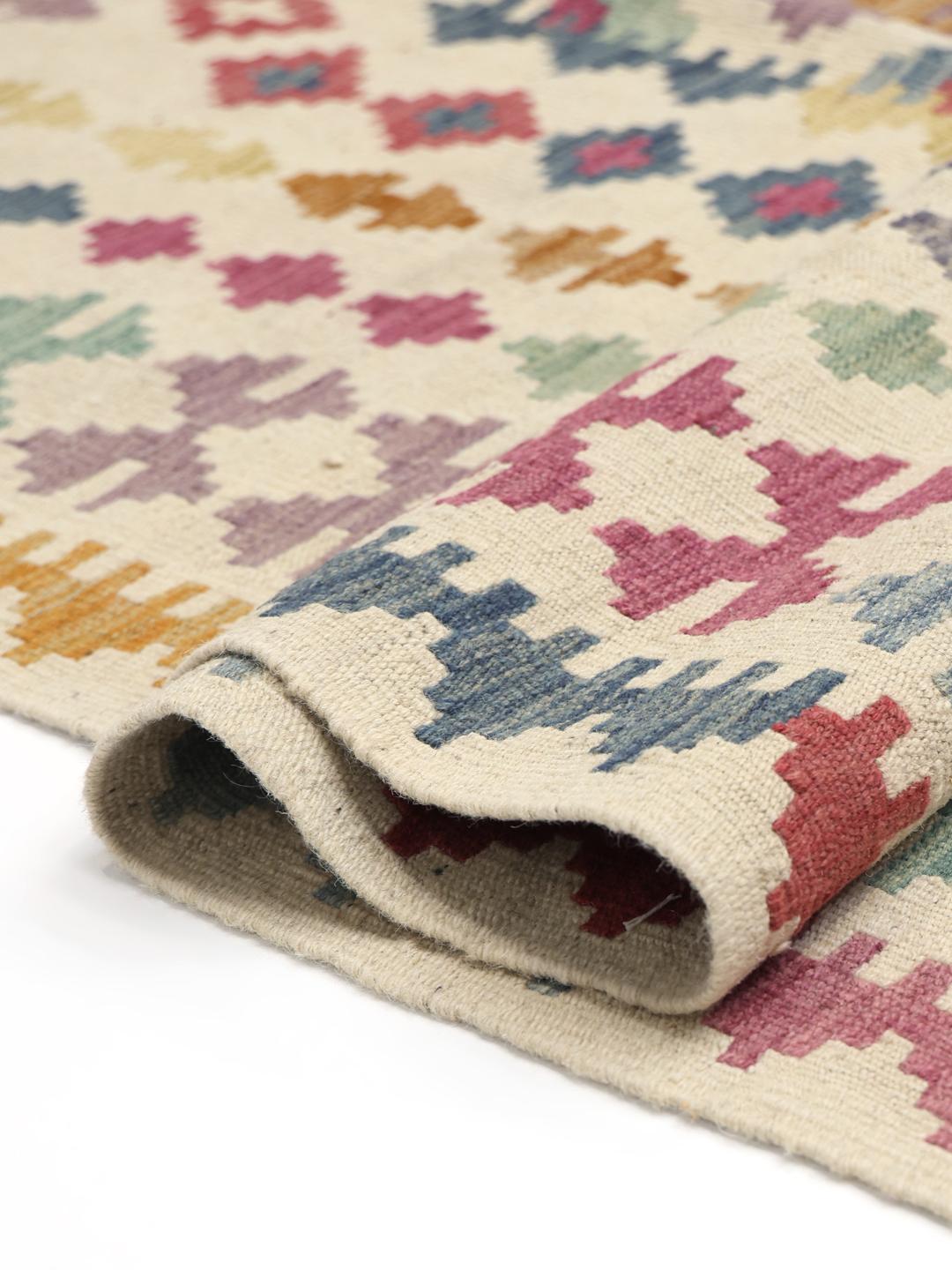
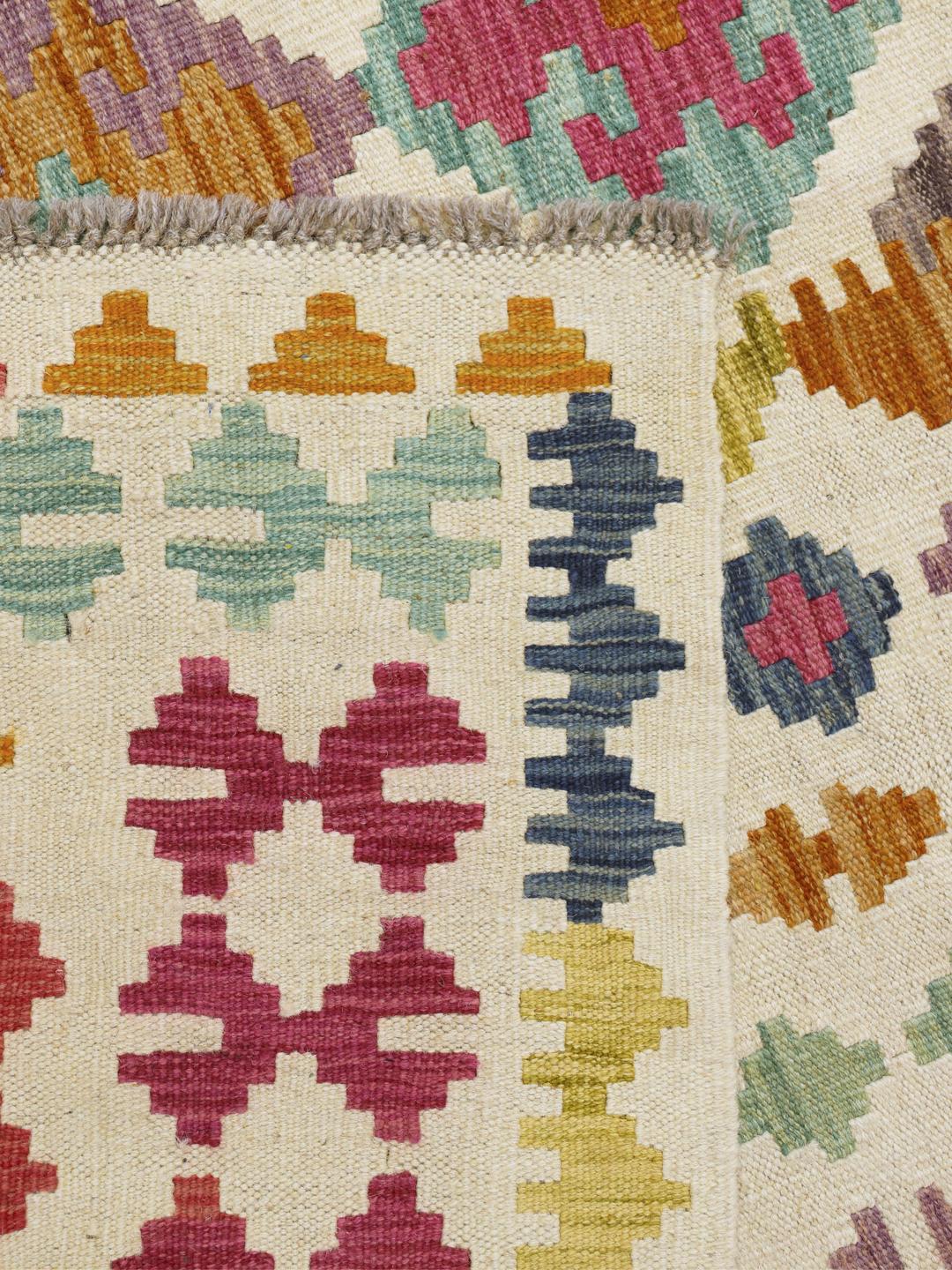
The term 'Kelim' refers specifically to the flat-weaving technique used, where there is no pile. Instead, the coloured weft threads are woven tightly over the warp threads to create the pattern. This method results in a durable, reversible rug that is prized for its clean lines and graphic clarity. The absence of pile allows the intricate geometric motifs to stand out with remarkable precision, showcasing the weaver's ability to count and manage complex colour changes.
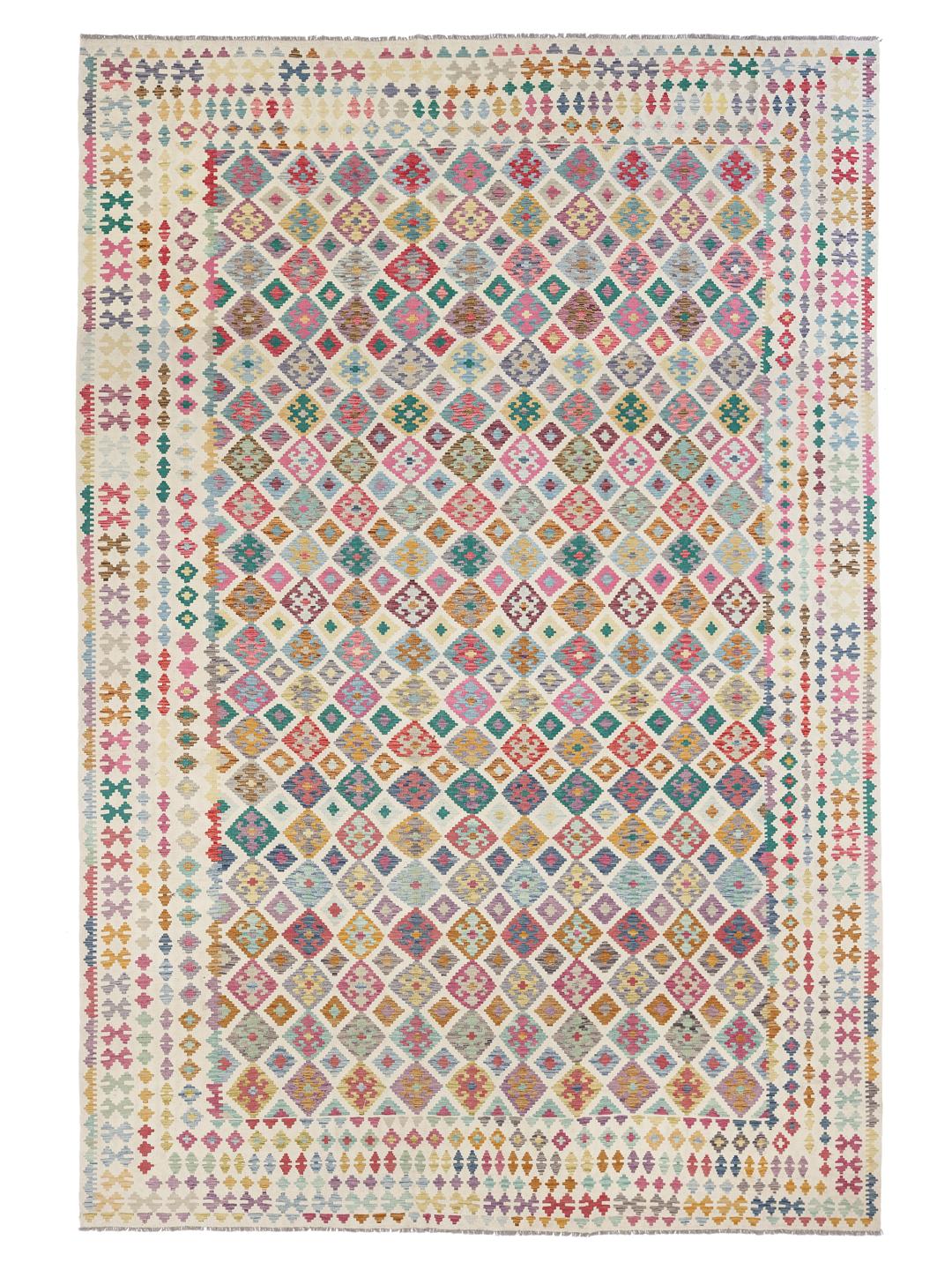
Signature design elements in Afghan Kelims often revolve around geometric shapes, with the diamond being a particularly common and auspicious motif. These patterns are not merely decorative but are rooted in a visual language that has evolved over centuries. The use of vibrant, contrasting colours is a hallmark of this tradition, often derived from natural dyes that age beautifully over time, giving each rug a lived-in, sophisticated appearance.
Today, these rugs are highly sought after by collectors and enthusiasts who value the human element in home decor. Owning a Kelim is a way to preserve a tangible link to ancient weaving traditions while adding a layer of cultural depth to a modern home. Each rug represents a unique chapter in the story of Afghan textile art, making it a valued acquisition for anyone who appreciates the marriage of history, skill, and enduring design.