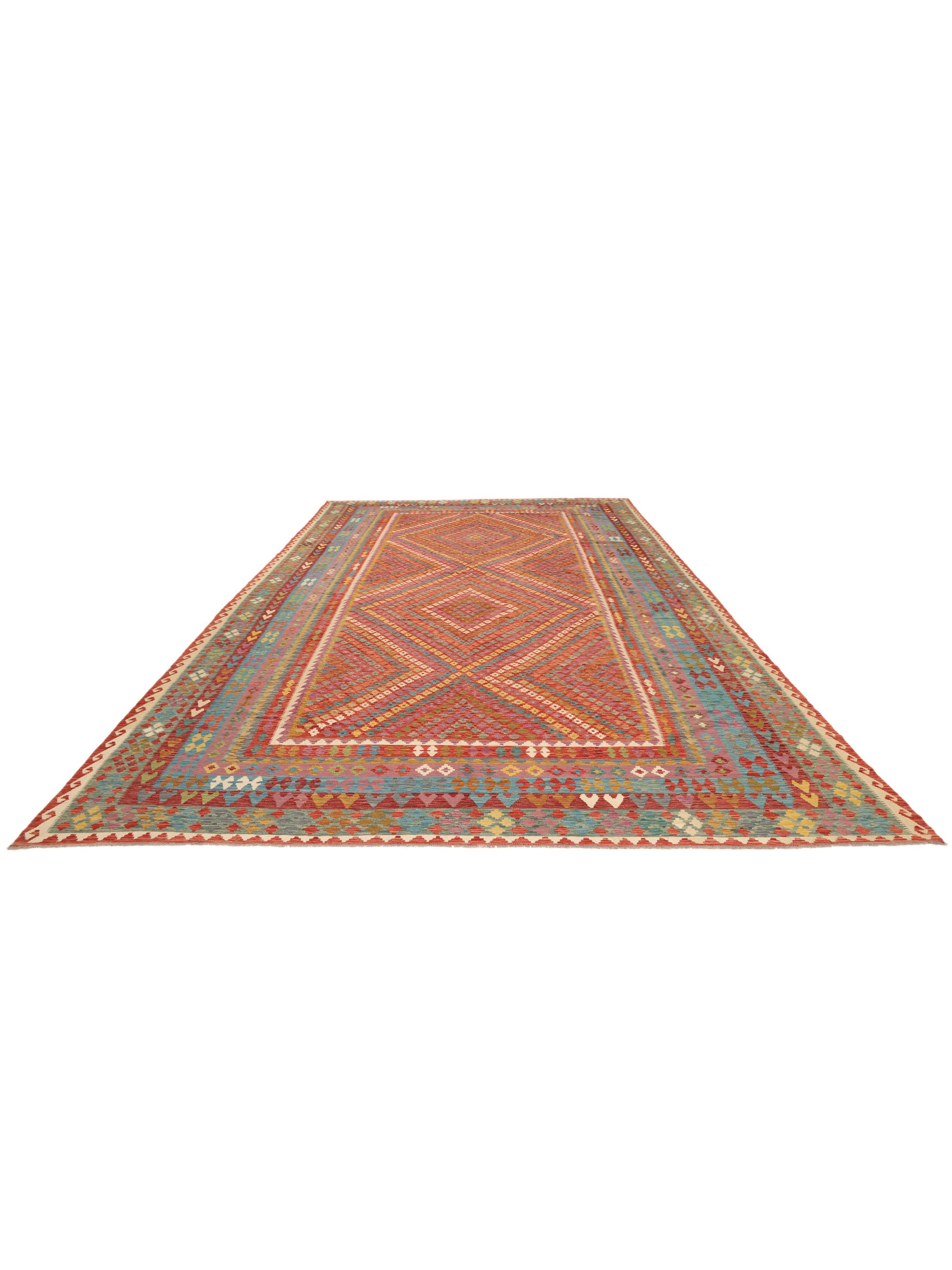
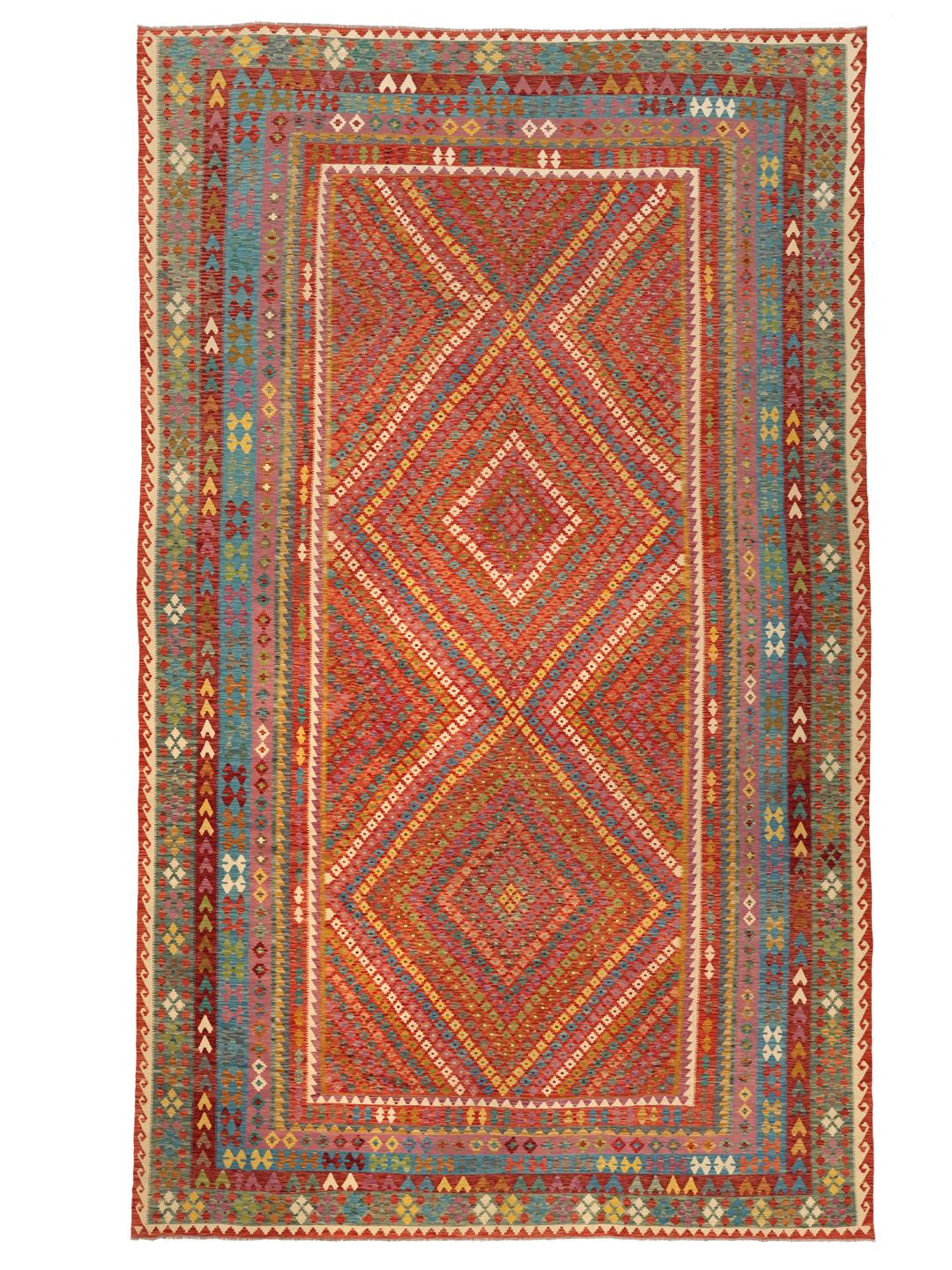
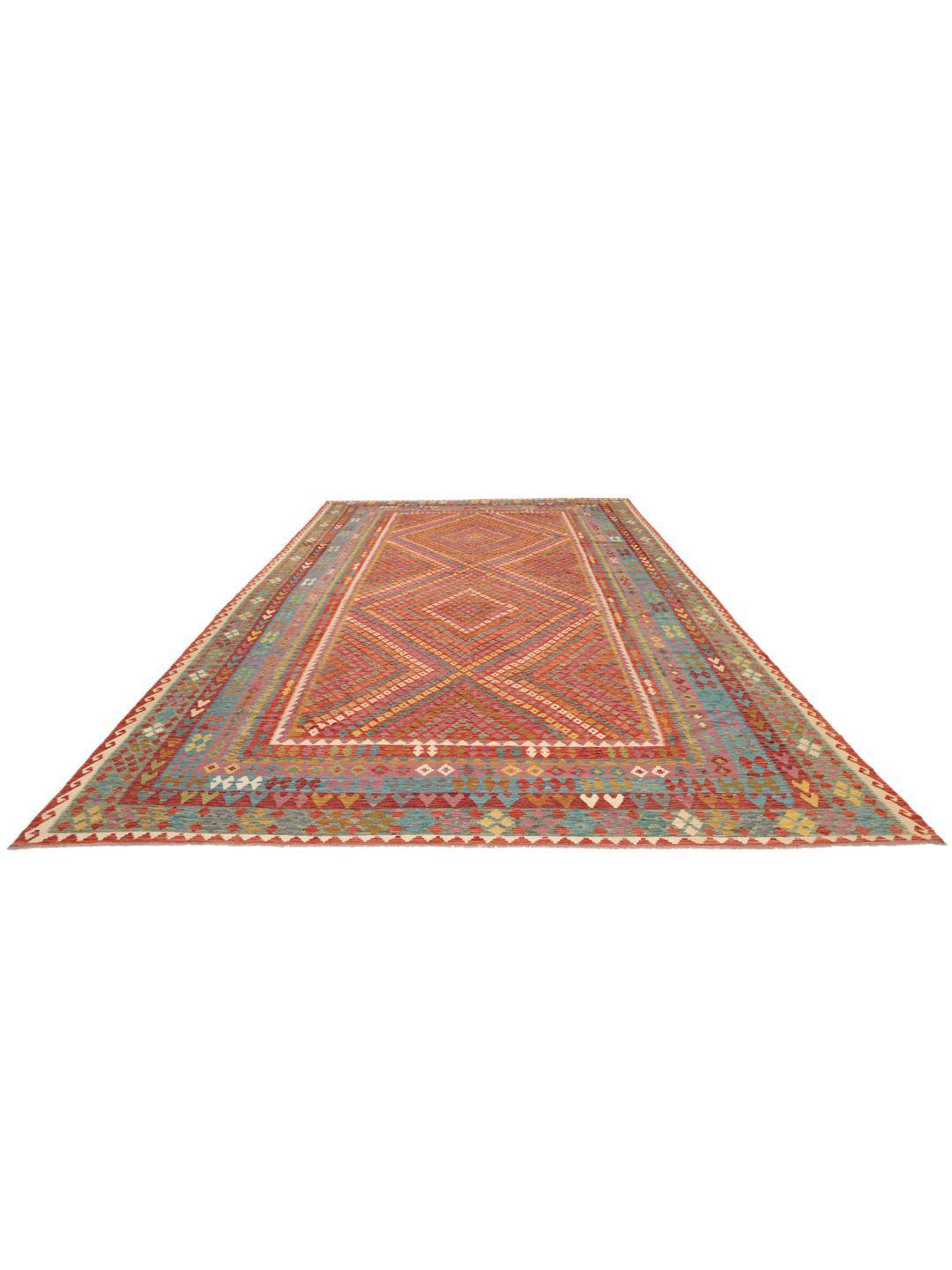
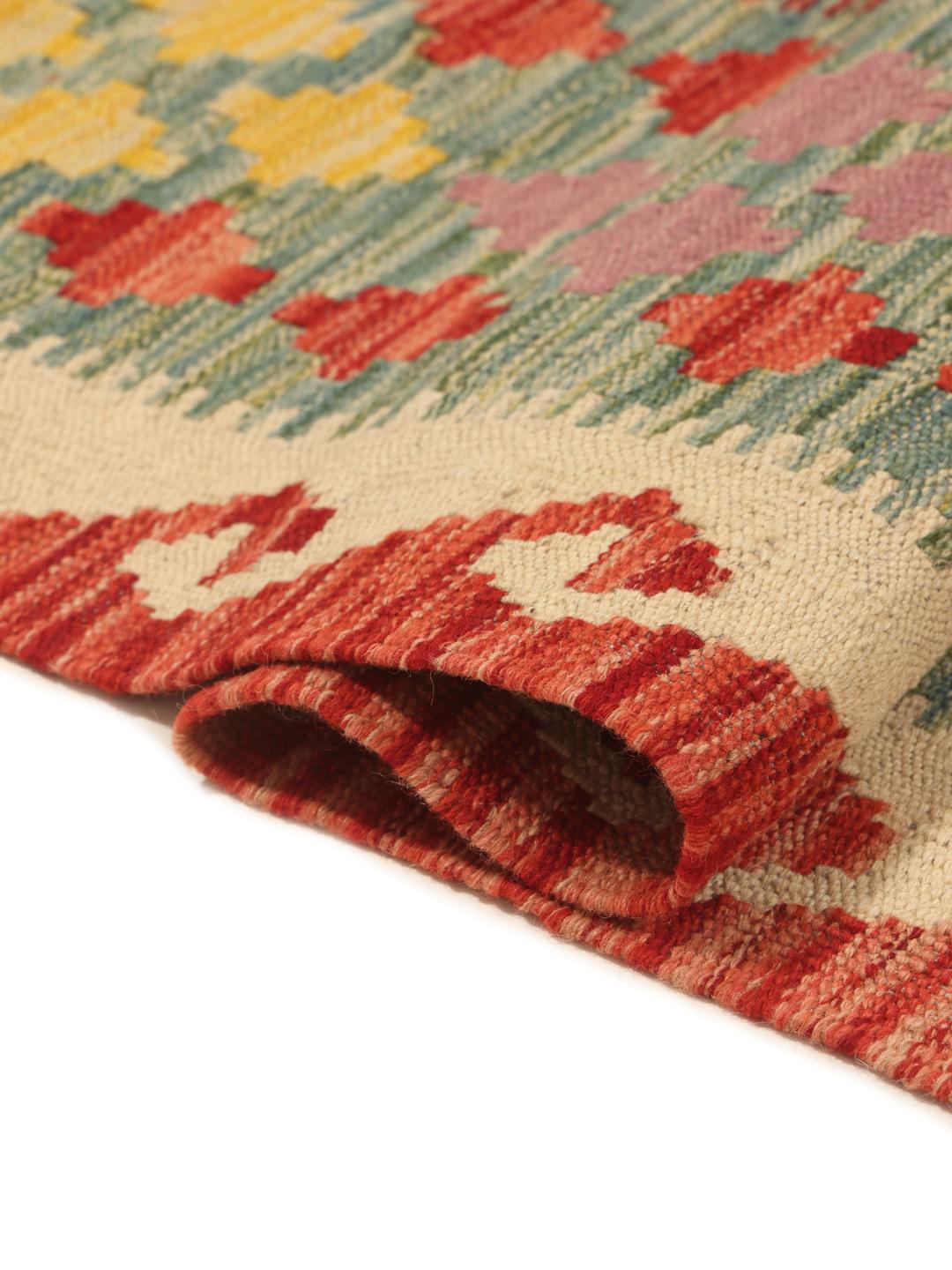
The Kelim rugs of Afghanistan are deeply rooted in the nomadic and village traditions of the Middle East. For centuries, these flat-woven textiles have served as essential elements of domestic life, functioning as everything from floor coverings to storage bags and wall hangings. The evolution of the Afghan Kelim is a story of cultural resilience, where ancient weaving techniques have been passed down through generations, maintaining a connection to the heritage of the Silk Road.
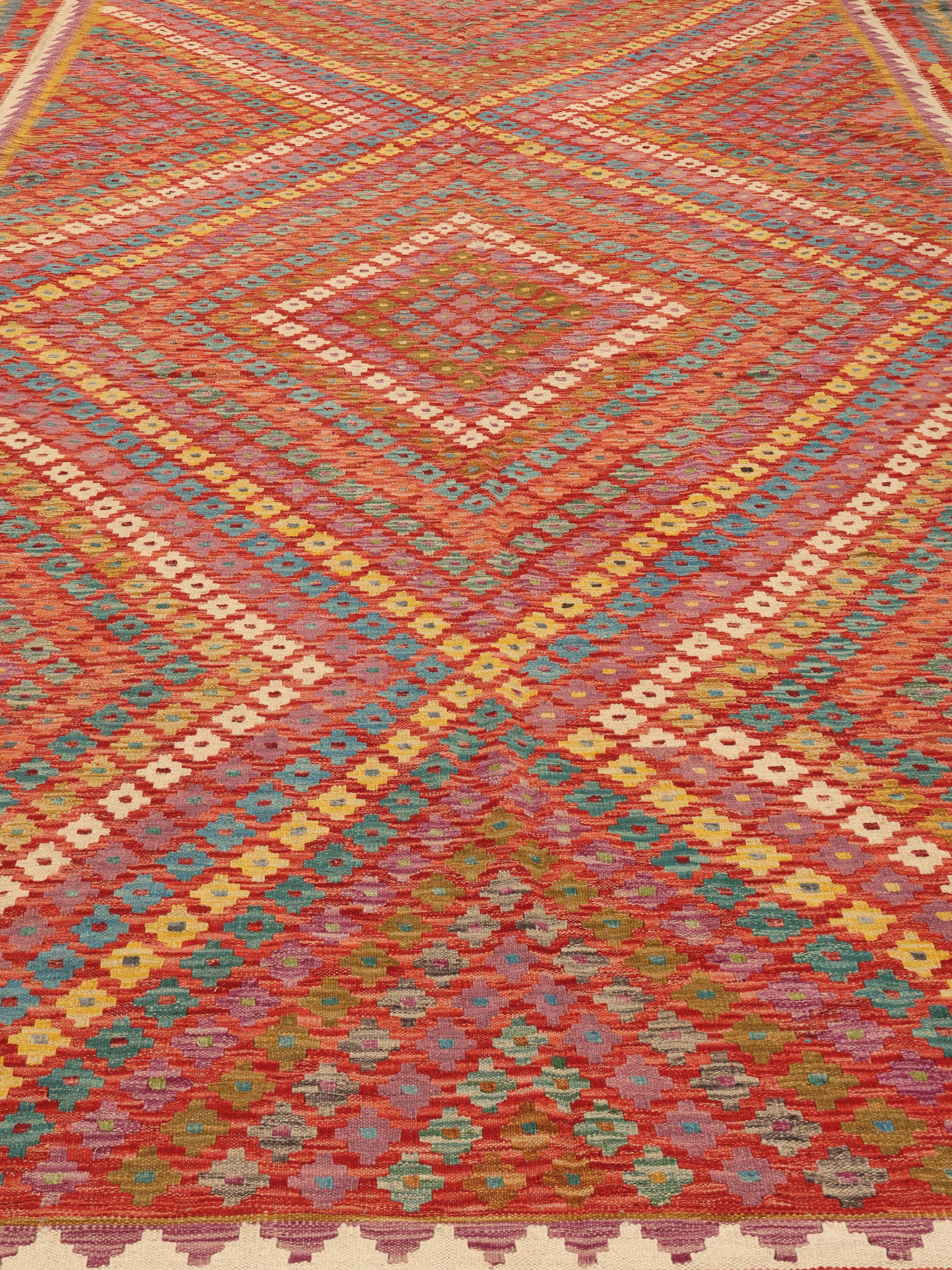
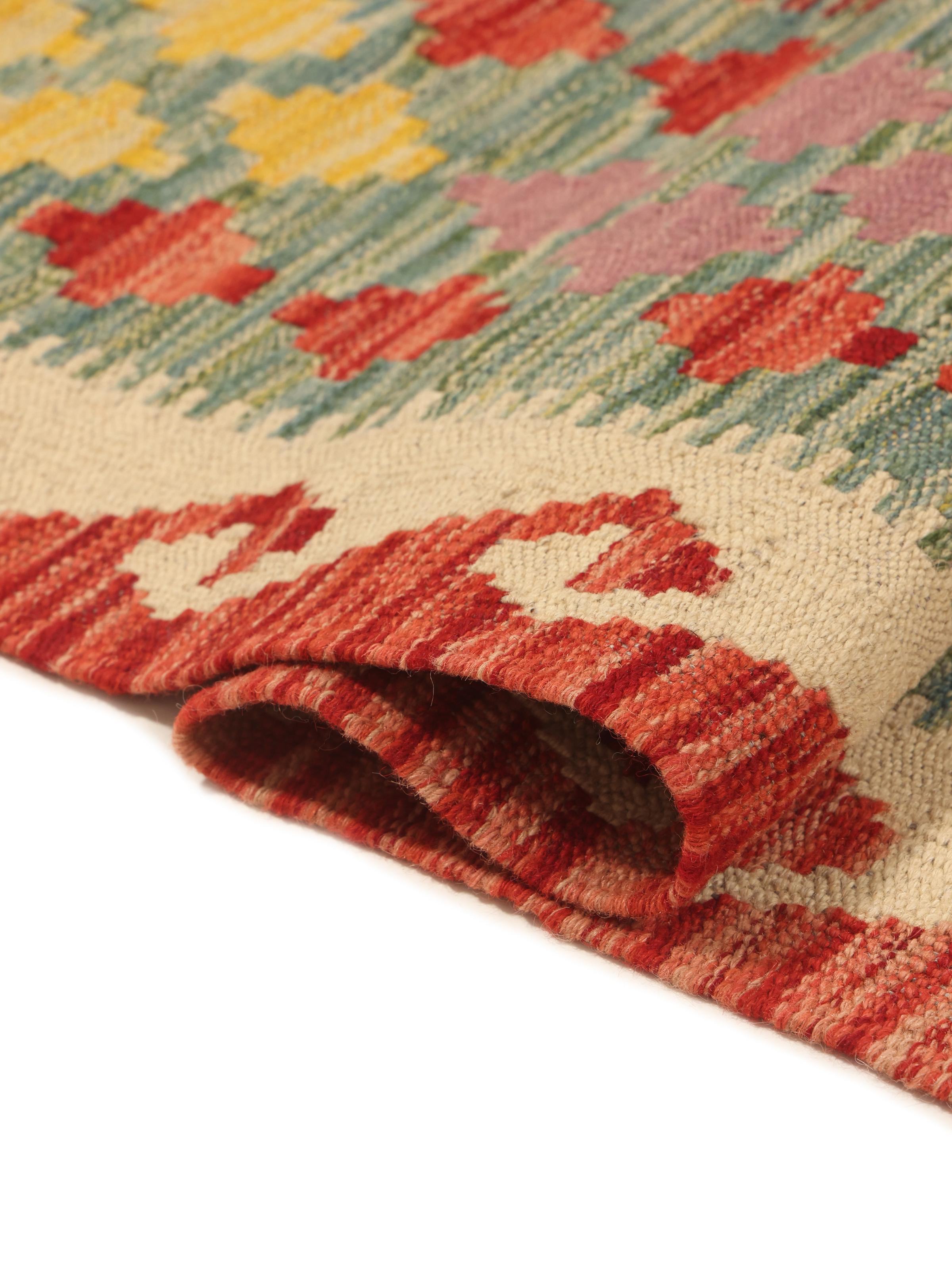
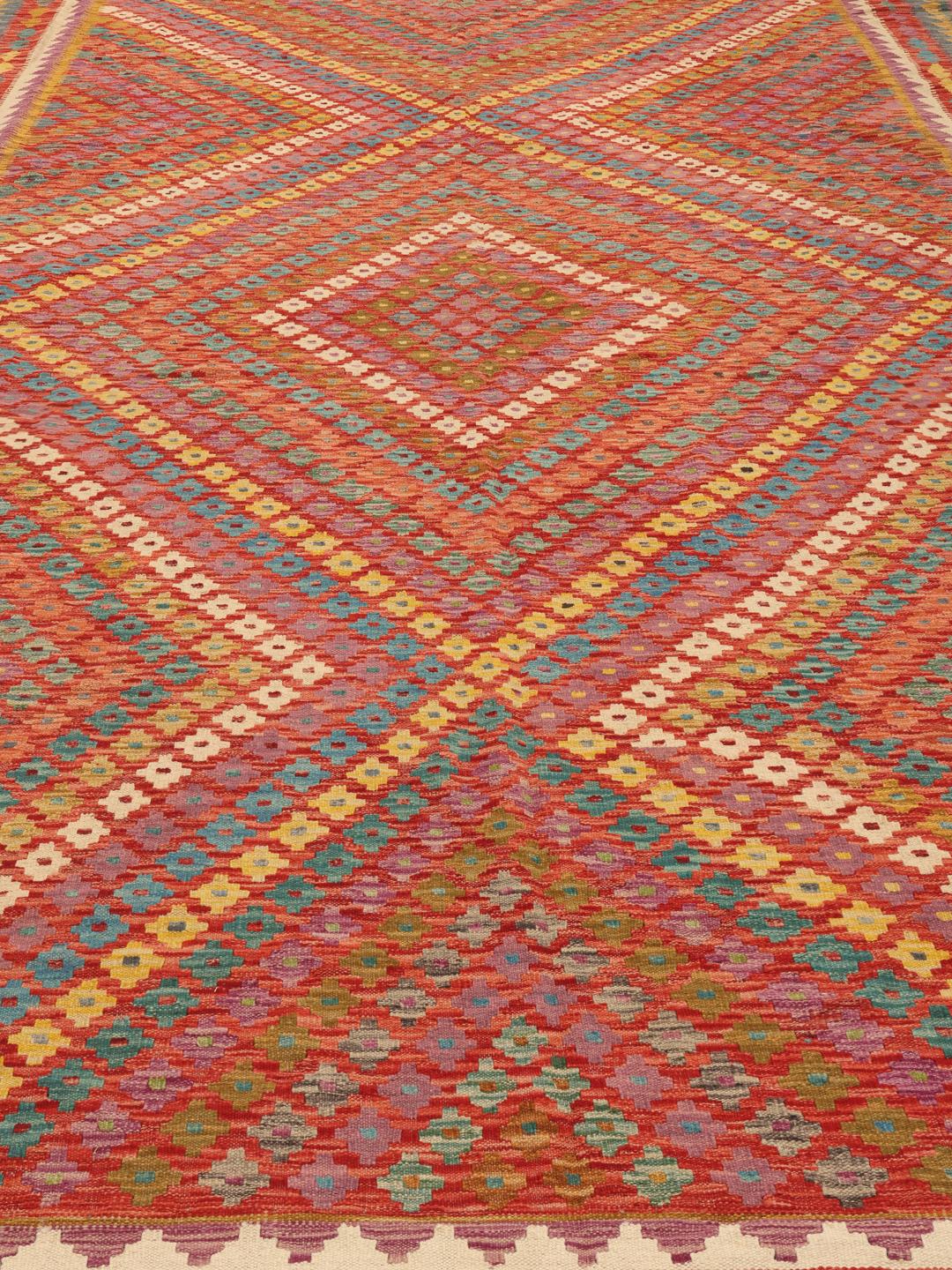
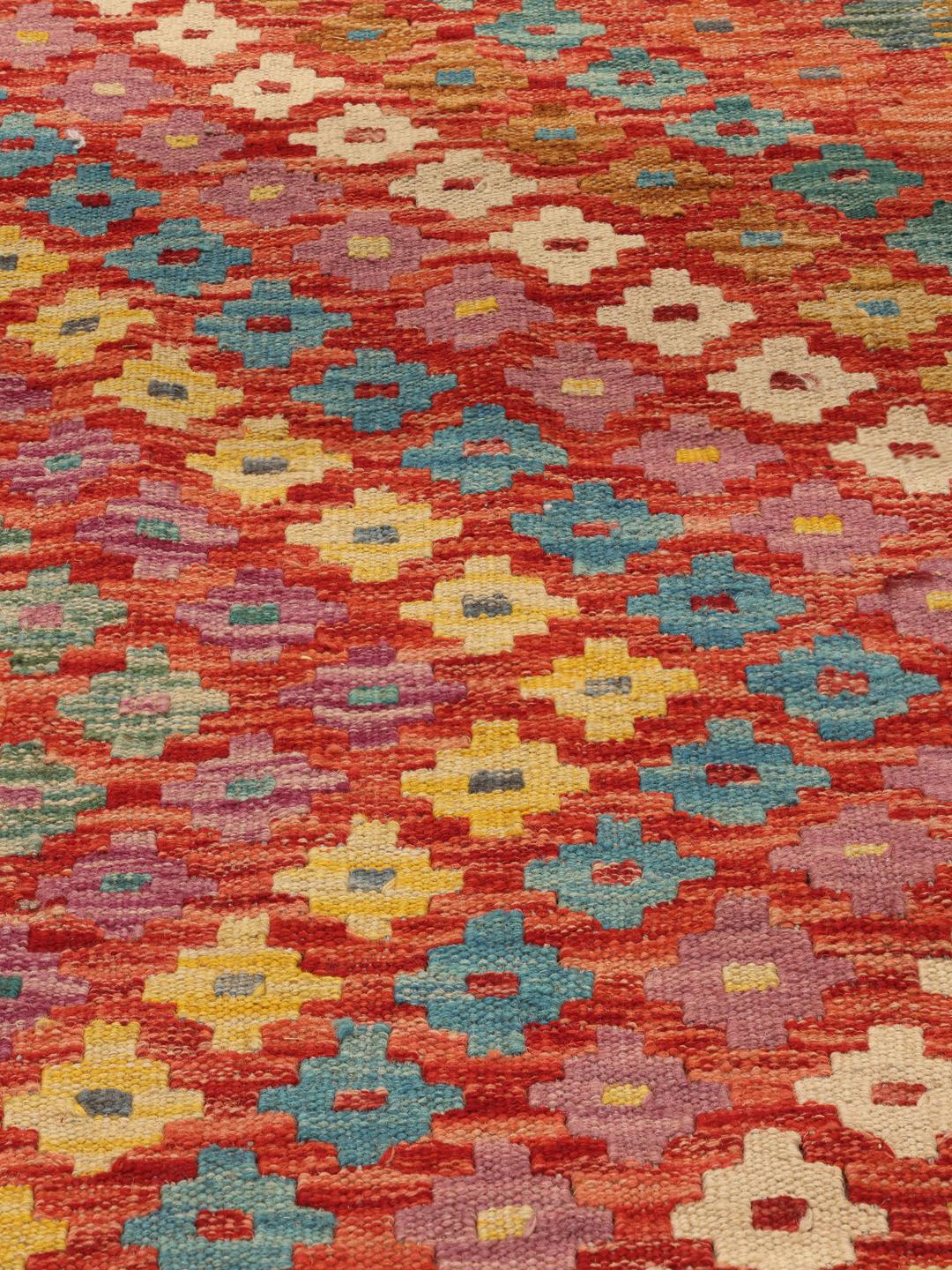
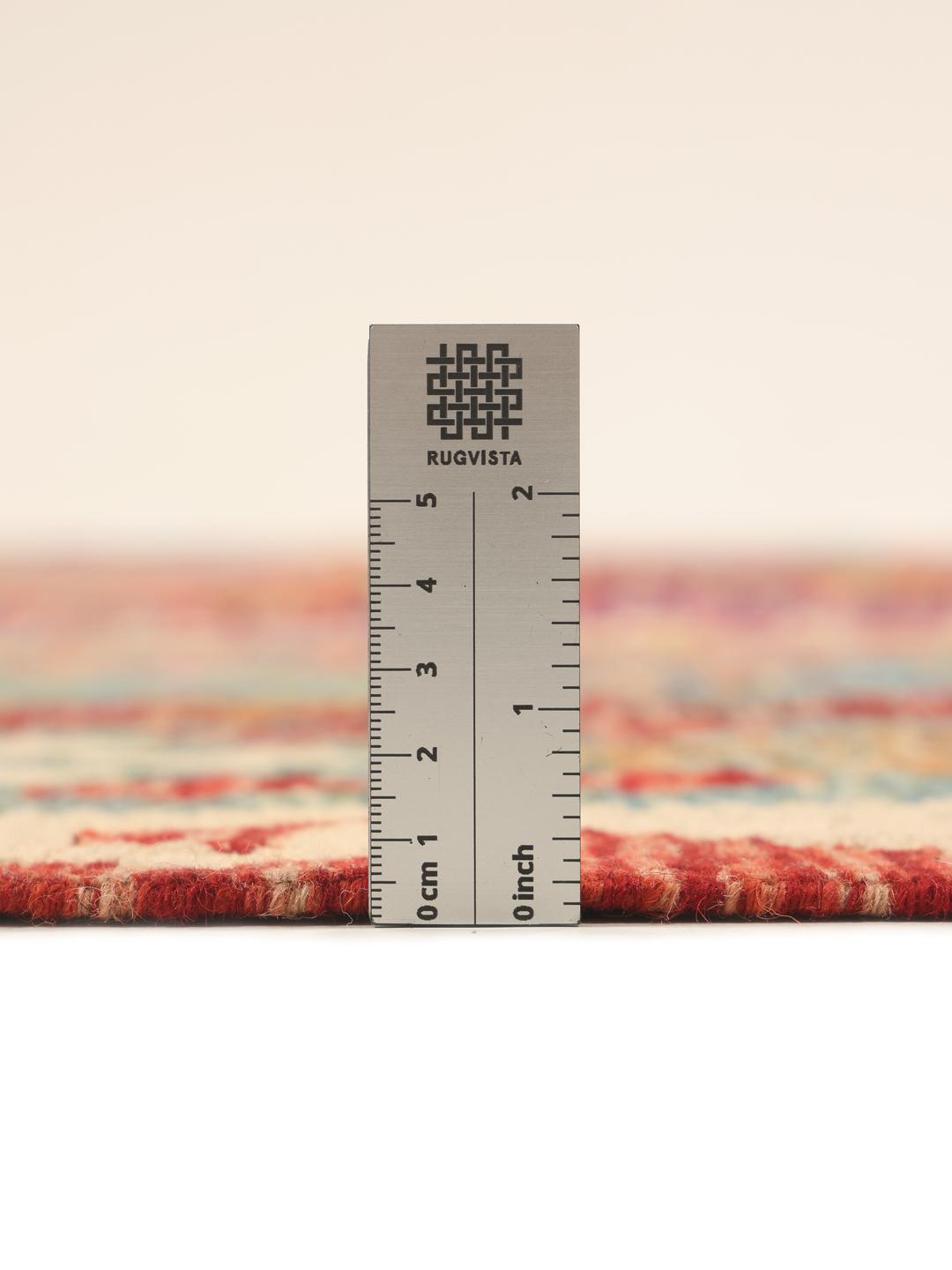
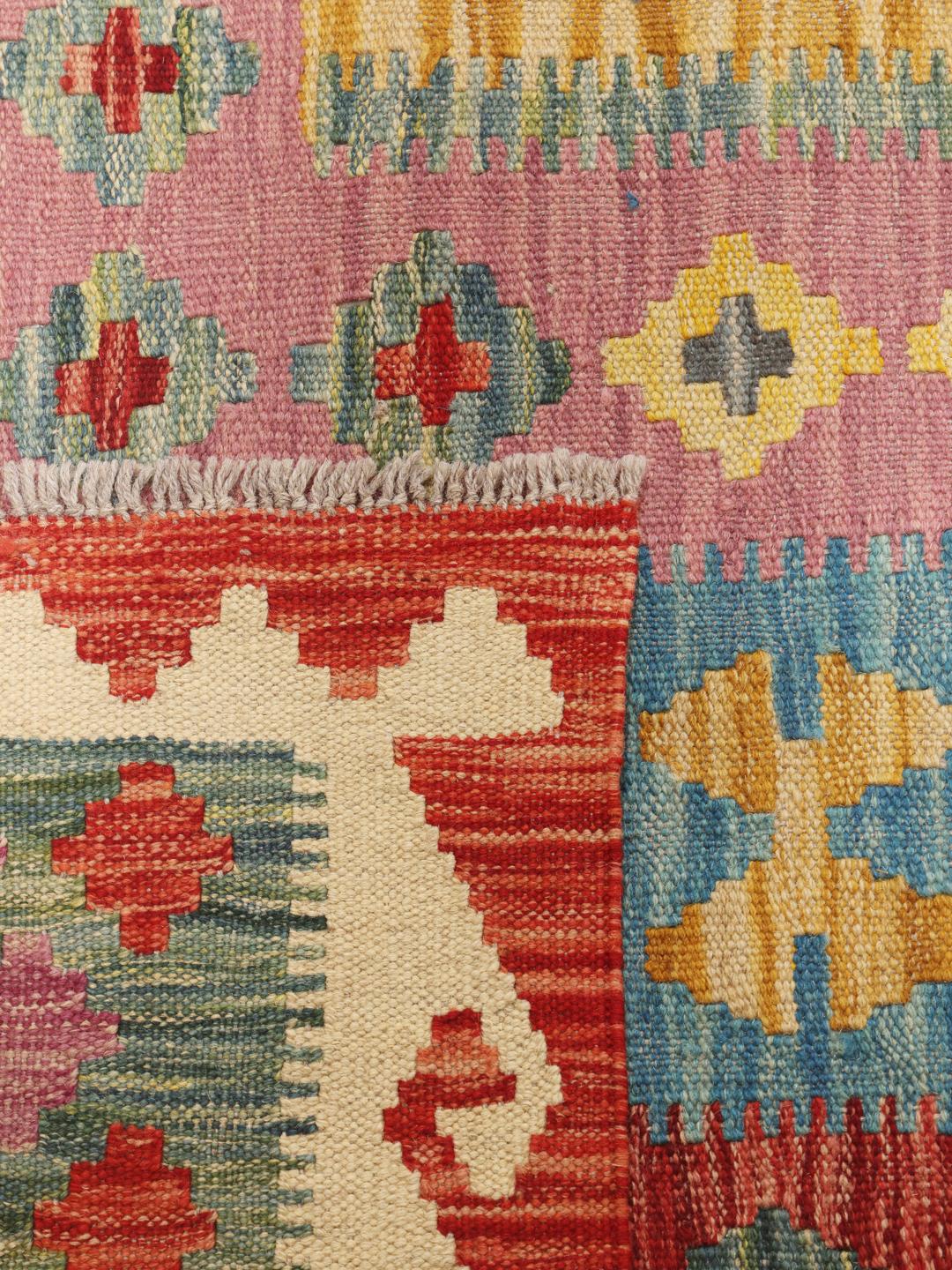
A Kelim is defined by its flat-weave construction, meaning it is made without a pile. This is achieved by interlacing warp and weft threads, a process that creates a lightweight yet incredibly durable fabric. The lack of pile allows the intricate geometric patterns to appear sharp and precise, showcasing the weaver's ability to manipulate colour and form within a strict grid-based structure. This technique is highly valued for its clean aesthetic and versatility.
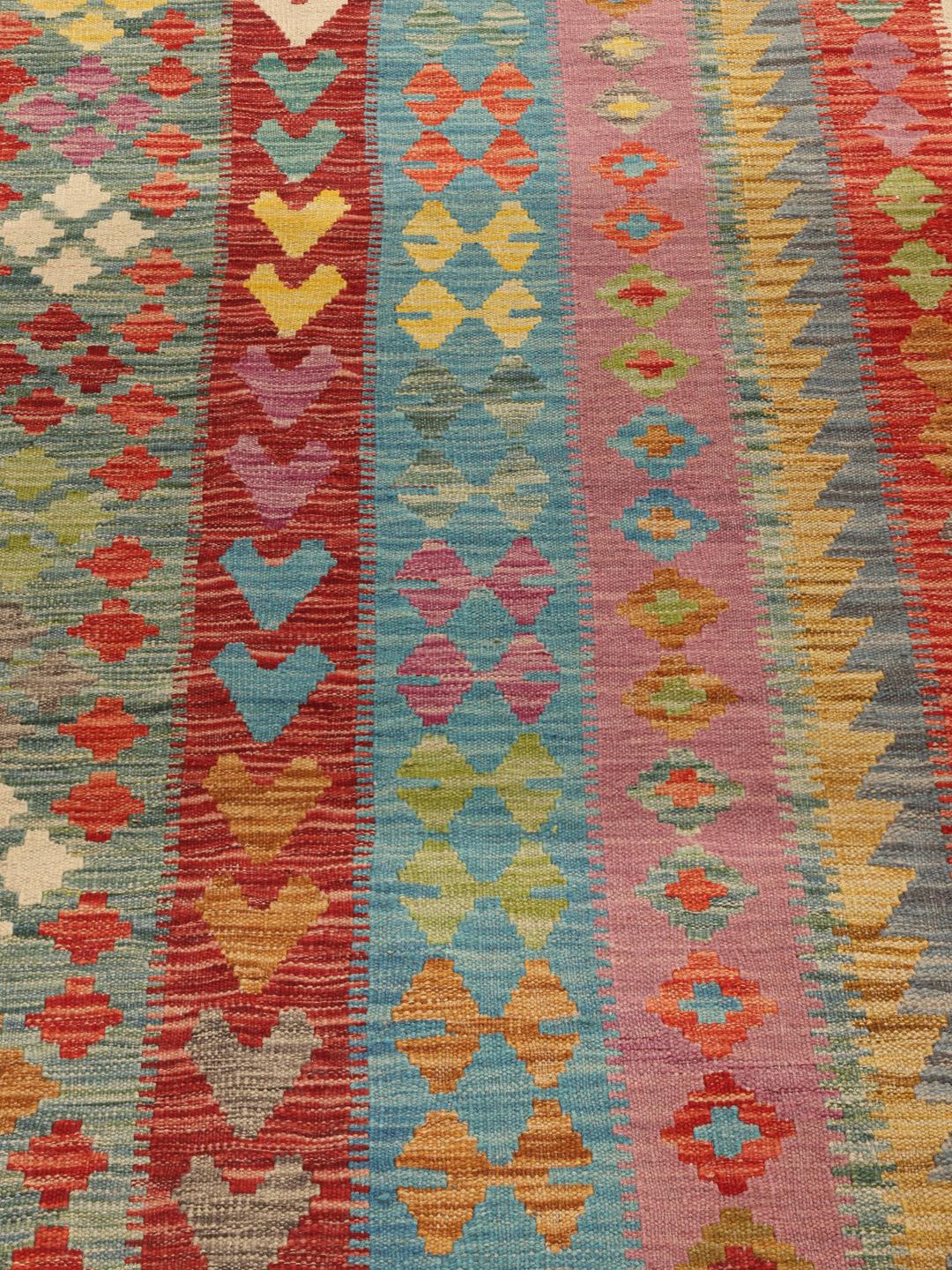
The signature design language of the Afghan Kelim is characterised by bold, repeating geometric motifs, such as diamonds, triangles, and stylised floral elements. These patterns are often symbolic, reflecting the environment and cultural identity of the tribal groups who create them. The use of vibrant, earthy colours is a hallmark of the tradition, with dyes often derived from local botanical sources, providing a depth of colour that ages gracefully over time.
Collecting a Kelim is an investment in cultural history. These rugs are highly prized by enthusiasts for their authenticity and the sheer human effort required to produce them. Owning such a piece is a way to preserve a centuries-old craft that continues to thrive in the modern world. It is more than just a floor covering; it is a piece of cultural heritage that brings a sense of history and human connection to any contemporary interior.