The Kelim tradition is deeply rooted in the nomadic and village cultures of the Middle East and Central Asia. Historically, these flat-woven rugs were essential to the daily lives of tribal groups, serving as floor coverings, blankets, and storage bags. The knowledge of these weaving techniques has been passed down through generations, with Afghan weavers particularly celebrated for their dedication to preserving these ancient, authentic styles.
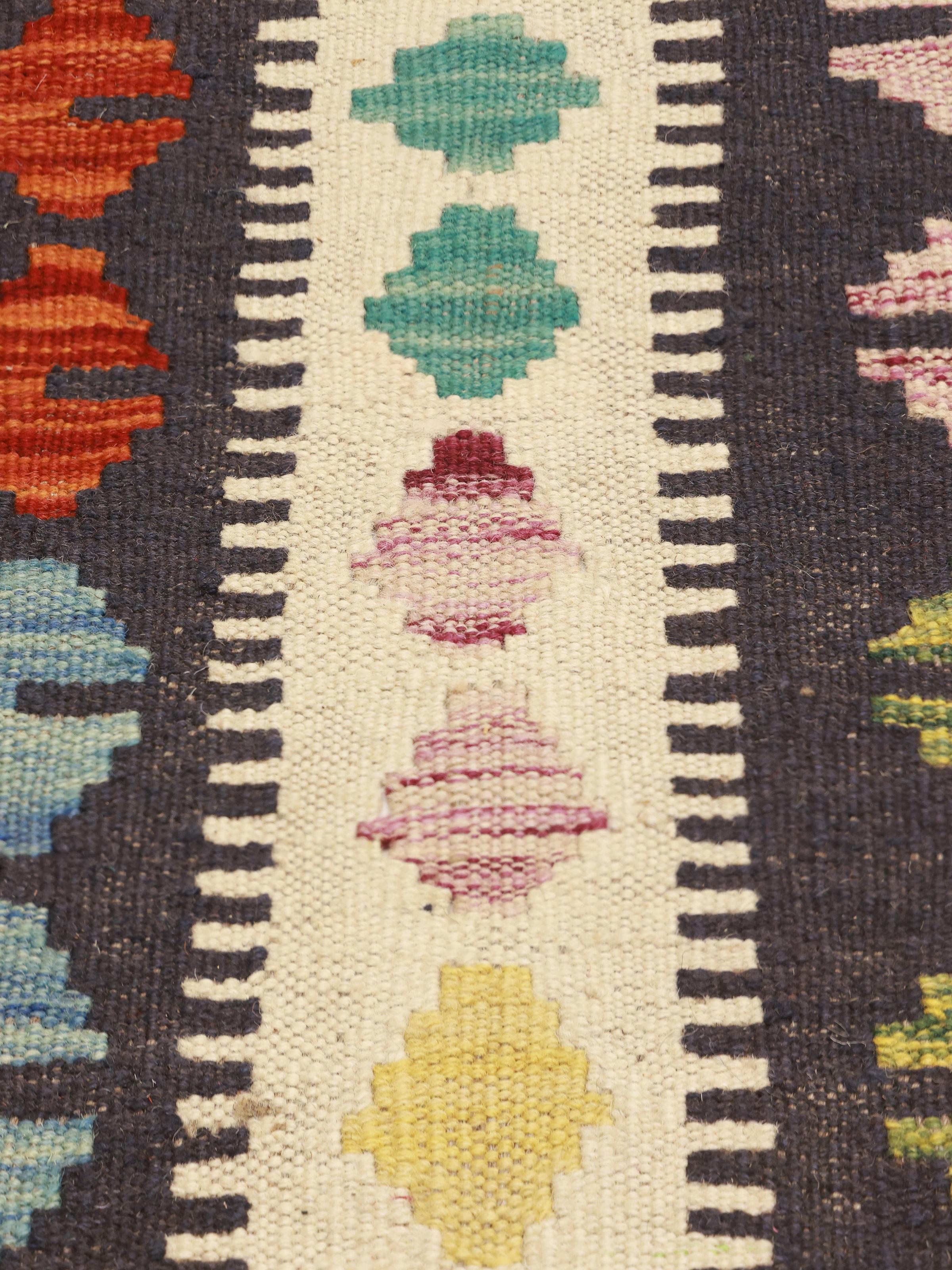
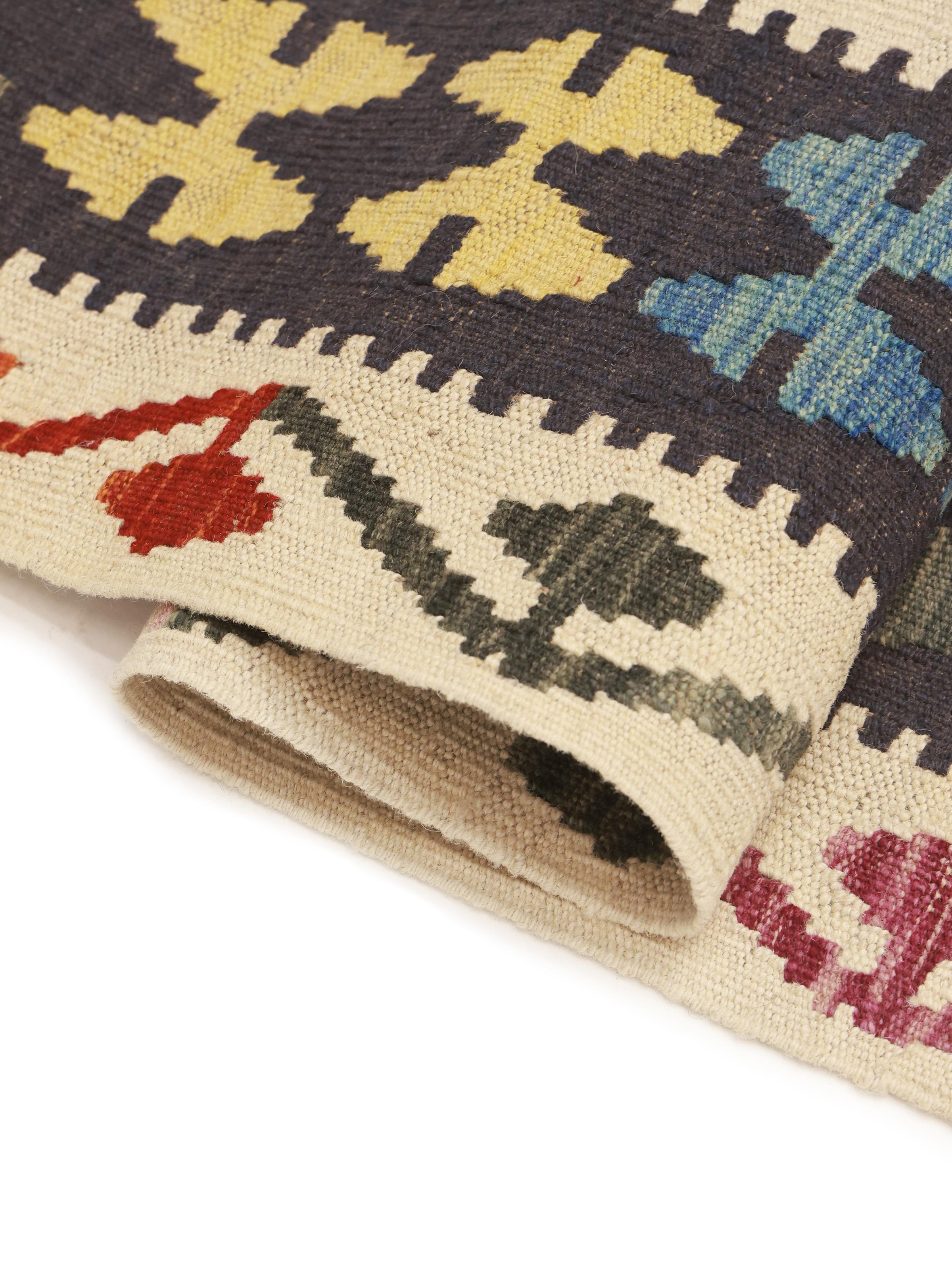
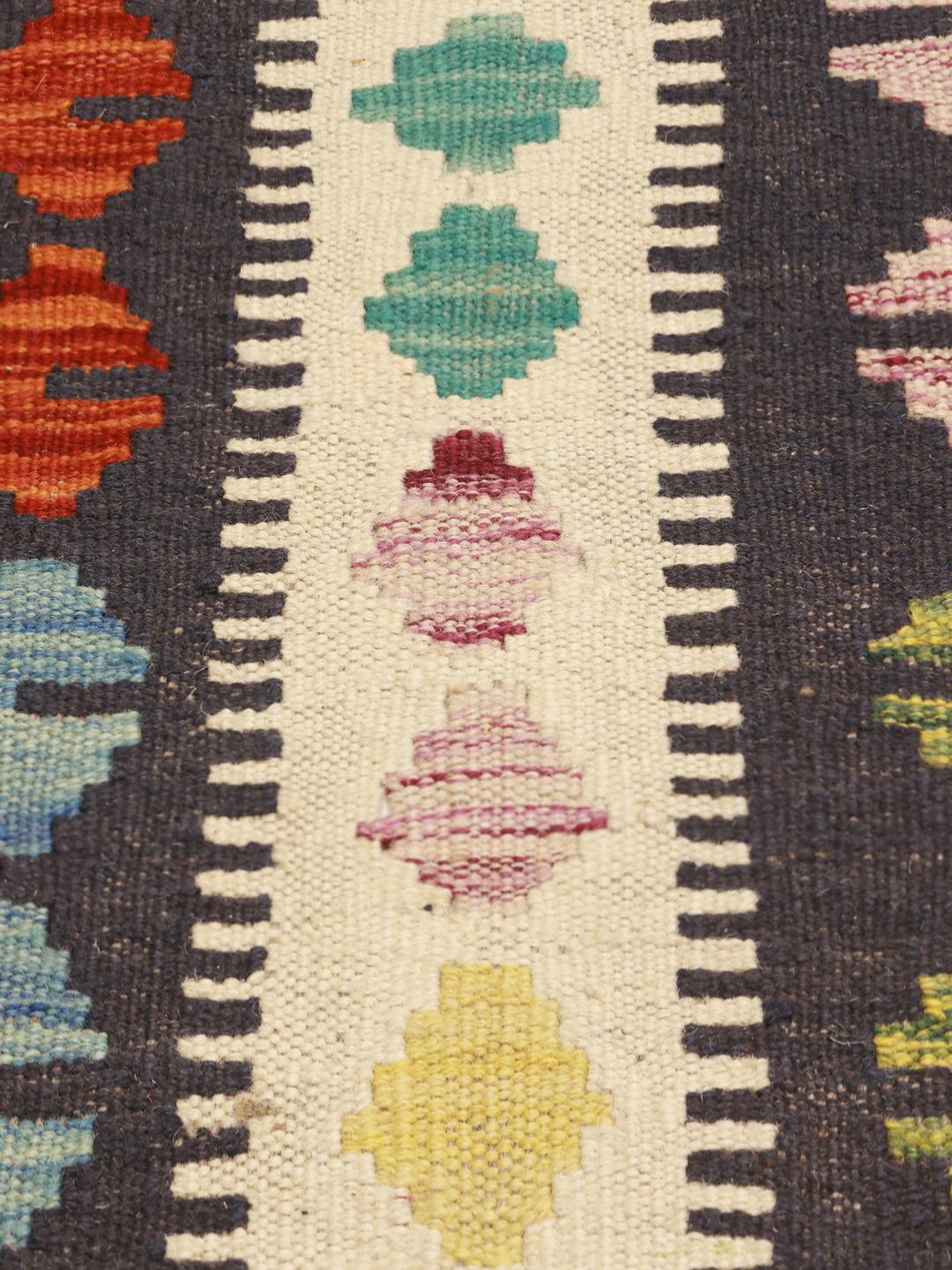
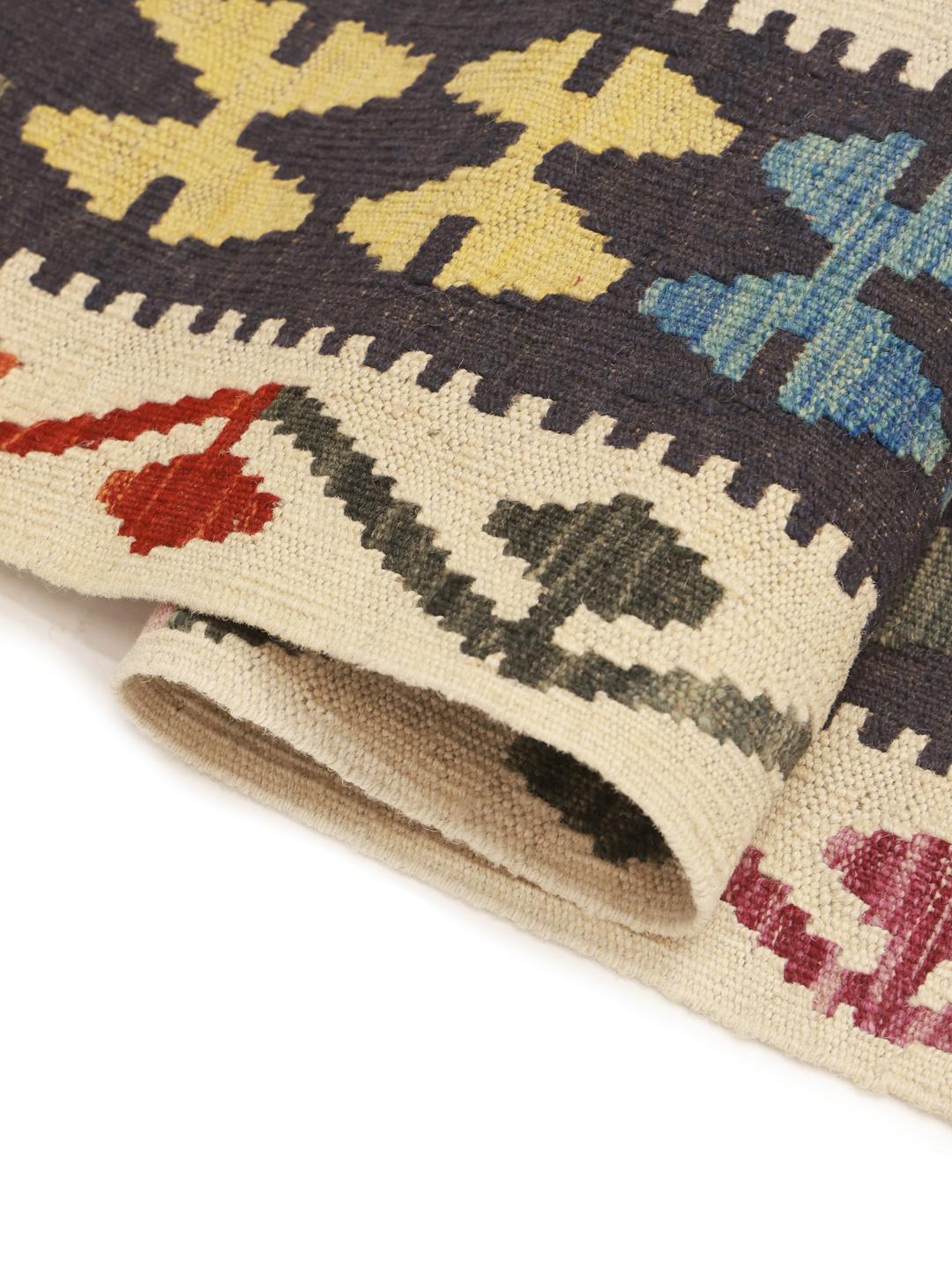
The term 'Kelim' refers to a specific tapestry-weave style where the weft threads are woven tightly over the warp, creating a smooth, pileless surface on both sides. This technique is highly prized for its clarity of design and durability. Because there is no pile to wear down, these rugs are exceptionally sturdy, and the intricate patterns are achieved by changing the colour of the weft threads as the weaver progresses across the loom.
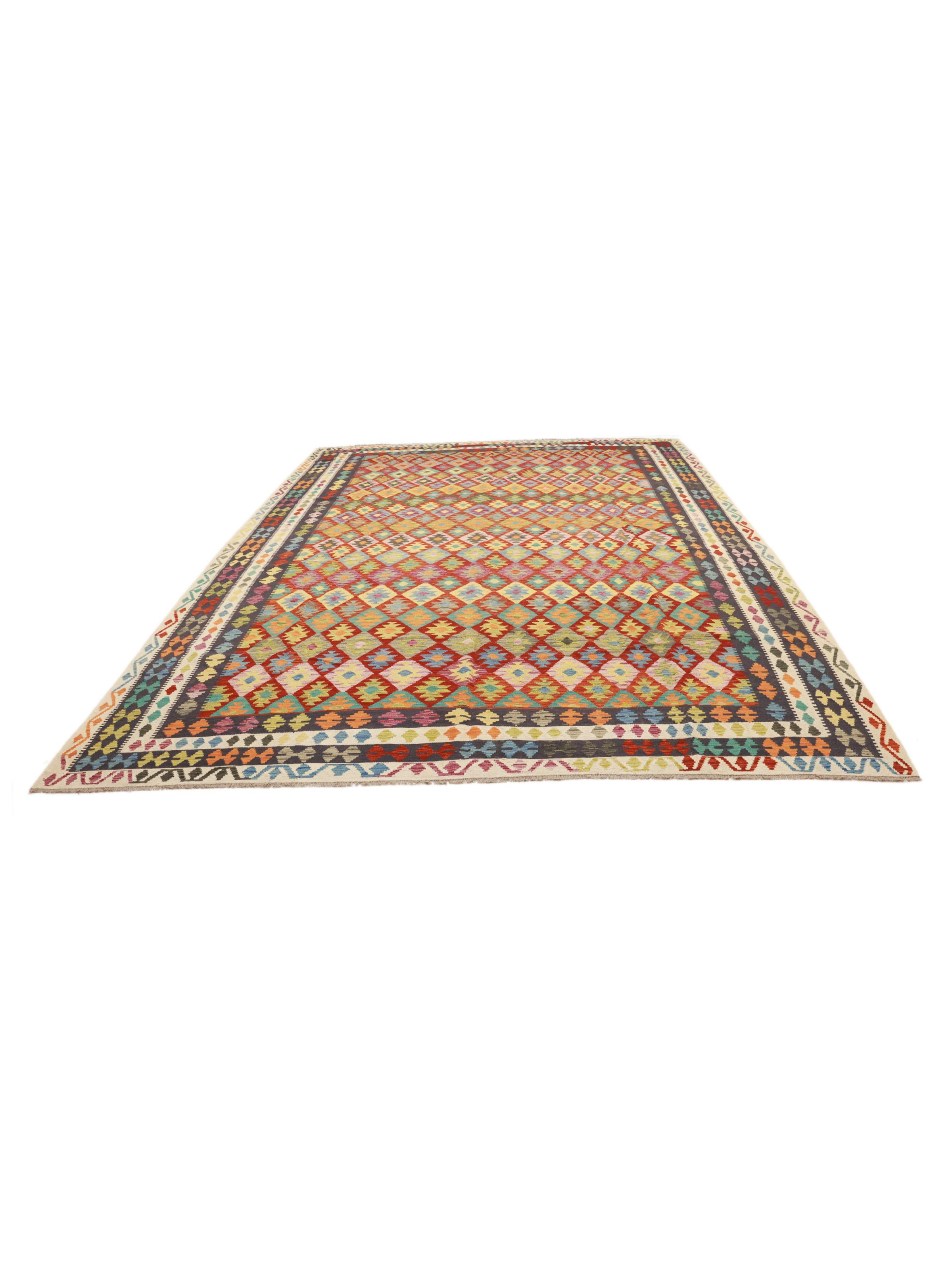
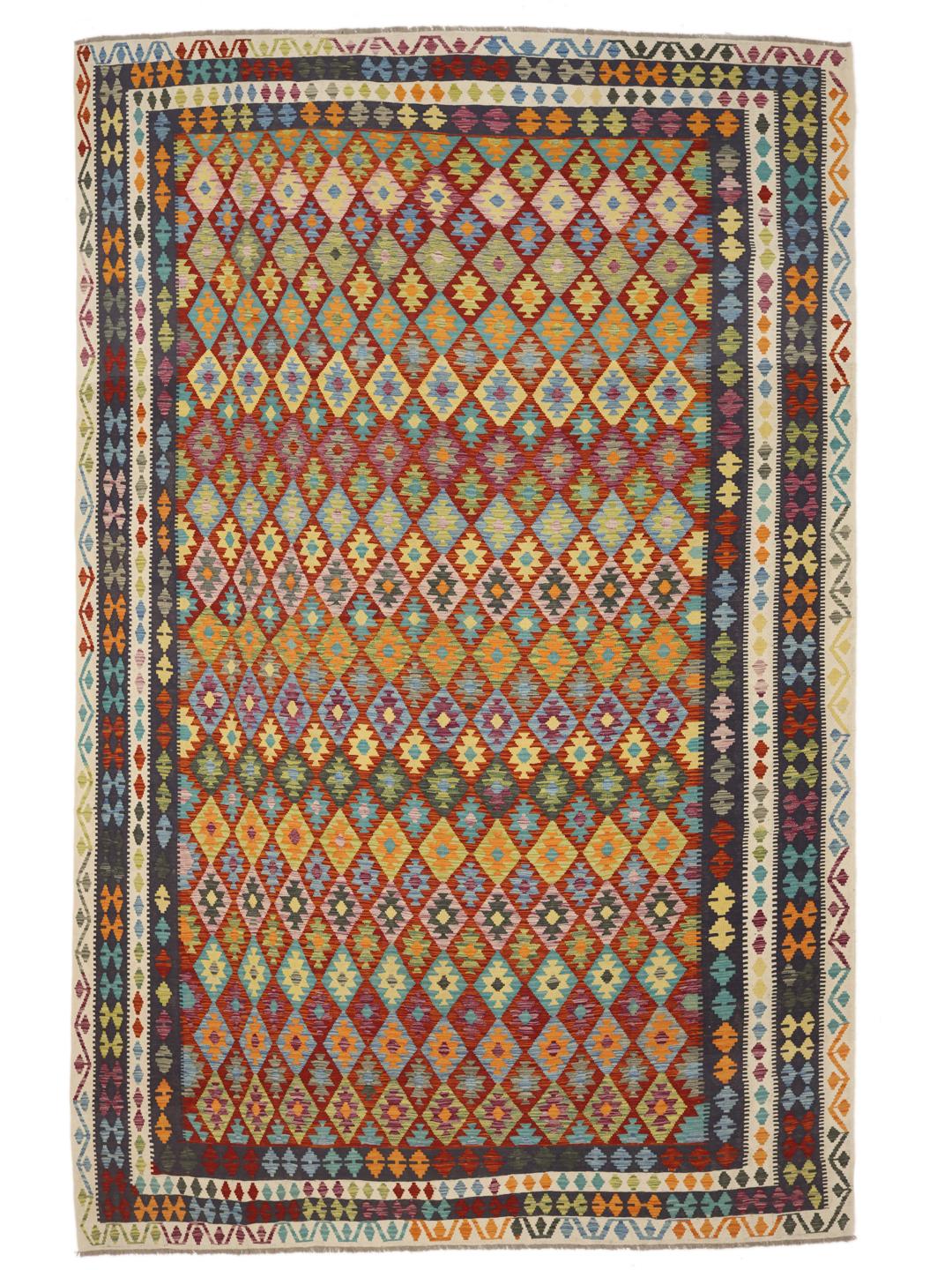
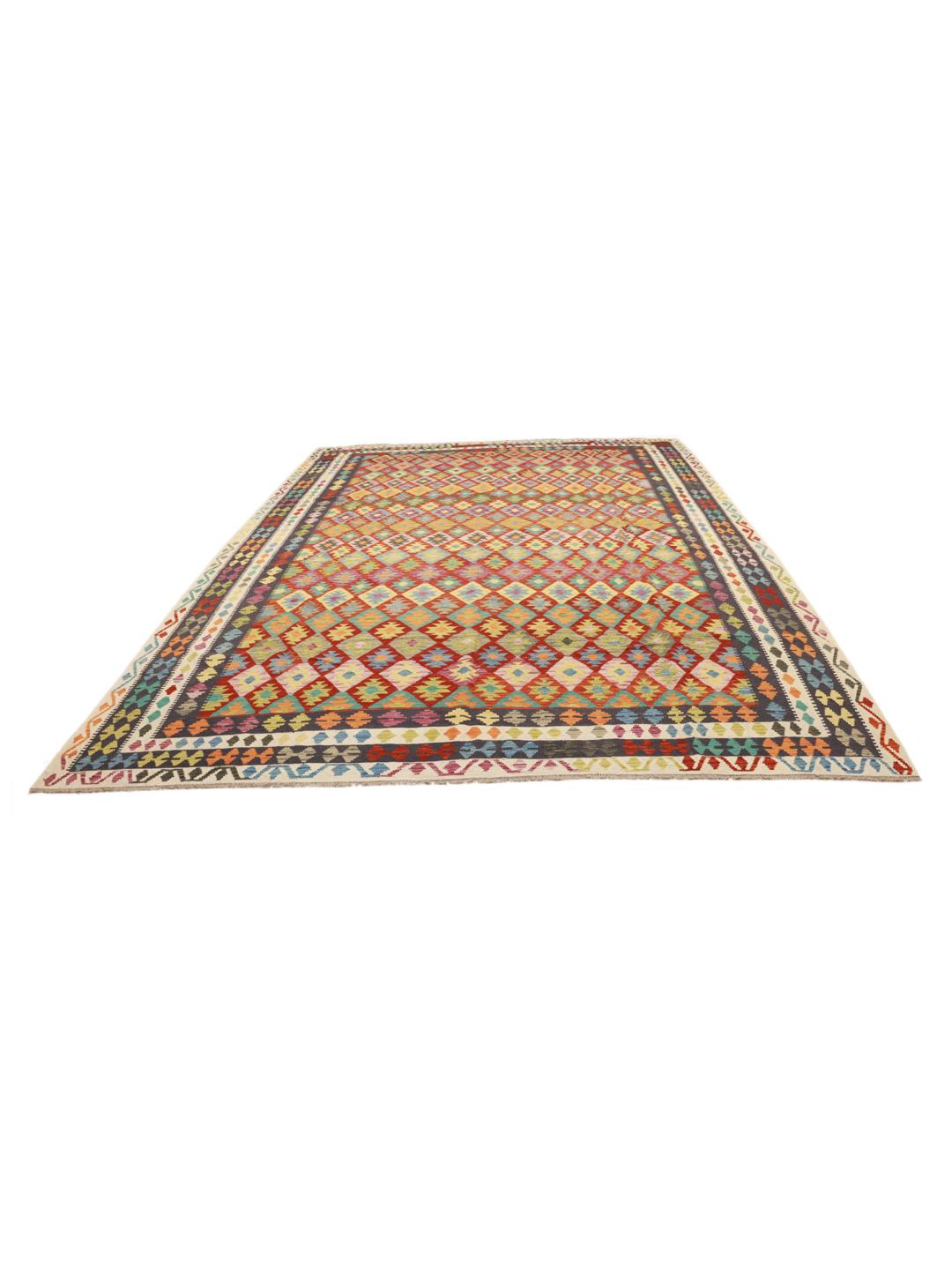
Signature design elements of Afghan Kelims often include bold, repeating geometric motifs such as diamonds, triangles, and stylized floral shapes. The use of vibrant, saturated colours is a hallmark of the tradition, often derived from natural dyes that age beautifully over time. This particular rug showcases a sophisticated arrangement of diamonds, a classic motif that represents protection and prosperity in many regional cultures.
Collecting a Kelim is an investment in cultural heritage and human skill. These pieces are valued not only for their aesthetic appeal but also for the story they tell about the environment and traditions of their origin. By bringing a piece like this into your home, you are supporting a craft tradition that has survived for centuries, ensuring its continued relevance and appreciation in the modern world.