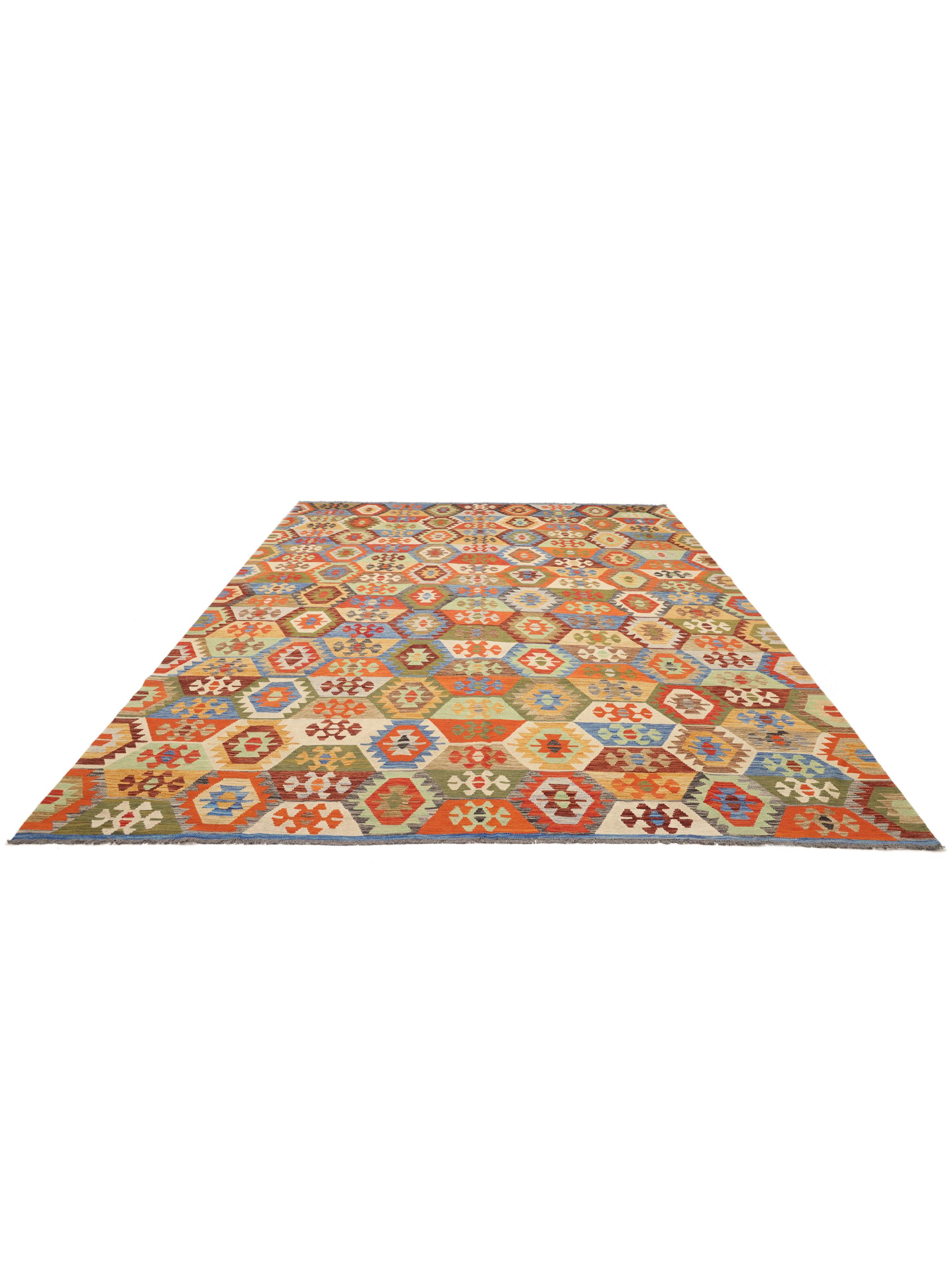
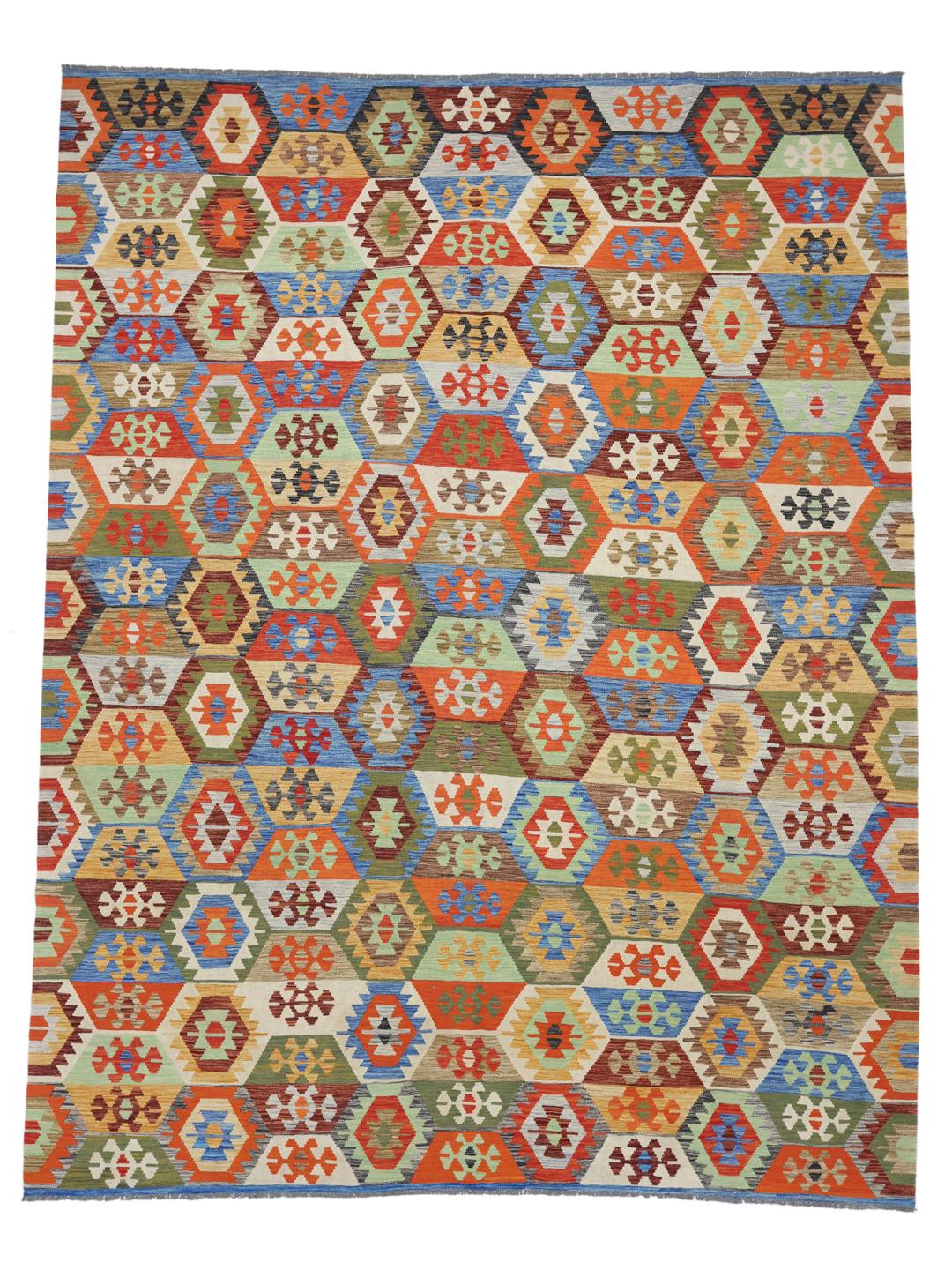
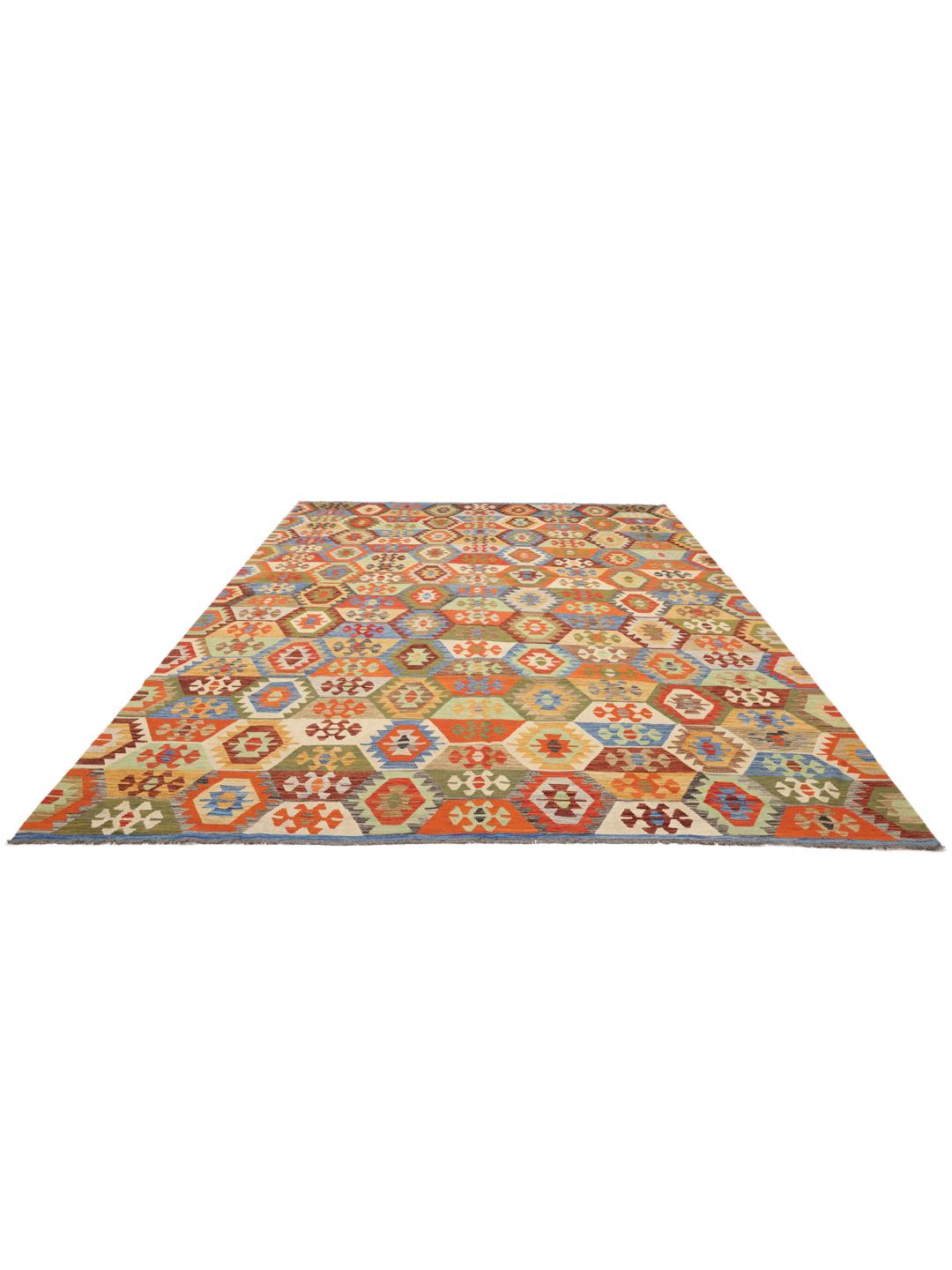
The Kelim tradition in Afghanistan is deeply rooted in the nomadic and village cultures of the Middle East. For centuries, these flat-woven rugs have served as essential, portable floor coverings, blankets, and storage sacks for families on the move. The resilience of the weave and the portability of the materials made them perfectly suited to a life defined by seasonal migrations.
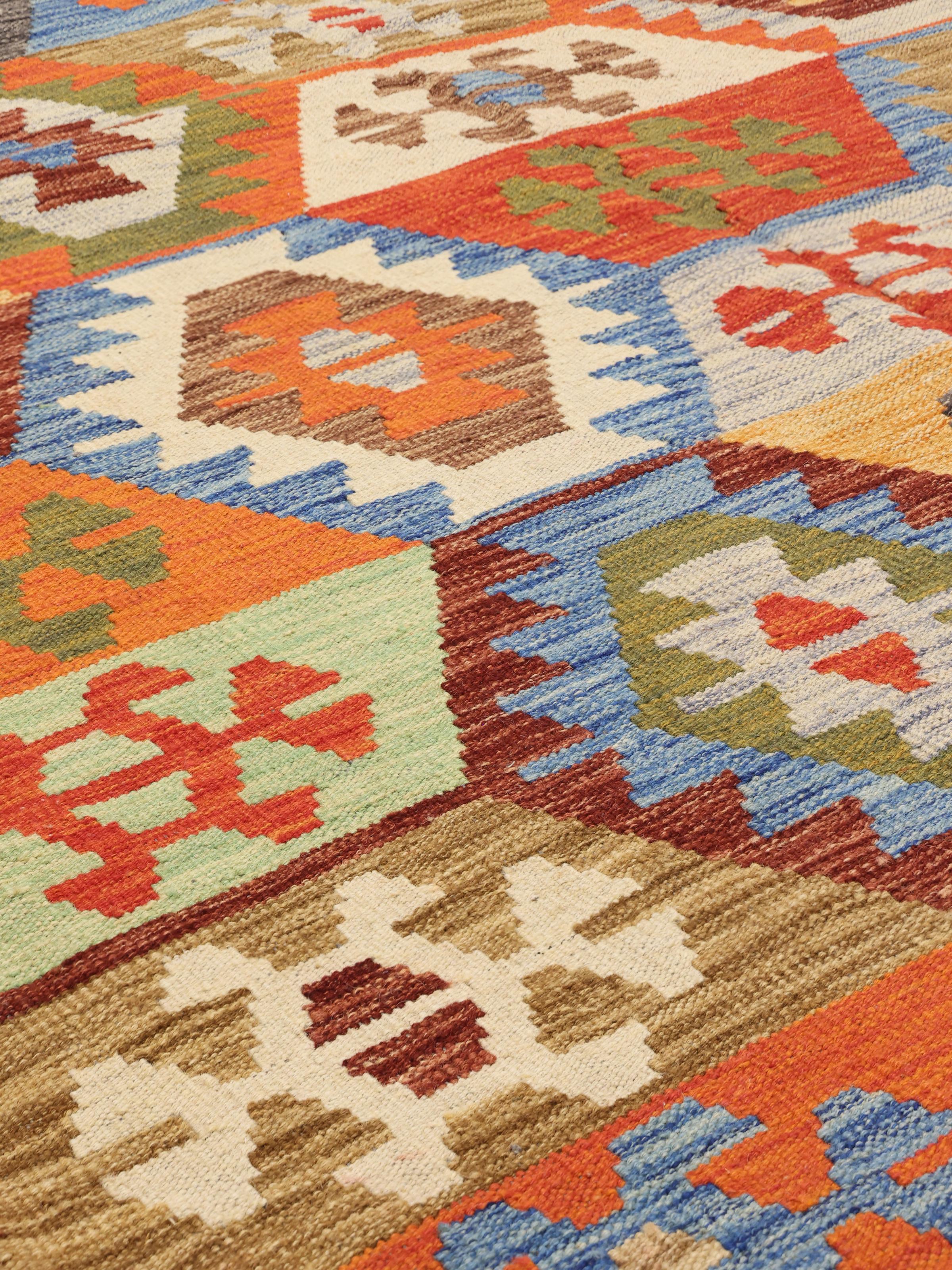
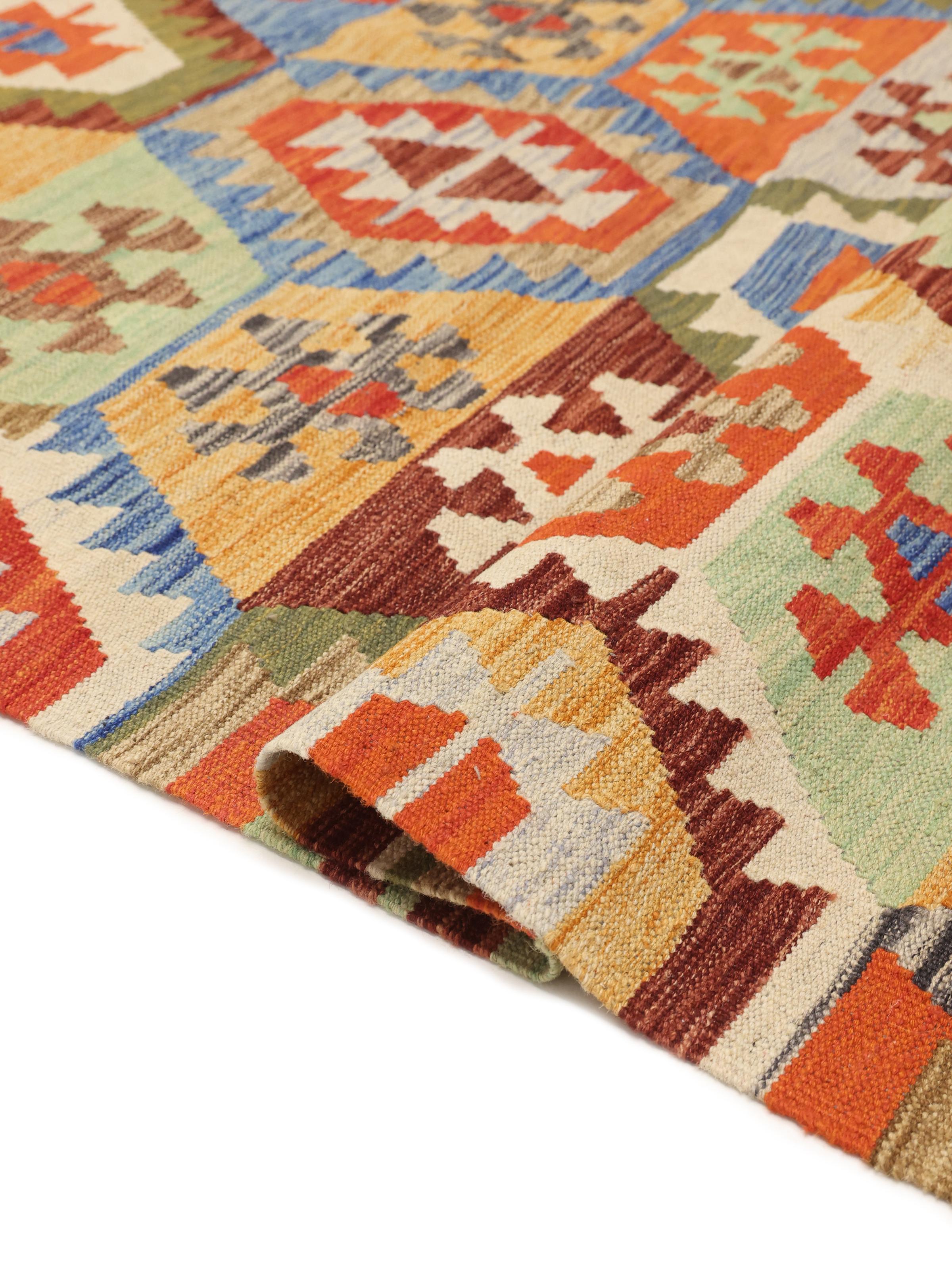
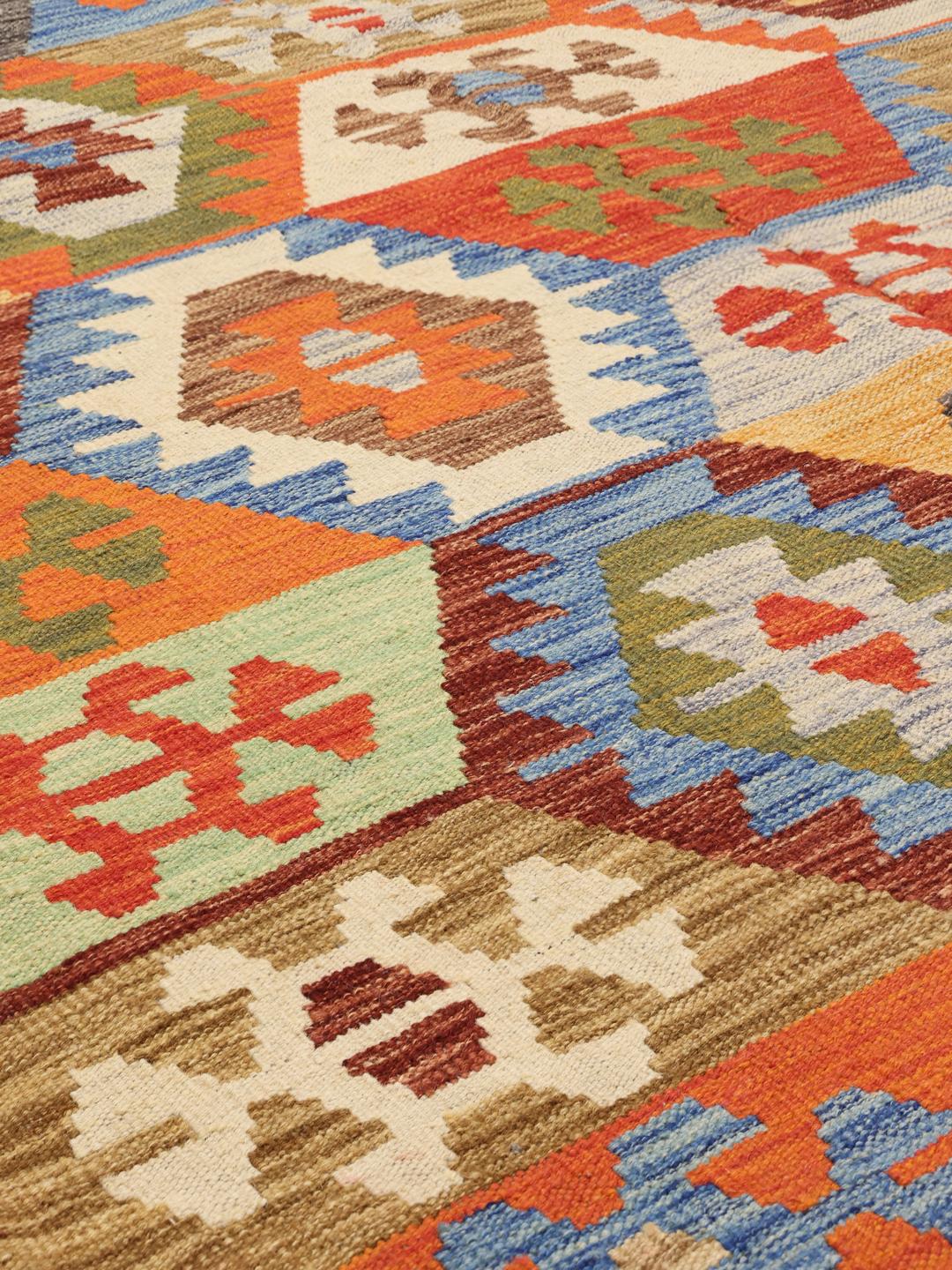
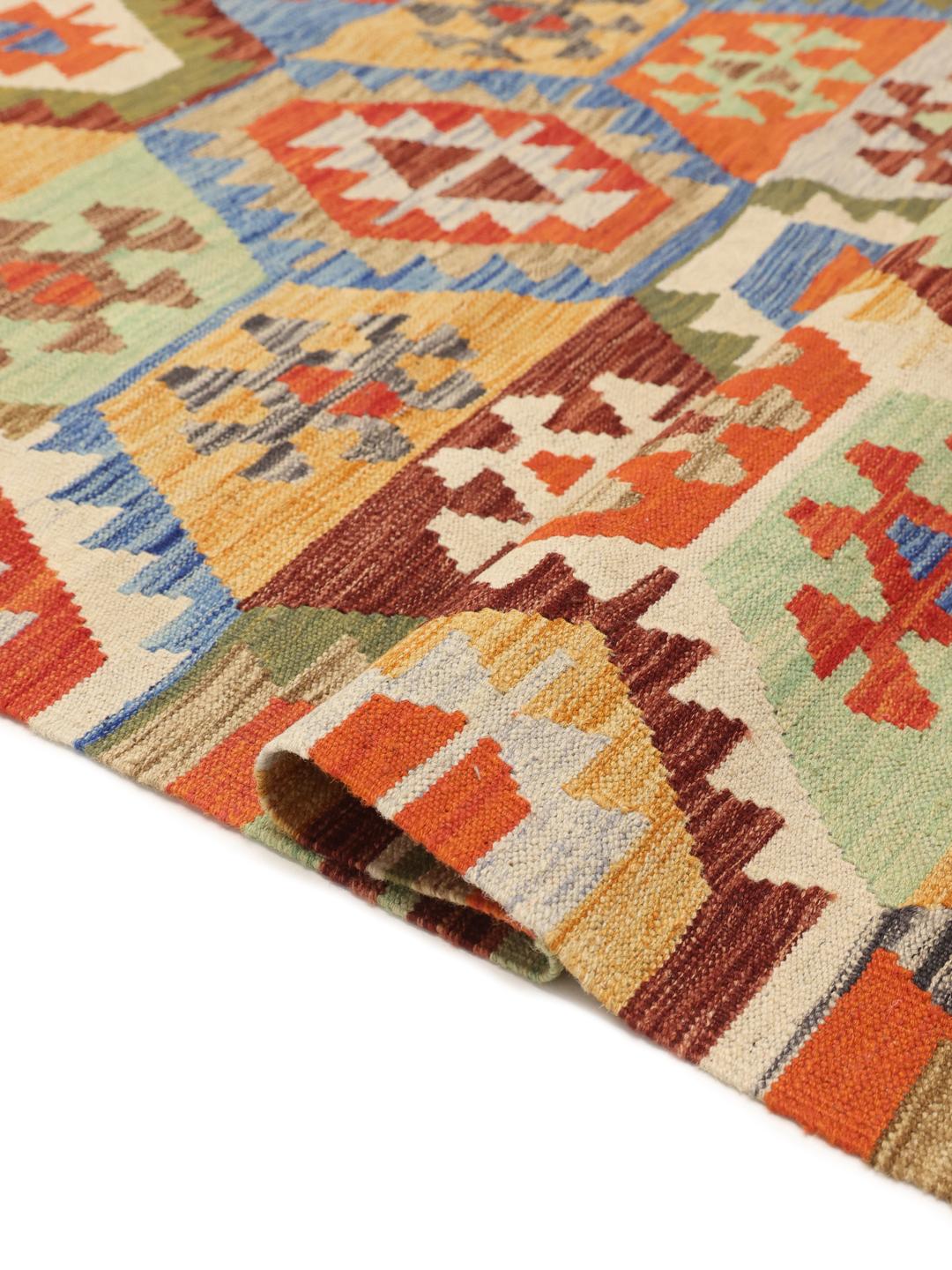
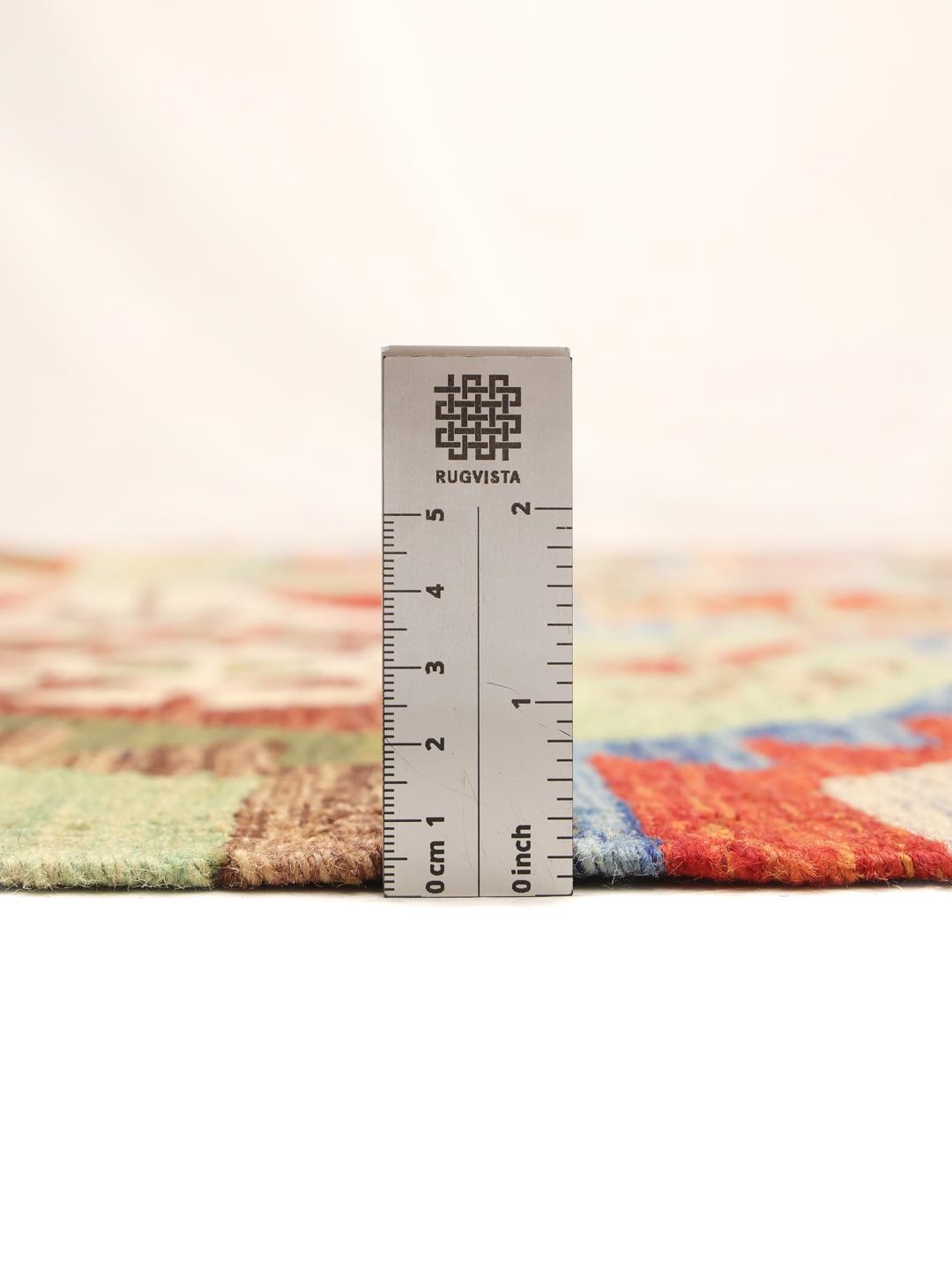
The term Kelim refers to the specific slit-weave technique used to create these rugs. By interlocking the weft threads tightly around the warp, weavers create a robust, reversible fabric without a pile. This technical approach allows for the sharp, angular geometric patterns that are synonymous with the style, as the structure naturally lends itself to straight lines and stepped designs.
Visual language in Afghan Kelims is dominated by symbolic motifs and bold, earthy colour palettes derived from natural dyes. You will often see repeating geometric shapes like diamonds, triangles, and hexagons, which serve as a graphic record of the weaver’s environment and tribal history. These motifs are not merely decorative but are imbued with cultural meaning and regional identity.
Today, these rugs are highly prized by collectors who appreciate the blend of utility and artistic expression. Owning an authentic Afghan Kelim is a way to connect with a long-standing heritage of craft. Each piece reflects the specific aesthetic choices of its creator, making it a meaningful addition to any collection that values history, skill, and lasting, natural materials.