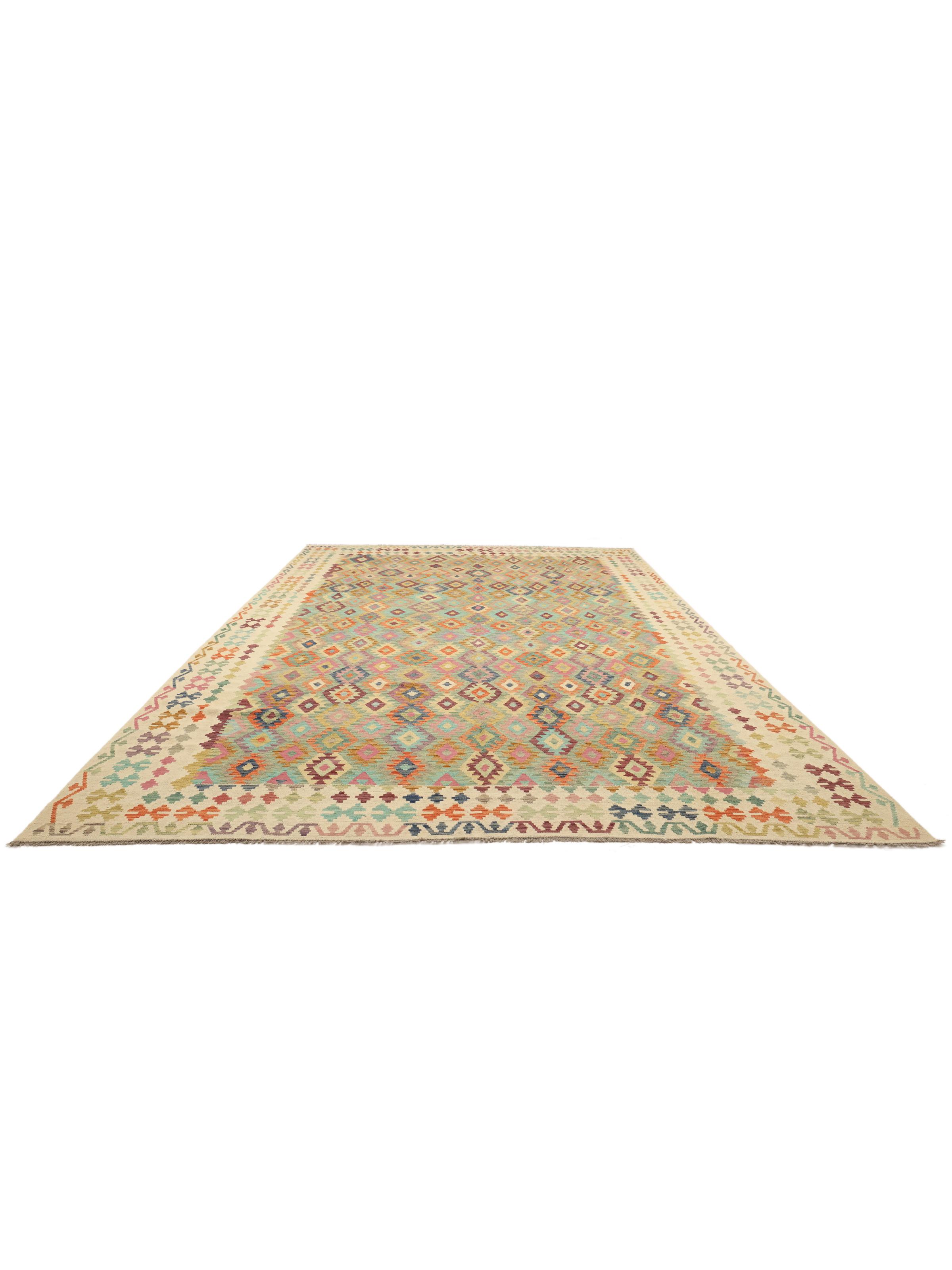
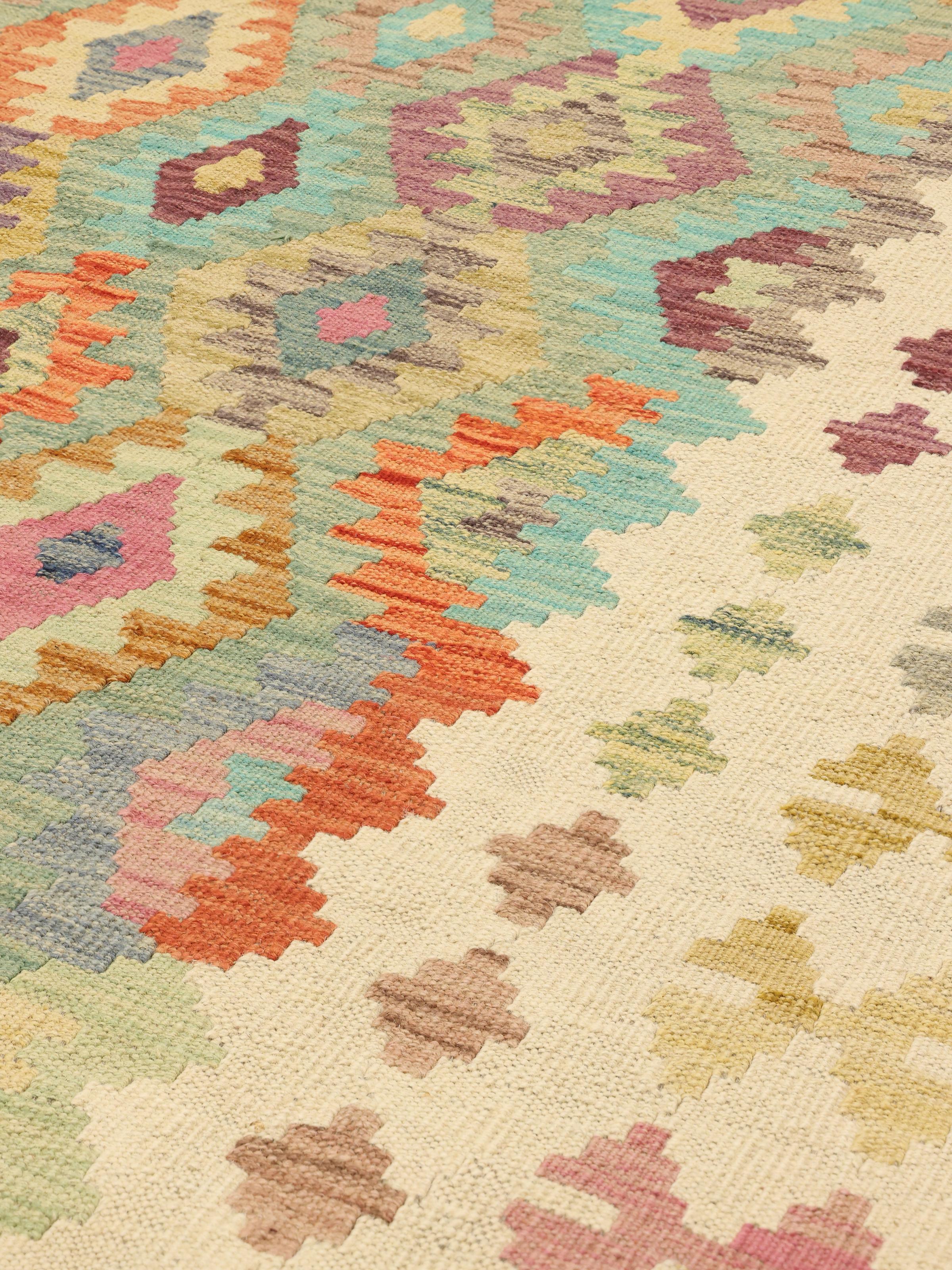
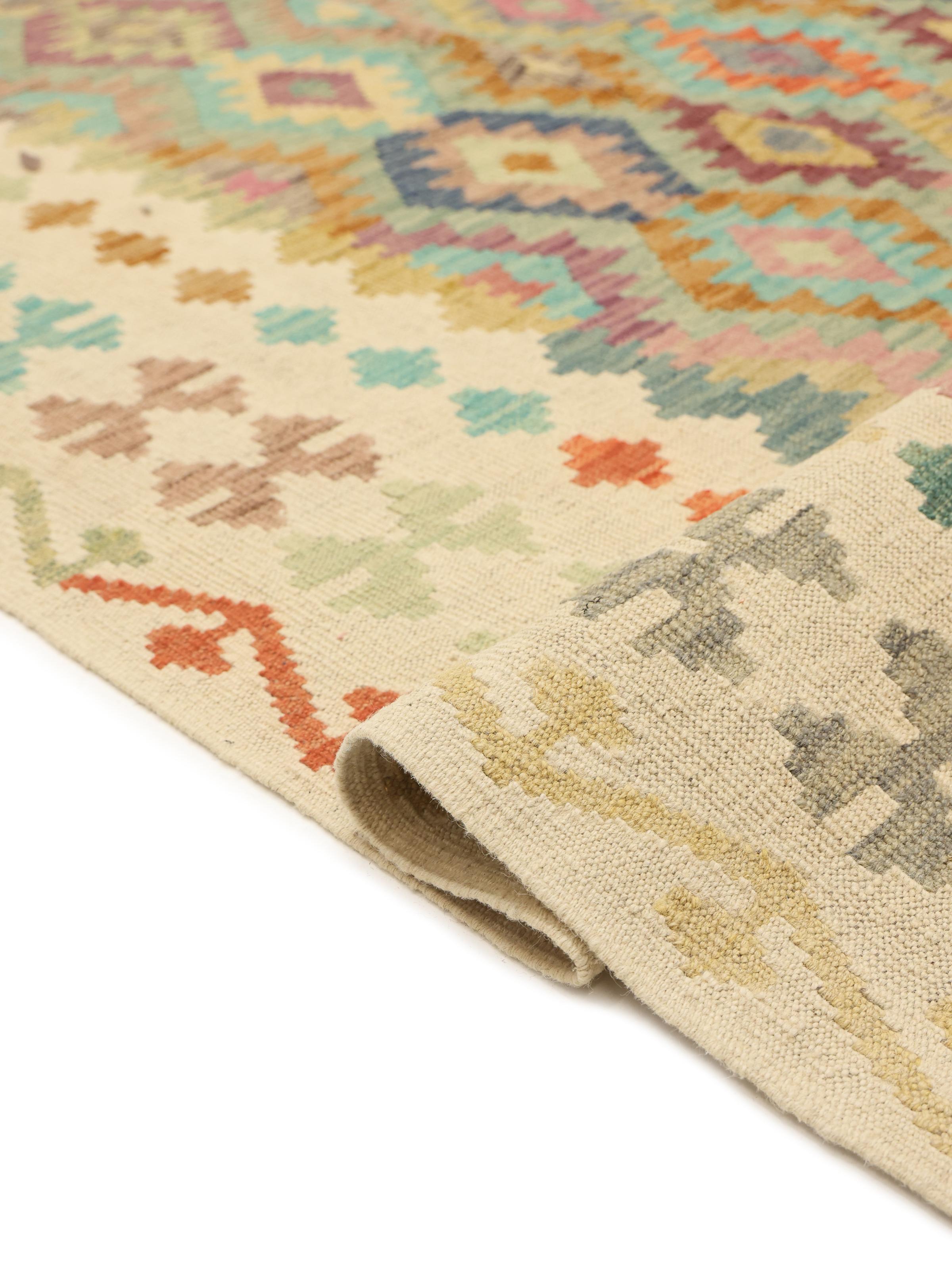
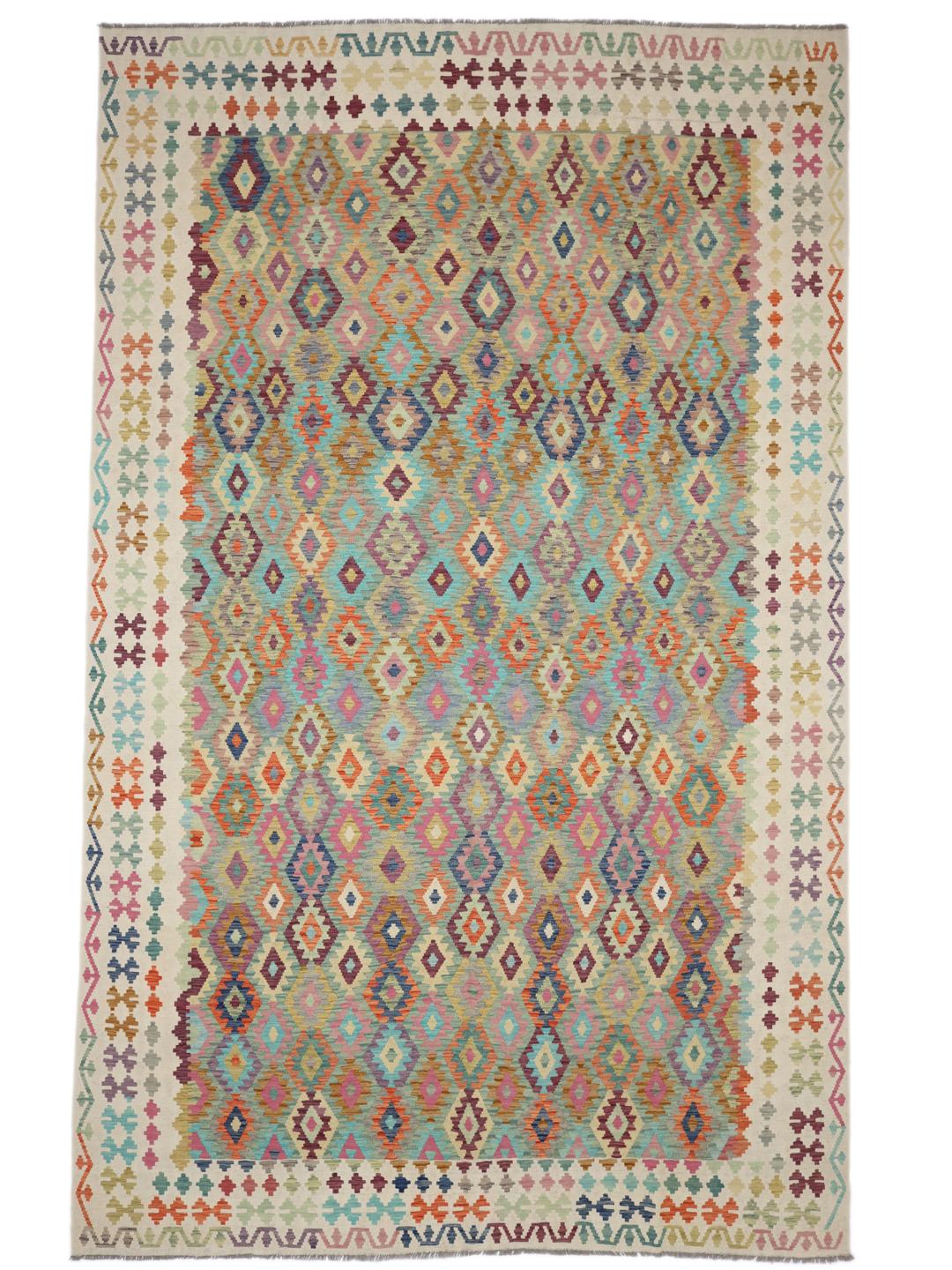
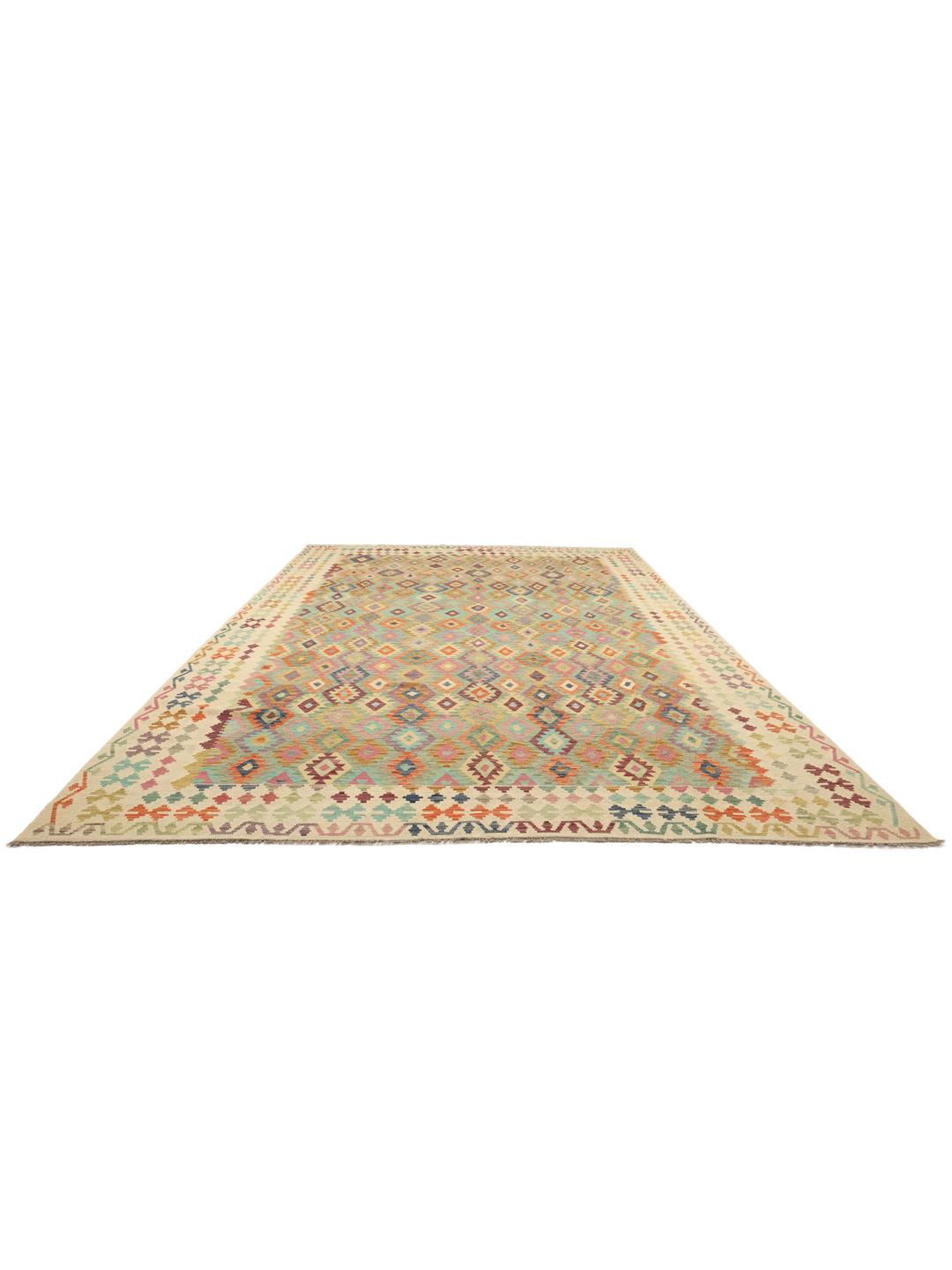
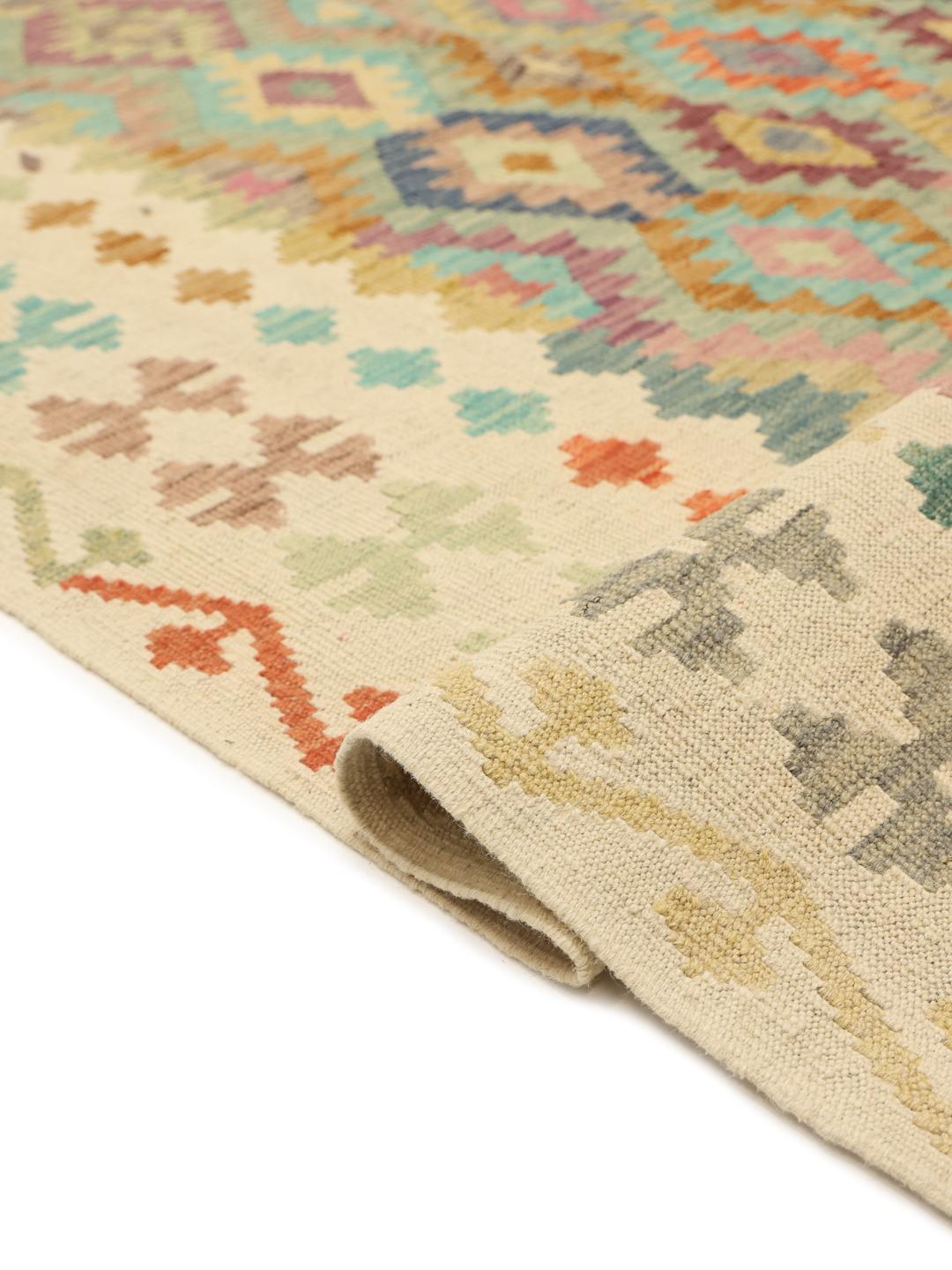
Kelim rugs have long been a cornerstone of nomadic life across the Middle East and Central Asia. The term refers to a flat-woven textile, meaning these rugs are created without a knotted pile, resulting in a smooth, reversible surface that has been favoured for centuries due to its versatility and ease of transport. The Afghan tradition, in particular, is celebrated for its deep connection to the rugged landscape and the resilient culture of its people.
The term 'Old Style' refers to the preservation of ancient design motifs and weaving practices that have remained largely unchanged for generations. These rugs are crafted using traditional techniques that emphasise the structural integrity of the weave, ensuring that the finished product is as practical as it is beautiful. This adherence to heritage ensures that the patterns remain sharp and the foundation remains strong over time.
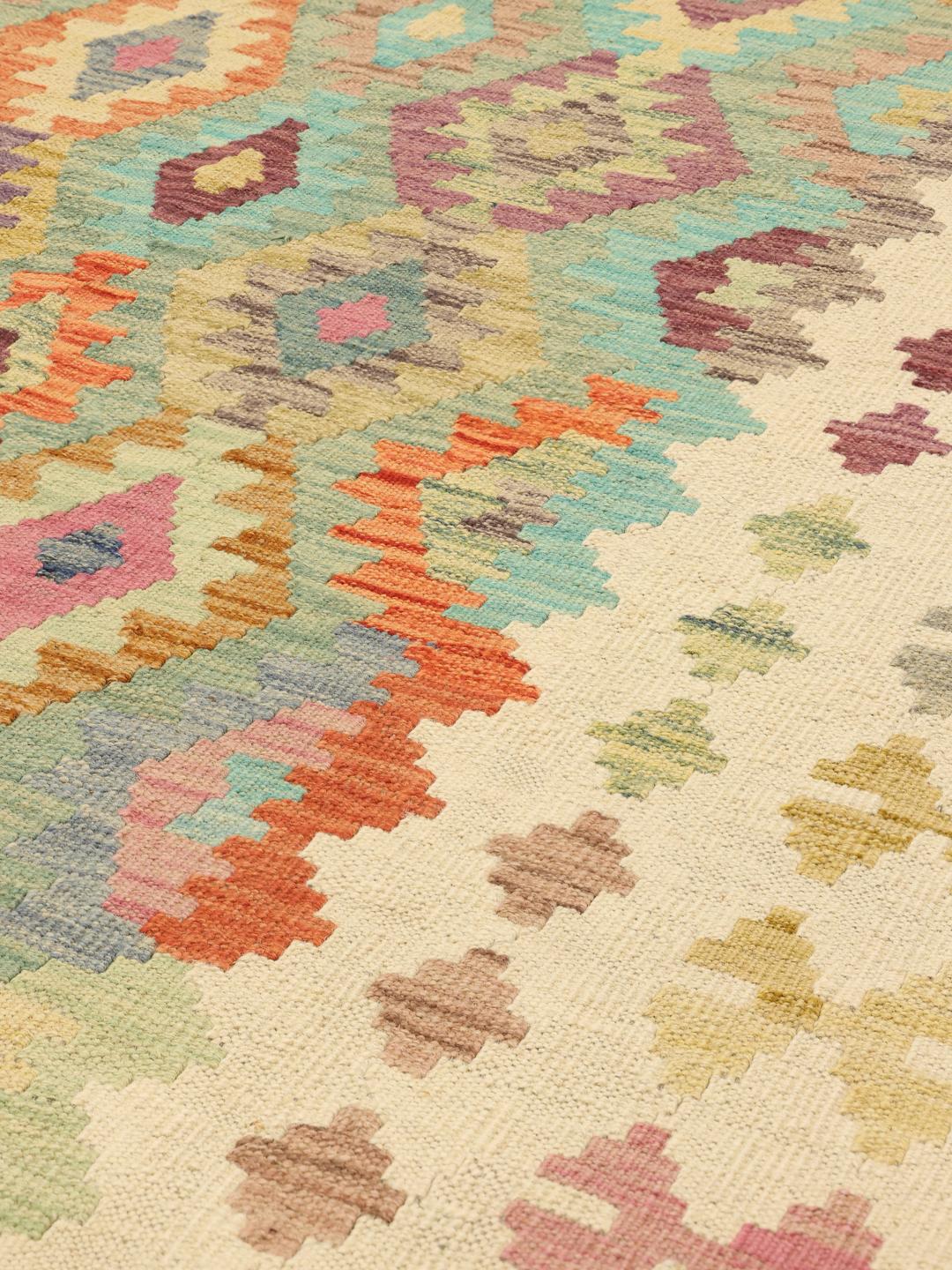
Visually, the Afghan Kelim is known for its bold geometric language. The diamond motif seen here is a classic signature, often representing protection or prosperity in local weaving traditions. The use of vibrant, earthy colours is achieved through traditional dyeing methods, which lend the rug a rich, authentic appearance that evolves gracefully as the wool ages and settles into its environment.
Collecting a Kelim is an investment in cultural heritage and human skill. Each piece acts as a narrative, told through the hands of the weaver and the legacy of their ancestors. By bringing this rug into your home, you are not only acquiring a high-quality floor covering but also participating in a long-standing tradition of craft that values beauty, utility, and the enduring nature of hand-made textiles.