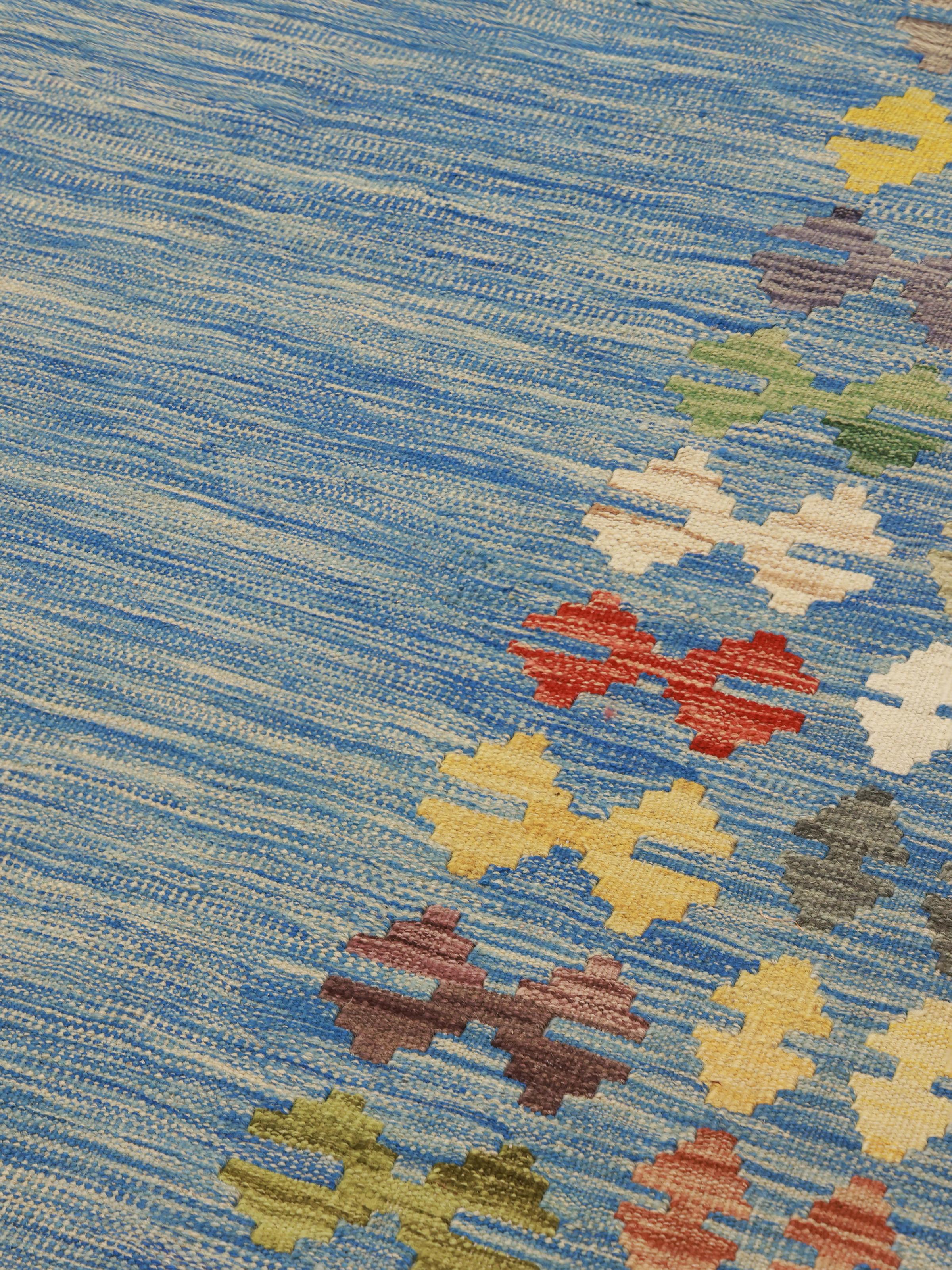
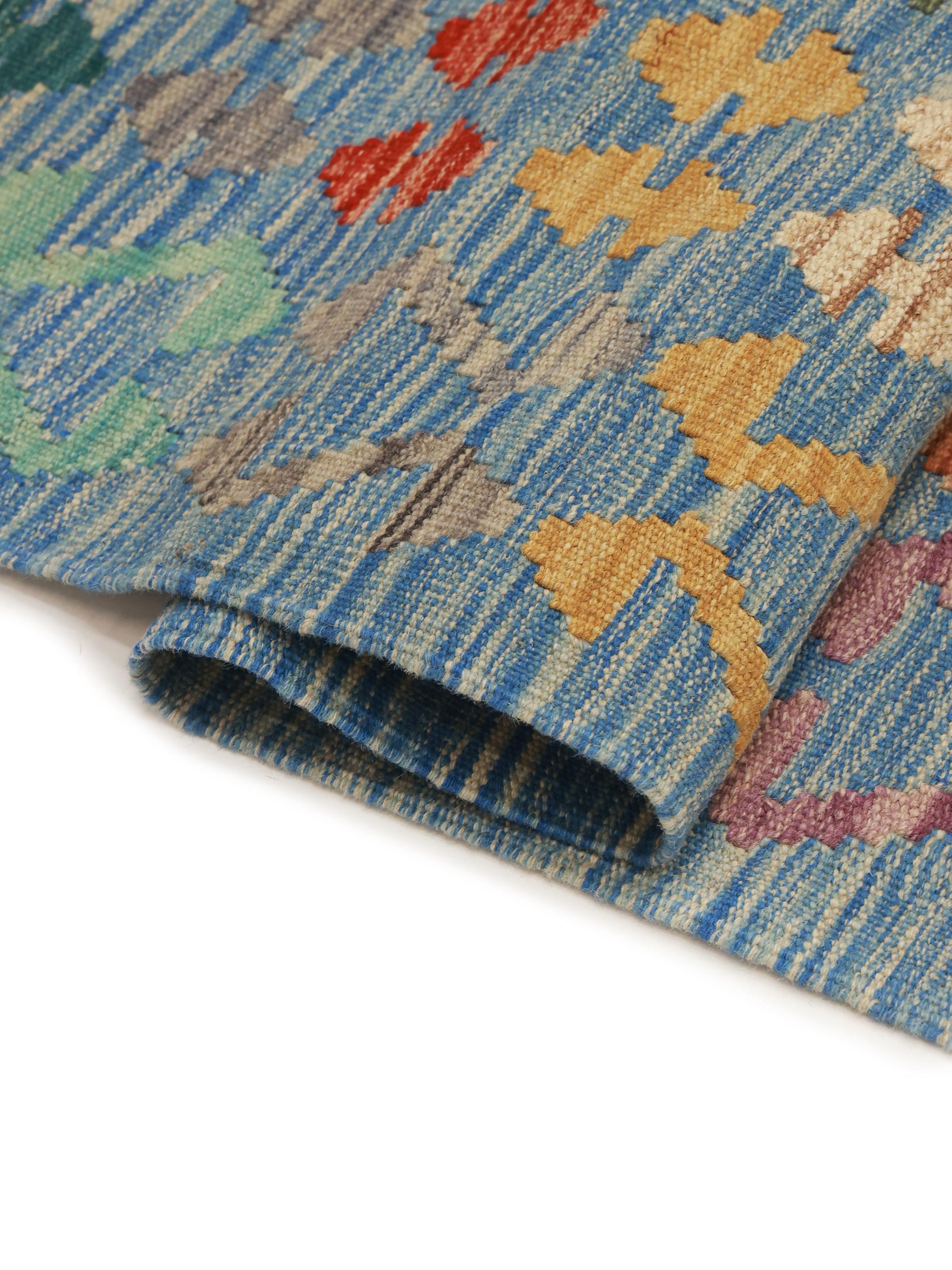
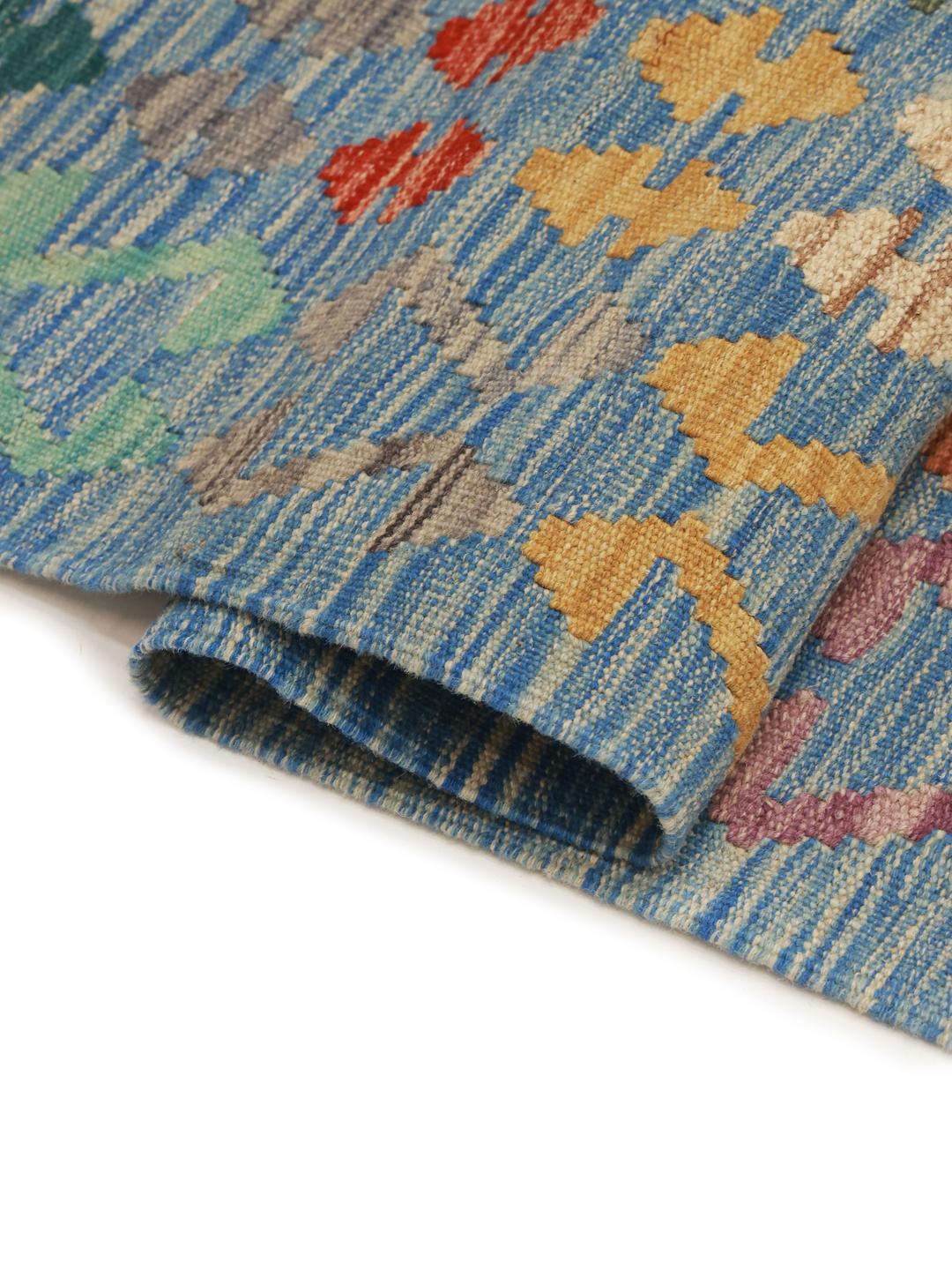
Kelim rugs have a long and storied history within the nomadic and village cultures of the Middle East and Central Asia. The term Kelim refers to a specific flat-weaving technique where the weft threads are pulled tightly over the warp threads to create a smooth, pileless surface. Traditionally, these rugs served as functional household items, used as floor coverings, wall hangings, and even as storage bags for migratory families, making them an essential part of daily life.
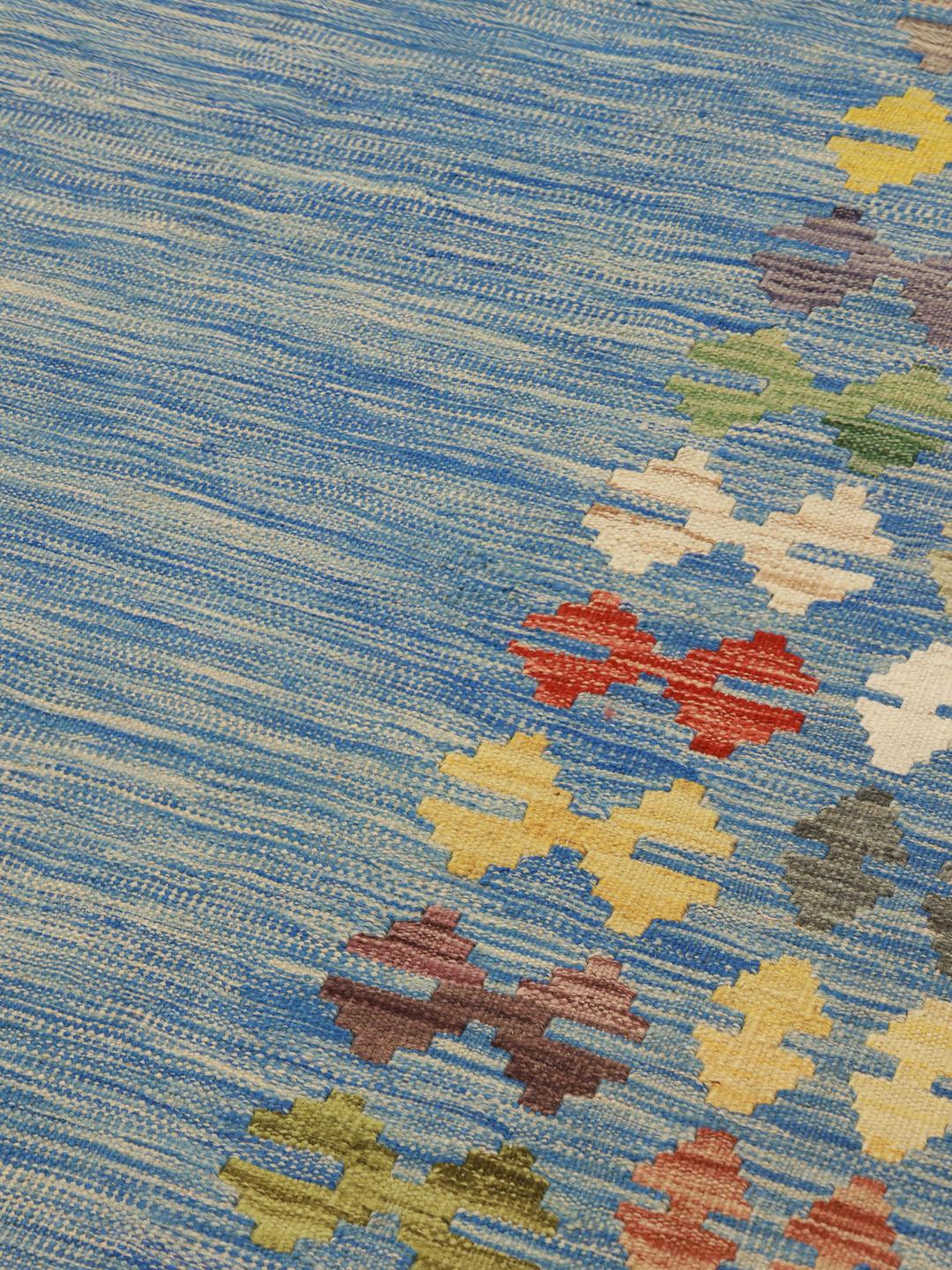
The Afghan Kelim tradition is particularly celebrated for its use of high-quality, hand-spun wool, which is often dyed using natural pigments to achieve rich, earthy tones. The flat-weave construction is not merely a stylistic choice; it is a practical one, as it makes the rugs lighter and easier to transport, while the density of the weave provides remarkable durability. This technique requires the weaver to manage the tension of the threads perfectly, a skill that is honed over years of practice.
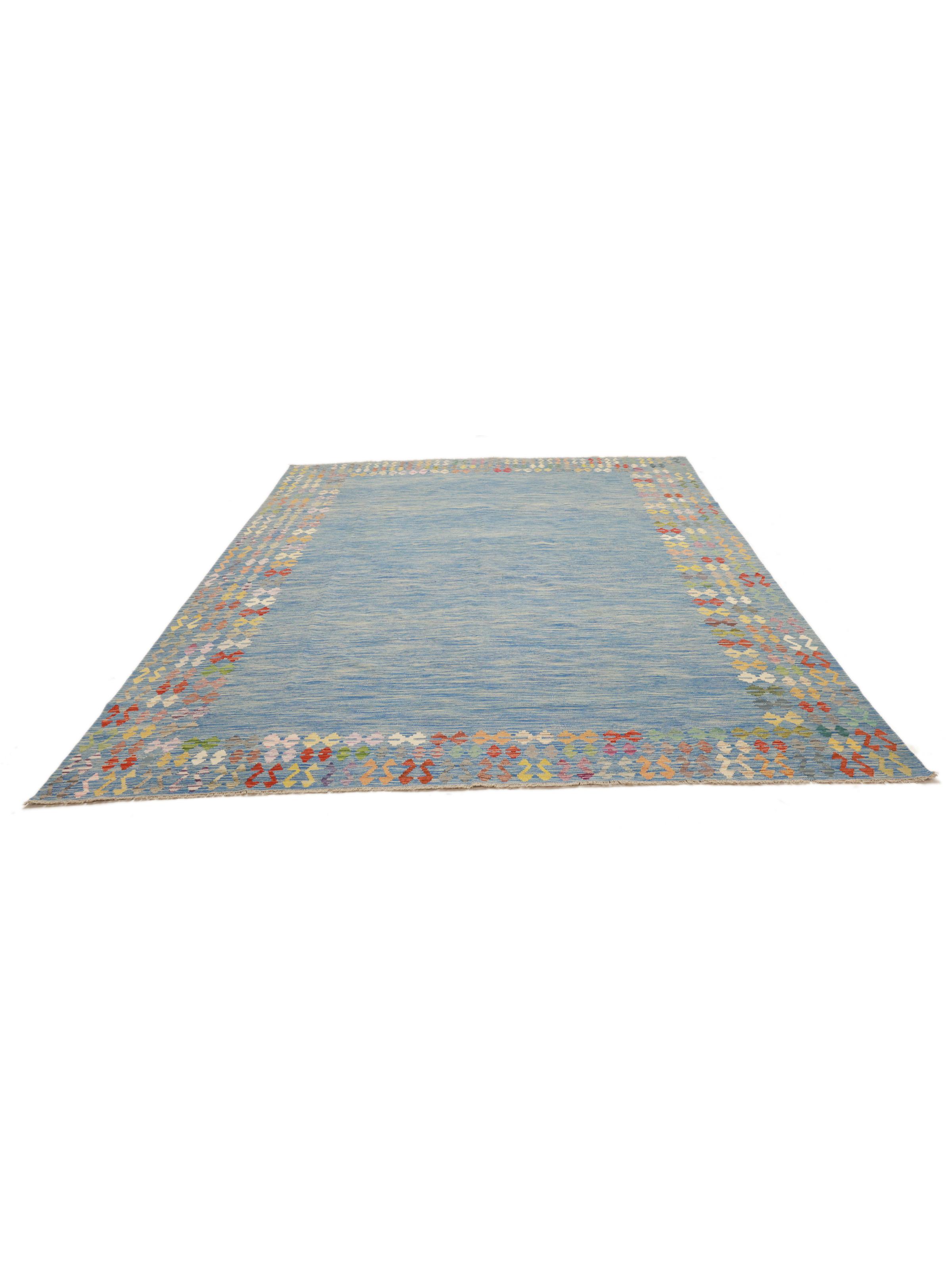
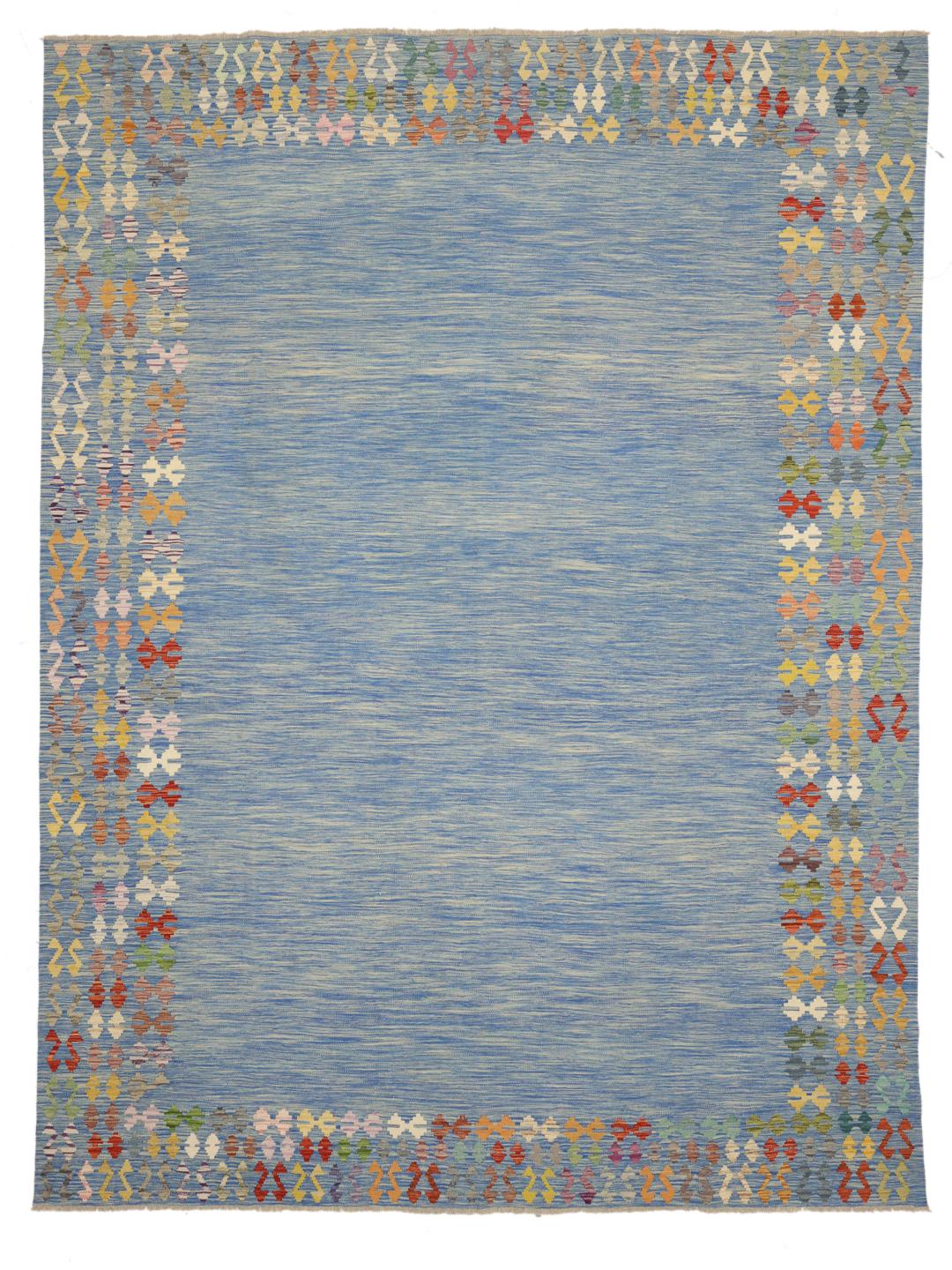
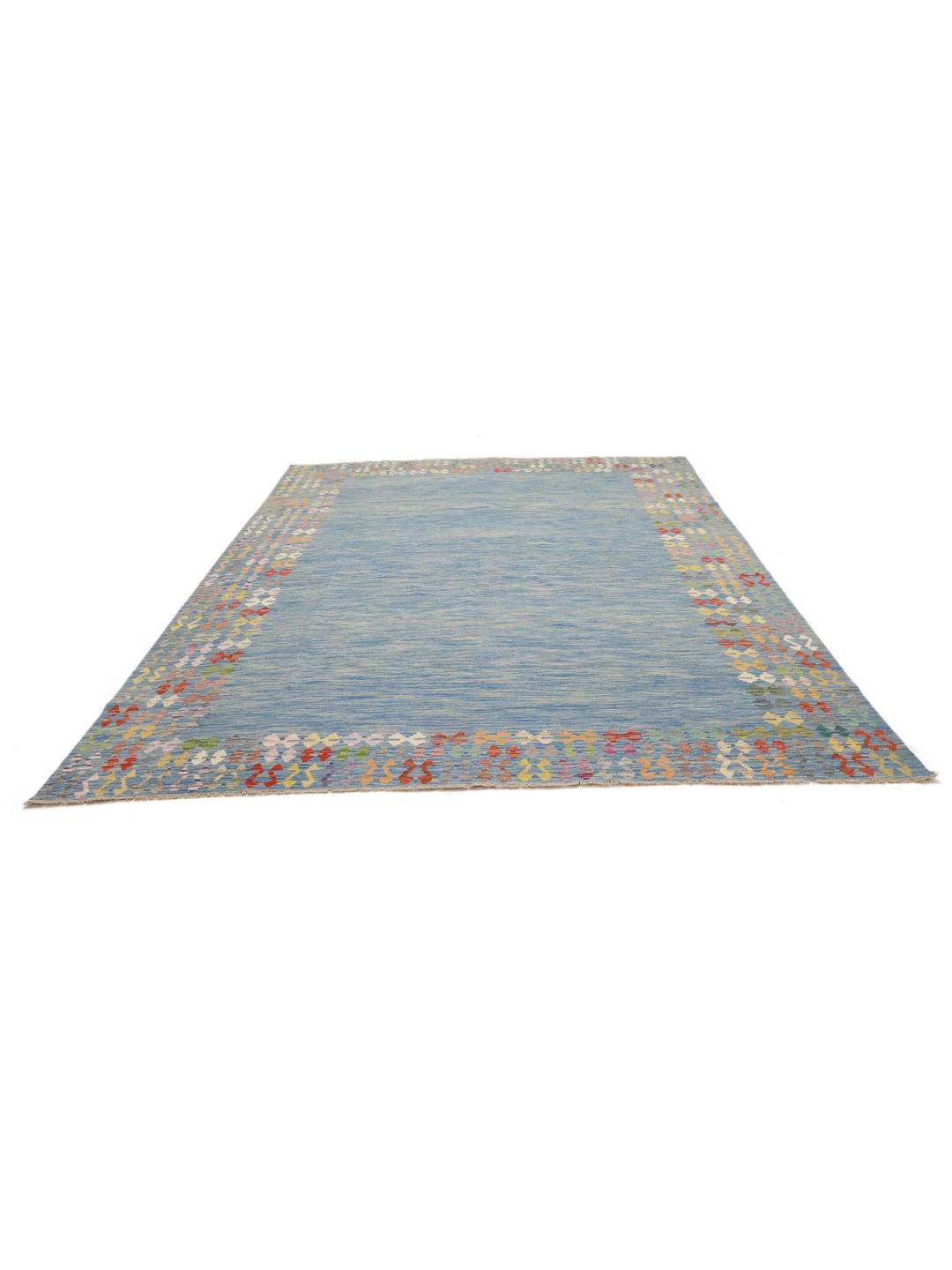
Signature design elements of Afghan Kelims often include bold geometric patterns, repeating motifs, and vibrant borders that carry symbolic meaning. The use of repeating shapes is common, intended to ward off bad luck or represent elements of the natural world, such as mountains, water, or stars. In this specific piece, the use of a blue field is a sophisticated departure from the more common red-dominant palettes, showcasing the creativity of the artisan within the established tradition.
Today, these rugs are highly sought after by collectors and interior enthusiasts alike for their cultural weight and authentic craft. Owning an Afghan Kelim is a way of preserving a legacy of skill that has survived for centuries. It represents a commitment to supporting traditional livelihoods and bringing a piece of genuine, human-made history into your modern home, ensuring that the stories woven into the fabric continue to be told.