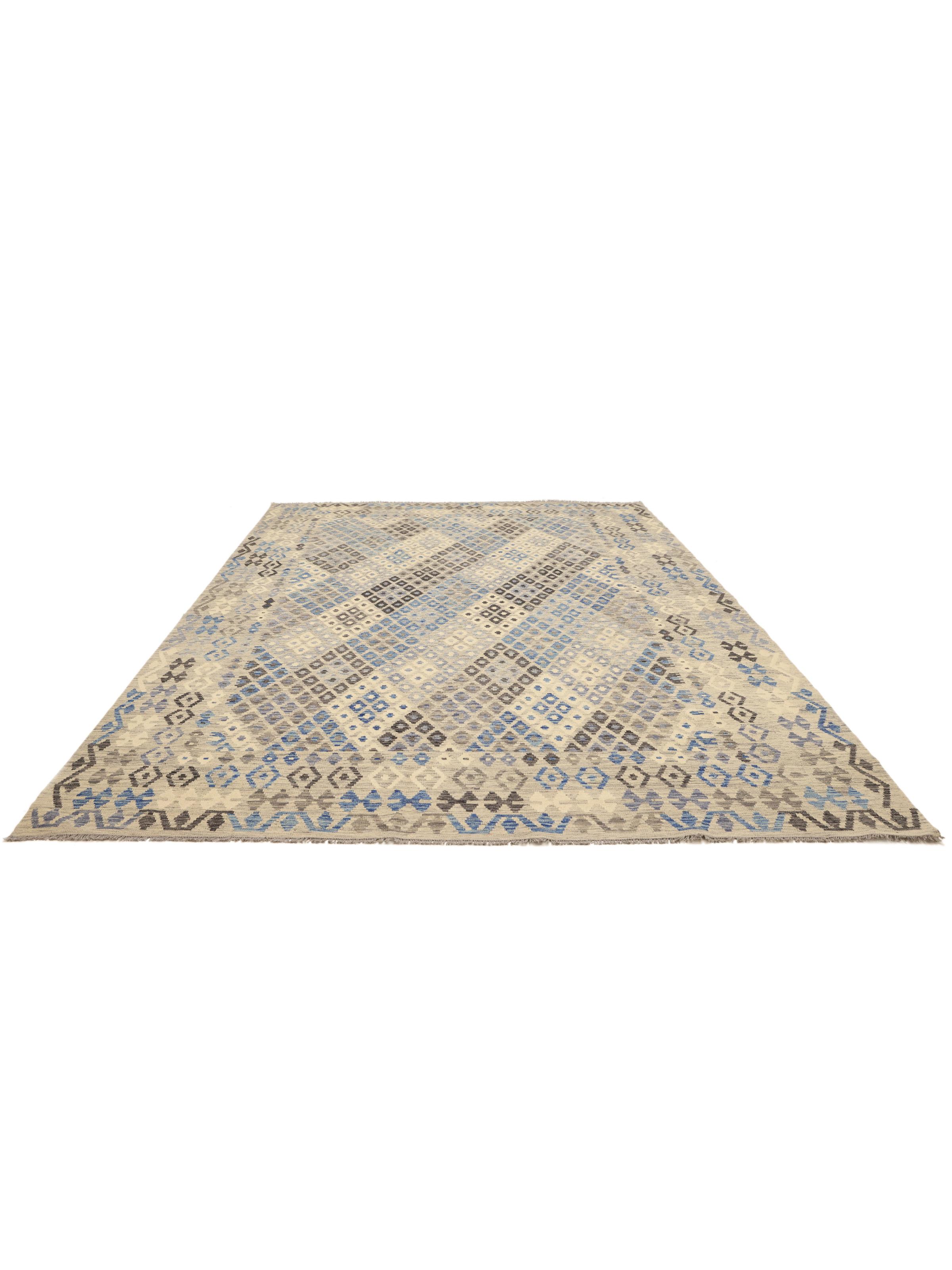
Kilim weaving in Afghanistan belongs to an ancient tradition passed down through generations of nomadic and village weavers. Historically woven for practical daily use as floor covers, saddlebags, and wall hangings, these flatweaves were built to be lightweight, durable, and easy to transport across rugged mountain landscapes.
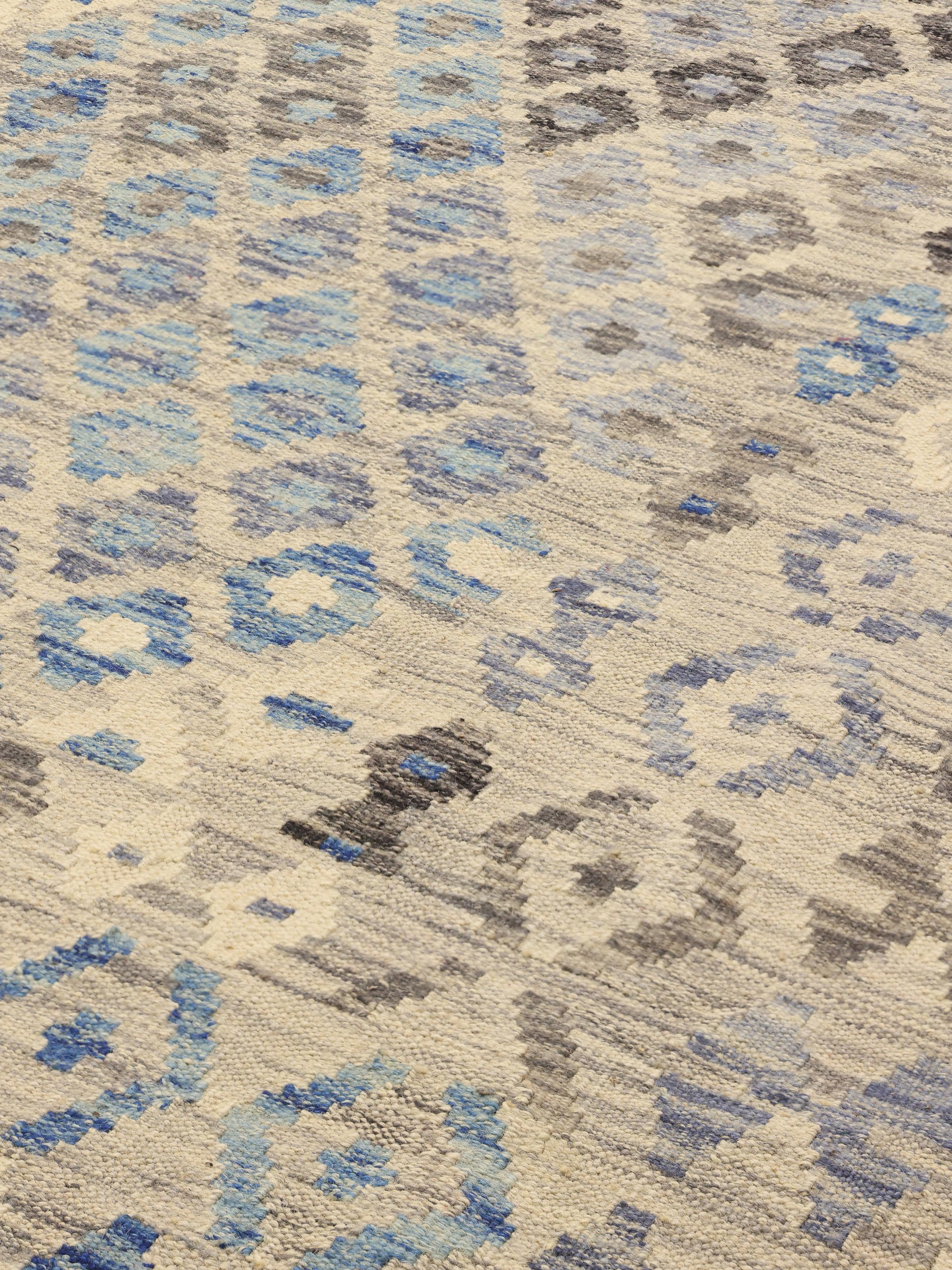
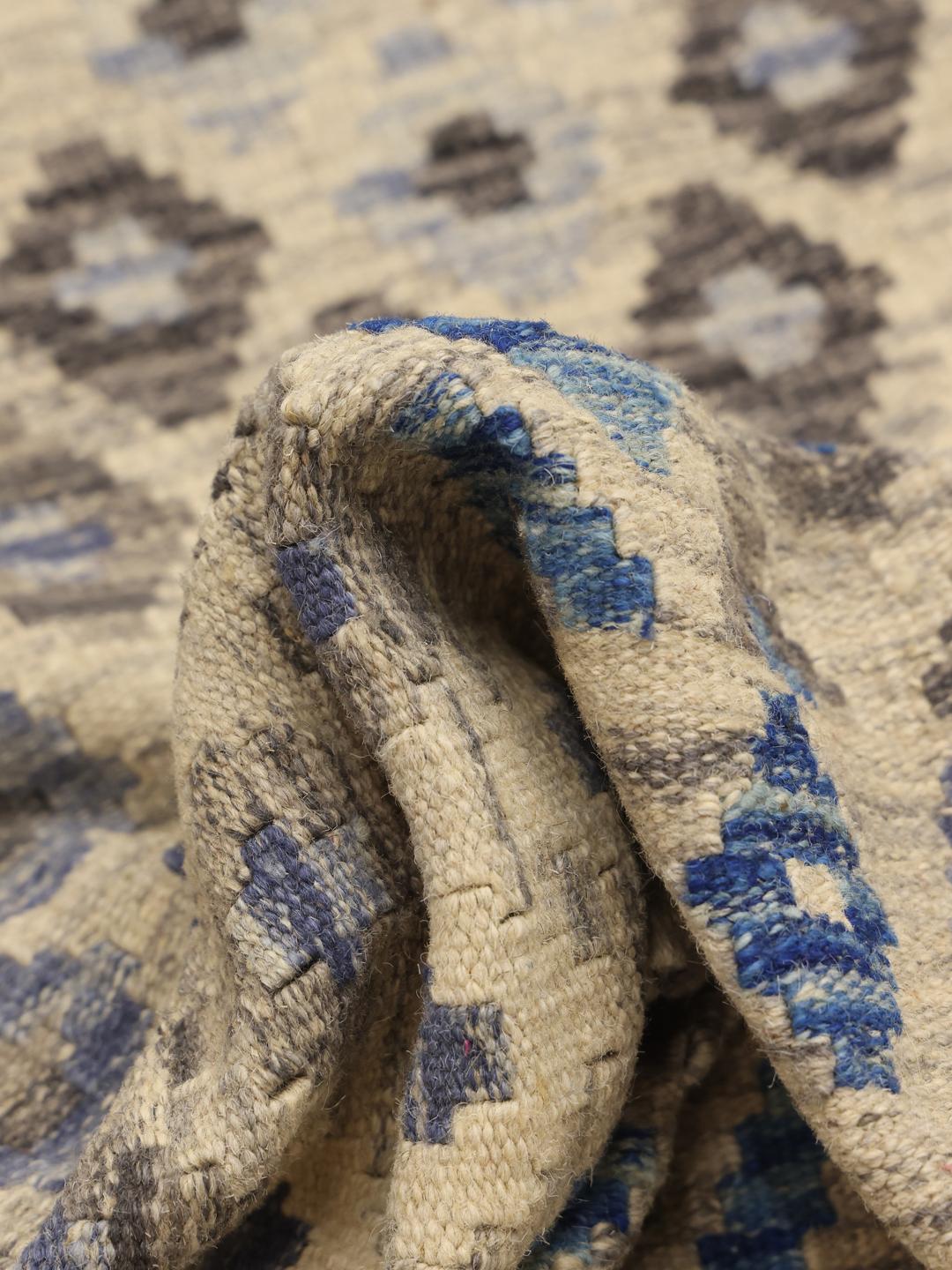
The term 'Old Style' refers to weaving methods and design choices that honor traditional regional aesthetics. Unlike pile rugs that use knots tied onto a warp, kilims are flatwoven using a slit-weave technique where the weft threads create both the structure and the surface design, resulting in a flexible and reversible textile.
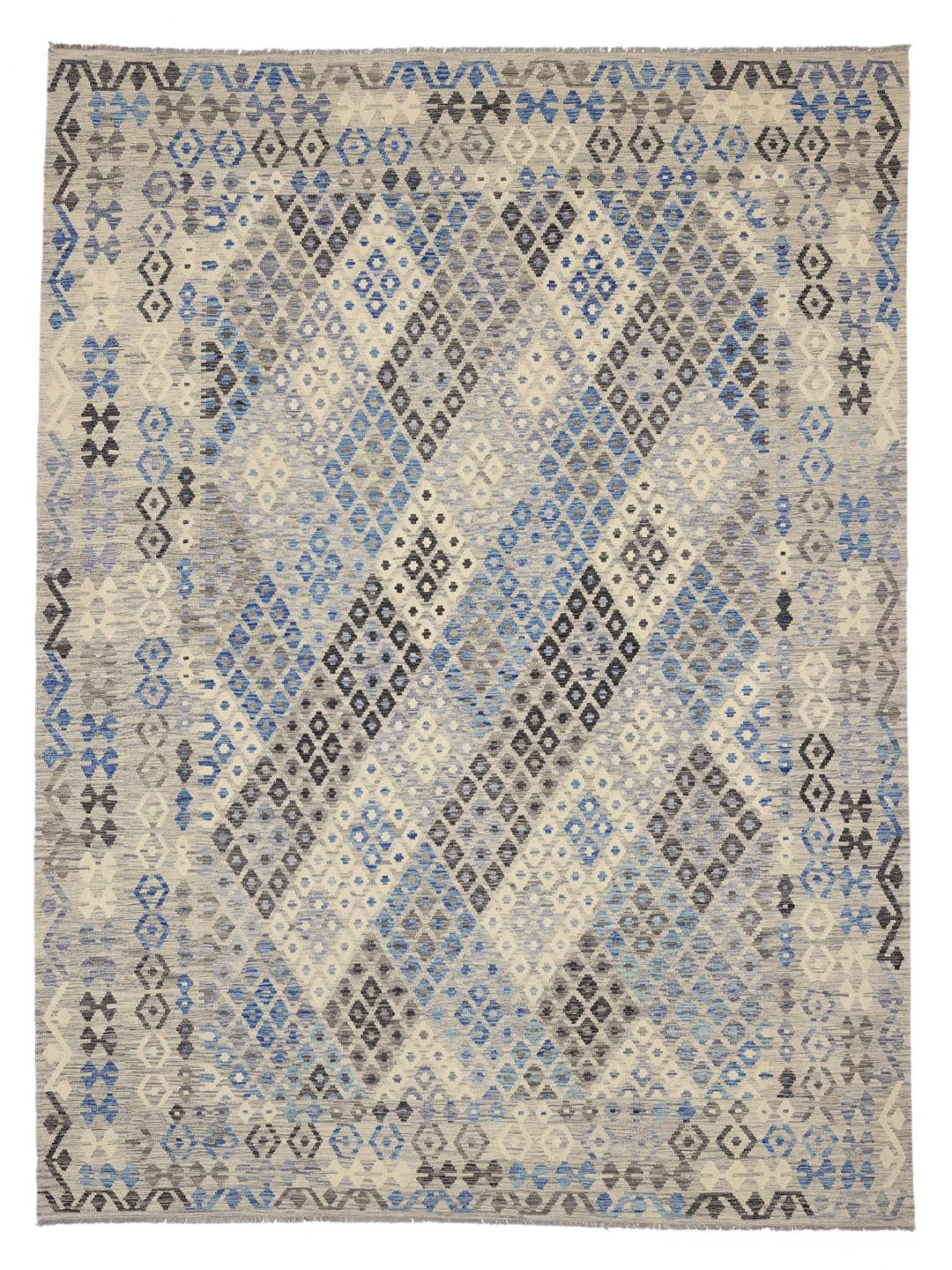
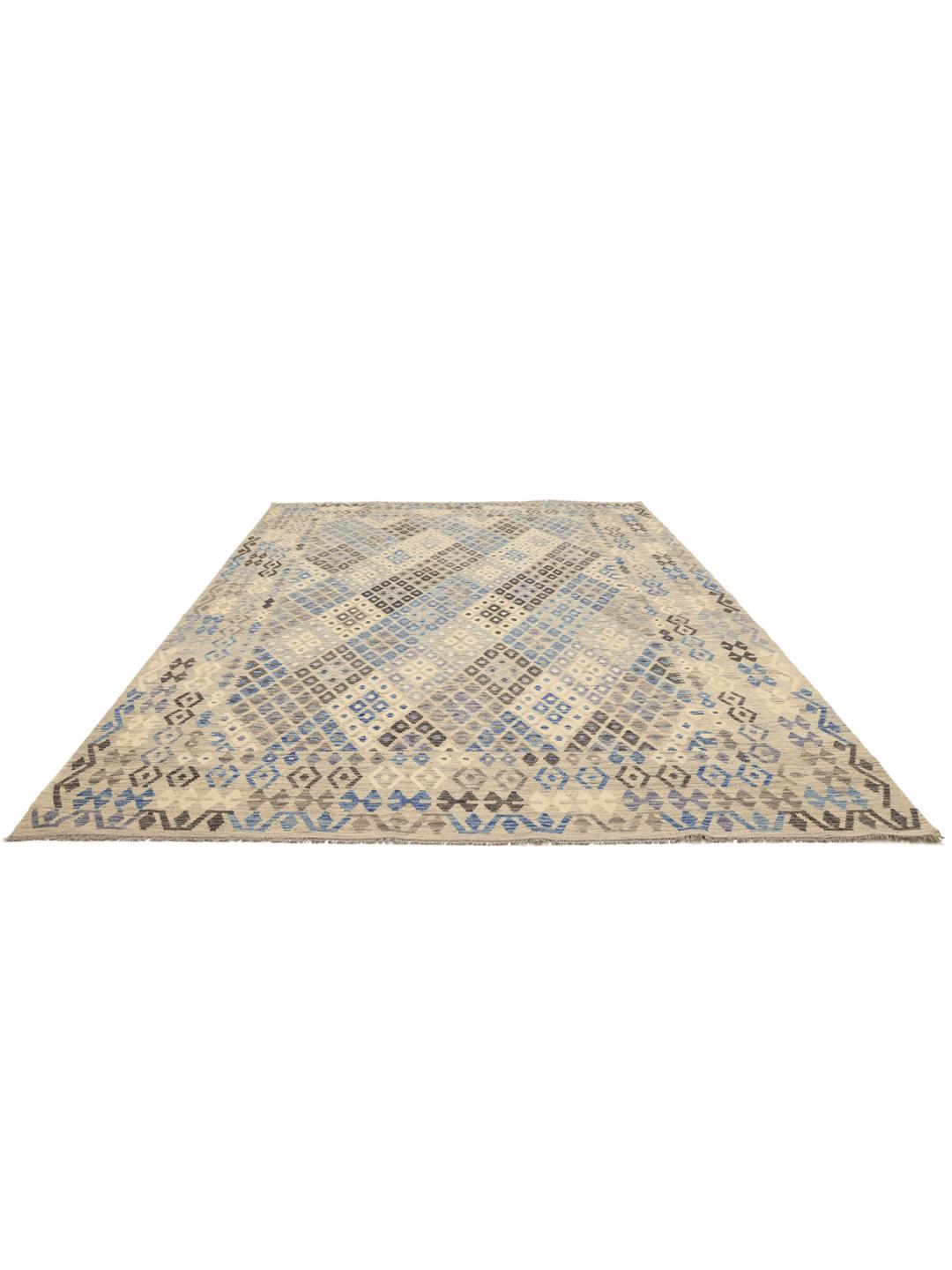
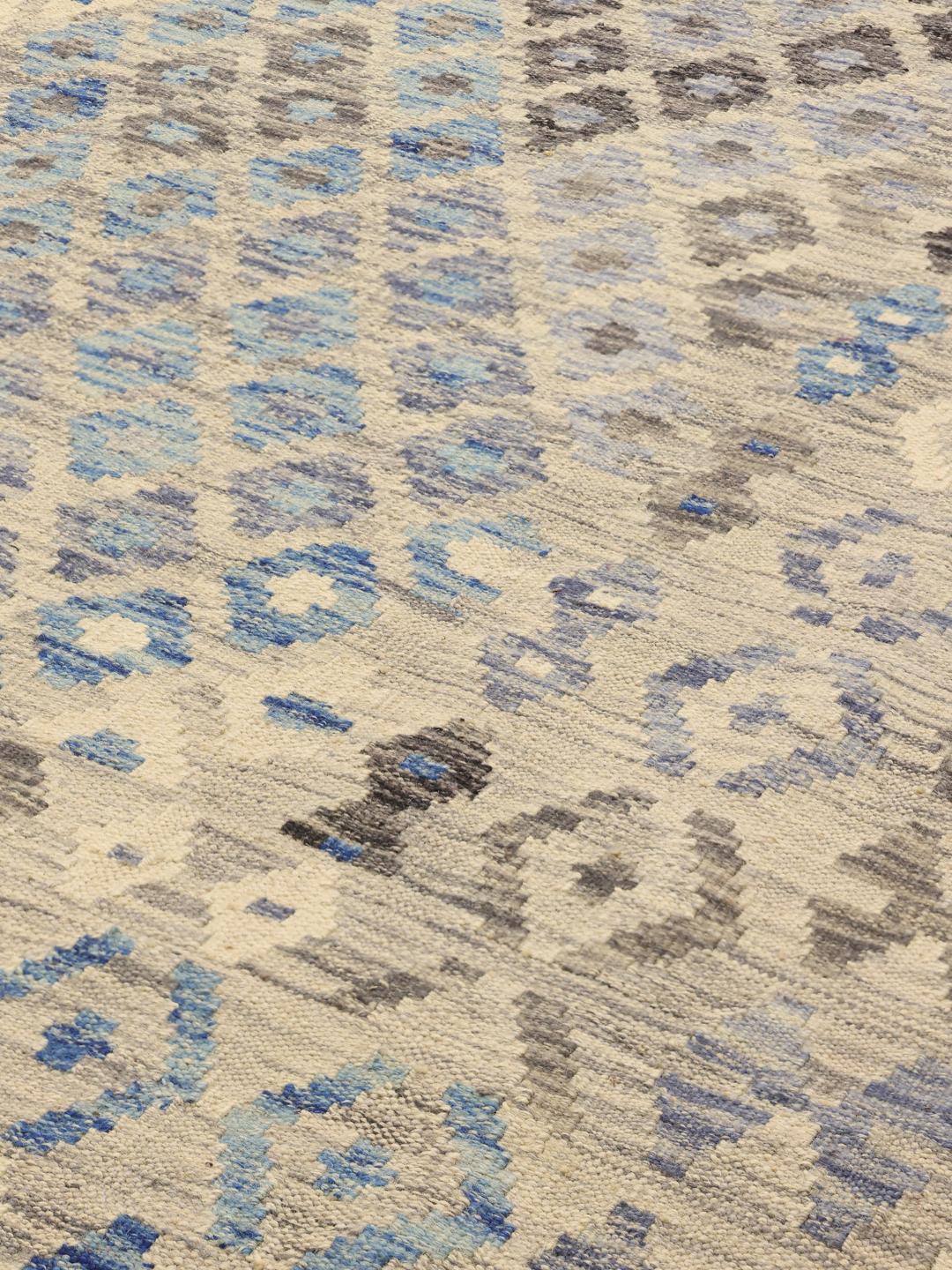
Signature elements of Afghan kilims include stepped diamonds, repeating hooked motifs, and geometric borders. While traditional Afghan kilims often favor deep madder reds and dark tones, modern adaptations like this piece introduce muted light grey and soft blue palettes, giving classic tribal geometry a softer look.
Flatwoven Afghan rugs are appreciated by collectors and homeowners for their authentic folk art character and tactile qualities. Owning a unique hand-woven kilim connects your home to an enduring weaving tradition shaped by history, geography, and personal artistic choice.