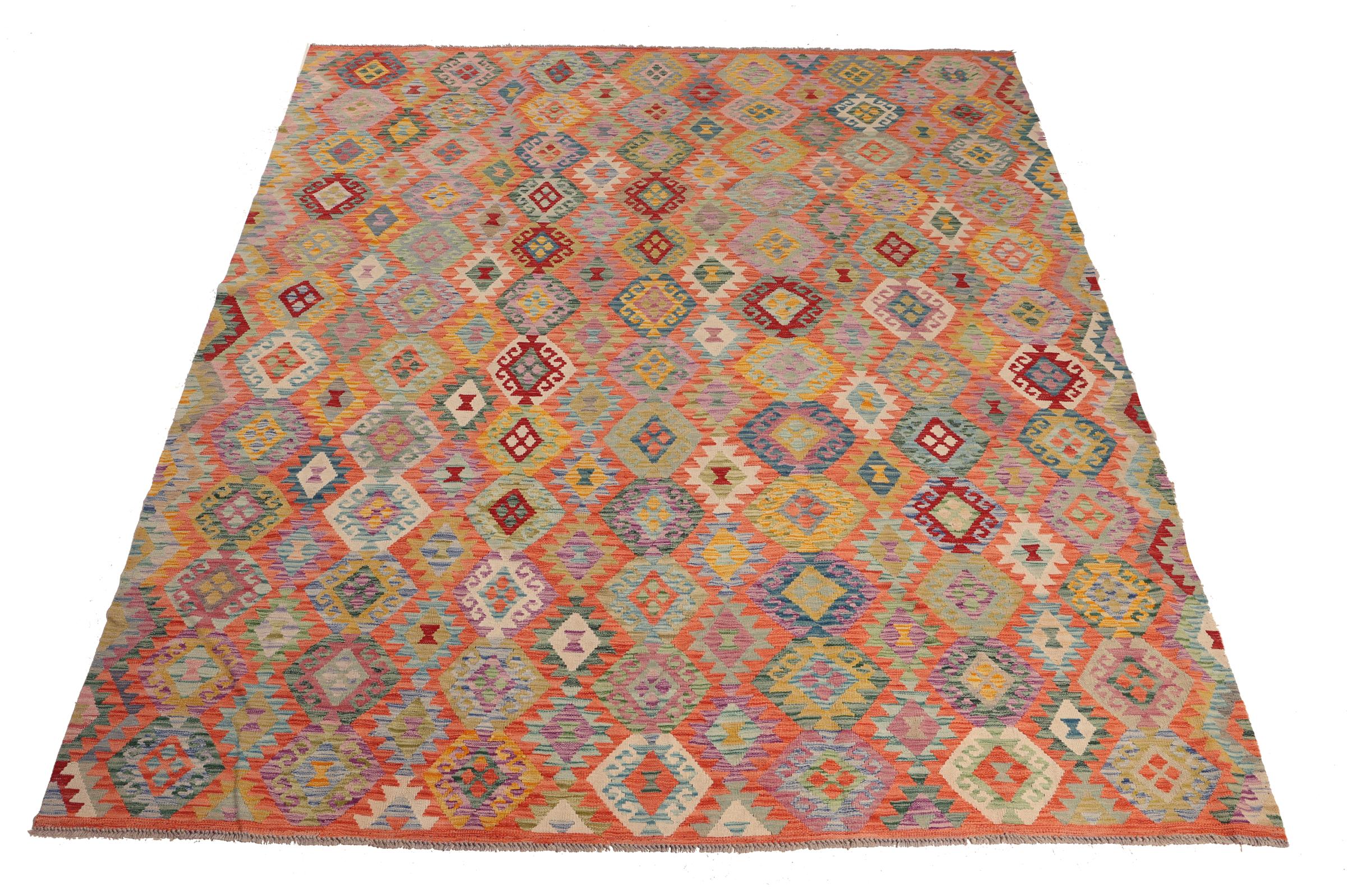
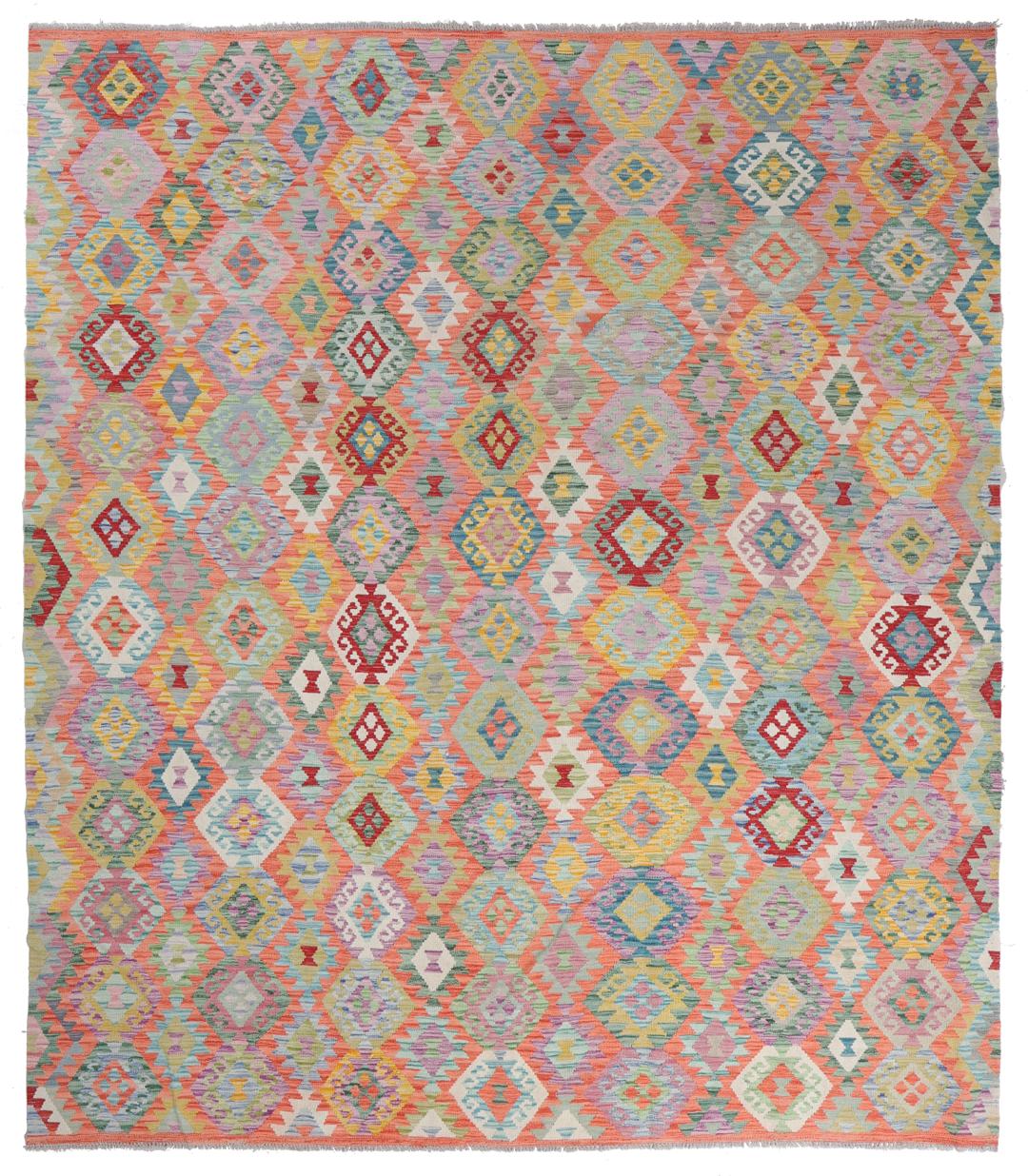
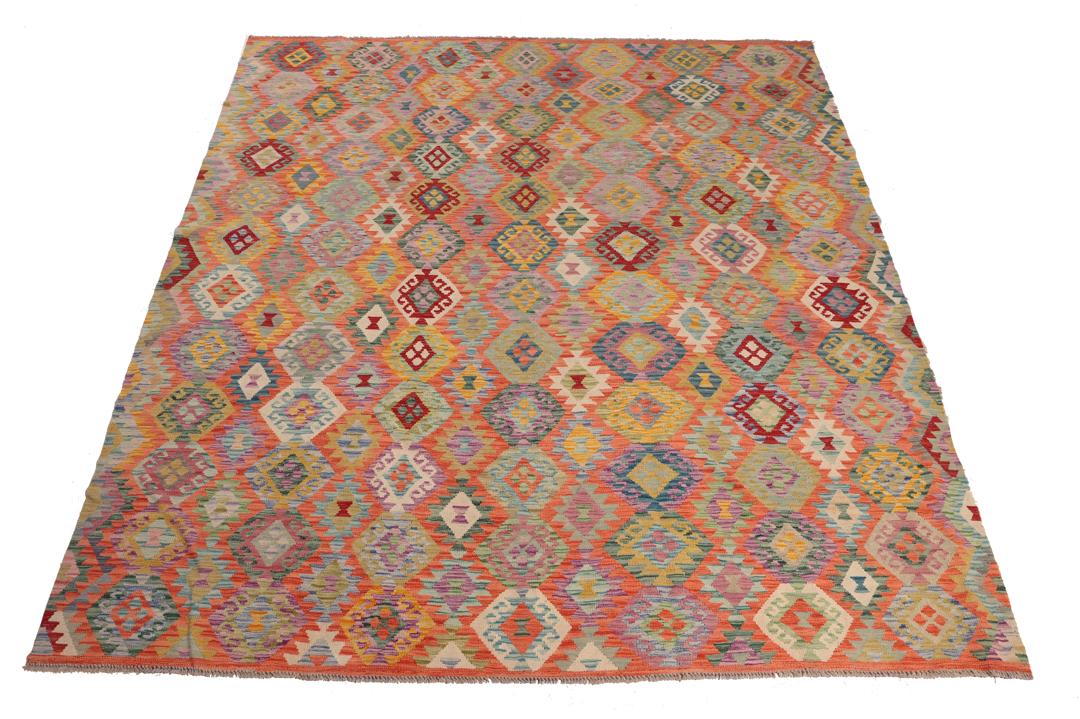
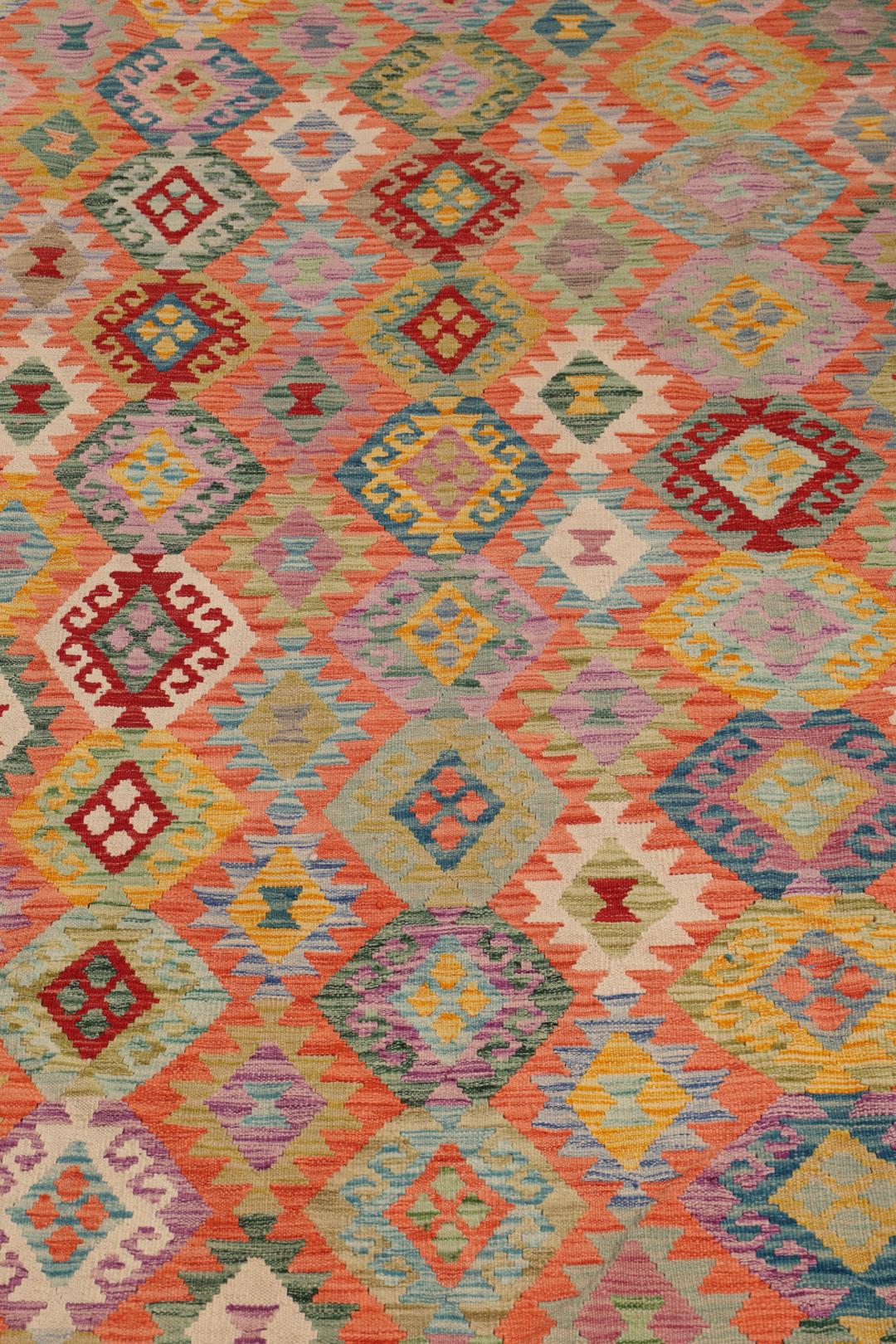
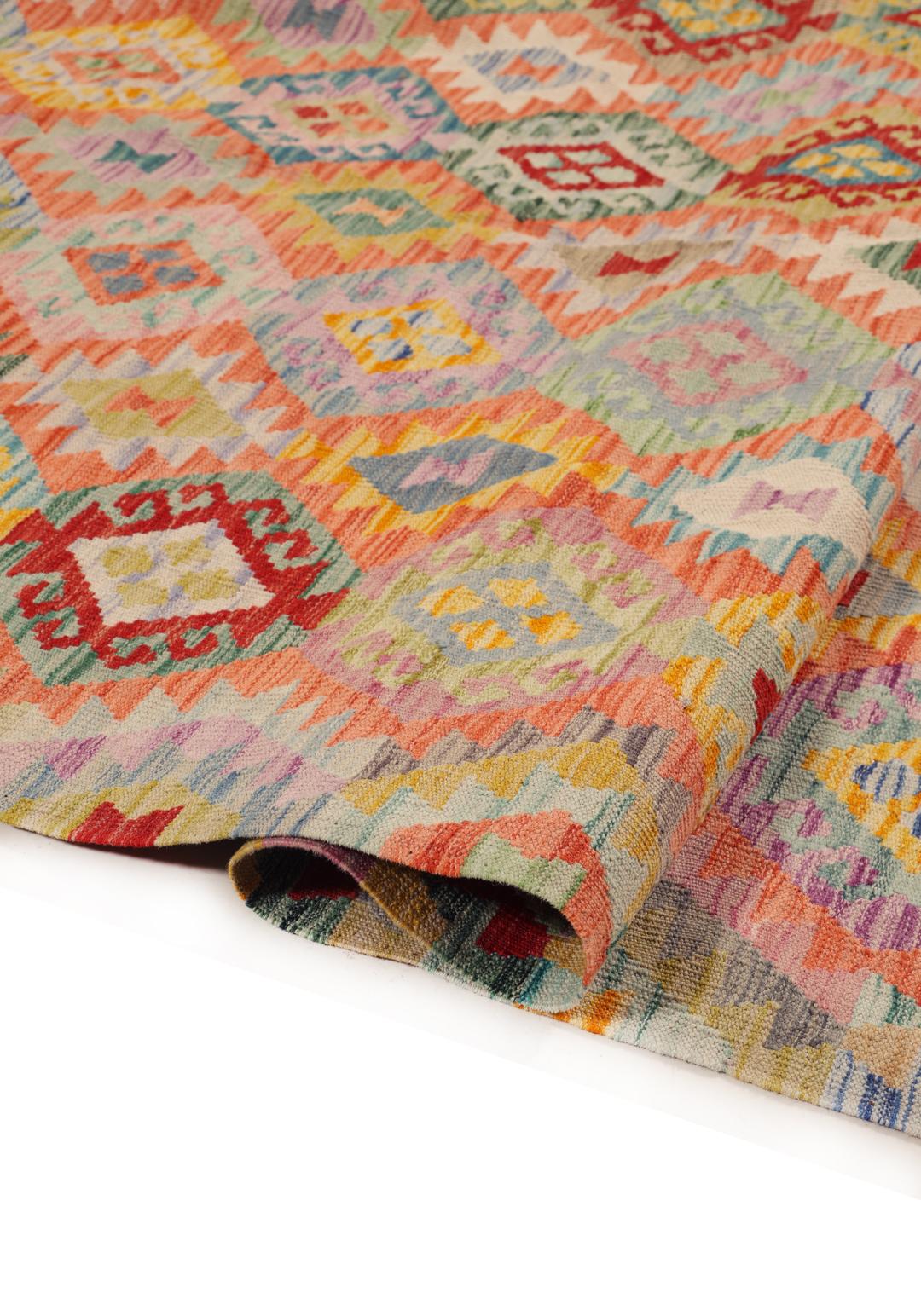
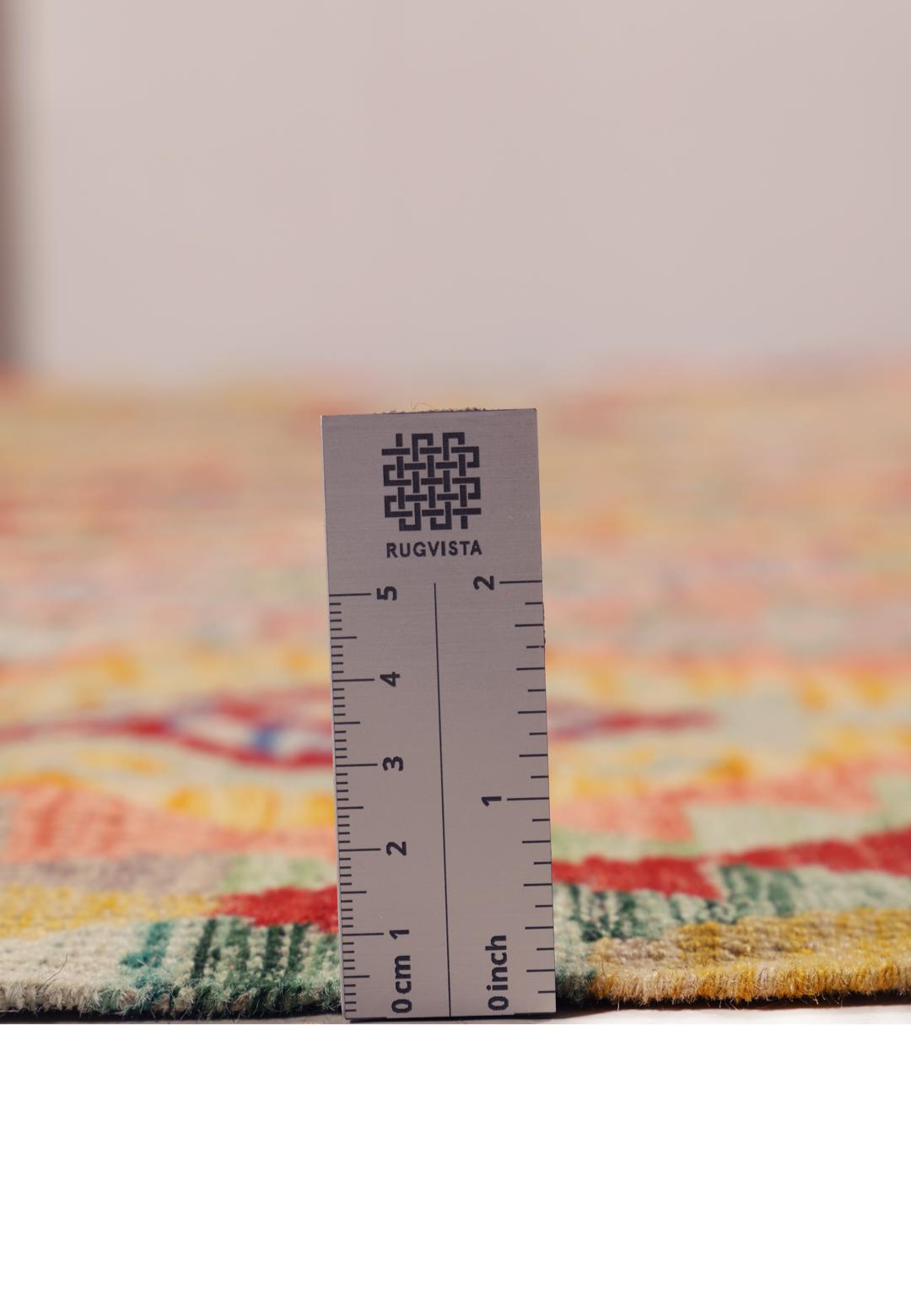
Kelim rugs have long been a cornerstone of nomadic life across the Middle East and Central Asia. Originally designed as functional, transportable textiles for floor coverings, wall hangings, and storage bags, these rugs evolved from the necessity of life on the move, where durability and portability were paramount.
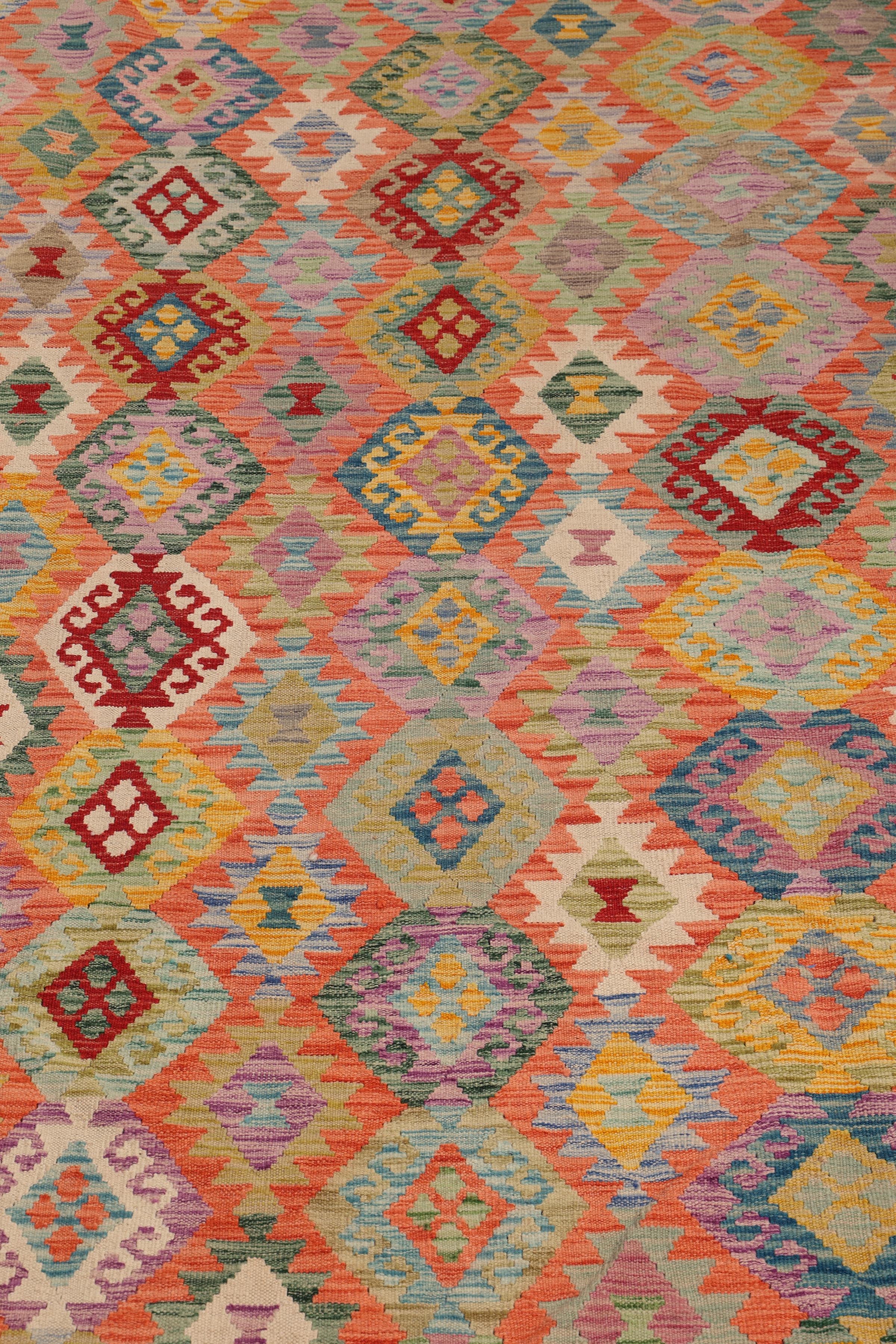
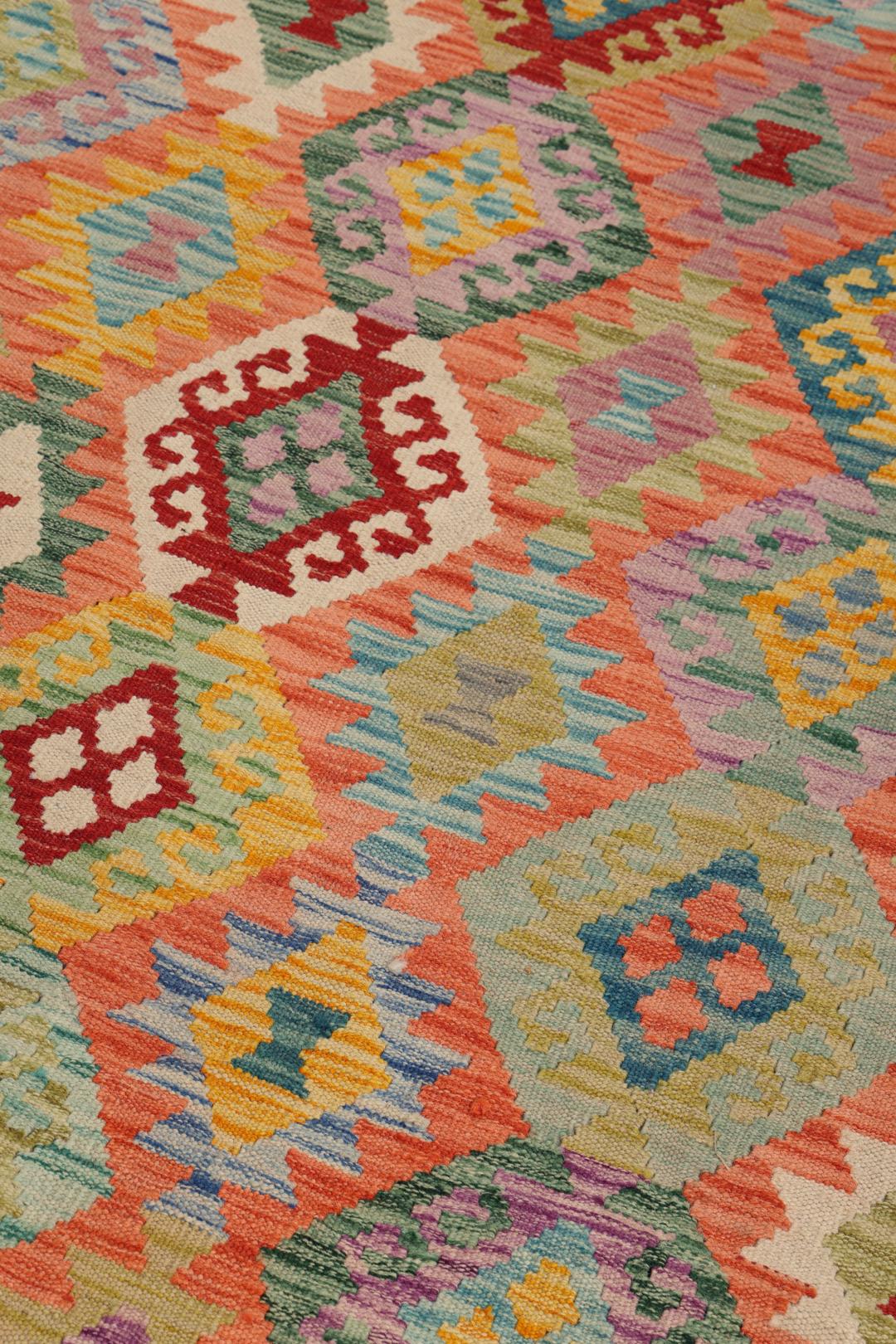
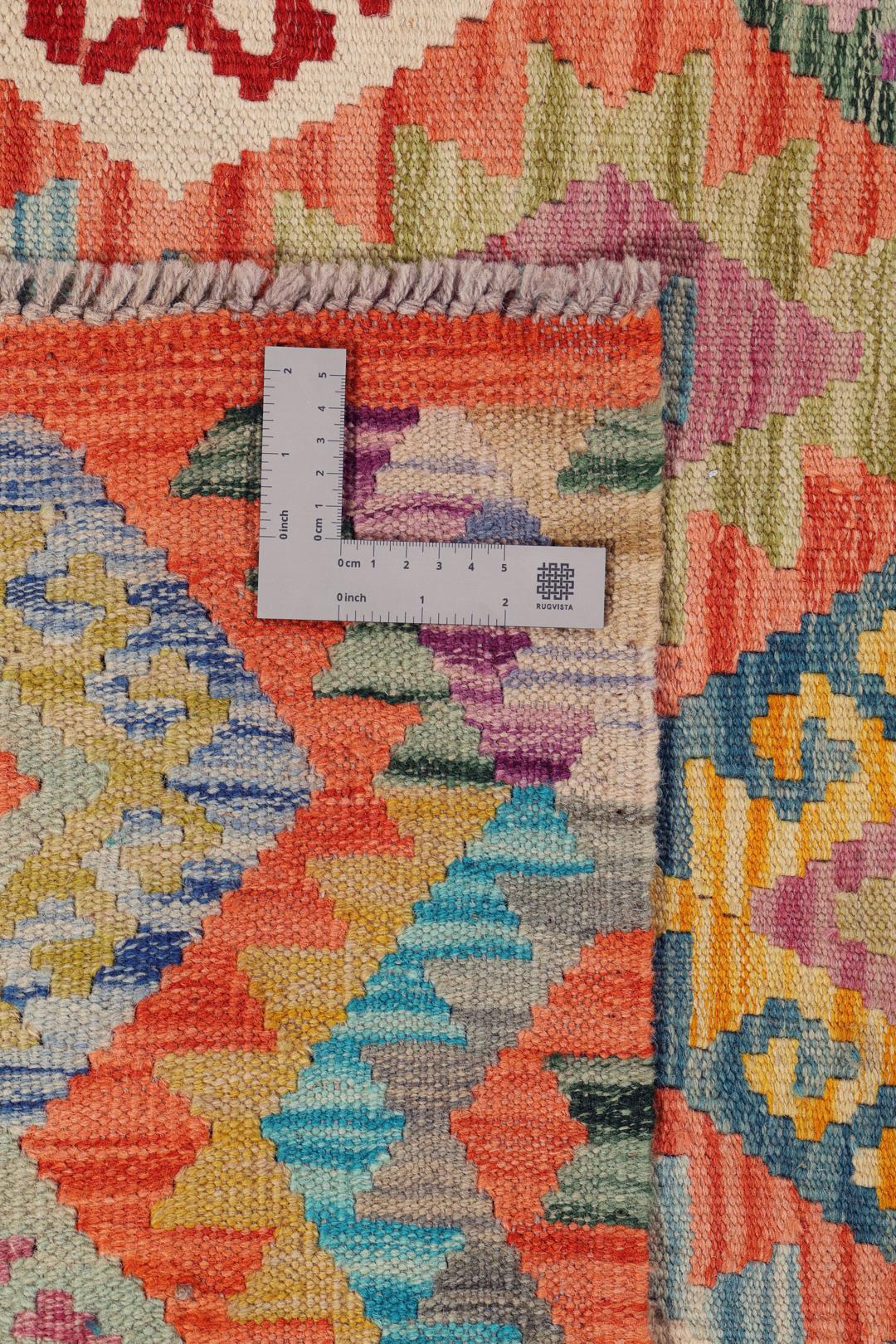
The term 'Kelim' refers to a specific flat-weaving technique where the weft threads are pulled tightly over the warp threads to create a smooth, pileless surface. This method allows for the creation of sharp, clean geometric motifs that are reversible, as the design appears almost identical on both sides of the rug.
Signature design elements of the Afghan style include a strong reliance on diamond shapes and interconnected medallions, often arranged in a repeating grid. The colour palette typically draws from local natural dyes, resulting in a harmonious yet vibrant aesthetic that feels both earthy and energetic, reflecting the landscape from which it emerges.
Owning a Kelim from this tradition is an investment in cultural heritage and human skill. These rugs are valued by collectors for their authenticity and the way they bridge the gap between ancient nomadic utility and contemporary interior design, serving as lasting symbols of craftsmanship and history.