Kelim rugs have long been a cornerstone of textile culture in the Middle East and Central Asia. Originally created by nomadic and semi-nomadic tribes, these flat-woven rugs served essential roles in daily life, functioning as floor coverings, blankets, and storage bags. The migration of these weaving traditions across the region has led to the distinct styles we see today in Afghan Kelims.
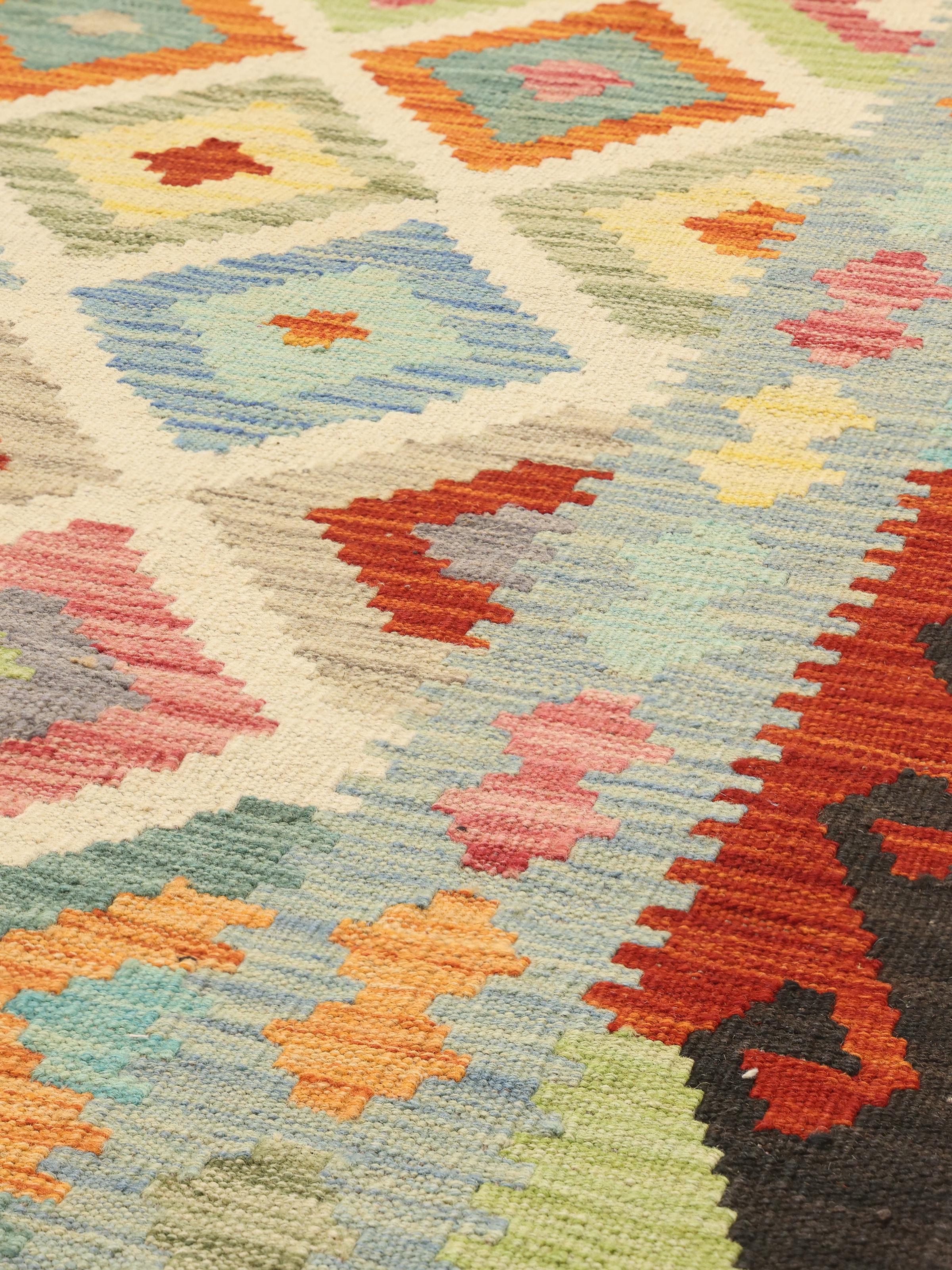
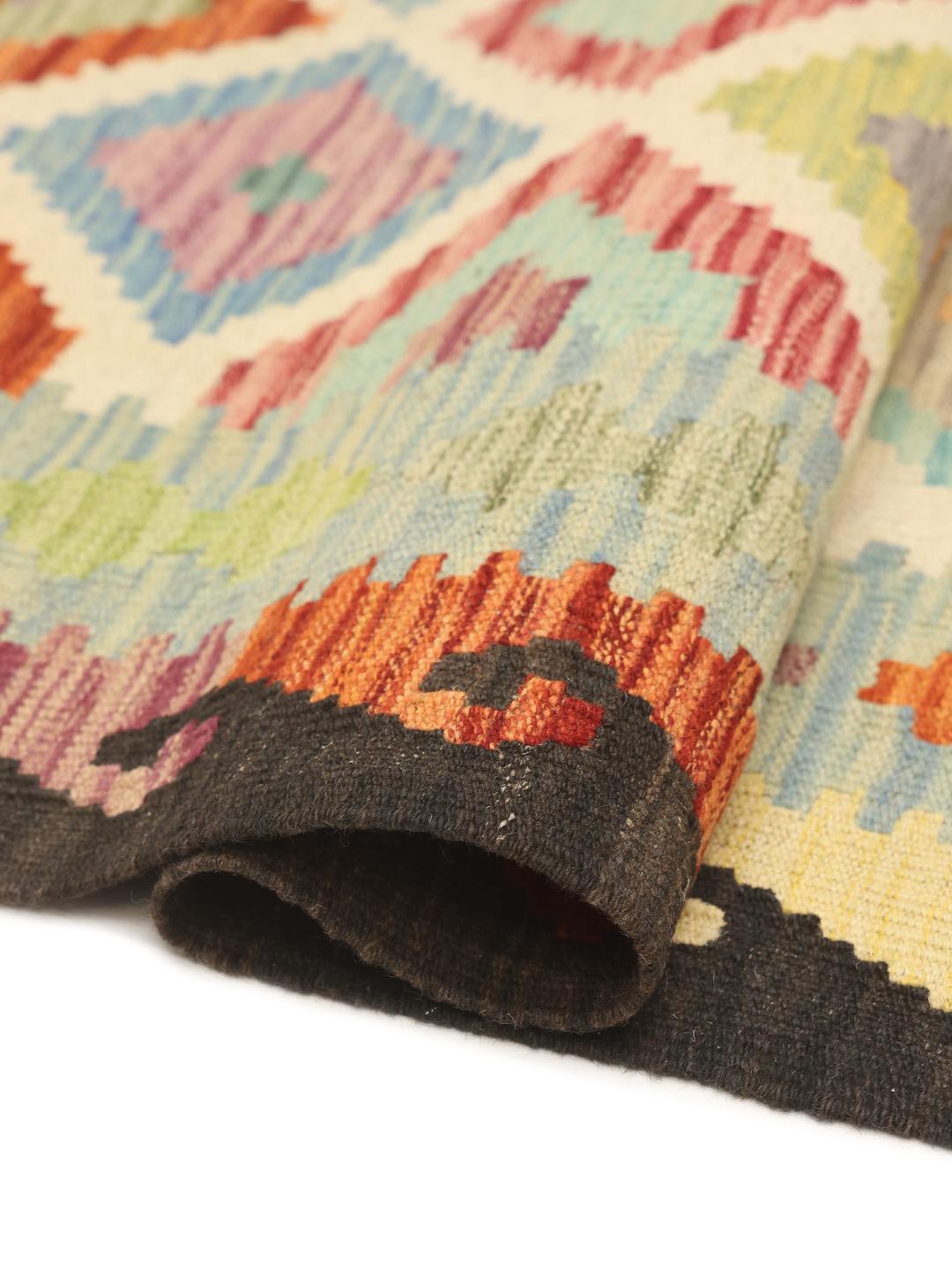
The term 'Kelim' refers to the specific flat-weaving technique where the warp and weft threads are interlaced to create a smooth, pile-less surface. This construction method is highly valued for its versatility and strength. Because there is no pile to wear down, these rugs are exceptionally durable and can be used on both sides, a practical feature that has kept the tradition alive for centuries.
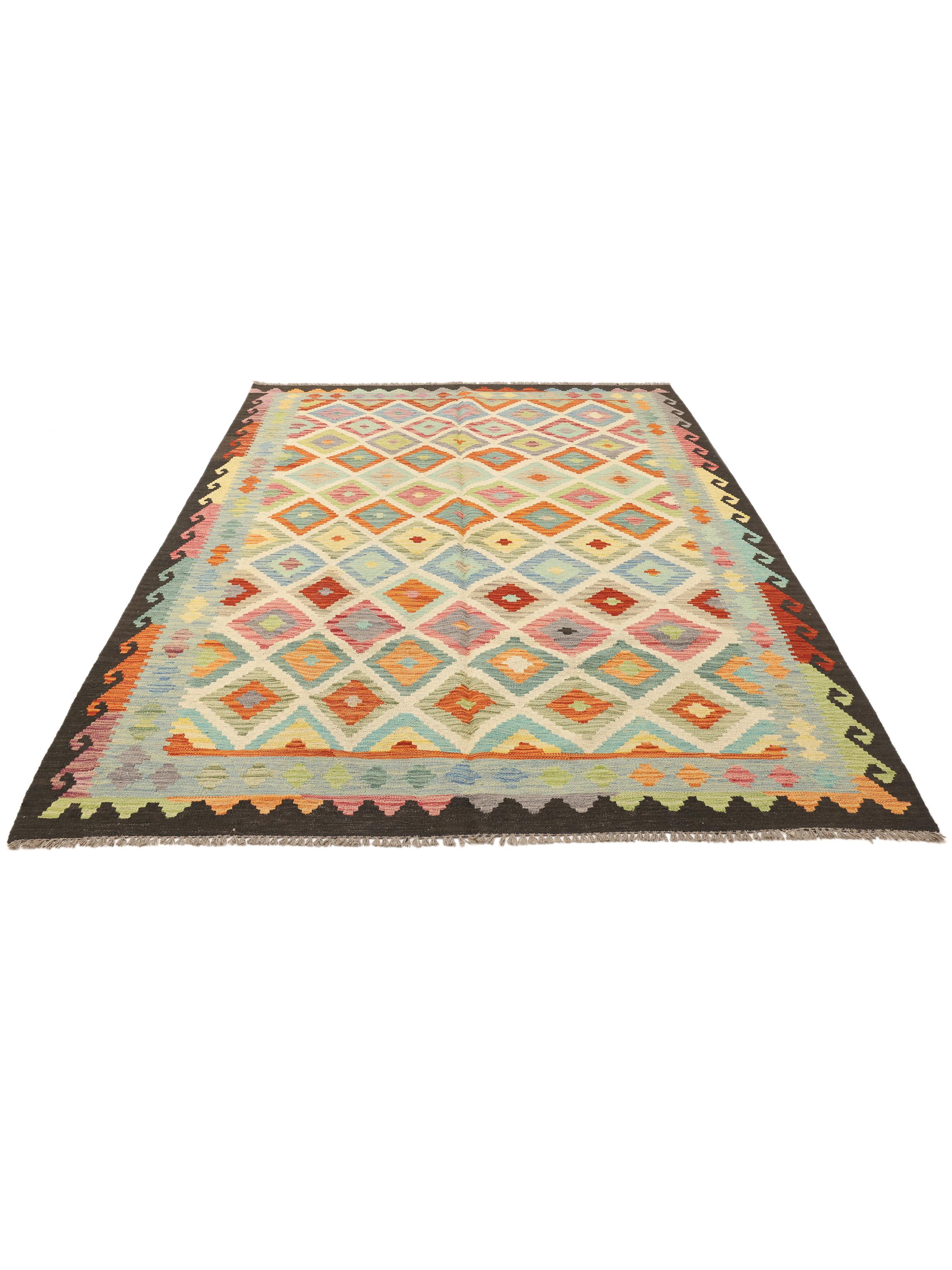
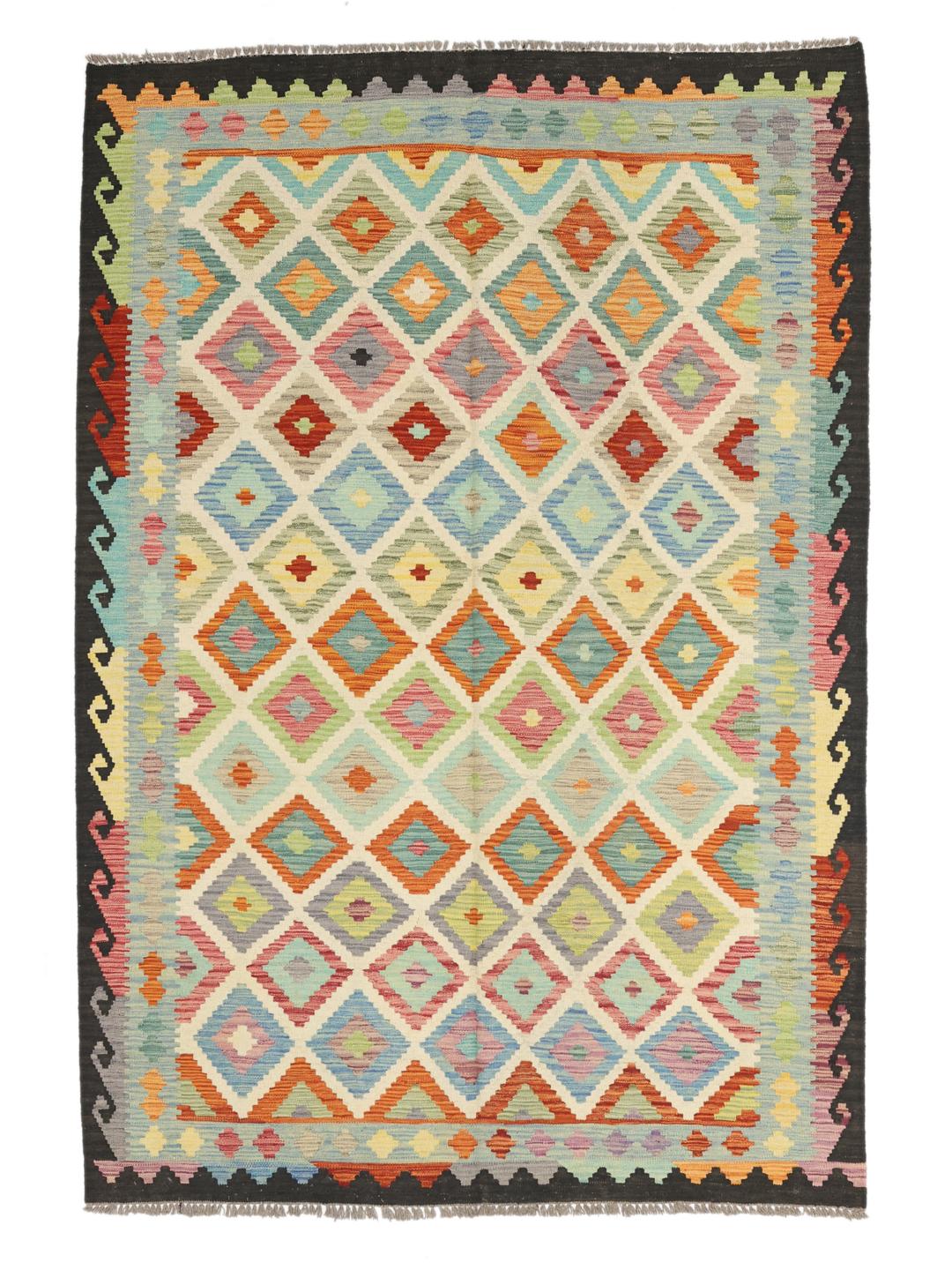
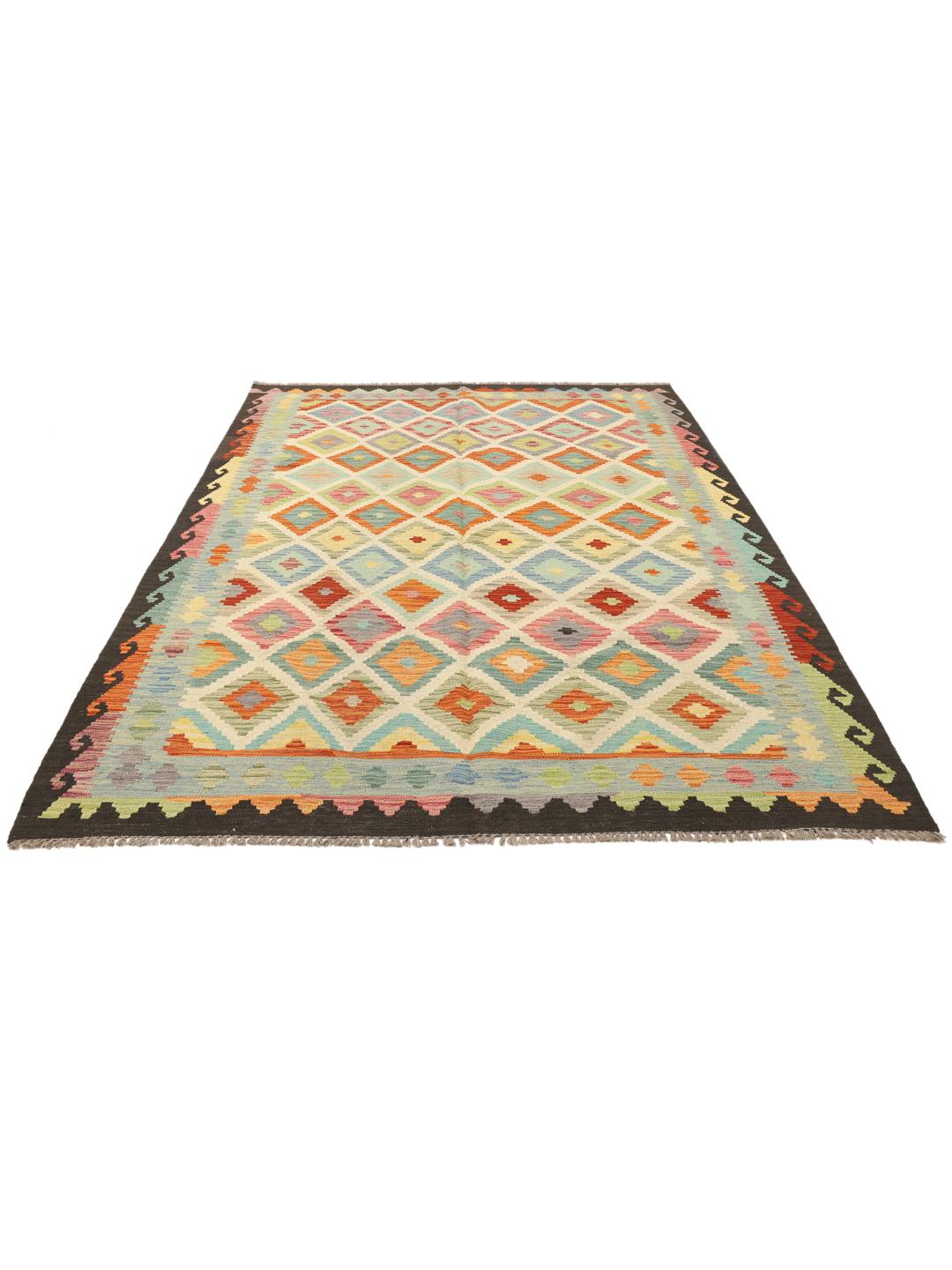
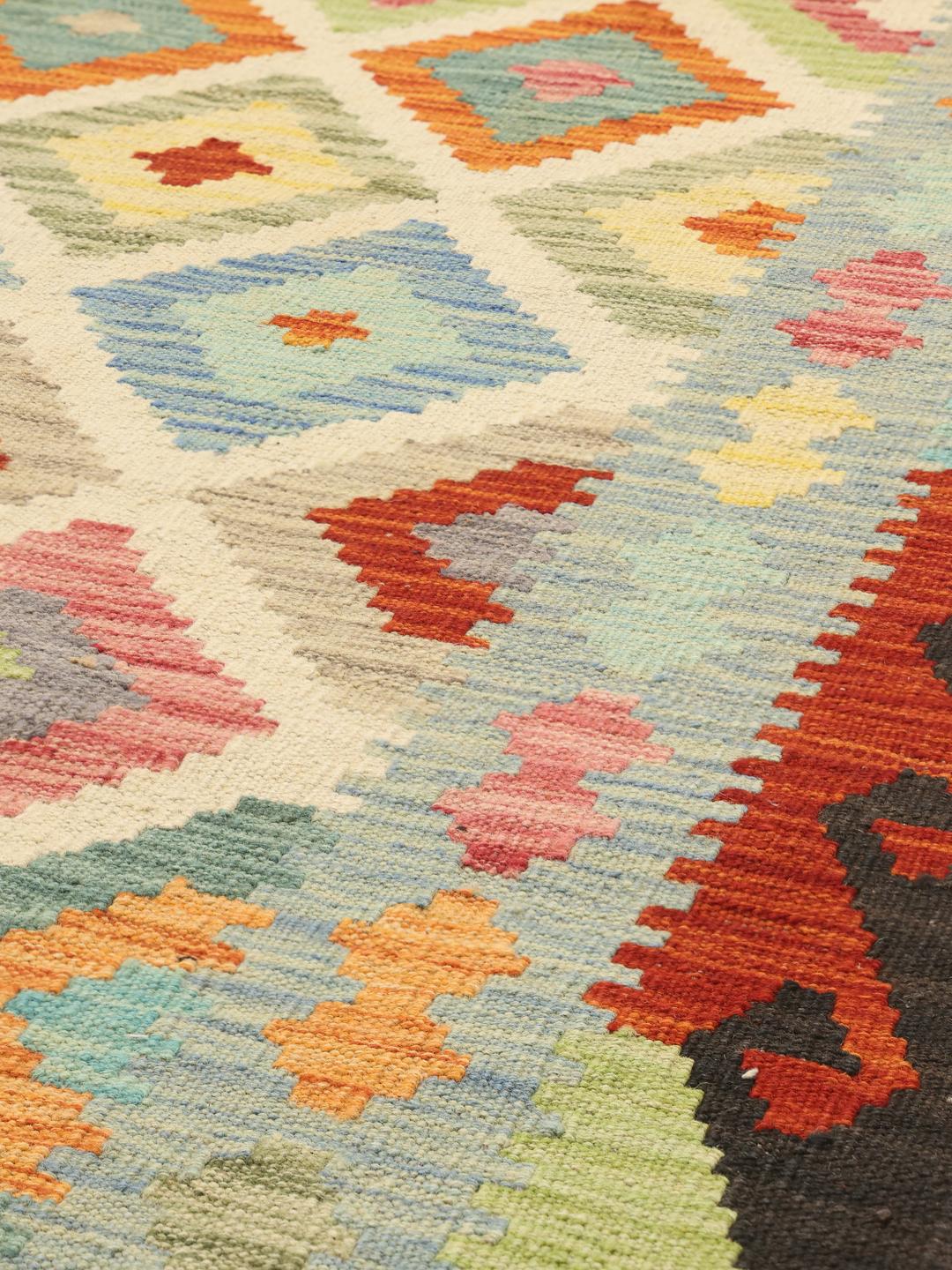
Visually, this tradition is defined by its bold geometric language. Diamond motifs, as seen in this piece, are classic elements of the style, representing a centuries-old visual vocabulary that tells stories through colour and shape. The use of vibrant, contrasting dyes is intended to bring life to living spaces, with each weaver often improvising on traditional patterns to create something distinct.
Collecting a hand-woven Kelim is an investment in human skill and cultural heritage. These pieces represent a direct connection to the weavers who continue to uphold ancient methods, ensuring that the knowledge and artistry of the region are preserved. To own one is to possess a tangible piece of history that adds warmth, depth, and a sense of story to a modern home.