Kelim rugs have a storied history rooted in the nomadic cultures of the Middle East and Central Asia. Originally created as utilitarian items for daily life, such as floor coverings, tent hangings, and storage sacks, these flat-woven textiles were essential for families on the move. Over centuries, they evolved into the decorative masterpieces we appreciate today.
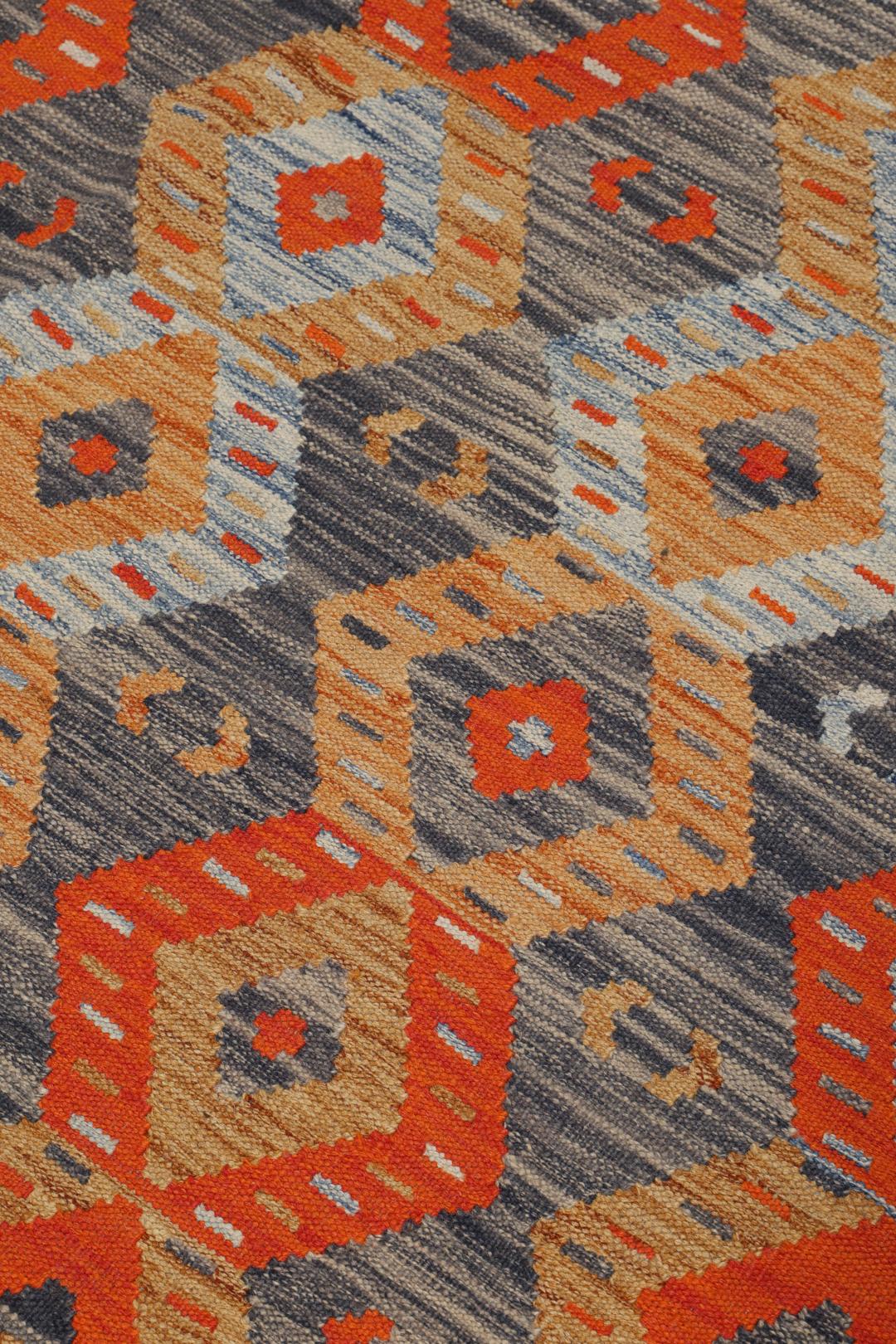
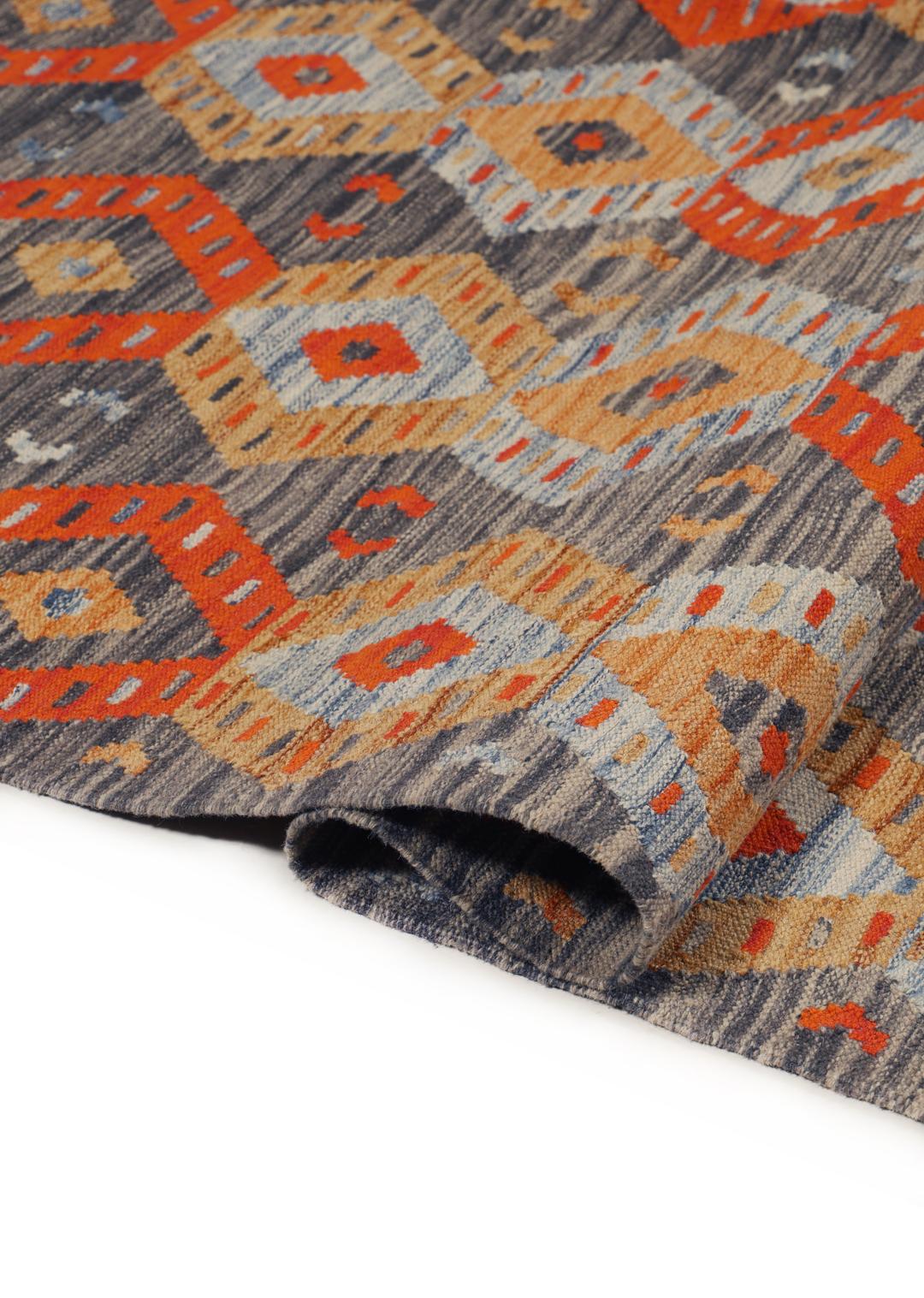
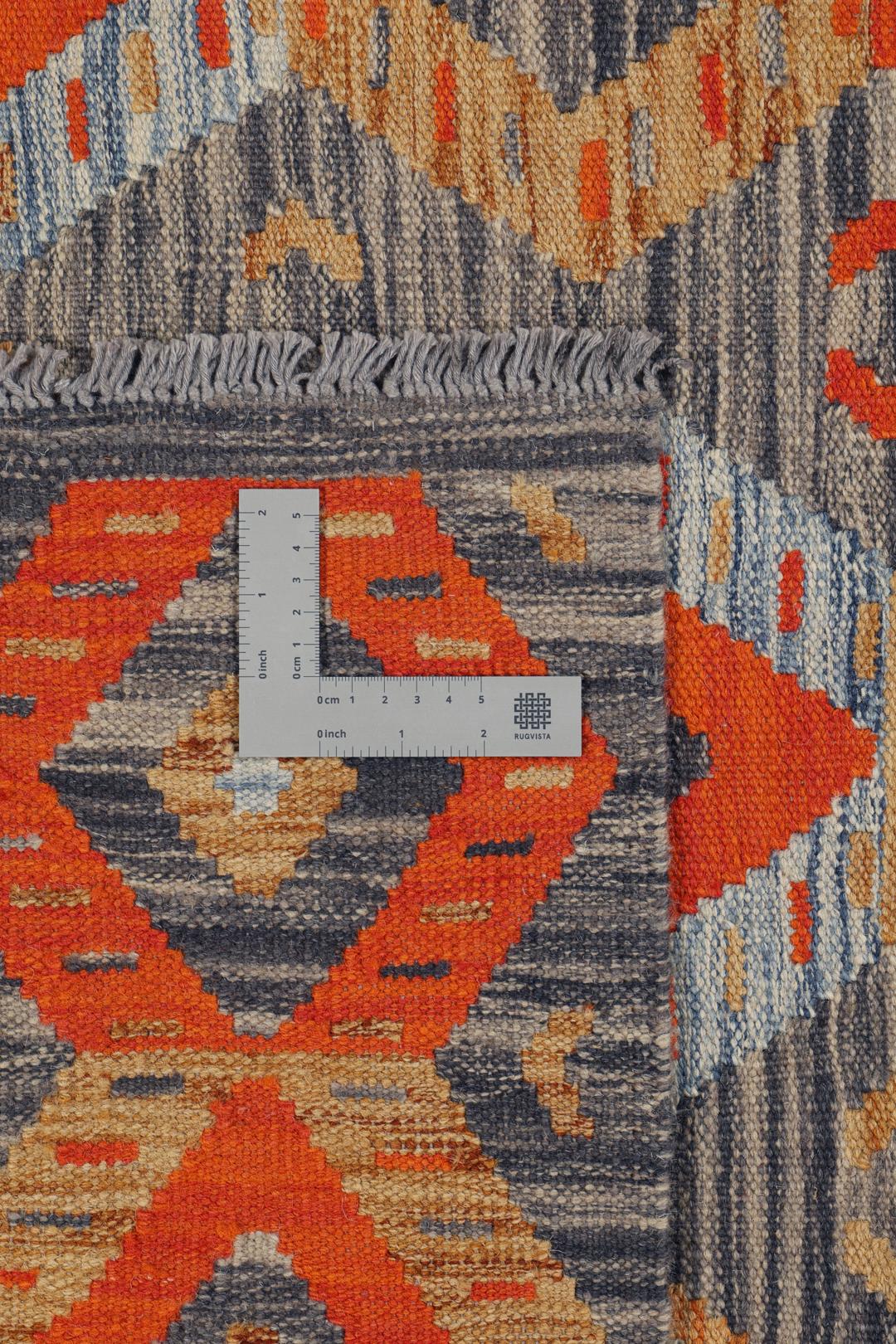
The term 'Kelim' refers to the specific slit-weave technique employed in their production. Unlike pile rugs, Kelims are created by interweaving the coloured weft threads through the warp, which results in a flat, reversible surface. This technique requires an immense amount of precision to ensure that the pattern remains crisp and the structure stays sound.
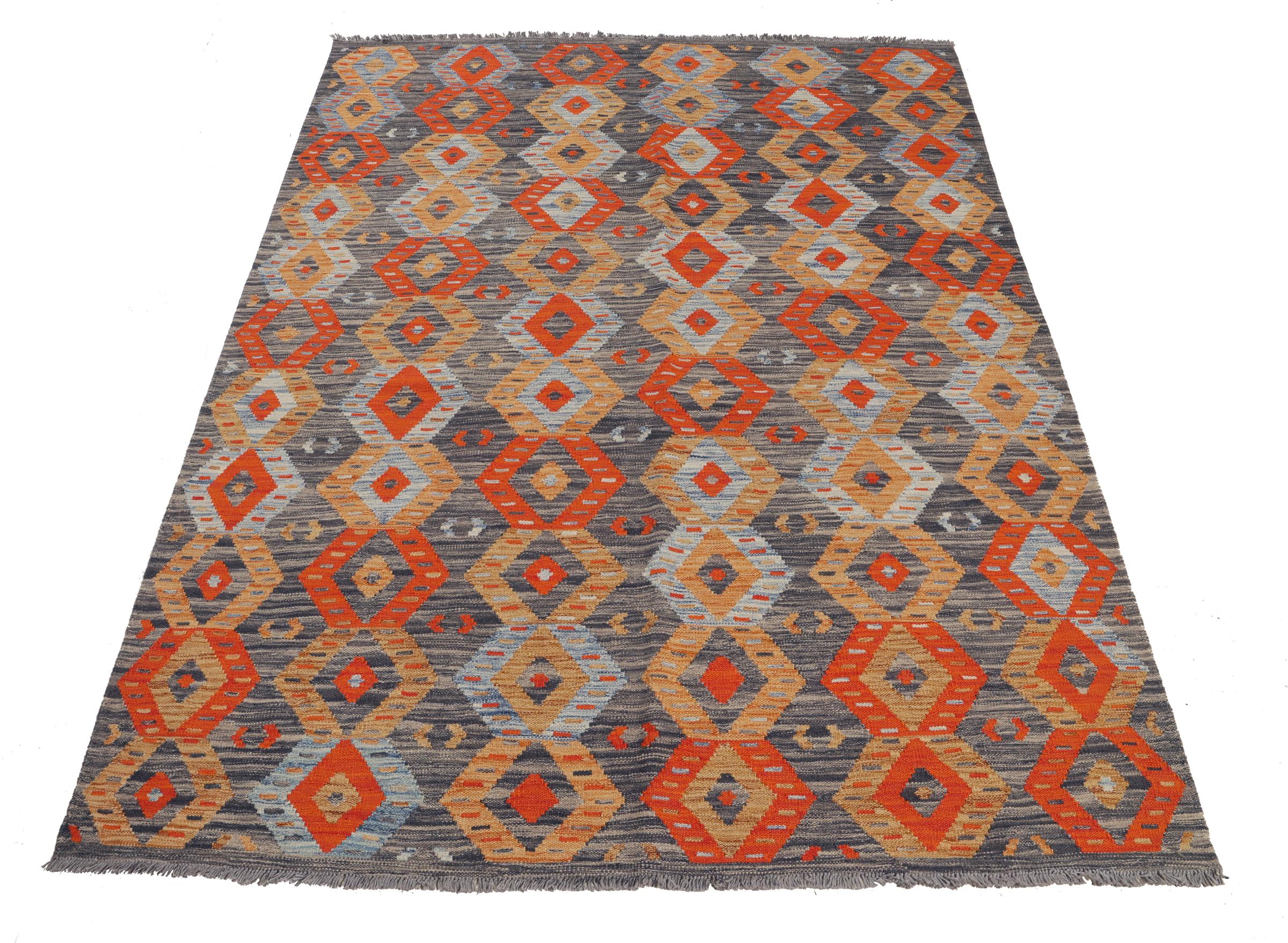
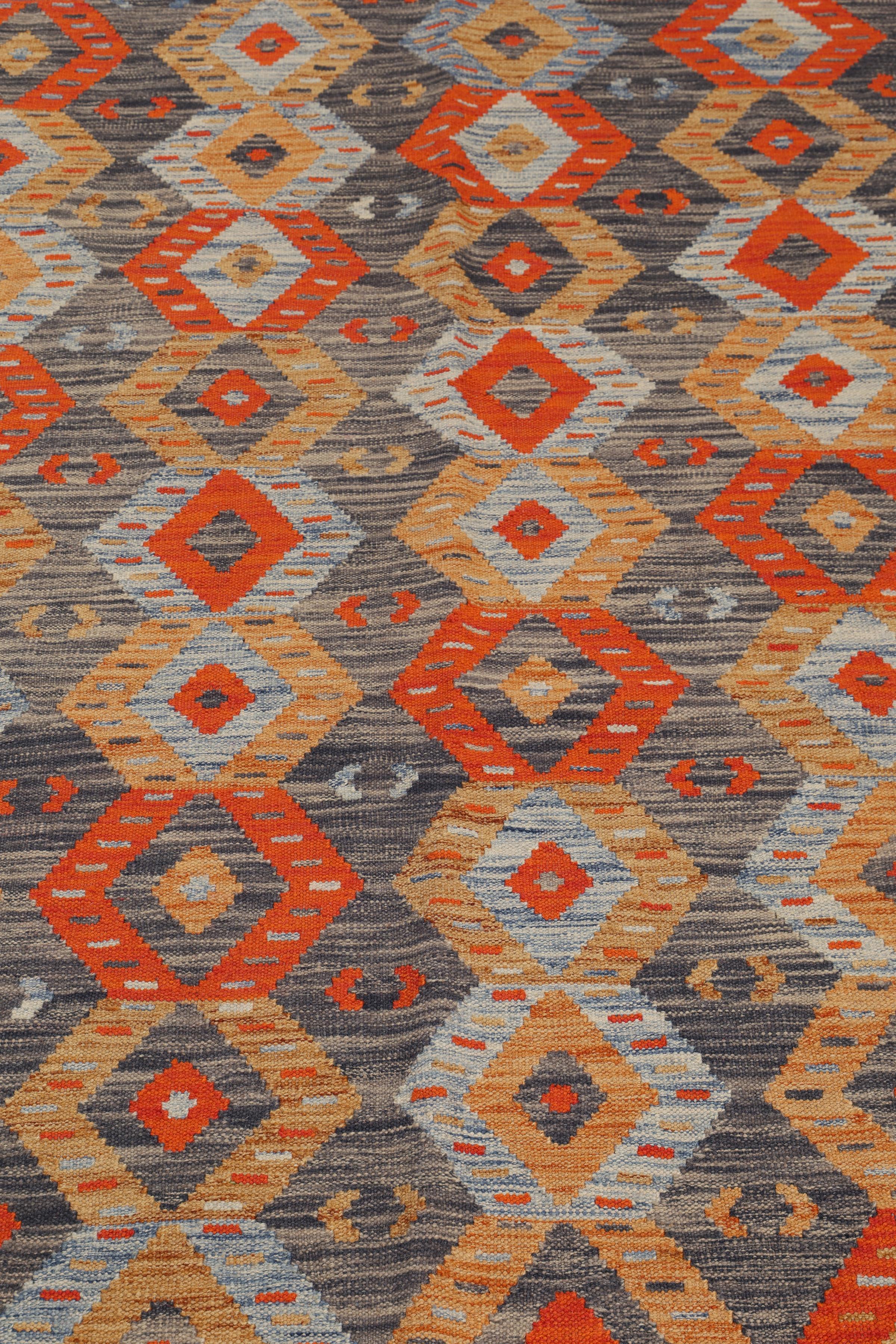
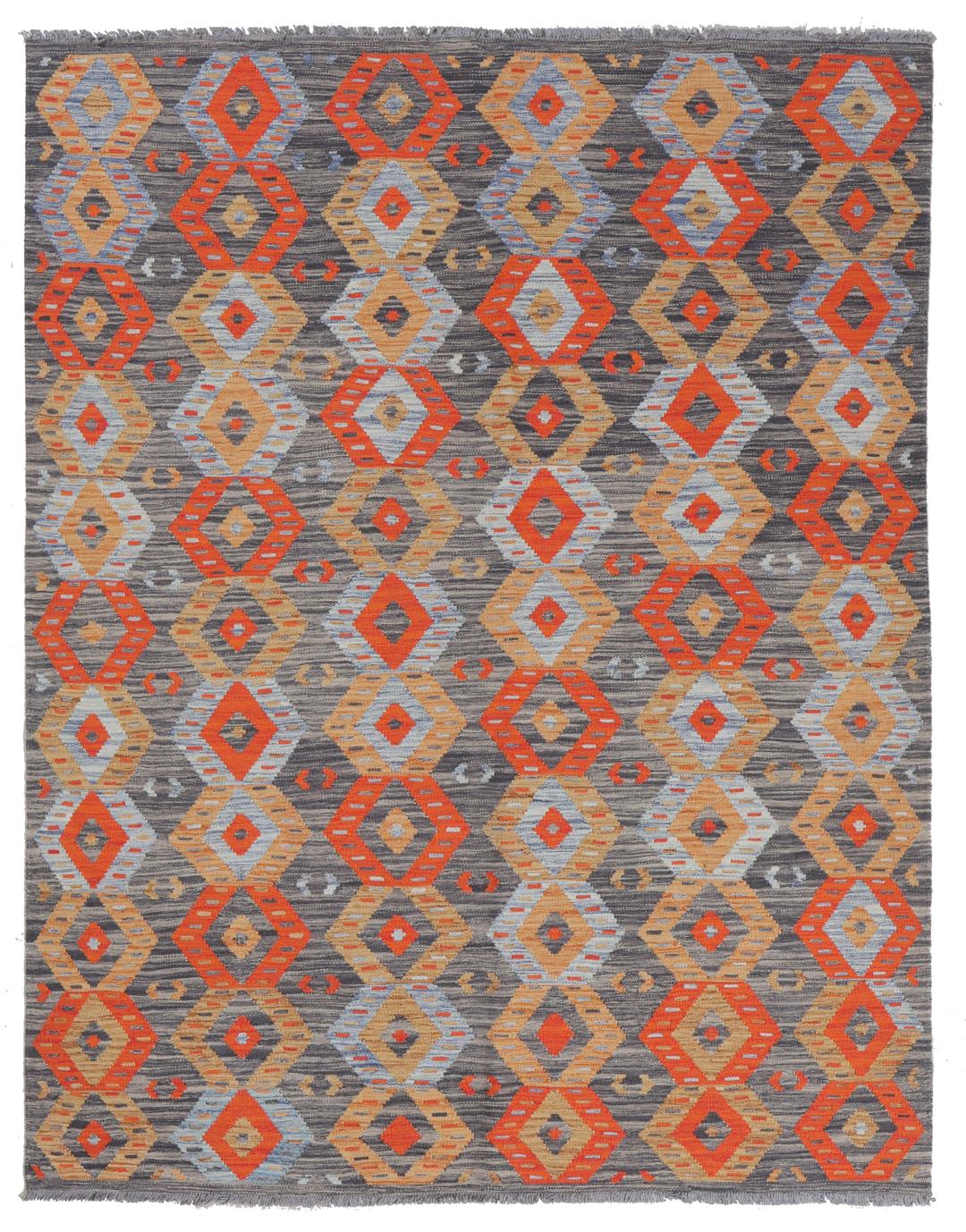
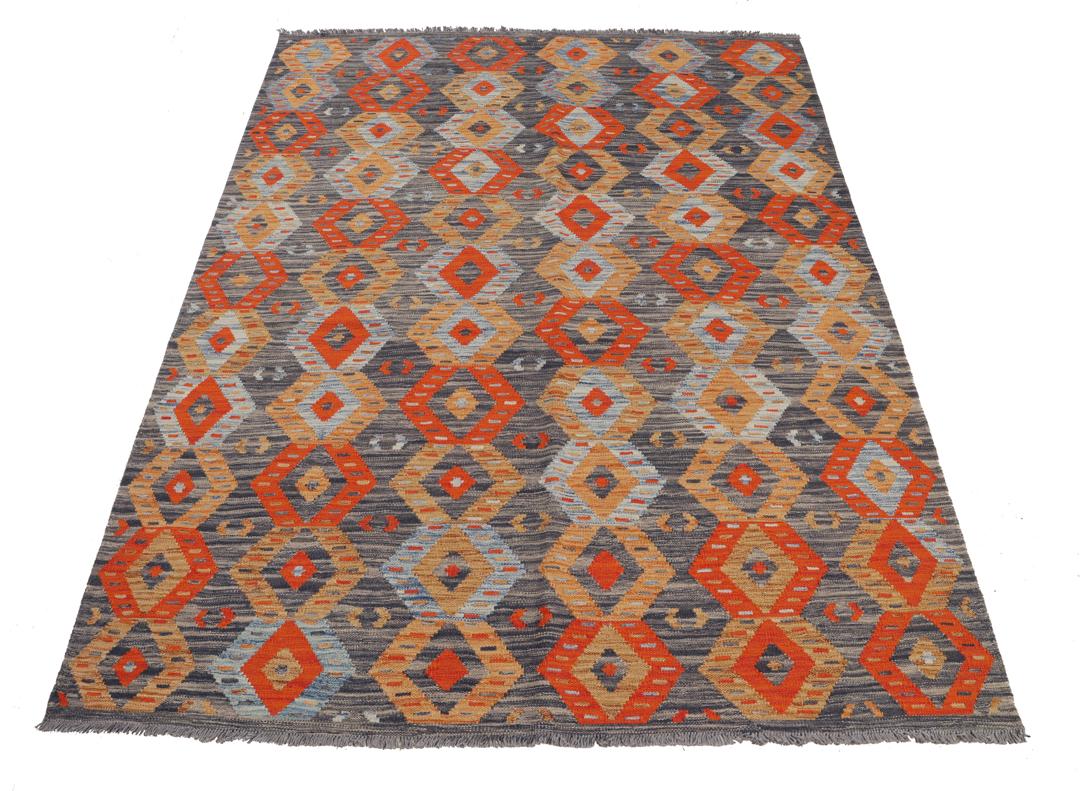
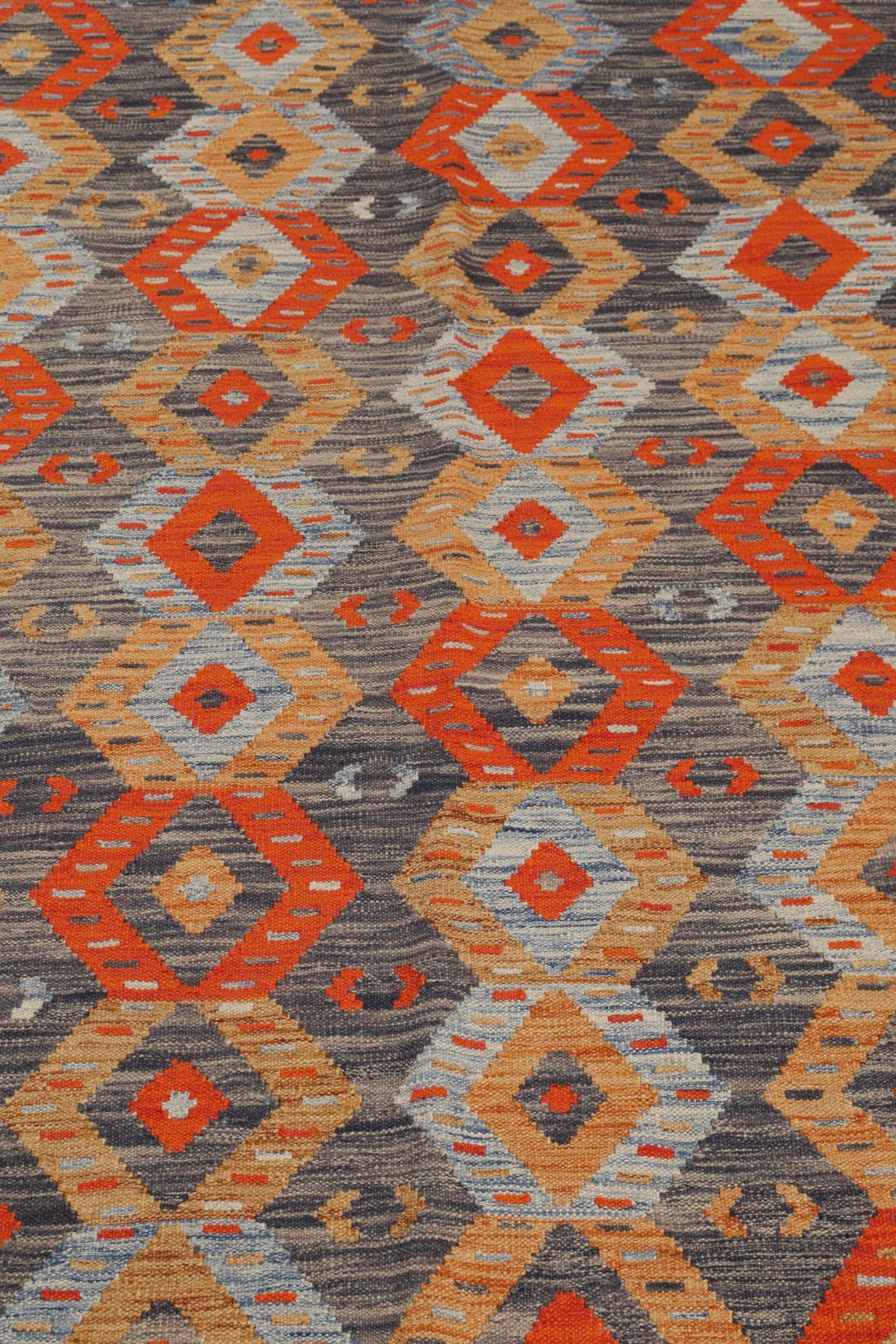
The design of this Afghan Kelim is defined by its repetitive geometric motifs, often inspired by tribal symbols and natural elements found in the weaver's environment. The diamonds and angular shapes seen here are signature elements of the tradition, representing a visual language passed down through generations of artisans.
Owning an Afghan Kelim is more than just purchasing a floor covering; it is an investment in a living tradition. These rugs are highly valued by collectors for their cultural weight and the undeniable skill required to produce them. By bringing one into your home, you are connecting with a craft that has survived for centuries as a symbol of human creativity and resilience.