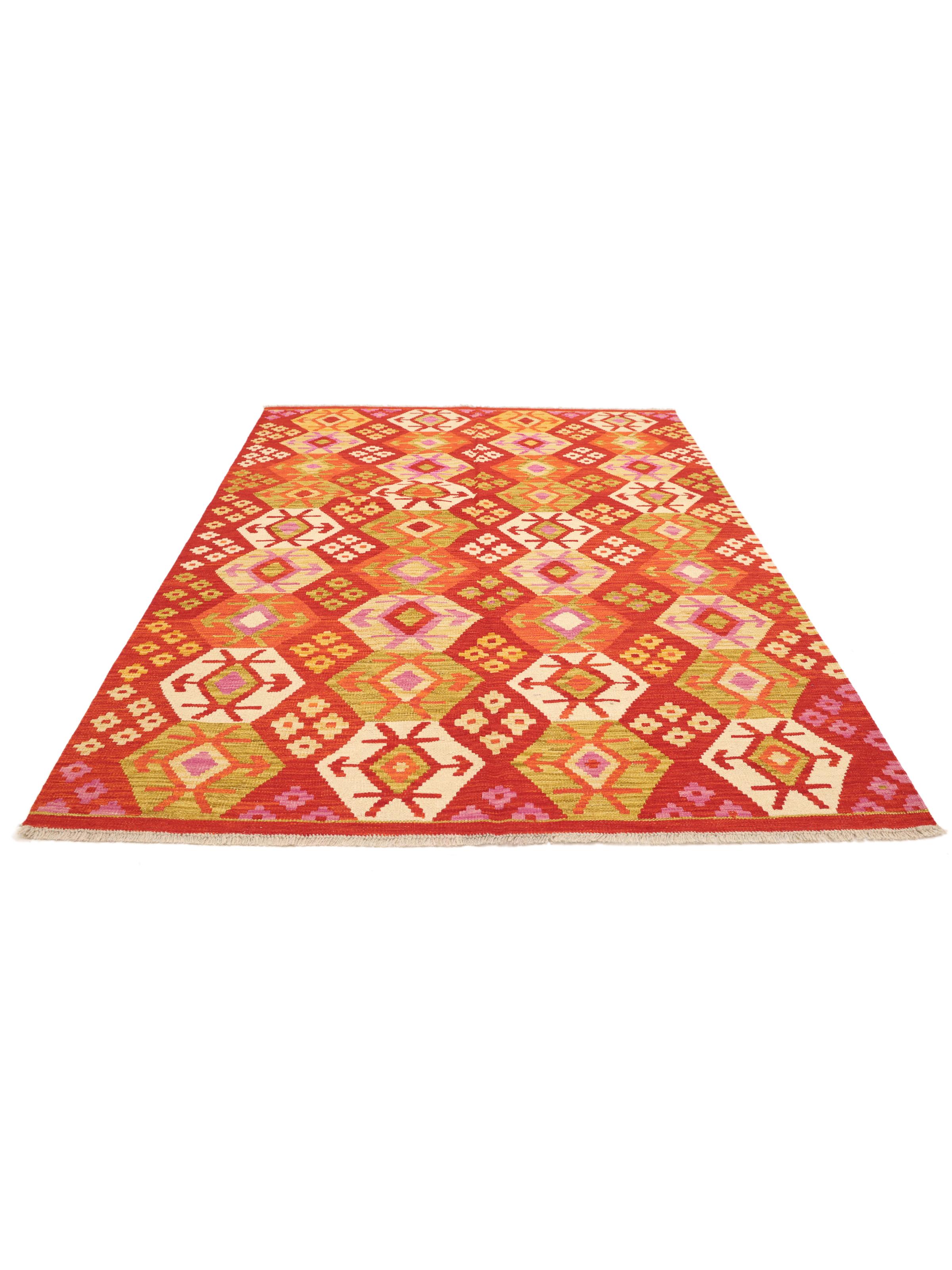
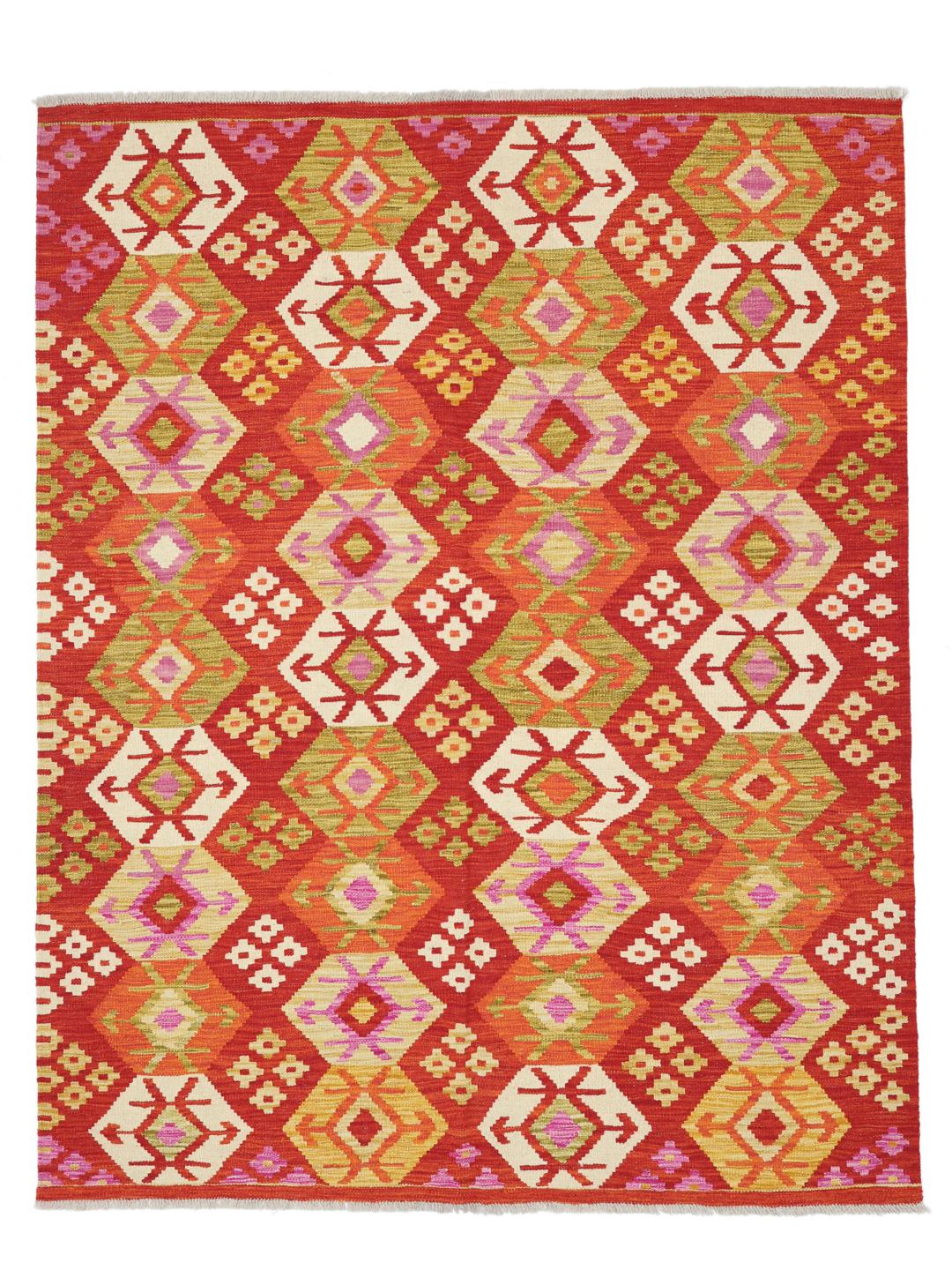
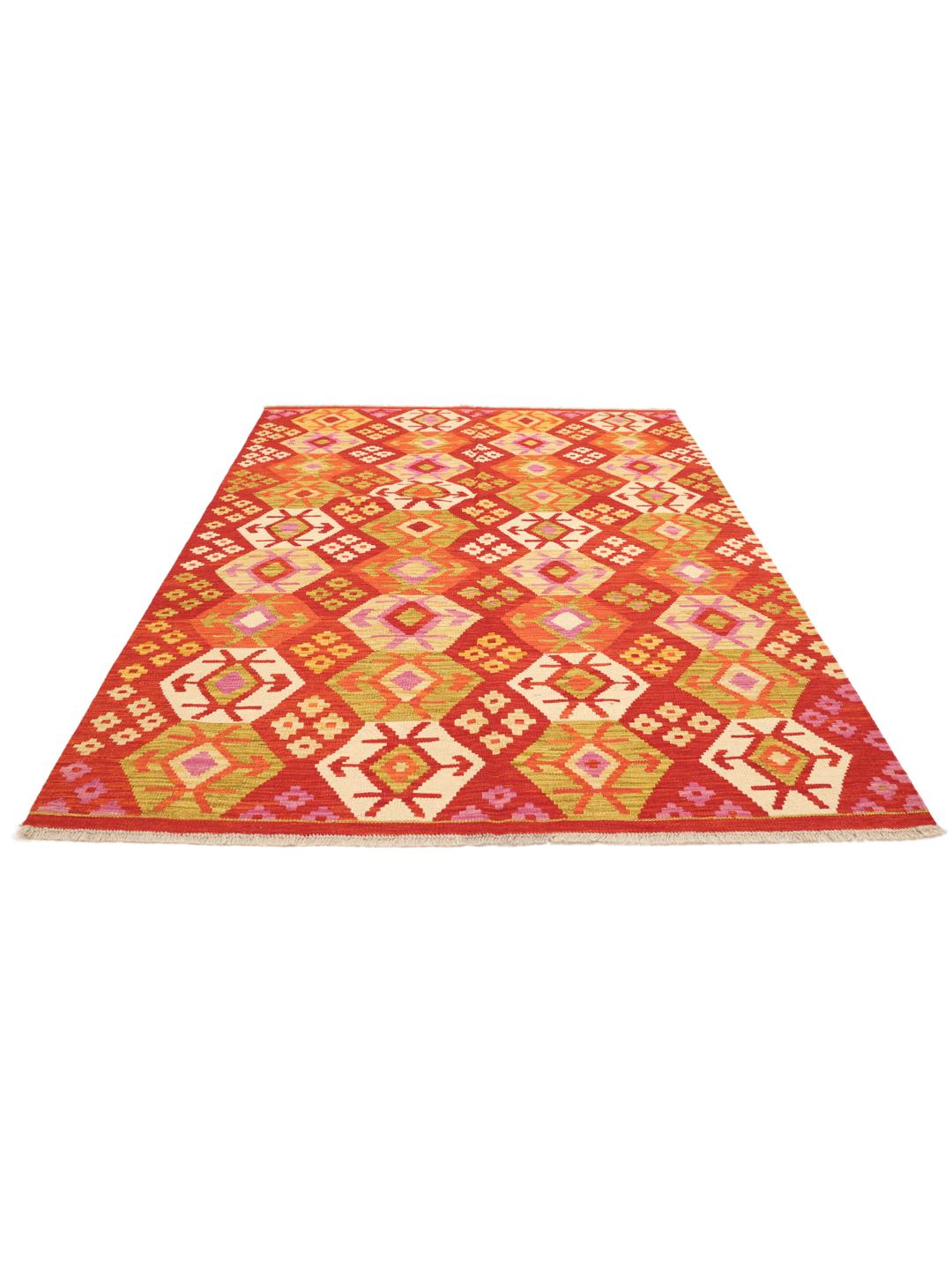
Kelim rugs originate from the diverse regions of the Middle East and Central Asia, where they have served as essential functional textiles for nomadic and village societies for centuries. The Afghan Kelim, in particular, is celebrated for its boldness and its deep connection to the rugged landscapes and rich cultural history of the region. These rugs were traditionally used as floor coverings, wall hangings, or even as storage bags, making them highly versatile and deeply embedded in the daily life of their makers.
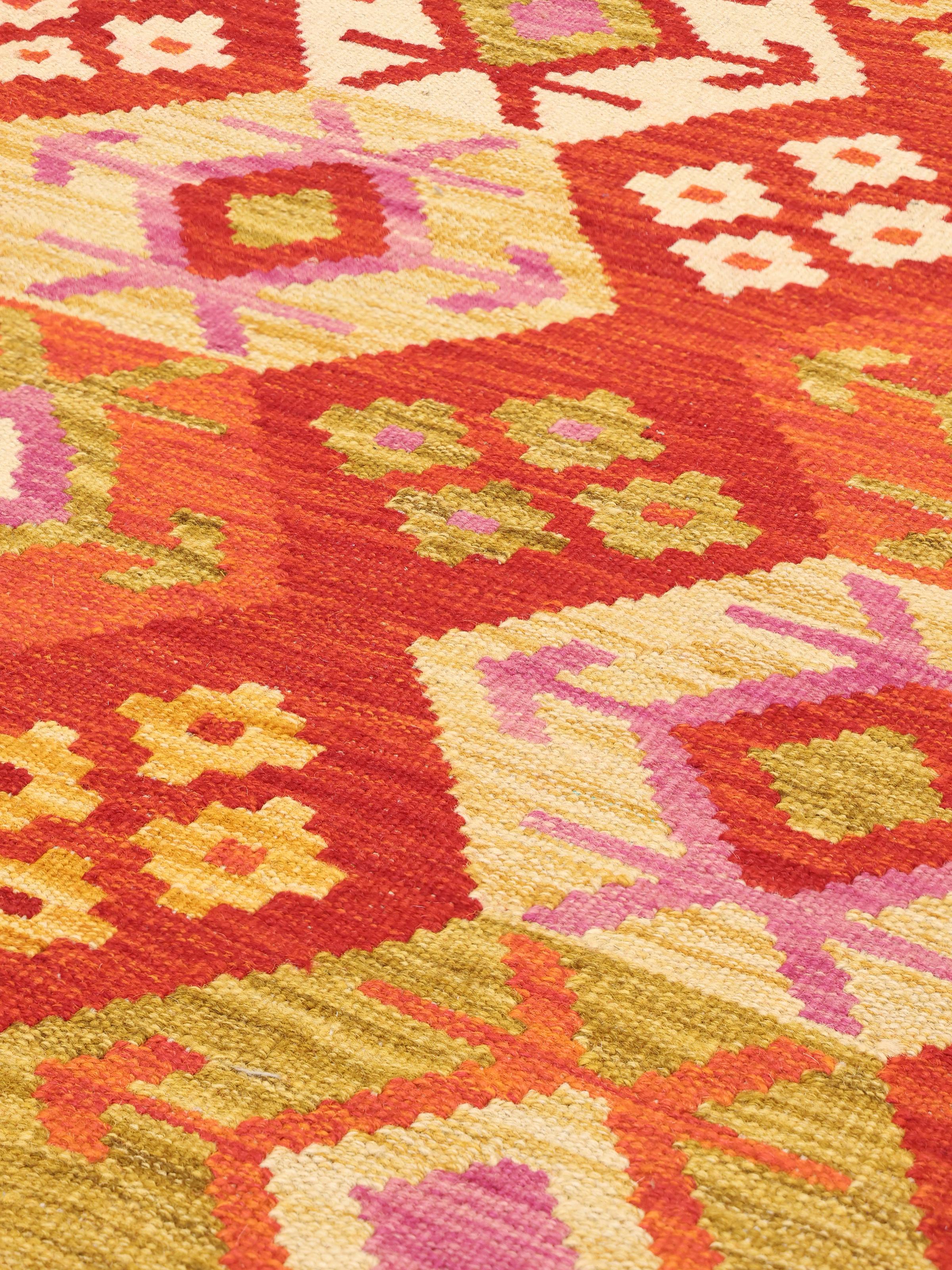
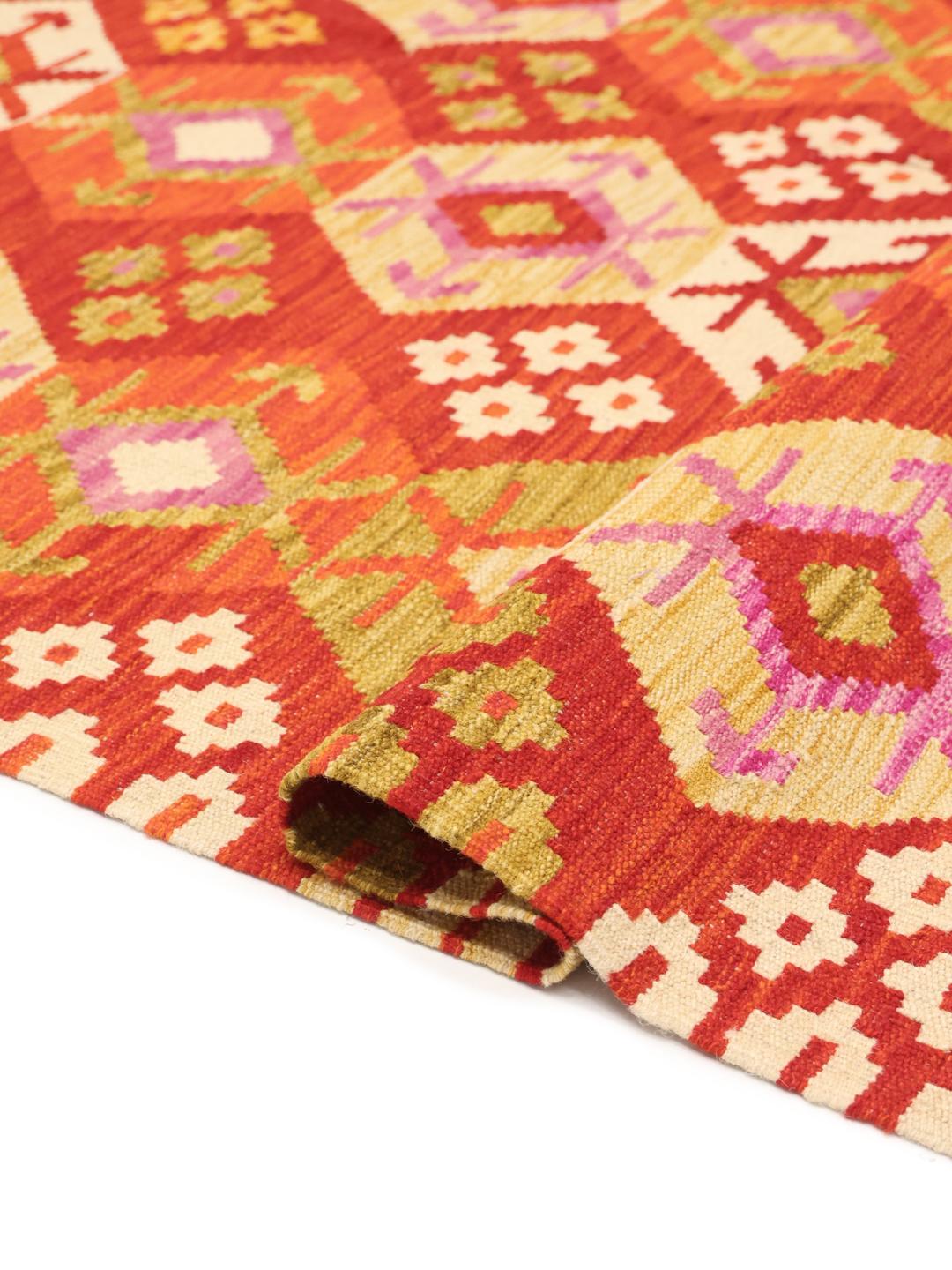
The term 'Kelim' refers to the flat-weaving technique where no pile is created, resulting in a thin, reversible rug that is both light and incredibly durable. This technique relies on the weft-faced weave, where the horizontal threads are tightly packed to cover the vertical warp threads, creating the rug's signature smooth surface. The quality of a Kelim is determined by the tightness of this weave; a tighter weave produces a more resilient rug with sharper, more defined edges on its geometric patterns.
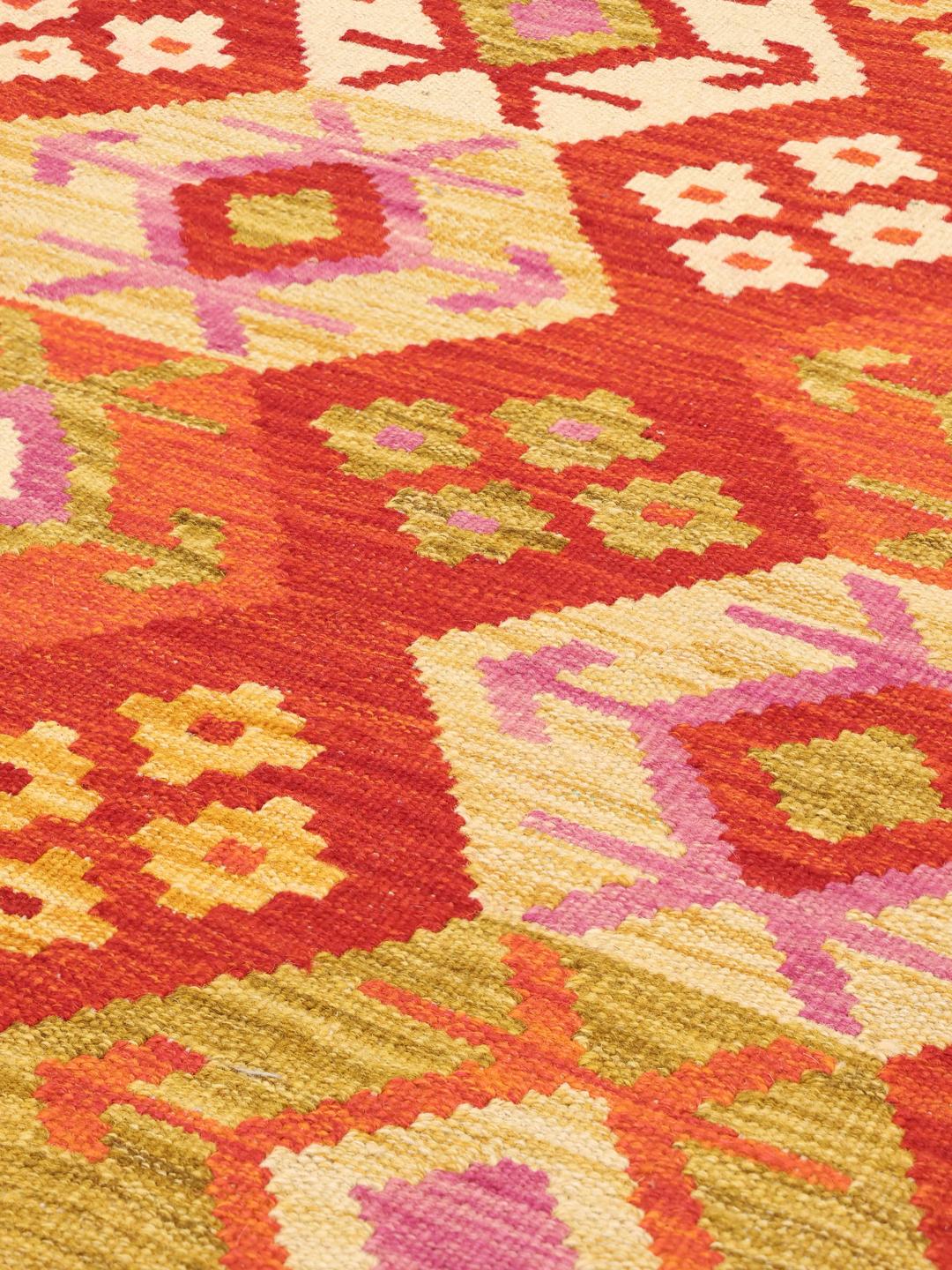
Signature design elements of Afghan Kelims often include bold, repeating geometric motifs such as diamonds, triangles, and stylised floral shapes. These patterns are not merely decorative but often hold symbolic meanings, reflecting the weaver's environment, tribal identity, or aspirations for luck and protection. The use of vibrant, earthy dyes—often derived from natural sources—gives these rugs their distinctive, warm palette that seems to glow in the light.
Collecting these rugs is an investment in cultural heritage, as they represent a bridge between ancient nomadic traditions and modern interior design. Because each rug is a reflection of the individual weaver's skill and the specific cultural influences of their village, owning one provides a sense of connection to a global craft history. They are valued for their authenticity and their ability to bring a sense of history and human presence into a contemporary living environment.