Kelim rugs have a rich heritage deeply rooted in the nomadic and village traditions of the Middle East and Central Asia. Historically woven by tribal communities for practical shelter, warmth, and daily use, these flat-weave textiles served as floor coverings, blankets, and storage bags. Over centuries, the craft evolved into a respected artistic tradition, with specific weaving techniques and design motifs handed down from mothers to daughters across generations.
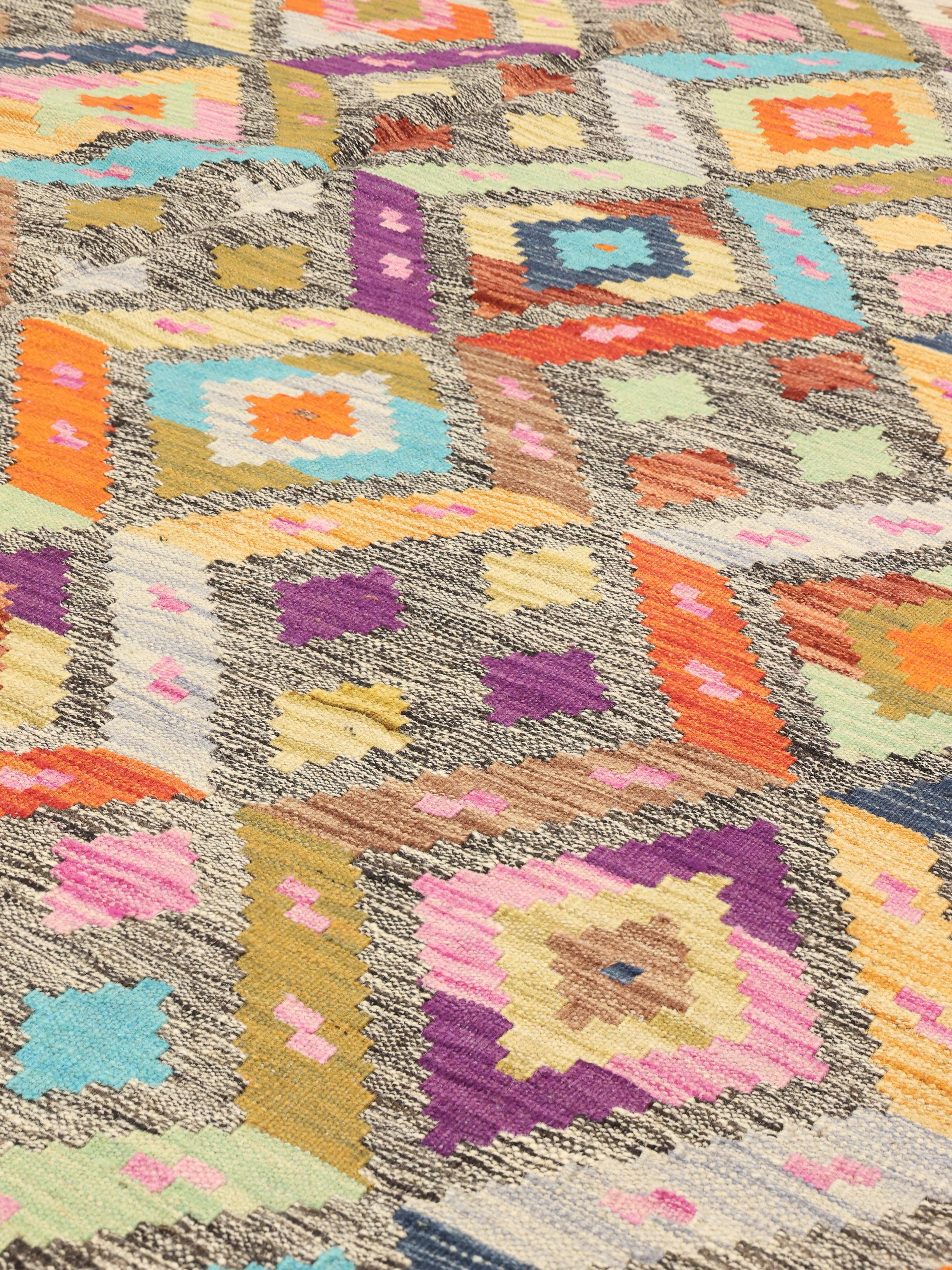
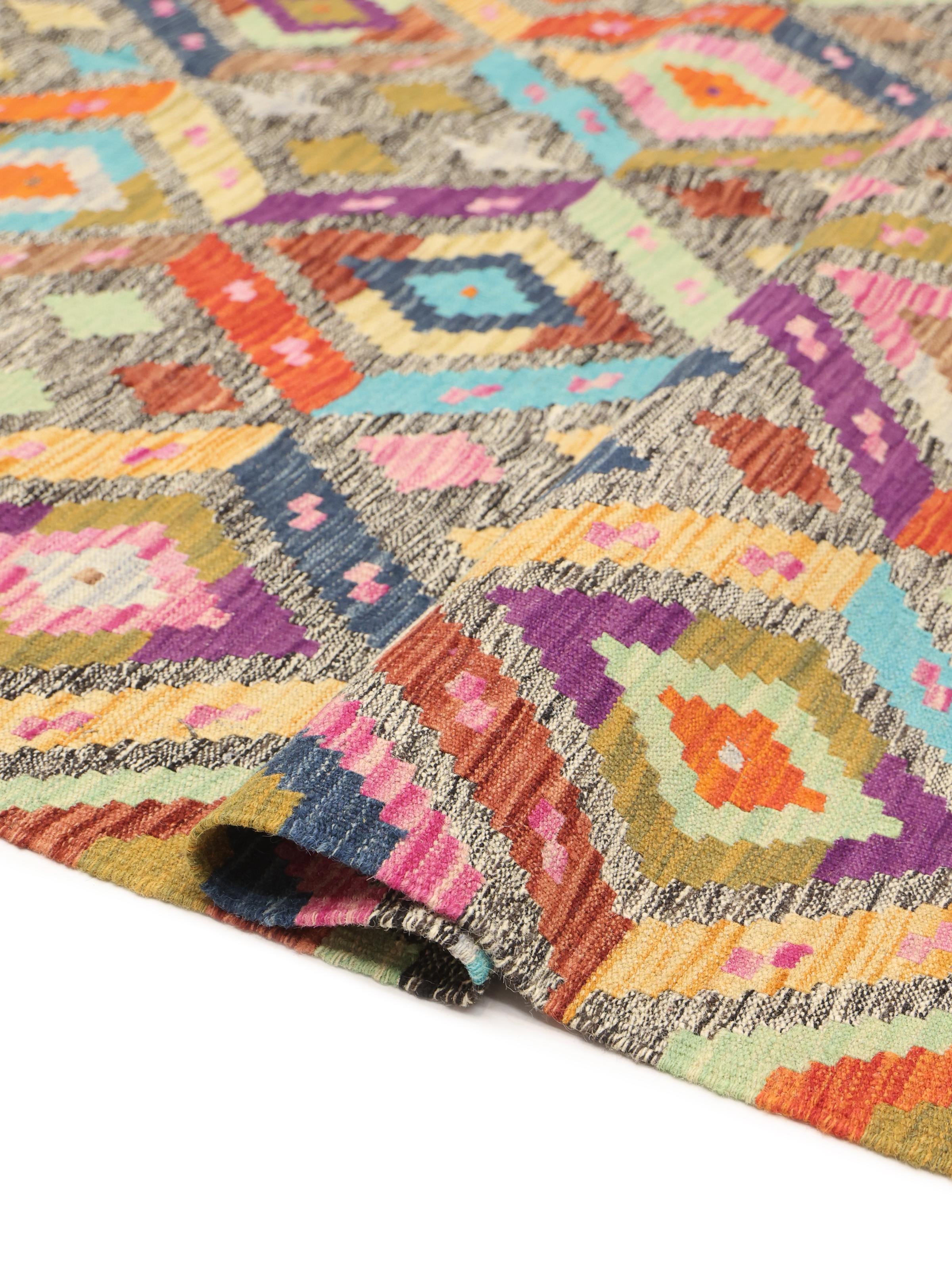
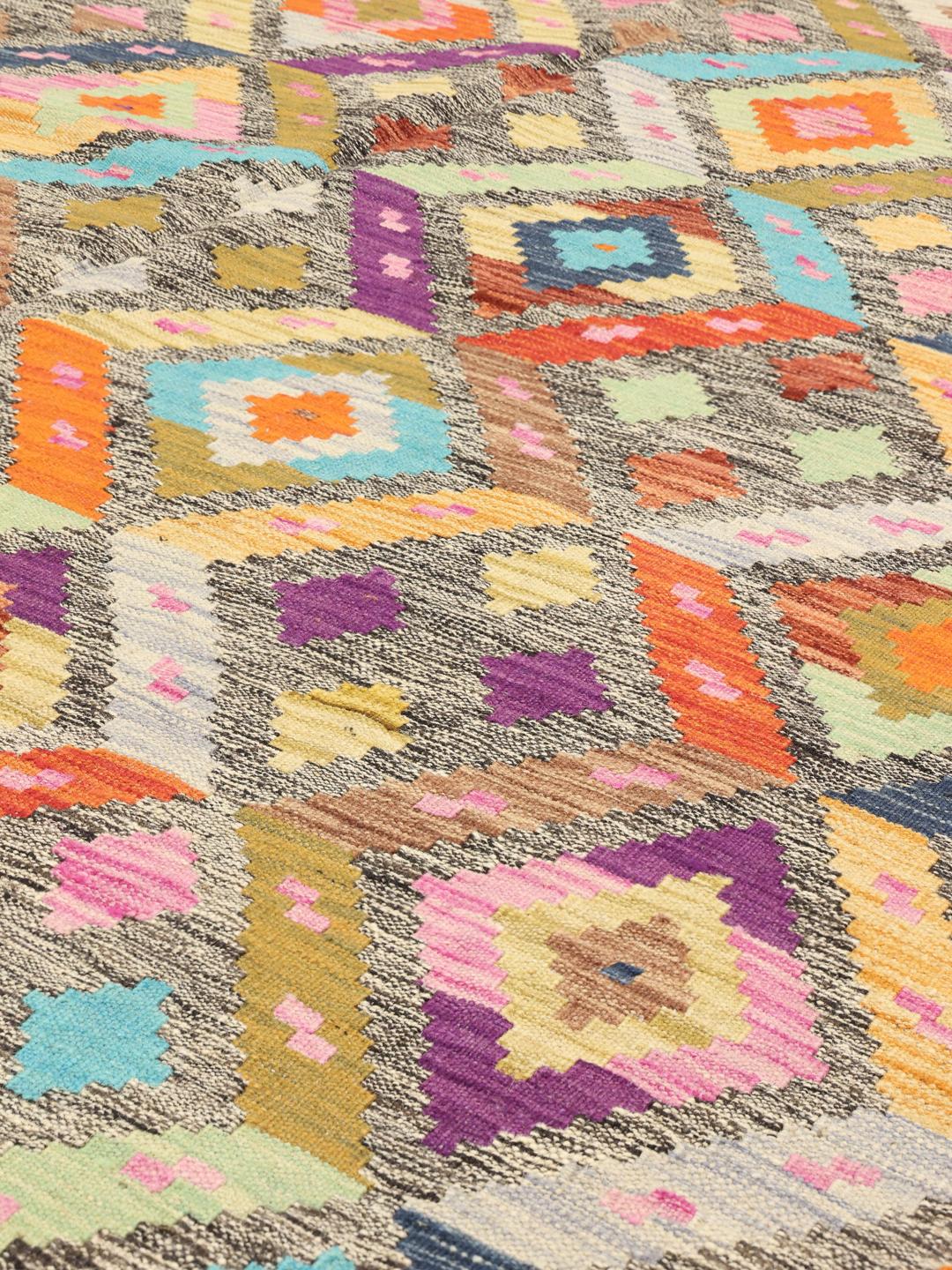
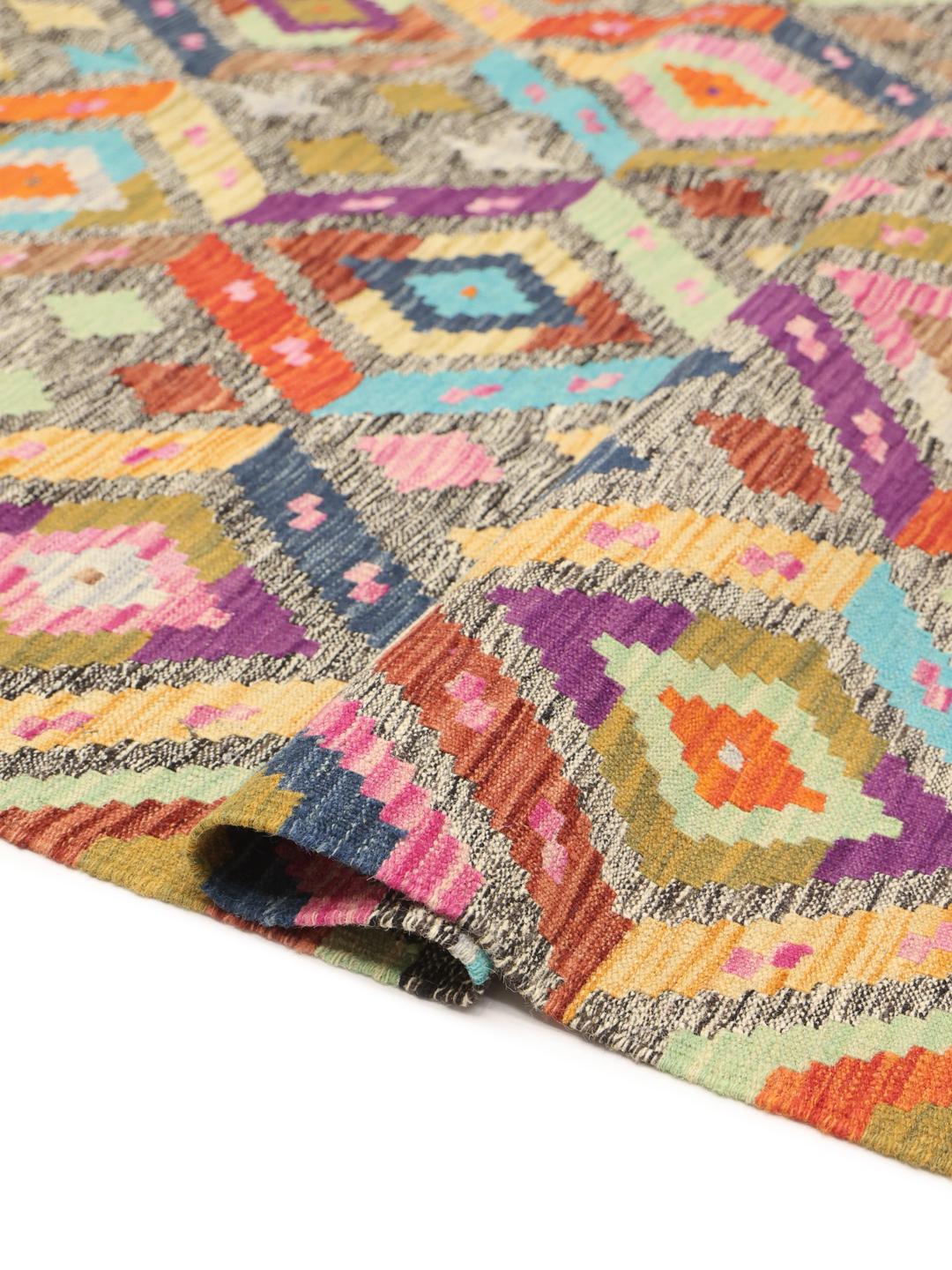
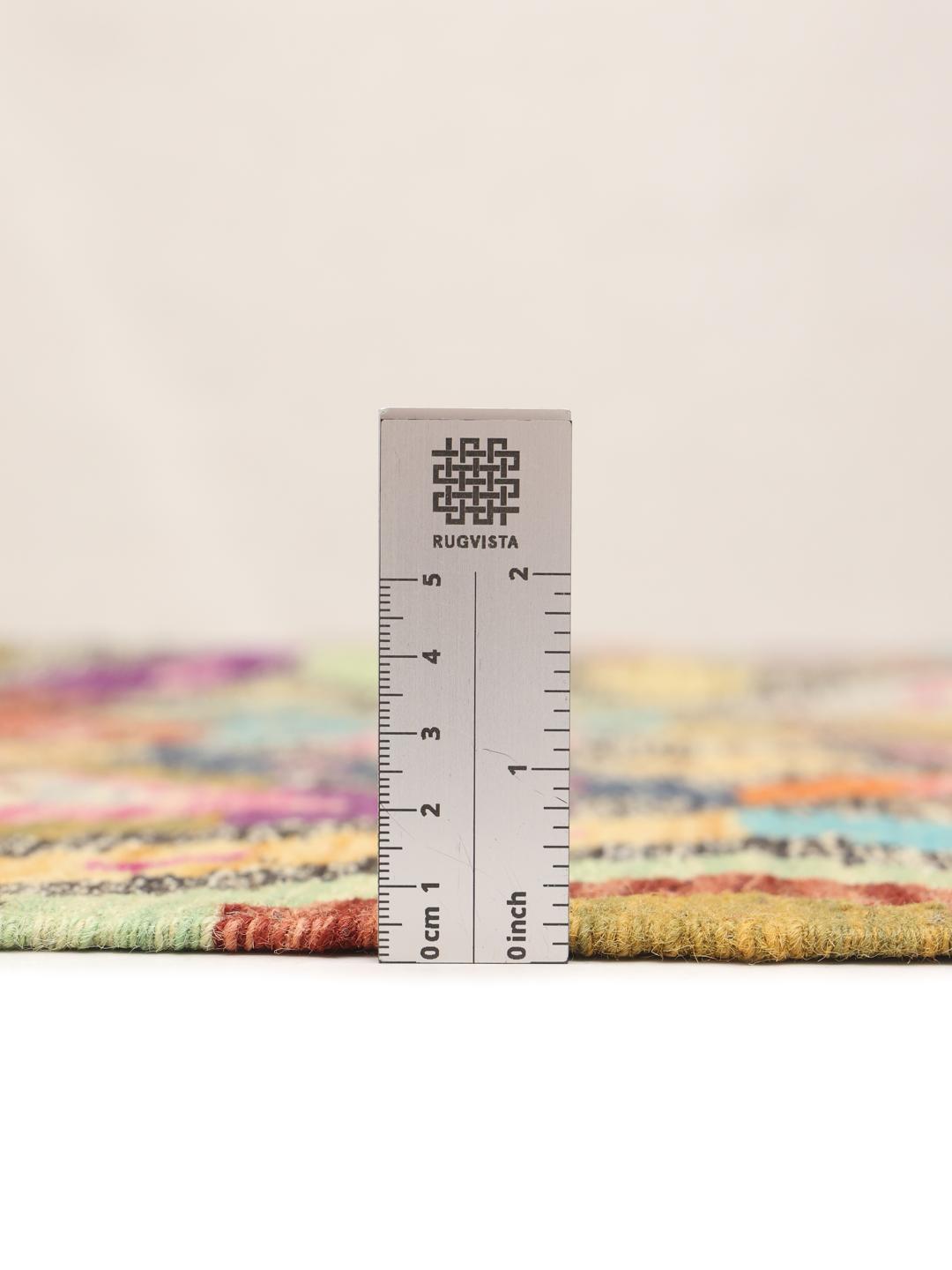
The term kelim refers to a flat-weaving technique where the weft threads are tightly pulled across the warp threads to create a smooth surface with no raised pile. This construction method allows artisans to produce sharp, geometric patterns that look nearly identical on both sides of the fabric. Because there are no knots to tie, the weaver builds the design using a slit-weave technique, leaving small vertical openings between colour changes that give traditional Kelims their signature structural clarity.
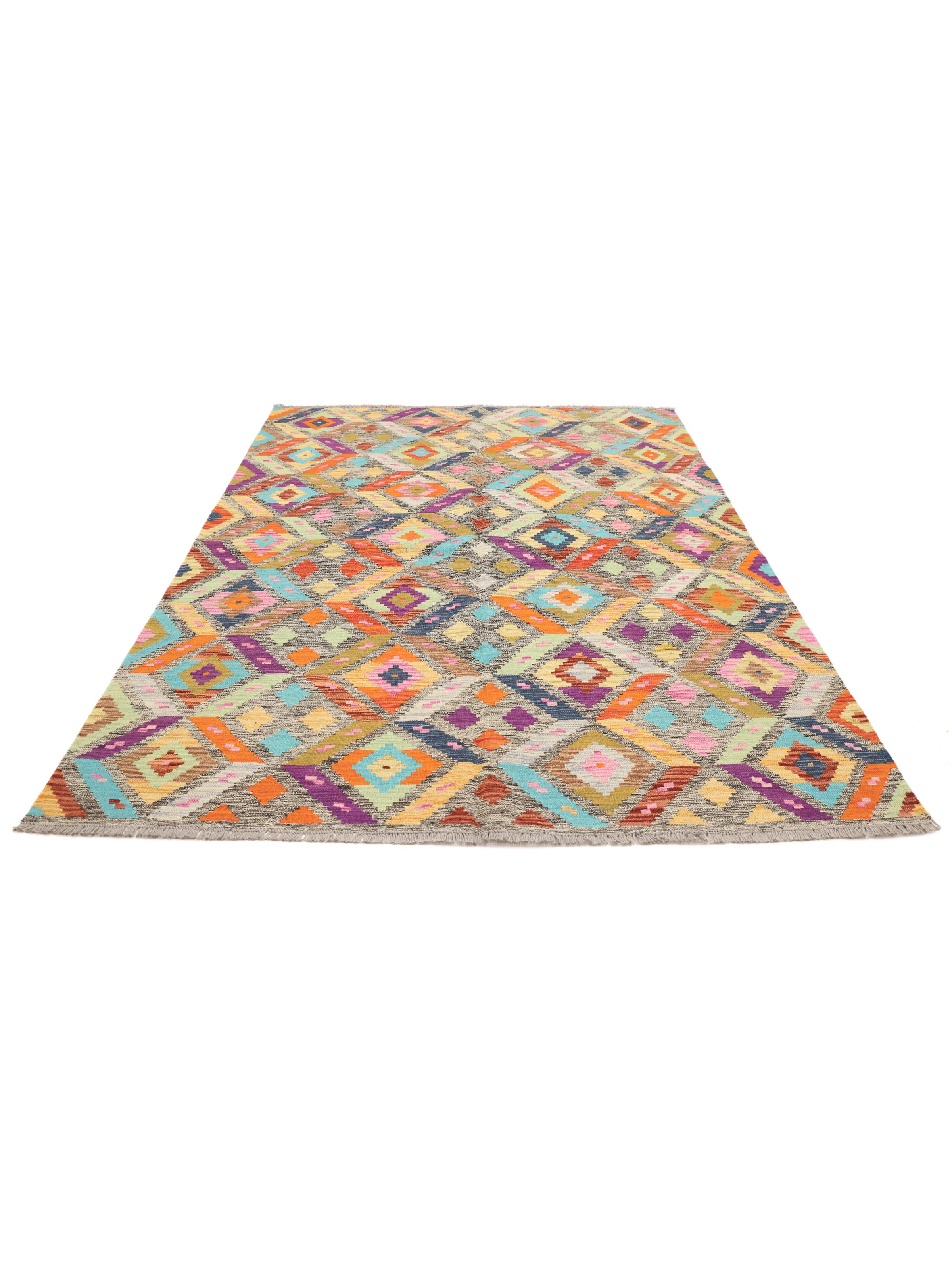
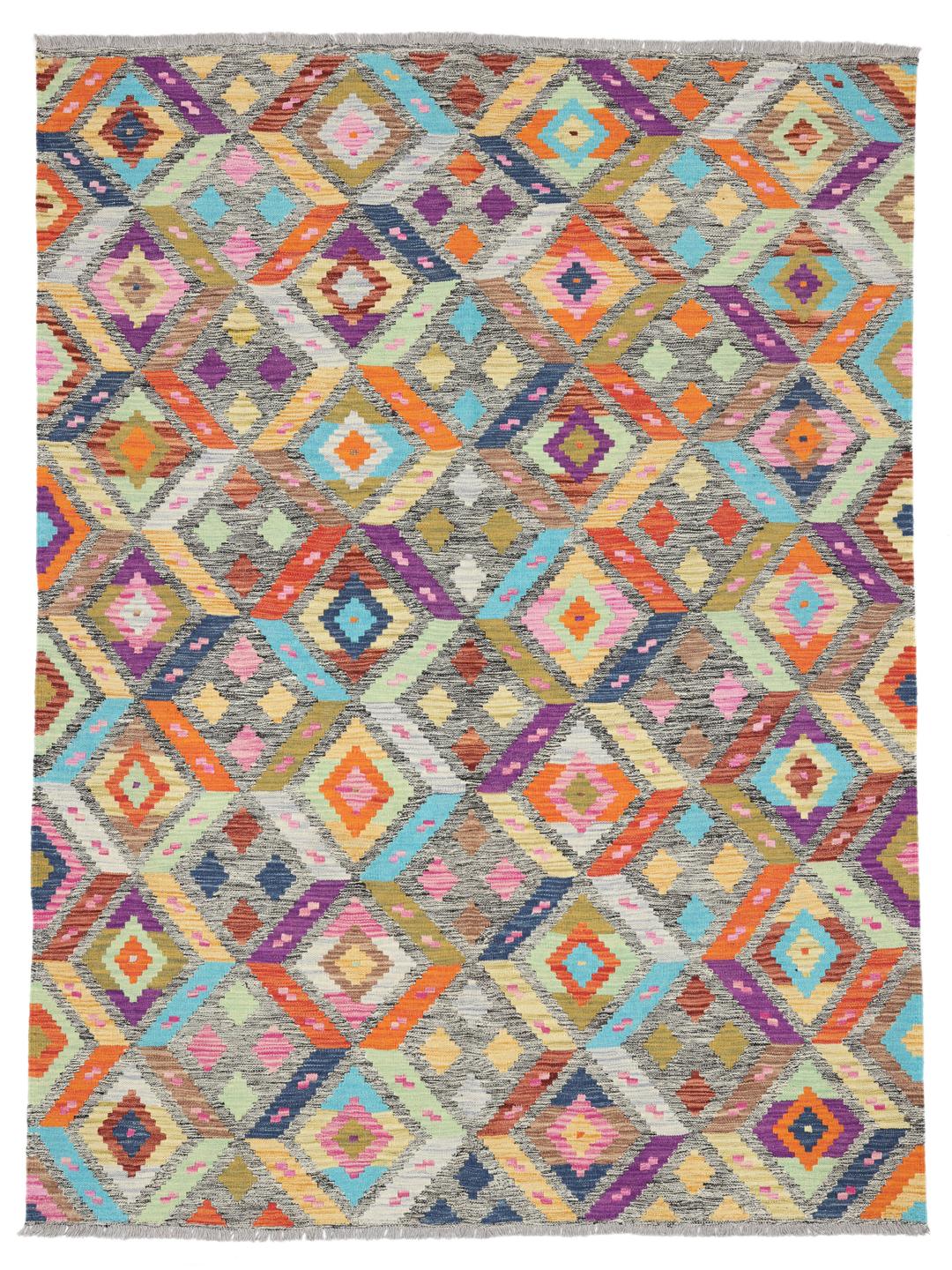
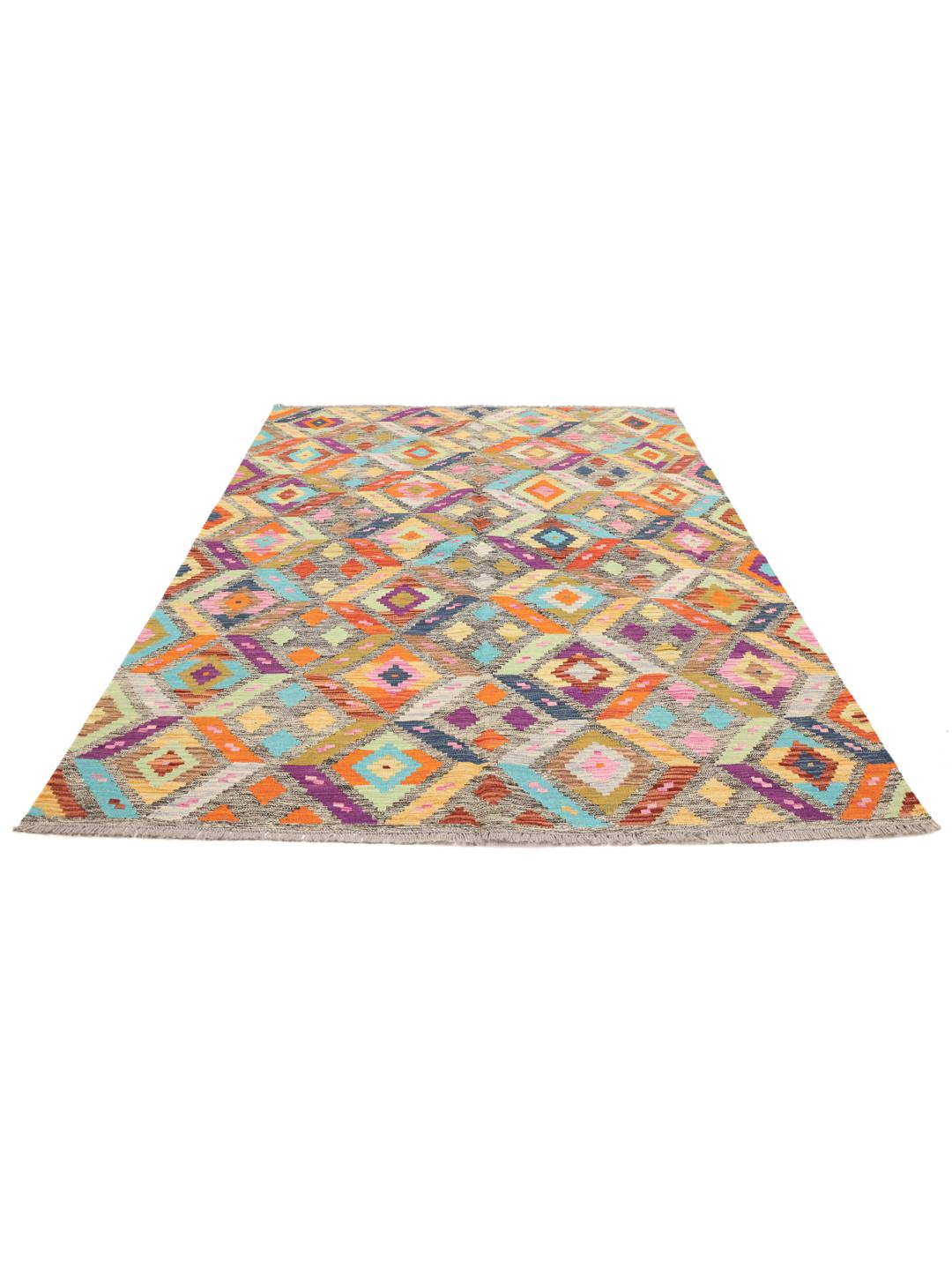
Visually, traditional Afghan Kelims are celebrated for their bold geometric arrangements, diamond motifs, and balanced symmetrical layouts. The palette typically draws from natural dyes, featuring earthy hues accented by vibrant pops of contrasting colour. This particular piece showcases a lively interplay of diamond patterns and intricate borders, reflecting the classic visual vocabulary of Afghan weavers while offering a fresh, energetic expression suitable for modern homes.
Collecting vintage and handmade Kelims has become a cherished pursuit for those who appreciate authentic artisan heritage and sustainable craftsmanship. Owning a rug from this tradition means preserving centuries-old textile skills and bringing a tangible piece of cultural history into your living environment. Each piece stands as a testament to the patience, skill, and artistic vision of the maker.